- Official name: Shepherd Gate Clock
- Address: Blackheath Ave, London SE10 8XJ, United Kingdom
- Date of opening: 1852
- Timings: 10 AM - 5 PM
- Constructed by: Charles Shepherd
Royal Observatory Greenwich's Guardian of Time: The Shepherd Gate Clock
What is Shepherd Gate Clock?
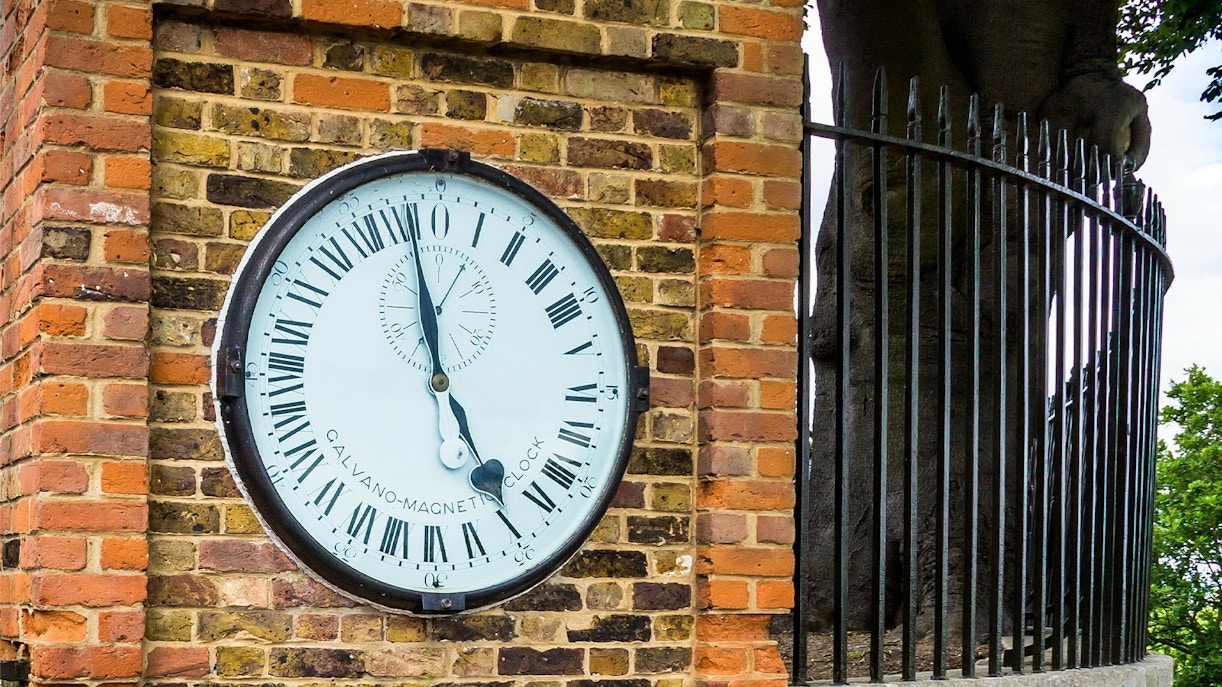
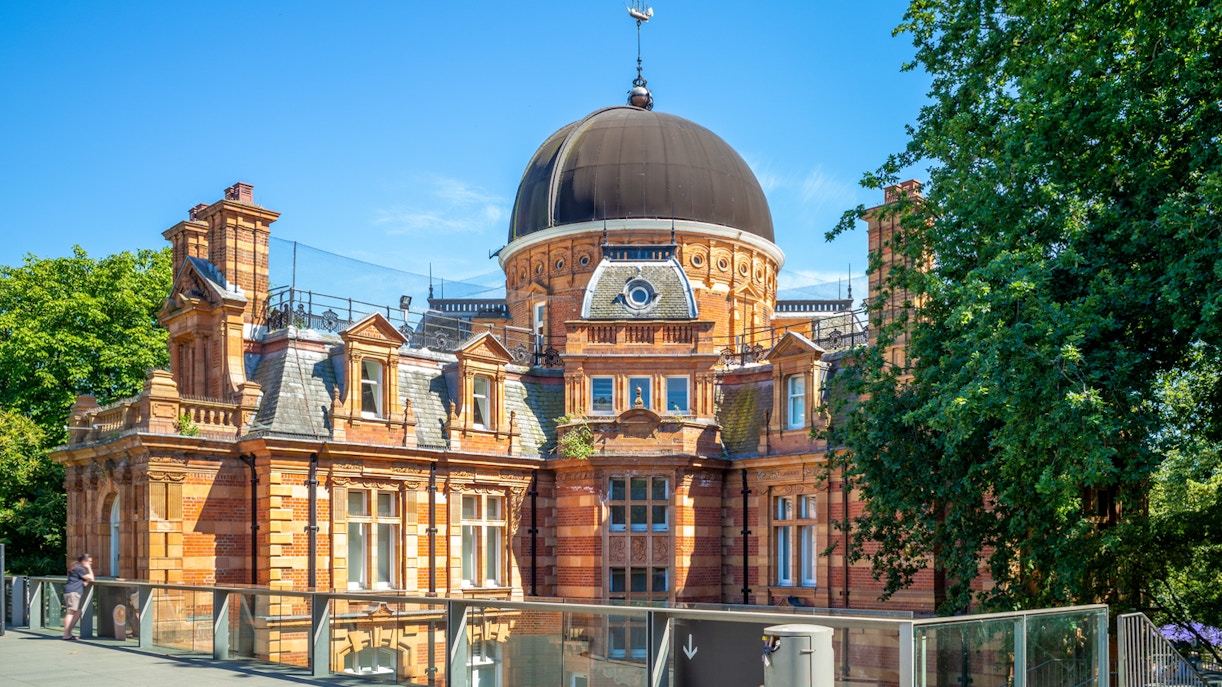
The Royal Observatory Greenwich is home to the Shepherd Gate Clock, a significant timepiece in the history of timekeeping. This clock was revolutionary for its time, as it was the first to display Greenwich Mean Time (GMT) to the public. Notably, its face features 24 hours rather than the conventional 12, a design that reflects the precision and importance of GMT. At noon, unlike traditional clocks, the hour hand points downward, a unique feature that has fascinated visitors for years.
Shepherd Gate Clock Quick Facts
Why Visit Shepherd Gate Clock?
- Astronomical Time Origin: Originally, the clock displayed astronomical time, which began at noon, offering insight into the historical methods of timekeeping.
- Public Time Display: The clock by the gate was among the first to display Greenwich Mean Time to the public, allowing residents and visitors to synchronize their time accurately.
- Historical Significance: As part of the Royal Observatory Greenwich, it holds a significant place in the history of timekeeping and is a symbol of Greenwich's role in defining the prime meridian.
- Visitor Attraction: Today, it continues to draw visitors interested in the history of time and navigation, making it a highlight of the Royal Observatory Greenwich experience.
Shepherd Gate Clock Highlights

Early Electric Precision
The Shepherd Gate Clock is a remarkable testament to 19th-century technological innovation, serving as an early example of an electrically connected clock system. At a time when electrical engineering was still in its infancy, this clock system demonstrated remarkable precision and synchronization. This innovation not only made timekeeping more reliable but also showed commitment to harnessing technology to improve everyday life and science.

24-Hour Analog Dial
What truly sets the Shepherd Gate Clock apart is its unique 24-hour analog dial. Unlike traditional clocks with 12-hour formats, this distinctive feature allowed for precise timekeeping throughout the day and night, catering to various needs, including astronomical observations and scientific research. The 24-hour format also reflects the clock's association with Greenwich Mean Time, a global standard for coordinating time around the world.

Sympathetic Timekeeping
The Shepherd Gate Clock is part of a 'sympathetic' clock network, relying on another clock, the 'motor' clock, located within the main Observatory building, for its accuracy. This arrangement ensures that the clock by the gate remains impeccably synchronized, making it an essential timekeeping instrument in the Greenwich Mean Time system. While the Shepherd Gate Clock is the one most visitors see, it's the motor clock that represents the true technological breakthrough, and you can find it inside the Time and Greenwich Gallery.
History of Shepherd Gate Clock
The Shepherd Gate Clock holds a significant place in the history of timekeeping. Its story began in the 19th century when George Airy, the Astronomer Royal, sought a unified time standard for the expanding railway network. To achieve this, he employed Charles Shepherd, an engineer, who patented a pioneering system using electricity to synchronize clocks. By August 1852, Shepherd had implemented this system, enabling the precise transmission of time pulses to clocks across the observatory and even other cities via telegraph wires. This innovation marked a crucial step towards Greenwich Mean Time's establishment and modern time synchronization techniques.
Construction of Shepherd Gate Clock

In 1849, Charles Shepherd introduced his patented system for controlling a network of synchronized clocks using electricity, then referred to as "galvanism." He installed public clocks for the Great Exhibition in May 1851, and soon, following a request from Astronomer Royal George Airy, Shepherd started creating multiple clocks, including an automatic clock and others synchronized to it. By August 1852, Shepherd had successfully constructed and installed this intricate network of clocks and cables within the observatory, including the iconic Shepherd Gate Clock.
Shepherd Gate Clock Today
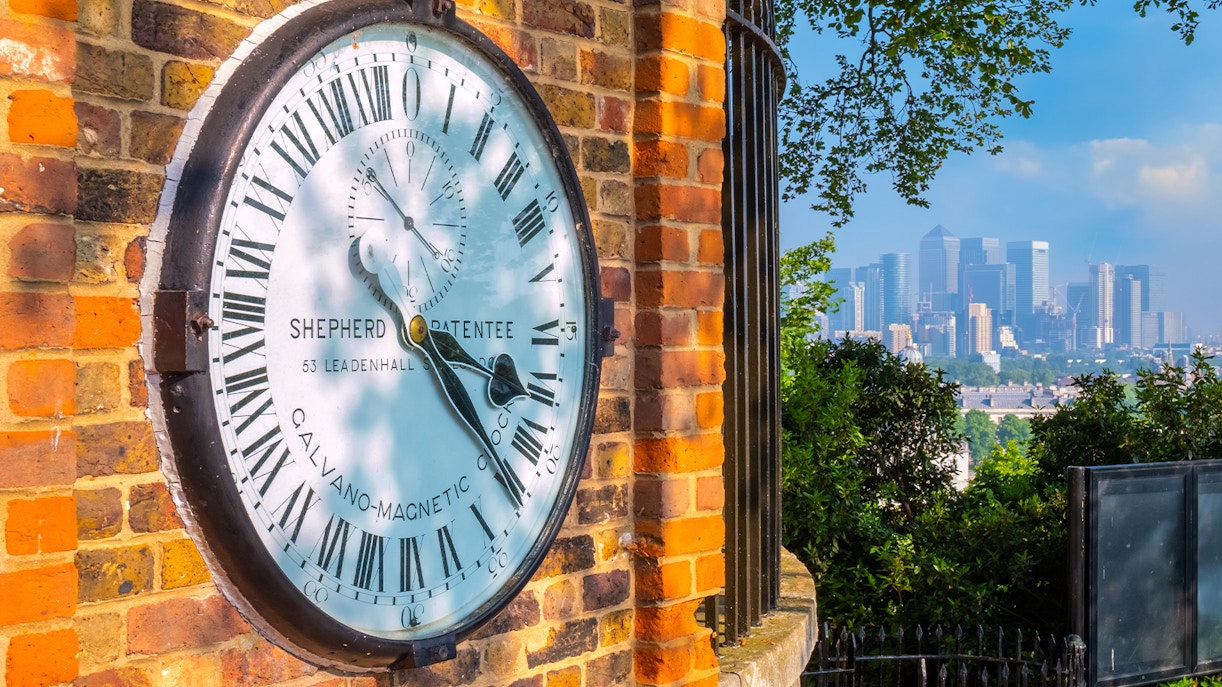
The Shepherd Gate Clock remains a steadfast symbol of GMT, unadjusted for daylight saving time. Today, its operation is governed by a precise quartz mechanism housed within the main building. While the motor clock stand as relics of the past, it is no longer functional. The clock was damaged during World War II, when a bomb damaged the dial on October 15, 1940. Fortunately, the mechanism survived, and an exact replica now stands at the gates of Royal Observatory Greenwich.
Frequently Asked Questions About Shepherd Gate Clock at Royal Observatory Greenwich
The Shepherd Gate Clock is an iconic timepiece located at the gates of the Royal Observatory Greenwich. It is known for displaying the Greenwich Mean Time (GMT) and its historical significance in timekeeping.
Yes, access to the Shepherd Gate Clock is included when you visit the Royal Observatory Greenwich. Your ticket allows you to explore both the observatory and view the clock.
Charles Shepherd constructed and designed the Shepherd Gate Clock's system.
The Shepherd Gate Clock was built and installed in the Royal Observatory Greenwich in August 1852.
The Shepherd Gate Clock is located near the entrance of the Royal Observatory Greenwich, which is situated in Greenwich Park, London, United Kingdom.
Yes, photography is allowed at the Shepherd Gate Clock. In fact, it is one of the most photographed clocks in the world.