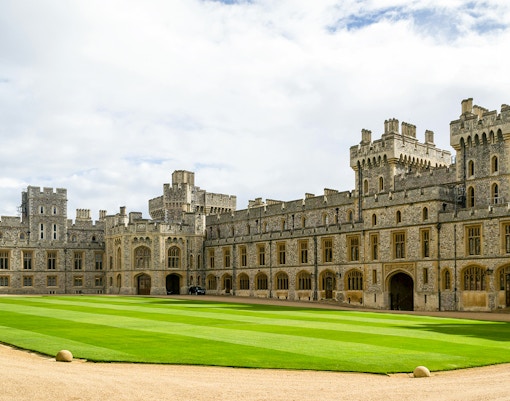
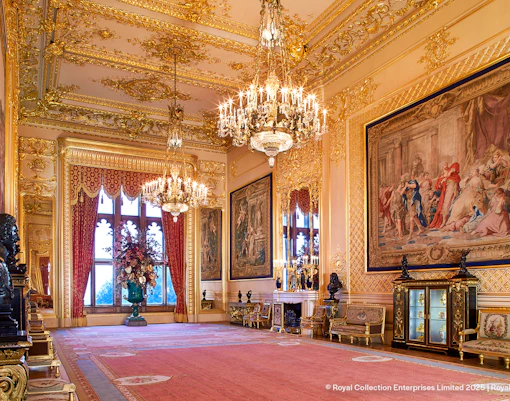
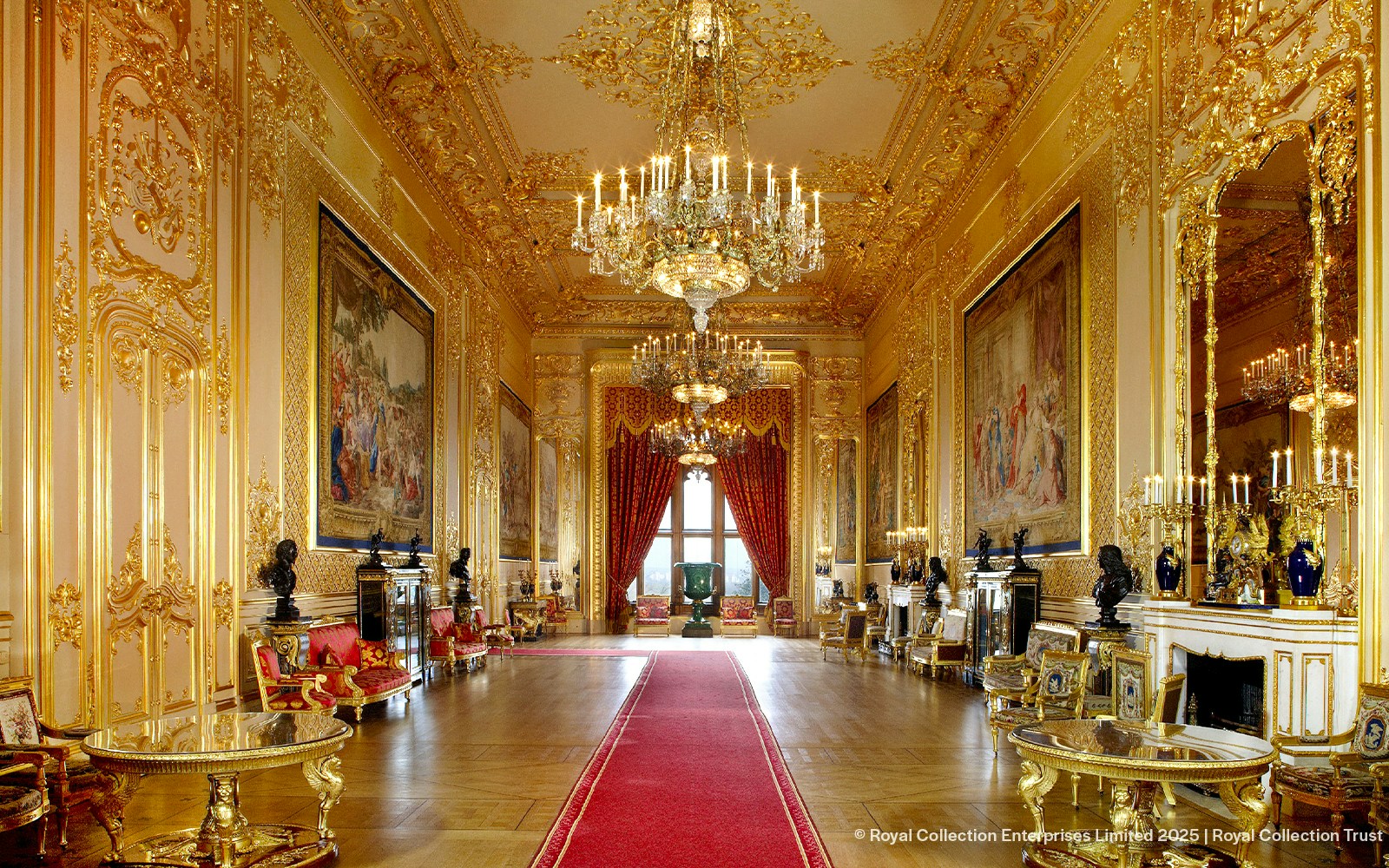
The State Apartments aren’t preserved as frozen museum pieces. They still frame state occasions, receptions, and formal royal moments, so the experience carries more weight than simply admiring beautiful interiors. You’re walking through rooms designed to impress, and still used to do exactly that.
Inside Windsor Castle | Royal rooms, chapel, and what’s worth seeing beyond the walls
Step inside, and Windsor Castle shifts from a famous skyline into a working royal residence filled with ceremony, craftsmanship, and lived history.
- Start here: The State Apartments and St George’s Chapel give you the clearest sense of royal ritual, architecture, and the scale of the castle experience.
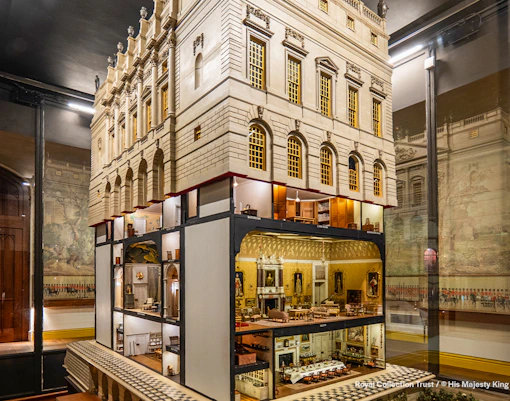
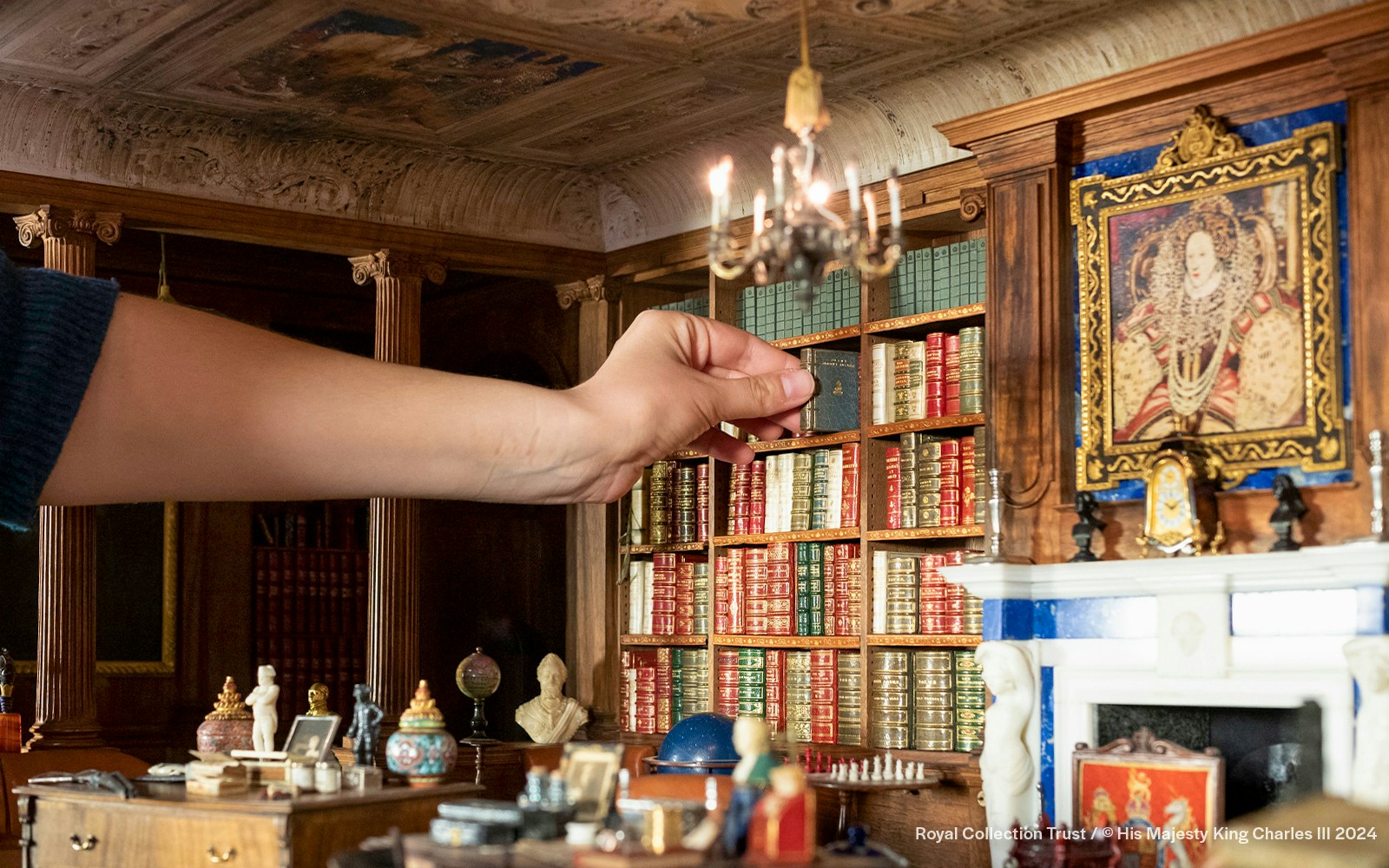
- Often missed: Queen Mary’s Dolls’ House looks tiny from the outside, but its lift, library, and running water make it one of the most absorbing stops.
- Pro tip: Book timed entry online and aim for an early slot for calmer rooms
Know more about: Top highlights inside Windsor Castle | How to explore Windsor Castle
What to expect inside Windsor Castle?
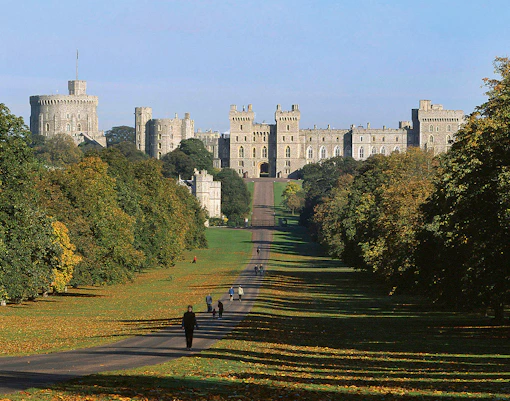
From the outside, Windsor Castle reads as a fortress: towers, battlements, and a commanding hilltop setting. Inside, it feels more layered than military — part ceremonial palace, part private royal world, part sacred space — with each section revealing a different side of how the monarchy has lived, ruled, and remembered itself for centuries.
If time is short, prioritise the State Apartments, St George’s Chapel, and one outdoor pause before you leave. If you’d rather not piece the day together yourself, transport-inclusive options like the Windsor Castle half-day tour from London can simplify the visit without rushing the experience.
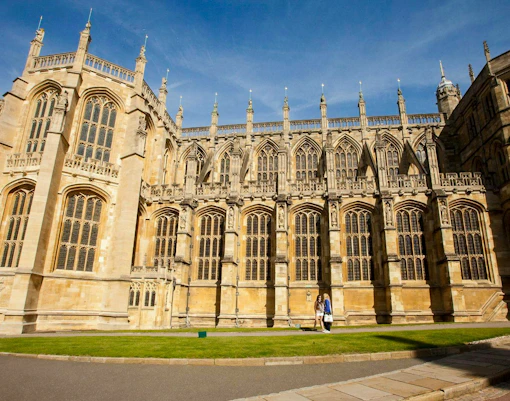
A chapel that carries national memory
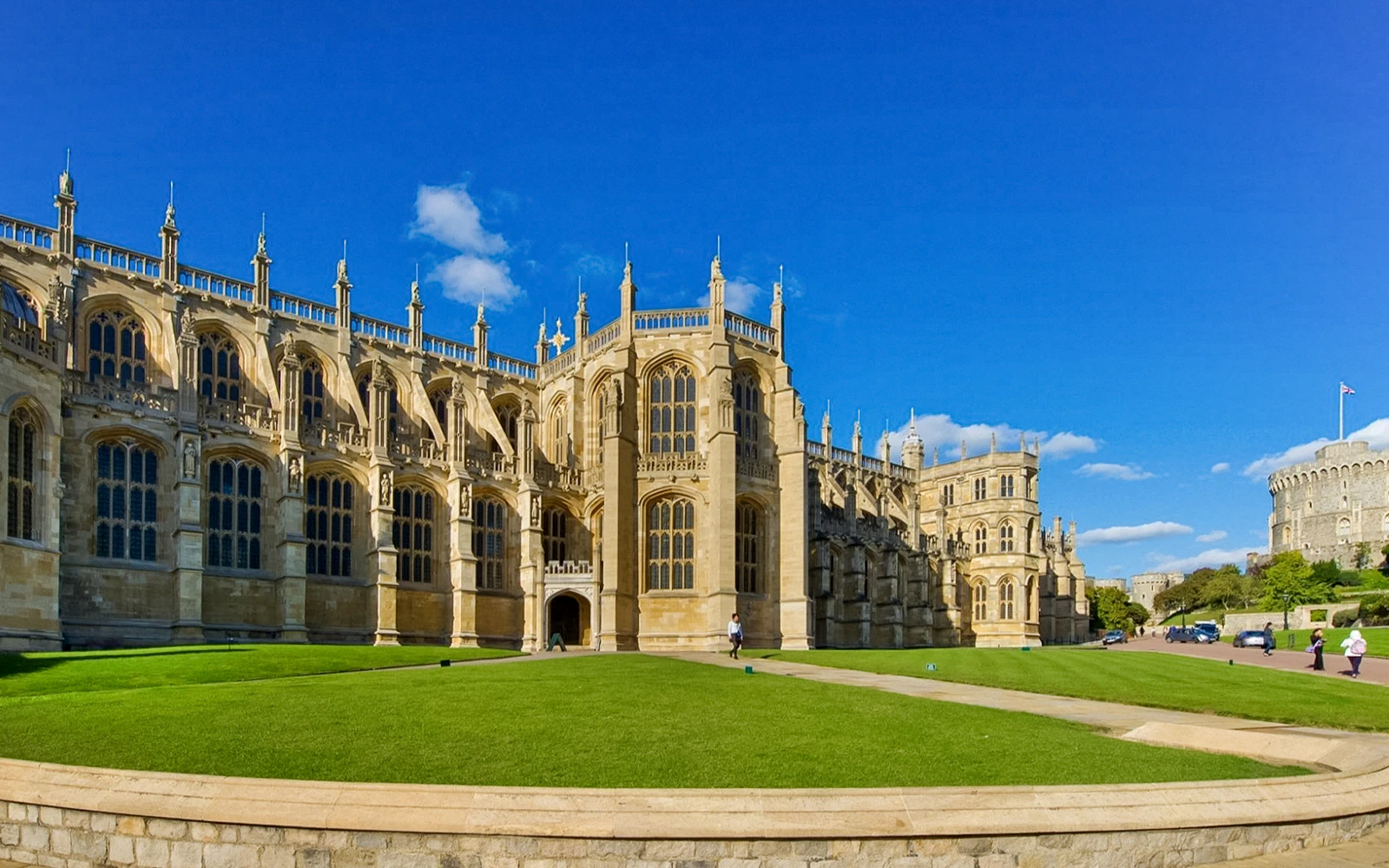
St George’s Chapel changes the pace completely. The atmosphere becomes quieter, more reflective, and more personal, especially when you notice royal tombs, carved stalls, and the chapel’s role in weddings, funerals, and the Order of the Garter. It’s one of the strongest reminders that this is a living royal site, not just a historic shell.
Miniature detail and human-scale craft
Queen Mary’s Dolls’ House brings the castle experience down to eye level in the best way. After the grandeur of formal rooms, this stop feels intimate and unexpectedly technical, revealing how much ingenuity went into even the smallest royal commissions.
Open-air views and fortress character
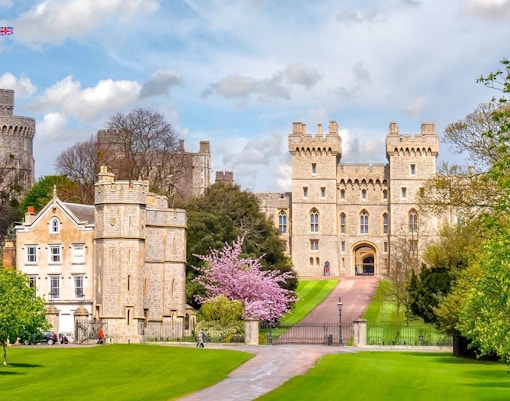
The outdoor precincts reconnect you with the castle’s original defensive identity. As you move between wards, terraces, and viewpoints, the scale makes more sense: this was built to protect, project power, and overlook the Thames Valley, not merely to decorate a postcard.
Map and orientation
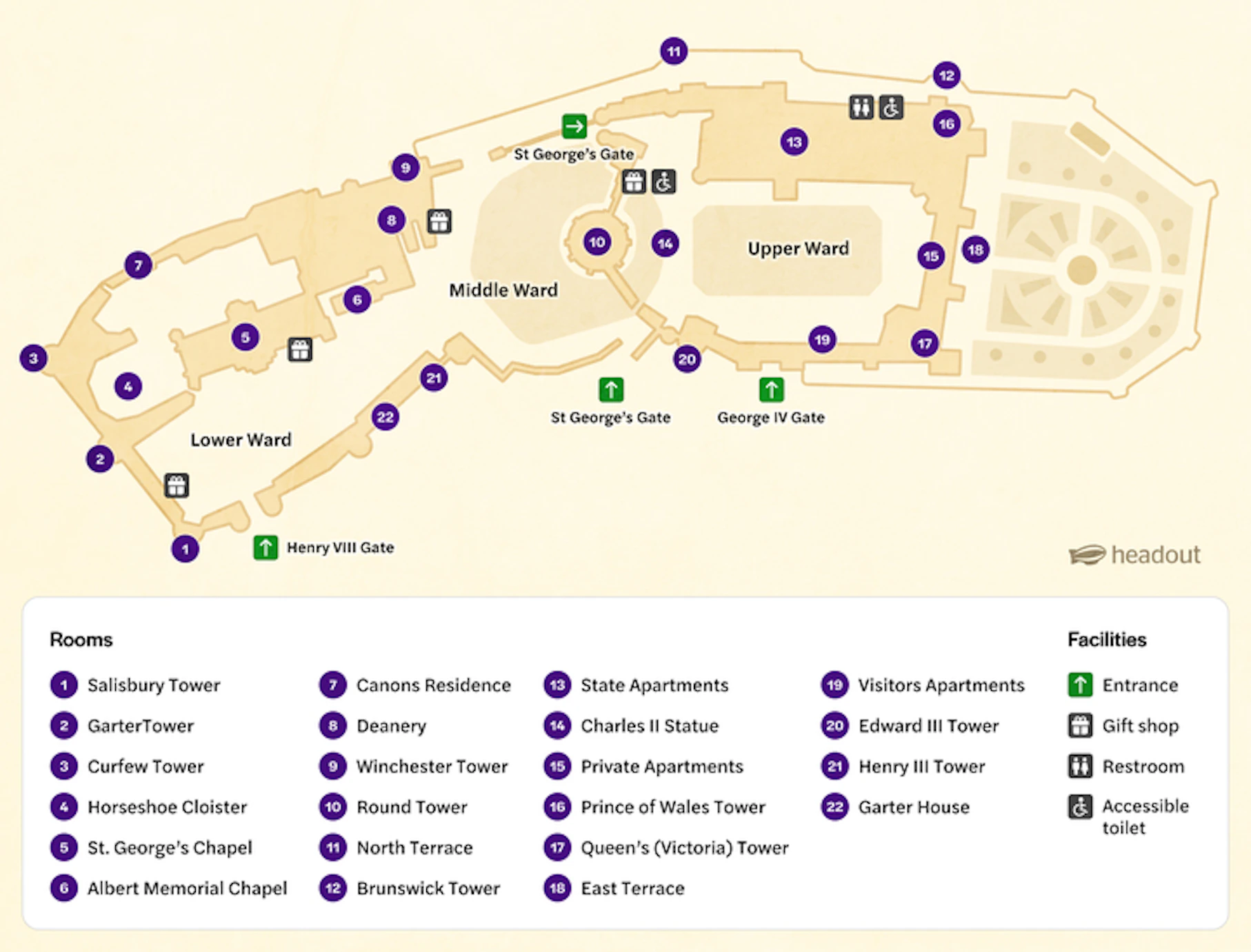
Windsor Castle sits above the town on Castle Hill. If you arrive by rail, Windsor & Eton Central is the shorter walk; Windsor & Eton Riverside is slightly farther but still easy on foot. Entry begins at the Admission Centre, then the route moves through the castle precincts toward Queen Mary’s Dolls’ House, the State Apartments, and St George’s Chapel in the Lower Ward. Expect an uphill approach, security screening, and some uneven surfaces once you’re inside.
Top highlights inside Windsor Castle
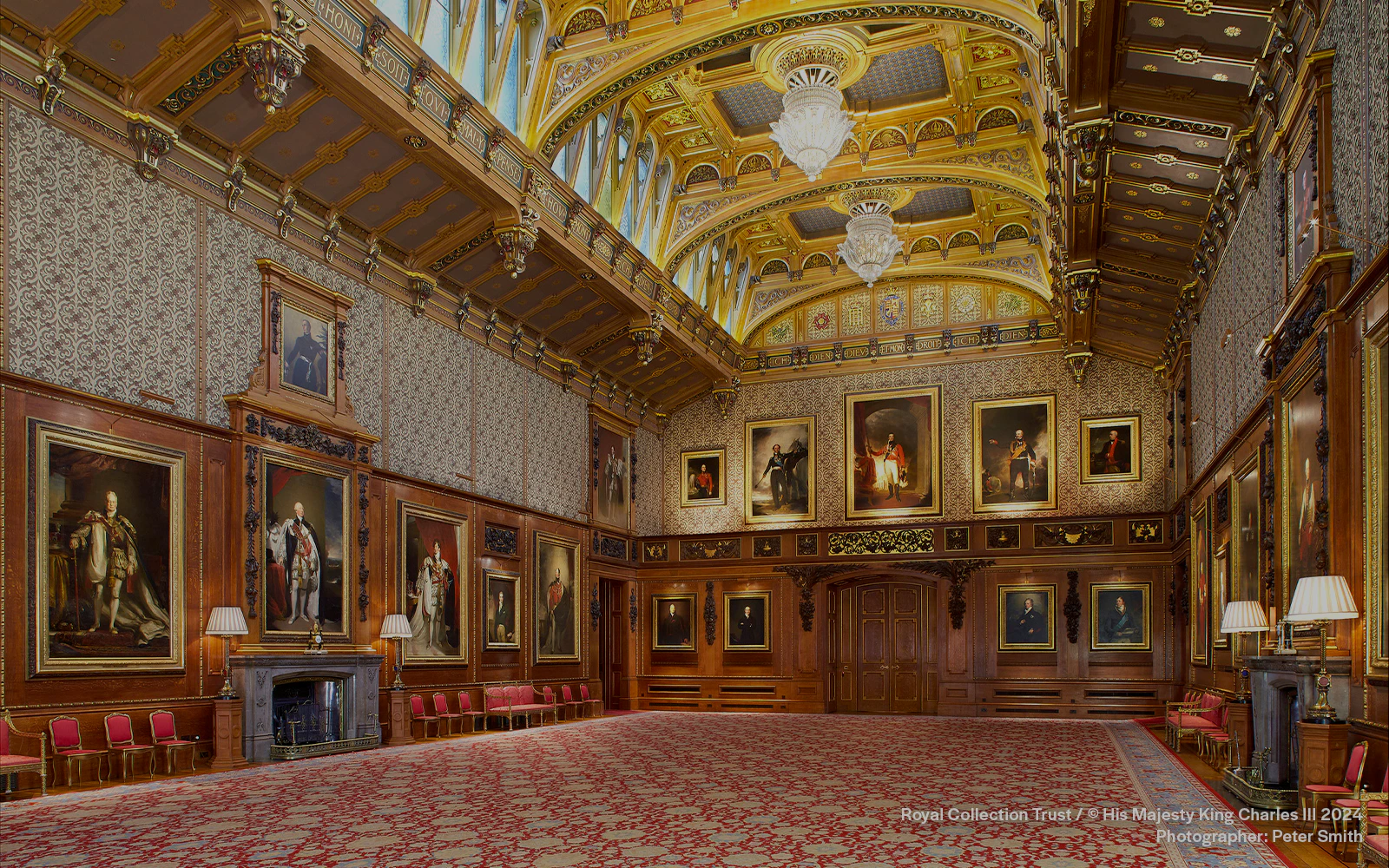
St George’s Hall
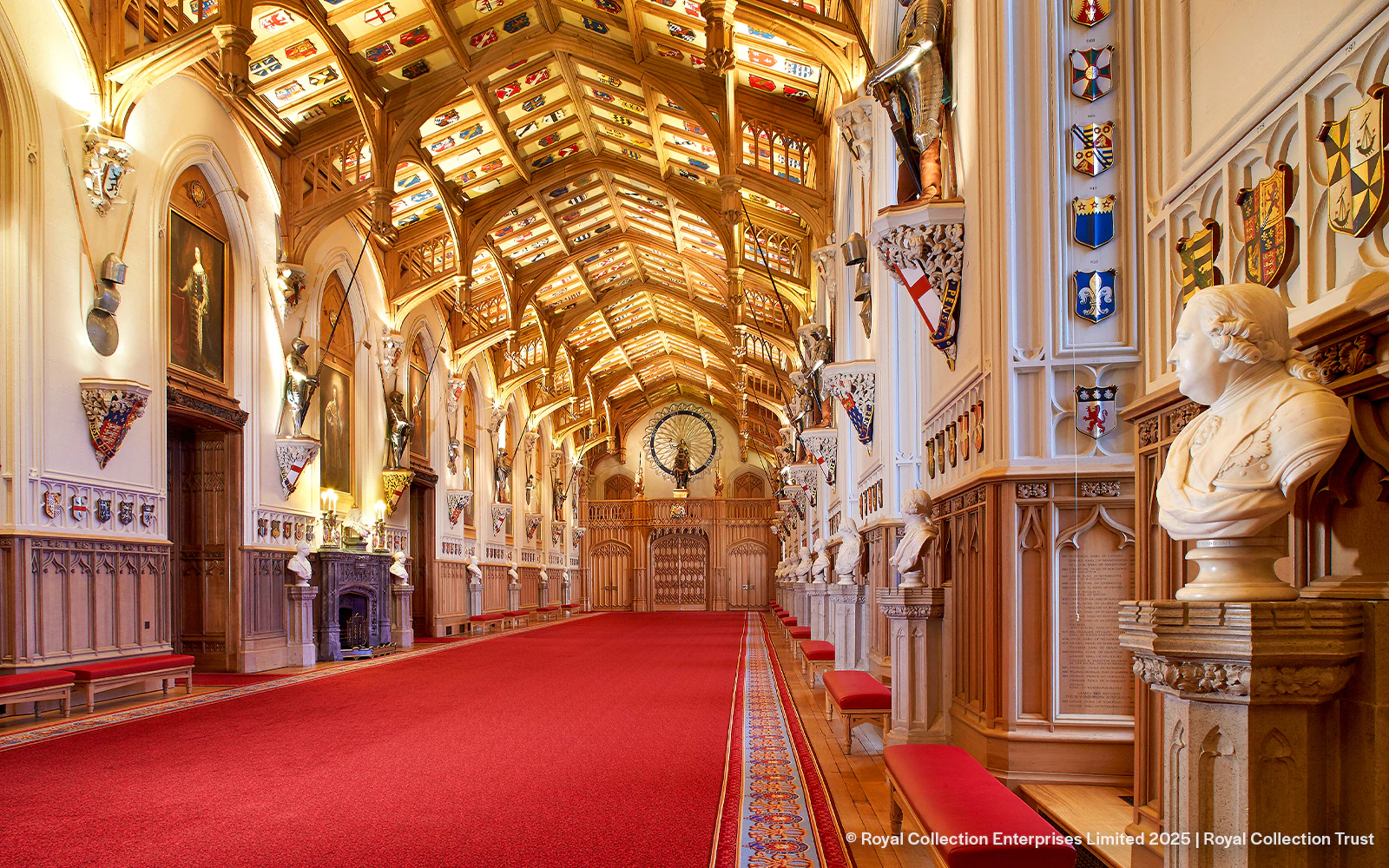
This long ceremonial hall is lined with heraldry and rebuilt with remarkable care after the 1992 fire.
Why it matters: It shows the castle as a working state venue.
Pro tip: Stop halfway down the room to take in the full roofline.
Inside Windsor Castle
Windsor Castle is easiest to understand in zones: ceremonial interiors above, chapel and cloisters below, and open-air spaces tying the whole site together.
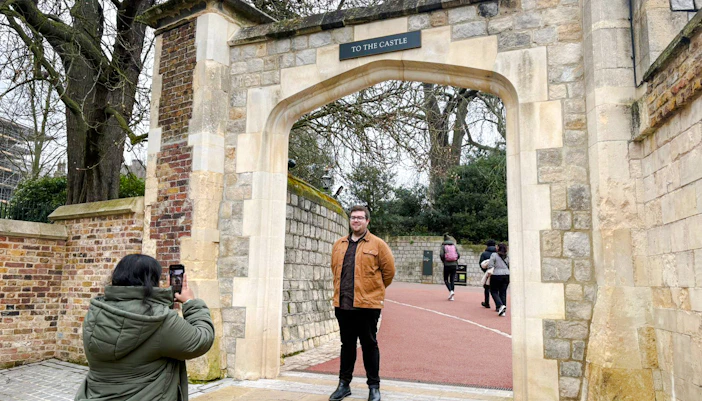
Admission Centre and Castle Hill
This is where the visit begins to feel real. After ticket checks and security, the uphill approach sets up the castle’s scale and position above the town. It’s also your moment to orient yourself before the route branches toward the main interior sequence.
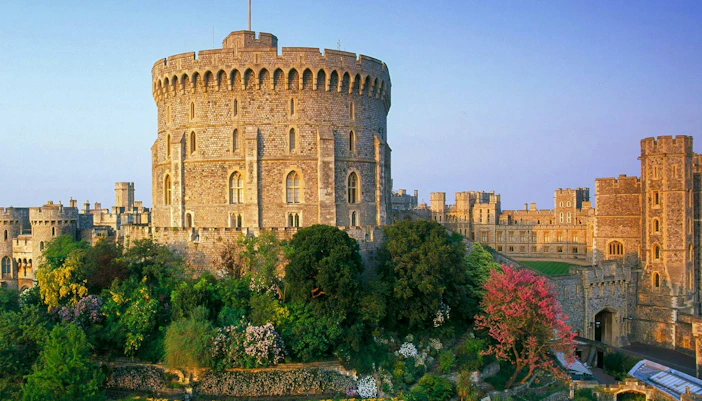
Middle Ward and the Round Tower
The Round Tower anchors the site visually, even though standard admission usually focuses on the areas around it rather than inside it. Walking past this central keep helps you read Windsor as a fortress first, then as a palace layered around it.
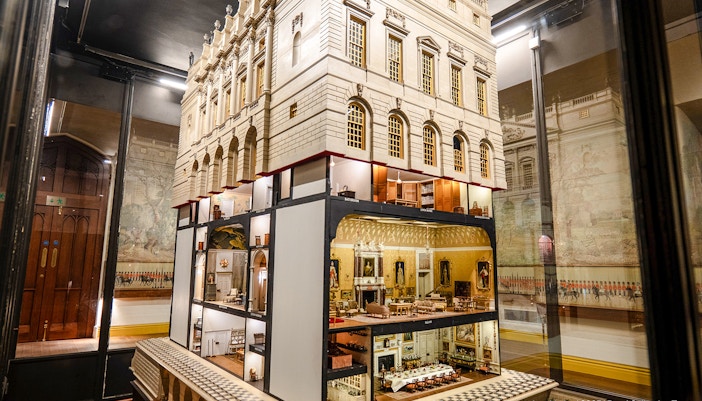
Queen Mary’s Dolls’ House
This stop sits early enough in the route to catch many visitors by surprise. The scale is miniature, but the workmanship is not: look for books, lighting, plumbing, and tiny domestic details that make the whole thing feel more like a world than a model.
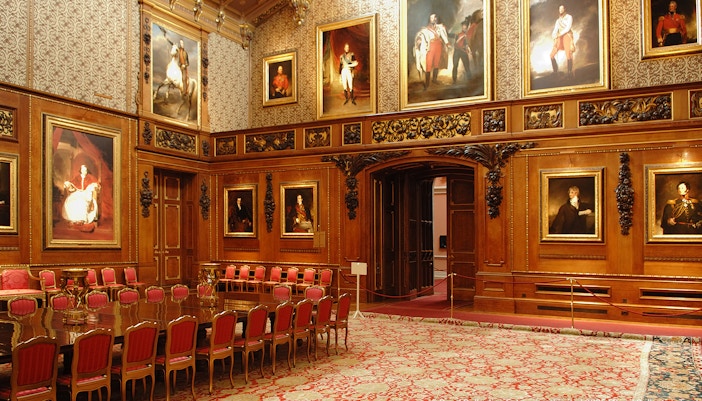
State Apartments
This is the castle’s ceremonial core, where painted ceilings, tapestries, armour, and formal rooms unfold one after another. The experience works best if you slow down instead of treating it like a checklist. Wardens here often add useful context beyond the multimedia guide.
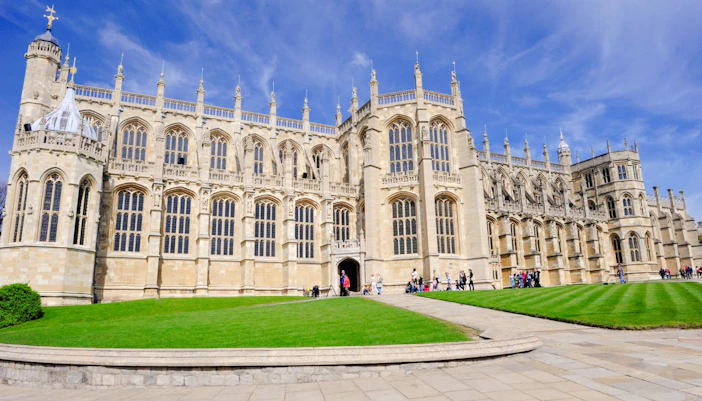
Lower Ward and St George’s Chapel
The mood shifts in the Lower Ward. The chapel brings architecture, devotion, royal memory, and national ceremony into one space, while the surrounding cloistered setting feels quieter than the palace interiors above. If the chapel matters to you, make sure your visit day allows access.
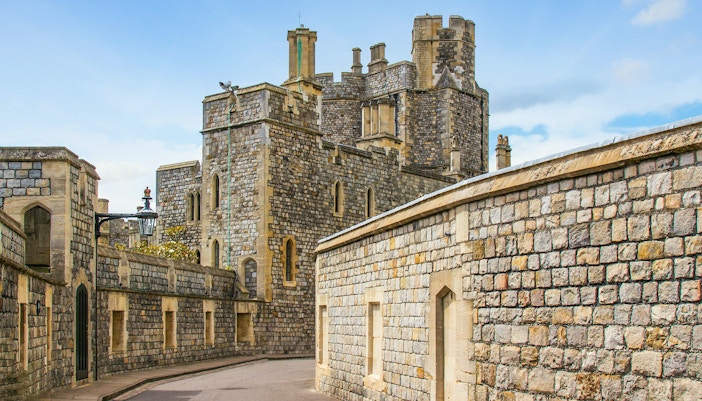
North Terrace and outer precincts
These outdoor sections reconnect you with the castle’s setting and defensive logic. From here, Windsor stops feeling like a series of rooms and becomes a landscape again — walls, height, sightlines, and views over the town all fall into place.
Size and design of Windsor Castle
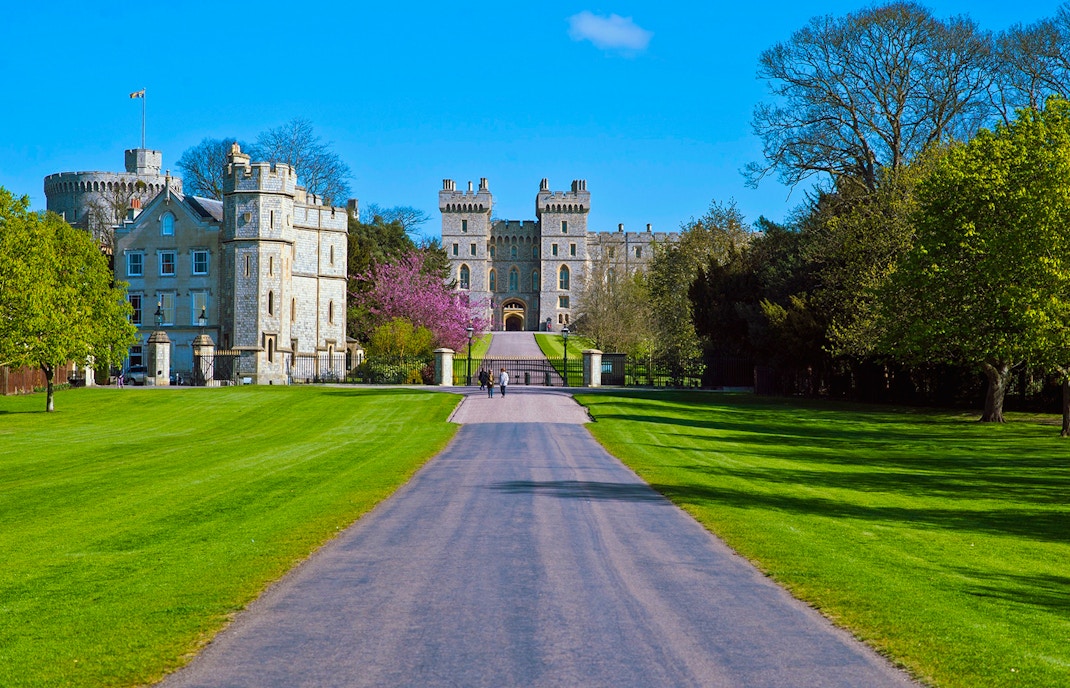
Windsor Castle is massive, covering 484,000 square feet over 13 acres—more than the size of 13 football fields! It has over 1,000 rooms, including 52 royal bedrooms, 92 offices, and 78 bathrooms, even more than Buckingham Palace. The castle is made up of numerous buildings and structures, some of which may be closed to visitors during royal events.
The largest space inside is St George’s Chapel, which can seat over 800 people. Built by King Edward III in the 14th century, it expanded throughout the 15th century to reach its current grandeur.
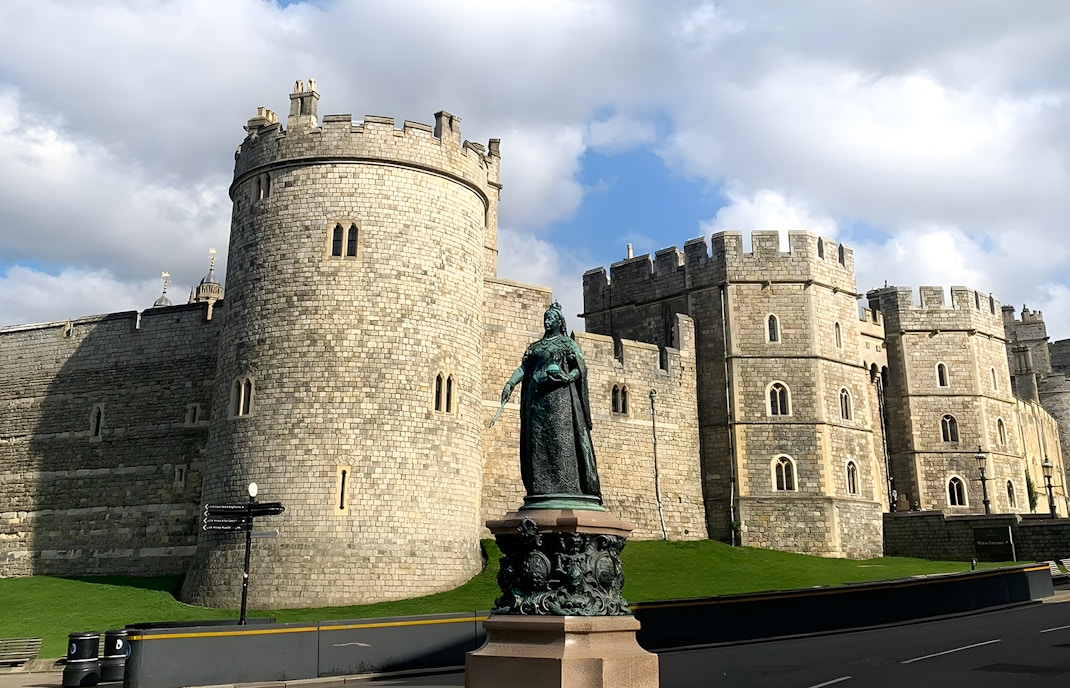
Originally constructed by William the Conqueror in 1070 as a wooden fortress, Windsor Castle has been reshaped over centuries by architects such as Jeffry Wyatville, Hugh May, Edward Blore, Anthony Salvin, Giles Downes, and Henry Emlyn. Major additions and renovations continued over the years, with the most recent significant reconstruction following the 1992 fire.
How to get inside Windsor Castle
The only entrance for visitors to Windsor Castle is at the corner at the top of Castle Hill. The Castle is open five days a week, from Thursday to Monday, and closed on Tuesdays and Wednesdays. It’s best to arrive at least 15 minutes before your entry time to avoid long lines. To skip the crowds, plan your visit on a weekday, either right after opening or in the late afternoon, as large tour groups often arrive later in the morning and on school days.
How to explore Windsor Castle
Entry process
Book timed-entry tickets online as your default; popular morning slots can fill up, especially on weekends and school-holiday dates. Standard tickets are self-guided and include a multimedia guide. On-site tickets may be available, but they’re less predictable. Carry ID if you’re using a concession or transport-inclusive booking.
Best times
The first entry slots after opening usually feel calmer because fewer tour groups have arrived and the State Apartments are easier to move through slowly. Late afternoon can also work well, but you’ll need to watch closing times carefully. Avoid Sundays if St George’s Chapel is a priority.
Duration
Plan 90 minutes for a quick visit, 2–3 hours for a standard visit, and 3+ hours if you want time for the audio guide, the precincts, and a slower pace through the ceremonial rooms. If you’re coming from London independently, add rail or coach time on top.
Your route
A first-time route that covers the essentials without feeling rushed.
- Admission Centre → clear security and get oriented before the uphill walk.
- Queen Mary’s Dolls’ House → short stop, but worth seeing before lines build.
- State Apartments → the main ceremonial sequence; take your time here.
- Waterloo Chamber → portraits and political history in one room.
- St George’s Chapel → the spiritual and memorial heart of the site.
- North Terrace → end with open views and a sense of the castle’s scale.
Rules and accessibility
Photography is not allowed inside Windsor Castle. Large backpacks and pushchairs aren’t permitted inside the State Apartments. The site is partially wheelchair accessible, and guide dogs are welcome. The castle is usually closed on Tuesdays and Wednesdays, and St George’s Chapel is closed to visitors on Sundays.
Tips
- Ask wardens questions in the State Apartments; they often share details the audio guide skips.
- If you want transport handled for you, a half-day tour keeps the day focused on the castle.
- Save the terrace views for last; they’re a good reset after the darker, denser interiors.
Visitor tips
- Choose a guided experience: Grab an audio guide or join a guided tour to get deeper insights into the castle’s history and significance. Instead of listening from start to finish, scan the rooms first and use the guide only for areas that interest you to avoid audio fatigue.
- Ask staff for stories: Room attendants and guides are often ex-military or longtime castle employees. Ask them about their favourite areas or hidden details—they usually share fascinating tidbits not in the guide.
- See the State Apartments first: Head straight to the State Apartments when you enter. These rooms are the main highlight and can get crowded. The Grand Reception Room and St George’s Hall are especially stunning, so give yourself space and time to enjoy them.
- St George’s Chapel highlights: Look up at the ceiling bosses, emblems, and badges representing hundreds of royals and Order of the Garter knights. Don’t miss the Albert Memorial Chapel and the Cloisters, which are intricate and often quiet.
- Changing of the Guard: If you are visiting on a day with a guard change (Tuesdays, Thursdays, or Saturdays), stand near the Henry VIII Gate or inside the lower ward for better views than the street entrance.
- Photography restrictions: Photography is allowed in most areas, but State Apartments, St George’s Chapel, and temporary exhibitions are off-limits. Avoid using flash to protect artworks and artefacts.
Frequently asked questions about what’s inside Windsor Castle
Yes. Visitors can go inside Windsor Castle with a valid timed-entry ticket and explore the main visitor route independently using the included multimedia guide. Standard admission typically covers the State Apartments, Queen Mary’s Dolls’ House, and St George’s Chapel, except when chapel access is restricted on Sundays or other closure dates. If you’re travelling from London and want transport sorted too, options like the** Windsor Castle half-day tour combine entry with travel.
The main interior highlights are the State Apartments, St George’s Chapel, and Queen Mary’s Dolls’ House. Depending on the season and operational schedule, some visitors may also have access to the Semi-State Rooms.
Usually, yes. Standard Windsor Castle admission includes St George’s Chapel, along with the State Apartments and Queen Mary’s Dolls’ House. The important exception is Sunday, when the chapel is closed to visitors because it is open for worship rather than sightseeing. That means your visit still works on a Sunday, but the experience is different. If the chapel is a major reason for your trip, choose another day.
No. Photography is strictly prohibited inside Windsor Castle’s interiors, including the State Apartments. You can usually take photos in the outdoor precincts and exterior areas, where the terraces, walls, and Round Tower views are often the best places to pause anyway. This catches some first-time visitors off guard, so it’s worth planning for a more screen-free visit inside and saving photo time for the open-air sections at the end.
Most visitors spend 2–3 hours inside Windsor Castle. A quick visit can be done in about 90 minutes if you focus on the core route, while a slower visit of 3+ hours gives you time for the multimedia guide, outdoor precincts, and a less hurried pace through the ceremonial rooms. If you’re comparing day-trip formats from London, half-day tours tend to suit quicker visits, while self-guided rail or coach options give you more flexibility.
The Semi-State Rooms usually open from autumn to spring, usually in August. When they reopen, they add a more private and richly decorated layer to the castle visit, distinct from the grander ceremonial sequence of the main apartments. Because access is seasonal, it’s worth checking availability before you build your route around them.
No. You can easily visit on a self-guided basis by booking castle admission and making your own way from London, and the included multimedia guide covers the essentials well. A guided or transport-inclusive product mainly helps if you want to simplify rail changes, coach travel, or same-day planning. If that sounds useful, the Windsor Castle half-day tour is an ideal option.
Yes, especially if you want a royal site that gives you both substance and access. It’s close enough to London for a manageable half or full day, but once you’re inside, the experience feels much deeper than a quick photo stop: ceremonial rooms, a functioning chapel, royal tombs, and a real sense of continuity. It suits first-timers, history-focused travellers, and anyone deciding between a city attraction and a more immersive outing beyond central London.