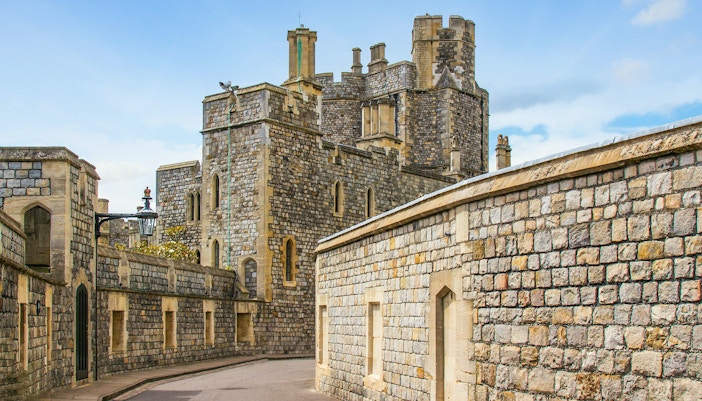
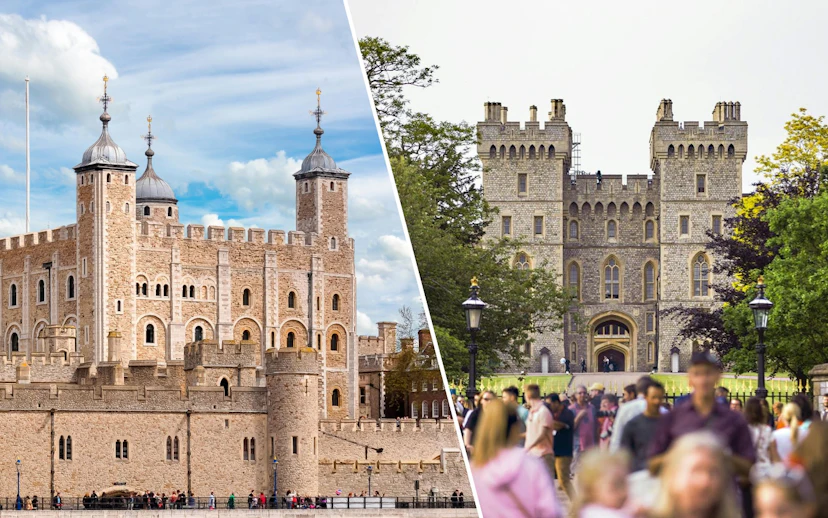
Windsor Castle

Waterloo Chamber

Included with Windsor Castle tickets

Timings

RECOMMENDED DURATION

2 hours

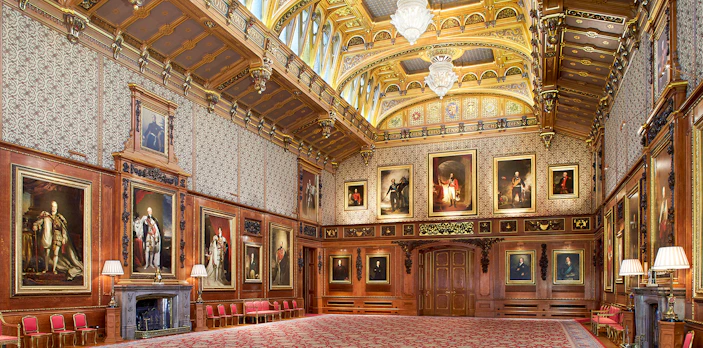
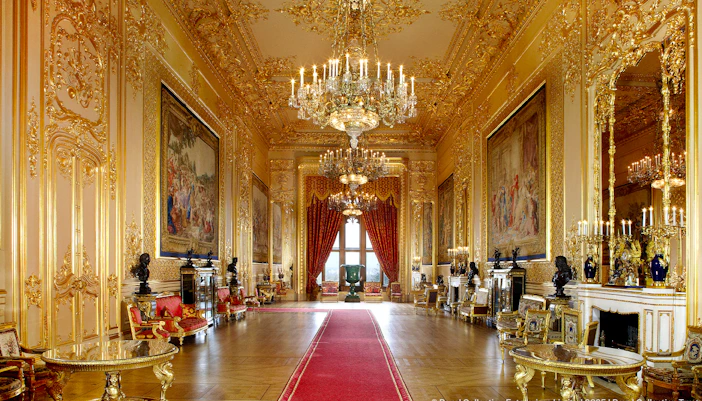
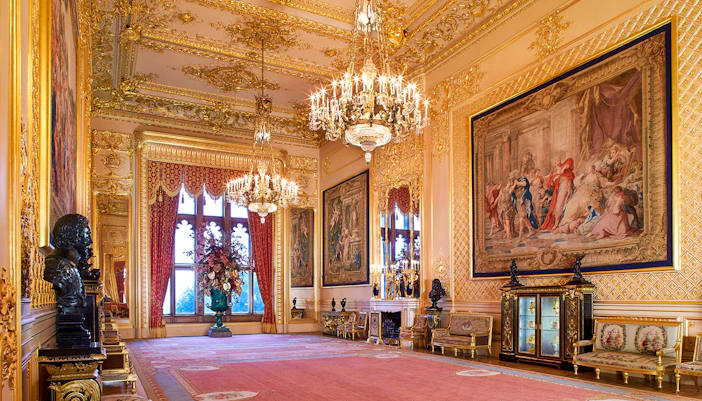
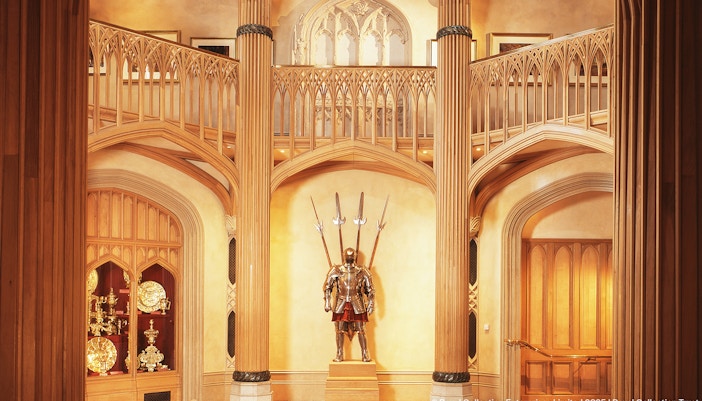
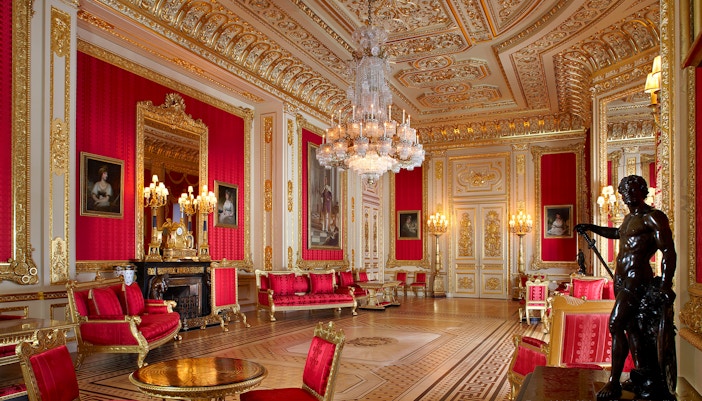
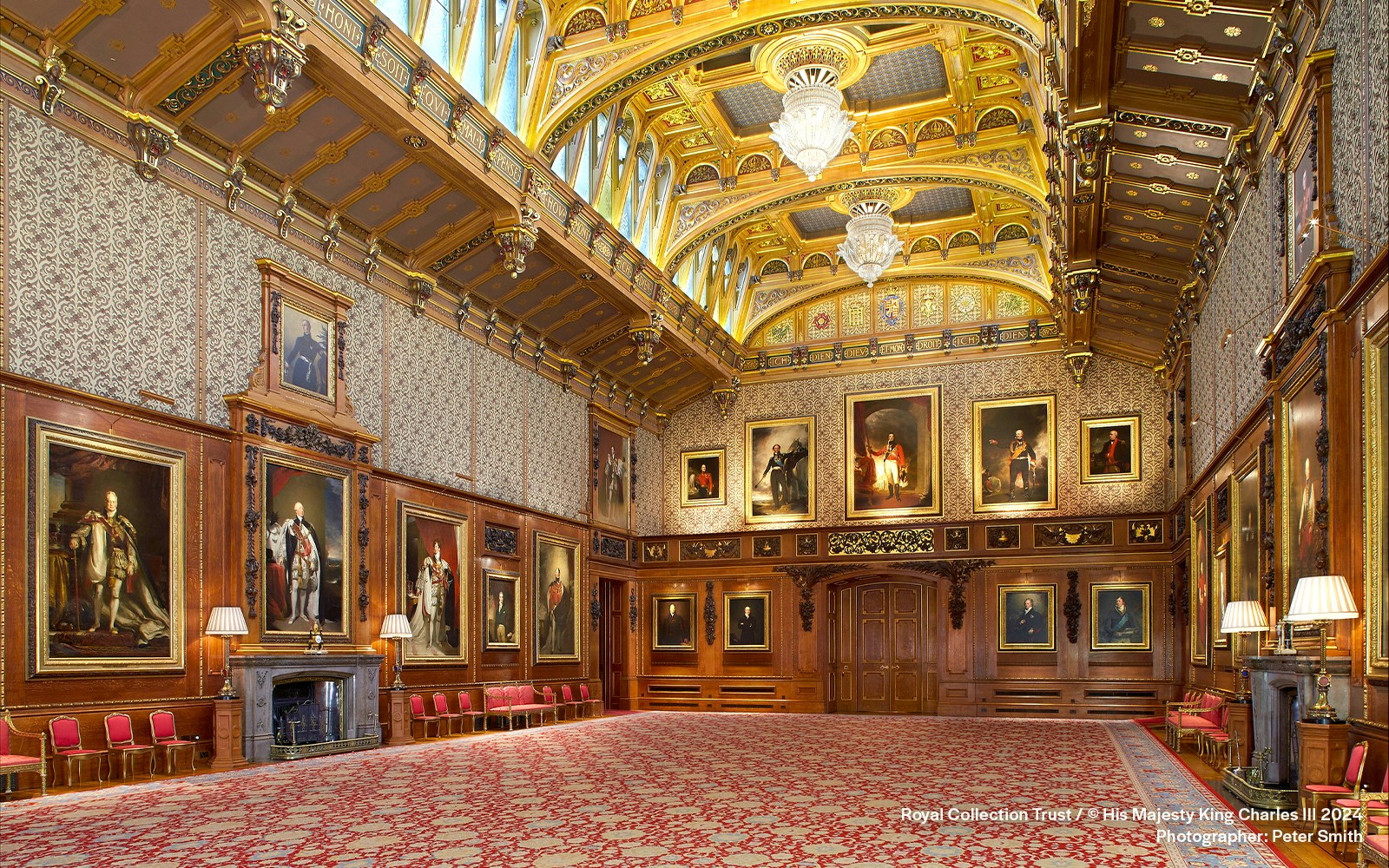
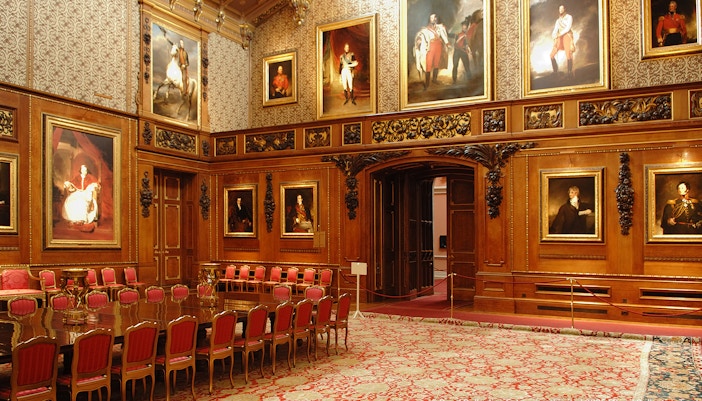
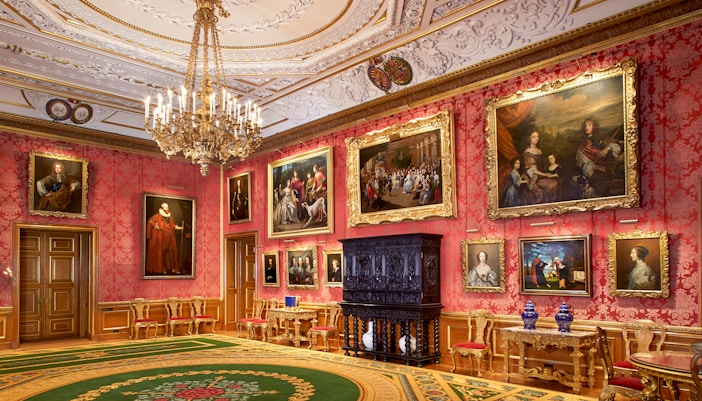
Grand hall with ornate ceiling and historic portraits at Windsor Castle, England.

Quick overview

  • Access: Included in all Windsor Castle tickets
  • Separate ticket: Not required
  • When you’ll see it: Midway through the State Apartments route
  • Visit duration: 10–15 min self-guided
  • Best time: First timed entry on Thursday or Monday, when you have more room to step back from the portrait walls
  • Restrictions: No photography. Large backpacks and pushchairs are not permitted in the State Apartments

The Waterloo Chamber is included with all Windsor Castle tickets. No separate ticket is needed. It is distinctive for its monumental portrait cycle of allied rulers and commanders after Napoleon’s defeat. You usually reach it midway through the State Apartments route, after several ceremonial rooms, and you can’t enter it separately from the main castle visit. Give it more than a glance: this is the room that turns a palace tour into a clear story about monarchy, diplomacy, and victory after 1815.

How to best experience the Waterloo Chamber
Best time to visit
Book the first timed entry on a Thursday or Monday if you can. The room reads best when you have space to step back from the portrait walls; by late morning, passing tour groups make that much harder.

How long to spend

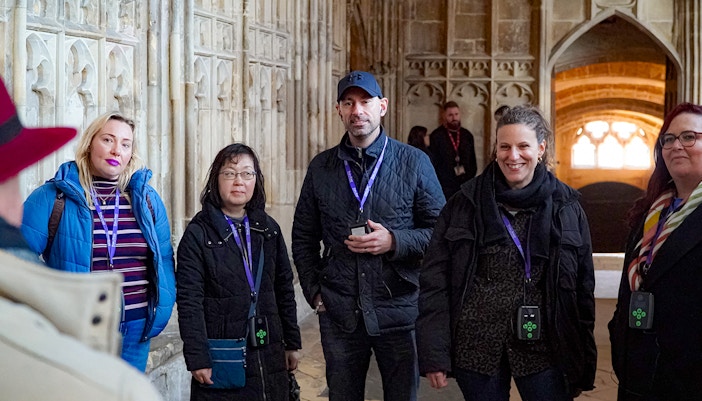
Give the Chamber 10–15 minutes minimum. If you use the multimedia guide and compare several portraits instead of scanning once, 15–20 minutes feels more realistic. If you rush, the room collapses into a blur of faces.

Where it fits in your itinerary

You reach it after security and several State Apartment rooms, so save attention for late in the interior route. Many visitors spend too long in the first rooms and then skim this one, which is a mistake.

Crowd patterns

Crowds build from about 11am, especially on Saturdays and on London coach-tour days. At peak flow, the doorway bottlenecks and side-wall viewing narrows. Earlier or later slots let you read the room as a whole.

What to prioritize if time is short

If time is short, start with the full room view from the entrance, then focus on Sir Thomas Lawrence’s portraits along the long walls, especially Wellington and the allied sovereigns. Skip lingering in connecting passages, not here.

Common mistakes to avoid

Don’t treat it as a corridor between grander rooms. Step back before focusing on individual canvases, and don’t stop in the doorway. The Chamber was designed as a diplomatic memorial, so scale and arrangement matter.

Best tickets to experience the Waterloo Chamber
Ticket typeWhy choose it

Windsor Castle entry ticket

Best for an unhurried State Apartments visit with the included multimedia guide and enough time to study the portraits properly.

Windsor Castle ticket with round-trip transport from London

Simplifies logistics and helps you reach the Chamber with less travel fatigue before the interior route begins.

Half-day Windsor Castle tour from London

Good for shorter London stays, but expect a faster pace through the State Apartments and plan your viewing time carefully.

Why it’s worth seeing

The Waterloo Chamber is irreplaceable within Windsor Castle because it turns a victory in 1815 into an entire ceremonial room, using portraiture rather than battle scenes to tell the story. Most visitors don’t realize it was designed for the annual Waterloo Banquet, so the paintings were meant to be read across a dining hall, not one by one at close range. That changes how you look at it once you step inside.

The long portrait walls

Start on the left and right walls as you enter. Sir Thomas Lawrence’s full-length portraits place monarchs, diplomats, and commanders into one political cast, so step back several paces and compare uniforms, orders, and posture across both sides.

Wellington and the allied commanders

Move along the commander portraits rather than stopping at the first face you recognize. Wellington matters here as part of a coalition story, and the room makes more sense when you read British and continental figures together.

The room’s central axis

From just inside the doorway, look straight down the room before looking at any single canvas. The length, chandeliers, ceiling, and repeated portrait rhythm explain that this was created as a banqueting and diplomatic space first.

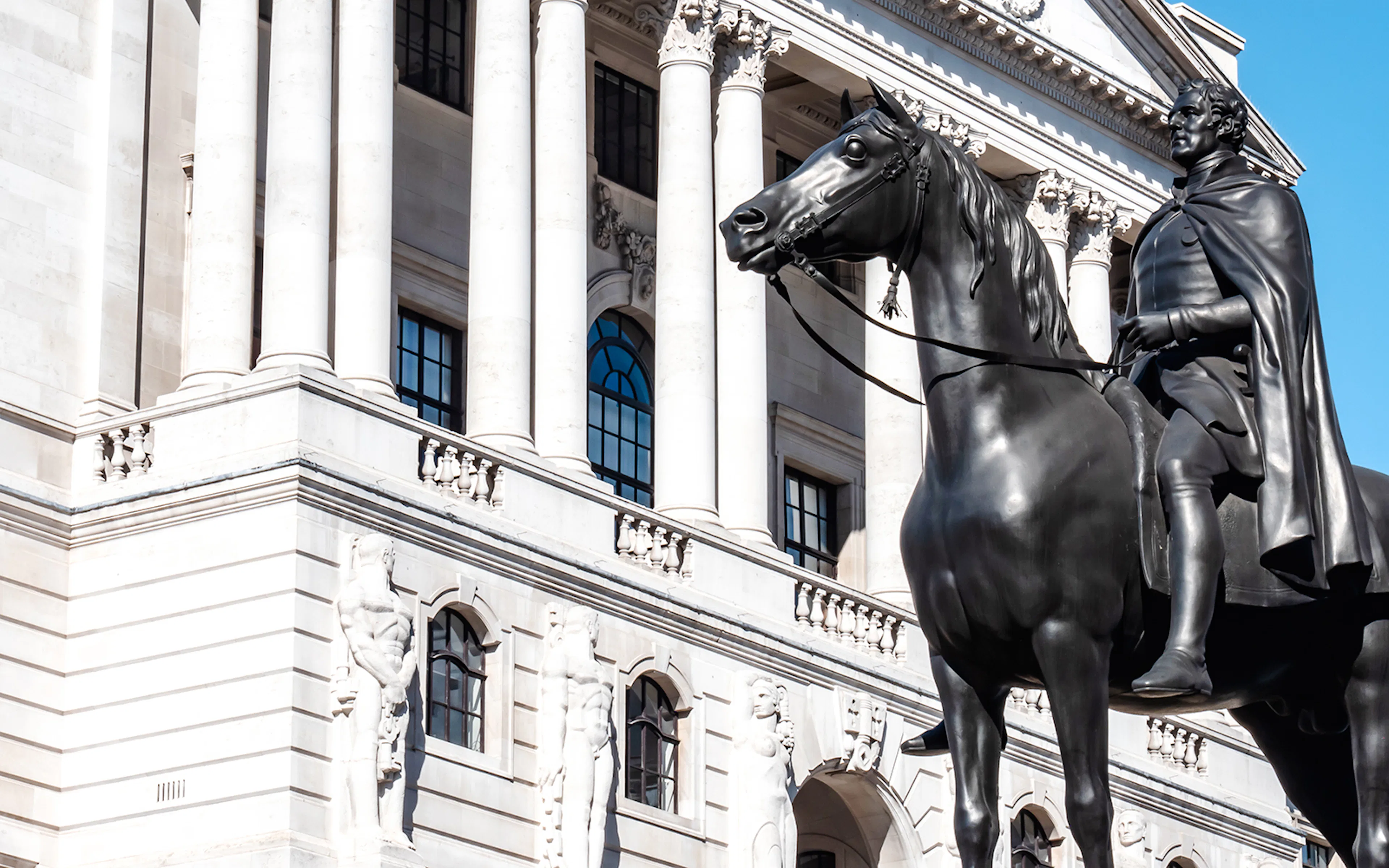
Statue of the Duke of Wellington on horseback in front of a neoclassical building.
1/12

Duke of Wellington (Arthur Wellesley)

Led Britain’s Peninsular campaign with decisive victories at Salamanca and Vitoria, and as commander of the Anglo-allied army secured Napoleon’s defeat at Waterloo in 1815.

Tsar Alexander I of Russia

As Emperor, he presided over Russia’s resistance to the 1812 French invasion and was a principal monarch of the coalition whose campaigns helped dismantle Napoleonic power in Europe.

Emperor Francis I of Austria

As Austria’s sovereign during the wars of 1813–14, he provided the political backing and resources for the Austrian armies that were central to the coalition victories that forced Napoleon’s abdication.

King Frederick William III of Prussia

After Prussia’s early defeats he presided over military reform and mobilisation; Prussian forces, reorganised and led by commanders such as Blücher, were decisive in the 1813–15 campaigns and at Waterloo.

Field-Marshal Karl Philipp, Prince of Schwarzenberg

Commanded the principal allied army in the German campaign of 1813 and at Leipzig, playing a leading role in the coalition’s largest engagement against Napoleon.

Armand-Emmanuel, Duke of Richelieu

A key statesman of the Bourbon Restoration, he served twice as prime minister and helped stabilise France politically and diplomatically after Napoleon’s fall.

Archduke Charles of Austria

One of Austria’s most able commanders, he halted Napoleon at Aspern-Essling in 1809 and later influenced Austrian military reform and coalition strategy against French dominance.

General Viscount Hill

A trusted Wellington subordinate, he won distinction in the Peninsular War and commanded troops effectively at Waterloo and in several critical actions throughout the campaigns.

Napoleon II (Duke of Reichstadt)

The son of Napoleon I who never ruled or commanded armies; his significance is largely symbolic as a dynastic heir during the turbulent post-Napoleonic period.

Pope Pius VII

Imprisoned by Napoleon, he later presided over the restoration of the papacy’s temporal authority and symbolised the moral and religious revival across Europe after Napoleonic upheaval.

Charles X of France

As the last Bourbon king, his conservative policies after 1824 provoked the 1830 July Revolution and illustrated the fragile nature of restored monarchies in post-Napoleonic Europe.

William IV of Great Britain

A former Royal Navy officer who later reigned as king (1830–1837); his inclusion in later royal displays reflects his status as contemporary monarch rather than battlefield command in the Napoleonic wars.

Historical & cultural significance

Created in the 1820s for George IV, the Waterloo Chamber commemorated the 1815 defeat of Napoleon and was designed to host the annual Waterloo Banquet honouring the victors. What began as a political memorial became one of Windsor Castle’s principal state rooms, with Sir Thomas Lawrence’s portraits turning diplomacy into decoration. Today it remains part of the working State Apartments and can close for official use.
👉 Explore the full history of Windsor Castle

Notable figures

George IV | Patron and commissioner

Commissioned the room during his Windsor remodelling, turning victory memory into royal ceremonial display.

Know more

Sir Thomas Lawrence | Portraitist

Painted the room’s celebrated allied portrait series, giving Waterloo a courtly rather than battlefield image.

Know more

Jeffry Wyatville | Architect

Oversaw George IV’s dramatic remodelling of Windsor Castle and the chamber’s ceremonial architectural setting.

Know more

Duke of Wellington | Military commander

Victor at Waterloo and symbolic anchor of the room’s military and diplomatic story.

Know more

Know before you go

  • Thursday to Monday: 10am–5:15pm from March to October; 10am–4:15pm from November to February
  • Last entry: 4pm from March to October; 3pm from November to February
  • Closed: Tuesdays, Wednesdays, and selected royal or state event dates

Castle timings

Address: Windsor Castle, Windsor SL4 1NJ, United Kingdom

  • Nearest rail: Windsor & Eton Central is about a 5-minute walk; Windsor & Eton Riverside is about a 10-minute walk
  • Entry point: Use the main visitor entrance on Castle Hill; the Waterloo Chamber has no separate entrance
  • Position in route: Inside the State Apartments, usually reached after several ceremonial rooms
  • Allow: About 30–60 minutes from security to reach the Chamber, depending on crowds and stops elsewhere

Get directions

  • Wheelchair access: Partial across Windsor Castle; some historic surfaces and gradients remain
  • Accessible route: Step-free routing through parts of the State Apartments is available with staff assistance
  • Guide dogs: Welcome at the castle
  • Audio support: Audio-descriptive tours are available for blind or partially sighted visitors
  • Room layout: The Chamber itself is flat once inside, but circulation space tightens when large groups pass through

Plan your visit

  • Photography: Strictly prohibited inside Windsor Castle, including the Waterloo Chamber
  • Bags: Large backpacks and pushchairs are not permitted inside the State Apartments
  • Pets: Not permitted, except guide dogs
  • Security: Airport-style screening applies before entry
  • Closures: As part of a working royal palace, the Chamber or wider State Apartments can close at short notice for official functions

Plan your visit

Frequently asked questions about the Waterloo Chamber
Yes. Entry to the Waterloo Chamber is included with every Windsor Castle ticket covering the State Apartments. No separate ticket exists.

More reads

Top things to do in London