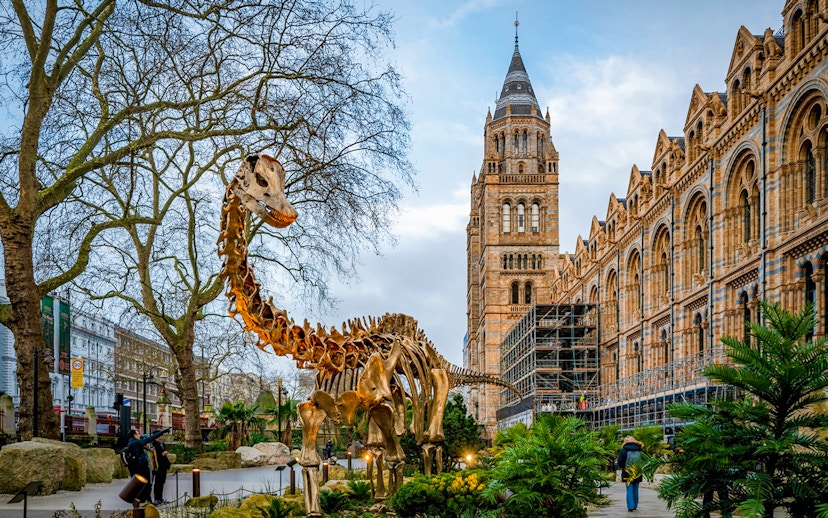
This family-friendly restaurant serves pizzas, salads, toasted sandwiches, desserts, and kids’ meals, and it is located next to the Creepy Crawlies Gallery.
- Highlights: Themed dinosaur décor, hot meals, kids’ menus, casual family dining.
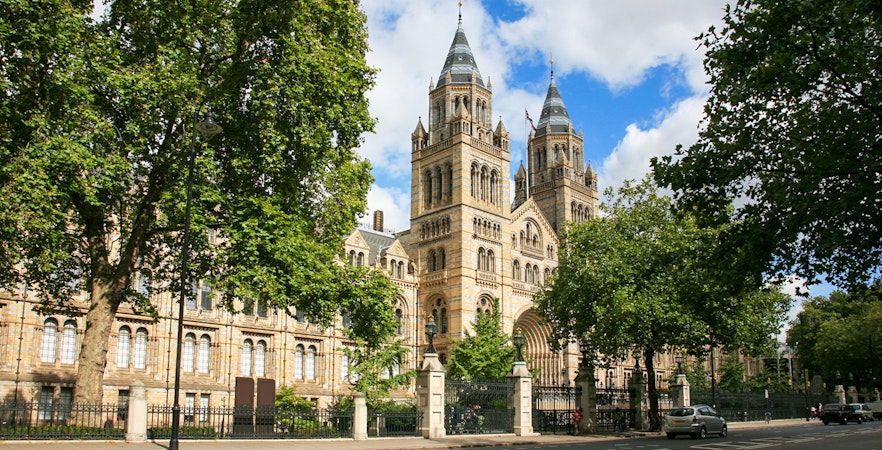
The Natural History Museum is a vast space filled with over 80 million specimens, from the towering blue whale to world-famous dinosaur skeletons. Its galleries span multiple floors and themes, and queues can build quickly during busy hours. With a little planning, you can navigate the museum smoothly, avoid the most crowded zones, and spend your time on the displays that truly interest you.
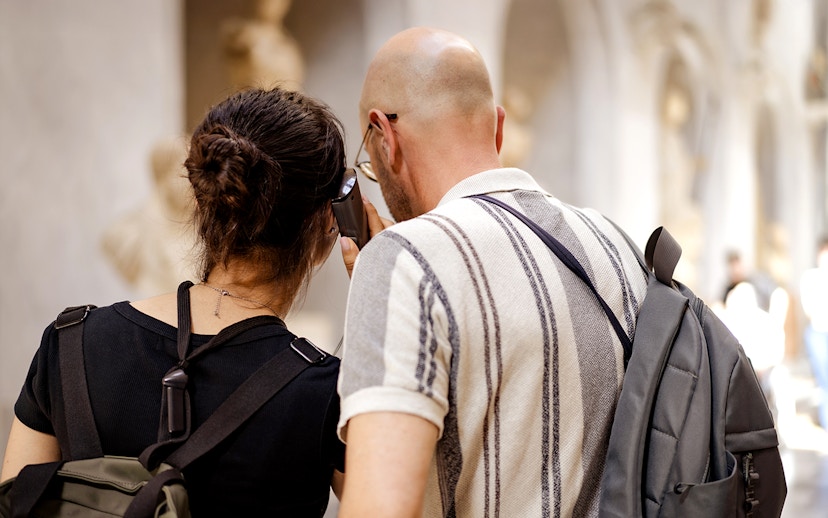
While entry to the Natural History Museum is free, its vast galleries can feel overwhelming. An audio tour lets you explore at your own pace with expert insights, helping you enjoy the highlights without feeling rushed.

| Visit type | Duration | Route | What you get |
|---|---|---|---|
Quick visit | 2 hours | Hintze Hall → Dinosaur Gallery → Earth Hall → Mammals Gallery | A quick look at the museum’s must-see highlights from the blue whale to towering dinosaurs, in a single smooth loop. |
Half-day exploration | 3–4 hours | Hintze Hall → Dinosaur Gallery → Earth Hall → Human Evolution → Minerals & Fossils | A balanced experience combining the museum’s star attractions with quieter galleries. Enjoy key specimens and interactive displays while moving at a relaxed pace. |
Full-day deep dive | 5–6 hours | Hintze Hall → Dinosaur Gallery → Earth Hall → Human Evolution → Minerals & Fossils → Darwin Centre → Wildlife Garden | The ultimate museum experience covering both iconic and hidden gems. Perfect for enthusiasts who want to explore in depth and discover interactive zones at leisure. |
| Day | Timings | Last entry | Closed on |
|---|---|---|---|
Monday – Sunday | 10 am to 5:50 pm | Around 5:30 pm | 24, 25, 26 December |
The Natural History Museum is busiest on weekends and late mornings, especially between 11 am and 2 pm.
| Name | Location | Who it's for | Crowds & wait times |
|---|---|---|---|
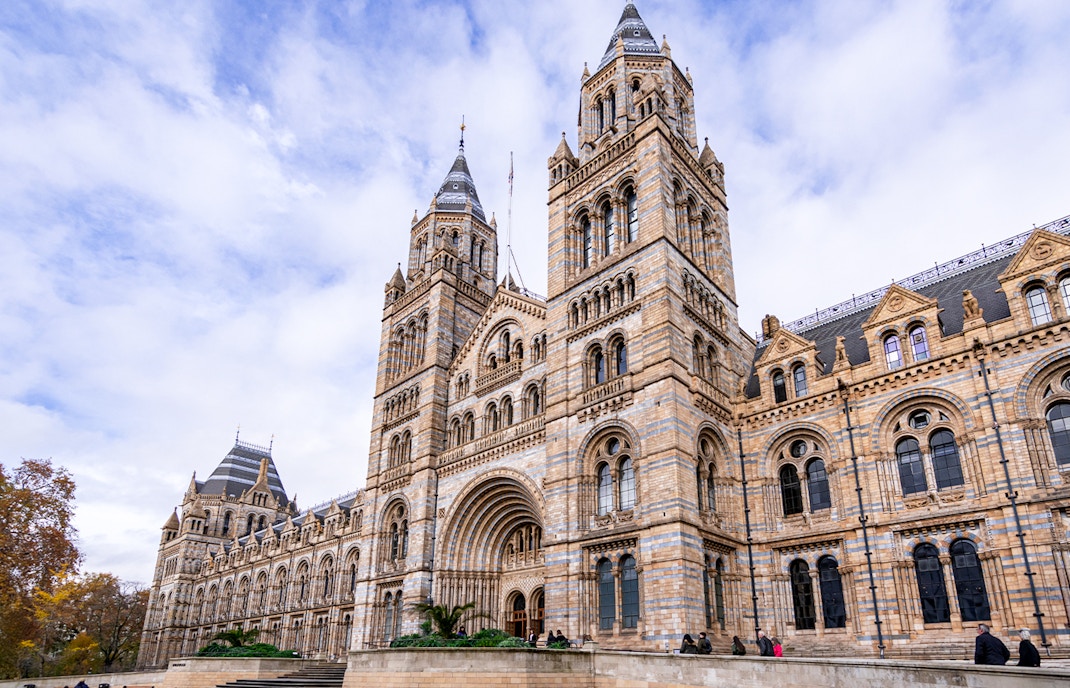
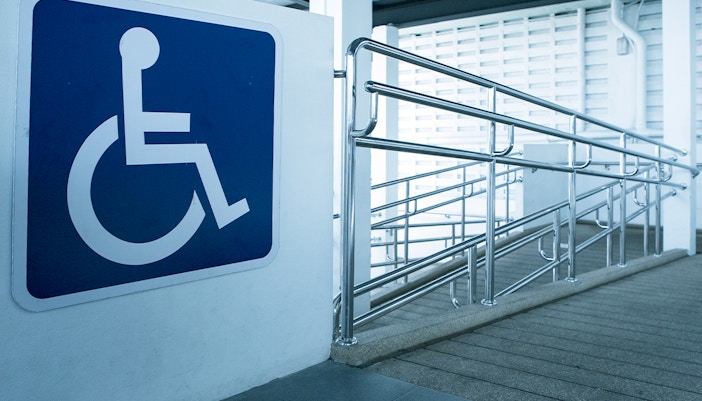
Central Entrance | Front of Cromwell Road, South Kensington | General visitors, all ticket types. Main, step-free entrance with ramp, often busiest. | Often the main entry point, busiest during peak times. Queues vary by crowd levels. |
East Entrance | Exhibition Road side | General visitors, independent exploration. It’s not step-free, but there’s a lift from the entrance lobby to the galleries. | Usually slightly quieter than central, may be closed temporarily when managing crowds. |
West Entrance | Queen’s Gate side | General visitors, drop‑off access. | Open daily until late afternoon. Typically less crowded than Cromwell Road. |

Most visitors spend around 2 to 4 hours exploring the main galleries. If you want to include special exhibitions or family activities, give yourself a little extra time.
The museum opens daily from 10 am to 5:50 pm, with last entry around 5:30 pm.
Exhibition Road usually has shorter queues and is stroller-friendly. Cromwell Road is the main entrance, very iconic, but often the busiest.
Some tickets, especially timed or special exhibition tickets, may not allow re-entry, so it’s best to check when you book.
Yes! Small backpacks are fine, but bigger bags and wheeled suitcases need to go in the cloakroom.
Absolutely! Most galleries are step-free, lifts are available, and wheelchairs can be borrowed on-site if you need one.

This family-friendly restaurant serves pizzas, salads, toasted sandwiches, desserts, and kids’ meals, and it is located next to the Creepy Crawlies Gallery.

The café offers sandwiches, salads, cakes, and pastries behind Hintze Hall, making it ideal for a quick break between galleries.

The Earth Hall Café serves hot meals, wraps, seasonal salads, cakes, pastries, and kids’ lunch packs near the East Entrance.

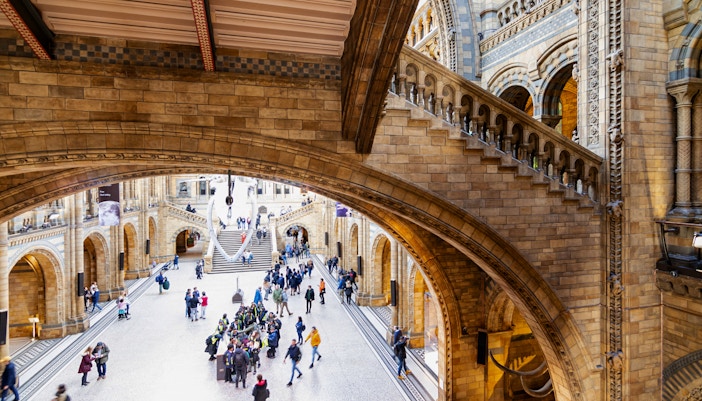
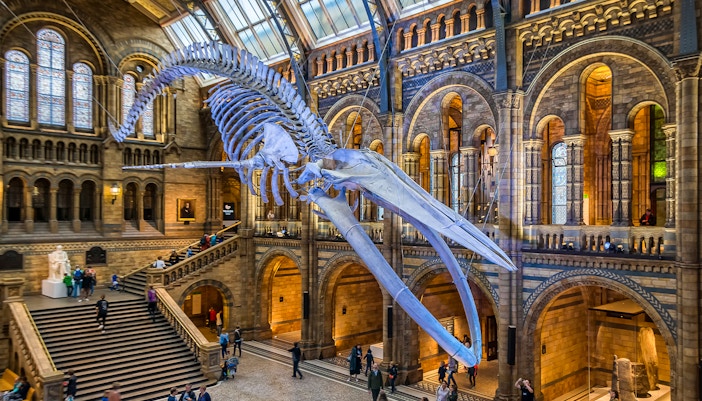
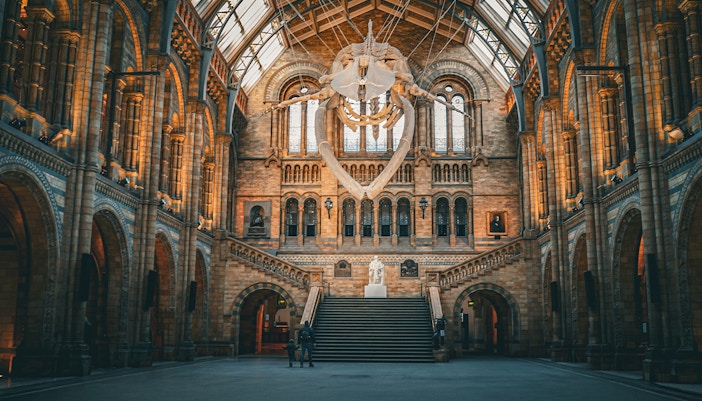
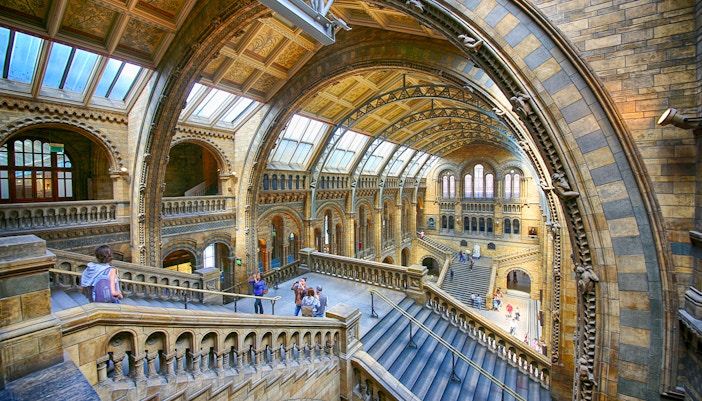
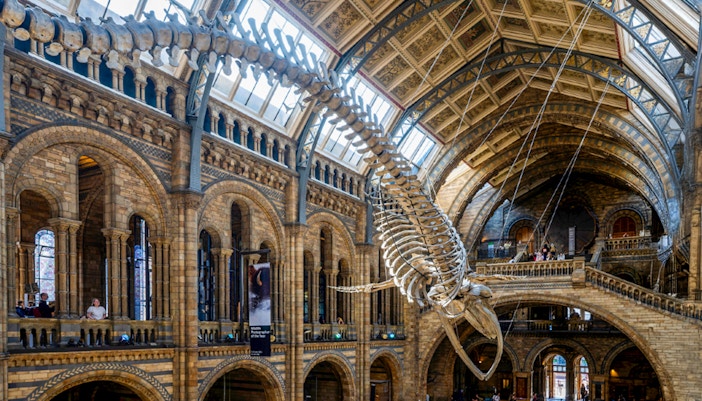
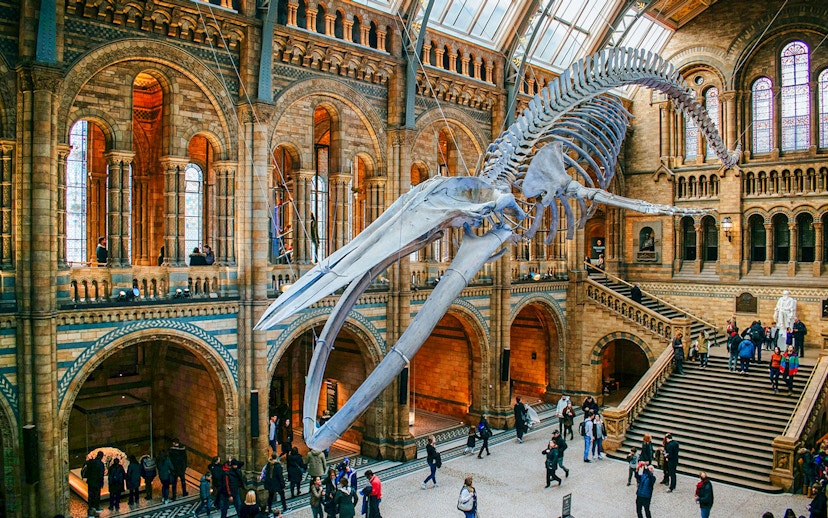
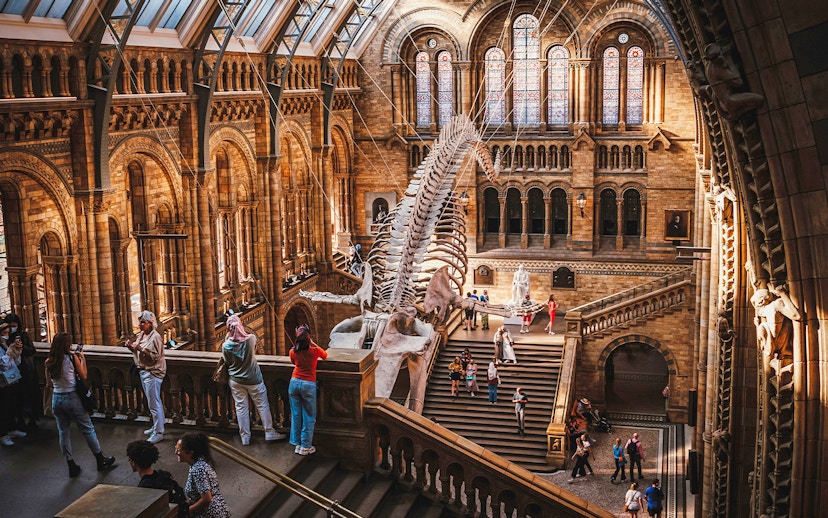
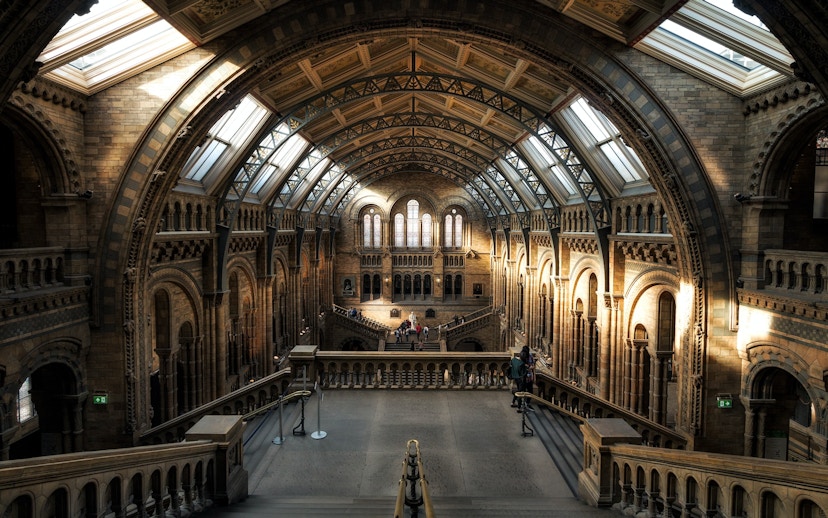
👉 The main Cromwell Road entrance takes you straight into Hintze Hall, the museum’s central space with the blue whale skeleton. This is also where you can pick up a free floor map to plan your visit.

👉 Start to the left of Hintze Hall, where you’ll find dinosaurs, marine invertebrates, and mammals. Interactive displays make this zone a highlight, especially for families and first-time visitors.

👉 This zone explores birds, minerals, fossils, and other key collections that tell the story of life over millions of years. It’s perfect if you want to dive deeper into how the natural world has developed.

👉 Move on to the red zone, where you’ll find volcanoes, earthquakes, rocks and minerals, and galleries on human evolution. This area is usually less crowded and great for a more focused visit.

👉 Around Queen’s Gate, you can explore the Darwin Centre, the Wildlife Garden, and the Zoology Spirit Building. These areas give a quieter, behind-the-scenes look at how the museum works.

👉 Once you’re done exploring, or if you want a break in between, stop by the on-site cafés and gift shops conveniently located on every floor.

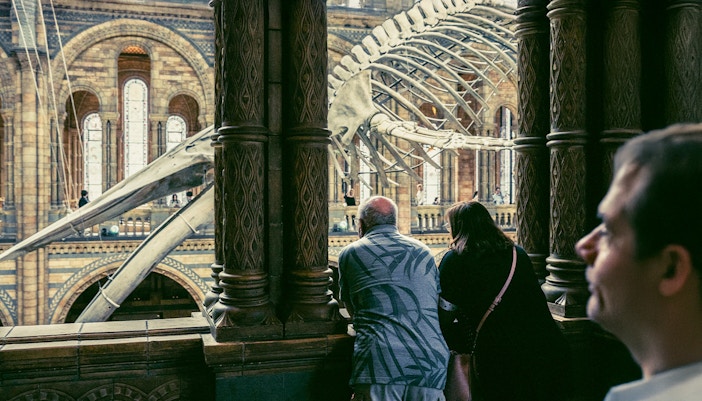
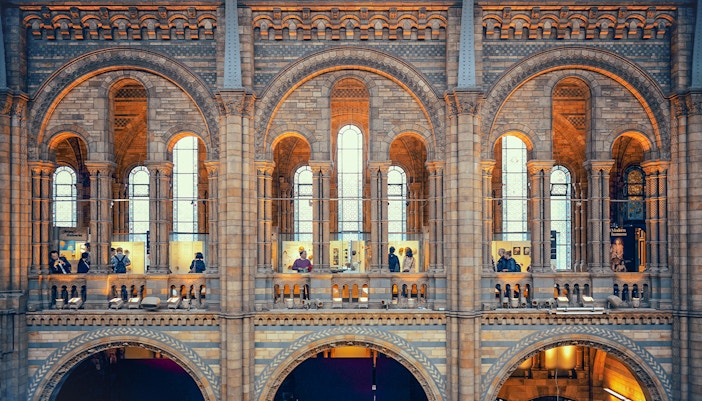
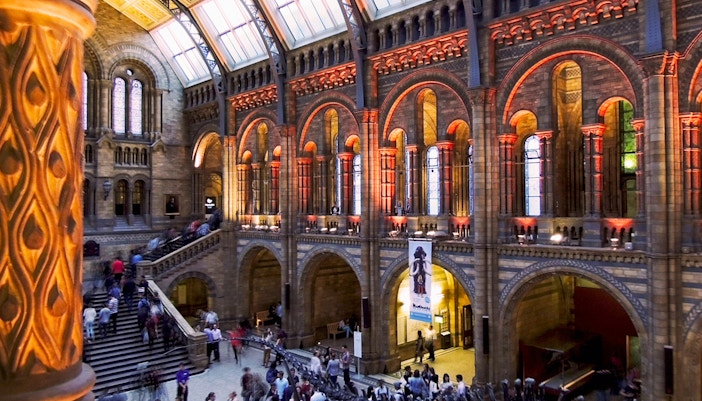
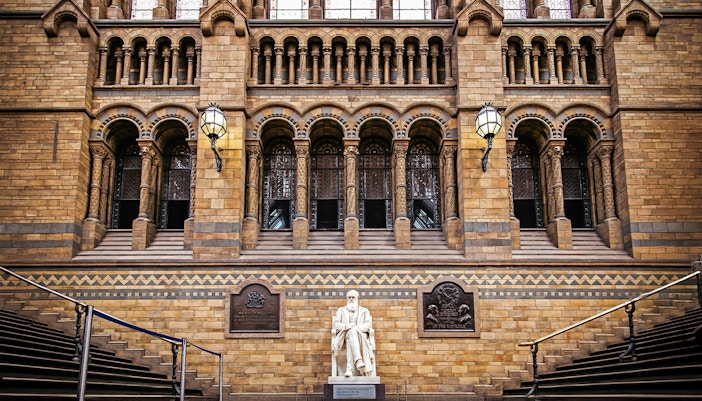
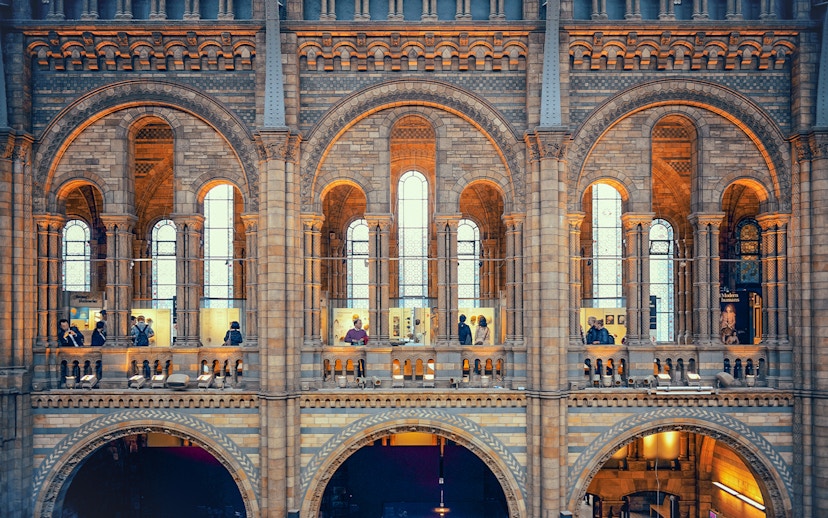
Step into the museum and you’ll immediately notice Hintze Hall’s ceilings, Victorian architecture, and displays. Look up to see “Hope,” the blue whale skeleton suspended above, and take a moment to admire the giant sequoia tree trunk nearby.

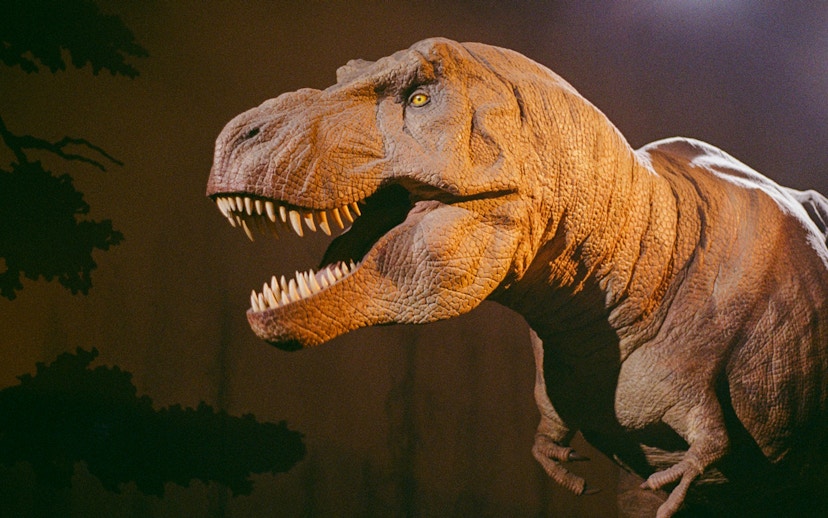
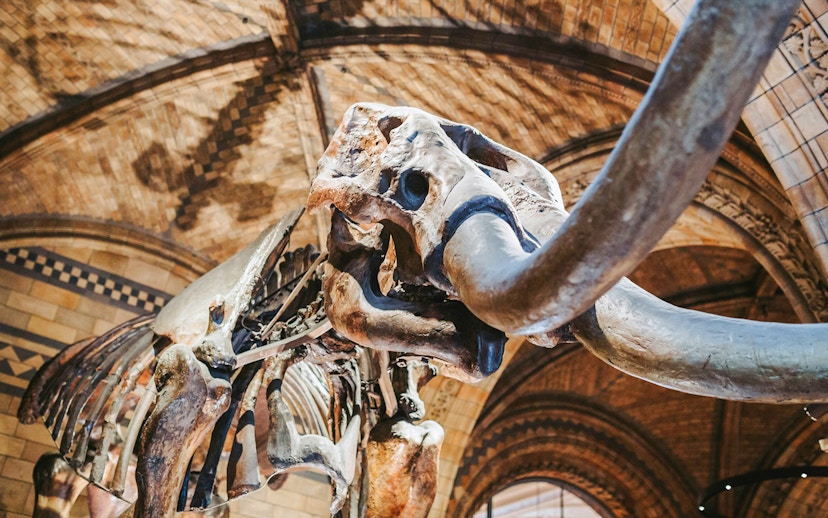
If you’ve ever dreamed of walking with dinosaurs, pause at the Blue Zone. This section is packed with skeletons of dinosaurs and marine creatures. You’ll also find the Images of Nature gallery, which engagingly mixes science and art.

Walk through the Red Zone to explore the forces that shape the Earth. Explore the From the Beginning gallery that traces how our planet was formed and the Volcanoes and Earthquakes gallery, where you can feel the floor shake in the earthquake simulator.

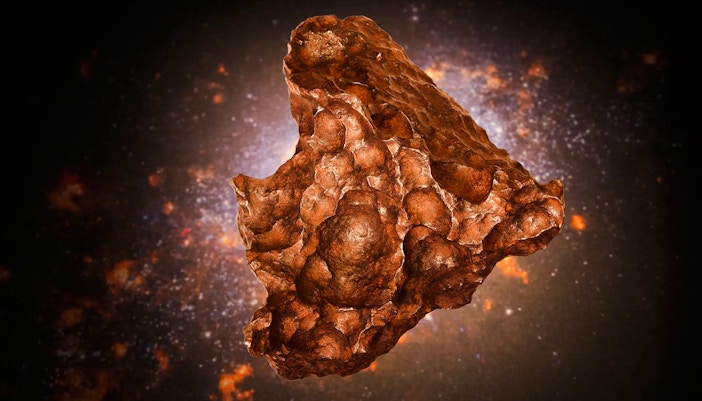
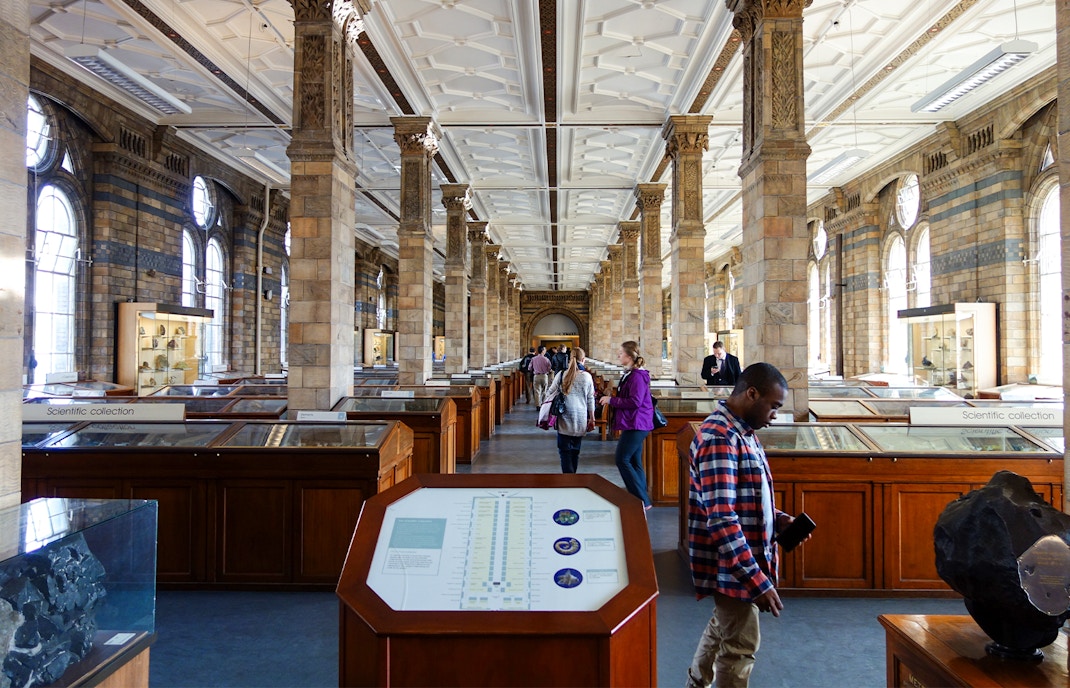
The Green Zone follows the story of life through fossils from Britain, marine reptiles, and the Birds gallery. Step into The Vault to see minerals and gems, including the Ostro Blue Topaz.

This is where you see how science actually happens. The Darwin Centre and Wildlife Garden offer a behind-the-scenes look at research and conservation with interactive displays, live specimens, and the spirit collection.

Step outside into the Urban Nature Gardens, a quiet green space in the middle of London. Opened in 2024, the gardens feature meadows, ponds, and woodland areas designed to support wildlife.


Address: Cromwell Road, South Kensington, London SW7 5BD, United Kingdom
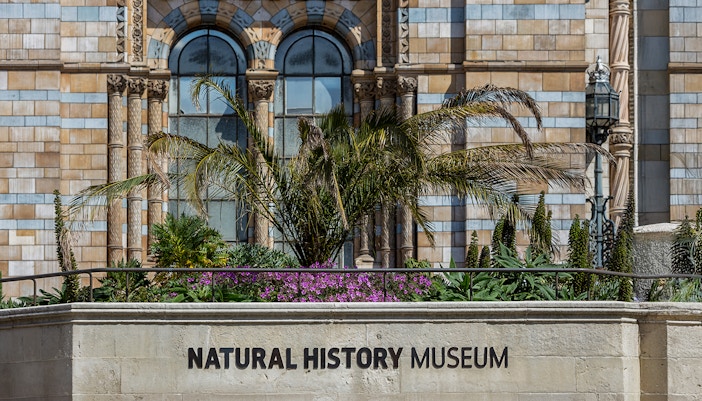
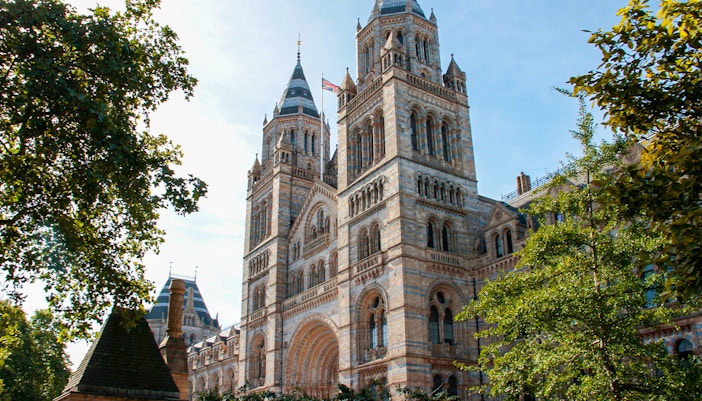
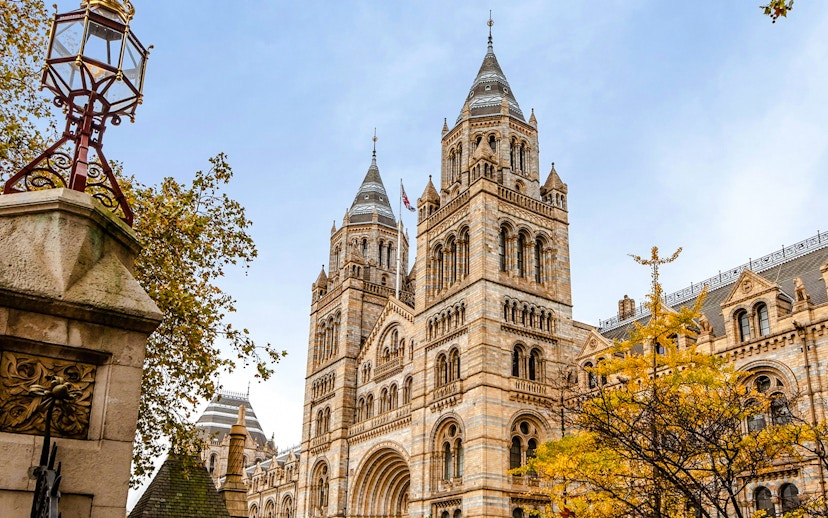
The Natural History Museum is located in South Kensington, London, right next to the Victoria and Albert Museum and close to the Science Museum. This area is a cultural hub with plenty of cafes, green spaces, and iconic London architecture.
Closest landmark: Victoria and Albert Museum, approximately 150 meters away.


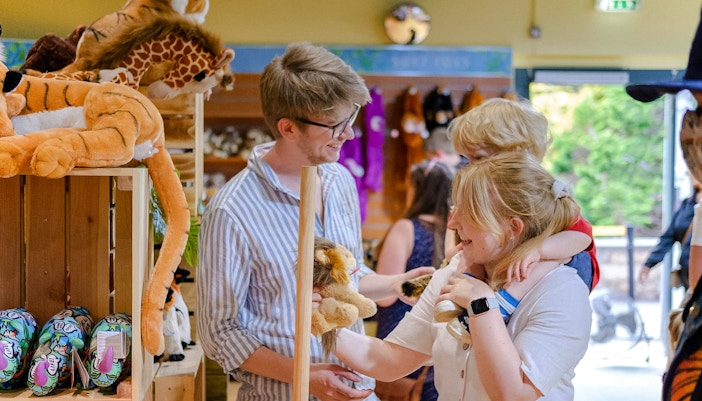
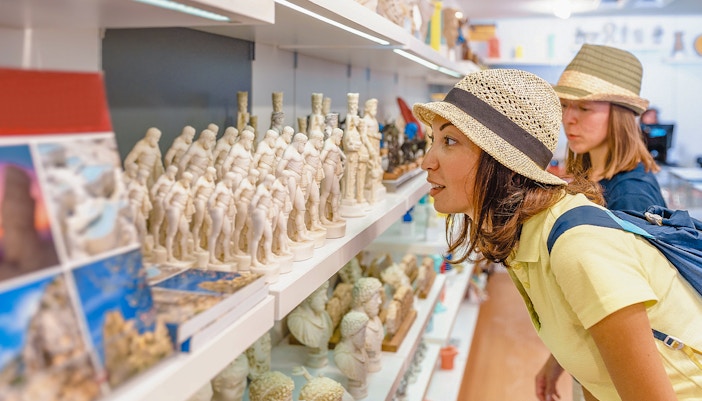
The main museum shop offers a wide selection of nature-inspired gifts, books, toys, and homewares for all ages.

This boutique specialises in fashion, homeware, prints, and stylish natural world–themed gifts for adults and collectors.

This is a dedicated store for dinosaur enthusiasts, offering toys, games, clothing, and themed gifts.

This is a luxury hotel with family-friendly amenities located near the museum and Kensington Gardens.

This modern hotel offers European dining on-site and comfortable rooms close to cafés and shops.

This is an apartment-style accommodation with kitchenettes, perfect for longer stays or families.

This mid-range accommodation offers serviced apartments with extra space, ideal for families and extended visits.
Take the District, Circle, or Piccadilly lines to South Kensington station. From there, it’s about a 5-minute walk to the museum entrance.
Routes 14, 49, 70, 74, 345, 360, 414, 430, C1, and night services N74 and N97 stop nearby.
Arrive at London Victoria or Paddington, then take the District or Circle line to South Kensington station, followed by a 5-minute walk to the museum.


See 80 million specimens at London’s Natural History Museum with reserved entry and a multilingual audioguide.
Inclusions #
Reserved entry ticket to the Natural History Museum
Highlights audio tour in Chinese, German, English, French, Italian, Korean, and Spanish
English-speaking host at the meeting point
Digital map
£1 donation to the Natural History Museum
Exclusions #
Priority entry
Entry to special exhibitions
Guided tour
Headset and mobile device
What to bring
What’s not allowed
Accessibility
Additional information