Quick Information

RECOMMENDED DURATION

4 hours

VISITORS PER YEAR

5000000

NUMBER OF ENTRANCES

3

EXPECTED WAIT TIME - STANDARD

30-60 mins (Peak), 0-30 mins (Off Peak)

Plan your visit

Did you know?

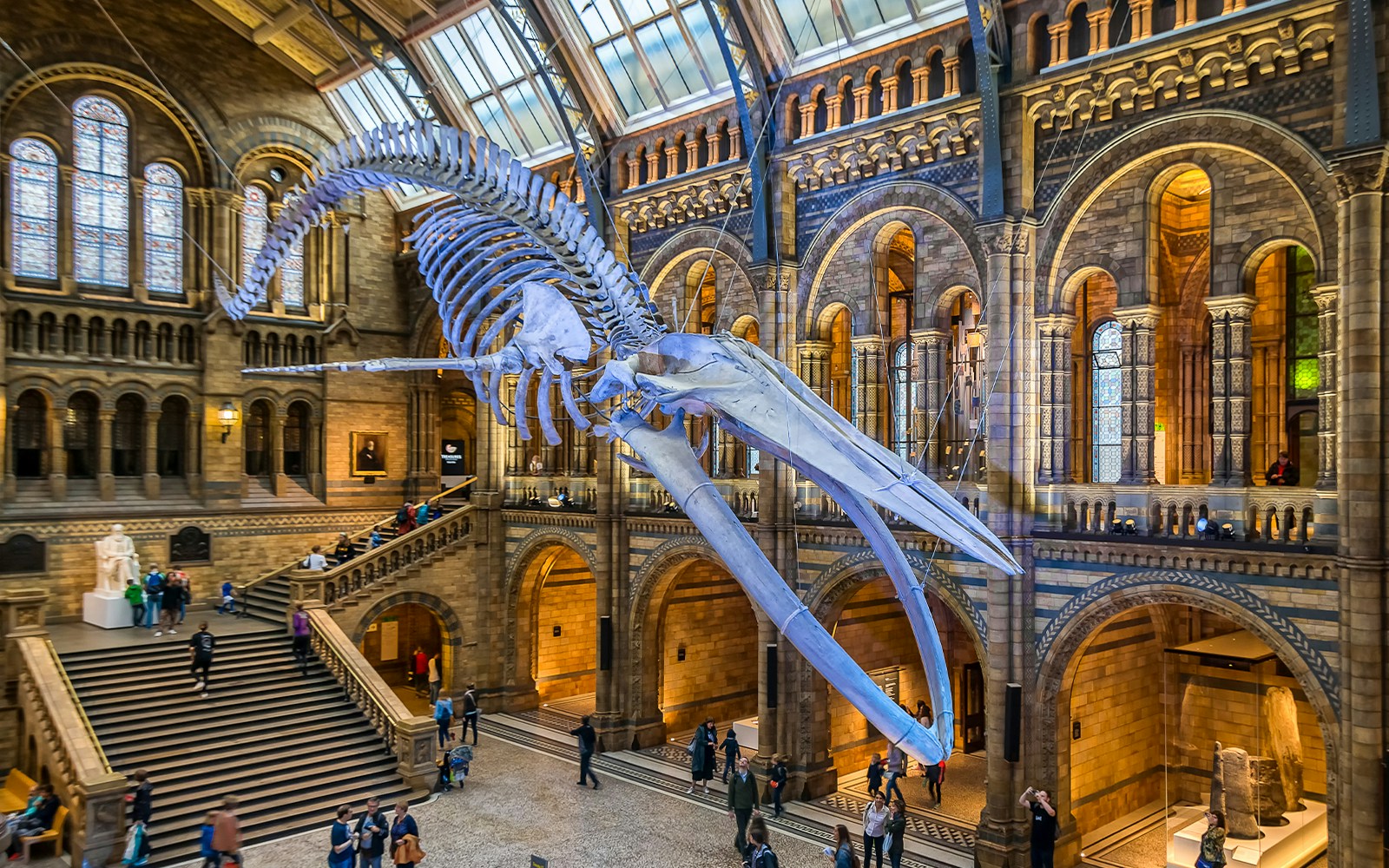
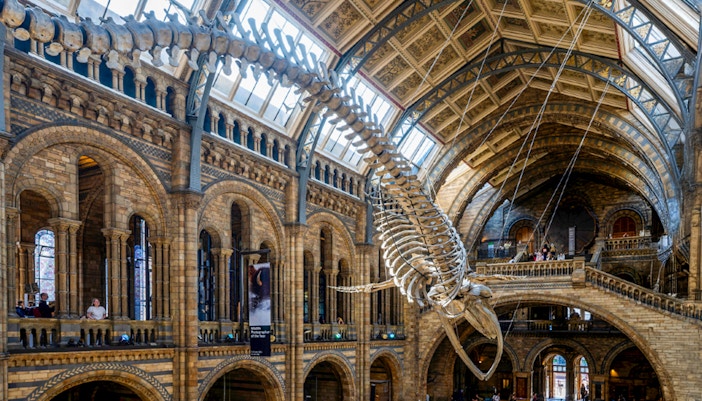
The museum’s blue whale skeleton, “Hope,” is the largest animal ever displayed at the museum, measuring 25.2 meters long.

The Natural History Museum welcomed a record 6.3 million visitors in 2024, making it the UK’s second-most-visited attraction.

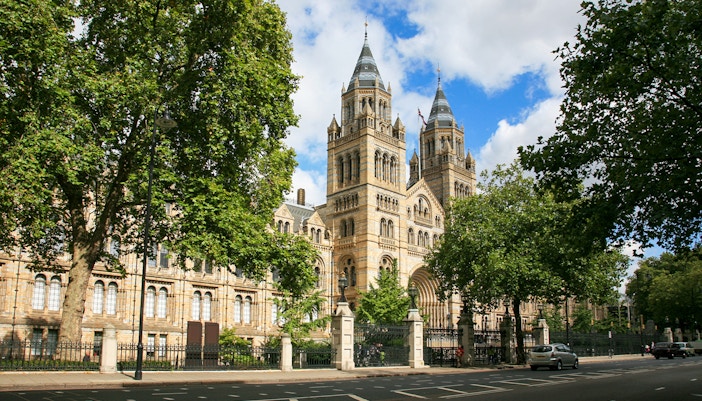
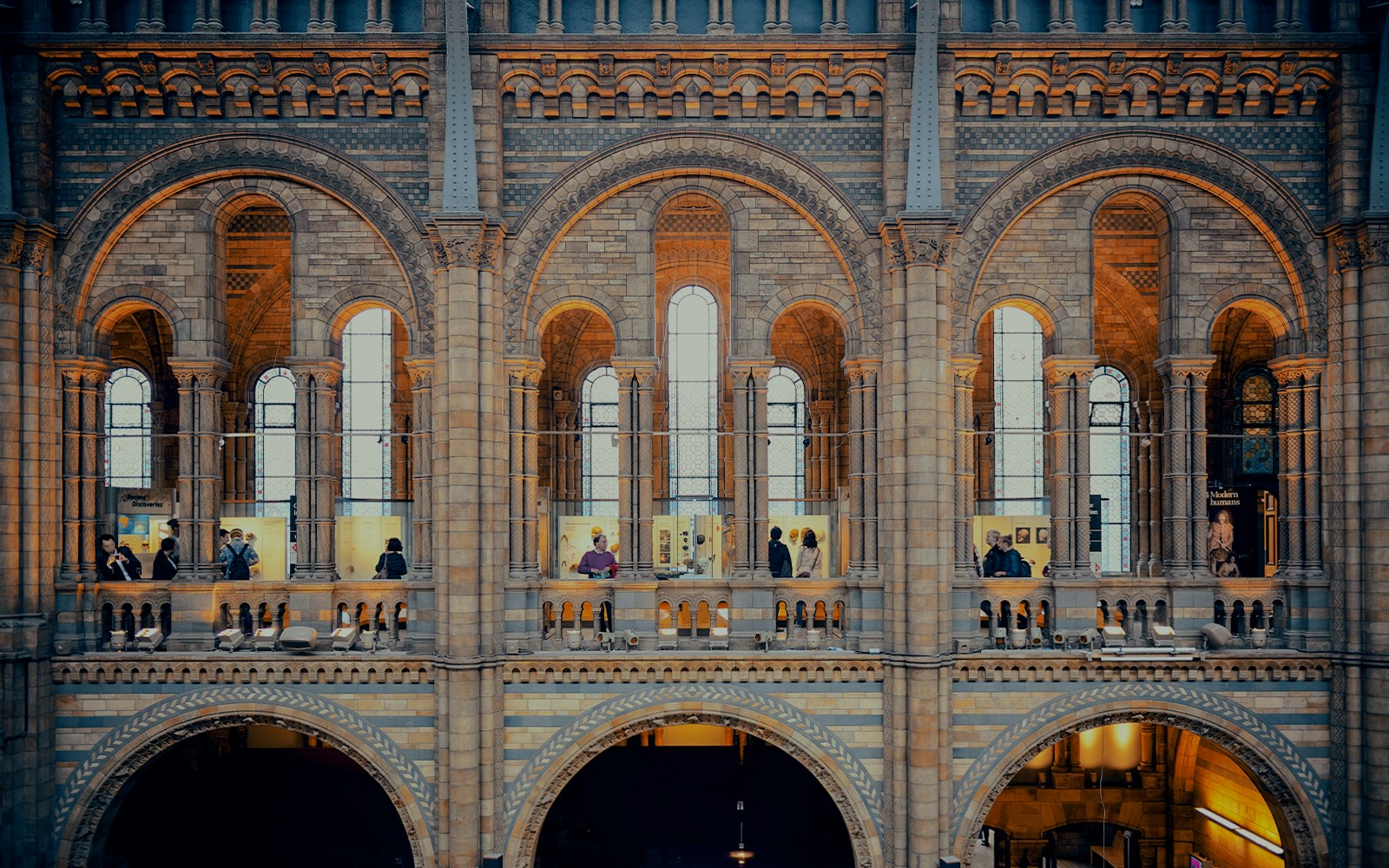
Its grand Victorian building, designed by Alfred Waterhouse, features over 78 million specimens and intricate terracotta animal carvings.

Why is the Natural History Museum a must-visit attraction?

The Natural History Museum is Britain’s largest natural history museum, housing over 80 million specimens spanning botany, zoology, mineralogy, and paleontology. Its world-class collections feature highlights such as Hope, the colossal blue whale skeleton, alongside dinosaur fossils, gemstones, and rare scientific specimens.

What truly sets the museum apart, however, is the variety of experiences beyond the exhibits. Housed in a grand Victorian building celebrated for its intricate terracotta carvings and stunning architecture, the museum stays closely connected to ongoing scientific research. With spaces like the Darwin Centre, the museum offers behind-the-scenes glimpses into active research, making the experience just as rewarding for adults, families, and young visitors.

What to see at the Natural History Museum?

Hintze Hall

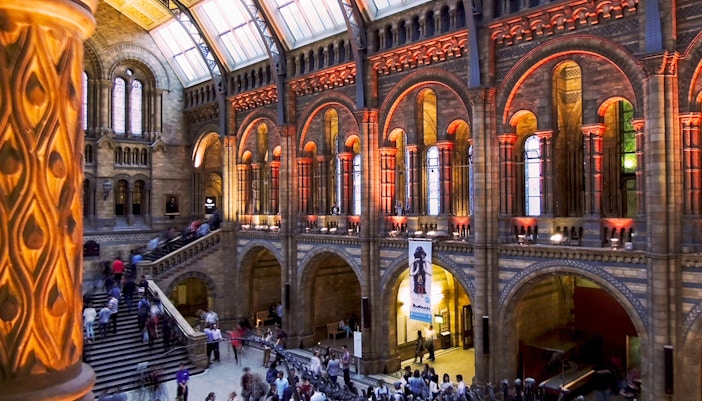
Hintze Hall is the heart of the museum and the first space you encounter. The Victorian hall features terracotta details, upper balconies, and the blue whale skeleton, Hope, suspended above the central staircase.

  • What to see: The giant sequoia tree trunk and animal carvings across ceilings.
Blue Zone – Life on Earth

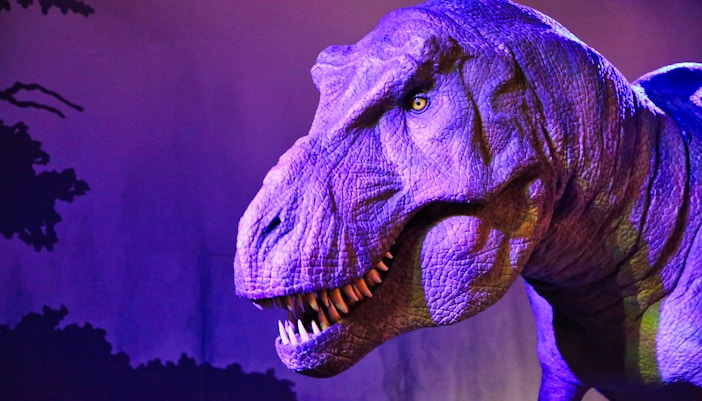
The Blue Zone focuses on living and extinct creatures, from dinosaurs to marine giants. This area is especially popular for its dinosaur gallery, life-sized skeletons, and displays that explore how animals evolved and adapted across millions of years.

  • What to see: The Tyrannosaurus rex, dinosaur skeletons, and marine mammals like whales.

Red Zone – Earth and planetary forces

The Red Zone explores the natural forces that shape the planet. Walk through a model of Earth’s interior, experience a simulated earthquake, and learn how volcanoes influenced life on Earth.

  • What to see: The earthquake simulator and the erupting volcano models.

Green Zone – Evolution and fossils

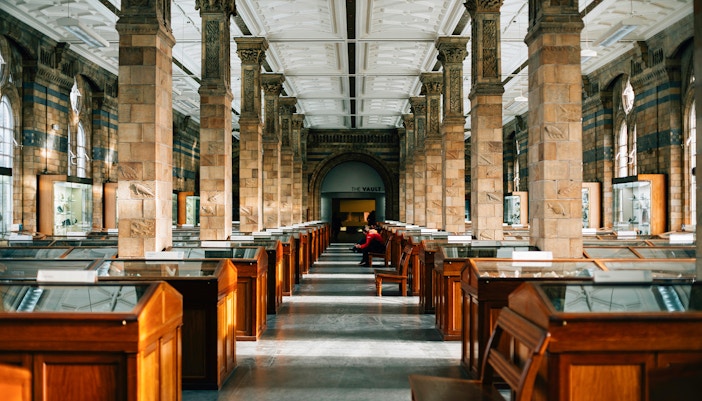
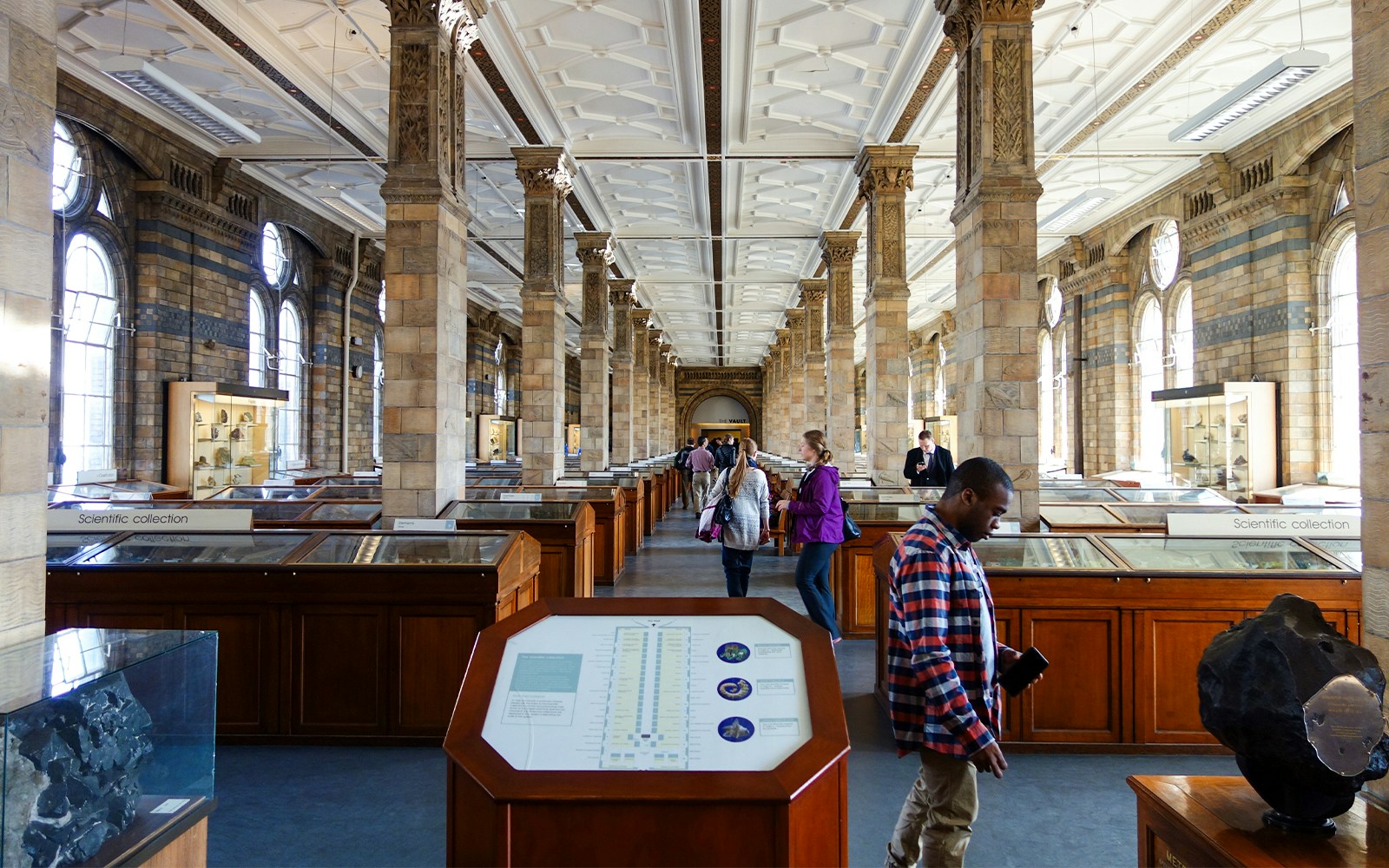
The Green Zone tells the story of life’s evolution through fossils, birds, and marine reptiles. It also houses The Vault, where you can see rare gemstones, minerals, and meteorites, alongside exhibits that explore biodiversity and extinction.

  • What to see: The Birds gallery featuring extinct species and the Vault with rare gems and meteorites.

Orange Zone – Science in action

The Orange Zone reveals how scientific research happens today. Through the Darwin Centre and outdoor spaces, you get a behind-the-scenes look at conservation, zoology, and climate research, with interactive displays and working science labs.

  • What to see: The Darwin Centre Cocoon, the Zoology Spirit Building with preserved specimens and science displays.

Urban nature gardens

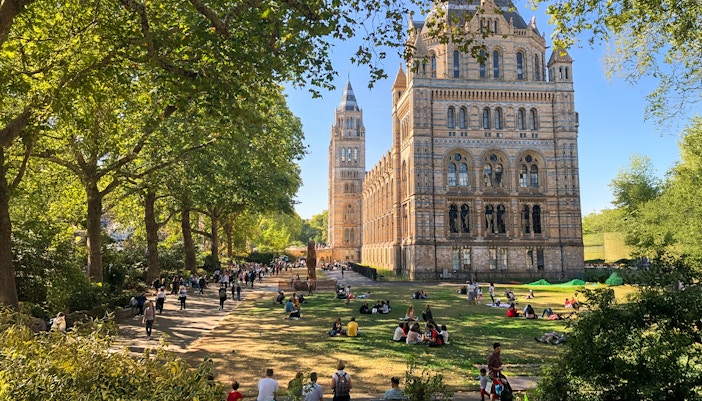
The Urban Nature Gardens offer a calm outdoor escape within the museum grounds. Featuring meadows and woodland areas, this space highlights native plants and urban wildlife.

  • What to see: Meadow habitats, pond ecosystems, woodland areas, native plants and trees.

Highlights of the Natural History Museum in London

Blue whale skeleton in Natural History Museum gallery, London.

Hope

Marvel at Hope, the blue whale skeleton, suspended within the vast Victorian hall, framed by intricate terracotta carvings and balconies above.

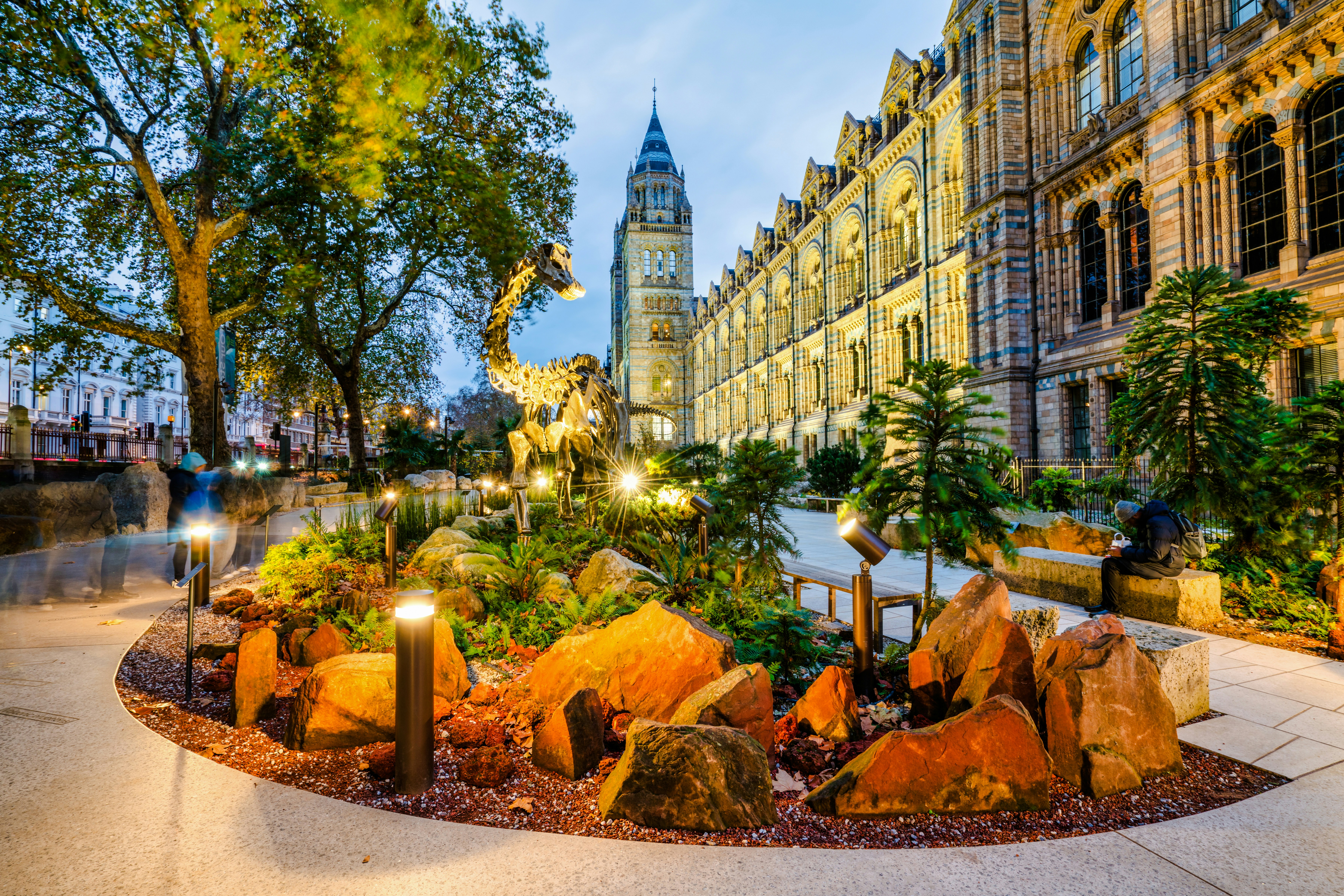
Dinosaur sculpture outside Natural History Museum, London, England, with illuminated facade.
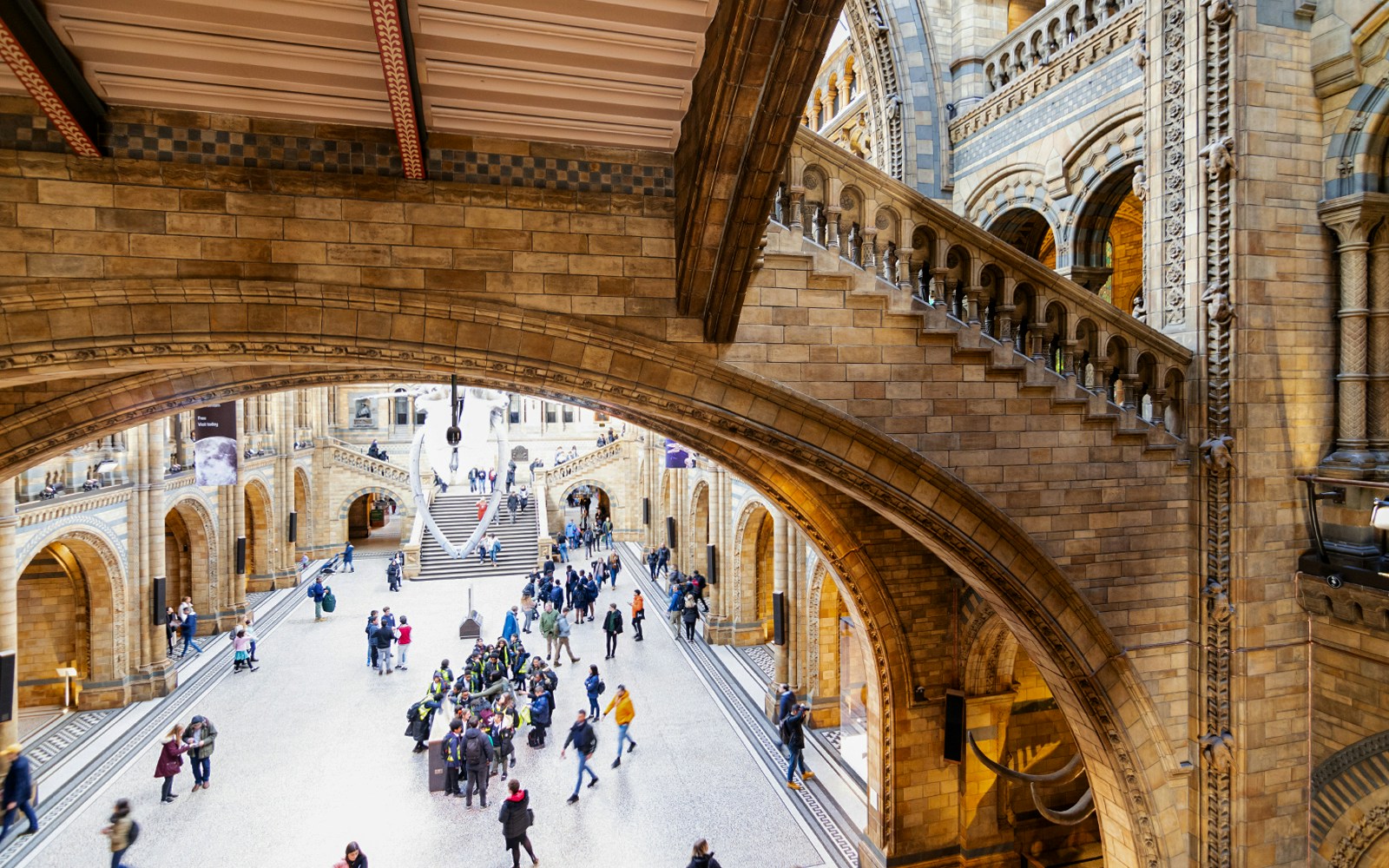
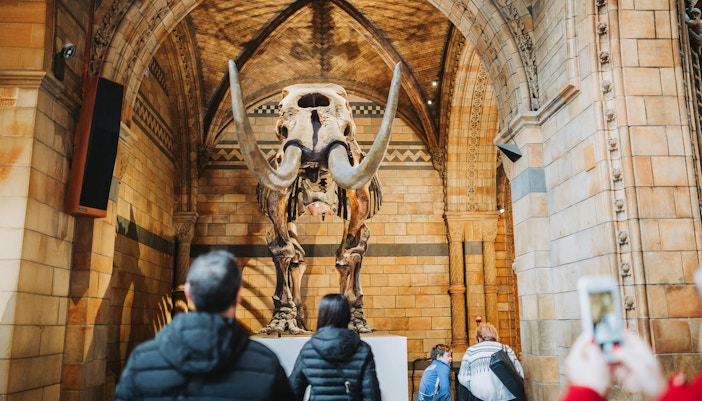
Visitors exploring the grand hall of the Natural History Museum, London.
Guests exploring exhibits at the Natural History Museum's scientific collection hall.
Visitors exploring dinosaur exhibit at Natural History Museum, London.

Brief history of the Natural History Museum in London

The Natural History Museum in London began with the collections of Sir Hans Sloane, acquired by Parliament in 1753 and housed within the British Museum. As the collections rapidly grew, natural scientist Sir Richard Owen pushed for a dedicated museum building. A design competition was held in 1864, and after the death of the originally chosen architect, Alfred Waterhouse took over, shaping the museum’s distinctive Romanesque style.

Construction began in 1873 and was completed in 1880, with the museum formally opening its doors on 18 April 1881. It was officially renamed the Natural History Museum in 1992.

Over time, the museum expanded its collections and facilities, absorbing the adjacent Geological Museum in 1986 and opening the Darwin Centre in 2009 to house research laboratories and vast scientific collections. Today, it stands as one of the world’s foremost natural history museums, celebrated for its global scientific importance.

Who built the Natural History Museum?

The Natural History Museum was initially designed by Francis Fowke, who won the 1864 design competition. Unfortunately, he passed away in 1865 before construction began. The project was then taken over by Alfred Waterhouse, who revised and completed the design in a distinctive Romanesque Revival style, overseeing construction from 1873 to 1880.

Waterhouse worked closely with Richard Owen, who influenced the layout and the integration of scientific themes throughout the building. The museum’s terracotta ornamentation was produced by Gibbs and Canning, with Farmer & Brindley executing the detailed animal and plant reliefs under Waterhouse’s direction. The designs were further modeled by French sculptors to translate Waterhouse’s sketches into the terracotta façades and interior decoration seen today.

Architecture of the Natural History Museum in London

The Natural History Museum displays a strong resemblance to Victorian Gothic Revival architecture with heavy Romanesque influences. Alfred Waterhouse, who took over the design after the death of Captain Francis Fowke, reworked Fowke’s original plans, ultimately defining the museum’s distinctive Romanesque Revival style.

Waterhouse’s design makes extensive use of glazed terracotta tiles on both the exterior and interior, chosen for their durability against London’s polluted air and their ability to support rich decorative motifs featuring flora and fauna, both living and extinct. The museum’s cathedral‑like Hintze Hall, rounded arches, symmetrical façades, and intricate relief sculptures all reflect Victorian ideals of science, education, and public grandeur, making the building itself a celebrated piece of architectural history.

Frequently asked questions about the Natural History Museum

General entry to the museum is free, but timed entry tickets are required to manage capacity. These can be reserved online in advance through the official tickets page to guarantee entry.

More reads

Plan your visit

Timings

Directions