
Budget 90 minutes for the standard stadium tour, or closer to 3 hours if you’re pairing it with The Dare Skywalk; the extra time goes on check-in, harnessing, and the climb itself. Start at the Tottenham Experience so you can check in smoothly, then move through the indoor route before crowds thicken around late-morning departures. On self-guided visits, it’s worth slowing down in the dressing room, tunnel, and pitchside areas, then using the South Stand view as your final big reveal.
Quick Information
RECOMMENDED DURATION
2 hours
Timings
09:30–17:30
VISITORS PER YEAR
2000000
TICKETS
From $29.95
NUMBER OF ENTRANCES
3
EXPECTED WAIT TIME - STANDARD
30-60 mins (Peak), 0-30 mins (Off Peak)
Did you know?
The golden cockerel on the roof is ~4.5 m tall and was inspired by the cockerel that stood on the old White Hart Lane.
The South Stand is a single-tier "wall" for ~17,500 fans and is described in the research as the largest single-tier stand in the UK by capacity.
Some tour routes include hospitality spaces with the "Bottoms Up" beer system, which fills cups from the base rather than the top.
Is the Tottenham Hotspur Stadium worth visiting?
The first thing you notice is the scale of the bowl and how tight it still feels. Steel, glass, and steep seating pull your eye toward the pitch, while the South Stand rises like a wall behind one goal. Even empty, the place has a charged, event-ready hum.
It was built to replace White Hart Lane without losing the club’s sense of home, while also working as a year-round venue for NFL games, concerts, and tours. That ambition explains the retractable pitch, the oversized concourses, and the unusual mix of football intimacy and big-event engineering.
The payoff is not just seeing a modern stadium, but understanding how carefully it has been designed to make 62,000 seats feel close to the action. You leave with a sharper sense of why this ground changed how London thinks about stadium design.
Skip it if: you want a heritage-heavy football museum or dislike steep seating, security checks, and large event venues.
What to see inside Tottenham Hotspur Stadium?
1/7
Tottenham Experience
The tour starts in the club’s visitor hub, where check-in, displays, and the megastore introduce the scale of the venue. It feels more like entering a polished event complex than an old-school football ground.
Home dressing room
The first-team dressing room is sleek, controlled, and slightly theatrical, with individual stations that underline how performance-driven this stadium is. It is one of the places where visitors most clearly feel the players’ pre-match routine.
Players’ tunnel and dugouts
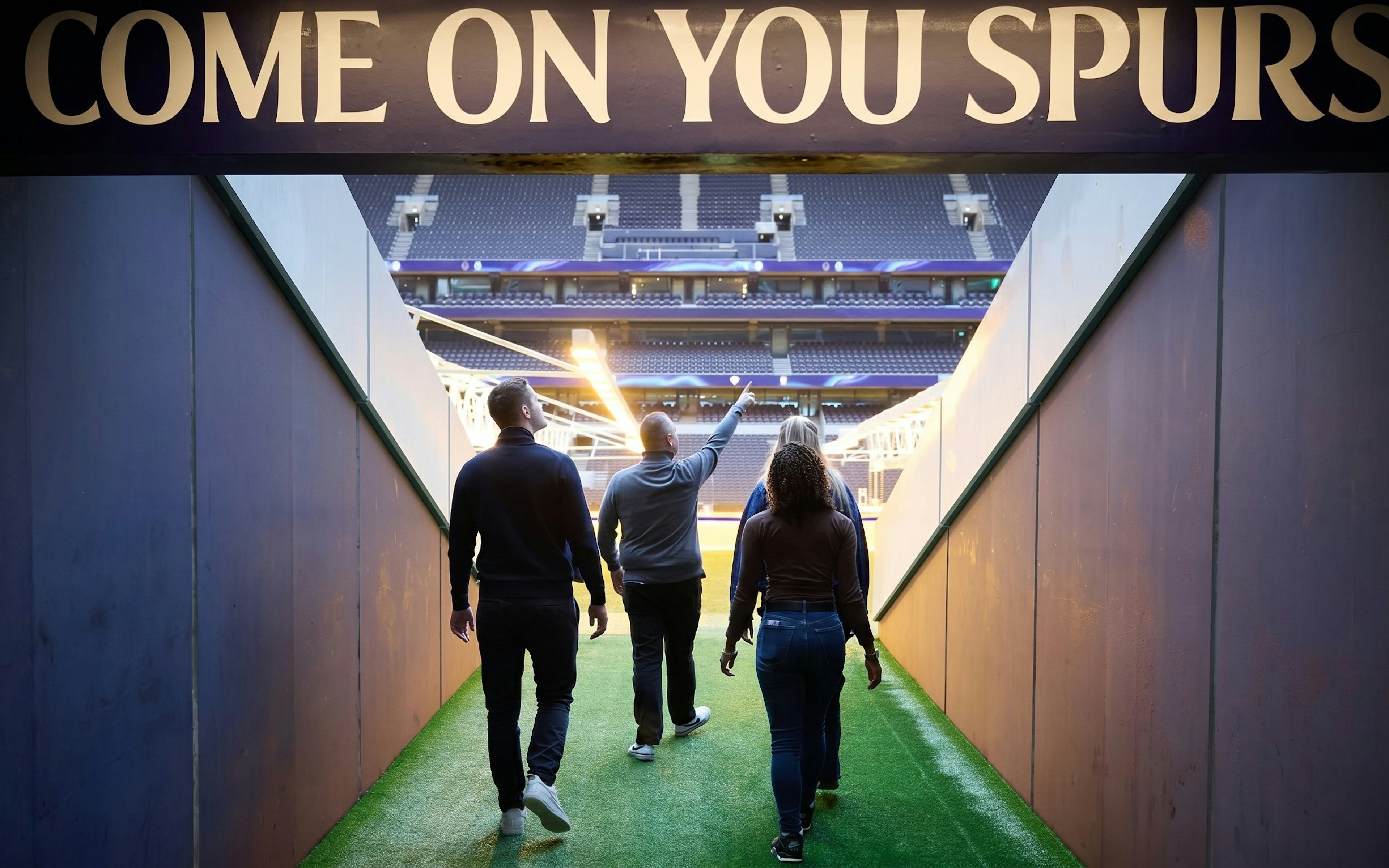
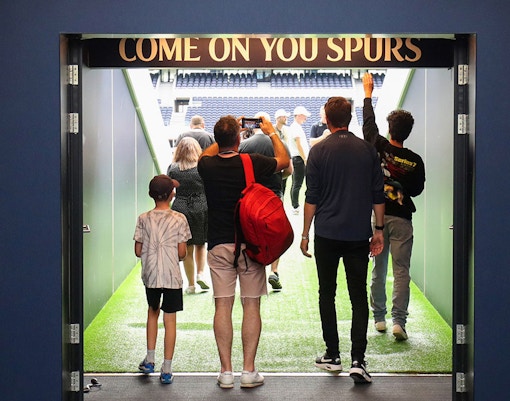
Walking the tunnel compresses the space and sharpens the sound, then the bowl opens suddenly at pitchside. Sit in the dugout, and you understand how close the coaching staff are to every phase of play.
The South Stand
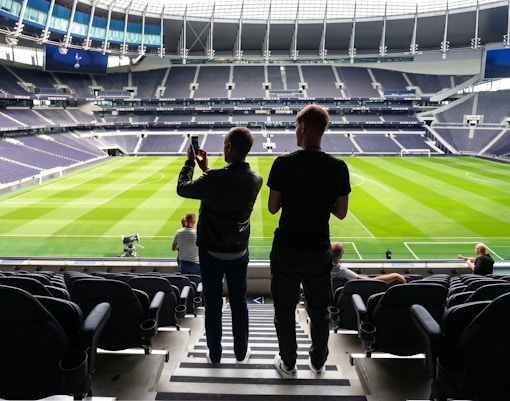
The single-tier South Stand is the stadium’s signature interior view. Seen empty, it explains the scale; imagined full, it explains the noise. This is where many visitors pause longest for photos across the bowl.
The pitch and NFL setup
Look down toward the pitch, and you begin to grasp the stadium’s dual identity. The retractable grass surface and NFL infrastructure are not gimmicks; they are the engineering idea that makes the whole venue unusual.
Press and premium areas
The media and hospitality spaces reveal how the stadium works beyond matchday. These areas matter because they show the venue was planned as a full-scale events destination, not just a home ground for 19 league games.
The Dare Skywalk
If you have booked it separately, The Dare Skywalk changes your understanding of the building completely. The rooftop route brings you close to the golden cockerel and gives a rare straight-down view into the stadium.
How to explore Tottenham Hotspur Stadium
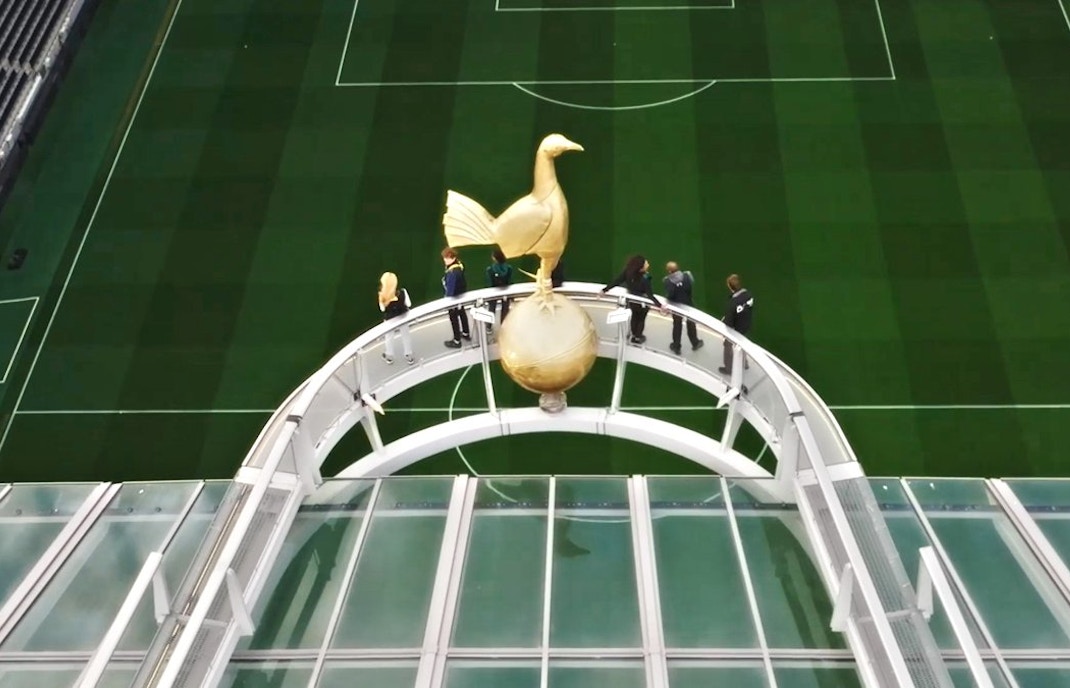

If you’ve booked the Skywalk, do it after the tour: once you’ve seen the stadium from ground level, the roof perspective makes more sense.
Must-see: the home dressing room, the players’ tunnel, pitchside, and the view up into the South Stand.
Optional: The Dare Skywalk adds about 90 minutes and gives you rooftop views and a close look at the golden cockerel; F1® Drive London is separate and suits visitors who want a second activity. Guided tours add real value here because details like the retractable pitch, reused White Hart Lane material, and NFL setup are easy to overlook on your own.
Brief history of the Tottenham Hotspur Stadium
- 1899: White Hart Lane opens as Tottenham Hotspur’s home, establishing the site as the club’s long-term base in north London.
- 2007: Tottenham begins publicly shaping plans for a larger replacement stadium designed for football and year-round events.
- 2017: White Hart Lane closes after the final men’s first-team match, clearing the site for full redevelopment.
- 2018: The new structure nears completion, with the retractable pitch system and South Stand defining the project’s identity.
- 2019: Tottenham Hotspur Stadium officially opens on the same footprint, replacing the old ground with a 62,000-seat venue.
- Today: The stadium hosts Spurs matches, NFL games, concerts, tours, and rooftop experiences as a full-time destination.
Architecture of Tottenham Hotspur Stadium
Style
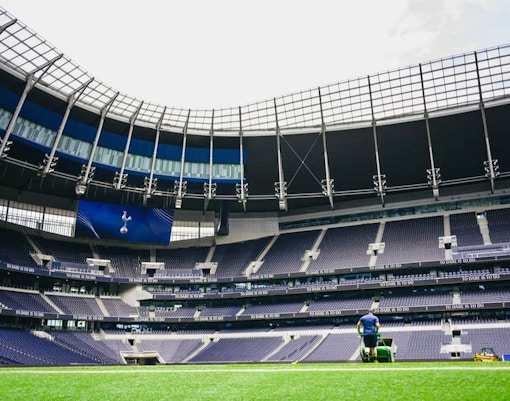
Contemporary bowl design, engineered to feel steep and enclosed rather than sprawling, so even from the upper levels the pitch stays visually close, and the crowd noise folds back into the seating.
Materials
Steel, glass, concrete, and dark metal cladding give the stadium a crisp, urban finish that feels more like a civic landmark than a traditional brick football ground.

Engineering
The retractable grass pitch slides away to reveal a synthetic NFL field beneath, one of the stadium’s defining technical feats and central to its year-round use.
Atmosphere
The South Stand’s single-tier wall changes how the building sounds; from pitch level, you can see immediately why one end feels louder and more concentrated on matchday.
Who built Tottenham Hotspur Stadium?
Tottenham Hotspur commissioned Populous to design the stadium as more than a football ground. Under chairman Daniel Levy, the brief was to build a year-round venue for football, NFL, concerts, and tours, while preserving the club’s emotional connection to the White Hart Lane site.
Populous, the sports architecture firm behind several major global venues, shaped Tottenham Hotspur Stadium around flexibility and atmosphere rather than nostalgia alone. Their design pairs event-scale circulation with tight sightlines, so the building can host NFL and concerts without feeling detached from football on ordinary matchdays.
Additional information about Tottenham Hotspur Stadium
The new ground does not treat White Hart Lane as a clean break. One of the most affecting details is in the concourse, where material from the old stadium has been worked into the fabric of the new one. It is an understated choice, easy to miss if you rush through, but it changes the emotional register of the place. For long-time supporters, it softens the shock of modernity. For first-time visitors, it explains why the stadium feels rooted rather than simply new.
Frequently asked questions about Tottenham Hotspur Stadium
Yes, especially if you care about modern stadium design as much as football. The retractable pitch, South Stand, and roof experiences give it broader appeal than a standard club visit.
Most visitors need about 90 minutes for the standard route. Add another 90 minutes if you’ve booked The Dare Skywalk, and arrive 15–20 minutes early for check-in, security, or harness fitting on timed experiences.
Do not skip the home dressing room, the tunnel, pitchside, and the South Stand view. If you want the most unusual perspective, add The Dare Skywalk for a roof-level look back into the bowl.
Yes, for most families and first-timers. The standard tour is stroller-accessible, but younger children may engage more with the tunnel and dugouts than the technical details. The Skywalk has age and height restrictions, so check before booking.
Yes. Tottenham Hotspur Stadium guided tours include entry, guided access inside the stadium, a look at the concourse and South Stand, and a photo opportunity with the UEFA Europa League Trophy.
Yes, if you want a specific time. Timed tours keep queues low, but weekend and midday slots fill first. Booking ahead also helps if you’re pairing the visit with The Dare Skywalk.
Yes. If you like city views or mild adrenaline, the appeal is broader than football. The climb is guided and secured throughout, and many non-fans choose The Dare Skywalk over the standard tour.

