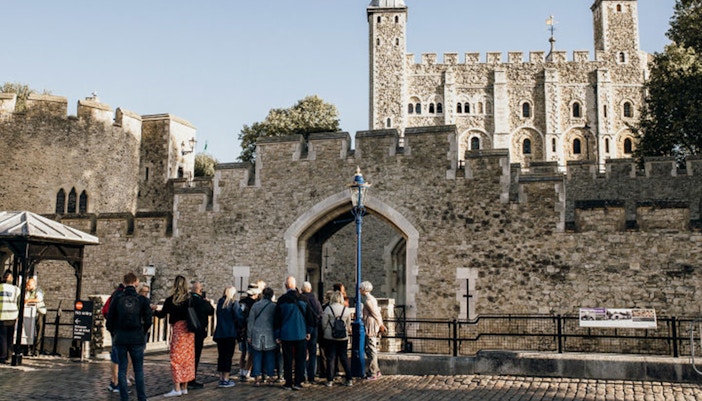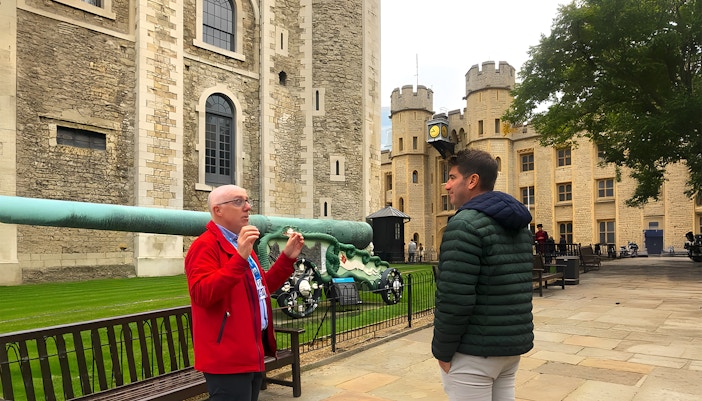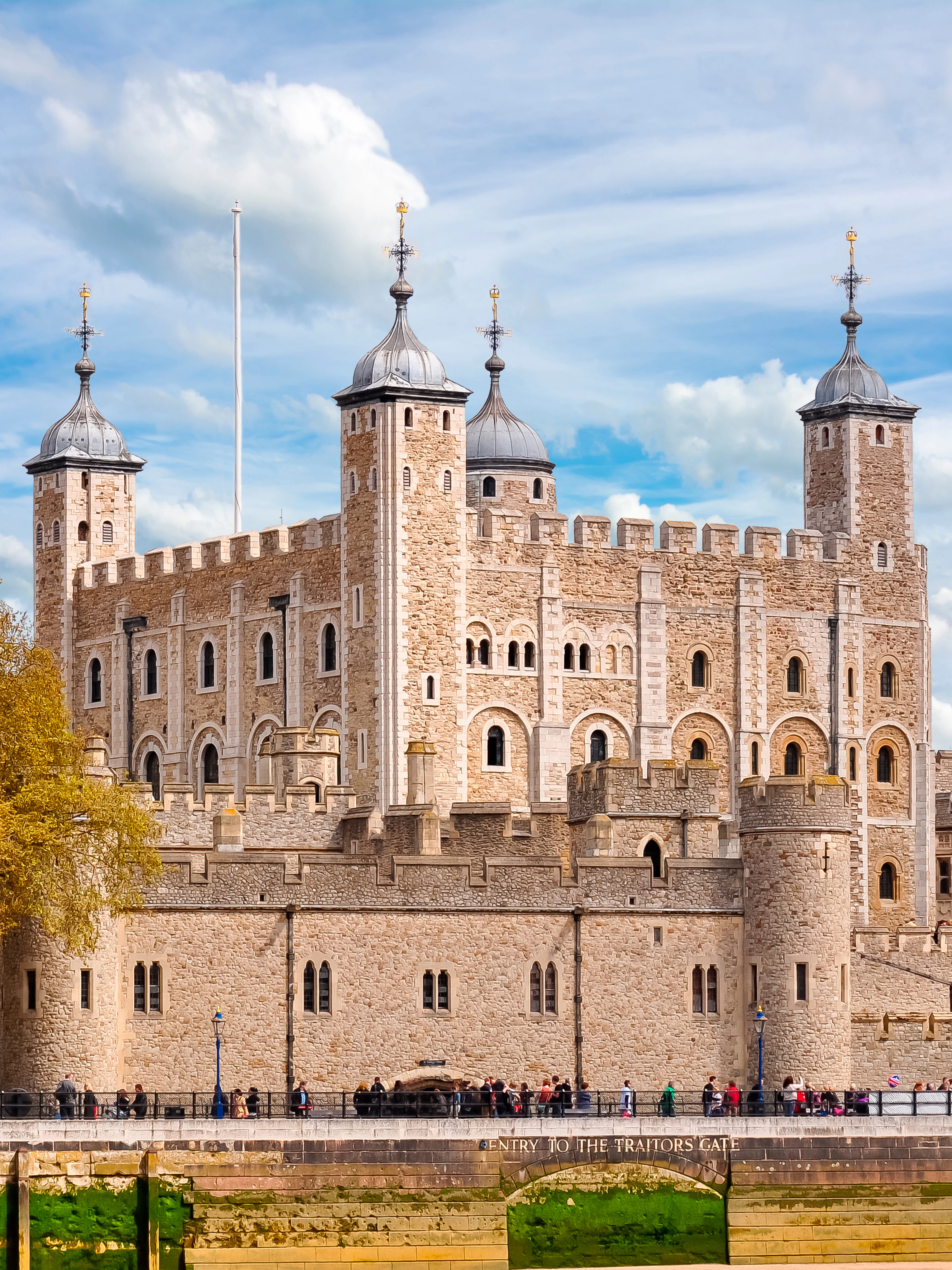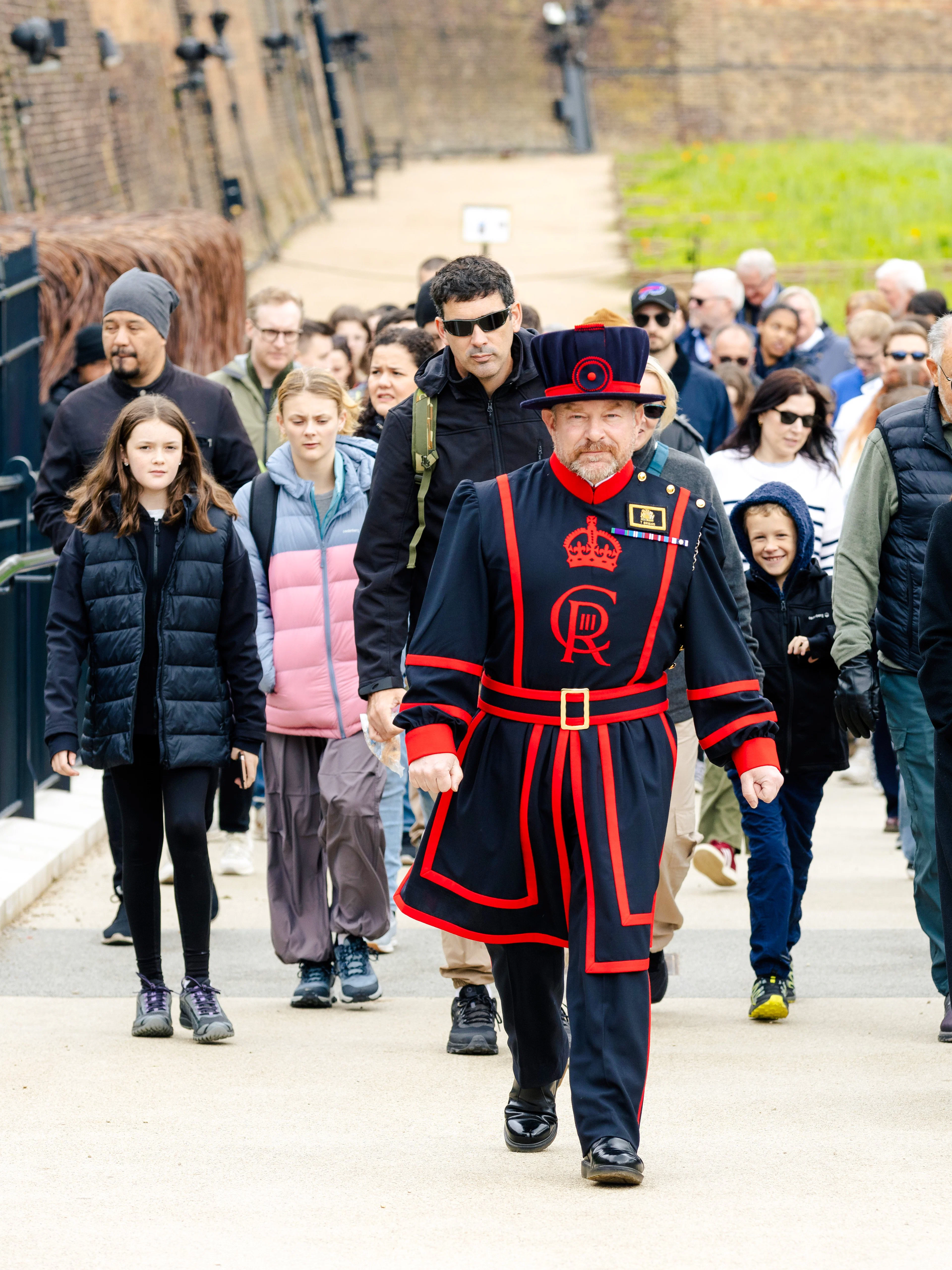












Choose the first weekday entry slot if seeing the Crown Jewels is your priority. The Jewel House is noticeably quieter during the opening hour, giving you a steadier pace through the display and better opportunities to appreciate each piece before visitor numbers build.
Crown Jewels tickets
Included with Tower of London tickets
Timings
RECOMMENDED DURATION
3 hours
Top things to do in London
Quick overview
- Access: Included in all Tower of London tickets
- Separate ticket: Not required
- When you'll see it: Midway through your Tower visit inside the Jewel House
- Visit duration: 20–30 min self-guided / 30–45 min with a guided tour
- Best time: First entry slot on a weekday
- Restrictions: Photography and videography are prohibited inside the Jewel House

How to access Crown Jewels
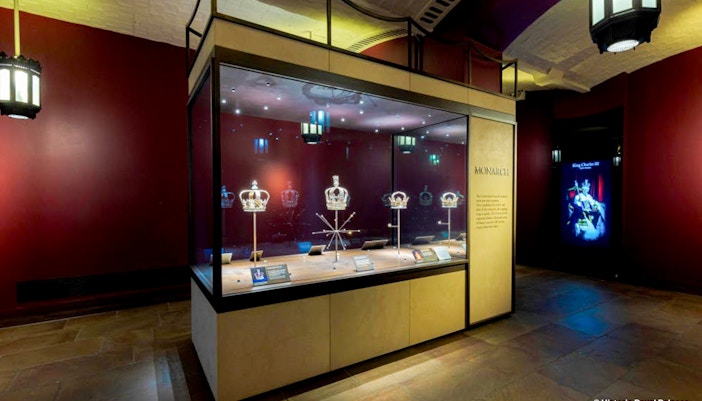
The Crown Jewels are included with every Tower of London ticket, so no separate admission is required. They're housed in the Jewel House, typically reached midway through the visitor route after exploring several of the Tower's historic buildings and courtyards.
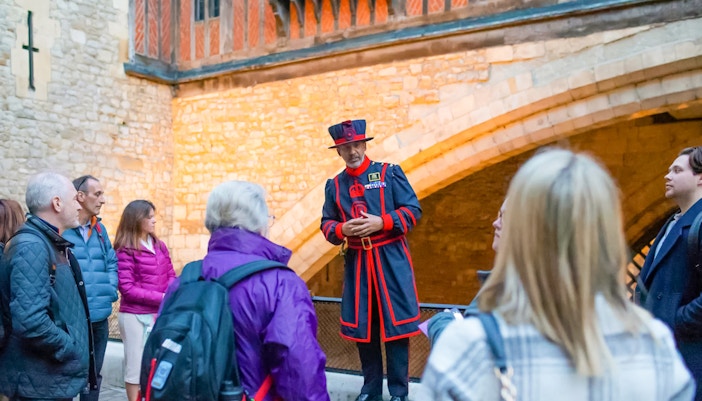
Since this is the Tower's busiest attraction, skip-the-line tickets or Beefeater Meet & Greet experiences help you reach the collection before queues become significantly longer.
How to best experience the Crown Jewels
Best time to visit
How long to spend
Allow 20–30 minutes for the Crown Jewels themselves, including the introductory displays and moving walkway. If you're visiting with a guide, set aside up to 45 minutes, as the historical context transforms the regalia from glittering objects into symbols of royal authority.

Where it fits in your itinerary
You'll usually reach the Jewel House midway through your Tower visit, before continuing to the White Tower, battlements, and other historic buildings. Keep enough energy and time in reserve—many visitors underestimate the queue and arrive feeling rushed through the Tower's most iconic collection.

Crowd patterns
Queues are longest between late morning and early afternoon, especially during weekends, school holidays, and summer months. Even after joining the line, expect a steady visitor flow inside the Jewel House. Earlier and later visits generally mean shorter waits and a more comfortable pace.

What to prioritise if time is short
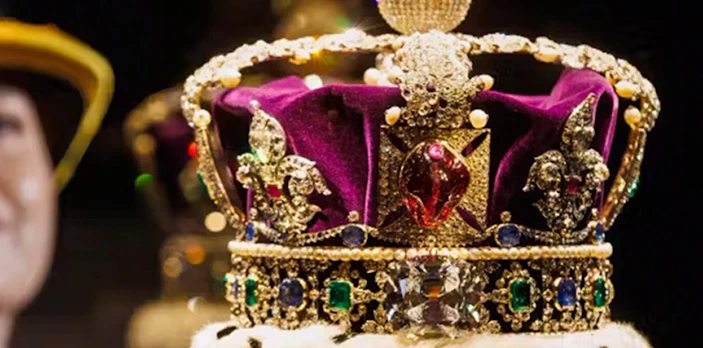
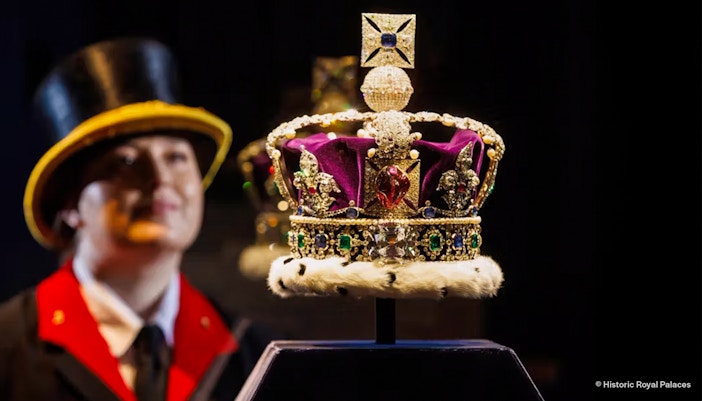
Focus on St Edward's Crown, the Imperial State Crown, and the Sovereign's Sceptre with Cross, home to the Cullinan I diamond. These ceremonial pieces remain the centrepieces of the collection and represent centuries of British coronation traditions.

Common mistakes to avoid
Many visitors assume they'll have unlimited time beside each display, but the moving walkway through the main chamber keeps everyone progressing. Take time to study the introductory galleries first, then use the second viewing opportunity to revisit details you may have missed.
Best tickets to experience the Crown Jewels
| Ticket type | Why choose it |
|---|---|
Standard tickets | Perfect for visitors exploring independently, allowing you to visit the Crown Jewels and the rest of the Tower at your own pace. |
Skip-the-line tickets | Spend less time waiting outside the Tower and reach the Jewel House before queues become significantly longer later in the day. |
Tickets with Beefeater Meet & Greet | Begin your visit with exclusive access to a Beefeater, whose stories about coronations, monarchs, and the Tower add valuable context before viewing the regalia. |
Combo tickets | Pair your Tower visit with other leading London attractions while still enjoying full access to the Crown Jewels during your Tower experience. |
Why it's worth seeing
The Crown Jewels are the ceremonial heart of the Tower of London and the only working royal regalia collection in the world that's still used for state occasions. While many visitors come for the diamonds, the collection's real significance lies in its continued role during coronations and other royal ceremonies. Every object on display has a purpose, from crowning a monarch to symbolising sovereign authority, making this far more than a treasury of priceless gems.

St Edward's Crown
Created in 1661 for the coronation of King Charles II, St Edward's Crown is the centrepiece of the collection. Crafted from solid gold and adorned with precious stones, it is traditionally used only during the moment of coronation, making it one of Britain's most important ceremonial objects.

The Imperial State Crown
Worn by the monarch during the State Opening of Parliament and after every coronation, this crown features nearly 3,000 gemstones, including the Cullinan II diamond, the Black Prince's Ruby, St Edward's Sapphire, and the Stuart Sapphire. Look closely to spot some of the monarchy's most famous historic jewels.

The Sovereign's Sceptre with Cross
Originally created for Charles II's coronation, the sceptre was redesigned in 1910 to hold the spectacular Cullinan I, or Great Star of Africa—the largest clear-cut diamond in the world. Despite its dazzling appearance, it remains an active symbol of royal power during every British coronation.
Historical & cultural significance
- Centuries of tradition: Although the Crown Jewels' history stretches back centuries, most of today's regalia was created for Charles II's coronation following the Restoration in 1661.
- Surviving civil upheaval: Earlier medieval regalia were destroyed after the English Civil War, making the current collection a remarkable recreation of Britain's royal ceremonial traditions.
- Still used today: Unlike many historic treasures, the Crown Jewels continue to play an active role in coronations, State Openings of Parliament, and other major royal ceremonies.
- Protected at the Tower: Housed in the Tower of London's Jewel House since the 17th century, the collection remains one of the nation's most closely guarded and treasured possessions.
Notable figures
Charles II
Commissioned the present Crown Jewels for his 1661 coronation following the Restoration.
Sir Robert Vyner
Royal goldsmith who crafted many of the coronation regalia still displayed in the Jewel House.
Charles III
The most recent monarch crowned using St Edward's Crown and other historic regalia from the Tower collection.
Oliver Cromwell
Ordered the medieval Crown Jewels to be broken up and sold after the monarchy was abolished in 1649.
George V
Oversaw the addition of the Cullinan I diamond to the Sovereign's Sceptre in 1910, enhancing one of the collection's most iconic pieces.
Know before you go

- Opening hours: The Crown Jewels follow the Tower of London's operating hours and are accessible whenever the Tower is open to visitors.
- Last entry: Entry to the Jewel House is available until the Tower of London's final admission time for the day.
- Seasonal changes: Opening and closing hours vary throughout the year in line with the Tower's seasonal visitor schedule and public holidays.
- Temporary closures: Access may occasionally be suspended during exceptional royal events, ceremonial occasions, or essential operational requirements.
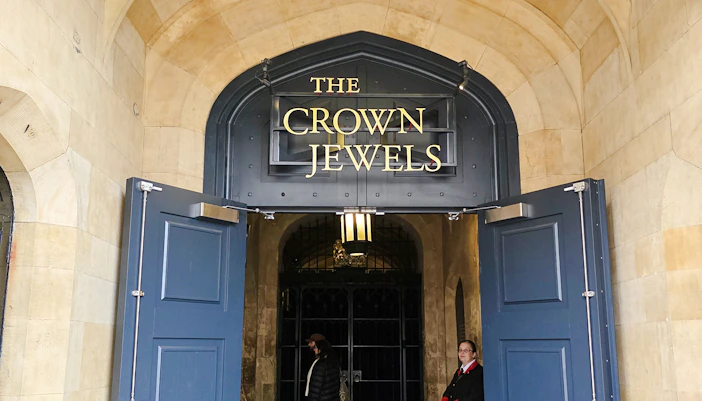
- Inside the Tower: The Crown Jewels are displayed inside the Jewel House, located within the central area of the Tower of London complex.
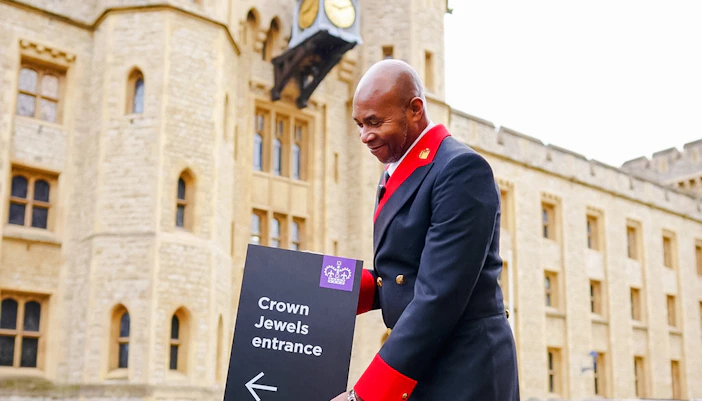
- Entry point: Visitors reach the Jewel House after entering the Tower through the main visitor entrance; no independent entrance is available.
- Visitor route: The Jewel House forms part of the Tower's signed visitor route and is easily reached using internal pedestrian pathways.
- Included admission: Access to the Crown Jewels is included with every valid Tower of London admission ticket without additional charges.

- Step-free access: The Jewel House offers step-free access throughout the visitor route, including entry, exit, and exhibition spaces.
- Moving walkway: The main viewing chamber features moving walkways, with stationary viewing lanes available for visitors requiring additional accessibility support.
- Mobility aids: Wheelchairs, mobility scooters, and other personal mobility aids are permitted throughout the accessible visitor route.
- Visitor assistance: Tower staff are available throughout the Jewel House to provide directions and accessibility assistance when required.

- Photography: Photography and video recording are strictly prohibited inside the Jewel House, including mobile phones and handheld cameras.
- Security screening: All visitors and belongings are subject to security screening before entering the Tower and accessing the Crown Jewels.
- Large luggage: Oversized bags, suitcases, and bulky items are not permitted inside the Jewel House under Tower security regulations.
- Food and drinks: Eating, drinking, and smoking are not permitted anywhere inside the Jewel House exhibition spaces.
Frequently asked questions about Crown Jewels
Yes. Every valid Tower of London ticket includes entry to the Crown Jewels inside the Jewel House.
No. There is no separate ticket. Admission is included with every Tower of London ticket.
No. The Jewel House is located within the Tower, so entry is only possible with Tower admission.
Most visitors encounter the Jewel House around the middle of the Tower route, although you can adjust your route after entering.
Allow around 20–30 minutes for a self-guided visit, or up to 45 minutes if accompanied by a guide.
Yes. Entry is included, though the amount of commentary depends on your chosen guided tour.
No. Photography and video recording are strictly prohibited inside the Jewel House.
Yes. The Jewel House provides step-free access, accessible viewing options, and support for visitors using mobility aids.