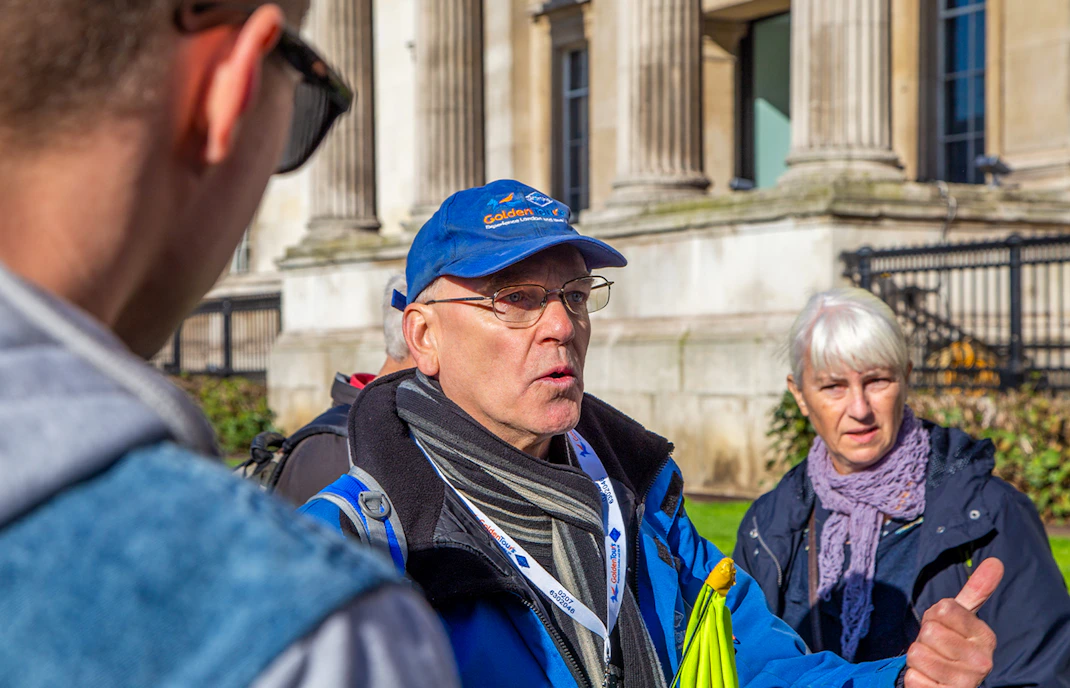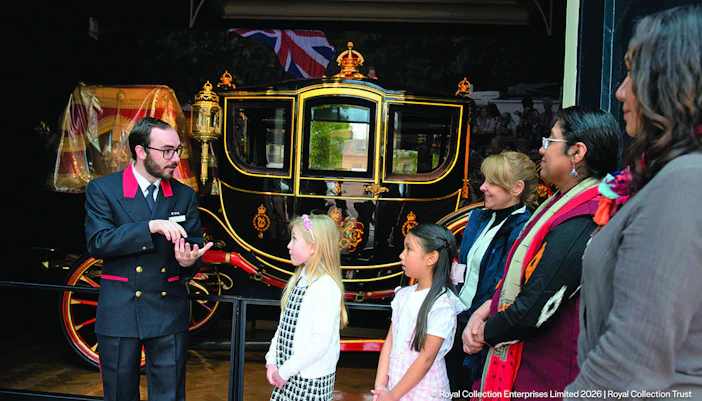
- Want the full ceremonial spectacle explained rather than just guessed at — the music, the regiments, the history behind the uniforms are easy to miss without a guide.
- Are visiting once and want a proper vantage point, not a scramble at the railings with everyone else.
- Are combining it with a wider walk past St James's Palace and The Mall, since the guided version turns a 45-minute wait into a fuller morning.
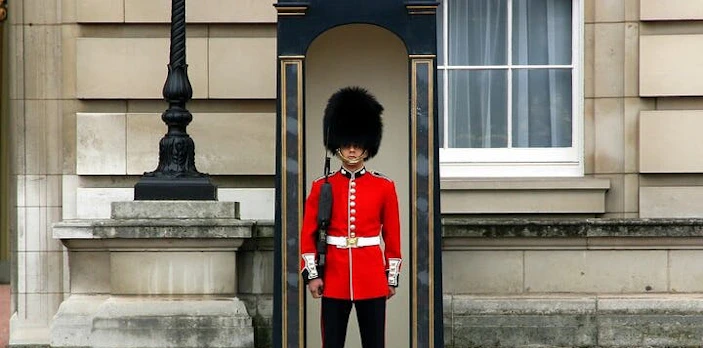
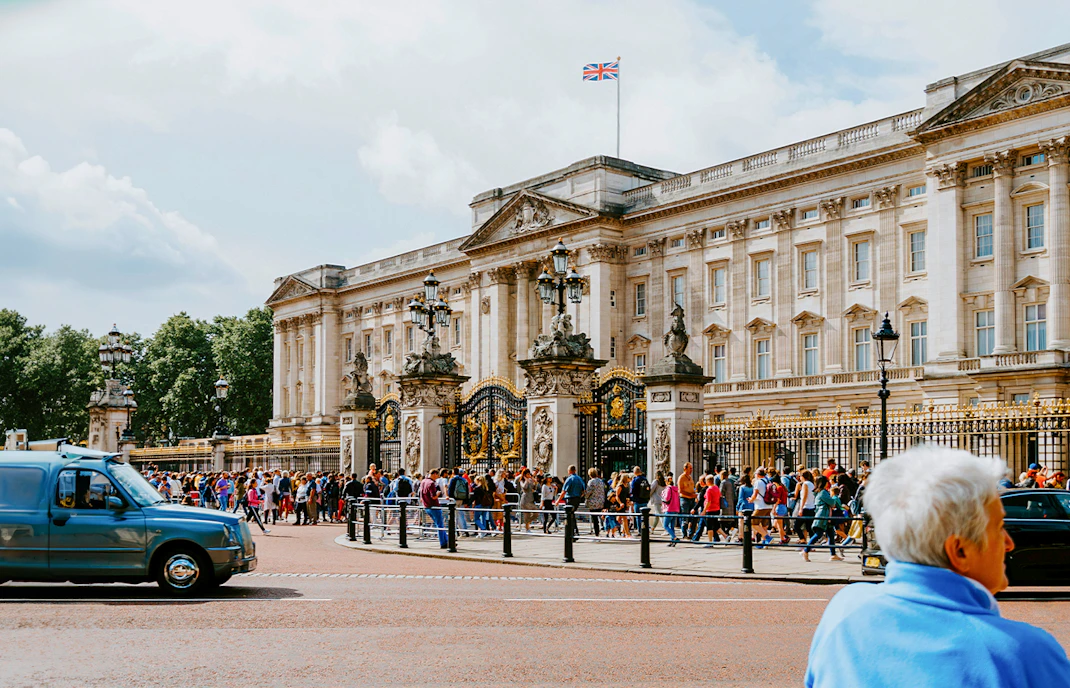
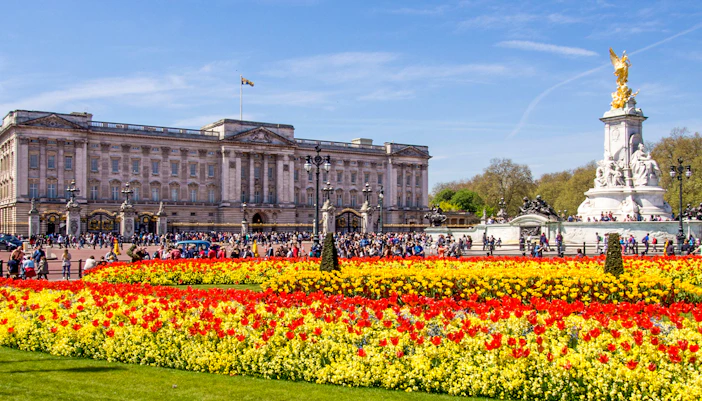
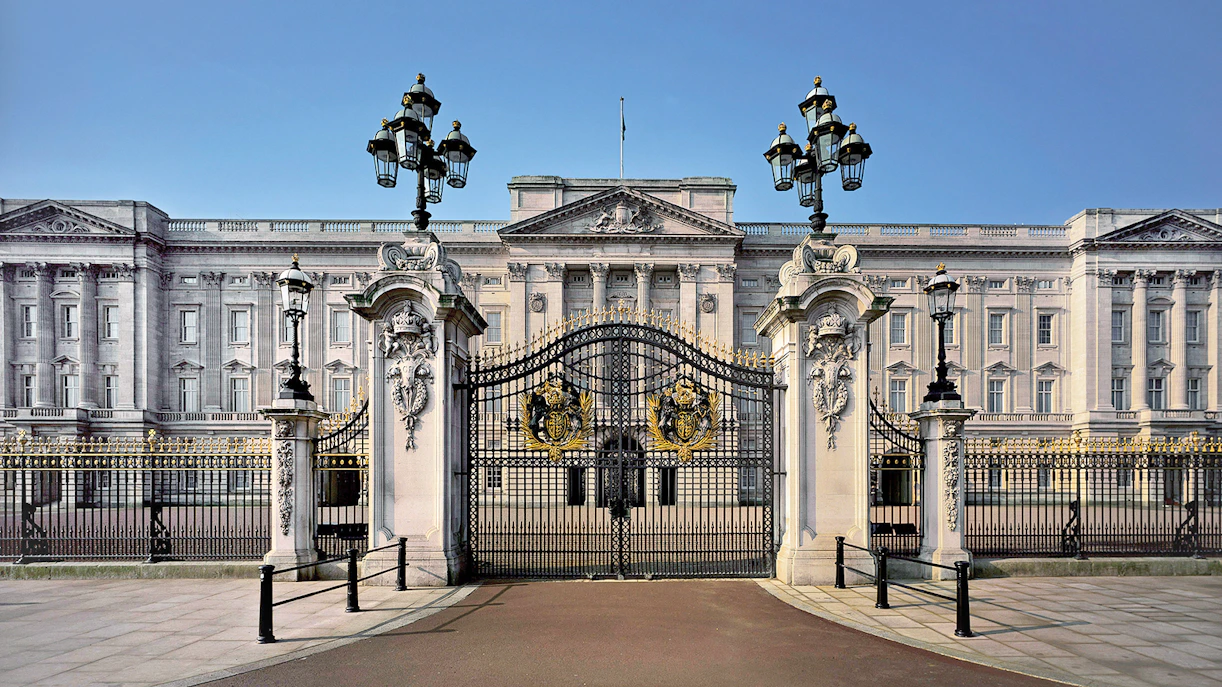
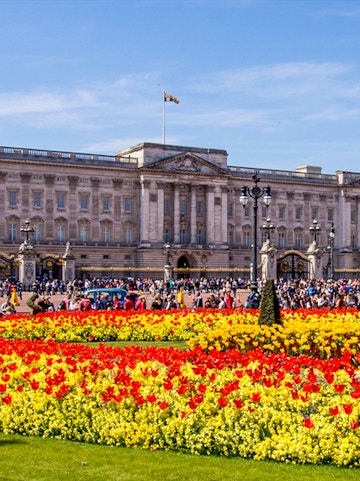
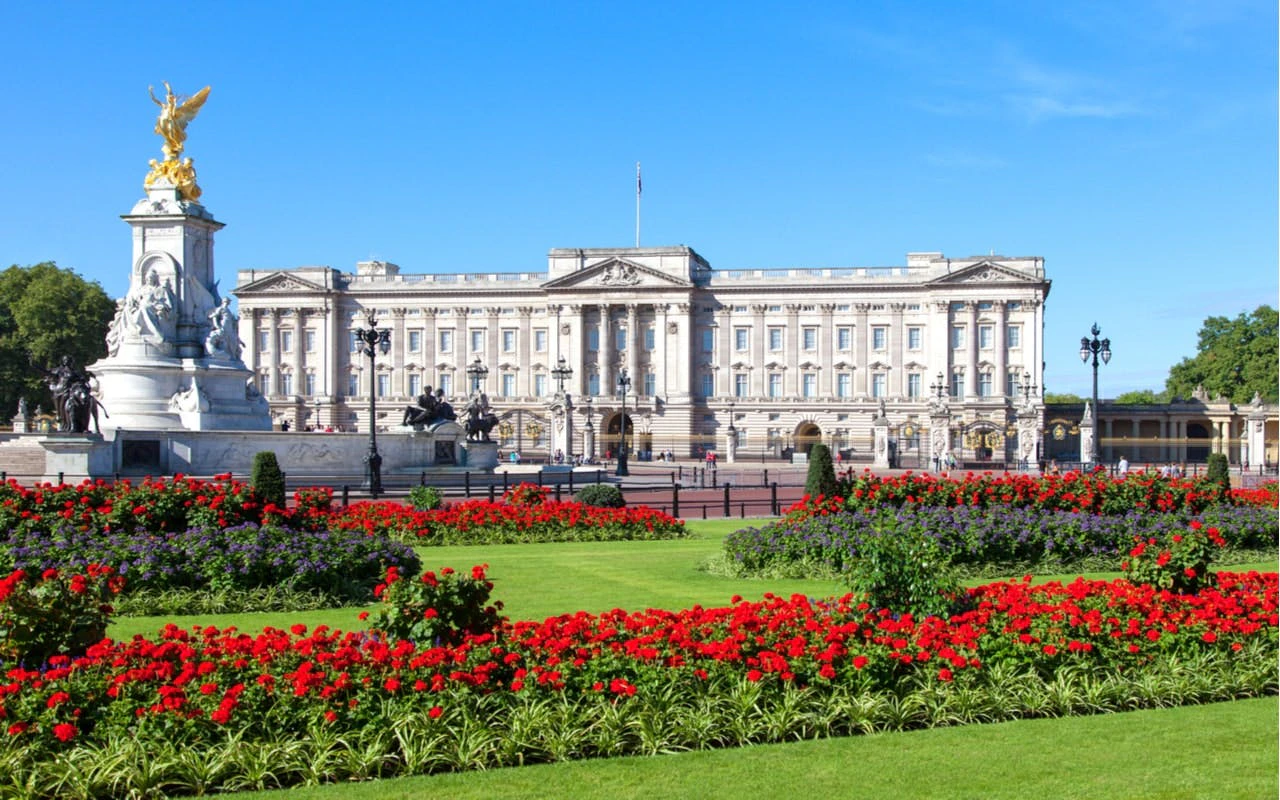
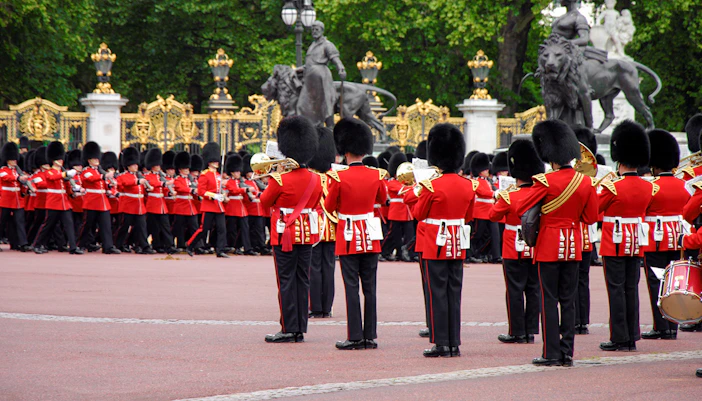
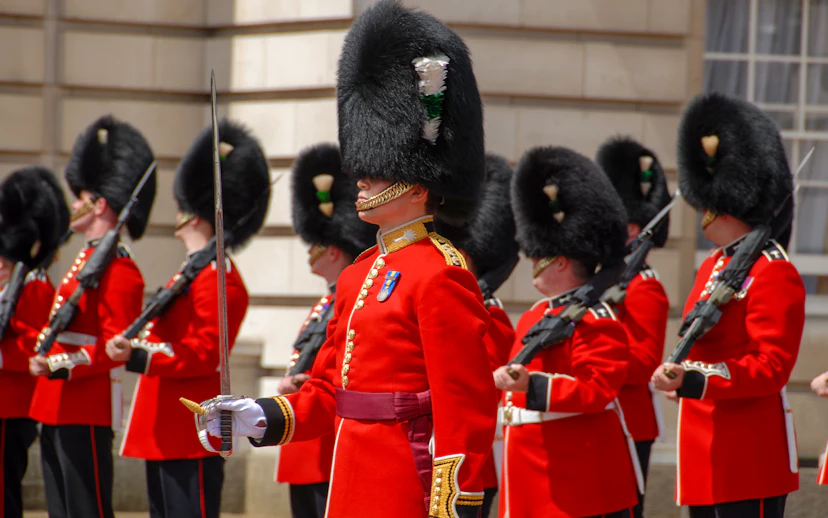
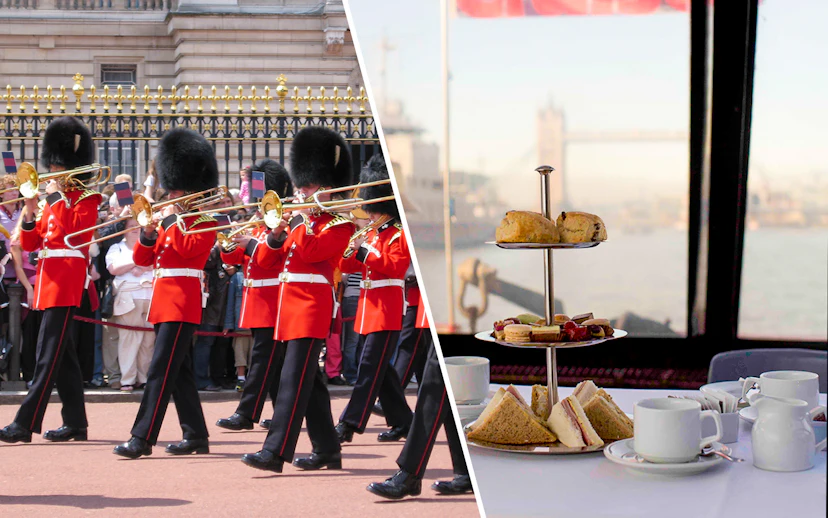
The Changing of the Guard at Buckingham Palace is one of London’s most recognisable royal ceremonies, where soldiers of the King’s Guard formally hand over responsibility for protecting the Palace. Watch the guards march to military music, accompanied by a military band, as the old guard is replaced by the new. The ceremony typically takes place outside Buckingham Palace, with the exact schedule subject to change.
Quick overview
- Ticket: Separate ticket required for a guided viewing experience. Watching the ceremony itself from public areas is free and needs no ticket at all.
- Starting price: From £14.
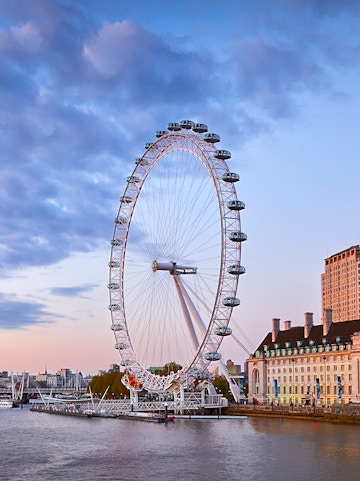
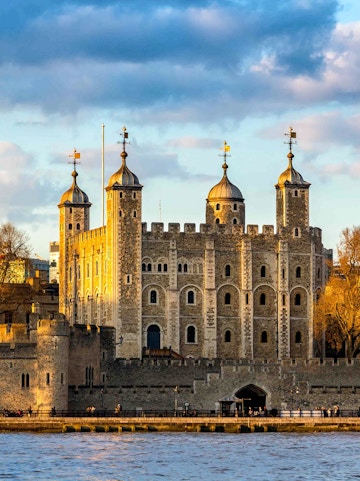
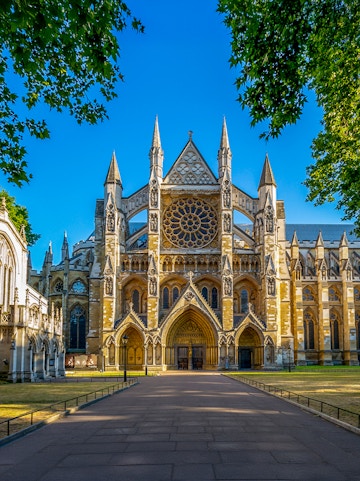
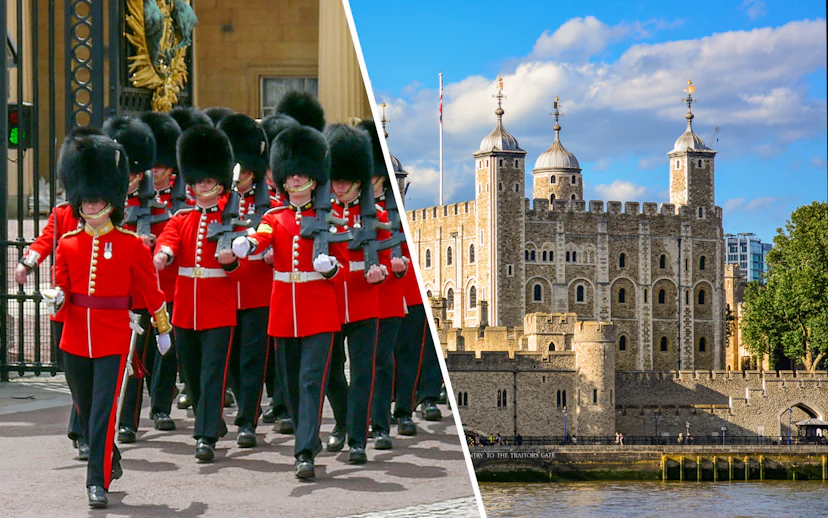
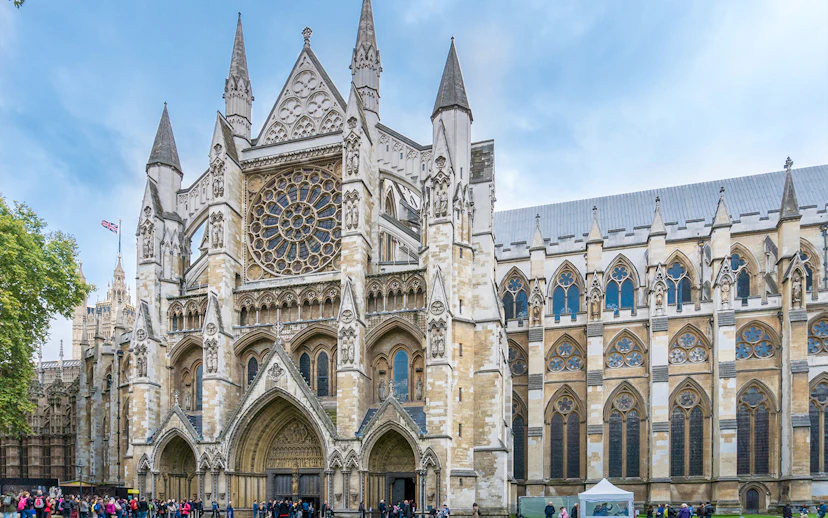
- Combo available: Yes. Combos exist with the Afternoon Tea Cruise, Tower of London, Westminster Abbey, and a Royal London coach tour.
- Visit duration: The ceremony itself runs about 45 minutes. Guided options add a walking tour, running 1.5–3 hours in total depending on which one you pick.
- Best time: The ceremony takes place at 11am on Mondays, Wednesdays, and Fridays, and at 10am on Sundays. Arrive by 10:15–10:40 for a good spot.
- Included in Buckingham Palace State Rooms ticket: No. It's a separate experience and not bundled with State Rooms entry.

Things to know before booking your Changing the Guard experience
- Access: Watching the Changing the Guard ceremony from the street or park is entirely free — no ticket needed. The paid options here are guided experiences (small-group walking tours, coach tours, and combos), not a way to "get in" to something otherwise closed off.
- Not bundled with State Rooms entry: If you want both, you'll need a separate Changing the Guard product and a separate State Rooms ticket, or one of the combos that pairs them.
- When a combo makes sense: Combo tickets exist with the Tower of London, the Afternoon Tea Cruise, and Westminster Abbey. These make sense if you're already planning to visit that second attraction the same day — the savings are modest, so don't book a combo purely for the discount if you weren't already going.
- Physical requirements: There is no seating during the ceremony, so expect to stand for the full 45 minutes. Wear comfortable shoes. Combo experiences with walking tours typically last 1.5–3 hours, with a fair amount of standing and walking.
- Timings differ from the Palace itself: The ceremony runs on a fixed public schedule (11am Mondays, Wednesdays, and Fridays; 10am Sundays) that's entirely independent of Buckingham Palace's own opening hours or State Rooms visiting times. Don't assume the two align.
- Ceremony can change at short notice: The Changing of the Guard can be cancelled at short notice due to bad weather, state events, or other operational reasons. On days when the Buckingham Palace ceremony is not scheduled, you may see the Changing of the Horse Guard instead.
- Rules on the day: Follow the instructions of police and event marshals, and stay behind the barriers at all times — both for your own safety and the marching guards'.
- Booking lead time: Group sizes are capped (around 15–20 people), and slots can sell out during peak summer months. Book at least a few weeks ahead in July and August if you have specific dates.
Is it worth it?

Go for it if you

Skip it if you
- Are short on time or budget — the ceremony is free to watch unguided, and a paid tour only adds value if commentary and positioning matter to you.
- Have already seen a similar military ceremony elsewhere and don't need the historical context repeated.
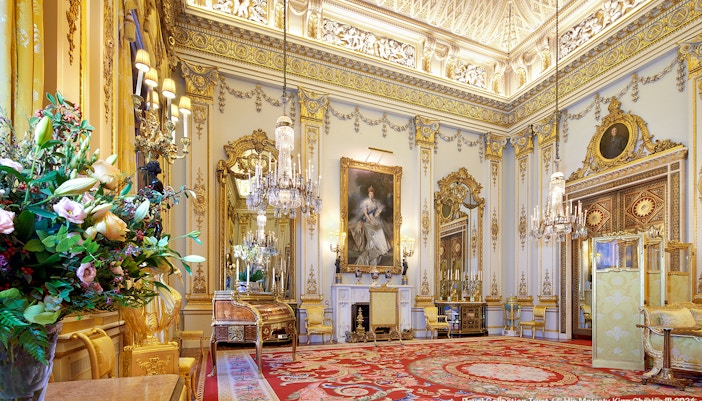
- Are set on going inside the Palace itself. This experience stays outside the railings; it isn't a way to see the State Rooms.
Standalone vs combo vs main attraction
| Ticket | Best for |
|---|---|
| Changing the Guard only | Visitors short on time who want the ceremony and its context, without committing to a longer palace visit |
| State Rooms only | Visitors prioritising the interior and art collection, or visiting on a day the ceremony isn't scheduled |
| Combo ticket (Changing the Guard + State Rooms) | First-time visitors who want the full royal day — the ceremony and a self-paced look inside the Palace — without booking two separate tickets |
Ticket options explained
| Factor / Access | Changing the Guard only | + Tower of London | + Afternoon Tea Cruise | + Westminster Abbey |
|---|---|---|---|---|
Guided experience | Yes | Yes | Yes | Yes |
Changing the Guard access | Yes | Yes | Yes | Yes |
State Rooms access | No | No | No | No |
Other attraction access | No | Tower of London | Thames cruise + tea | Westminster Abbey |
Why go for it | You only want the ceremony explained properly, without adding another stop to your day | You're doing the Tower anyway and want it paired with a guide for the ceremony too | You'd rather end the morning on the river with tea than rush to a second attraction | You want Westminster's landmarks and the Abbey covered in one guided booking |
Starting price | From £14 | From £48.45 | From £51.30 | From £68 |
How to best experience the Changing the Guard
Best time to visit
Arrive by 10:15 in July and August, when tourist crowds peak; 10:30–10:40 works the rest of the year. Sundays draw thinner crowds than the Monday/Wednesday/Friday slots, since fewer visitors know the schedule shifts.

How long to spend
The ceremony itself runs 45 minutes end to end. A guided walking tour extends this to 1.5–3 hours by adding context and a route past St James's Palace. Unguided, you'll get the spectacle but miss why any of it matters.

Where it fits in your itinerary
Pair it with a morning State Rooms visit if you're touring the Palace that day — the ceremony wraps just as State Rooms entry slots open. As a standalone, it fits neatly before an afternoon elsewhere in Westminster.

Crowd patterns
Crowds peak in the 20 minutes before 11am, when everyone converges on the railings at once. Positions along The Mall or near Wellington Barracks fill up more slowly, giving you a workable view without the earliest arrival.

What to prioritise if time is short
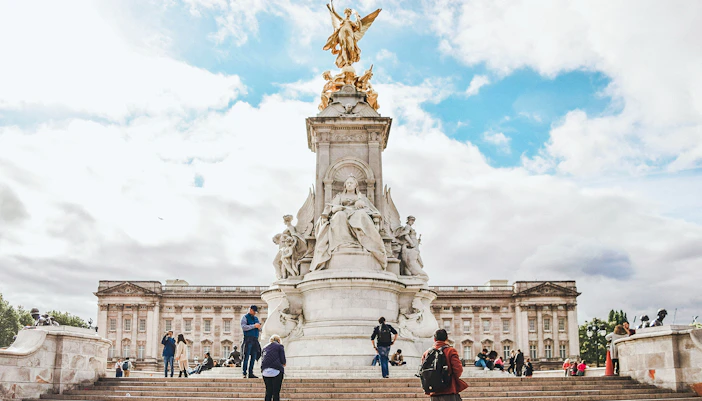
Skip the packed palace railings and head to the Victoria Memorial steps for an elevated, unobstructed view of the whole ceremony. If you only catch one moment, the march-out from Wellington Barracks beats the static handover itself.

Common mistakes to avoid
Assuming the ceremony happens daily — it doesn't run on Tuesdays, Thursdays, or Saturdays. Showing up on the wrong day for your planned viewing spot is the single most common wasted trip here.
Most visitors think the ceremony is a single moment at 11am — it isn't. It's a sequence spread across nearly an hour and three separate locations, and where you stand changes what you actually see. The full spectacle only comes together if you follow the stages rather than planting yourself at one spot and waiting.
Highlights of the Changing the Guard ceremony
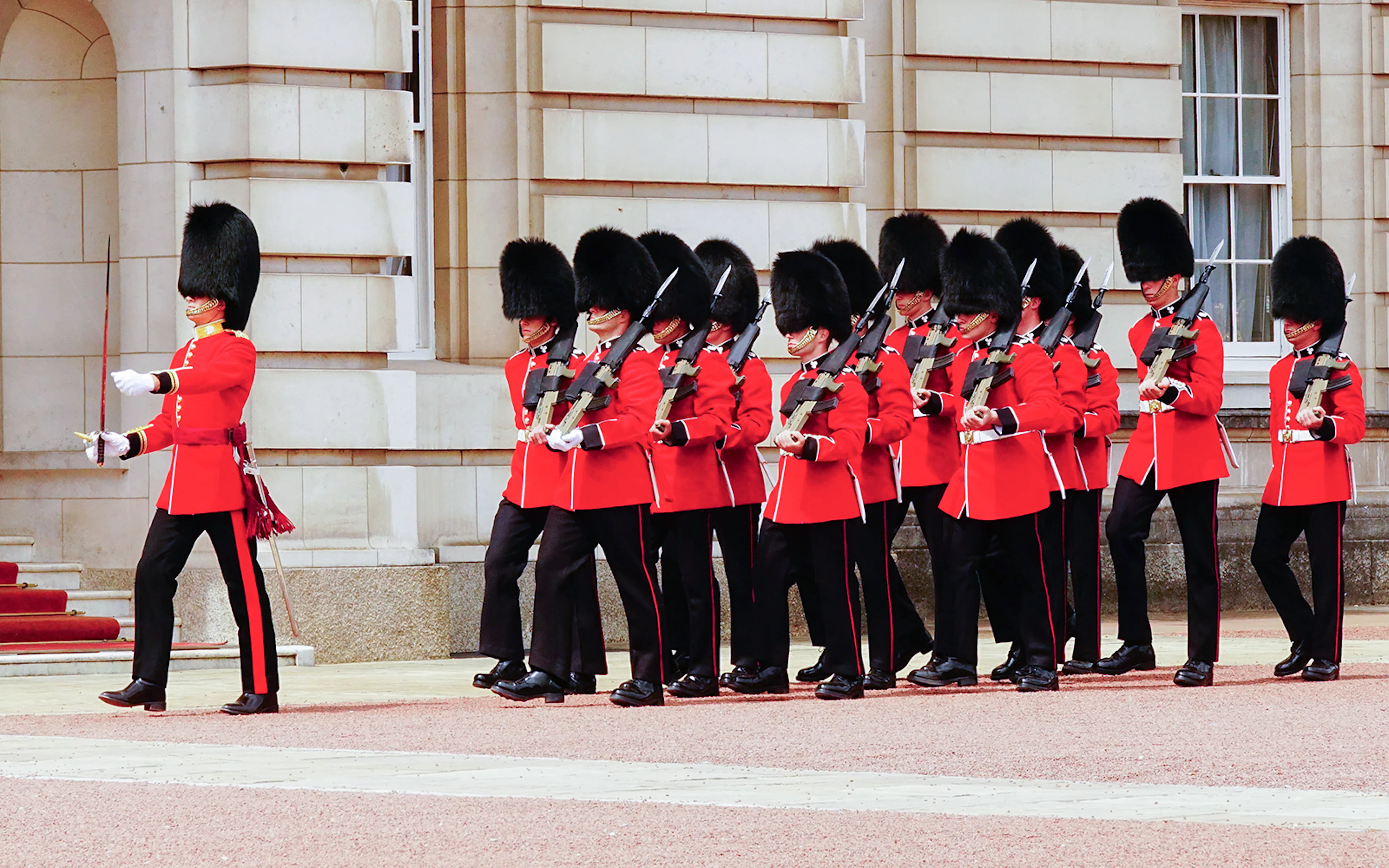
Wellington Barracks: the New Guard forms up
Before anything reaches the Palace, the New Guard assembles at Wellington Barracks, a few minutes' walk away. This is where the band tunes up and the formal inspection happens. Few tourists come here first, which makes it the easiest place to get close and see the guardsmen before the crowds thicken at the Palace itself.
The march to the Palace
The New Guard marches from the barracks to the Palace forecourt along Birdcage Walk, music playing, and this procession is often more visually striking than the static ceremony that follows. Position yourself along this route rather than only at the gates, and you'll see the guards in motion, not just standing still.
The forecourt handover
This is the ceremony most people picture: the Old Guard formally hands responsibility to the New Guard in front of the Palace railings. There's no public access to the forecourt itself, so sightlines from ground level are often partial. The elevated Victoria Memorial gives you the clearest view of this stage.
The band's music
Before the march, the band plays while waiting for the Regimental Colour, mixing traditional military tunes with occasional contemporary pieces — a detail that catches most first-time visitors off guard. It's worth arriving early enough at the barracks to catch this rather than only seeing the formal handover later.
The Old Guard's return
Once relieved, the Old Guard marches back to Wellington Barracks, performing a "falling out" ceremony on arrival. Following this final stretch gives you a second, quieter viewing after the main crowds at the Palace have already dispersed — worth doing if you want photos without the rush.

Historical & cultural significance
Most visitors assume the guards are performers — they're active-duty soldiers, and the ceremony began as a genuine security necessity, not a show. It dates to 1660, following the Restoration of Charles II, making it over 360 years old. What started purely as functional protection has become one of London's most-watched spectacles, yet the duty itself hasn't changed: these regiments still guard the King's residences today, the pageantry built entirely on top of a real job.
Know before you go

- Ceremony days: Monday, Wednesday, Friday at 11am; Sunday at 10am.
- Tuesday, Thursday, Saturday: no Changing the Guard — the Horse Guards change instead, at Horse Guards Parade.
- Full sequence runs about 45 minutes, from the New Guard forming up to the Old Guard's return to barracks.
- The schedule can be suspended at short notice for state events, military commitments, or severe weather.
- Guided tour meeting times vary by product — check your specific booking confirmation for the exact time and location.
Address: Buckingham Palace, London SW1A 1AA | Find on Google Maps
- Nearest tube: Green Park (closest, ~9 minutes), St James's Park and Hyde Park Corner (~10 minutes). Victoria is the recommended approach on ceremony mornings.
- Alternative viewing point: Wellington Barracks on Birdcage Walk, where the New Guard forms up before marching to the Palace.
- No visitor parking on-site; nearest paid options include Q-Park Victoria and the Victoria Coach Station car park.

- The footpaths in front of the Palace are paved and step-free.
- There are no official dedicated wheelchair viewing areas; police and staff on duty typically help wheelchair users into a clear position near the gates.
- Wellington Barracks is a flatter, less crowded alternative that's generally easier for wheelchairs and pushchairs than the Palace forecourt itself.
- No seating is provided anywhere along the route; standing is required throughout.

- Photography is permitted and encouraged throughout.
- Visitors must stay behind barriers and follow instructions from police and event marshals at all times.
- Do not attempt to cross the road when the guards are marching — they will not stop or divert.
Frequently asked questions about Changing the Guard experience
No. Watching from public footpaths or the Victoria Memorial is free. A ticket is only needed for a guided experience with commentary and a better vantage point.
No. State Rooms entry and Changing the Guard viewing are entirely separate — you'd need both a State Rooms ticket and a Changing the Guard product to do both.
If you're already visiting the Tower of London, Westminster Abbey, or planning a Thames cruise that day, a combo saves a little money. Otherwise, standalone is simpler.
The ceremony itself runs about 45 minutes. Guided options add a walking tour, extending the whole experience to 1.5–3 hours depending on the option.
Arrive by 10:15 in July and August; 10:30–10:40 works the rest of the year. Sundays tend to be quieter than Monday, Wednesday, or Friday.
Yes. The ceremony takes place outside, on the forecourt and surrounding streets. No palace entry or ticket is required to watch it for free.

Guided experiences have capped group sizes and can sell out in peak summer months. Book a few weeks ahead if you have specific dates in mind.