How to visit Buckingham Palace
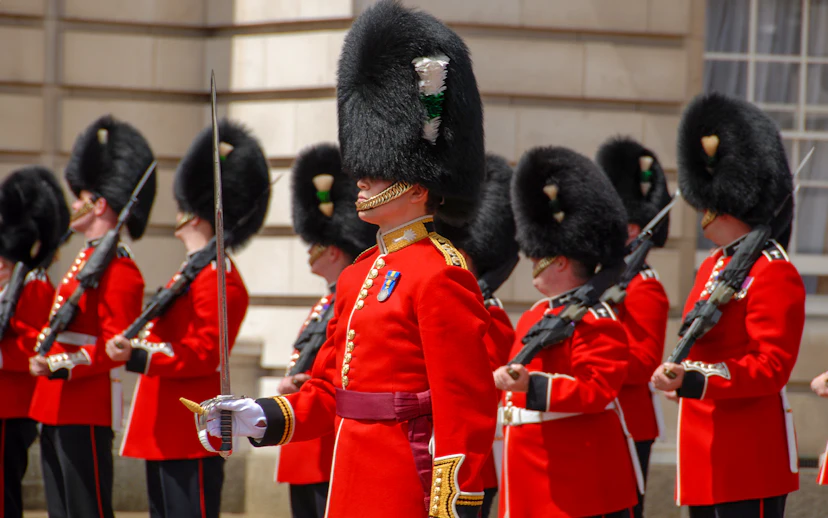
Buckingham Palace is the monarch’s official London residence, with the summer State Rooms tour offering visitors a glimpse inside its grand interiors. The experience is elegant but more structured than many first-timers expect, with timed entry, airport-style security, a one-way route, and steady crowds through the palace’s largest rooms. Your entry time can make a noticeable difference, with quieter visits feeling very different from the late-morning rush following the Guard ceremony. This guide covers everything you need to know, from tickets and timings to entry, the visitor route, and what to expect when you arrive.
Quick overview: Buckingham Palace at a glance
- When to visit: The State Rooms are open daily from 9 Jul to 27 Sep 2026, with first entries at 9:30am. The first slot is noticeably calmer than 11:30am–2pm, when guard watchers and midday ticket holders converge.
- Getting in: Standard entry starts at £14, State Rooms entry at £33, State Rooms with a Royal Walking Tour at £53.36, and State Rooms with the Changing the Guard tour at £61. The Royal Mews ticket starts at £18, and the Changing the Guard tour alone starts at £14. Guided tours for other attractions typically start at £55.54. Book ahead for August and weekend slots; later September dates are easiest to secure.
- How long to allow: 1.5–2 hours for most visitors. Add extra time for the multimedia guide at full pace, a stop at the garden end, or a walking tour before entry.
- What most people miss: The Grand Staircase, the Picture Gallery, and the garden exit are often rushed, since most visitors focus almost entirely on the Throne Room and Ballroom.
- Is a guide worth it? Yes, if you want to combine the Guard ceremony or a royal walk without juggling timings. For the palace interior alone, the included multimedia guide usually gives enough context for less.
🎟️ Tickets for Buckingham Palace sell out days or weeks in advance during August and summer weekends. Lock in your visit before the time you want is gone. → See ticket options.
Jump to what you need
🕒 Where and when to go
🗓️ How much time do you need?
🎟️ Which ticket is right for you?
🗺️ Getting around
👑 What to see
♿ Facilities and accessibility
Where and when to go

How do you get to Buckingham Palace?
Buckingham Palace sits in St James's, between Green Park and Victoria, and is an easy walk from several central London stations.
Buckingham Palace Road, London SW1A 1AA, United Kingdom
- Tube: Green Park station → 10 min walk → easiest if you want to approach through the park and avoid the Victoria traffic flow.
- Tube: Victoria station → 10 min walk → best if you're arriving by National Rail, coach, or staying near Belgravia.
- Tube: St James's Park station → 10 min walk → usually the simplest approach if you're pairing the Palace with Westminster.
- Bus: Routes serving Buckingham Palace Road and Victoria Memorial → short walk → useful if you want the least walking from other Westminster sights.
- Taxi/rideshare: Drop-off near Buckingham Palace Road or Grosvenor Place → allow extra time on guard mornings because road controls can slow access.
Which entrance should you use?
The State Rooms use one visitor entrance, but the line you join still matters, since timed-ticket holders and same-day enquirers don't move at the same pace.
- Buckingham Palace (State Rooms): Pre-booked timed tickets move fastest — expect around 10–20 minutes at busy midday times, mostly for security screening. On-the-day enquiries can stretch to 30–60 minutes in summer, and popular dates often sell out before you reach the desk.
- The Royal Mews: A separate ticketed venue from the State Rooms, with its own accessible entrance on Buckingham Palace Road.
- The King's Gallery: Also a separate ticketed venue, with its own accessible entrance on Buckingham Palace Road.
When is Buckingham Palace open?
The State Rooms are only open for a short public season, so your travel dates matter more here than at most London landmarks.
- Season: 9 July – 27 September 2026.
- Hours: 9:30am–7:30pm (9 Jul–31 Aug), then 9:30am–6:30pm (1–27 Sept).
- Rest of the year: Closed to general visitors, aside from selected guided tours on limited dates.
- Last entry: Around 2 hours before closing
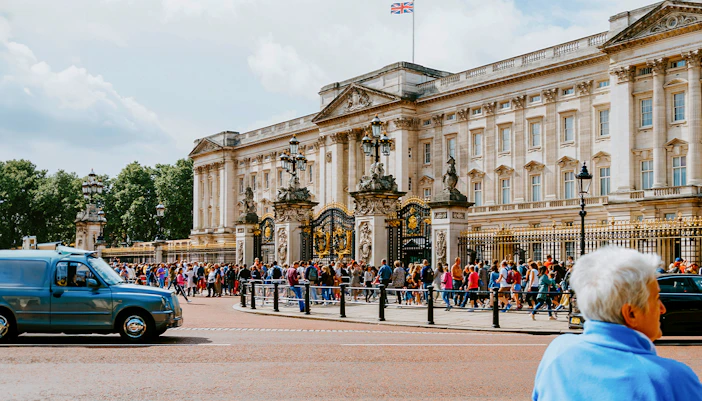
When is it busiest: Weekends, August dates, and the 11:30am-2pm window are the most crowded, especially after the Changing the Guard crowds spill toward Palace entry.
When should you actually go? The first 9:30am slot or one of the last afternoon entries usually feels easier, because security moves faster and the rooms are less packed.
How much time do you need?
| Visit type | Route | Duration | Walking distance | What you get |
|---|---|---|---|---|
State Rooms | Entrance → State Rooms → garden route → exit | 2–2½ hrs | 500m garden walk | The standard self-guided visit through the 19 State Rooms, followed by the garden route to the exit. |
State Rooms + Garden Highlights | Entrance → State Rooms → West Terrace → Garden Highlights → garden exit | 3–3½ hrs | 500m+ | Adds a 45-minute guided walk through the Palace garden, covering its key highlights. |
Royal Day Out | King’s Gallery → Royal Mews → State Rooms → garden exit | 4½ hrs | 500m+ | Combines all 3 venues in one day, ending with the garden walk out of Buckingham Palace. |
Which ticket is right for you?
| Ticket type | What's included | Best for | Price from |
|---|---|---|---|
The State Rooms at Buckingham Palace | State Rooms entry, multimedia guide, and headsets when needed | A self-paced visit to the State Rooms with no added tour | £33 |
Buckingham Palace Ticket | Entry to either the State Rooms or Royal Mews, plus multimedia guide | Choosing one royal site and exploring it at your own pace | £14 |
State Rooms + Royal Walking Tour | Skip-the-line State Rooms entry, Royal London walking tour, guide, and multimedia guide | Combining palace interiors with a guided walk through royal London | £53.36 |
State Rooms + Changing the Guard Tour | State Rooms entry, Changing the Guard experience, English-speaking guide, and audio guide | Pairing the palace with a guided Guard ceremony experience | £53.36 |
Changing the Guard Ceremony | Small-group Guard ceremony experience with an English-speaking guide and headsets | A focused visit centred on the Changing the Guard, without palace entry | £14 |
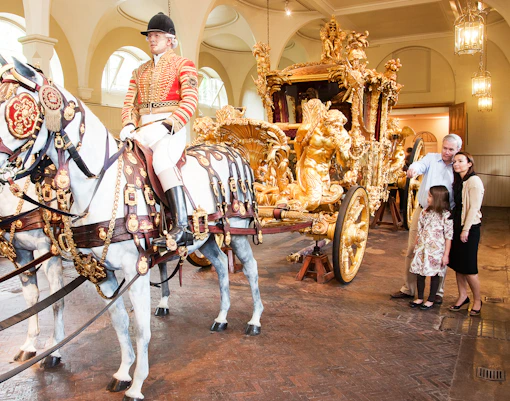
Royal Mews | Royal Mews entry, State Coaches, horses, multimedia guide, and family activities | Exploring royal transport, working stables, and ceremonial coaches | £18 |
Westminster Abbey, Big Ben & Buckingham Palace | Westminster Abbey entry plus a walking tour past Big Ben and Buckingham Palace | Seeing Buckingham Palace from outside while covering other major Westminster sights | £55.54 |
Headout Pass London | Access to 2–7 selected London attractions over 30 days | Building a flexible London itinerary across multiple attractions | £63 |
How do you get around Buckingham Palace?
Buckingham Palace has a structured, one-way visitor route rather than a layout you can freely explore. The State Rooms span several large rooms and halls across 2 floors, after which the route continues outdoors through the Palace Garden to the exit. Allow 2–2½ hours for the standard visit, including time for the multimedia guide.
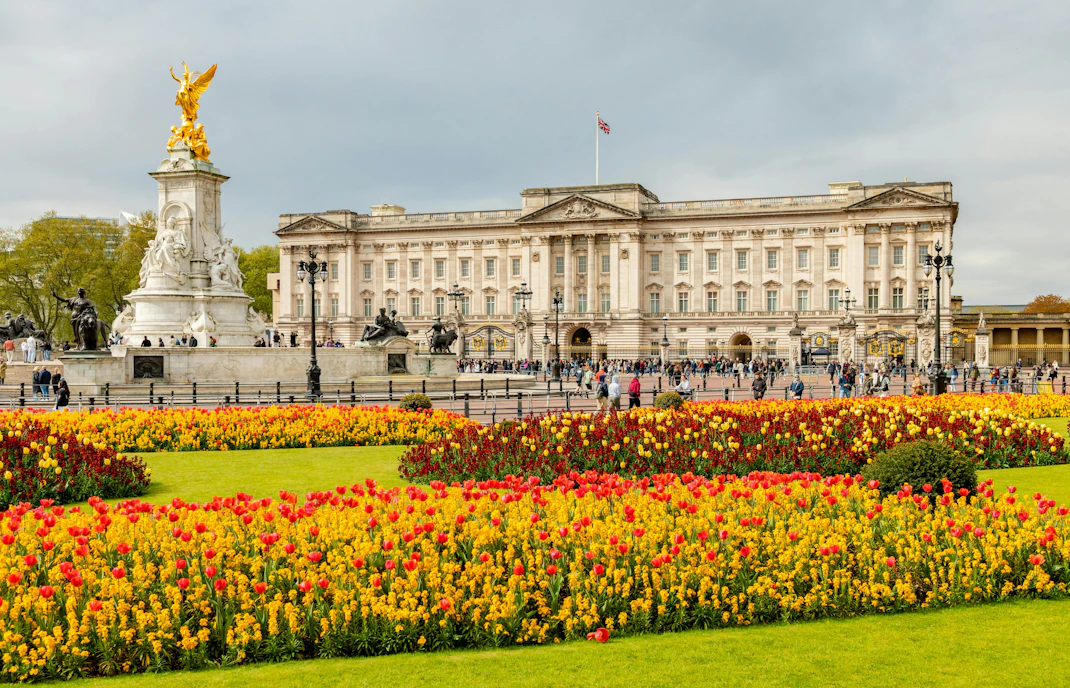
Inside the Palace
- State Rooms: Follow the one-way route through the palace’s ceremonial rooms and halls. The multimedia guide provides commentary as you move through the visit.
- West Terrace: After the State Rooms, take in views of the garden before continuing towards the exit.
- Palace Garden: The route continues down 10 steps into the garden, then follows a gravel path for around 500m along the south side towards the exit.

Maps and navigation tools
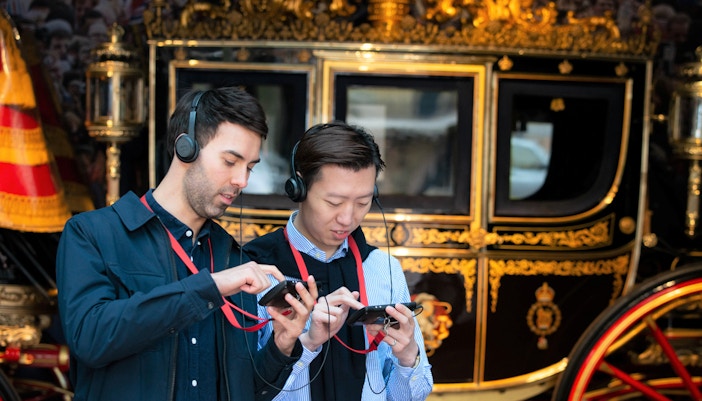
- Multimedia guide: Included with State Rooms admission and available in English, Brazilian Portuguese, French, German, Italian, Japanese, Mandarin Chinese, Russian, Spanish, and BSL with subtitles.
- Signage: The visitor route is one-way, with signs directing visitors through the palace and towards the garden exit.
- Access guide: An official Access Guide and Photo Journey can be downloaded before your visit if you want to familiarise yourself with the route and accessibility arrangements.
💡 Pro tip: There are no toilets at the start of the visitor route. Toilets and baby-care facilities are at the end, so plan accordingly before entering the State Rooms.
Where are the masterpieces inside Buckingham Palace?
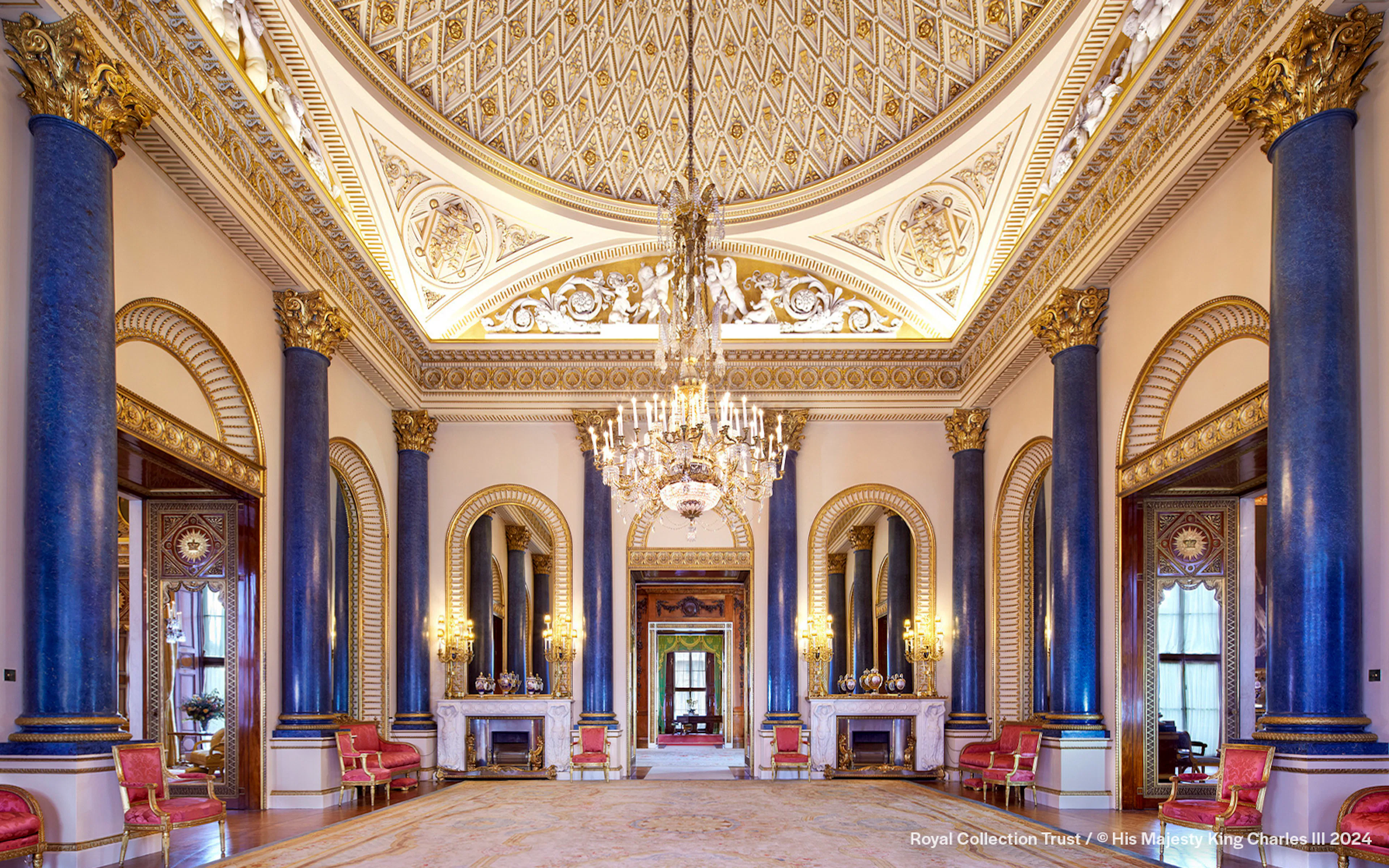
The Music Lesson
Artist: Johannes Vermeer.
This small painting is one of only 34 Vermeers known to exist worldwide and just one of five in the UK. Most visitors move past it quickly, drawn to the gallery's larger, more dramatic canvases nearby. Slow down here — a work this rare rarely hangs somewhere you can walk right up to, with no glass, no crowd barrier, just a rope line.
Where to find it: Picture Gallery, roughly midway along the 47-metre gallery.
The Throne Room
Era: Designed by John Nash for George IV, 1820s.
The gilded "ER" and "P" thrones sit beneath a crimson canopy, framed by an arch Nash borrowed straight from his background in stage design. It's still used for investitures today, and was the backdrop for the Prince and Princess of Wales's wedding photographs. Look up: 28 carved figures around the canopy represent chivalry and history.
Where to find it: Midway through the State Rooms route, just past the Guard Chamber.
The Grand Staircase
Creator: John Nash, added in the 1830s.
This staircase in marble with gilded balustrades is the first true "wow" moment of the visit, positioned right after the entrance, before you reach any of the State Rooms proper. Most visitors are drawn to the sheer scale and gilding overhead and move through quickly. It's worth pausing on the landing, where the full scale of the palace first becomes obvious.
Where to find it: Immediately after the entrance, before the first State Room.
The Ballroom
Era: Completed 1855, under Queen Victoria.
This is the largest room in the Palace — over 33 metres long, originally built as a ball and concert room, and still used today for state banquets and investitures. Six enormous chandeliers hang beneath a dramatic vaulted ceiling. Look toward the far end: a working pipe organ, installed for Victoria, sits in a musicians' gallery most visitors walk straight past.
Where to find it: Toward the end of the State Rooms sequence.
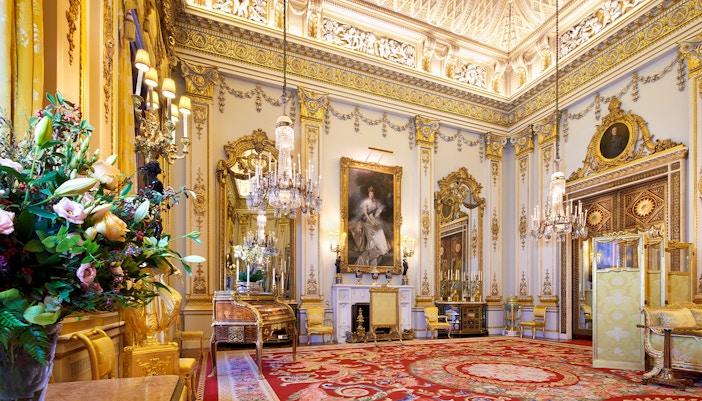
The White Drawing Room
Attribute: Concealed mirror door.
The room's standout feature is a large gilt mirror on the far wall that conceals a hidden door, disguised well enough that most visitors miss it entirely. It's one of the more overlooked details in the State Rooms — easy to stand right next to and never notice.
Where to find it: Ask an attendant to point it out; it's not obvious at a glance.
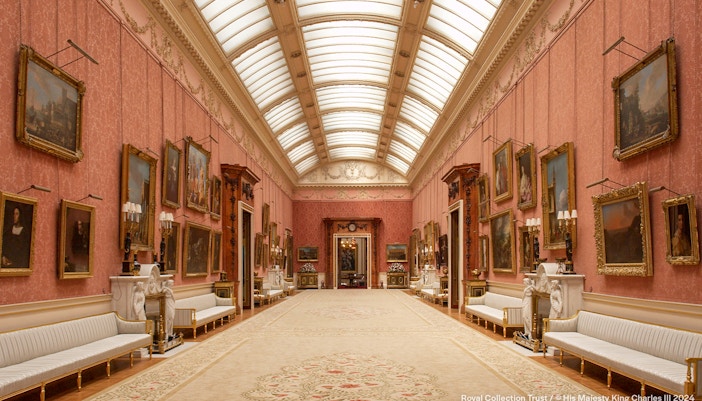
The Picture Gallery
Attribute: 47-metre top-lit gallery, completed 1914.
This is the spine of the State Rooms — a single run of Old Masters including Rembrandt, Rubens, Van Dyck and Canaletto, illuminated by roof lanterns designed specifically to bring out the paintings' detail. It's easy to treat as a corridor between grander rooms, but it rewards walking slowly.
Where to find it: Connects the central State Rooms to the Ballroom sequence.
Facilities and accessibility
- 🎒 Pushchairs and baby carriers: Pushchairs are not permitted inside the State Rooms and must be checked in, but baby carriers are available for loan.
- 🎧 Multimedia guide: Palace entry includes a multimedia guide in English, Brazilian Portuguese, French, German, Italian, Japanese, Mandarin Chinese, Russian, Spanish, and British Sign Language with subtitles.
- 🍽️ Garden Café: The easiest place to eat relative to the Palace visit is at the garden end, after the one-way route is complete.
- 🔐 Security screening: All visitors pass through airport-style security, so bringing less helps the whole arrival process move faster.
- 👶 Family support: Infants up to 4 years are admitted free on some Palace products, and the visit works more smoothly if you plan around the one-way route rather than trying to stop and double back.
- 🪑 Rest breaks: The Palace experience is calmer if you pace yourself through the route, because once you enter the State Rooms, the visit keeps moving forward rather than inviting lots of stop-start breaks.
- ♿ Mobility: The self-guided Buckingham Palace ticket is wheelchair accessible, but several guided walking and guard combo products are not, so choose the standard Palace entry if step-free access matters.
- 👁️ Visual impairments: Guide dogs are welcome, and the multimedia guide includes British Sign Language support with subtitles for visitors who need it.
- 🧠 Cognitive and sensory needs: The first timed slot is the easiest choice if you need a quieter visit, because midday entries bring denser rooms, more noise, and more crowd pressure.
- 👨👩👧 Families and strollers: Some Buckingham Palace products are stroller accessible, but pushchairs are not permitted in the State Rooms themselves and may need to be checked during the visit.
- 🚶 Walking-tour caution: Guard and Westminster walking combinations often involve standing and outdoor movement before Palace entry, so they are a very different accessibility choice from the standard interior ticket.
Buckingham Palace works best for children who enjoy costumes, ceremony, coaches, and royal stories rather than hands-on exhibits.
- 🕐 Time: Around 60-90 min is realistic with younger children, and the rooms most worth prioritising are the Grand Staircase, Throne Room, and Ballroom.
- 🏠 Facilities: Baby carriers are available for loan, which matters because pushchairs are not permitted inside the State Rooms.
- 💡 Engagement: Frame the visit around real events like banquets, guards, and royal arrivals, because children usually connect better with the people and rituals than with the decorative detail alone.
- 🎒 Logistics: Bring the lightest bag you can, use an early slot, and avoid stacking too much before entry because the security line and one-way route are harder with tired children.
- 📍 After your visit: St James's Park is the easiest family-friendly follow-up because it gives children open space immediately after a structured indoor visit.
Rules and restrictions

What you need to know before you go
- Entry: A timed-entry ticket for the State Rooms is required and must be booked in advance; entry is only at the time slot printed on your ticket.
- Bags: Bags and suitcases larger than 45cm × 20cm × 30cm cannot be brought in at all — there's no large-bag storage on site. Small bags and handbags are permitted but must be carried by your side or front, not worn on your back.
- Re-entry: Once you exit, you cannot re-enter — plan to see everything, including the Garden, in one visit.
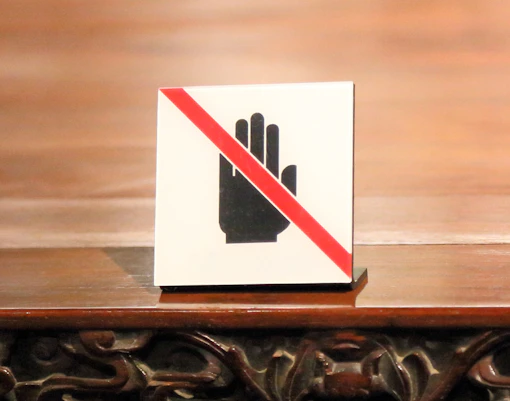
Not allowed
- Food and drink: Nothing except bottled water is permitted inside; you'll be asked to pack away any other food or drinks before entering.
- Smoking and vaping: Prohibited everywhere on the premises, including the Gardens.
- Pets: Not allowed, other than registered guide, hearing, or assistance animals.
- Touching exhibits: Visitors may not touch or get too close to any objects — many of the furnishings and artworks are centuries old and irreplaceable.
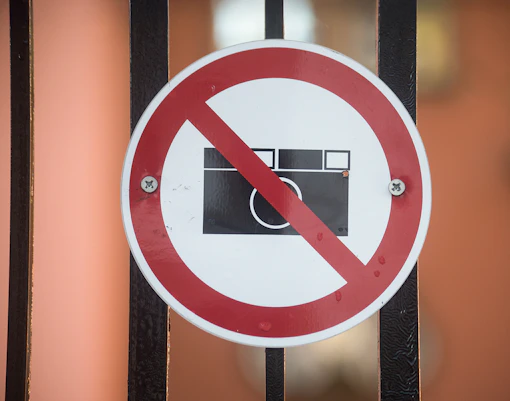
Photography
Photography and filming are strictly prohibited throughout the State Rooms. The rule lifts once you reach the Garden at the end of the route, where personal, non-commercial photography is encouraged.
Good to know
- There's no formal dress code, but the route involves a fair amount of walking, so comfortable shoes are worth it.
- Pushchairs aren't allowed inside the State Rooms — they must be checked in at the entrance, though free baby carriers and hip seats are available to borrow.
Practical tips
- Booking and arrival: Timed entry sells out fast for July and August weekends, so book weeks ahead. Arrive at least 15 minutes before your slot — security screening alone can eat into that window, and turning up late risks being turned away rather than just delayed.
- Pacing: Don't rush the Picture Gallery just because it looks like a corridor — most visitors treat it as a walkway between the grander rooms and miss half the Old Masters lining it. Save your unhurried pace for here rather than the Grand Staircase, which people linger over for photos it can't actually take, since there's no photography allowed inside.
- Crowd timing: Book the very first slot of the day, and go in the first two weeks of July if your dates are flexible — that opening stretch is noticeably quieter than August. Avoid late morning to early afternoon, since the 11am Changing of the Guard next door pushes crowds straight into the Palace queue afterward.
- What to bring: Bring the smallest bag you can manage — anything over 45cm × 20cm × 30cm can't come in at all, and there's no on-site storage for it. A small bag worn at your side, not on your back, gets you through security fastest.
- Food and drink: Eat before you go in, or wait until the very end. The only café and ice-cream stand sit at the exit past the Garden, unreachable mid-tour, and nothing but bottled water is allowed inside the State Rooms themselves.
What else is worth visiting nearby?
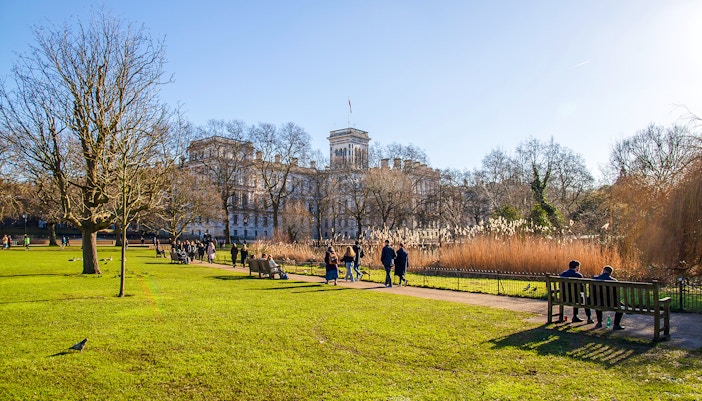
Commonly paired: St James's Park
- Distance: 200 m - 3 min walk
- Why people combine them: It sits right beside the Palace, so it is the easiest decompress-and-reset stop after the one-way indoor route, especially if you want space after the crowds.
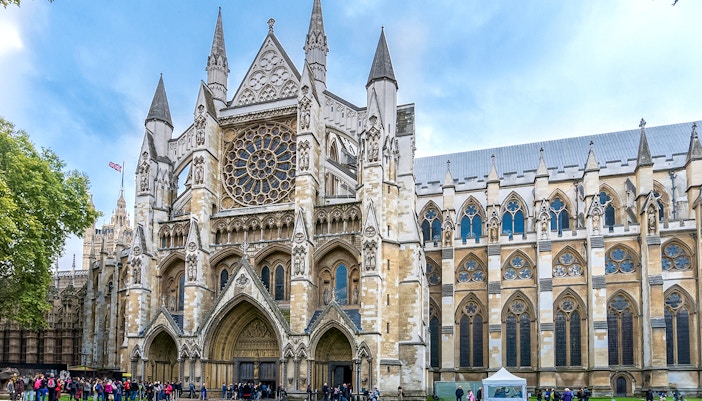
Commonly paired: Westminster Abbey
- Distance: 1.4 km - 20 min walk
- Why people combine them: Both fit naturally into the same royal Westminster day, and the contrast works well: Buckingham Palace for ceremonial rooms, the Abbey for coronations, burials, and architecture.
Also nearby
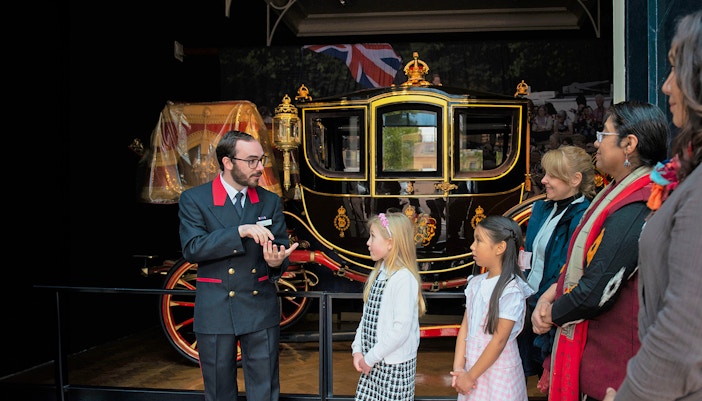
The King's Gallery
- Distance: 350 m - 5 min walk
- Worth knowing: This is the best nearby add-on if you want more of the Royal Collection without committing to a full second major attraction.
Royal Mews at Buckingham Palace
- Distance: 350 m - 5 min walk
- Worth knowing: The Royal Mews is a better pick than another big museum if you want to keep the royal theme going with coaches, horses, and ceremonial transport.
Eat, shop and stay near Buckingham Palace
On-site: The Garden Café, at the exit of the State Rooms route, serves light lunches, cream teas, and cakes. It's pleasant enough for a post-tour sit-down with garden views, but it's a convenience stop rather than a destination — go for the setting, not the food.
Better options nearby:
- Crumpets (5-min walk, Petty France): Coffee and pastries with a Sri Lankan-inflected daily special — good for fuelling up before your slot rather than after.
- Regency Café (12-min walk, Pimlico): Classic British fry-up at budget prices — worth the walk if you want a proper breakfast before an early entry time.
- The Thomas Cubitt (15-min walk, Belgravia): A well-regarded gastropub for a relaxed sit-down lunch or dinner once you're done touring.
💡 Pro tip: Eat before your entry slot, not after — the on-site café sits at the very end of the route, so you'll have walked the full State Rooms and Garden before you can get food, and by then you'll likely just want to sit down rather than queue.
- Buckingham Palace Shop (Buckingham Palace Road): The main gift shop, open year-round — china, homeware, and royal-themed gifts, all supporting the Royal Collection Trust as a charity.
- Palace Garden Shop: Open only during the summer State Rooms opening, inside the Garden itself — garden-themed and commemorative gifts alongside a small tea and cakes counter.
The streets immediately around the Palace split into Belgravia, St James's, and Victoria — elegant but largely tourist- and business-facing, with Victoria functioning more as a transport hub than a place with real neighbourhood character after dark. If you want to walk to the entrance and keep logistics simple, it works well; if you want a livelier evening scene, you'll be getting the tube elsewhere anyway.
- Price point: Skews upscale, especially in Belgravia and St James's — Victoria has a wider range of mid-range hotels, largely due to its role as a rail and coach hub.
- Best for: Short first-time visits where minimising logistics matters more than nightlife, and travellers connecting via Gatwick Express from Victoria.
- Consider instead: Soho or Covent Garden, both a short tube ride away, give you a livelier base with far more restaurant choice for longer stays.
Frequently asked questions about visiting Buckingham Palace
Most visitors need 1.5-2 hours for the State Rooms. That gives you enough time to follow the multimedia guide properly, pause in the major ceremonial rooms, and still enjoy the garden end without rushing. If you add a royal walking tour or Changing the Guard experience, plan for a half day instead.
Yes, you should book in advance if Buckingham Palace is a priority. The State Rooms are only open for a short summer season, and August dates plus weekend slots are usually the first to sell out. Same-day availability can exist, but relying on it is a poor bet during peak summer.
It can be worth it, but keep in mind that skip-the-line access does not bypass the security queue. Every visitor still goes through airport-style screening, so the main advantage is a smoother, more predictable entry rather than skipping every line at the gate.
Arrive about 15 minutes before your timed slot. That's usually enough buffer for entry checks without leaving you standing outside much longer than necessary. Arriving very early does not always help, because admissions still move by timed batches and the main queue point is security.
Yes, but keep it small and expect screening. Large luggage and bulky bags are more likely to cause problems, slow your entry, or be refused depending on the ticket and venue rules. If you're visiting the State Rooms, traveling light makes the whole process easier.
Not inside the State Rooms. The rule that surprises most first-time visitors is that interior photography is not allowed, so your best photos will come from the exterior approach or the garden end where permitted on your ticket terms.
Yes, but the best format depends on what you want from the visit. Small-group tours work well if you want commentary and help with timing, while standard timed Palace entry is better if your group wants to move at its own pace once inside.
Yes, but it suits children who enjoy royal stories and ceremony more than hands-on museum displays. The visit is structured, quiet, and one-way, so younger children often do best on an early slot with a shorter focus on the biggest rooms rather than a very long palace day.
Yes, the standard Palace visit is accessible, but accessibility can vary across different areas. Some sections involve more standing, walking, steps, or outdoor movement, so check the specific areas included in your visit before booking.
Yes, but not during the main State Rooms route. Food and drink are not part of the Palace interior visit, so the easiest option is to eat before entry or use the café at the garden end after you finish the one-way route.
The best time to visit is the first entry slot of the day. It is usually calmer than the late-morning to early-afternoon window, when visitors coming from the Changing the Guard and midday ticket holders overlap. Late afternoon can also feel lighter than the noon rush.
Yes, but only if you plan the timings carefully. The mistake most people make is booking the Palace too close to the ceremony and then getting caught in the crowd flow. If you want both without stress, book a guided combo or leave a generous gap between the two.
For the State Rooms in July and August, book 4 to 6 weeks ahead. September State Rooms slots and the Royal Mews and King's Gallery can usually be booked 1 to 2 weeks out. Same-day State Rooms booking is rarely available.
No. The State Rooms, King's Gallery, and Royal Mews each require their own separate ticket. The Changing the Guard can be watched free from outside, or with a guided tour for better positioning.
Yes. The Palace exterior and the Victoria Memorial are free. The Changing the Guard ceremony is free to watch from the street. The Royal Mews and King's Gallery are also accessible without a State Rooms ticket.
Book an early 9:30am slot for the State Rooms, as it is the busiest attraction. Then visit the King's Gallery and Royal Mews later that day. Both are less crowded in the afternoon and do not require a specific timed slot. This strategy only works in August, when all three are open simultaneously.
Yes. Visitors of all ages are welcome. The Royal Mews is well-suited to younger children. Pushchairs are not permitted inside the State Rooms, but baby carriers can be borrowed free of charge.
Photos near the guards are permitted. Maintain a respectful distance and do not touch or distract them while on duty.
Buckingham Palace is the official royal residence, but King Charles and Queen Camilla live at Clarence House, directly opposite the Palace.
Yes. Combined tickets are available pairing Buckingham Palace with Windsor Castle, the Tower of London, and Westminster Abbey, covering multiple sites in one booking.