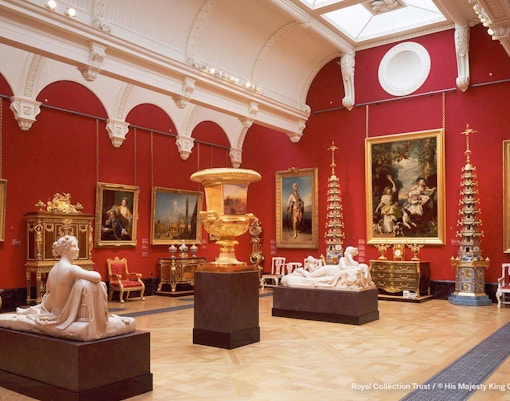
The first payoff of stepping inside the Palace is access itself. Buckingham Palace is still a working royal residence, so its interior feels markedly different from a former palace turned museum — formal, polished, and quietly theatrical from the moment you enter.
Inside Buckingham Palace | A room-by-room look at the State Rooms
Buckingham Palace is a vast four-storey royal residence, with 775 rooms arranged around a central courtyard. Step inside to explore its 19 State Rooms, where grand staircases, ceremonial spaces, royal artworks, and lavish interiors reveal the Palace’s role in royal life.
- What you’ll see: The State Rooms, including the Grand Staircase, Throne Room, and Ballroom, alongside Royal Collection paintings and decorative arts.
- What surprises first-timers: This is a one-way route rather than a free-roaming palace visit, so look out for details such as the concealed door in the White Drawing Room.
- Pro tip: The Palace is open to the public only for a limited time each summer. To avoid long queues and make the most of your visit, book your tickets at least 2-3 weeks in advance.
Know more about: Buckingham Palace History | Buckingham Palace Architecture | Buckingham Palace Royal Family
What's inside Buckingham Palace?
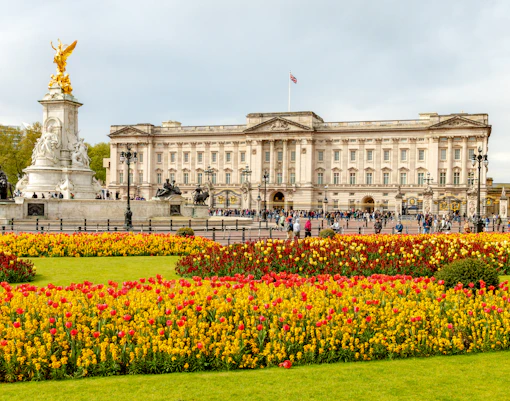
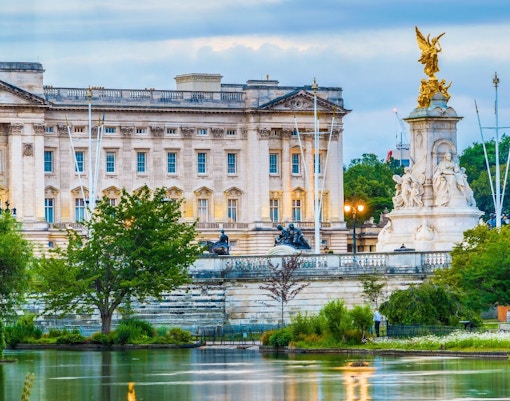
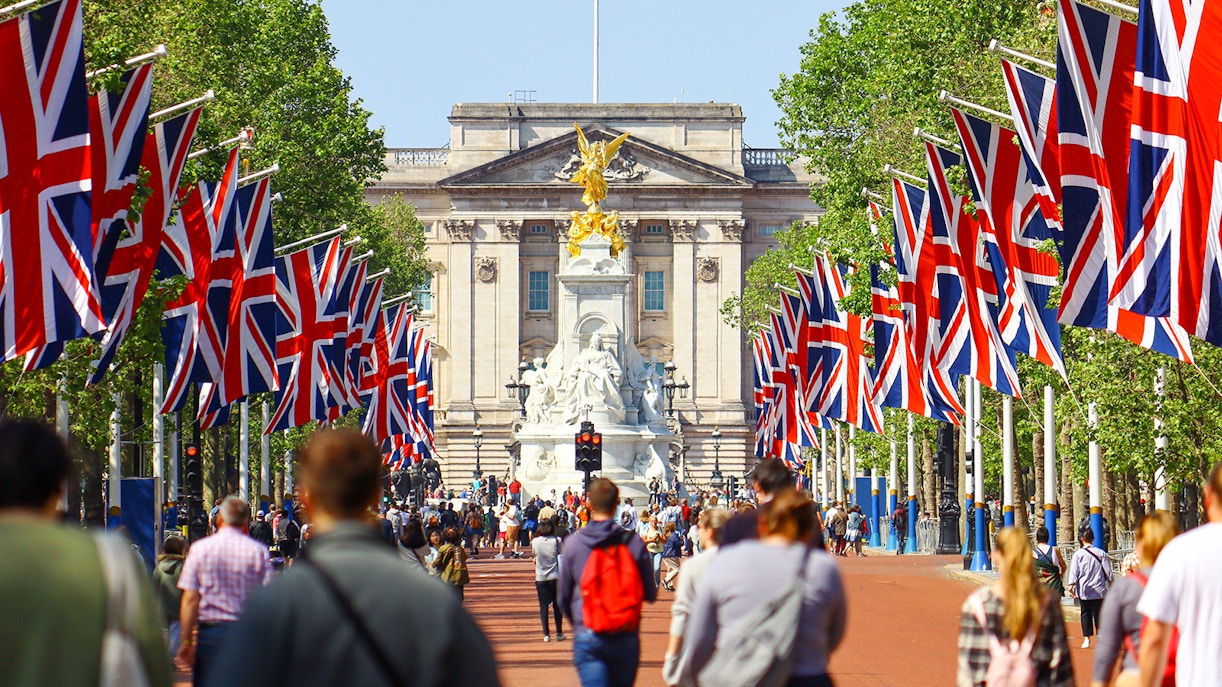
From the outside, Buckingham Palace can feel distant — a grand facade, railings, and a crowd gathered for photos. Step inside and the experience shifts completely: you're no longer watching a royal ceremony from the street; you're moving through the rooms where it actually happens.
If your goal is atmosphere, go early; if it's context, pairing your visit with a guided option like the Buckingham Palace State Rooms Tour with Royal Walking Tour can help you decode the ceremonial setting beforehand. If time is short, prioritize the major ceremonial rooms over the transition spaces. A guided tour makes it easier to see everything Buckingham Palace's rooms have to offer without missing the details that matter most.
Layout of Buckingham Palace
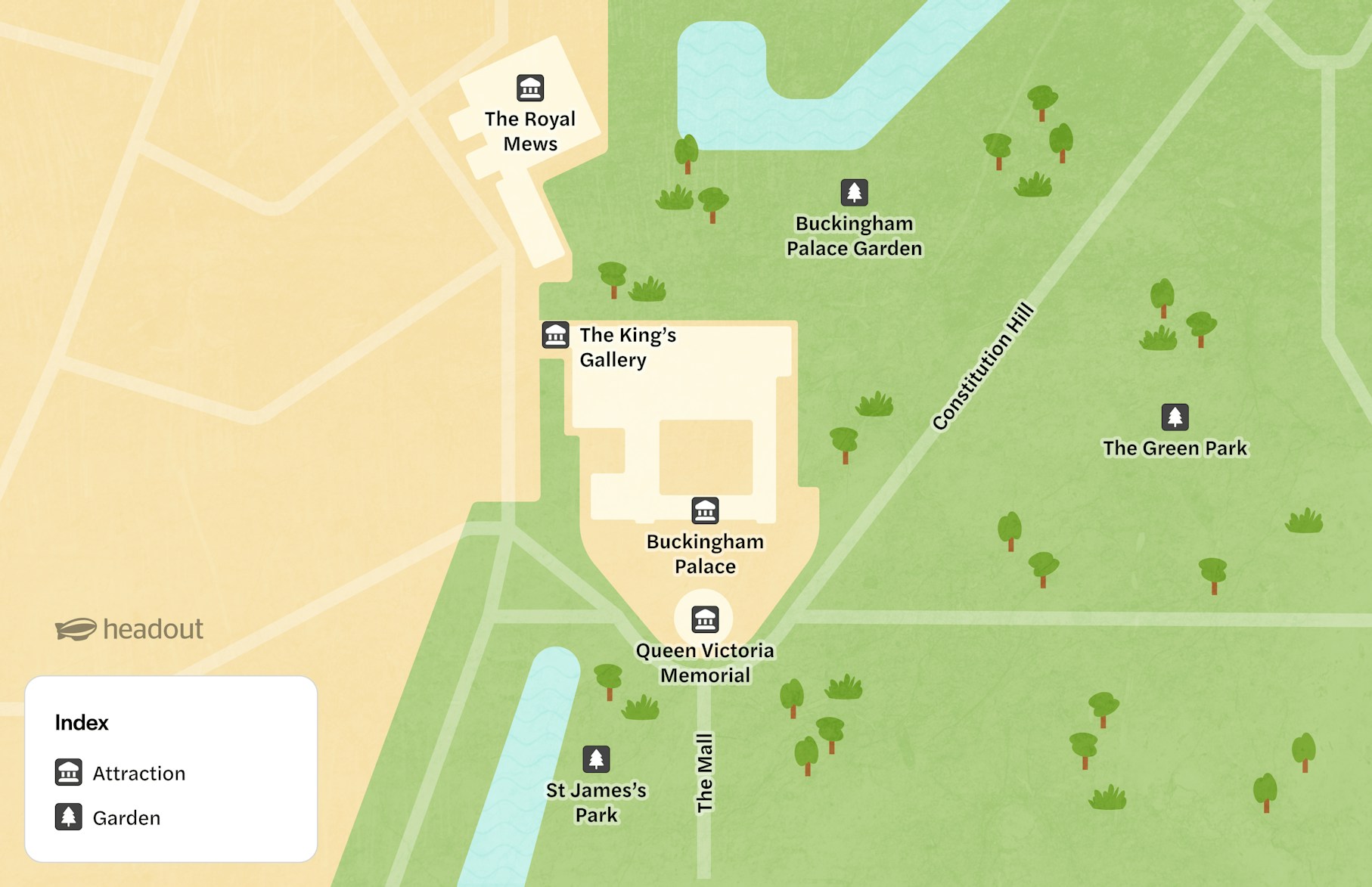
Buckingham Palace isn’t a museum you can freely wander. The State Rooms follow a one-way route, so you can’t circle back once you’ve moved on. Treat the visit as a paced sequence and ask about step-free access or visitor assistance before you enter.
Make more of your Buckingham Palace visit with a royal walking tour
Buckingham Palace’s State Rooms reveal the grandeur of royal ceremony, but the story doesn’t stop at the Palace gates. Pair your visit with a guided walk through royal London to connect the Palace with the landmarks, traditions, and history surrounding it.
Top highlights inside Buckingham Palace
1/7
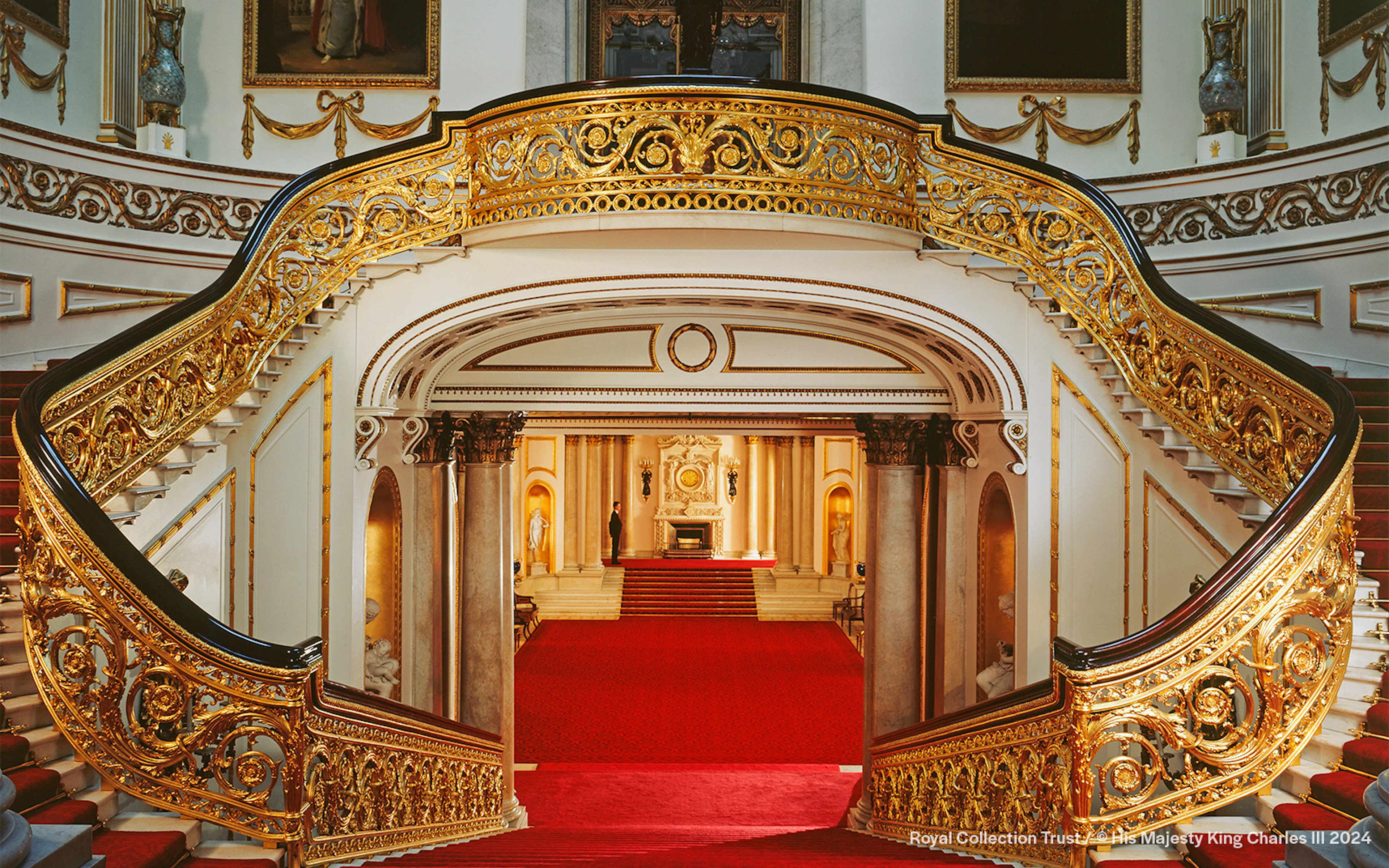
Grand Staircase
The dramatic bronze staircase that greets every visitor entering the State Rooms.
Why it matters: Designed by John Nash, its double balustrade and family portraits announce the scale of what's ahead.
Pro tip: Look up before you climb — the gilded reliefs added by Edward VII in 1901 are easy to miss in the rush upstairs.
Throne Room
Two gilded thrones beneath a crimson canopy, still used for official ceremonies today.
Why it matters: This working ceremonial space also served as the backdrop for the Prince and Princess of Wales' wedding photographs.
Pro tip: Look for the "ER" and "P" monograms on the thrones — a personal detail easy to overlook among the grandeur.
White Drawing Room
One of Buckingham Palace’s most elegant State Rooms, with gilded details, white-and-gold interiors, and a distinctive concealed door built into the wall.
Why it matters: Used for receptions and royal gatherings, the room shows how the palace combines ceremonial grandeur with practical details designed for a working royal residence.
Pro tip: Look closely at the wall beside the mirror — the concealed door is designed to blend seamlessly into the surrounding panelling.
Picture Gallery
A 47-metre gallery holding masterpieces by Rembrandt, Vermeer, Van Dyck, and Canaletto.
Why it matters: It doubles as a reception room for visiting Heads of State, so you're seeing royal art displayed exactly as the monarchy uses it.
Pro tip: Give this room extra time — its length makes it easy to rush past genuine masterpieces.
Ballroom
The largest room in the palace, built for state banquets and investitures.
Why it matters: Built under Queen Victoria and Prince Albert for grand occasions, the Ballroom has hosted over 30,000 investitures.
Pro tip: Listen for the organ at the far end, installed for Queen Victoria and still standing today.
Marble Hall
A quieter space many visitors walk straight through on the way to the Grand Staircase.
Why it matters: It houses Antonio Canova's Mars and Venus, carved from a single block of marble for George IV.
Pro tip: Slow down here — it's one of the least crowded rooms on the entire route.
Green Drawing Room
The first of Nash's State Rooms, serving as the anteroom to the Throne Room.
Why it matters: It's still used for the King's Diplomatic Reception, where over 500 ambassadors gather each year.
Pro tip: Look closely at the Sèvres porcelain on display, including a potpourri vase shaped like a ship.
Book your Buckingham Palace tickets
Booking ahead helps you secure your preferred entry time, especially during the limited summer opening season. Guided tours can also add context to the State Rooms, royal collections, and palace history.
How to explore Buckingham Palace
Frequently asked questions about what’s inside Buckingham Palace
Yes, but public access is limited to the Buckingham Palace State Rooms during the summer opening, rather than year-round access to the full palace. You’re visiting ceremonial interiors, not the private living quarters of the monarch.
You’ll move through the State Rooms — formal reception and ceremonial spaces used for official events — rather than private bedrooms or family areas. The route typically includes grand interiors such as the Grand Staircase, Throne Room, Picture Gallery, White Drawing Room, and Ballroom, alongside works from the Royal Collection. It’s best understood as a curated royal interior visit, not an all-access palace tour.
No. The State Rooms are seasonal and usually open only during the summer public opening. For 2026, the rooms are open from July 9 to September 27, 2026. Outside that period, Buckingham Palace is not generally open in the same way, though separate attractions on the grounds, such as the King’s Gallery or Royal Mews, may operate on different schedules.
No photos or filming are allowed inside the State Rooms. This is one of the biggest surprises for first-time visitors, so it’s worth knowing before you go. Private-use photography is generally permitted only in the Palace Gardens at the end of the route. If photos matter to you, plan to use the garden exit as your picture moment rather than expecting interior shots.
Most visitors spend about 90 minutes inside. If you move briskly, you can finish in around 60–75 minutes, but that usually means less time with the art and room details. A slower visit, especially if you pause in the gardens or café afterward, can reach 2–2.5 hours.
No. A standard timed ticket is designed for self-guided visits with a multimedia guide, and for most travellers that’s enough. Guided products are more useful if you want help with the ceremonial context outside the palace or want the morning linked to the guard ceremony. Other options, such as Buckingham Palace State Rooms Tour with Royal Walking Tour, add structure rather than changing the core interior route.
Not automatically. This is a common point of confusion because all three sit within the broader Buckingham Palace complex, but they are separate attractions. Some ticket products let you choose one site, while others bundle combinations. If you want coaches and working stables, you need the Royal Mews at Buckingham Palace.
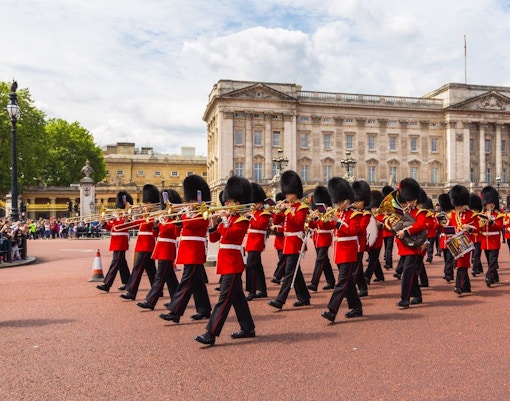
Yes, but timing matters. Late morning entry slots are often the busiest because many visitors watch the ceremony first and then head straight to the palace. If you want both without juggling the schedule yourself, a combination such as Buckingham Palace State Rooms Tour with Changing of the Guard can simplify the handoff from outdoor pageantry to interior visit.
Accessibility depends partly on which ticket type you choose. Standard Buckingham Palace tickets are listed in current inventory as wheelchair and pram/stroller accessible, while some walking-tour combinations are not. Because the interior route is one-way and highly controlled, it’s smart to sort any step-free or support needs before you enter rather than once you are already moving through the rooms.