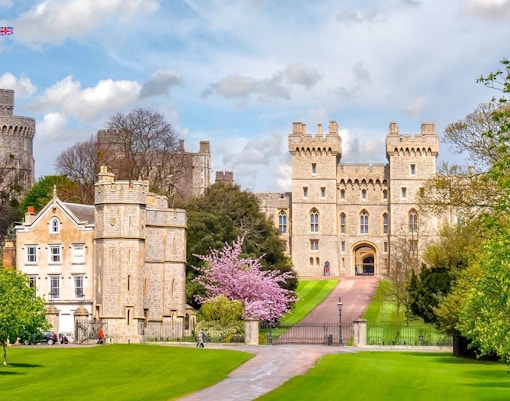
Windsor began as a strategic Norman fortress guarding routes west of London and the Thames Valley. Its hilltop position still shapes your first impression today, with strong walls, commanding views, and the Round Tower anchoring the skyline.
History of Windsor Castle
Few places feel history as alive as Windsor Castle, a royal home continuously occupied for nearly 1,000 years. Today you can walk through ceremonial rooms, see St George’s Chapel, and trace the monarchy’s story with an included multimedia guide.
Windsor Castle timeline
- c. 1070: Norman fortress
William the Conqueror founds Windsor as a timber stronghold. - 1165–1179: Stone rebuild
Henry II replaces timber works with stone walls. - 1240s: Palace expansion
Henry III adds chapels, apartments, and courtly spaces. - 1350–1377: Royal transformation
Edward III reshapes Windsor into a Gothic palace. - 1475–1528: Chapel constructed
St George’s Chapel rises under Edward IV and Henry VIII. - 1642–1660: Civil War era
Parliamentary troops occupy the castle during national conflict. - 1824–1840: Georgian makeover
George IV and Jeffry Wyatville refashion the skyline. - 1992–1997: Fire and recovery
Damaged rooms are restored after a major blaze. - 2022: New royal significance
Queen Elizabeth II is interred at St George’s Chapel.
Windsor Castle's history explained
Norman defense and royal control (c. 1070–1200)
From fortress to palace (13th–14th centuries)
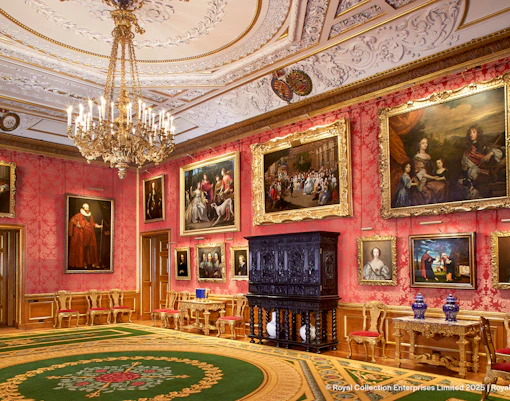
Successive kings made Windsor more comfortable, ceremonial, and ambitious. Henry III introduced richer royal apartments, then Edward III turned the complex into a grand Gothic court that projected monarchy, chivalry, and power.
Faith, dynasty, and ceremony (15th–17th centuries)
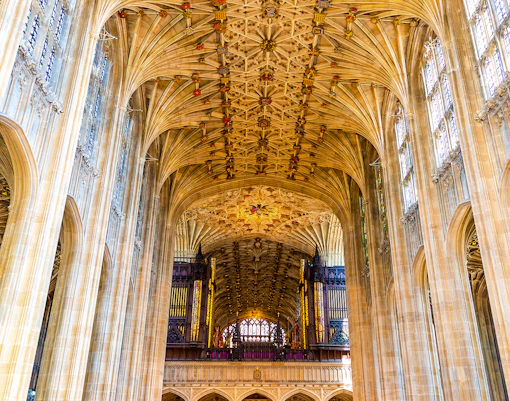
St George’s Chapel gave Windsor a lasting spiritual center. Royal worship, burials, and the Order of the Garter tied the castle to dynastic memory, which is why the chapel remains one of the most moving parts of a visit.
Reinvention and resilience (19th century–today)
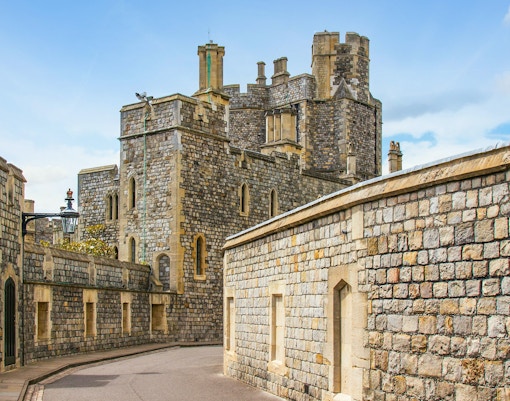
George IV’s dramatic redesign created much of the silhouette visitors recognize now. After the 1992 fire, careful restoration preserved both splendor and function, proving Windsor is not a frozen monument, but a working royal residence.
Construction and architecture of Windsor Castle
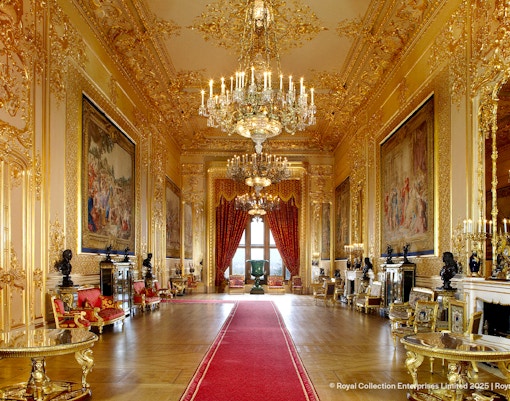
Built from the late 11th century onward, Windsor Castle evolved in layers rather than a single campaign. William the Conqueror’s timber fortress gave way to Henry II’s stone defenses, Edward III’s Gothic palace, and George IV’s 19th-century redesign by architect Jeffry Wyatville. Look for battlements, towers, vaulted chapel interiors, and richly decorated State Apartments—features that make Windsor’s architecture feel both defensive and ceremonial today.
Additional information about Windsor Castle's history
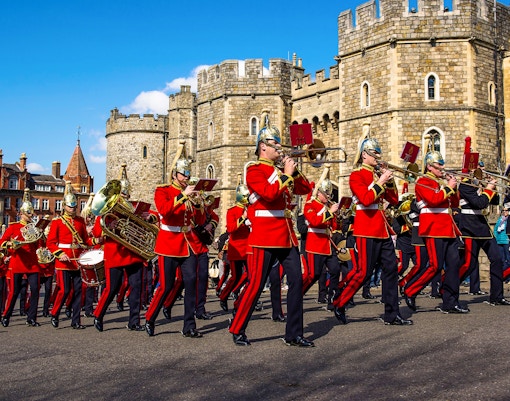
Windsor’s past feels unusually immediate because it still functions as a royal residence. That living status explains changing visitor routes, seasonal access to the Semi-State Rooms, and occasional short-notice closures. It also means the history you encounter here is not sealed off behind glass—ceremony, worship, and state use still shape the castle experience.
Windsor Castle today – why it matters
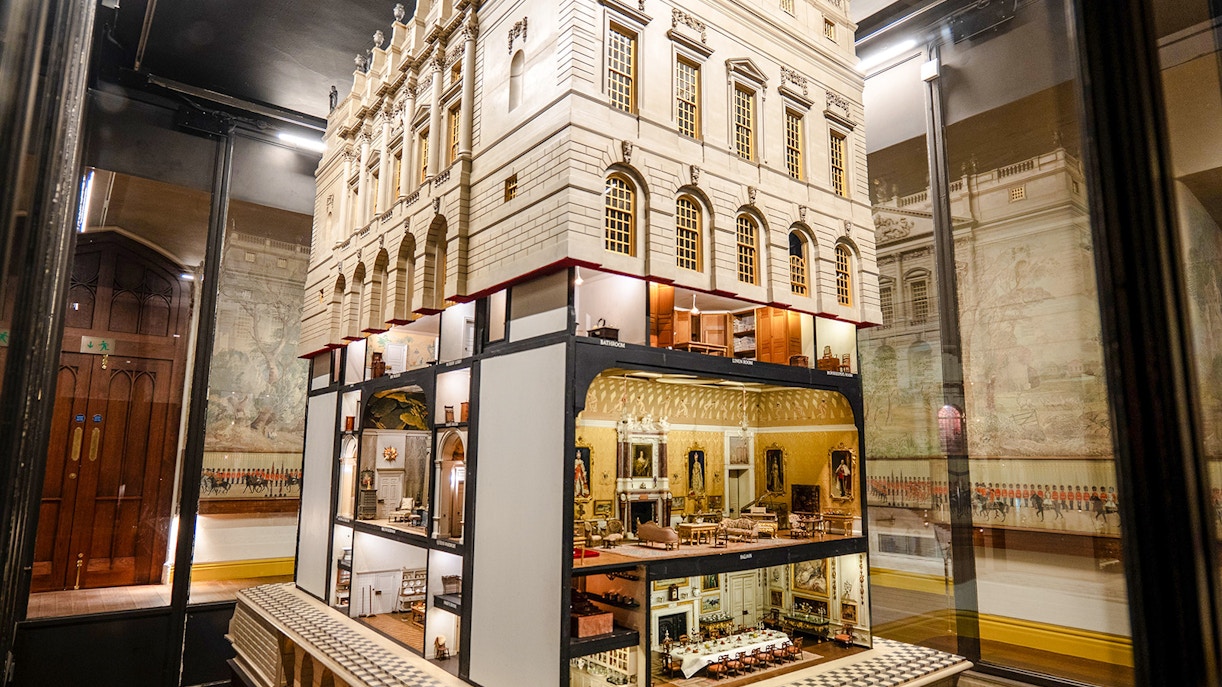
Today, Windsor Castle remains an active royal residence managed for public access by the Royal Collection Trust. Visitors can tour the State Apartments, Queen Mary’s Dolls’ House, and St George’s Chapel on most visiting days, usually with a multimedia guide included. It is also one of the most important ceremonial and memorial sites in Britain, especially after Queen Elizabeth II’s burial here in 2022.
Windsor Castle guided tours
Make the castle’s 1,000-year story easier to follow on a guided trip from London—expert commentary, precinct walks, and coach or train transfers on select experiences add context you won’t get from photos alone.
Frequently asked questions about Windsor Castle's history
Windsor Castle began around 1070 under William the Conqueror, then expanded over many centuries.
It is the world’s oldest and largest occupied castle and has been linked to about 40 monarchs.
It started as a fortress, but it became a long-term royal residence in the medieval period.
Notable burials include Henry VIII, Charles I, Queen Elizabeth II, and Prince Philip.
Yes. A major fire in 1992 damaged several state rooms, which were later restored.
Yes, at St George’s Chapel, though chapel access is usually not available to visitors on Sundays.
Standard entry includes a multimedia guide. Some experiences add expert or Blue Badge guiding in the precincts, not inside the main rooms.
Plan for 2–3 hours if you want enough time for the State Apartments, chapel, and Dolls’ House.