Hours, directions, entrances and the best time to arrive
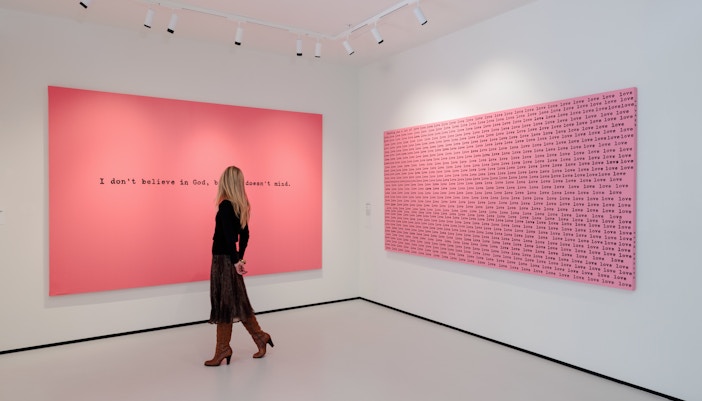
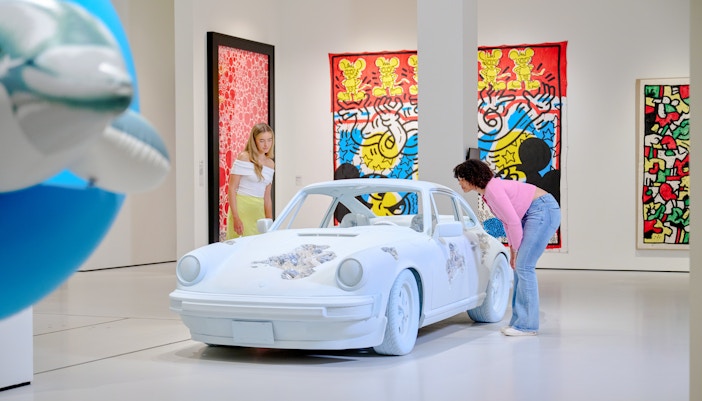
Moco Museum London is a paid contemporary-art museum best known for big-name artists like Banksy, Warhol, Basquiat, Kusama, and Keith Haring in a compact Marble Arch setting. The visit is short, highly visual, and easy to combine with Hyde Park, Oxford Street, or Frameless, but it works best if you arrive with the right expectations: this is a tight, edited art hit, not a half-day museum marathon. This guide covers timing, tickets, route, and practical logistics.
If you want a compact, central London art stop that feels manageable rather than exhausting, this is the fast version.
🎟️ Popular afternoon slots for Moco Museum London can fill a few days in advance during school holidays and while Keith Haring’s temporary show is running. Lock in your visit before the time you want is gone. See ticket options
Hours, directions, entrances and the best time to arrive
Visit lengths, suggested routes and how to plan around your time
Compare all entry options, tours and special experiences
How the galleries are laid out and the route that makes most sense
Banksy, Keith Haring, and Lunar Garden
Restrooms, lockers, accessibility details and family services
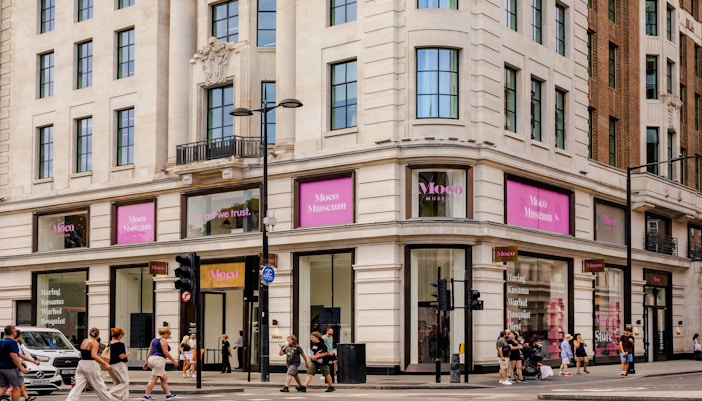
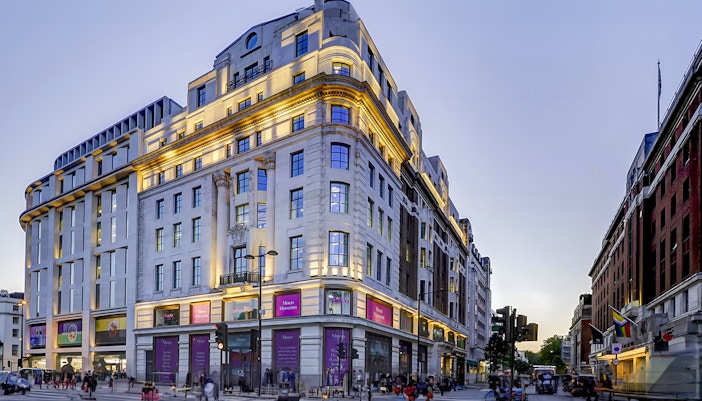
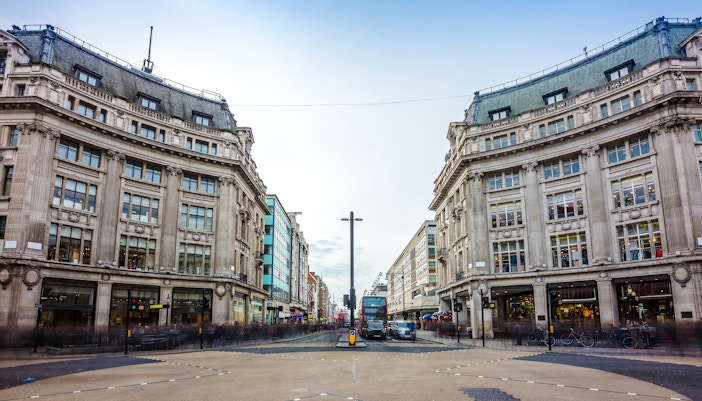
Moco Museum London sits at the Marble Arch end of Oxford Street, beside Hyde Park and a short ride from the West End core.
1–4 Marble Arch, London W1H 7EJ
Full getting there guide
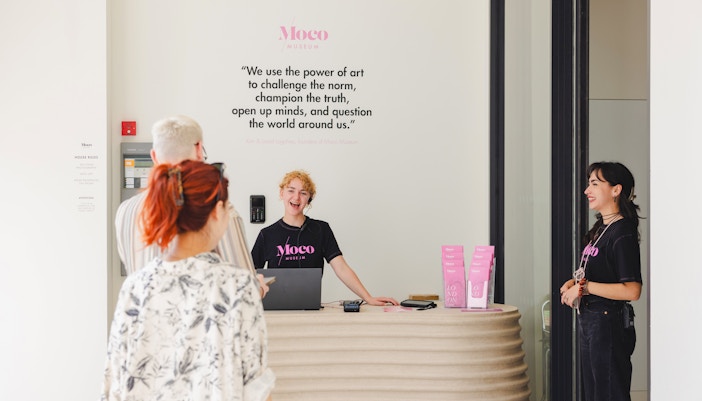
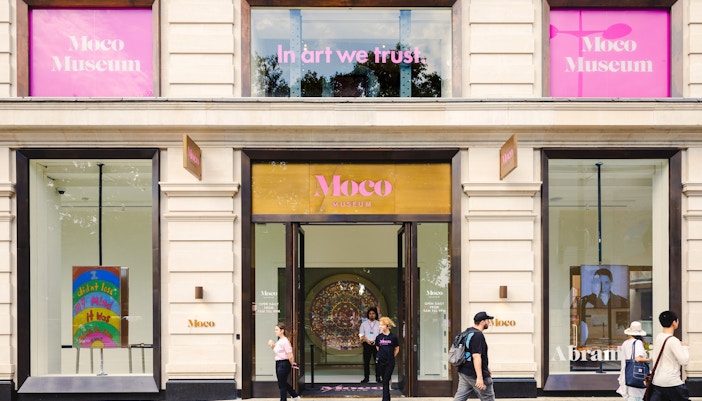
There is one street-level entrance, but the real difference is whether you are already holding a timed ticket or still need desk help. Most visitors lose time by showing up without a prebooked slot and assuming they can walk straight in.
Full entrances guide
When is it busiest? Weekend afternoons, school-holiday dates, and the weeks leading up to the Keith Haring exhibition close on June 18, 2026, are the most compressed, especially on the Banksy floor and in Heart Space.
When should you actually go? A weekday slot within the first 60–90 minutes of opening gives you more room around the headline rooms before Marble Arch shopping traffic builds.
| Visit type | Route | Duration | Walking distance | What you get |
|---|---|---|---|---|
Highlights only | Entrance floor masters → Banksy floor → one basement immersive room → exit
| 1–1.25 hrs | ~0.7 km | You’ll see the biggest names and one immersive stop, but you will skim labels and shortchange the temporary exhibition.
|
Balanced visit | Entrance floor masters → first-floor Banksy, KAWS, Emin, and temporary exhibition → basement immersive rooms → shop
| 1.5–2 hrs | ~1 km | This is the sweet spot for most visitors: all three floors, selective audioguide use, and enough time for the show that gives the ticket its current urgency.
|
Full exploration | Full route with audioguide in most rooms → temporary exhibition in full → longer pauses in Lunar Garden and Heart Space → shop
| 2–2.5 hrs | ~1.2 km | You get the closest thing to a complete visit, but later slots can feel busier upstairs and the experience starts to lose its quick-stop advantage.
|
| Ticket type | What's included | Best for | Price range |
|---|---|---|---|
Moco Museum London Tickets with Banksy & More | Admission + permanent exhibitions + temporary exhibitions + audioguide
| A short central-London art stop where you want the museum done properly without turning it into a full-day plan.
| From £20.80 ↗ |
Combo: Moco Museum London + Frameless | Admission to Moco Museum London + admission to Frameless
| A half-day near Marble Arch where one compact museum would feel a little light on its own, but two visual art formats make the spend feel justified.
| From £44.46 ↗ |
Combo: Moco Museum London + Thames River Cruise | Admission to Moco Museum London + Thames cruise | A London day where you want one indoor culture stop and one classic sightseeing moment without managing two separate checkouts.
|
|
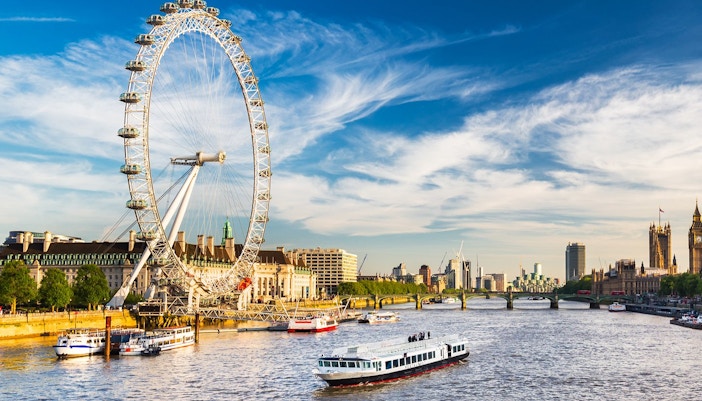
Combo: Moco Museum London + London Eye | Admission to Moco Museum London + London Eye | A first London trip where you want recognizable art and a skyline icon instead of committing half a day to a larger museum.
|
|
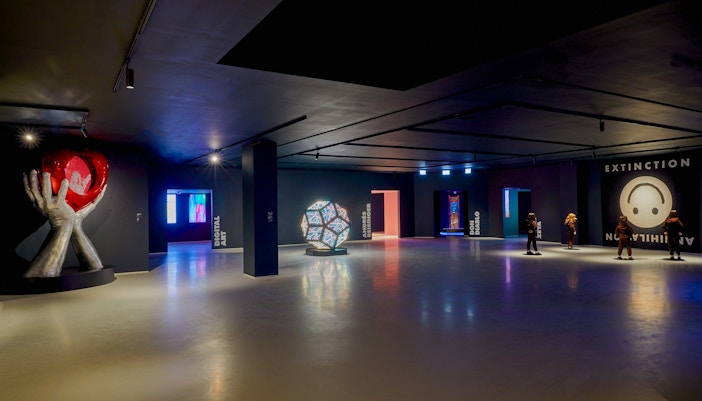
The museum is spread across 3 floors, and most visitors need 1–2 hours for the highlights or closer to 2 hours for a fuller visit. It is easy to self-navigate, but the basement works best if you still have a little time and energy left.
Suggested route: Start on the ground floor, do the first-floor Banksy and contemporary rooms while your attention is freshest, then finish downstairs so the immersive rooms feel like a reset rather than something you rush through on the way up.
💡 Pro tip: Save the basement for last — it works better as a slower finish, and Heart Space is less frustrating when you are not watching the clock for the next room.
Get the Moco Museum London map / audio guide


Street artist: Banksy
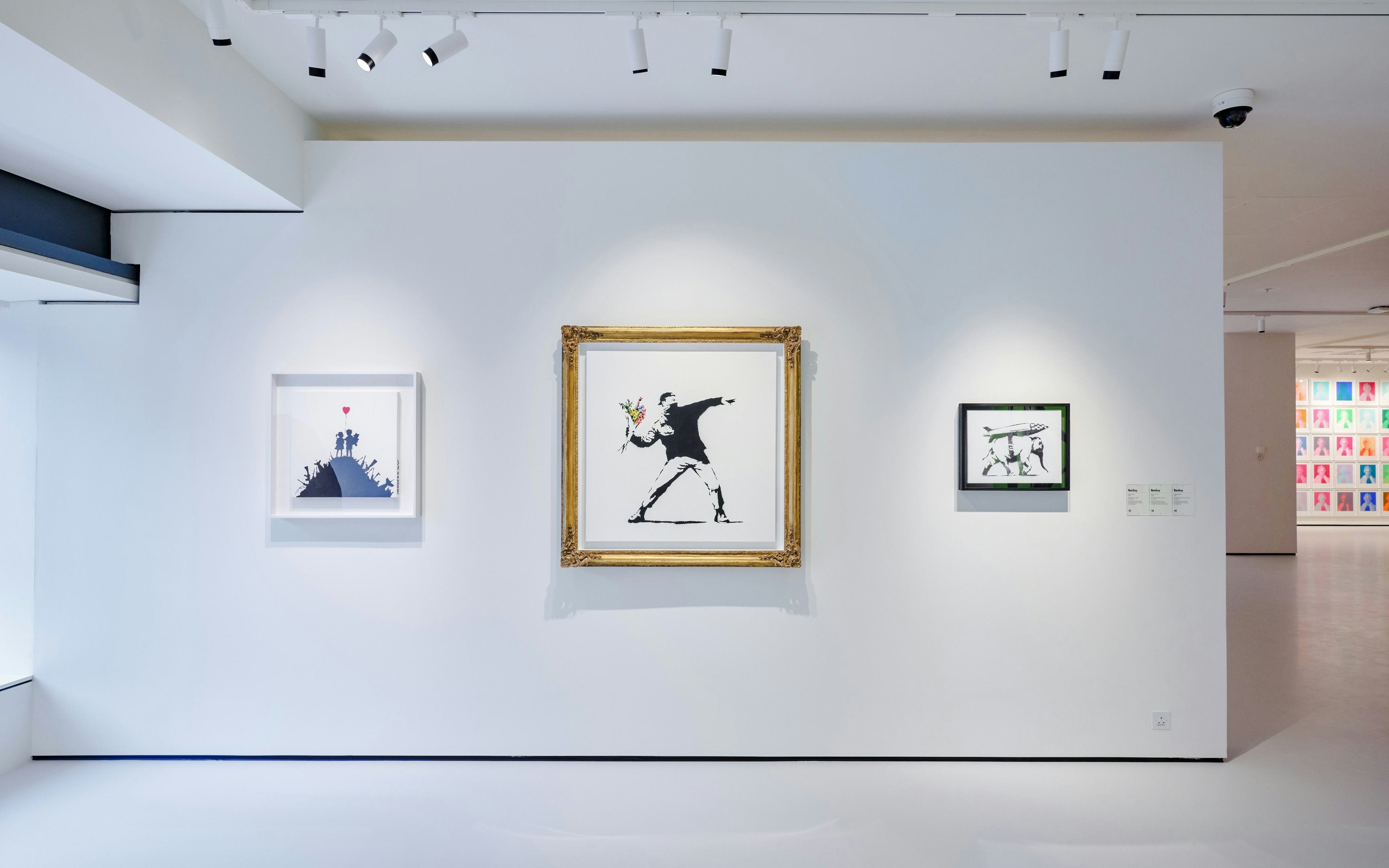
This is the museum’s strongest crowd-puller and the point where Moco’s ‘recognizable names in one stop’ promise lands most clearly. The room works because the imagery is instantly familiar, but it is worth slowing down long enough to notice how different protest-driven work feels once it is framed as gallery art. Most visitors photograph the boldest pieces first and rush past the smaller contextual details.
Where to find it: First floor, in the street-art and contemporary galleries.
Artist: Keith Haring
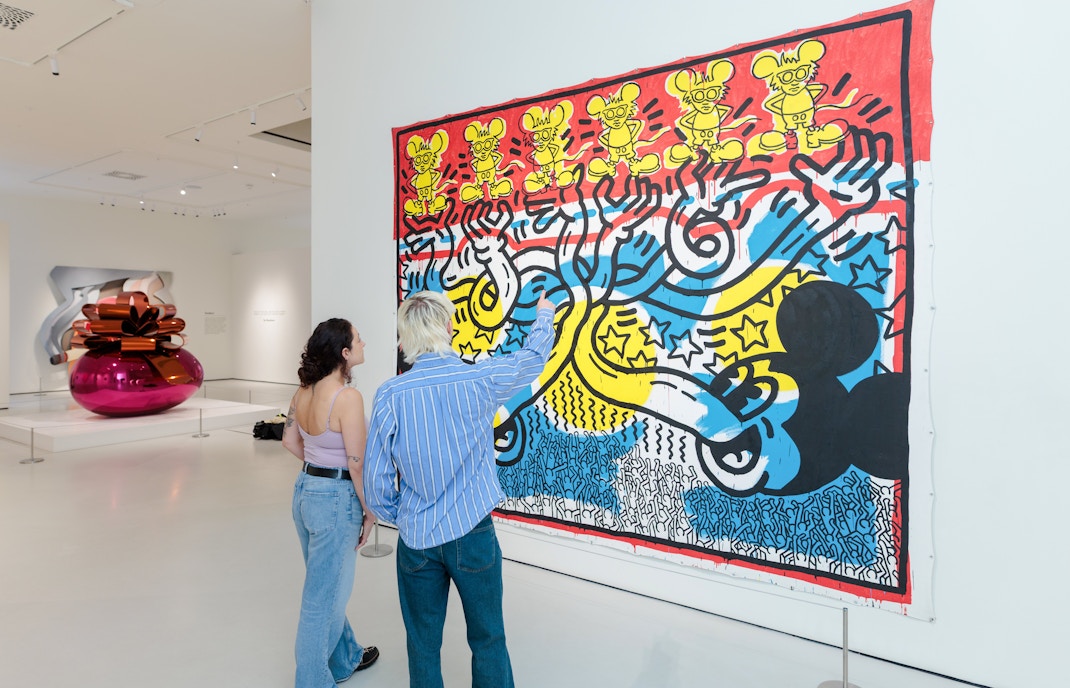
This temporary exhibition is the most time-sensitive reason to book right now, with 30 original Keith Haring Subway Drawings shown in a recreated subway environment. It changes the museum from a compact permanent collection into something more event-like and date-specific. What many visitors miss is that this is the section most worth protecting time for, because it adds context and urgency the permanent rooms cannot.
Where to find it: Temporary exhibition zone within the museum route; current run through June 18, 2026.
Artist: Jean-Michel Basquiat
The Basquiat stop gives the museum some needed edge and stops the visit from becoming all surface and selfies. The compressed text, crown motifs, and raw visual energy reward a slower look, especially if you want the museum to feel more substantial than a big-name checklist. Many visitors move too fast here because the louder, more immediately familiar works elsewhere pull them onward.
Where to find it: Ground floor, within the modern masters sequence.
Artist: Daniel Arsham
Lunar Garden is one of the best reasons not to treat the basement as an afterthought. The installation is quieter and more contemplative than the upstairs rooms, and it resets your pace after the more crowded first-floor flow. The detail most people rush past is exactly what makes it work: the room rewards stillness more than movement or photography.
Where to find it: Basement immersive-art area.
Artist: Krista Kim
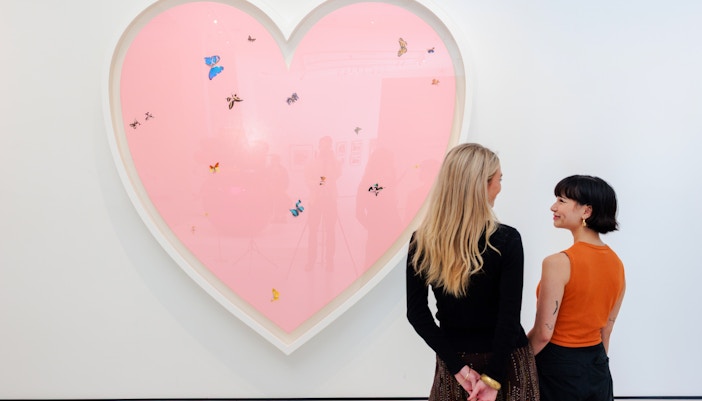
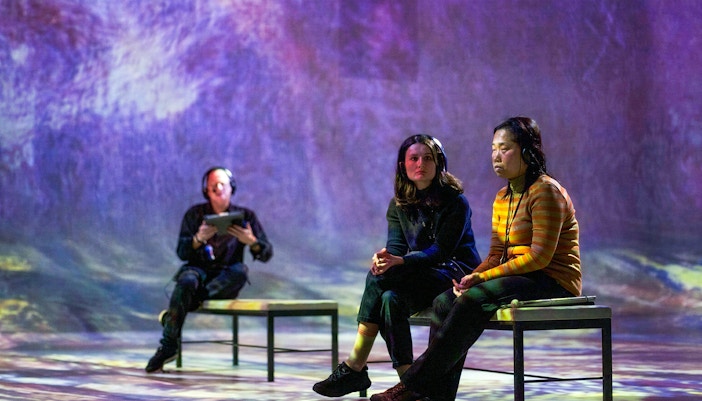
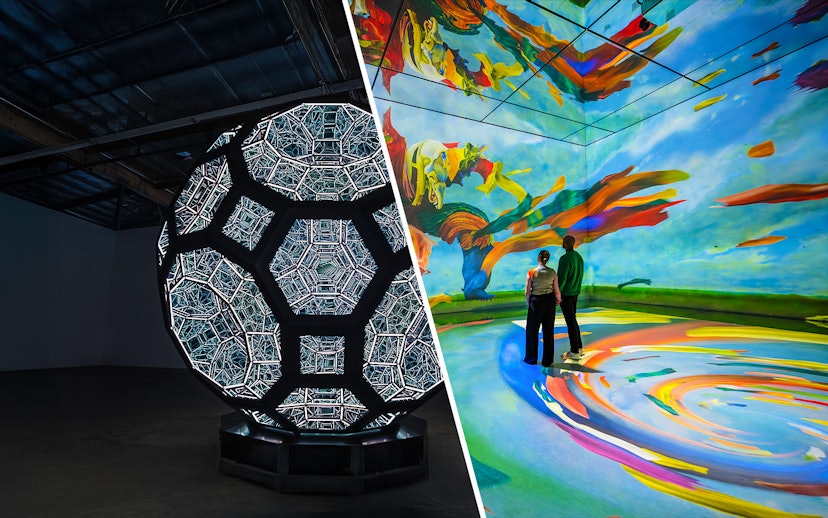
Heart Space is the museum’s clearest participatory work, turning heartbeat data into shifting visuals in a mirrored digital setting. It is one of the few places here where you are not just viewing the art but becoming part of the room’s rhythm. What visitors often underestimate is the small wait this can create when the museum is busy, especially if multiple people want to interact at once.
Where to find it: Basement, near the immersive and digital installations.
Artist: Tracey Emin
Tracey Emin’s neon adds a distinctly British, more intimate note to a museum otherwise driven by high-recognition names and photogenic impact. It is worth slowing down for because the emotional register is quieter and more personal than the Banksy-heavy energy around it. Many visitors miss it because they are still in ‘headline-name hunt’ mode by the time they reach this area.
Where to find it: First floor, within the contemporary galleries.
Moco works best for school-age children and teens who already respond to bold visuals, famous names, or interactive rooms rather than long historical interpretation.
Personal photography is allowed at Moco Museum London, but flash is not permitted and visitors are expected not to disturb others while shooting. The key distinction is between casual phone photography, which is fine across much of the museum, and professional-style setups, which are not: tripods and professional equipment are not permitted. In busy rooms such as the Banksy floor and Heart Space, the practical rule is to keep moving and avoid turning one stop into a filming session.
Frameless
Distance: 350m — 5-minute walk
Why people combine them: It is the strongest like-for-like pairing nearby — one compact museum, one large-format immersive art space, and both fit cleanly into the same half-day without much transit.
Book / Learn more
✨ Moco Museum London and Frameless are most commonly visited together — and simplest to do on a combo ticket. The combo turns one paid museum stop into a fuller art half-day and removes the need for two separate checkouts. → See combo options
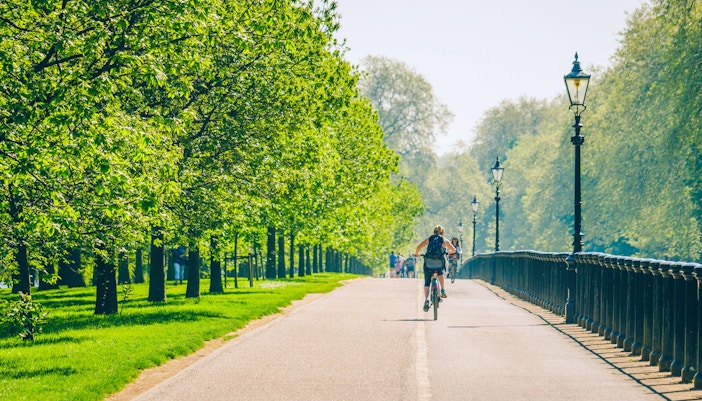
Hyde Park
Distance: 150m — 2-minute walk
Why people combine them: It gives you an immediate free outdoor reset after a visually dense indoor visit, which is especially useful if Moco is only one part of your Marble Arch day.
Book / Learn more
Selfridges
Distance: 700m — 9-minute walk
Worth knowing: If you are already doing Oxford Street, this is the easiest next stop for food, shopping, or simply stretching your day beyond a 90-minute museum visit.
Marble Arch
Distance: 100m — 1-minute walk
Worth knowing: It is more of a quick landmark than a standalone attraction, but it anchors the area and makes Moco easy to slot into a central London walking route.
Yes, if your priority is convenience. Marble Arch and the Hyde Park edge are walkable, central, and easy for short stays, but they are not usually the cheapest base in London. This area suits visitors who want to keep transport friction low and fit Moco into a broader West End plan, not travelers looking for neighborhood character or better-value longer stays.
Most visits take 90–120 minutes. You can do a faster 60-minute highlights sweep if you only want the biggest names, but the visit feels more complete if you leave time for the Keith Haring exhibition and the basement immersive rooms.
Yes, prebooking is the smart move for Moco Museum London. The main benefit is not skipping a huge line but protecting your preferred timed slot, since walk-up visitors can be pushed into the next available entry window when the museum is busy.
Prebooked timed entry is worth it, but think of it as slot protection rather than a magic no-wait pass. It helps you avoid walk-up ticket risk and desk friction, though you may still have a short wait for scanning or entry during busy periods.
Arrive 10–15 minutes early. That gives you enough time for ticket scanning, cloakroom use, and getting your phone and headphones ready for the audio guide without turning an already short visit into a rushed start.
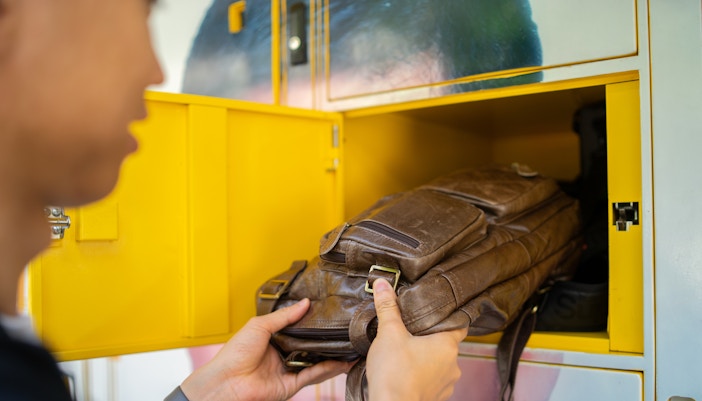
Yes, you can bring a small bag or backpack, but oversized luggage is not allowed. There is cloakroom storage for personal bags and coats, so the best approach is to travel light and avoid bringing anything you do not want to deal with across 3 floors.
Yes, personal photography is allowed, but flash is not. Tripods and professional equipment are not permitted, and the practical rule in the busiest rooms is to keep moving so you are not blocking other visitors in compact gallery spaces.
Yes, groups can visit, but the museum works best in small, self-managed clusters rather than one large slow-moving pack. Because the building is compact, bigger groups can bunch up quickly around Banksy and the immersive rooms, especially later in the day.
Yes, especially for older children and teens who respond to bold visuals and interactive spaces. The museum is manageable in 60–90 minutes with kids, and the basement installations help, but families should know there is no café and very little seating inside.
Yes, the museum is wheelchair accessible. Elevator access is part of the setup, guide dogs are welcome, and strollers are allowed, though a compact multi-floor venue always feels easiest when lifts are operating smoothly.
Food is available near the museum, but not inside it. There is no on-site café or food counter, so plan to eat before or after your visit around Marble Arch, Oxford Street, or Hyde Park rather than expecting a mid-visit break.
Yes, the audio guide is included with admission. It runs on your phone, so bring a charged battery and your own headphones if you want the visit to feel more substantial than a quick photo-led walk-through.
Buy online through a verified seller before you go. For most visitors, the key advantage is locking in the right time slot, and Headout is especially useful if you also want to pair Moco with Frameless, a Thames cruise, or the London Eye.


Accessibility
Inclusions #
Entry to Moco Museum London
Access to Voice of the Street – Keith Haring’s Subway Drawings exhibition


What to bring Frameless London + Moco Museum London
Moco Museum London
What’s not allowed Frameless London + Moco Museum London
Frameless London
Moco Museum London
Accessibility Frameless London + Moco Museum London
Frameless London
Additional information Frameless London + Moco Museum London
Moco Museum London
Inclusions #
Frameless London
Entry to Frameless London
Access to the 4 galleries: Beyond Reality, Colour in Motion, The World Around Us and The Art of Abstraction
Access to seasonal events and artist residencies (when open)
Access to gift shop, cafe bar and ‘Art of You’ photo experience
Ideal duration: 90-minutes
Moco Museum London
Entry to Moco Museum London
Access to both permanent and temporary exhibitions


Moco Museum
London Eye
Inclusions #
Moco Museum London
London Eye
Entry to the London Eye
30-min ride on the London Eye
London Eye guide
Priority boarding through fast-track entrance (as per option selected)


Moco Museum London
River Thames Sightseeing Cruise
Inclusions #
Moco Museum London
River Thames Sightseeing Cruise
Hop-on-hop-off sightseeing ticket (view route and timetable here)
Live English commentary
Recorded commentary in 14 languages
Open-air deck & heated indoor saloon
Fully stocked bar (at additional cost)


Madame Tussauds and Moco Museum
Madame Tussauds
Inclusions #
Madame Tussauds
Entry tickets to Madame Tussauds
Access to Chamber of Horrors and Spirit of London ride
Moco Museum