St Paul’s Cathedral architecture I Construction and design

A magnificent architectural icon, St Paul's Cathedral, one of London's prestigious religious centers and currently the Seat of the Bishop of London, has managed to stand tall for more than 300 years. A highlight of Christopher Wren's career, this masterpiece was also way ahead of its time boasting Neoclassical, Gothic, and Baroque elements. Read on to find out all about the architectural style and the architect behind St Paul's Cathedral in this quick guide.

Information about St Paul's Cathedral

Official name: Cathedral Church of St Paul the Apostle
Attraction type: Anglican Church
Location: St. Paul's Churchyard, London EC4M 8AD, United Kingdom
Opened: 1710
Area: Approximately 574 feet
Height: 365 ft (111 m)
Architectural style: Renaissance and English Baroque architecture
Main architects: Sir Christopher Wren and Robert Hooke

About St Paul’s Cathedral

St Paul's Cathedral architectural style
st paul's cathedral architecture

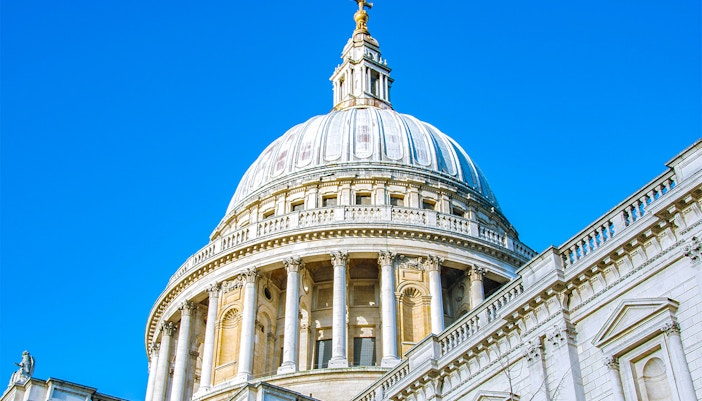
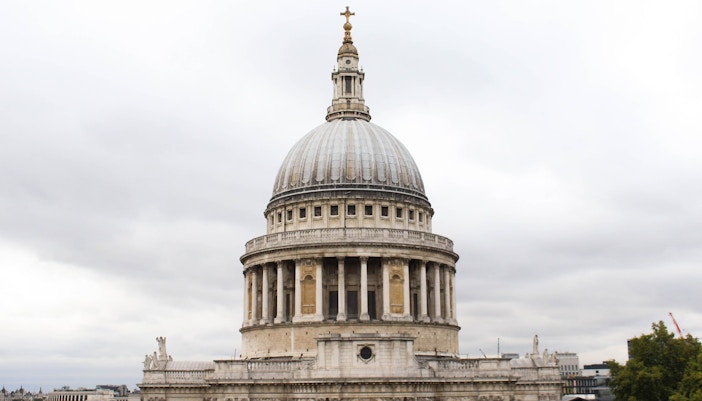
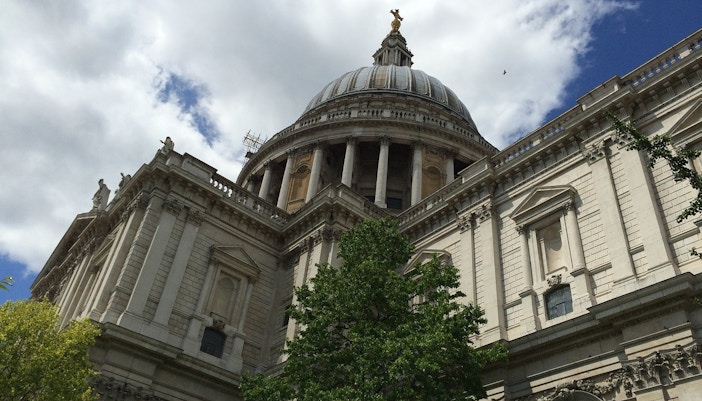
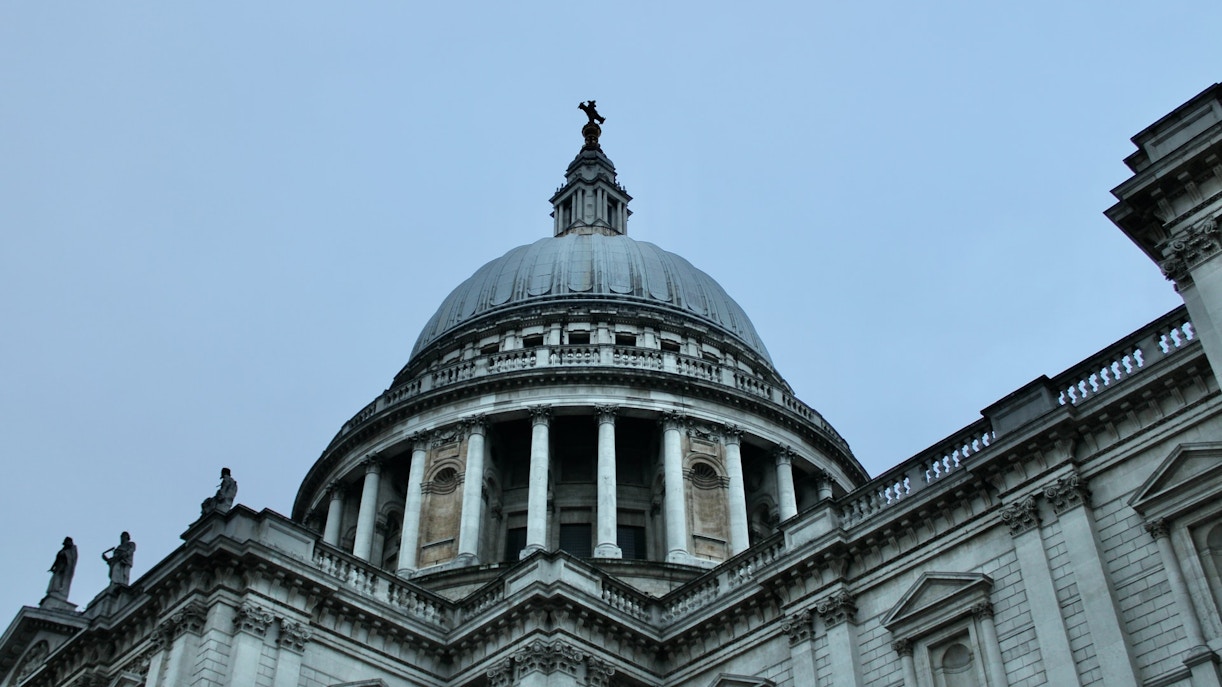
Religious importance aside, the Anglican St Paul's Cathedral (the largest cathedral in England) is a site tourists from far and near visit because of its Renaissance and English Baroque architecture styles. Sir Christopher Wren created the cathedral's famous 'three nested domes' — a hemispherical outer dome to dominate the skyline, a steeper inner dome, and a hidden middle dome. The dome was an entirely new architectural form before Wren's creation! Inspired by contemporary Renaissance trends in Italian architecture and his precursor Borromini, Wren also incorporated Corinthian columns and towers in the facade.

St Paul’s Cathedral architects

Sir Christopher Wren

Influenced by Italian and Baroque styles observed during his visit to Paris, Christopher Wren, in his 50-year career, designed 53 London churches, including St Paul's Cathedral. Following the Great Fire of London in 1666, he proposed reconstructing St Paul's with a dome, which was met with disagreements from the royals and English clergy.

Robert Hooke

Robert Hooke, an English scientist and architect, collaborated closely with Wren in designing St Paul's Cathedral. Though less celebrated than Wren, Hooke's contributions were notable, particularly in shaping the dome's structure. His theories, published in anagram form, influenced the cathedral's structural design.

St Paul’s Cathedral construction

Initiation and early designs

St Paul's Cathedral saw three iterations before Christopher Wren's masterpiece. The first cathedral, founded in 604 AD, marked the beginning of this long history on Ludgate Hill. The second, started in 1087, was destroyed, prompting the creation of the Old St Paul's Cathedral, a Gothic marvel with a towering spire, which was ultimately destroyed by the Great Fire of 1666.

Reconstruction by Wren

After the Great Fire, Wren was commissioned to design a replacement structure. Inspired by contemporary Renaissance trends in Italian architecture, Wren combined English medieval cathedral traditions with Inigo Jones' classical style and Mansart's French buildings. The final design, strongly influenced by St. Peter's Basilica in Rome, adopted a restrained Baroque style.

Structural development

St Paul's Cathedral was constructed using Portland stone, a durable and elegant light grey limestone from Dorset, which formed the cathedral's exterior. Inside, intricate marble floors, colorful stone mosaics, and ornate ironwork enhance its beauty. Wren's innovative design features a triple dome system, with the outer dome covered in wood and lead.

Book your St Paul's Cathedral tickets

St Paul’s Cathedral Admission Tickets

Flexible duration
Audio guide

Combo (Save 5%): Tower of London + St. Paul’s Cathedral Tickets

Flexible duration
Guided tour

Combo (Save 5%): Westminster Abbey + St. Paul's Cathedral Entry Tickets

Flexible duration
Audio guide

Headout London Pass: Save up to 40% at All Top Attractions

Free cancellation
Flexible duration
Audio guide
Guided tour
Transfers available

Combo (Save 10%): St Paul's Cathedral + London Eye Tickets

Flexible duration
Guided tour


London Explorer Pass by Go City: Choose 2 to 7 Attractions

Free cancellation
Book now, pay later
Extended validity
Flexible duration
Guided tour

The exterior

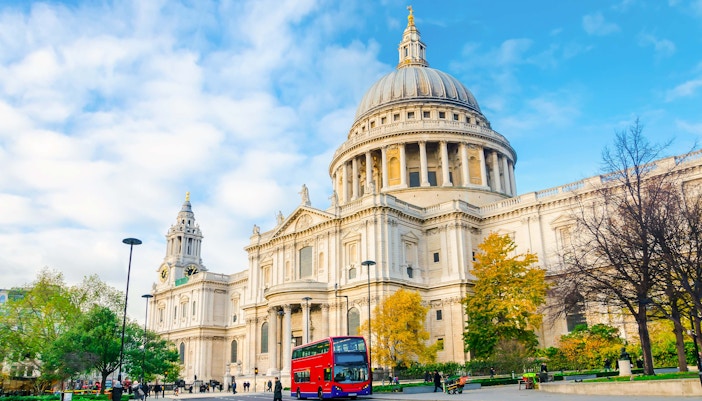
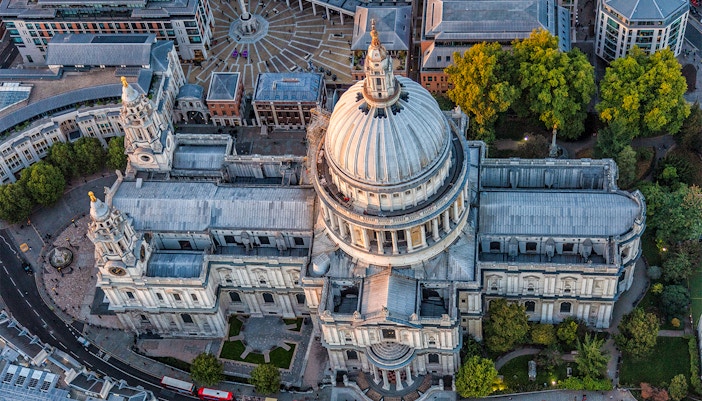
Set on Summit Hill overlooking the city of Saint Paul, the highlight of St Paul's facade is the dome that stands tall at 365 feet, considered one of the world's largest domes. The West Front and the walls of the cathedral are other standout features of its exterior.

St Paul's dome

The dome is double-shelled and composed of three components - an outer dome, a brick cone within for structural support, and an inner dome. The 18-inch thick cone and inner dome are supported by iron chains to prevent cracking and spreading. Wren borrowed this idea from the dome of St. Peter's Basilica and further improved upon it to feature extra supportive elements. The cross on top of the outer dome stands nearly 366 feet above ground level.

St Paul’s dome

The West Front

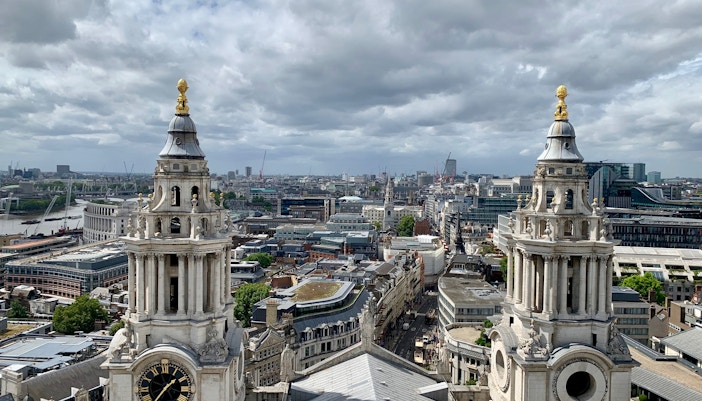
The West Front is the main entrance with a 30-foot-high Great West Door (which is only opened completely for special occasions). There is a columned portico along with an upper columned colonnade. The pediment has the Conversion of St Paul, a bas-relief sculpture by Francis Bird. Above this pediment lies three different statues of Saints James, Paul, and Peter. Finally, framing the portico on either side are two bell towers known as West Towers.

The walls

The two-story body of the church and its walls are made of granite stone, in the shape of a Greek cross with nearly equal-length arms. The exterior wall supports the buttresses of the vault and provides a beautiful appearance when viewed, rising above buildings of the 17th-century city. You can still see the building of St Paul’s Cathedral from across the River Thames. You can also see the Corinthian pillars and windows between them from far.

The interiors

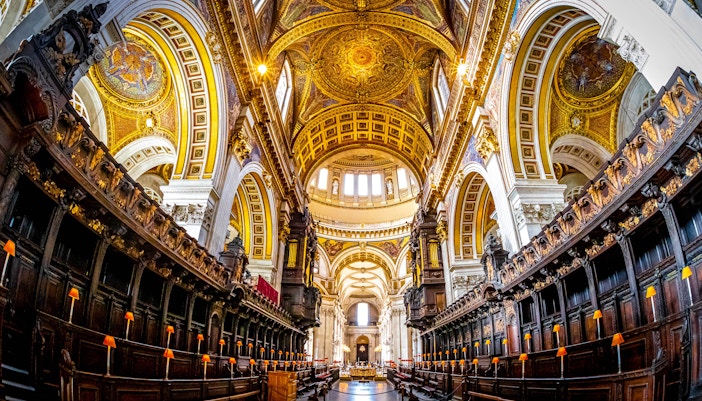
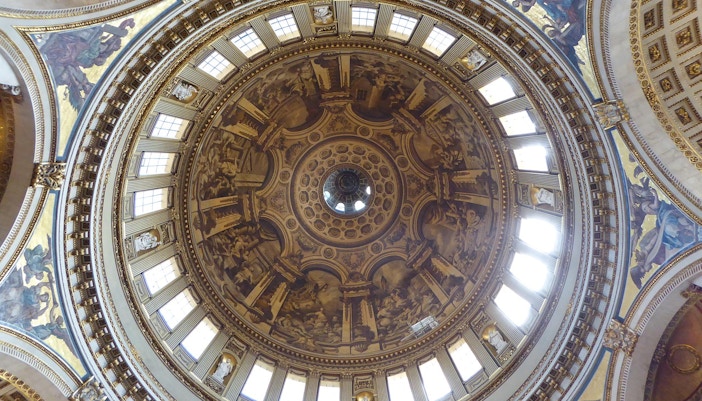
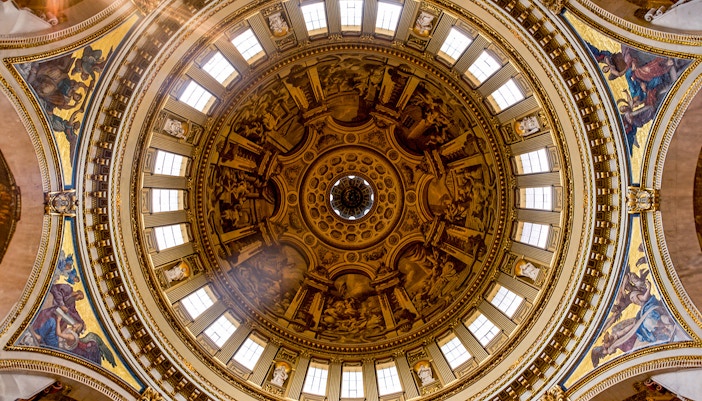
St Paul's Cathedral interiors were designed with unobstructed views of the altar and pulpit so that all visitors would be able to see and hear the Mass. Light floods into the cathedral interiors through the 24 large windows in the dome and the rose windows in the transept.

Inside the dome

When visiting St Paul's Cathedral, admire its impressive dome from the transept. Weighing nearly 65,000 tons, this grand structure is supported by eight Dorset stone piers and arches, distributing its weight evenly. The dome's interior features a stunning fresco by James Thornhill depicting scenes from Saint Paul's life. Light enters through openings in the outer dome and brick cone, illuminating the interior and supporting the inner dome.

The Apse and High Altar

The High Altar and Apse are in the cathedral's eastern section. Funded by British citizens, the Apse later became the American Memorial Chapel in 1958, honoring over 28,000 Americans who died in World War II. The High Altar, designed by Christopher Wren and carved from Italian marble, features a ten-foot cross and two gilded candlesticks commemorating World War II victims. An oak canopy, added in 1958, covers the altar.

The clock and bells

The West Front features two Baroque bell towers, the West Towers. The southwest tower houses four clock bells, including the 5-ton 'Great Tom' and the 16.75-ton ‘Great Paul,' England's largest bell, currently silent due to a broken chiming mechanism. These bells mark hours and toll for significant deaths. The northwest tower holds 12 change ringing bells, and the Service Bell, in use for daily services at the Cathedral.

St Paul's Cathedral art

St Paul’s Cathedral houses an impressive art collection, including Grinling Gibbons' carvings, Sir James Thornhill's dome murals, and Victorian mosaics. This art has inspired and illuminated the Christian faith, offering reflection and contemplation. The Visual Arts Programme explores the intersection of art and faith, featuring renowned artists like Rebecca Horn, Yoko Ono, Antony Gormley, and Bill Viola.

Frequently Asked Questions about St Paul’s Cathedral architecture

Construction of St. Paul's Cathedral began in 1675 and was completed in 1710, taking approximately 35 years to finish.

More Reads

Inside St Paul's Cathedral

Book Now

Opening Hours

Book Now

Old St Paul's Cathedral

Book Now