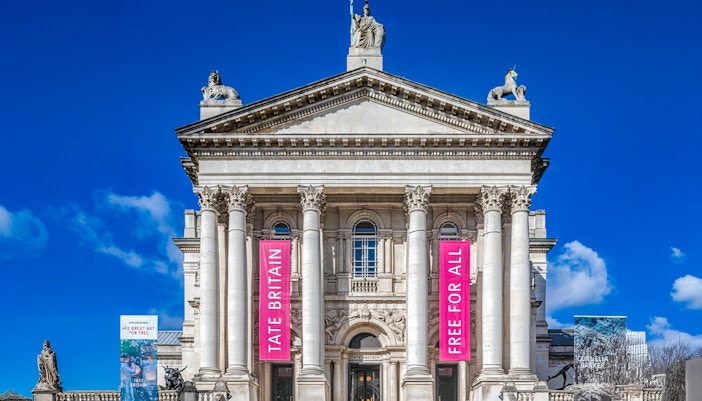
Plan your visit to the iconic Tate Britain in London

Visiting Tate Britain is like stepping into the story of British art. From delicate Pre-Raphaelite masterpieces to Turner’s seascapes and the grand sculptures in the Duveen Galleries, there is so much to see that it can feel a little overwhelming at first. The key is to have a plan so you can catch all the important highlights while still leaving time to wander, soak in the atmosphere, and enjoy the building.

Navigating your way at Tate Britain

The collection spans from Tudor and Stuart portraits to Turner’s masterpieces, the Pre-Raphaelites, and modern British sculpture, so knowing the layout helps you prioritise highlights and explore without feeling rushed.

Enter via the Main Entrance

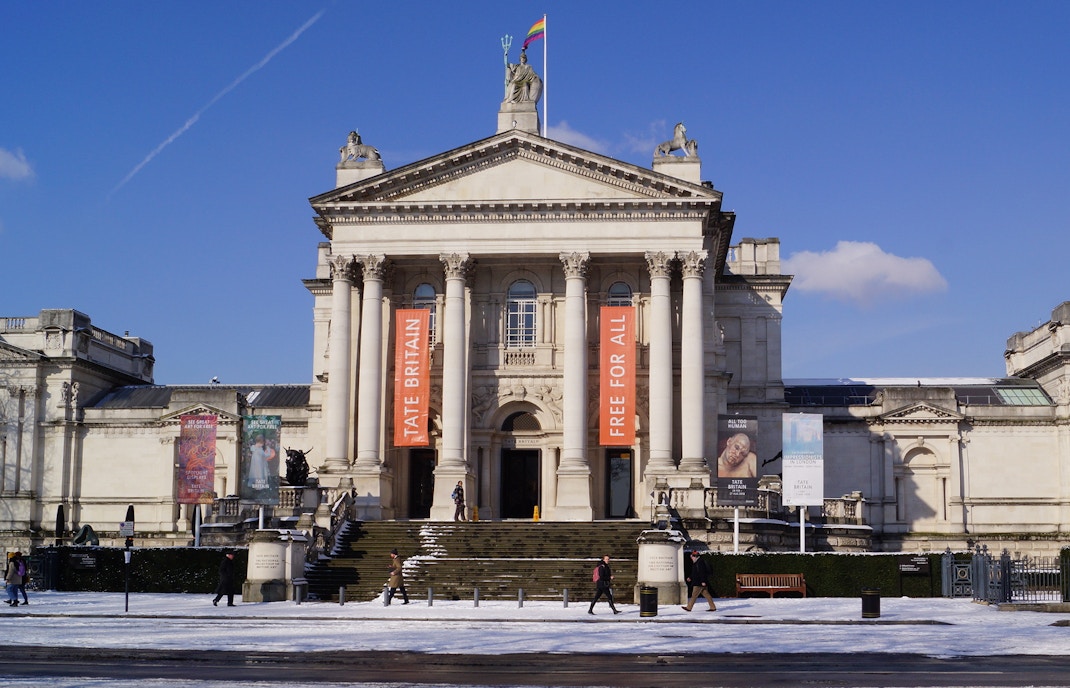
👉 Start at the main Millbank entrance. You’ll find ticket desks, cloakrooms, and information points here. Grab a map to navigate efficiently, and follow signage to move between galleries without backtracking.

Follow the chronological flow

👉 Begin on the ground floor with historic British art from the 1500s to the 18th century, and stop by the Duveen Galleries to admire sculptures before heading to the Clore Gallery for Turner’s masterpieces.

Check out the shops and cafés

👉 Once you’re done exploring, take a break in the museum café or browse the gift shop for art-inspired souvenirs. These spaces are perfect for relaxing between galleries and soaking in the atmosphere of the building.

Explore Tate Britain with an expert guide

With so much to see, Tate Britain can feel overwhelming. A 1-hour guided tour cuts through the noise, spotlighting must-see masterpieces with expert insight. It’s an easy, hassle-free way to experience the highlights!

How to make the most of your time?

Visit typeDurationRouteWhat you get

Snapshot visit

1–2 hours

Duveen Galleries → Pre-Raphaelite rooms → Clore Gallery

A sharp, time-efficient overview that lets you experience Tate Britain’s most famous works without committing to a long museum visit.

Balanced visit

2–4 hours

Historic British galleries → Pre-Raphaelite and Victorian art → Clore Gallery → Modern British rooms

A flowing, easy-to-follow visit that gives you context, variety, and breathing room without feeling rushed or exhaustive.

In-depth exploration

4–6 hours (half day)

Chronological galleries → Duveen Galleries → Clore Gallery → Modern and contemporary British art → Café and shop

A relaxed, immersive visit that leaves space to linger in the galleries, reflect over a break, and end with art-inspired souvenirs before you leave.

Handy tips

Beat the crowds

  • Choose calmer windows: Opt for weekday mornings, especially Tuesday to Thursday, or visit after 4 pm on Fridays.
  • Use the riverside entrance: The Millbank entrance facing the Thames is usually quieter than Atterbury Street, even during popular exhibitions, and drops you straight into the rotunda and Duveen Galleries.
  • Beat the school rush: Expect heavy school groups between 11 am and 2 pm on weekdays. For calmer galleries, arrive at the opening or visit after 3:30 pm.

Explore smarter

  • Start with Turner: Head straight to the Clore Gallery at opening. Fewer people and softer morning light make Turner’s works feel more intimate and easier to appreciate.
  • Time the Duveen Galleries: These sculpture halls shine when they’re quiet. Go right at 10am or during the 1–2pm lunchtime lull for the best experience.
  • Use a smart flow: Start with the historic galleries and finish with modern and contemporary art. Crowds thin out upstairs later, making Bacon and Moore much easier to enjoy.

Explore Tate Britain

Clore Gallery

Dedicated to J.M.W. Turner, this gallery houses his major works in controlled lighting designed to protect and showcase his paintings. Here, you can study his seascapes, skies, and use of color and movement.

What to look out for:

  • Norham Castle, Sunrise
  • Sun Setting over a Lake
  • Other Turner masterpieces

Pre‑Raphaelite Galleries

These rooms display Pre-Raphaelite art, emphasizing vivid colors, intricate detail, and literary or mythological themes, highlighting the Victorian approach to storytelling in painting.

What to look out for:

  • Ophelia by John Everett Millais
  • The Lady of Shalott by John William Waterhouse
  • Narrative landscapes

Duveen Galleries

The Duveen Galleries are a large neoclassical hall primarily created for housing sculpture. The space emphasizes scale, perspective, and the relationship between sculptures and the architecture.

What to look out for:

  • Rotating major sculpture installations, including works by Bill Woodrow, Rachel Whiteread and Michael Craig-Martin
  • British sculptors like Henry Moore

Modern & Contemporary British Art

These sections display British art from the 20th and 21st centuries, specifically works from 1940 to the present day, alongside the historic British art collection from 1500 to WWII.

What to look out for:

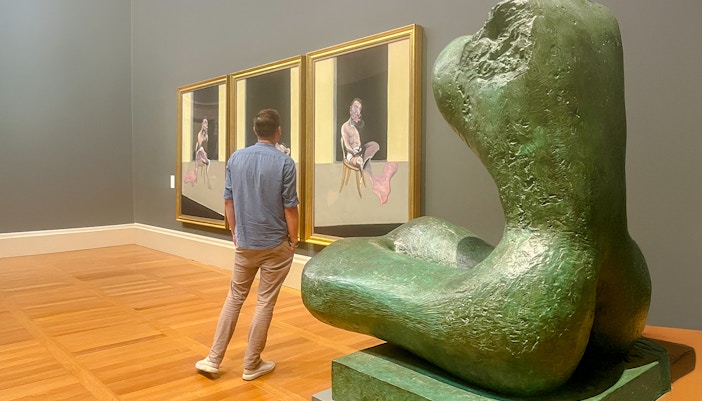
  • Works by Barbara Hepworth, Francis Bacon, and David Hockney
  • Contemporary artists like Tracey Emin, Zineb Sedira, and Damien Hirst

Millbank Riverside & Rotunda

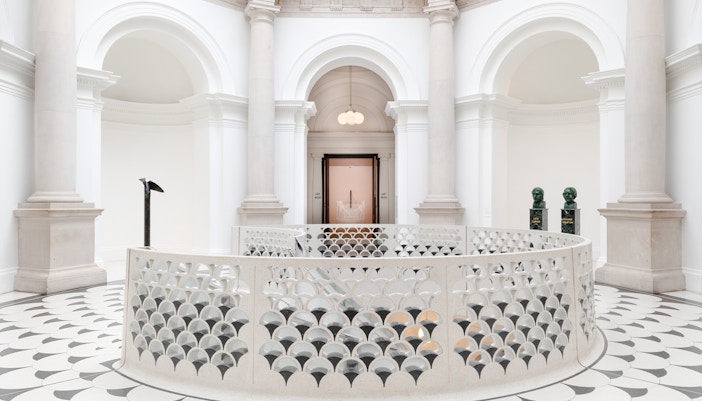
These areas act as a central hub linking galleries, showcasing Tate Britain’s architecture while offering views of the Thames and circulation between floors.

What to look out for:

  • Rotunda staircase
  • Views of the Thames
  • Architectural features

Museum Café & Shops

Tate Britain also has café and retail spaces reflecting art themes, offering a place to rest and browse books, prints, and gifts inspired by the museum.

What to look out for:

  • Art-inspired books and prints
  • Unique souvenirs
  • Riverside seating

Before you get there

About

Know all about Tate Britain before you choose to visit the art museum.

Timings

Find the opening hours and best time to visit for a smooth experience.

Directions

Read up on the location, directions, and best ways to get to Tate Britain.

Know before booking your Tate Britain tickets

  • Ticket overview: Choosing the right Tate Britain ticket comes down to depth of experience and whether you want expert context or independent exploration. Entry to Tate Britain is free, so paid tickets are only relevant if you’re planning a guided visit or a time-limited exhibition.
  • Exhibition tickets: If you’re visiting specifically for the Lee Miller exhibition (2 October 2025 – 15 February 2026), an exhibition ticket is the clear baseline. It includes timed access to the exhibition and is best for those whose primary interest is Lee Miller’s work rather than a general overview of British art.
  • Guided tours: If you want a curated introduction to Tate Britain, the 1-hour guided tour is the best option. It includes expert-led commentary covering key works across 500 years of British art and is perfect for those who value structure and deeper interpretation.
  • Accessibility: Tate Britain is fully wheelchair- and stroller-accessible, with multiple facilities to accommodate guests with varying needs. Make sure you reach out to the staff on-site if you need any assistance or help navigating any section of the museum.

Your Tate Britain tickets explained

Ticket typeWhat's includedBest forPrice range

Exhibition ticket (Lee Miller)

Entry to Tate Britain + access to the Lee Miller exhibition (2 Oct 2025 – 15 Feb 2026)

Focused access to Lee Miller exhibition

£20

Guided tour

Entry to Tate Britain + 1-hour guided tour + Tate expert guide

Detailed and curated highlights with expert context

£20

Tate Britain timings

DayTimingsLast entryClosed on

Mon–Sun

10am – 6pm

5:30 pm (galleries and exhibitions

24–26 Dec

Best time to visit

Weekday vs Weekend

  • Weekday: Mornings (Tuesday–Thursday from 10 am) are quieter, with fewer visitors in the main galleries and special exhibitions. Late afternoons before closing also see reduced footfall.
  • Weekend: Saturdays and Sundays are usually crowded. Afternoons and UK school holidays are the busiest, particularly around midday, with more crowded galleries and exhibitions.

Peak vs low season

  • Peak season: Summer months (June–August) attract the highest crowds, often with longer wait times during check-in, security, and when selecting your preferred time slot.
  • Low season: Spring (March–May) and autumn (September–November) offer milder weather and smaller crowds. Winter months outside Christmas are generally quieter, though major exhibitions can still draw visitors.

Where is Tate Britain located?

Address: Millbank, London SW1P 4RG, United Kingdom

Tate Britain is situated in central London along the north bank of the River Thames in the Millbank district. It’s just outside the busiest tourist areas, providing a quieter environment while staying easily accessible.

Closest landmark: Houses of Parliament (approximately 1 km away)

Getting to Tate Britain

Getting to Tate Britain

Tate Britain is well connected to multiple lines, making it easy to combine your visit with other central London attractions.

  • Travel time from Central London (Charing Cross): 10–15 minutes
  • Nearest stations: Pimlico (Victoria Line, ~600 m), Vauxhall (Victoria Line & National Rail, ~850 m), Westminster (Circle, District, Jubilee Lines, ~1.2 km)

Taking the bus offers a scenic route along the Thames, allowing you to enjoy views of nearby landmarks before arriving at the museum.

  • Travel time from Central London (Charing Cross): 15–20 minutes
  • Closest stops: John Islip Street, Vauxhall Bridge Road

Trains make Tate Britain accessible for visitors coming from outer London or regional locations, providing a convenient option for day trips.

  • Travel time from Central London (Charing Cross): 10–15 minutes
  • Closest stations: Vauxhall (~850 m), Victoria (~1.6 km)

Travelling by river offers a unique perspective of central London and a relaxed alternative to roads and crowded public transport.

  • Travel time from Central London (Embankment area): 20–25 minutes
  • Nearest pier: Millbank Pier

For flexible and comfortable travel, you can take a cab or drive to Tate Britain. Driving allows you to plan a multi-stop itinerary around Westminster and the South Bank, especially if visiting multiple attractions in one trip.

  • Travel time from Central London (Charing Cross): 10–20 minutes depending on traffic
  • Distance: Around 3 km via A3212 and Millbank

Parking facilities:

  • On-site accessible parking is available for Blue Badge holders on John Islip Street.
  • Atterbury Street Blue Badge bays are nearby for disabled parking.
  • Q-Park Victoria is a private car park around 15–20 minutes’ walk from Tate Britain and suitable for longer stays.

Entrances

Entrance nameLocationWho it's forCrowds & wait times

Manton Entrance

Atterbury Street (step‑free)

General visitors, wheelchair/stroller access

Usually quickest with level access, quieter than main entrance

Millbank Entrance

Millbank (facing Thames)

General visitors

Main access point, can be busier during peak hours

Facilities

  • Information desks: Staffed help points are available near the Manton and Millbank entrances to assist visitors.
  • Toilets: Standard and accessible toilets are located on the Lower Floor and in the Clore Gallery foyer.
  • Baby changing: Baby changing facilities are provided near the café and Clore Gallery toilets for convenience.
  • Changing Places toilet: A fully equipped Changing Places toilet is available with a RADAR key for accessibility.
  • Lifts: Multiple lifts connecting lower and upper gallery floors are available throughout the museum.
  • Cloakroom: Free bag and coat storage is provided on the lower floor for visitors.
  • Seating: Benches and seats are placed near entrances and in galleries, with folding seats available on request.
  • Water fountains: Drinking fountains are available next to the Lower Floor toilets and the café.
  • Cafe (Djanogly Café): The café offers casual dining with light meals and drinks for visitors.
  • Shops: The main shop on the upper floor and the Manton shop on the lower floor sell art books and gifts.
  • Library & reading rooms: Study spaces are provided for prints, archives, and research purposes.
  • Members Room: An exclusive lounge space is available for Tate members.
  • Multi‑faith room: A quiet space is provided for prayer and contemplation.

Accessibility at Tate Britain

General facilities

Tate Britain provides level access via the Manton Entrance ramp, lifts to all gallery floors, and accessible toilets, including a Changing Places facility.

For physical disabilities

Wheelchairs and walkers are available to borrow free of charge, and mobility scooters can be booked 24 hours in advance. Accessible parking spaces and drop-off points are provided near the gallery, with level access routes from these points into the building.

For hearing impairments

Hearing loops are installed in key areas such as the Auditorium and Manton Studio. Staff are trained to support communication needs, and tours can accommodate hearing-impaired needs.

For visual impairments

Large-print gallery plans, raised-image plans with Braille, and printed large-print guides for special exhibitions are available on request from information desks.

For developmental or learning needs

Tate Britain offers staff support, communication cards, and quiet rooms to provide a calm space for sensory breaks or focus. You can request assistance navigating galleries and using these spaces to ensure a comfortable experience.

Visiting with family

  • Baby changing facilities are available on the lower floor near toilets and the café for easier care breaks.
  • Story Space in the Manton Studio offers quiet reading and play areas with soft seating and books during school holidays and weekends.
  • Djanogly Café serves light meals and snacks, suitable for families with kids.

Exhibition at Tate Britain

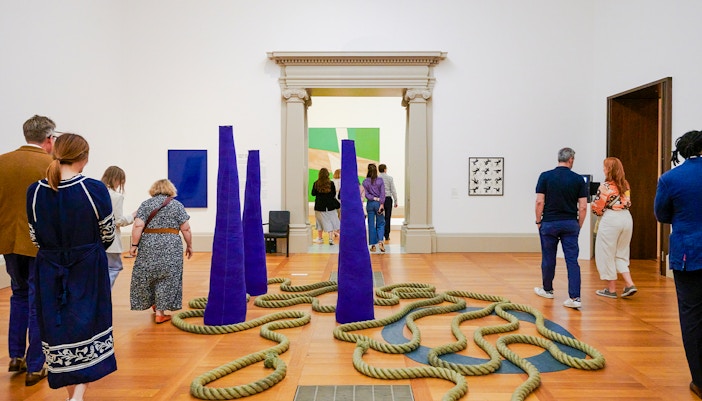
Visitors observing exhibits inside a museum.

Lee Miller exhibition: A UK‑wide retrospective of surrealist photographer Lee Miller’s work, tracing her art from French surrealism and fashion photography to incisive World War II photojournalism. The show features around 230–250 vintage and modern prints, including rare and previously unseen material, revealing her fearless vision and multifaceted career.

Highlights:

  • Surrealist portraits and fashion photography from her Paris years.
  • Powerful war photographs, including frontline coverage and liberated concentration camps.
  • Rare personal portraits and self-portraits showcasing her unique artistic vision.

Dates: 2 October 2025–15 February 2026

Rules and restrictions

  • Entry to the permanent collection is free. Some temporary exhibitions require paid tickets and may have separate conditions.
  • Bags and items larger than 55 cm x 40 cm x 20 cm are not permitted inside.
  • Electric skateboards, scooters, and folding bikes are prohibited. Non-electric versions must be stored in the cloakroom.
  • Do not touch any artworks or display items.
  • Photography for personal use is allowed without flash. Flashes, tripods, and camera supports are not permitted.
  • Food and drink must only be consumed in designated areas such as the café, not inside galleries.
  • Smoking and vaping are prohibited anywhere on the premises.
  • Assistance dogs are welcome. Other animals are not permitted.
  • Cloakroom space is limited and cannot accept oversized luggage.

Where to eat

Djanogly Café (inside Tate Britain)

An on-site café serving sandwiches, pastries, cakes, soups, and hot and cold drinks within the gallery.

Café Society (Millbank)

A nearby café offering coffee, light meals, and brunch-style dishes in a relaxed setting.

Regency Café (Regency Street)

A traditional British café known for cooked breakfasts, classic comfort food, and fast service.

Sapori (Horseferry Road)

An Italian restaurant close to the gallery serving pasta, pizza, and Mediterranean dishes.

Where to shop

Tate Britain Main Shop

This is the main retail space at Tate Britain, offering books on British art, exhibition catalogues, prints, postcards, jewelry, homeware, and Tate-exclusive gifts.

Manton Foyer Shop

A compact shop near the main accessible entrance selling current exhibition merchandise, art books, children’s gifts, stationery, and postcards.

Cardinal Place

An indoor shopping centre close to Tate Britain with a mix of fashion, lifestyle, beauty, and gift stores.

Westminster Abbey Shop

A specialist shop offering heritage gifts, books, prints, and souvenirs inspired by British history and culture.

Where to stay

Dolphin House Serviced Apartments

A large aparthotel offering studio and apartment-style accommodation near the river and transport links.

  • Highlights: Spacious rooms with kitchenettes, suitable for families and longer stays, and on-site leisure facilities.

DoubleTree by Hilton London Westminster

A modern hotel located along the Thames, very close to Tate Britain and Westminster landmarks.

  • Highlights: Riverside location, short walk to the gallery, rooftop bar with city views.

Staybridge Suites London Vauxhall

An all-suite hotel offering spacious accommodation with kitchen facilities near major transport connections.

  • Highlights: Suites with kitchens, good for extended stays, and strong tube and rail access.

Insider tips for Tate Britain

  • Avoid the main entrance queue: The Manton Entrance ramp sees far fewer visitors than the main Millbank entrance, especially on weekday mornings. Arrive 30–40 minutes before opening, and you can skip the crowds.
  • Plan your route for highlights: Tate Britain houses over 70,000 artworks spanning centuries. Focus on 5–7 must-see pieces, such as works by Turner, Hockney, and the Lee Miller exhibition, to avoid fatigue and ensure a meaningful visit.
  • Hidden quiet spots: Between galleries, the Manton Staircase landings and upper floor corners often have seating and natural light, perfect for a 10–15 minute rest away from crowds.
  • Exhibition shortcuts: For temporary shows like Lee Miller, enter via the Manton Foyer Shop side entrance. It drops you directly into the exhibition and avoids the afternoon crush at the main hall, saving 10–15 minutes.
  • Timing your visit: Weekday mornings from Tuesday to Thursday are generally quietest. Weekends and UK school holidays see the largest crowds around 11 am–2 pm. Arriving early or mid-afternoon helps you avoid the busiest periods.

Frequently asked questions about visiting Tate Britain

Most people spend around 2–3 hours exploring the galleries. If you want to include temporary exhibitions like Lee Miller, plan for 3–4 hours to really take it all in.