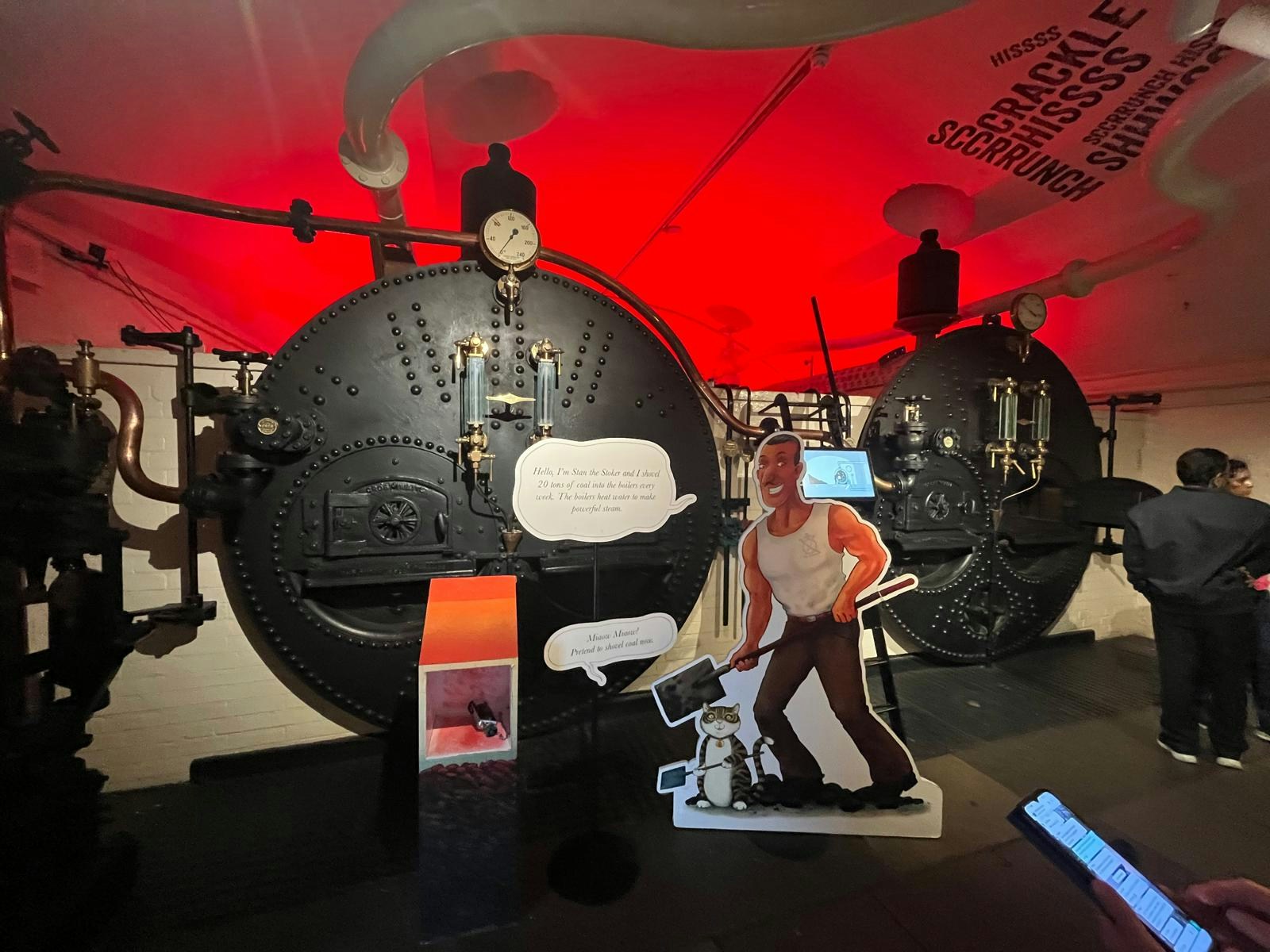
- Must-see highlights: Massive original Victorian steam engines, hydraulic accumulators, and coal-fired boilers that once powered the entire bridge lifting system.
- Current use: The Engine Rooms now function as a preserved industrial museum showcasing Victorian engineering and the evolution of bridge technology.
- Unique facts: The original system could lift the 1,000-ton bascules in under a minute, powered by a team of around 80 maintenance workers.
Victorian Engine Rooms | Tower Bridge's industrial heart
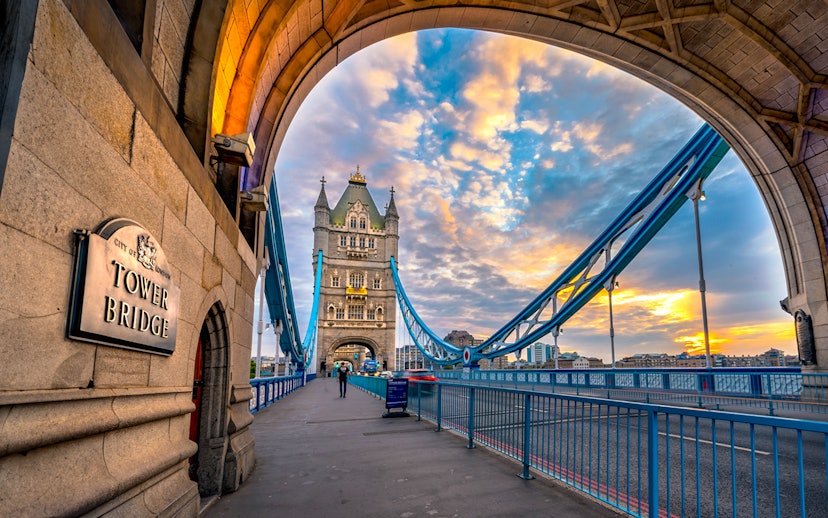
The Tower Bridge Engine Rooms sit beneath the bridge like a hidden mechanical world frozen in time. These preserved Victorian steam engines once powered the raising of the bascules, allowing tall ships to pass through the Thames.
Inside the Tower Bridge Engine Rooms, visitors walk among enormous original machinery, still arranged exactly as it was during the bridge’s working life. This is not just an exhibition of machines, it is the original power source of one of London’s most iconic landmarks.
Where is it located?
The Tower Bridge Engine Rooms are located beneath the South Tower on the south bank of the River Thames. They form the final section of the Tower Bridge exhibition and sit at ground level, just after you exit the high-level walkways.
From outside, the entrance is easy to spot once you follow the marked visitor route from the South Tower.
How to access?
Access to the Tower Bridge Engine Rooms is included with all standard Tower Bridge tickets .
Visitors reach the Engine Rooms after completing the full Tower Bridge route, which includes:
- North Tower exhibition spaces
- High-level Glass Walkway
- South Tower descent
From there, a clearly marked path leads directly into the Engine Rooms. No separate booking is required.
Tower Bridge Engine Rooms in a nutshell
Things to know before booking Tower Bridge Engine Rooms tickets
- Guaranteed entry included with all tickets: All Tower Bridge Engine Room tickets include entry to this exhibition space. It is not an add-on or upgrade, but part of the complete Tower Bridge experience.
- Step-free accessibility throughout: The Engine Rooms are fully accessible via lift and level flooring. Visitors with mobility needs can comfortably navigate both entry and exhibition spaces.
- Final stop in your visit route: The Engine Rooms are always visited at the end of the Tower Bridge experience. Entry is only possible after completing the upper towers and walkways.
- Atmospheric lighting and photography: Lighting is intentionally low to preserve the historic feel. Non-flash photography is allowed, and the shadows create striking industrial-style images.
Your Tower Bridge Engine Rooms ticket types
| Ticket type | Standard entry tickets | Skip-the-line guided tours | Combo tours |
|---|---|---|---|
Is Engine Rooms access included? | Yes | Yes | Yes |
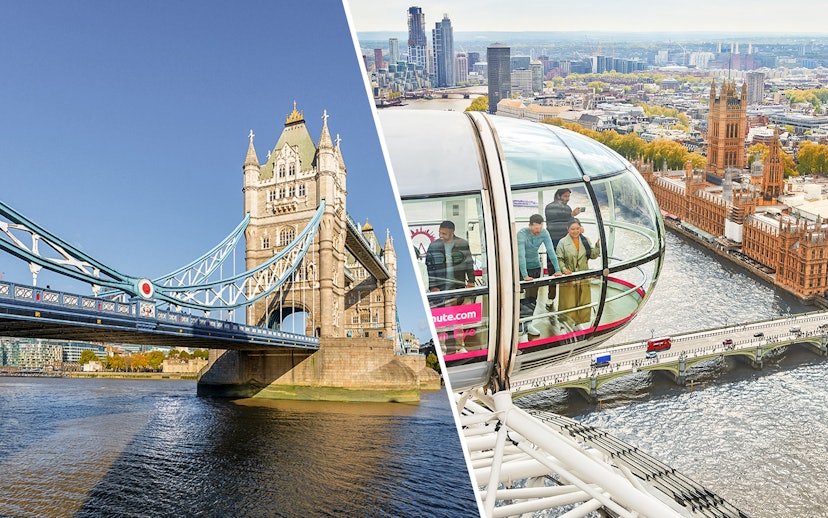
Why go for it? | Budget-friendly, self-paced visit | Expert storytelling on machinery and engineering | Tower Bridge plus another London attraction like Tower of London, London Eye, Westminster Abbey, or Thames Cruise |
Starting price | From £18 | From £132 | From £24.92 |
Exploring inside the Tower Bridge Engine Rooms
1/5
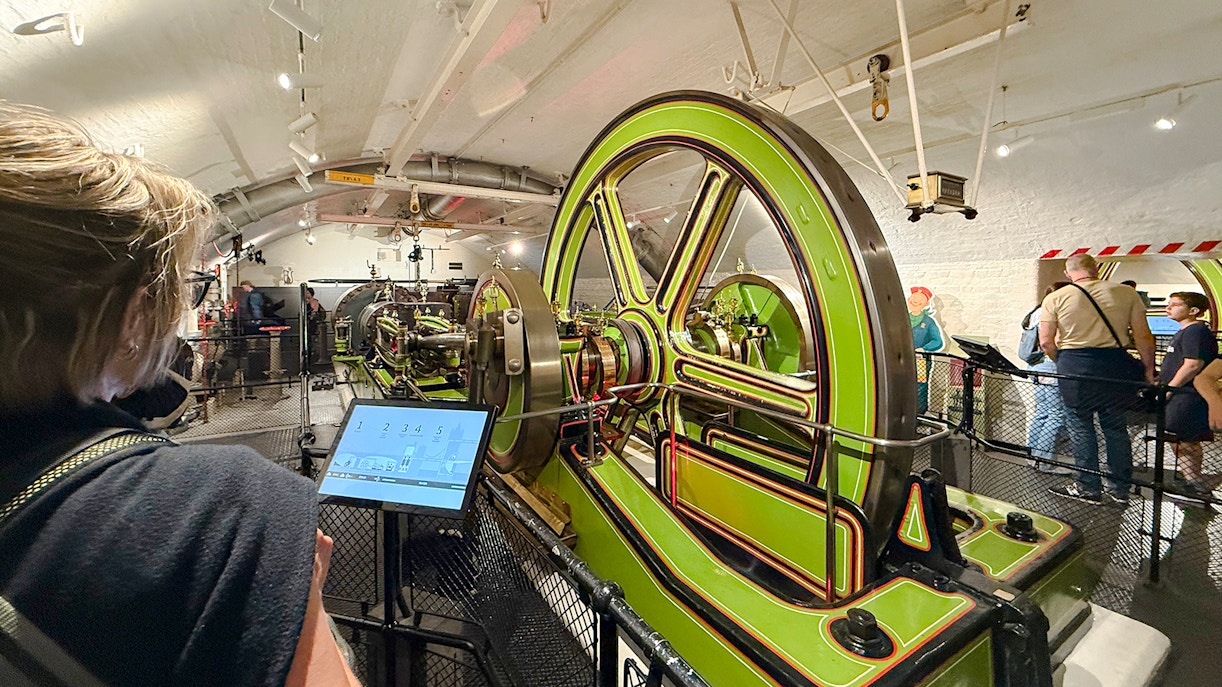
Original steam engines
Standing beside the original steam engines gives a real sense of their immense scale. These towering machines once powered every bridge lift, generating the force needed to raise the bascules. Preserved in their original positions, they offer a fascinating glimpse into Victorian engineering in action.
Hydraulic accumulators
Among the most impressive pieces of machinery are the hydraulic accumulators, large iron structures that stored enormous amounts of pressurised energy. They acted like giant batteries for the bridge, ensuring the bascules could be raised quickly and reliably whenever river traffic needed passage.
Coal-fired boilers
The coal-fired boilers reveal the demanding process behind operating Tower Bridge in its early years. These massive units produced the steam that powered the engines, while teams of workers worked around the clock to fuel, monitor, and maintain the entire system.
Interactive exhibits
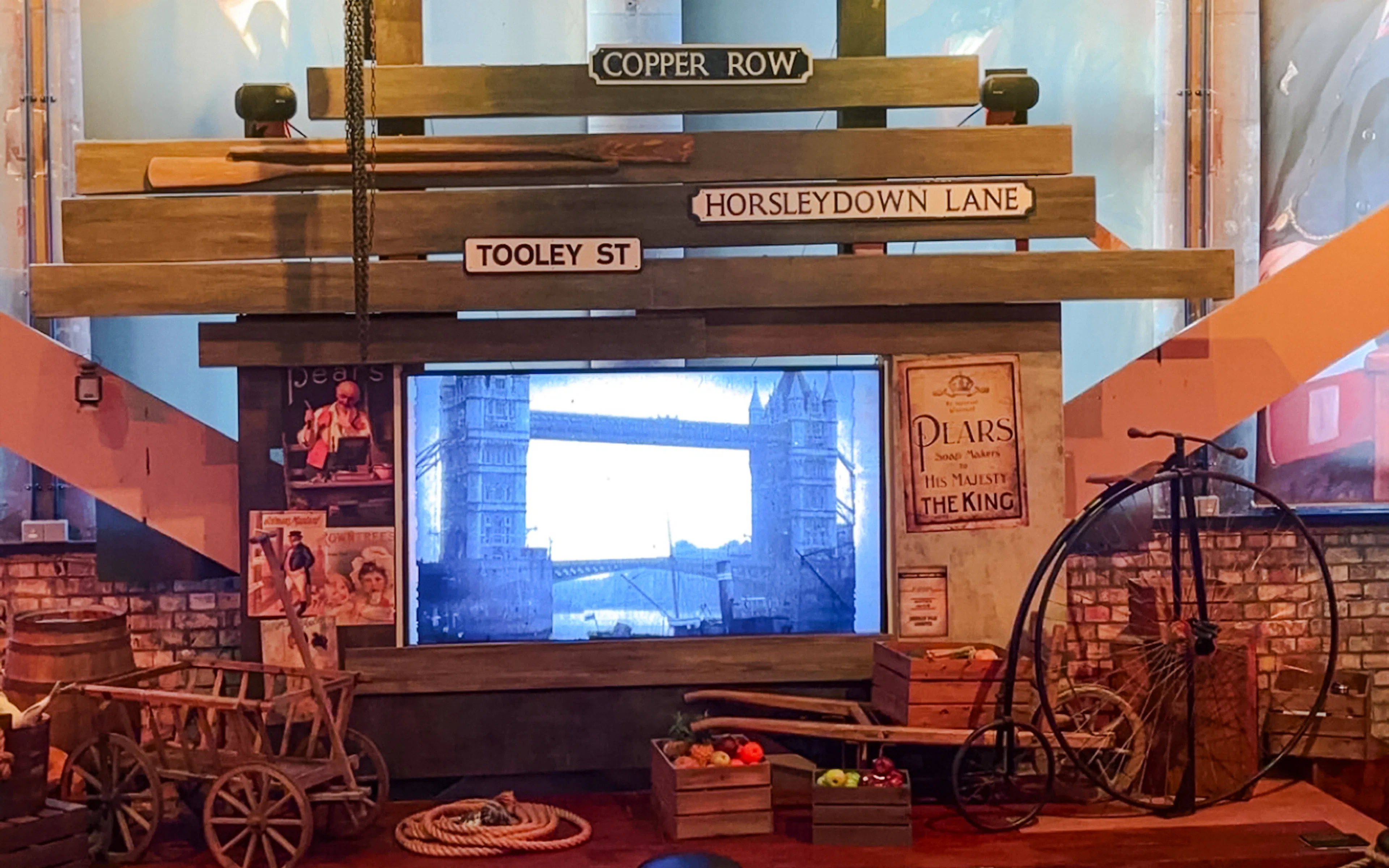
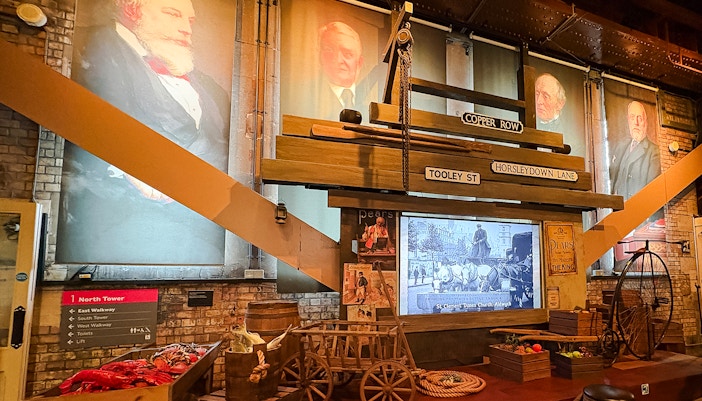
Interactive displays and short films help bring the machinery to life by showing exactly how steam, hydraulics, and engineering worked together. Through models, animations, and historical footage, visitors can easily follow the journey from Victorian power systems to modern technology.
Gift shop
Before leaving, browse the official gift shop located within the Engine Rooms. The collection includes engineering-inspired keepsakes, books, souvenirs, and Tower Bridge memorabilia, making it a convenient place to pick up a reminder of your visit.
Architectural highlights of the Victorian Engine Rooms
Victorian pumping station design
Built in 1894, the Engine Rooms were designed as a fully functional industrial pumping station powering a working river crossing. Massive iron frameworks and exposed mechanical systems reflect Victorian engineering confidence and scale.
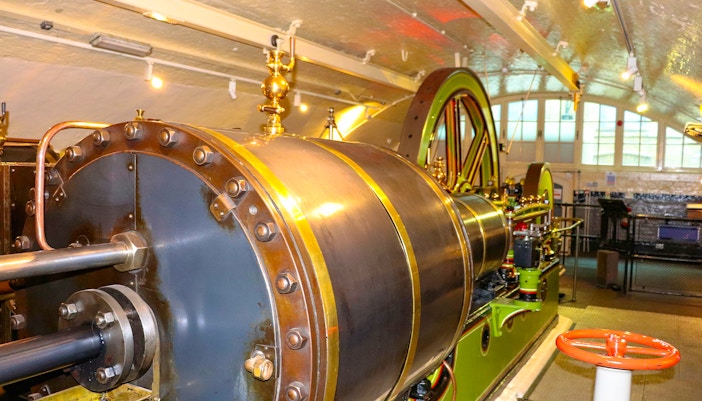
Hydraulic power system explained simply
Coal-fired boilers produced steam, which powered pumping engines. These systems pressurised water to operate the lifting mechanism of the bridge. It was one of the most advanced urban engineering systems of its time.
Preservation and design
The original machinery remains intact, including engines, accumulators, and drive systems. The space retains its industrial character with exposed metal structures and functional layout design.
Historical and cultural significance of the Engine Rooms
- A Victorian engineering landmark: The Engine Rooms preserve one of the world's most complete Victorian hydraulic systems, showcasing the innovation that powered Tower Bridge.
- Keeping London's river moving: For over eight decades, these machines lifted the bascules, allowing ships to navigate one of the world's busiest waterways.
- A rare survival of industrial history: Unlike many historic infrastructures, the original engines, boilers, and accumulators remain in place for visitors to see.
- Behind-the-scenes of a famous icon: The Engine Rooms reveal the complex machinery and workforce that kept London's most recognisable bridge operating daily.
- A testament to human ingenuity: Combining steam power, hydraulics, and skilled labour, the system demonstrated the remarkable engineering achievements of the Victorian era.
Notable figures of the Tower Bridge Engine Rooms
Sir William Armstrong
Sir William Armstrong pioneered the hydraulic accumulator technology used at Tower Bridge, creating a system that stored and released pressurised energy efficiently. His innovations made it possible for the heavy bascules to be raised quickly, safely, and reliably.
Sir John Wolfe Barry
As Tower Bridge's Chief Engineer, Sir John Wolfe Barry led the design and construction of the bridge. He played a key role in integrating Armstrong's hydraulic technology into the structure, ensuring the bridge functioned as both a landmark crossing and a working river passage.
Edward Cruttwell
Edward Cruttwell served as the Resident Engineer during construction, overseeing the installation of the bridge's complex mechanical systems. His supervision helped ensure the machinery, hydraulics, and engineering components were built and operated exactly as intended.
Edward 'Ted' Forrest
Edward "Ted" Forrest was one of the longest-serving members of the Tower Bridge workforce, spending nearly four decades maintaining its machinery. His story represents the engineers, stokers, and technicians whose daily efforts kept the bridge operating smoothly.
Know before you go

The Engine Rooms are open daily from 9:30am to 6pm, with last entry at 5pm.
Most visitors spend around 20–30 minutes here as part of a full 90-minute Tower Bridge experience.
Located beneath the South Tower on the south bank of the Thames, the Engine Rooms are reached after descending from the walkways.
Clear signage guides visitors from the exit point into the exhibition space.

- Step-free throughout: Lifts provide step-free access to the Engine Rooms, allowing wheelchair users to comfortably reach and explore the exhibition.
- Wheelchair-friendly facilities: Accessible restrooms are available nearby, and complimentary wheelchairs can be borrowed subject to availability on the day.
- Accessible route options: Visitors can use dedicated lifts at both the bridge exhibition and Engine Rooms, ensuring a seamless step-free journey.
- Clear exhibition displays: Information panels are positioned throughout the space, helping visitors follow the story of the machinery at their own pace.
- Seating opportunities: Benches and resting spots are available at points along the exhibition, offering a chance to pause during your visit.
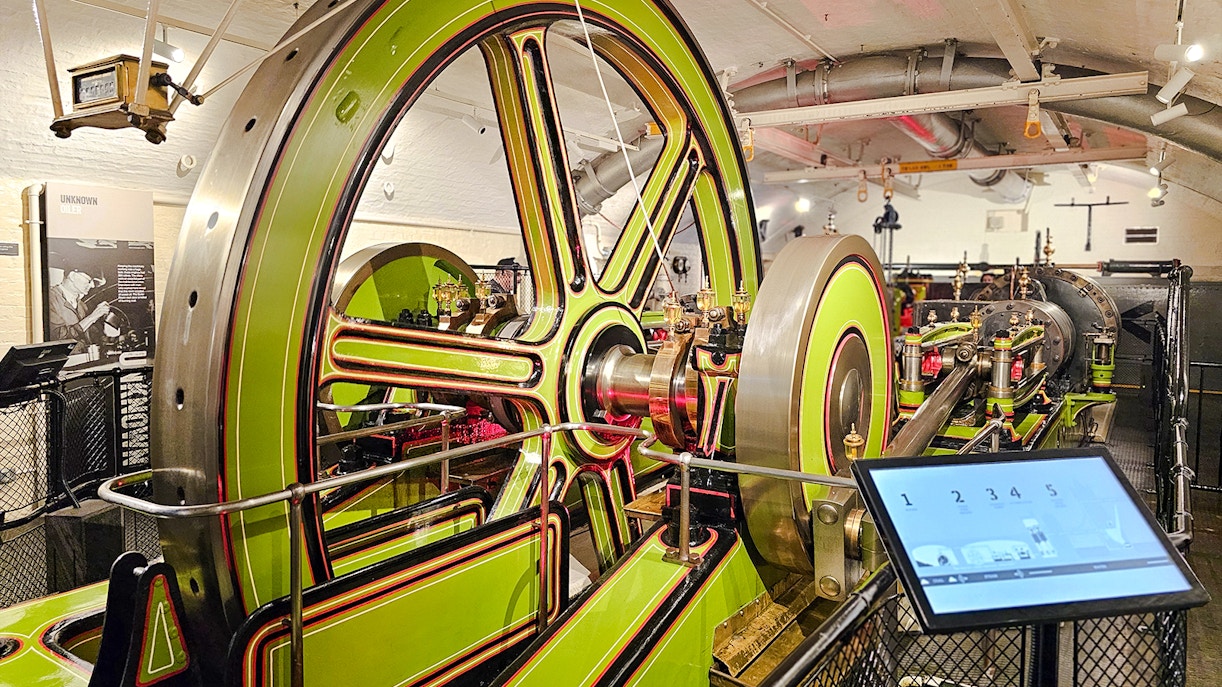
- Compare old and new systems: Look for displays explaining the 1976 conversion to electric power to better appreciate how dramatically bridge operations changed.
- Follow the power journey: Trace the sequence from boilers to engines to accumulators, helping the entire hydraulic system make much more sense.
- Spot maintenance details: Look closely for gauges, valves, and control mechanisms that reveal how engineers monitored pressure and machinery performance.
- Notice worker stories: Pay attention to staff photographs and personal accounts that highlight the human effort behind every bridge lift.
- Look beyond the engines: Some of the most fascinating details are found in smaller components that controlled and distributed hydraulic pressure.
- Pair it with the bascules: Recall the bridge's lifting arms seen earlier in your visit to better connect machinery with real-world function.
Frequently asked questions about the Tower Bridge Engine Rooms tickets
Yes, access is included in all Tower Bridge general admission and combo tickets.
No, they are part of the full Tower Bridge visitor route and cannot be accessed independently.
Yes, full step-free access is available via lifts and level pathways.
Most visitors spend 20 to 30 minutes inside the Engine Rooms.
Yes. The Engine Rooms contain the original steam engines, boilers, hydraulic accumulators, and other machinery that powered Tower Bridge from 1894 to 1976.
No. The original steam-powered machinery is preserved as a historic exhibit. The bridge is now raised using a modern electric hydraulic system.
Yes. Interactive displays, large-scale machinery, and multimedia exhibits make the Engine Rooms engaging for visitors of all ages.
Yes. Photography for personal use is permitted throughout the exhibition. Flash photography may be restricted in certain areas.
The Engine Rooms are generally quieter than the Glass Walkways, as visitors tend to spread out throughout the exhibition space.
Yes. Alongside the machinery, you'll find historic tools, photographs, engineering components, and displays documenting the bridge's operational history.
Yes. The exhibition combines history, architecture, human stories, and interactive displays, making it interesting even for visitors with little engineering knowledge.