- Official name: Tower Bridge
- Location: Tower Bridge Rd, London SE1 2UP, spanning the River Thames
- Category: Combined bascule and suspension bridge
- Era: Late Victorian
- Completed: 1894
- Length: 244 m (800 ft)
- Height: Towers rise about 65 m (213 ft); walkways sit 42 m (138 ft) above the river
- Style: Victorian Gothic over a steel-framed engineering structure
- Lead designers: Sir Horace Jones, architect, and Sir John Wolfe Barry, engineer
- Headline fact: Its stone exterior masks a steel skeleton built to open for river traffic while carrying road traffic above
Tower Bridge Architecture: Victorian Gothic towers over a working bascule bridge
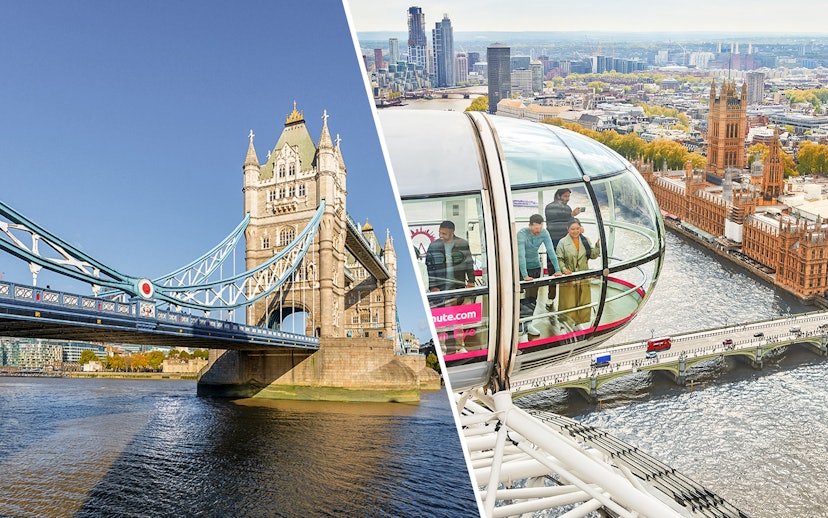
Seen from the Thames, Tower Bridge looks almost medieval — pointed arches, stone-clad towers, and high walkways suspended above the river. In reality, it is one of London’s smartest pieces of 19th-century engineering, designed to solve a traffic problem without blocking ships bound for the Pool of London. City Architect Sir Horace Jones gave it its unmistakable Gothic character, while engineer Sir John Wolfe Barry made the lifting bridge work. The result is neither pure monument nor pure machine, but a rare blend of civic theater and industrial precision. Once you know what to look for, every tower, truss, and panel starts telling a richer story.
{jumplink target="Quick overview of the architecture of Tower Bridge" text="Quick overview"}
{jumplink target="Architectural style(s) & influences" text="Styles & influences"}
{jumplink target="Architectural highlights of Tower Bridge" text="Highlights"}
{jumplink target="Who designed/built Tower Bridge?" text="Who designed it?"}
{jumplink target="History of Tower Bridge’s architecture / Stages of construction" text="History"}
{jumplink target="The exterior of Tower Bridge" text="Exterior"}
{jumplink target="The interior of Tower Bridge" text="Interior"}
{jumplink target="Best Tower Bridge tickets & tours to explore Tower Bridge architecture" text="Tickets & tours"}
{jumplink target="Frequently asked questions about Tower Bridge’s architecture" text="FAQs"}
Quick overview of the architecture of Tower Bridge
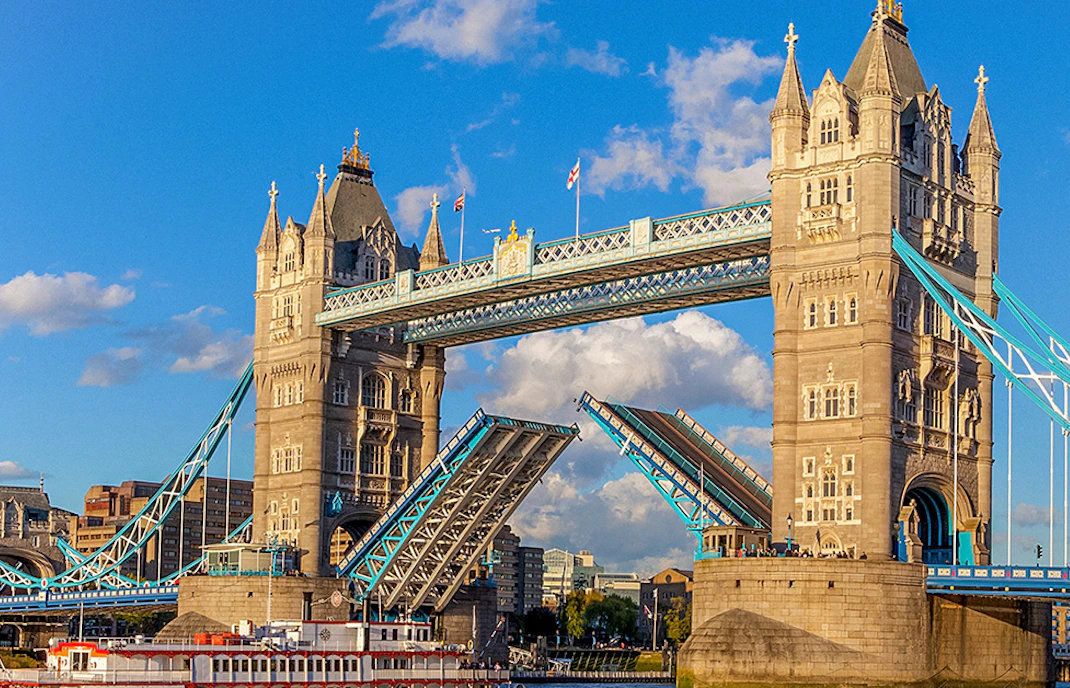
Architectural style(s) & influences
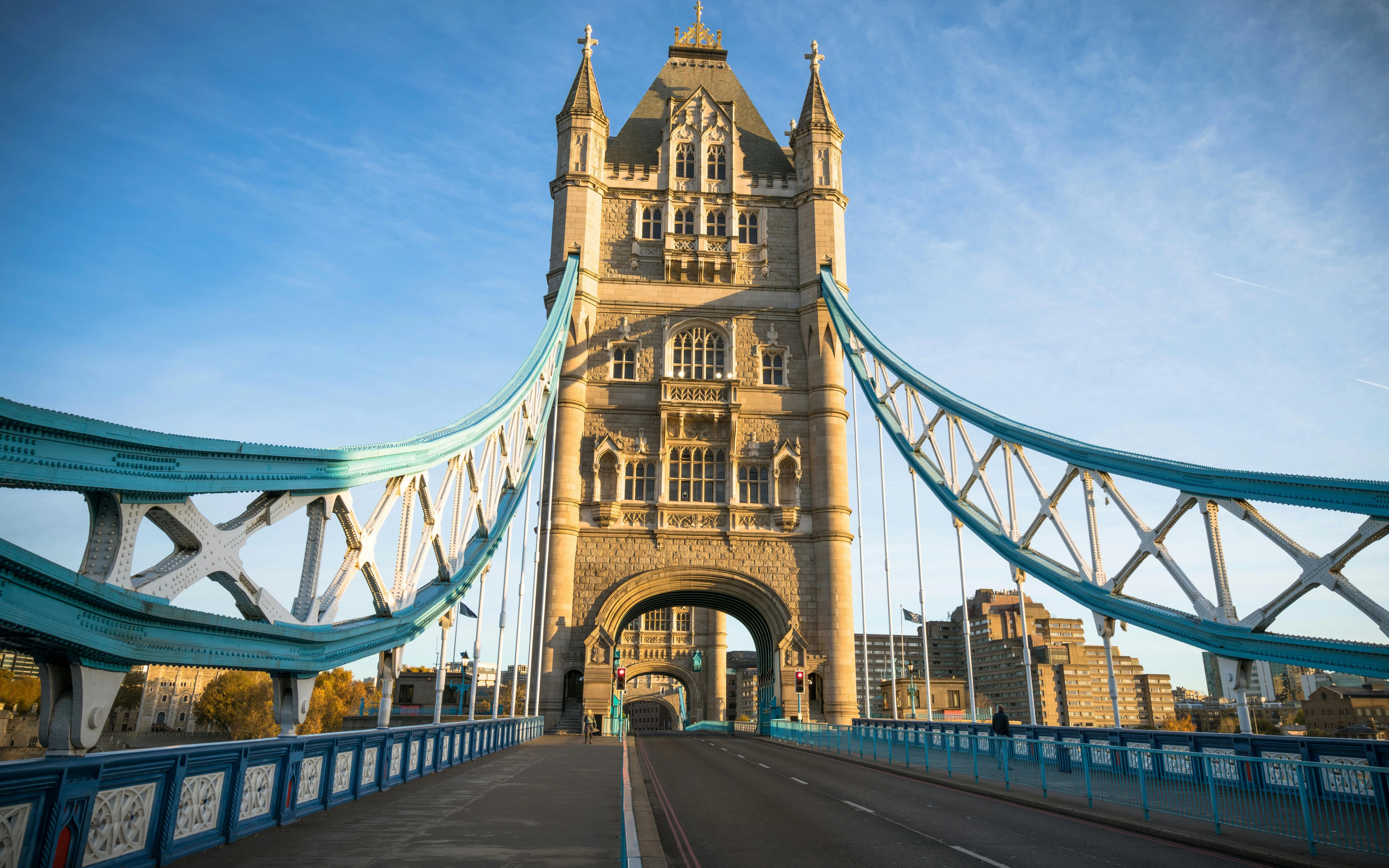
Tower Bridge combines Victorian Gothic and industrial engineering in a way few bridges do. Victorian Gothic means a 19th-century revival of medieval forms — pointed arches, pinnacles, and castle-like towers — used here to give a modern structure a historic London character. Beneath that decorative skin sits a steel frame, the real load-bearing system that made the bridge strong enough to lift and carry heavy traffic.
That contrast is what makes the bridge special. London Bridge is plainer and more utilitarian; Millennium Bridge is sleek and Minimalist; Westminster Bridge is decorative but lower and more conventional. Tower Bridge, by comparison, looks ceremonial and mechanical at once. You can spot the blend in person where blue-painted steel members meet granite and Portland stone cladding, especially around the towers and the bascules.
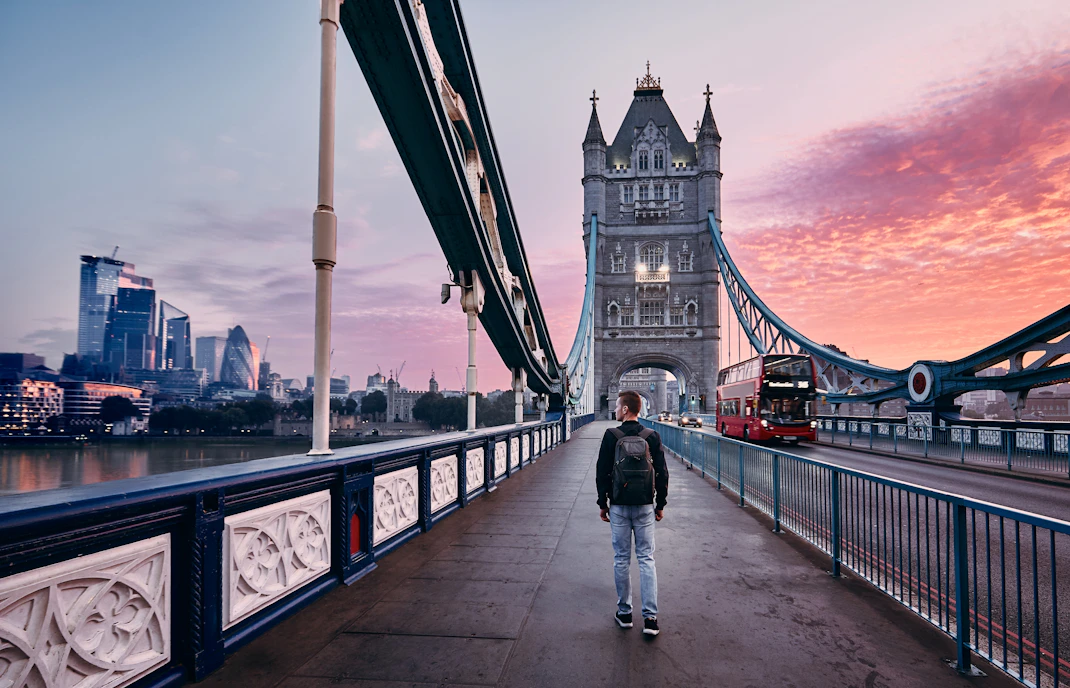
North Tower facade
Close view of the North Tower showing pointed arches, stone cladding, and blue-painted steel details.
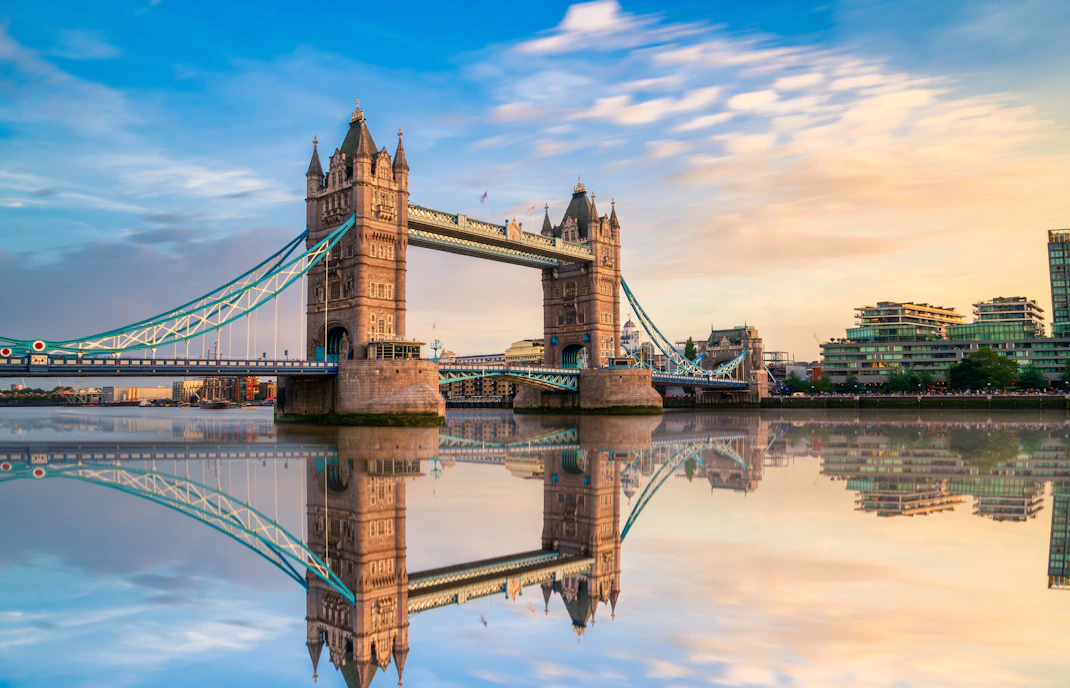
Open bascules and suspension elements
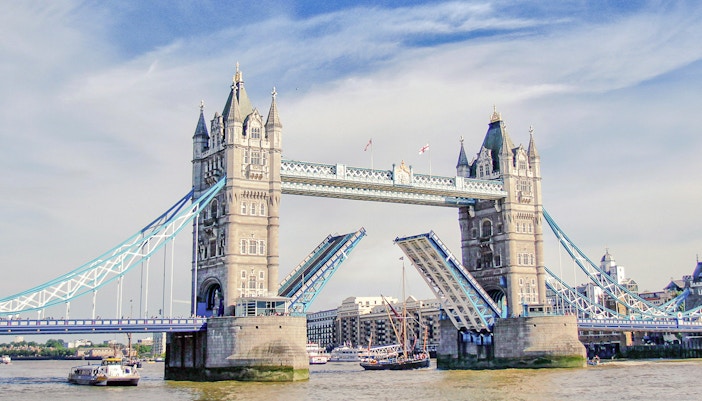
River-level view of Tower Bridge open for a vessel, revealing the bascules, suspension chains, and Gothic towers.
Architectural highlights of Tower Bridge
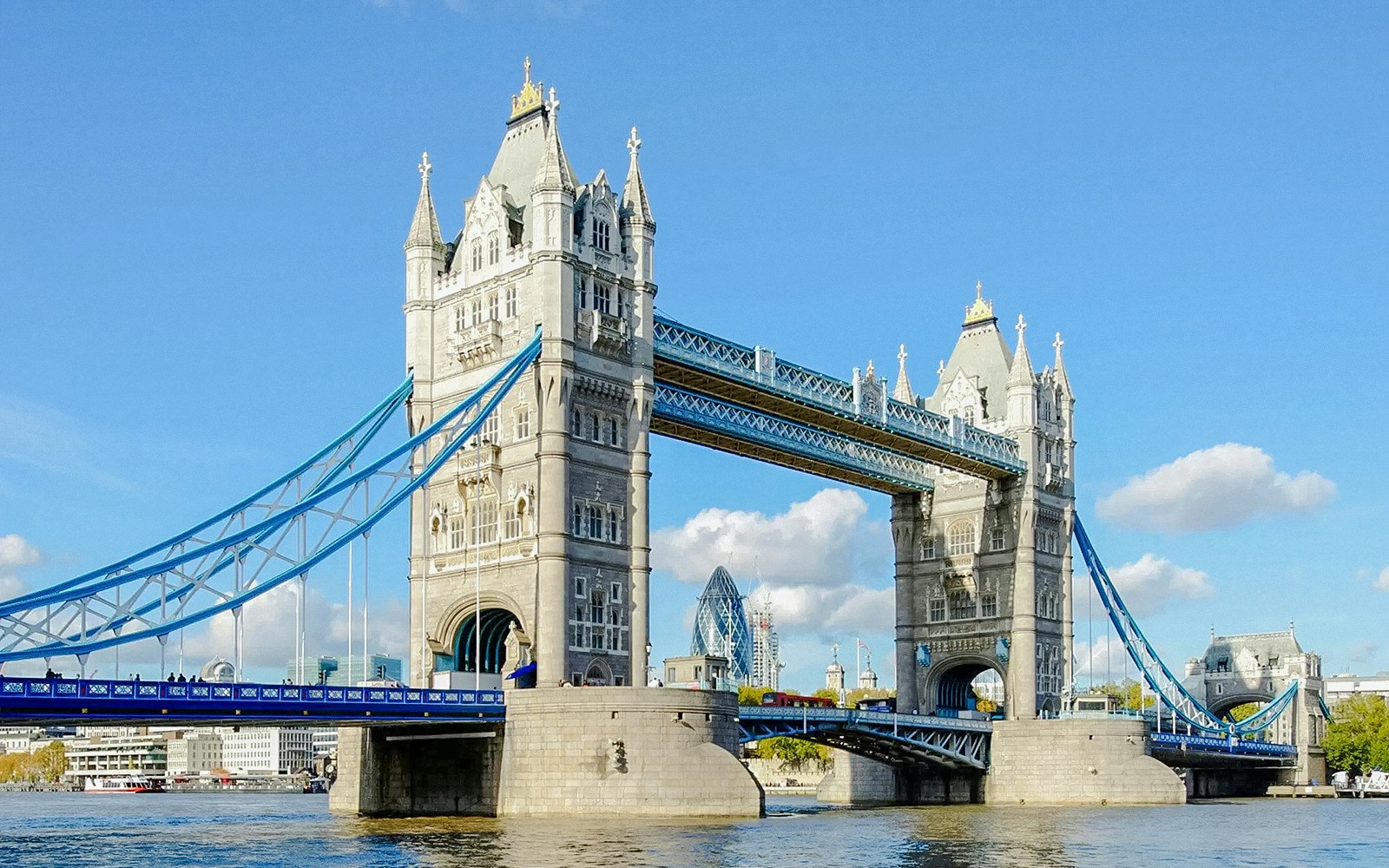
Twin towers
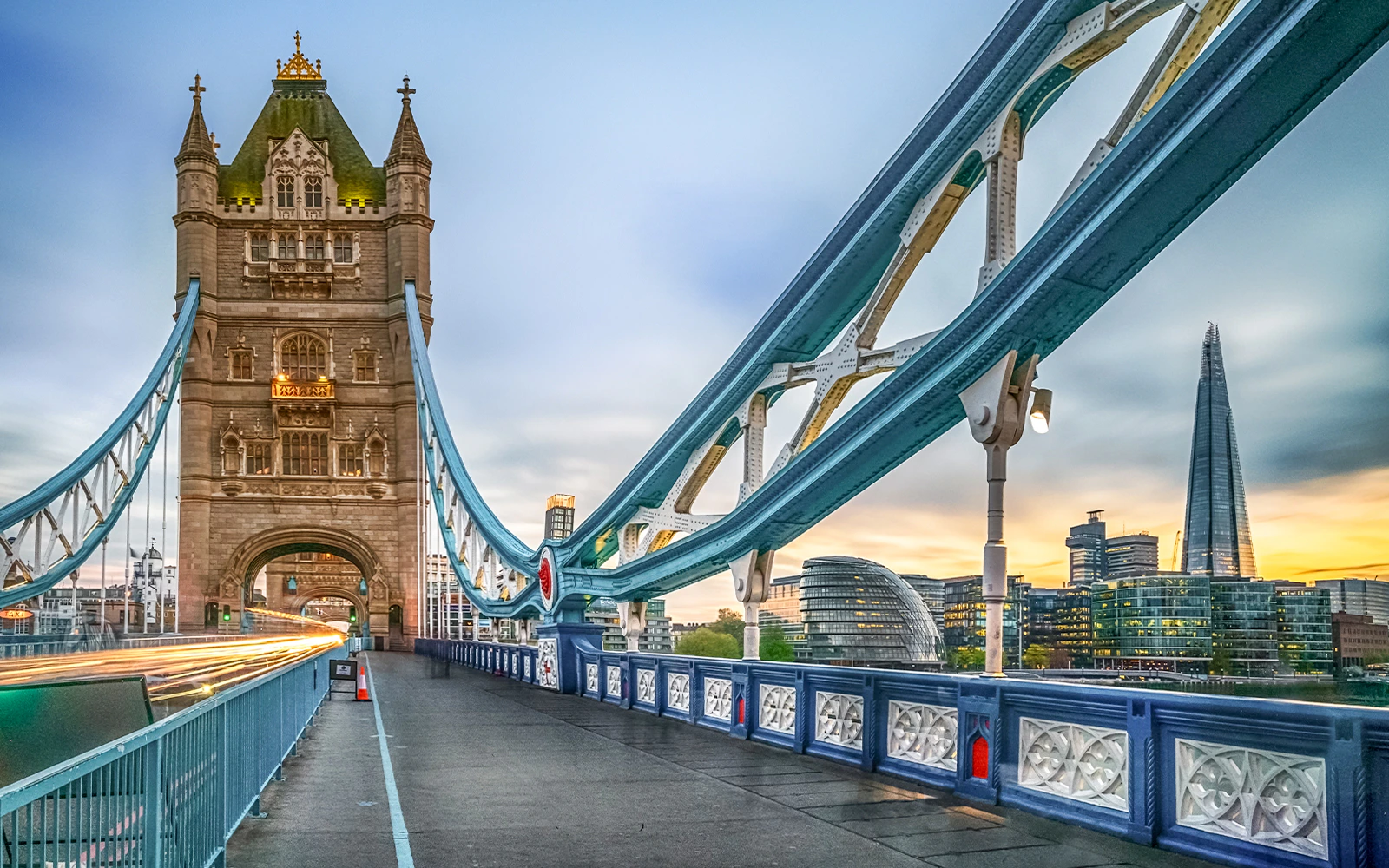
The two 65 m towers frame the river like a monumental gateway, giving the bridge the silhouette most visitors instantly recognize from postcards and skyline views.
The need for a new crossing
By the late 19th century, East London needed another Thames crossing, but a conventional fixed bridge would have blocked tall commercial ships serving the busy docks upstream. The challenge was architectural as much as practical: the crossing had to move, carry growing road traffic, and suit its historic setting near the Tower of London.
Design competition and construction
A design competition led to the scheme developed by Sir Horace Jones and engineer Sir John Wolfe Barry. Construction began in 1886. Jones died before completion, but Barry carried the project forward, using a steel framework clad in granite and Portland stone to combine strength with visual grandeur. Tower Bridge opened in 1894.
Mechanical change and later restoration
The bridge originally operated with steam-powered hydraulic machinery. In 1976, that system was modernized to electro-hydraulic power, while the historic engines were preserved for display. Its appearance also changed over time: a red, white, and blue repaint marked the 1977 Silver Jubilee, and later restoration campaigns returned the bridge to the cleaner blue-and-white palette most visitors know today.
Read more about the history of Tower Bridge.
The exterior of Tower Bridge
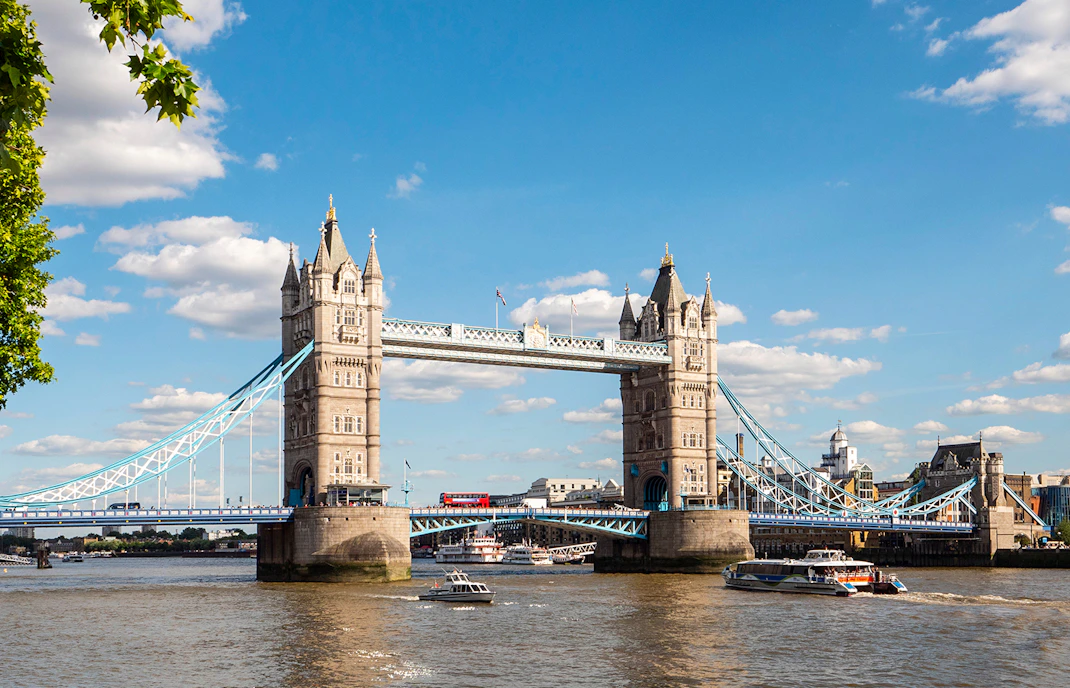
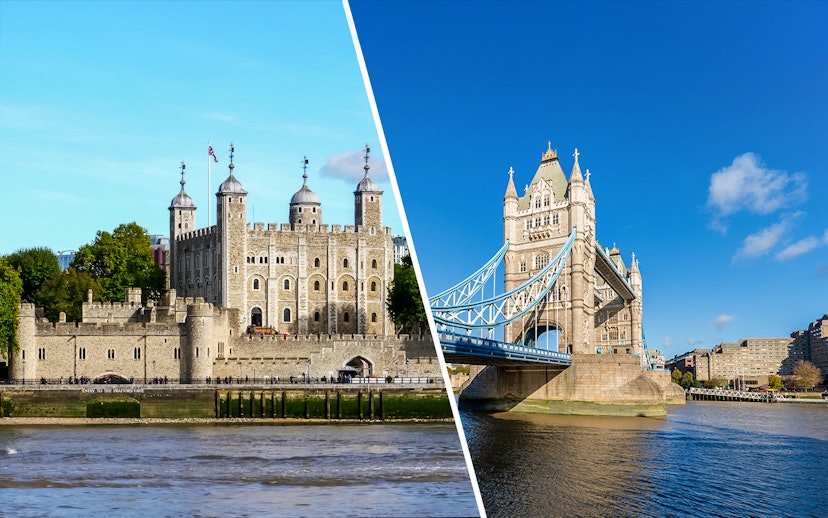
From a distance, Tower Bridge reads first as a skyline object: two tall Gothic towers, a suspended walkway, and blue steel bands stretched across the Thames. As you get closer, the illusion shifts. What seems like an old stone bridge reveals itself as a carefully dressed steel machine, with granite and Portland stone masking the industrial frame beneath. The pointed arches, corner turrets, and ribbed details soften the engineering without hiding it.
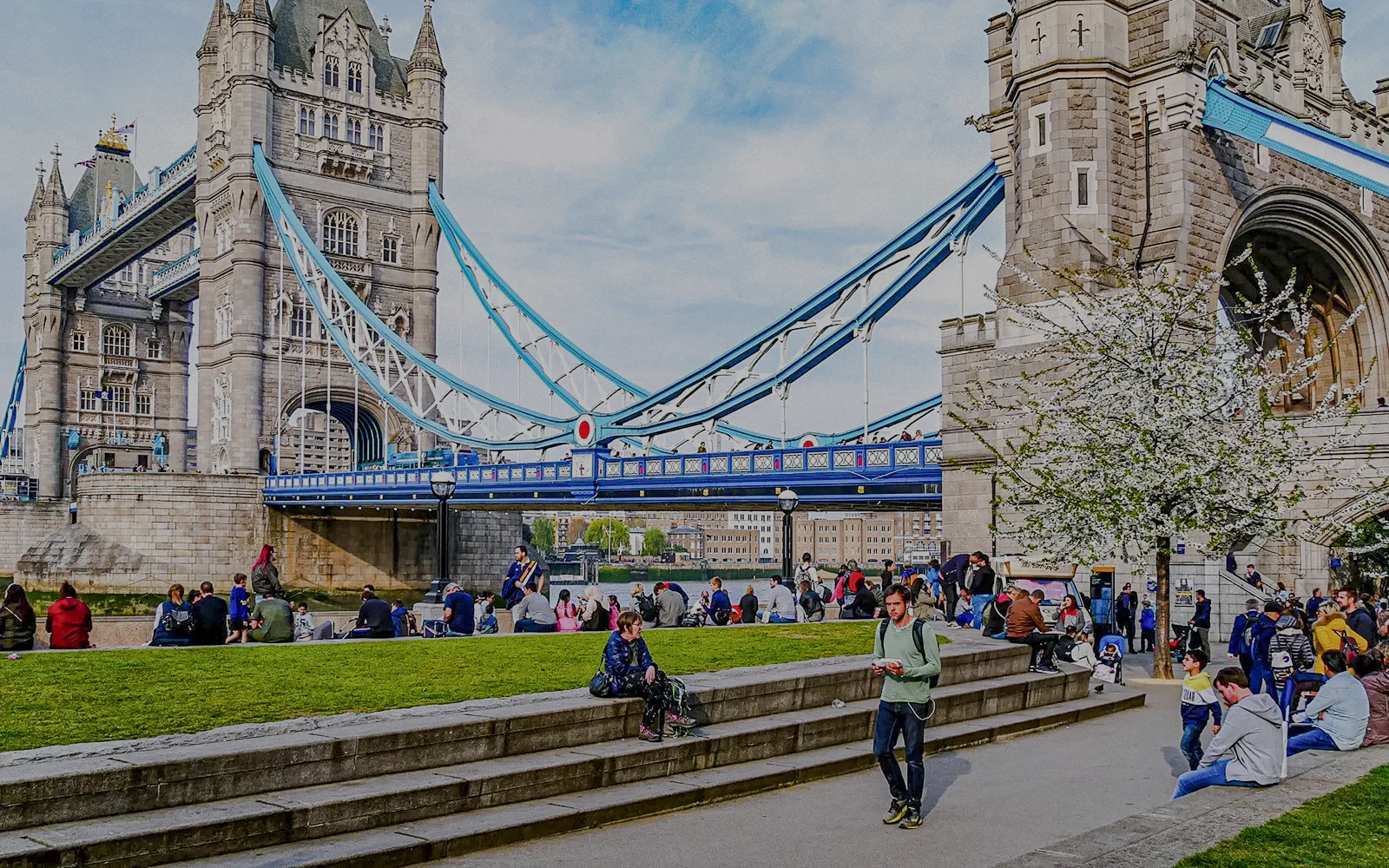
For architecture-focused views, start at Potters Fields Park (Google Maps: ‘Potters Fields Park’) for the classic south-bank profile, then walk onto the bridge for close details in the masonry and riveted steel. If you have 30–45 minutes, continue across to the north side and look back from the Tower of London approach for symmetry. Early morning, before 10am, usually gives you cleaner sightlines and fewer people on the sidewalks. After decades of repainting and conservation, the bridge still arrives with real presence: half fortress, half moving infrastructure.
The interior of Tower Bridge
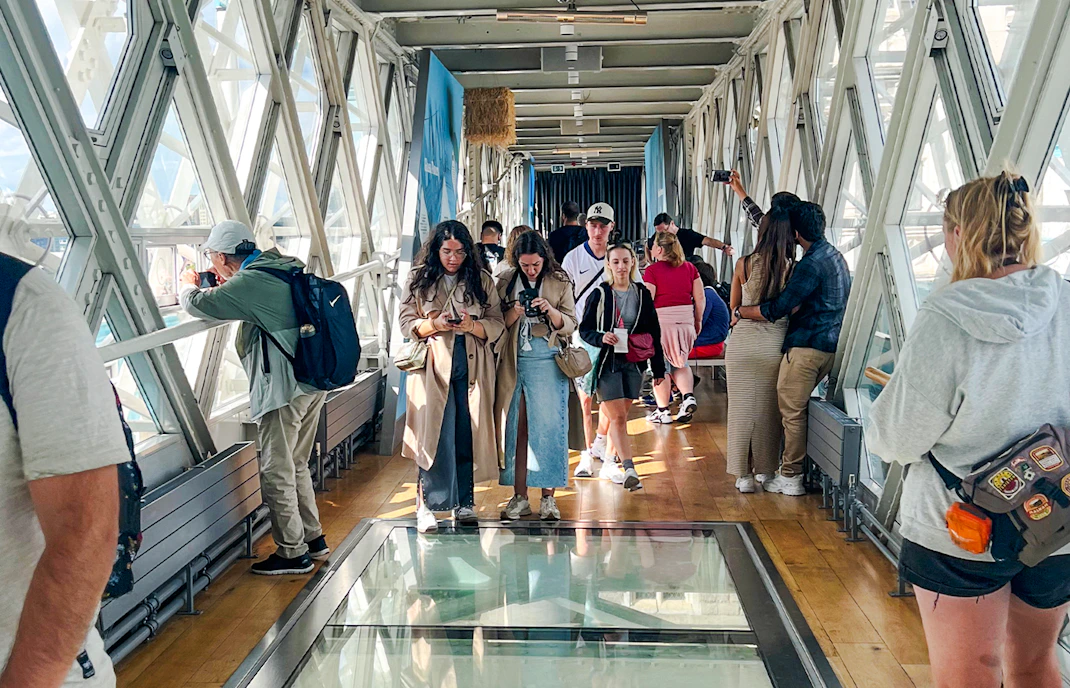
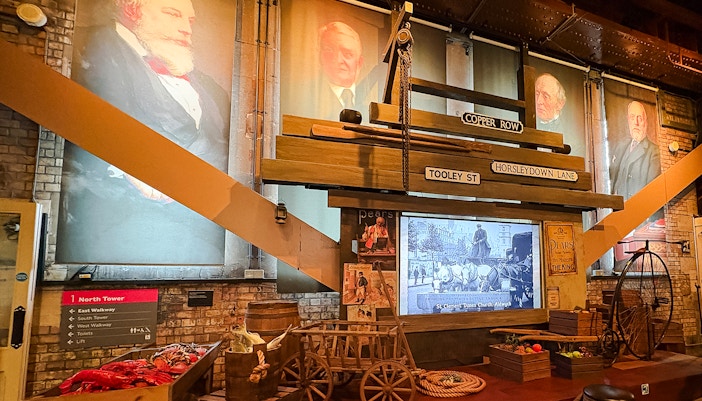
The interior experience follows the bridge’s structure. In the North Tower, you move upward through the vertical core, either by elevator or via the historic stair route, where displays explain why the crossing had to lift and how Victorian London built it. This first zone makes the bridge feel less like a postcard and more like a solution to an urban problem.
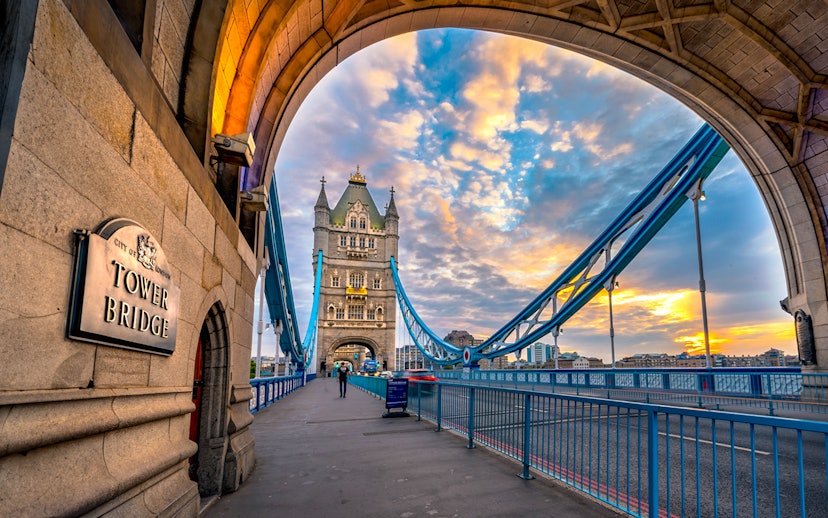
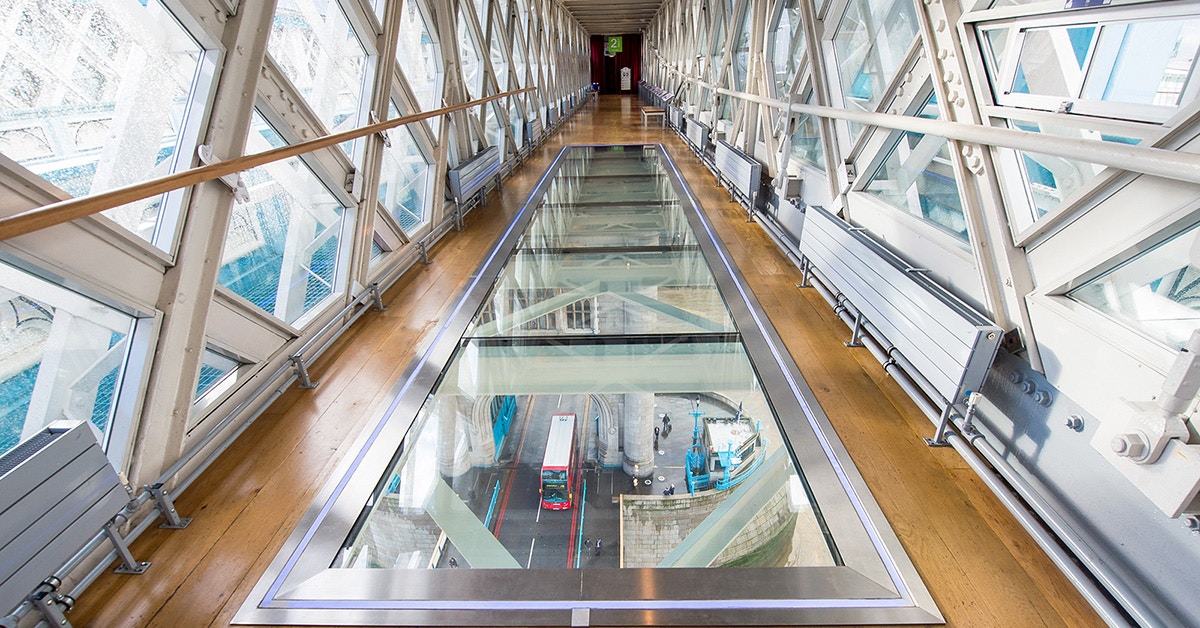
At the top, the high-level walkways are the main spatial reveal. Light pours through the glazing, the river opens on both sides, and the steel framing becomes easier to read. The glass floor panels add drama, but they also help you understand the height and scale of the crossing. From there, the route descends and continues to the Engine Rooms, where the original steam engines and hydraulic equipment show how the bascules were once powered.
If you want the clearest understanding of the bridge’s design, seeing these spaces from inside is worth it. Discover more in this guide to what’s inside Tower Bridge.
Frequently asked questions about Tower Bridge’s architecture
It combines two identities that usually stay separate: a working bascule bridge and a ceremonial Victorian Gothic landmark. The stone-clad towers give it a historic look, while the steel frame, suspension elements, and lifting roadway reveal serious industrial engineering.
Partly. Its appearance is Victorian Gothic, a 19th-century revival style inspired by medieval architecture. Its structure, though, is modern for its time: a steel-framed bridge designed for traffic flow, river access, and heavy urban use.
The center of the bridge is made of two bascules, or lifting leaves, which rise to let tall vessels pass. Originally, steam-powered hydraulics raised them; today, an electro-hydraulic system does the job while the historic machinery survives in the Engine Rooms.
Its structural core is steel, but the visible exterior is clad in granite and Portland stone. That combination was intentional: it gave a modern bridge the visual weight and dignity needed for such a prominent site near the Tower of London.
Its look has evolved through repainting and restoration. One of the best-known changes came in 1977, when it was repainted red, white, and blue for the Silver Jubilee. Later conservation work restored the cleaner blue-and-white scheme seen today.
For the full profile, the south bank around Potters Fields Park is hard to beat. For close detail, walk the bridge itself and study the towers, suspension elements, and masonry junctions. The high-level walkways are best for understanding the design from within.
No — and that’s one of London’s most common visitor mix-ups. Tower Bridge is the ornate bridge with twin towers and a lifting roadway. London Bridge, a short distance upstream, is much plainer and far less decorative.