Where to go in London, and why it matters

London is one of the most visited cities in the world, and most visitors arrive with a long list of things to do but little sense of where those places actually are. The truth is that London is not a single, unified city. It is a collection of villages that slowly grew into each other over more than a thousand years without ever fully becoming the same place.

Westminster and Soho are only fifteen minutes apart on foot, yet they feel like different countries. Greenwich and Kensington are both royal and historic, but almost nothing alike.

The neighbourhoods are where London starts to make sense. Each one has its own character, its own reasons to visit, and its own rhythm for the day. Choose the right neighbourhood, and everything else falls into place: where to eat, what to see, how to get around, and when to slow down. Choose poorly and you spend half the day on the Underground wondering why the city feels harder than it looked on the map.

This guide covers five of London’s most rewarding neighbourhoods. Not necessarily the most famous five, but five that together capture much of what the city does best: history, museums, parks, food, nightlife, river views, royal palaces, and the occasional flamingo on a rooftop. Between them, they include many of the best things to do in London. The rest of this guide will help you decide where to begin.
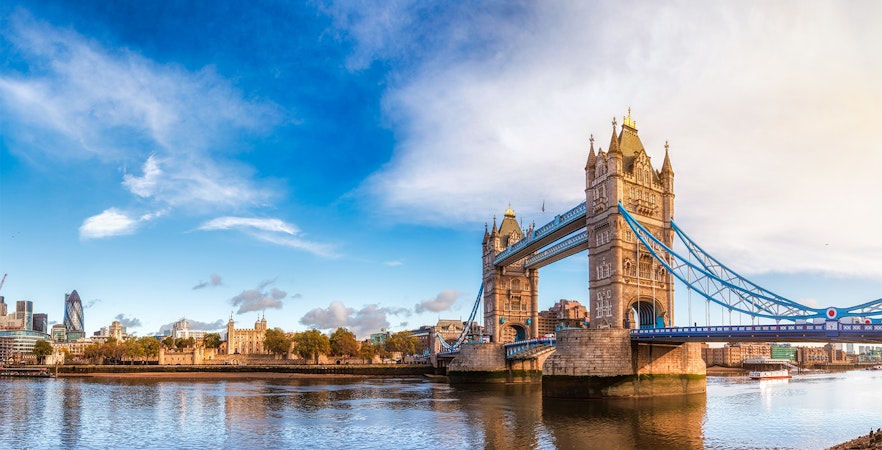
Five neighbourhoods, one city

London rewards the visitor who picks a neighbourhood and goes properly rather than trying to cover everything at once. Here are the five worth knowing, and what each one gives you that the others don't.

Westminster

The most concentrated stretch of landmarks in London, possibly in Europe. Big Ben, the Houses of Parliament, Westminster Abbey, Buckingham Palace, and two royal parks, all within a single square mile and all walkable. Westminster is where London performs itself for the world, and for many first-time visitors it is the day that makes the city click. Come here first. Come here early. Everything else builds from it.

Full guide to Westminster

Kensington

Three world-class museums on the same street, all free, all built on the proceeds of a single Victorian exhibition. Add a working royal palace, 265 hectares of park, and streets so composed they make you want to improve your posture, and you have the most quietly extraordinary postcode in London. Kensington rewards the visitor who slows down.

Full guide to Kensington

Greenwich

Five miles from the centre and feeling nothing like it. A riverside neighbourhood where you can stand on the line from which every time zone on earth is measured, board the last surviving tea clipper, and eat pie and mash in a pub Dickens frequented, all before lunch. Greenwich is the day that surprises people who think they know what London looks like.

Full guide to Greenwich

Waterloo

The neighbourhood most visitors pass through without stopping, which is a significant mistake. The South Bank runs along its edge carrying Tate Modern, the National Theatre, the Globe, and Borough Market within a single riverside walk. Behind it, quieter streets and railway arches hide a neighbourhood that has been getting on with things largely indifferent to the spectacle next door. Waterloo is London at its most layered.

Full guide to Waterloo

Soho

Every city has a neighbourhood that stays up later than the rest and takes it as a point of pride. London's is Soho. Restaurants from every cuisine on earth, bars that have been running since before most cities had nightlife, theatres, independent cinemas, and a history of creative rebellion that stretches from the Blitz to Bowie. Soho is where London goes when it wants to be itself rather than perform for anyone.

Full guide to Soho

Which neighbourhood is right for you

London has a neighbourhood for every kind of trip. The question is knowing which one matches what you actually want from the day.

Start with Westminster

  • It is the most obvious answer and the correct one.
  • The landmarks are real, the distances are short, and the day has a natural shape to it.
  • Come here first and use it as your orientation point.
  • Everything else in London makes more sense once you've stood on Westminster Bridge and seen the city arrange itself around you.

Go to Kensington

  • The Natural History Museum, the V&A, and the Science Museum are three of the greatest museums on earth, all free, all on the same street.
  • The trick is to pick one and go properly rather than attempting all three.
  • Kensington rewards depth over breadth.

Kensington and Greenwich between them cover most of what families need.

  • The Natural History Museum and the Science Museum in Kensington are genuinely excellent for children of all ages.
  • The Cutty Sark and the planetarium in Greenwich engage older children in a different way.
  • The parks in both neighbourhoods handle the energy that museums cannot.

Greenwich

  • The buildings here are still used, the streets are still lived on, and almost all of it is free.
  • Nowhere else in London puts a thousand years of maritime, royal, and scientific history into a single walkable square mile without making it feel like a museum.

Waterloo and Kensington between them cover the full range

  • Tate Modern, the National Theatre, the Globe, and the Southbank Centre sit along Waterloo's riverside.
  • The V&A and the Serpentine Galleries are in Kensington.
  • A day that starts in one and ends in the other is one of the better ways to spend time in London.

Soho

  • It is not a close contest.
  • The concentration of restaurants, bars, and theatres in a single square mile is unmatched anywhere in London.
  • Go in the evening and stay later than you planned.

Kensington and Greenwich

  • Kensington and Greenwich are the two most generous neighbourhoods in London for free things to do.
  • Between them they offer three world-class museums, two royal parks, a working palace exterior, the meridian line, the Naval College, the National Maritime Museum, and the Queen's House, all free.
  • Westminster adds the National Gallery, St James's Park, and Evensong at the abbey.
  • A full day in any of the three costs almost nothing if you plan it carefully.
  • Waterloo and Soho are the two neighbourhoods that feel most like London going about its actual life.
  • Waterloo has the markets, the railway arches, the neighbourhood streets behind the South Bank spectacle.
  • Soho has the independent restaurants, the late bars, the creative history.
  • Both reward the visitor who wanders rather than plans.

Can I visit more than one neighbourhood in a day?

Yes, and London is well suited to it. The five neighbourhoods in this guide sit close enough to each other that combining two in a day is not only possible but often the best way to experience the city. The key is choosing pairings that complement rather than compete, two neighbourhoods that give you different things rather than the same thing twice.

Westminster and the South Bank

  • The most natural pairing in London.
  • Cross Westminster Bridge after the abbey and the Houses of Parliament and the city changes register entirely.
  • Same river, completely different mood.
  • The South Bank runs east past the London Eye, Tate Modern, the Globe, and Borough Market, all on foot, all along the water.
  • Westminster in the morning, Waterloo and the South Bank in the afternoon, river back at dusk.
  • One of the great London days.

Westminster and Soho

  • Westminster empties after dark.
  • Soho fills up.
  • The two neighbourhoods are twenty minutes apart on foot and as different in character as any two places in London.
  • Westminster gives you the formal, ceremonial, historically layered city.
  • Soho gives you the loose, late, creative one.
  • Start at the abbey, end at a restaurant on Dean Street. The contrast is the point.

Kensington and Westminster

  • The same royal story told in two different registers.
  • Westminster is where the monarchy governs publicly.
  • Kensington is where it lives privately.
  • You can walk between the two entirely through royal parkland, St James's Park to Green Park to Hyde Park to Kensington Gardens, without touching a road.
  • The walk takes about forty minutes and is one of the great London routes. Do it in either direction.

Greenwich and Waterloo

  • Two South Bank neighbourhoods connected by the Thames Clipper.
  • Greenwich in the morning for the history, the meridian, and the park. Waterloo and the South Bank in the afternoon for Tate Modern, Borough Market, and the riverside walk back toward the city.
  • The Clipper connects them directly and the river journey is part of the experience rather than just the way to get there.

Greenwich and Westminster

  • The historical counterparts.
  • Westminster is where Britain governed. Greenwich is where it navigated.
  • Both sit on the Thames, both carry a thousand years of history, and the Thames Sightseeing Cruise from Westminster Pier to Greenwich connects them directly.
  • Arriving in Greenwich by river and the approach, with the Cutty Sark's masts appearing above the roofline and the Naval College domes rising behind her, is one of the great London arrivals.

Getting between neighbourhoods

London's transport system is straightforward once you understand one thing: the Oyster card or a contactless bank card gets you onto every bus, Underground line, and Thames Clipper in the city at the same price. Buy or activate one before you start moving and you will never need to queue for a ticket.

The fastest way to move between most neighbourhoods. The key lines for the five neighbourhoods in this guide are the District and Circle lines, which connect Westminster, Kensington, and the South Bank directly, and the Jubilee line, which connects Westminster to Canary Wharf and the O2. Journey times between most of the five neighbourhoods run between five and twenty minutes.

Useful connections:

  • Westminster to South Kensington: District or Circle line, four stops, under ten minutes
  • Westminster to Waterloo: Jubilee line, one stop, three minutes
  • Bank to Greenwich: DLR, approximately twenty minutes
  • Green Park to Soho: five minute walk, no Underground needed
  • The Thames Clipper is the most underused transport option in London and one of the most enjoyable.
  • It runs frequent services between Westminster Pier, Embankment, Bankside, Tower Bridge, Canary Wharf, and Greenwich, and costs the same as a bus fare with an Oyster card or contactless payment.
  • The journey from Westminster to Greenwich takes approximately forty minutes and the approach to both piers, Big Ben rising above the embankment in one direction and the Naval College domes in the other, is worth the trip independently.
  • For the Greenwich and Westminster pairing, the route Thames Sightseeing Cruisefrom Westminster to Greenwich is the most atmospheric way to connect the two.

More of London is walkable than most visitors realise. The five neighbourhoods in this guide sit within a geography that rewards walking between them:

  • Westminster to Waterloo: cross Westminster Bridge, ten minutes
  • Westminster to Kensington: through the royal parks, forty minutes, entirely on grass
  • Waterloo to Soho: across Waterloo Bridge, fifteen minutes
  • Soho to Westminster: down Whitehall, twenty minutes
  • London's buses are slower than the Underground but considerably more useful for short distances and for seeing the city at street level.
  • The number 11 connects Kensington, Westminster, and the City in a single route.
  • The number 188 connects Waterloo to Greenwich directly.
  • All buses accept Oyster and contactless. Cash is not accepted.

A note on taxis and ride sharing

Black cabs and ride sharing apps work throughout London but are rarely the most efficient option for moving between the neighbourhoods in this guide. The Underground and the river are faster, cheaper, and more interesting.

Frequently asked questions about London's neighbourhoods

Westminster. It is the most concentrated stretch of landmarks in London and the day that makes the city click for most first-time visitors. Big Ben, Westminster Abbey, Buckingham Palace, St James's Park, and the National Gallery are all within a single square mile and all walkable. Start here and use it as your orientation point for everything else.