Explore the Harry Potter Studio costumes | What to see, highlights, & more
Every thread tells a story. The Harry Potter costumes on display at Warner Bros. Studio Tour London are more than just outfits—they are visual blueprints of character, mood, and magic.
Discover the Harry Potter Studio costumes
Stepping into the Warner Bros. Studio Tour London is like walking into the world’s most magical wardrobe. The costume collection spans all eight films, showcasing the incredible craftsmanship of designers like Judianna Makovsky and Jany Temime. Visitors can expect to see thousands of authentic garments, ranging from the humble, oversized hand-me-downs worn by Harry in The Philosopher’s Stone to the intricate, battle-worn ensembles of the Second Wizarding War. The collection highlights how attire evolved over a decade of filmmaking, reflecting the characters' transition from childhood innocence to the grit of adulthood.
Harry Potter Studio costumes | What to look out for
The costume department didn't just make clothes; they built identities. As you wander through the studio, keep an eye out for these distinct categories of wizarding fashion:
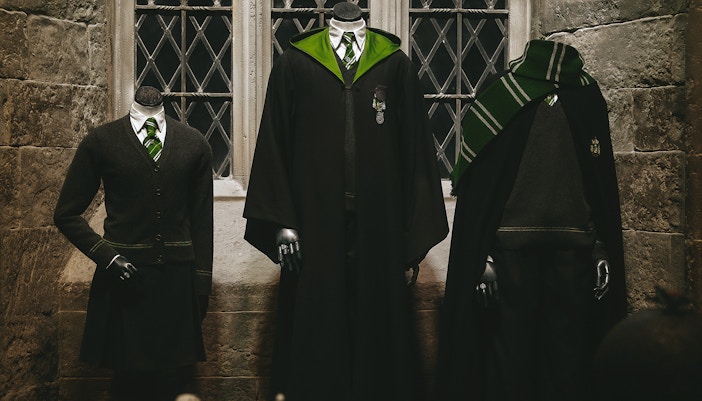
Hogwarts school uniforms
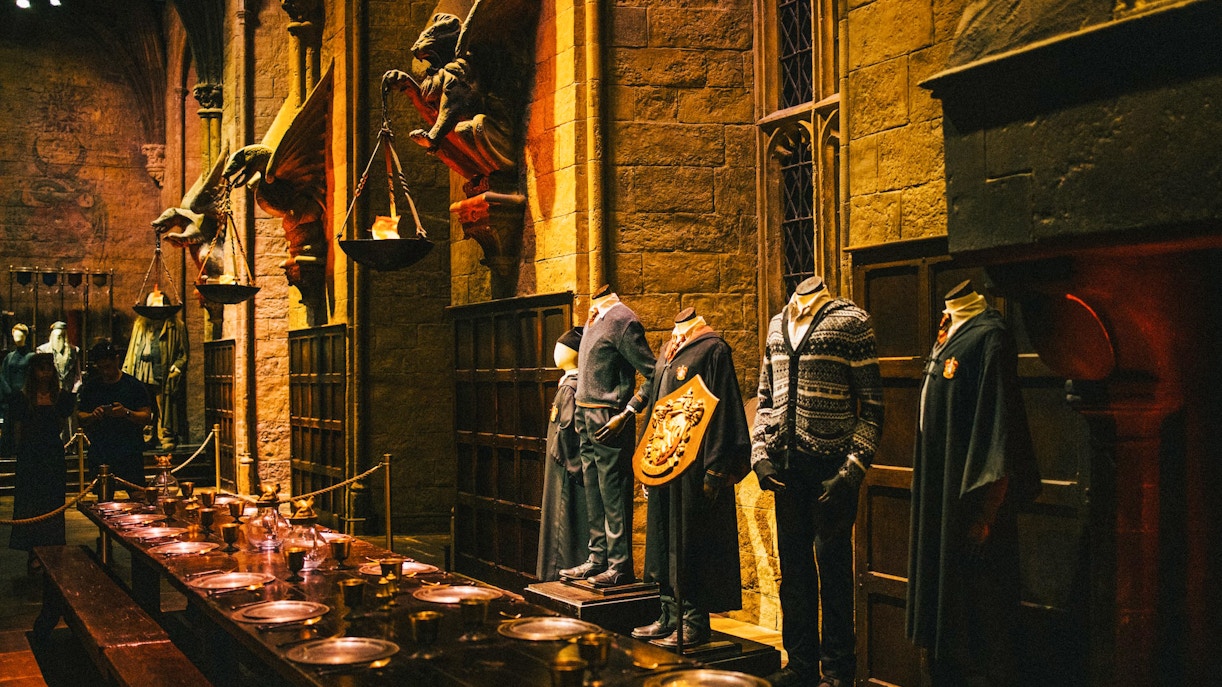
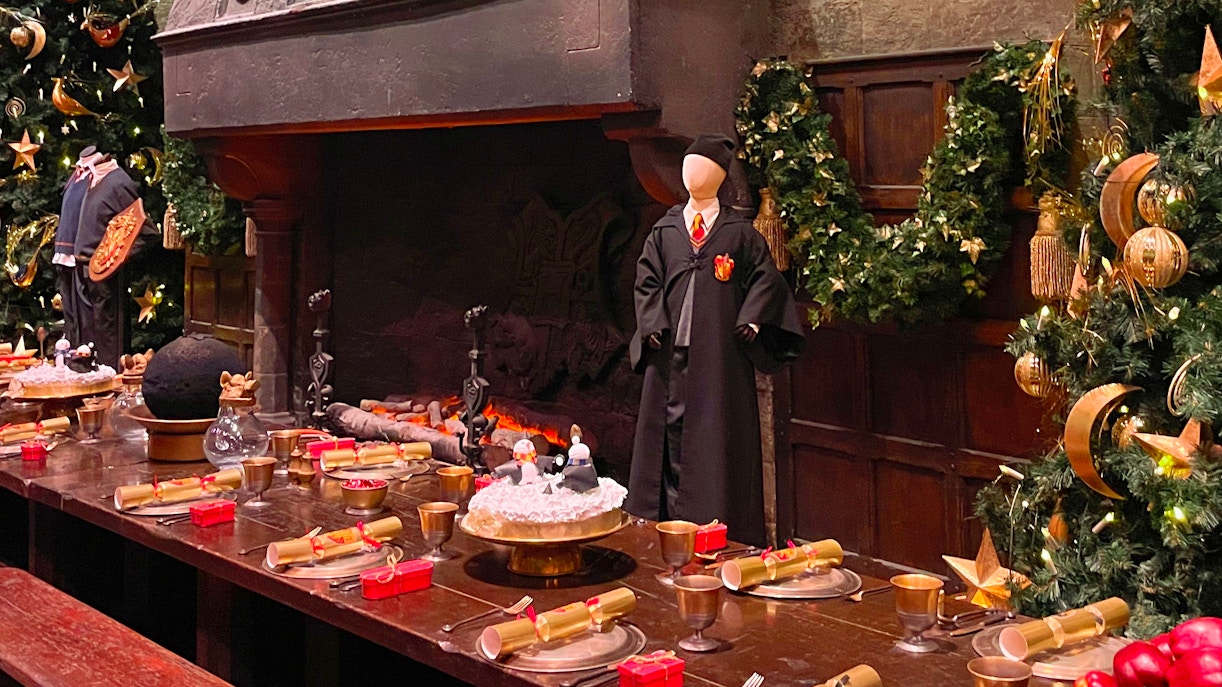
Notice how the classic robes evolved from stiff, formal cloaks to more relaxed, personalised student wear as the series progressed.
Formal & Yule Ball attire
High-fashion meets fantasy with layered chiffon, silk organza, and velvet dress robes designed for the Triwizard Tournament’s most glamorous night.
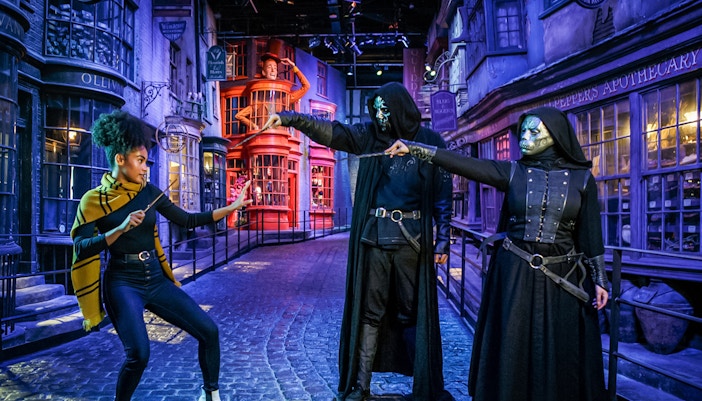
Death Eater & Dark Arts garb
Look for hand-stitched leather masks and heavy, dark fabrics that used ageing techniques to look centuries old.
Quidditch gear
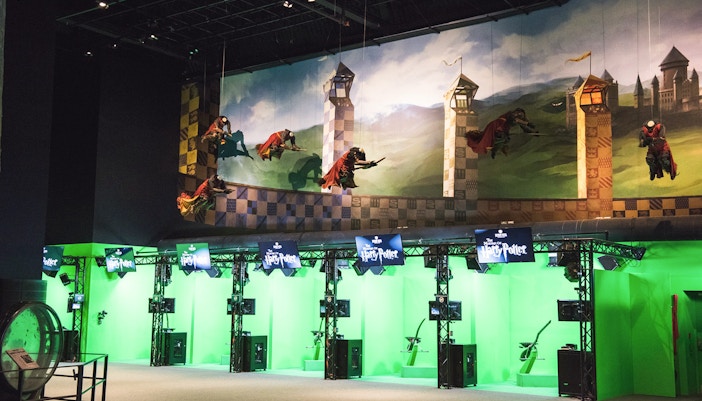
Explore the transition from thick sweaters to aerodynamic, athletic robes complete with protective padding and house insignias.
Muggle wear
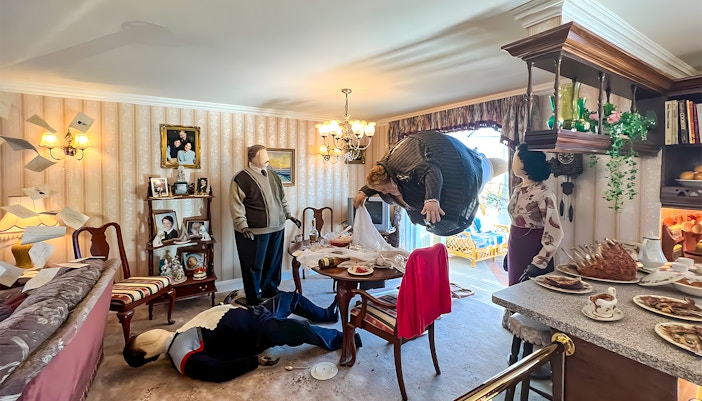
Even the normal clothes were carefully chosen to reflect the trio's personalities during their time away from Hogwarts.
Iconic Harry Potter Studio costumes & outfits
1/5
Beauxbatons uniforms
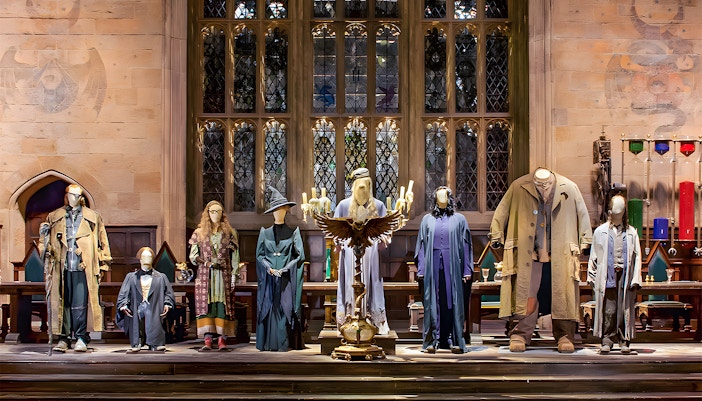
Created from fine French silk (2005) in a signature pale blue, these outfits include iconic pointed felt hats; located in the Great Hall display.
The 19 Years Later outfits
Practical, adult ensembles for Harry, Ron, and Hermione (2011) representing their maturity; located near the Hogwarts Express.
Hermione’s Yule Ball gown
Designed by Jany Temime (2005), this pink ombre masterpiece features layers of delicate chiffon, found in the Great Hall.
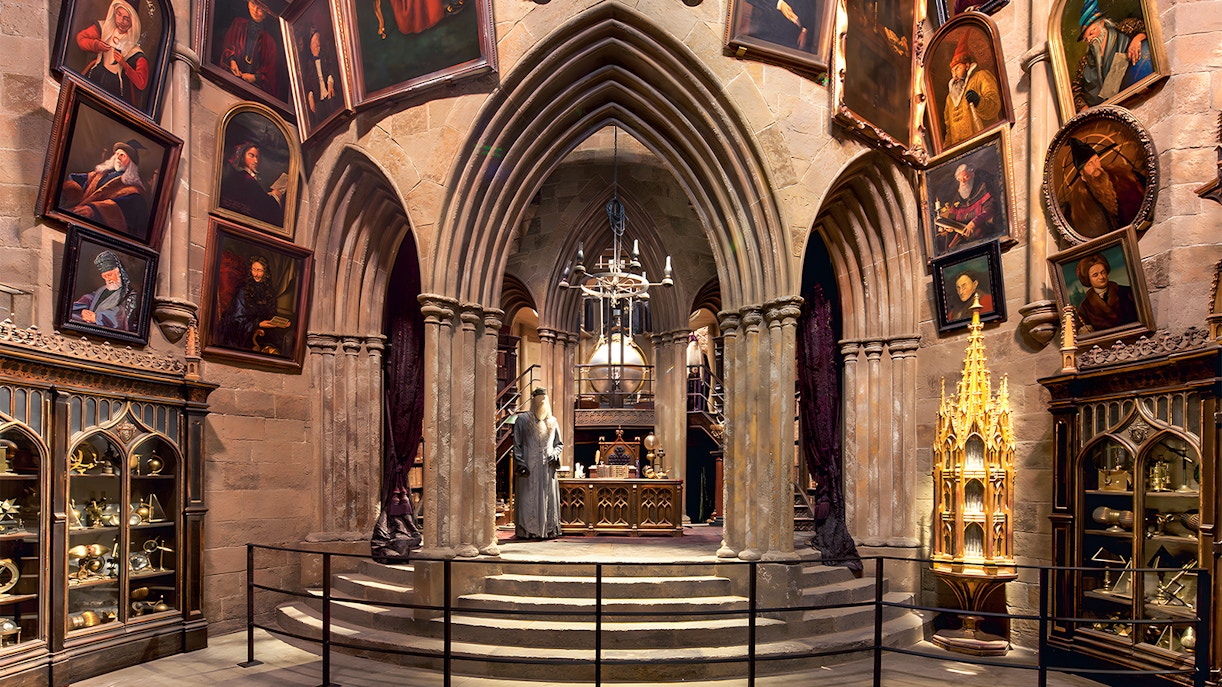
Dumbledore’s velvet robes
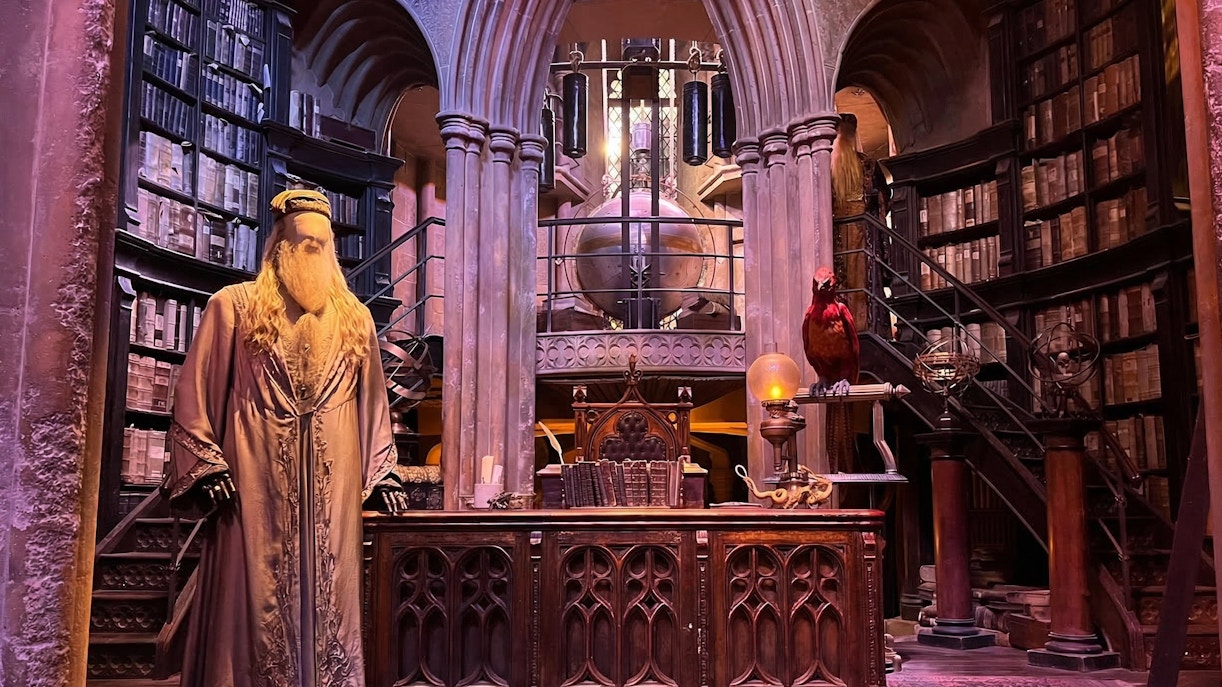
Created for Michael Gambon, these robes feature alchemical symbols and celestial embroidery; located in Dumbledore’s office.
Bellatrix Lestrange’s corset
A hand-painted, distressed leather piece (2007) reflecting her chaotic nature, displayed in the Malfoy Manor set.
Why do costumes matter in the Wizarding World?
Costumes reveal character backstories: Lupin’s patched, worn-down outfit reflects his struggles as an outcast, even before you know his story. Seeing these intentional rips, faded fabrics, and tailored finishes up close at the studio helps you unveil hidden truths about each character.
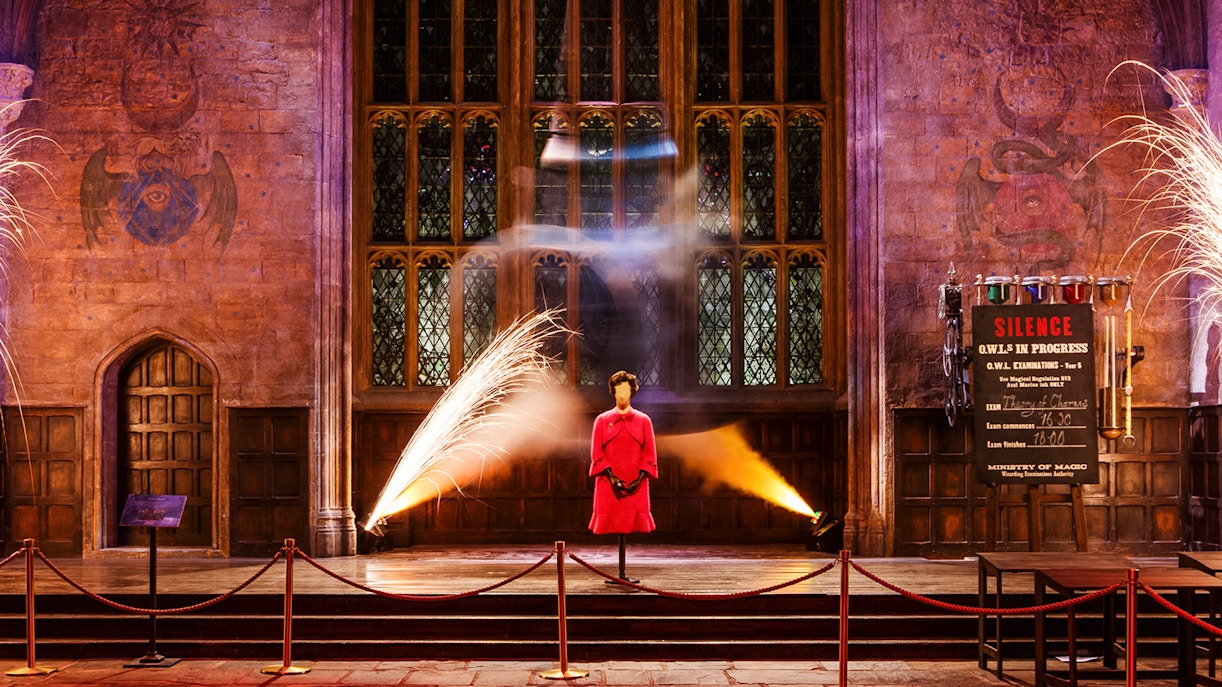
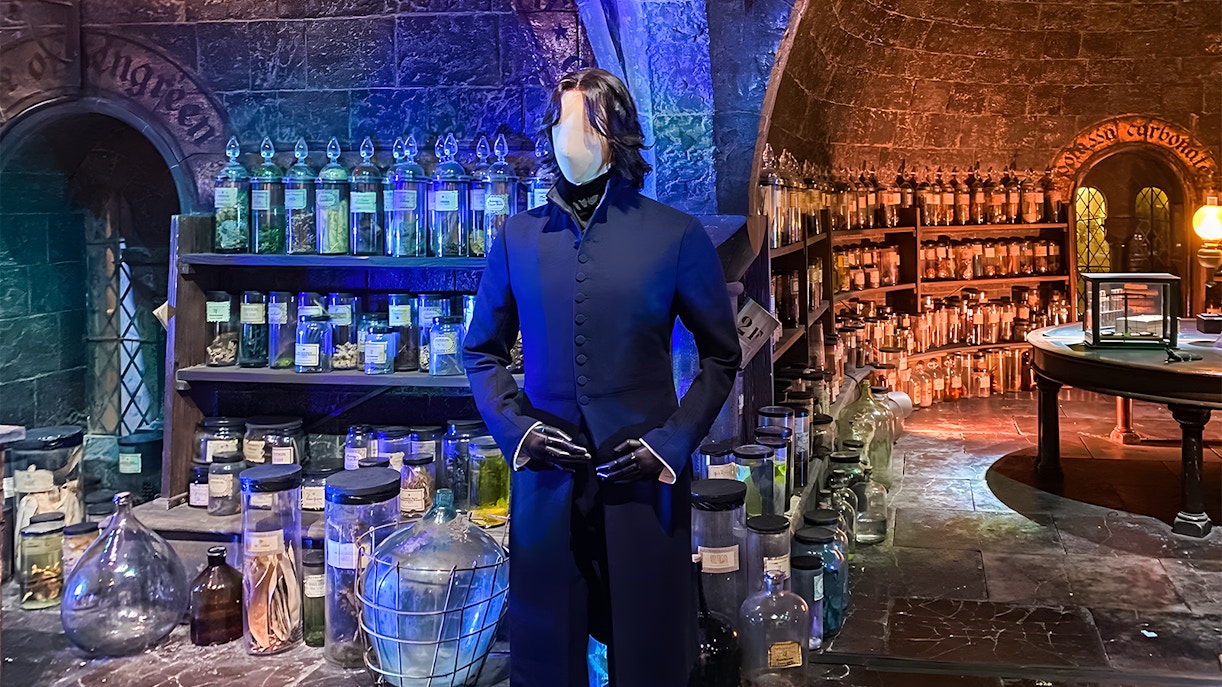
Visual clues you’ve never noticed on screen: Luna’s quirky jewellery, Umbridge’s kitten brooches, or Snape’s stiff silhouette all offer deeper clues about their roles and ideologies, especially when viewed just inches away.
You’ll witness costume evolution across films: Harry’s shift from oversized hand-me-downs to confident, fitted robes reflects his transformation. You can easily track the different versions of the same character’s wardrobe as they are displayed side by side in the studio.
Costume design adds emotional weight to key scenes: Hermione’s soft pink Yule Ball gown marks her coming-of-age. Neville’s later, more structured clothing reflects his rise to bravery. These outfits are emotional anchors that highlight pivotal moments across the series.
Design details you might miss
Costume fabrics were carefully selected to reflect each character’s world—wool for Hogwarts uniforms, velvet and silk for formal robes, and aged cotton for worn looks. For example, Bellatrix’s corset is made from aged leather, while Hermione’s Yule Ball gown uses delicate organza for elegance. These materials were layered, dyed, and distressed to feel lived-in, helping costumes blend effortlessly into Hogwarts’ magical settings.
Costumes for high-ranking characters often feature embroidered symbols linked to wizarding lore. For instance, Dumbledore’s robes include gold-thread embroidery inspired by celestial maps and alchemical symbols. Even background costumes had special touches, like enchanted-looking stitching on wizard robes or glimmering thread on dress uniforms. Fine detailing was often added using metallic thread, beading, or custom embroidery to reflect magical lineage and spellwork.
From burn marks on battle robes to dirt-smudged hems, costume distressing told visual stories. Every stain, tear, or fray was added by hand using sandpaper, fabric paints, and chemical washes, helping costumes look as if they’d truly been through wizarding duels or forest journeys. Lupin’s coat, for example, was deliberately frayed and faded to reflect years of wear, enhancing the realism and backstory without a single line of dialogue.
Accessories tell you as much as clothing. Snape’s high-collared robe is pinned with silver buttons, Umbridge’s kitten brooches contrast her cruel nature, Lucius Malfoy’s serpent-headed cane conceals a wand, and Luna Lovegood’s cork necklace and butterbeer-cap earrings were handmade to reflect her quirky outlook. These small props reinforce themes of legacy and hierarchy and were carefully coordinated with tailored outfits.
Notable figures in the Costume Department
Jany Temime
The award-winning Lead Costume Designer for the final six films, responsible for the series' more mature, iconic look.
A key costume specialist and designer who worked extensively on the intricate details and fabric ageing for the franchise.
Frequently asked questions about Harry Potter Studio costumes
The collection includes everything from primary character outfits and background extra uniforms to specialised prosthetics and hand-crafted accessories. You will see formal wear, Quidditch robes, and civilian Muggle clothing that the trio wore during their Horcrux hunt.
The costume department created over 25,000 unique items of clothing across the decade-long production. While not all are on-site, the Studio Tour houses hundreds of the most iconic pieces, making it one of the largest film costume displays in the world.
No, due to the sheer volume of items created for the eight films, the collection is rotated. This ensures that the garments are preserved properly and allows the studio to introduce new archival pieces during seasonal events or special exhibitions.
Since the costumes are integrated into various sets like the Great Hall and Diagon Alley, you should allow at least three to four hours for the full tour. This gives you ample time to appreciate the stitching and fabric textures.
The Yule Ball gowns and Dumbledore’s celestial robes are often considered the masterpieces of the collection. However, the hand-carved Death Eater masks and Voldemort’s robes, which subtly fade in colour as his power weakens, are also must-see highlights for fans.
The collection dates back to the year 2000, when production began on The Philosopher’s Stone. The pieces span the entire filming period up until the final scenes of The Deathly Hallows – Part 2 were wrapped in 2010.
Yes, the vast majority of the Harry Potter Studio costumes on display are the actual garments worn by the actors. Some displays may include stunt versions, which were reinforced for action sequences but are identical in design to the hero costumes.
Absolutely. Many displays feature original concept art and sketches by Jany Temime. These drawings show the initial creative vision before the fabric was even chosen, offering a rare look at the creative process behind the magic.
Most costumes are behind protective barriers or glass, but the displays are positioned for close-up viewing. You can see stitching, fabric textures, and detailing that aren’t visible on screen.
Yes. Some costumes, such as the winter-themed robes, appear during special events like Hogwarts in the Snow. The Studio frequently rotates displays for limited-time exhibitions.
Select displays include name tags or labels indicating which actor or character the costume belonged to. In cases with multiples, the labels might specify screen-worn, stunt, or replica.
No. The Studio Tour focuses on the Harry Potter film series. Costumes from Fantastic Beasts are not part of the standard experience, though temporary exhibitions have included related items in the past.