Start with the Great Hall and State Rooms to understand how the castle functioned as both a fortress and a noble residence. Continue to the Ramparts and Towers for panoramic views before visiting the Kingmaker Exhibition. From there, explore the Peacock Garden, East Front, and River Island at a slower pace. Finish at the Pageant Field if live shows are running, and add the Dungeon Experience toward the end of your visit.
Is Warwick Castle worth visiting?
Inside Warwick Castle, the atmosphere feels layered—part medieval stronghold, part living storybook. You pass through towering stone walls and echoing courtyards where the wind seems to carry centuries of tension and celebration at once. It was originally built as a fortress to project power and control a strategic bend in the River Avon, and that sense of authority still lingers in every corner.
What you feel as you move through it isn’t just history—it’s momentum. The Great Hall, ramparts, and towers pull you into the rhythm of medieval life, from feasts to fortifications.
The emotional payoff is a rare mix of scale and immersion—you leave feeling like you’ve stepped inside a functioning past rather than a preserved monument.
Skip it if you have under 90 minutes and prefer modern, minimalist attractions without structured storytelling or historical immersion.
What to see at Warwick Castle?
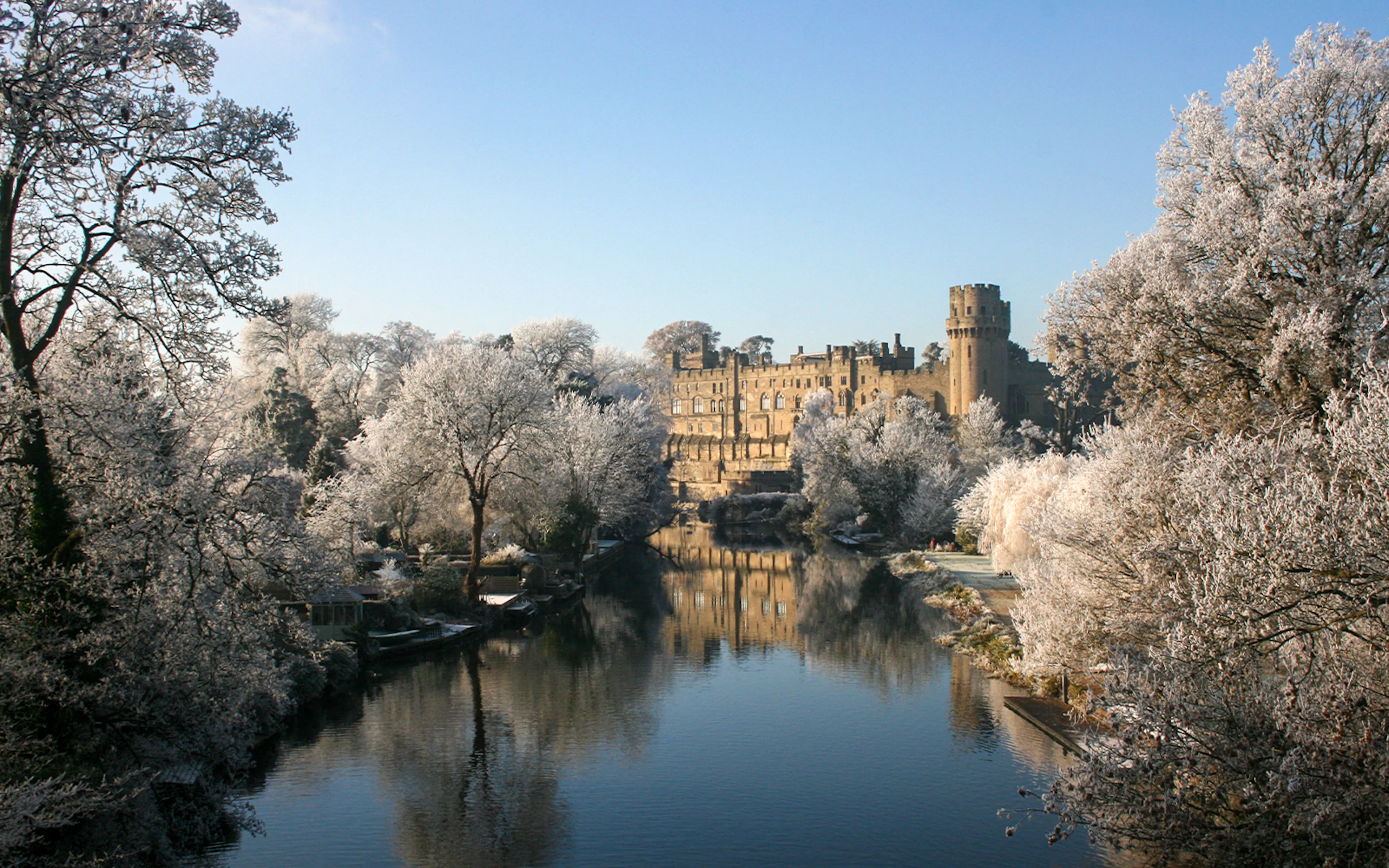
1/11
The Great Hall & State Rooms
The Great Hall is the most visually commanding interior space in the castle, where scale and detail are used to recreate the authority of medieval power. Most visitors slow down here immediately, spending longer than expected absorbing the scale and density of the room before moving on.
The Ramparts & Towers
The ramparts and towers offer the most direct connection to the castle’s original defensive purpose, with elevated stone walkways circling high above the River Avon. From here, you get uninterrupted views across the town, water, and the surrounding countryside. It is one of the most consistently visited areas, with many people looping the walls twice to take in the changing angles of the landscape.
The Conqueror’s Fortress
The Conqueror’s Fortress area focuses on the earliest phase of Warwick Castle’s existence as a Norman stronghold built for control and defence. It reconstructs how the original fortification asserted dominance over the surrounding region. Visitors typically pass through slowly, using it as a contextual bridge between the castle’s origins and its later transformation.
The Peacock Garden
The Peacock Garden is a landscaped outdoor space where ornamental gardens meet free-roaming peacocks moving through lawns and pathways. The contrast between natural calm and the surrounding stone fortress makes it one of the most visually distinctive areas of the estate.
The Pageant Field
The Pageant Field is the castle’s main performance ground, designed for large-scale live shows including jousting tournaments, reenactments, and seasonal events. It functions as the most active storytelling space on the grounds, where history is staged at full scale rather than displayed behind glass.
The East Front
The East Front is the grand external façade that defines the castle’s iconic silhouette, designed to impress visitors through symmetry, height, and architectural dominance. It is the most photographed angle of Warwick Castle, especially when viewed from a distance across the grounds.
The River Island
The River Island is a quieter section of the estate along the River Avon, where walking paths open up views of the castle rising above the water. It offers one of the most balanced perspectives of the fortress, separating you from the main crowds while framing the structure in its natural landscape.
The Mill & Engine House
The Mill & Engine House reveals the working infrastructure that once supported life inside the castle, from milling operations to early mechanical systems. Unlike the more theatrical areas, this section focuses on practical function and historical utility. It is often less crowded, giving you a quieter, more detailed understanding of how the estate sustained itself.
The Courtyard
The Courtyard acts as the central circulation point of Warwick Castle, connecting major interiors and outdoor spaces in a continuous flow. It is also a stage for performers, demonstrations, and seasonal entertainment that bring movement into the historic setting. Most visitors pass through it multiple times, using it as both a meeting point and transition space between experiences.
The Dungeon Experience
The Dungeon Experience is a fully immersive walkthrough attraction combining live actors, dark humour, and staged environments to recreate the castle’s more brutal and unsettling historical narratives. It consistently ranks as one of the most memorable paid experiences, especially for visitors who prefer interactive storytelling.
The Kingmaker Exhibition
The Kingmaker Exhibition reconstructs the preparations and realities of medieval warfare during the Wars of the Roses using life-size scenes, armour displays, and atmospheric staging. Visitors often spend longer here than expected due to the density of visual detail and narrative structure.
Explore more with a guided day trip from London
Discover Warwick Castle along with Oxford, Stratford-upon-Avon, and the Cotswolds on a full-day guided coach tour. Upgrade your experience with optional entry to Warwick Castle and Shakespeare’s Birthplace for a deeper, more immersive journey through England’s most iconic heritage sites.
How to explore Warwick Castle
Budget 3 to 5 hours for a comfortable visit, especially if you plan to explore the interiors, towers, gardens, and live attractions. Families and first-time visitors often spend longer than expected because the grounds are larger than they appear from the entrance.
Brief history of Warwick Castle
- 1068: William the Conqueror orders the construction of Warwick Castle as a timber motte-and-bailey fortress. Positioned above the River Avon, it forms part of a network of castles built to secure Norman control of England after the conquest.
- 1260s–1390s: The castle is rebuilt in stone and expanded with formidable defensive features, including Caesar's Tower, Guy's Tower, curtain walls, and gatehouses. This period gives Warwick much of the medieval appearance visitors see today.
- 1450s–1471: The castle becomes the seat of Richard Neville, Earl of Warwick—better known as the "Kingmaker." As one of the most powerful nobles in England, he plays a decisive role in the Wars of the Roses, cementing the castle's place in English political history.
- 1604: King James I grants Warwick Castle to Sir Fulke Greville. The fortress gradually shifts from a military stronghold to an aristocratic residence, with extensive renovations and landscaped grounds transforming its character.
- 1750s–1800s: The State Rooms, gardens, and decorative interiors are expanded, turning Warwick into one of Britain's grandest country estates while preserving its medieval core.
- 1978: The castle opens as a major heritage attraction, welcoming visitors on a large scale for the first time.
- Today: Warwick Castle remains one of England's best-preserved medieval castles, combining nearly 1,000 years of history with exhibitions, live shows, and immersive visitor experiences.
Architecture of Warwick Castle
Who built Warwick Castle?
Warwick Castle was commissioned by William the Conqueror in 1068 as part of a network of Norman fortifications built to secure England after the conquest. The original timber fortress was later rebuilt in stone by successive Earls of Warwick, who transformed it into one of the kingdom's strongest castles. Unlike many famous landmarks, its design was shaped over centuries by military necessity rather than the vision of a single architect.
Frequently asked questions about Warwick Castle
Yes, especially if you're looking for a castle that feels immersive rather than purely historical. Between the medieval towers, interactive exhibitions, landscaped grounds, and live shows, Warwick Castle offers significantly more variety than a typical heritage site.
Most visitors spend between 3 and 5 hours exploring the castle interiors, towers, gardens, and exhibitions. If you're attending live shows or adding the Dungeon Experience, it's easy to spend most of the day on-site without feeling rushed.
The Great Hall, Ramparts & Towers, and Kingmaker Exhibition are the essential experiences. The views from the battlements provide the best sense of the castle's scale, while the Kingmaker brings the Wars of the Roses to life through immersive storytelling.
Yes. Warwick Castle is one of the most family-friendly historic attractions in England, with interactive exhibits, open grounds, seasonal shows, and live demonstrations. Younger children often enjoy the outdoor areas and performances as much as the historical displays.
Arriving at opening time (around 10 am) offers the quietest experience, particularly for the Great Hall and towers. Weekdays outside school holidays generally see smaller crowds, while summer weekends and special event days are the busiest periods of the year.
Yes. Advance booking is strongly recommended, especially during weekends, school holidays, and seasonal events. Pre-booked tickets are usually cheaper than gate prices and help secure entry during the busiest periods.
Yes. Warwick Castle is one of the most popular day-trip destinations from London and is frequently combined with visits to Oxford, Stratford-upon-Avon, and the Cotswolds. The journey is straightforward and works well as a full-day excursion.
Not always. The Dungeon Experience is often sold as a separate add-on and may not be included with standard entry tickets. Check your ticket details carefully before visiting if this experience is a priority.


