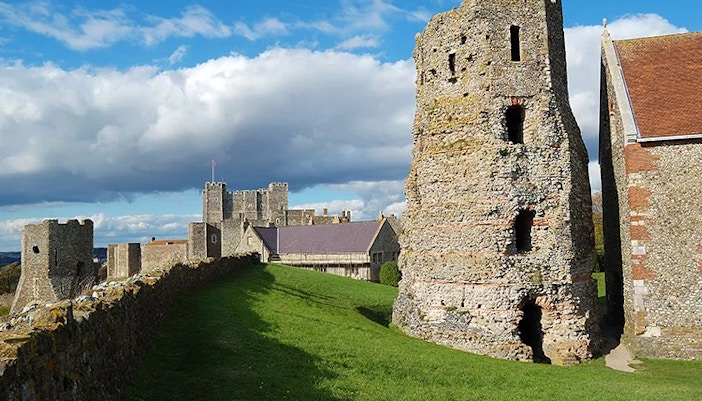
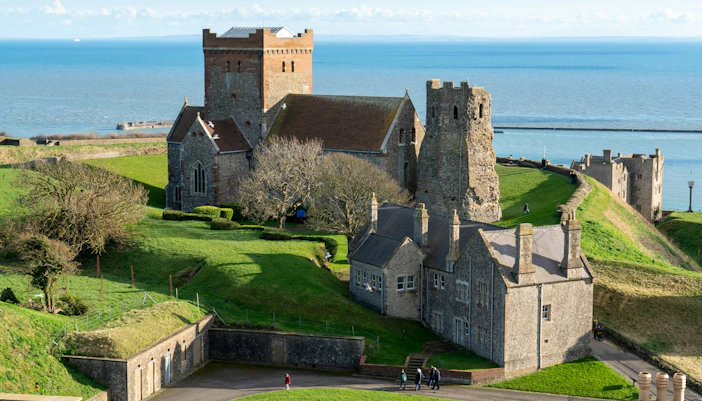
Long before the medieval castle existed, the Romans built a lighthouse on the hill shortly after AD 43. Known as the Roman Pharos, it remains one of the best-preserved Roman structures in England and one of only three surviving Roman lighthouses from the former Roman Empire.
9 interesting facts about Dover Castle that we bet you didn’t know!
Perched high above the White Cliffs, Dover Castle has watched over England’s coastline for centuries. From Roman lighthouses to wartime tunnels hidden deep inside the chalk cliffs, the fortress is packed with stories far stranger than fiction.
9 fascinating Dover Castle facts
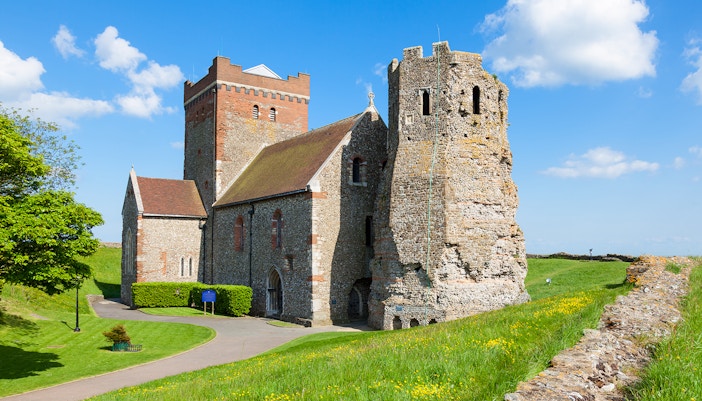
A Roman lighthouse still survives here
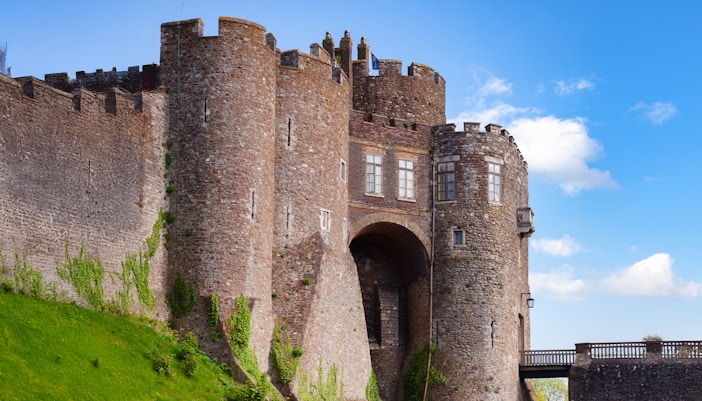
Secret tunnels run beneath the cliffs
Hidden beneath the castle is a maze of tunnels stretching for more than three miles. Originally dug during the Napoleonic Wars for gun batteries, these chalk passages were later expanded into wartime command centres, hospitals, and communication hubs during the 19th and 20th centuries.
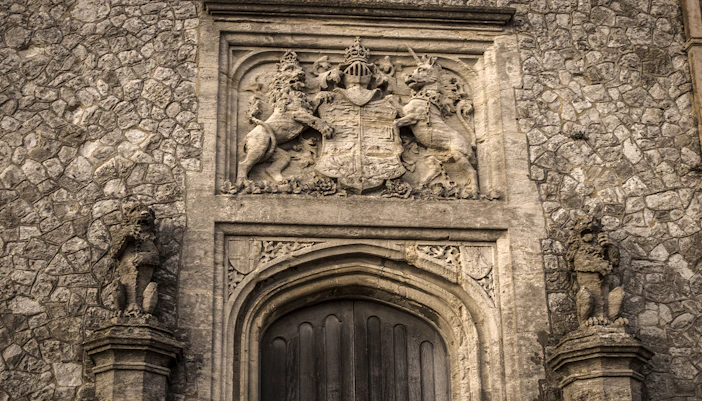
The Dunkirk evacuation was coordinated here
During the Second World War, the castle’s underground tunnels became a protected military headquarters. In 1940, commanders planned and directed the evacuation of more than 330,000 Allied troops from Dunkirk from rooms carved directly into the chalk beneath the cliffs.
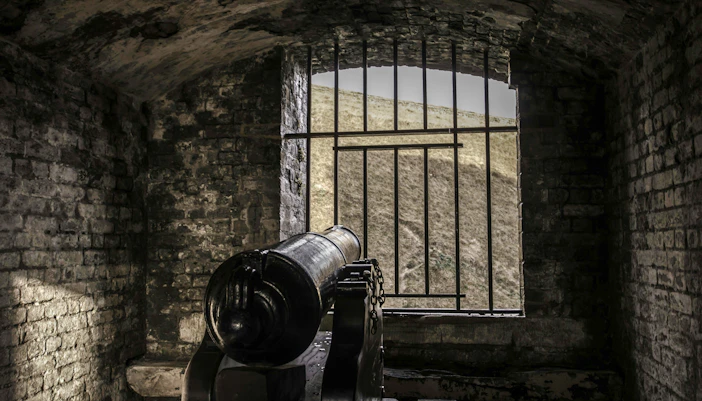
A giant cannon had a surprisingly playful nickname
One of Dover Castle’s most famous Tudor weapons was nicknamed “Queen Elizabeth’s Pocket Pistol.” Despite the humorous name, the enormous bronze cannon measured over seven feet long and symbolised the growing importance of heavy artillery in defending England’s coastline.
Prisoners left graffiti inside the Great Tower
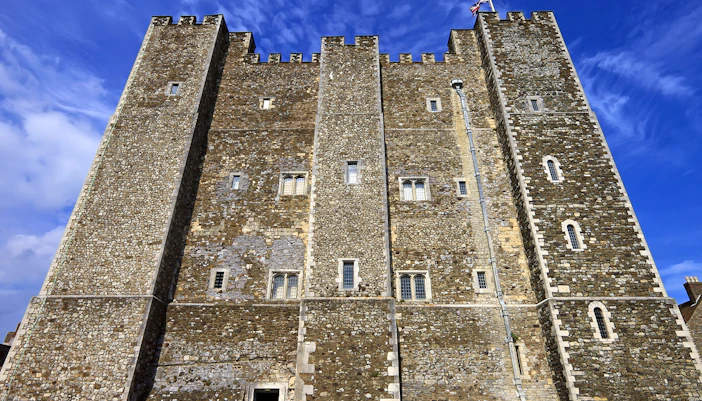
Captured foreign prisoners once held at the castle scratched names, drawings, and messages into the stone walls of the Great Tower. Many of these carvings still survive today, offering small but personal glimpses into lives shaped by war and imprisonment centuries ago.
Strange tunnel sounds have practical explanations
The underground passages have earned a reputation for ghost stories and mysterious noises. However, experts believe the castle’s exposed cliffside location creates unusual air currents and echoes inside the chalk tunnels, making ordinary sounds seem eerie and unexplained.
The site has been defended for nearly 2,000 years
The hilltop has served defensive purposes since the Iron Age, long before the Romans arrived. Over centuries, the same strategic position continued evolving from hillfort to medieval castle to modern military headquarters, giving the site one of Britain’s longest defensive histories.
Napoleonic tunnels later became wartime hospitals
The tunnels built for Napoleonic gun batteries were never actually used in battle at the time. Instead, later generations transformed the chambers into hidden wartime facilities complete with telephone exchanges, map rooms, offices, and even underground medical wards.
The earthworks beneath the castle are older than Rome
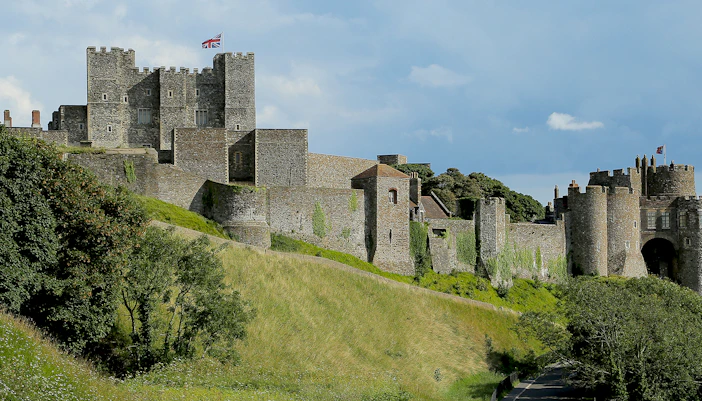
Beneath the stone walls lie massive ditches and earth ramparts first created by Iron Age communities. The landscape itself has been reshaped repeatedly over thousands of years, making the castle grounds an extraordinary layered record of Britain’s defensive past.
Frequently asked questions about Dover Castle facts
The site’s history stretches back over 2,000 years, beginning with Iron Age earthworks. The medieval stone castle seen today largely dates to the 12th century under King Henry II.
Its position overlooking the English Channel made it one of the country’s most important defensive strongholds. Whoever controlled Dover could monitor and protect one of England’s busiest sea crossings.
Yes. The castle contains an extensive underground tunnel network built into the chalk cliffs. Visitors can explore sections including wartime command centres and hospitals.
The castle became a major military headquarters during the war. Its tunnels were used for planning operations, including the Dunkirk evacuation in 1940.
Yes. The Roman Pharos still stands within the castle grounds near St Mary in Castro Church and is one of the oldest surviving Roman buildings in Britain.
Several monarchs used the castle over the centuries. Henry II heavily rebuilt it in the 1100s, while later rulers strengthened and expanded its defences.
Dover Castle covers a much larger site due to its extensive outer defences, earthworks, and cliffside position, making it one of England’s largest castles by area.
Yes. Prisoners of war were kept at the castle during different periods, especially in the 17th and 18th centuries. Some even left graffiti that remains visible today.
The castle’s underground tunnels, wartime history, and echoing chalk passages have inspired many ghost legends. Unusual acoustics and strong air currents also contribute to the eerie atmosphere.
Few places in England combine Iron Age, Roman, medieval, Tudor, Napoleonic, and Second World War history in one site. Its continuous military importance across centuries makes it exceptionally significant.


