Quick Information

RECOMMENDED DURATION

30 minutes

VISITORS PER YEAR

3500000

TICKETS

From $40

NUMBER OF ENTRANCES

4

EXPECTED WAIT TIME - STANDARD

30-60 mins (Peak), 0-30 mins (Off Peak)

EXPECTED WAIT TIME - SKIP THE LINE

0-30 mins (Peak), 0-30 mins (Off Peak)

Plan your visit

Did you know?

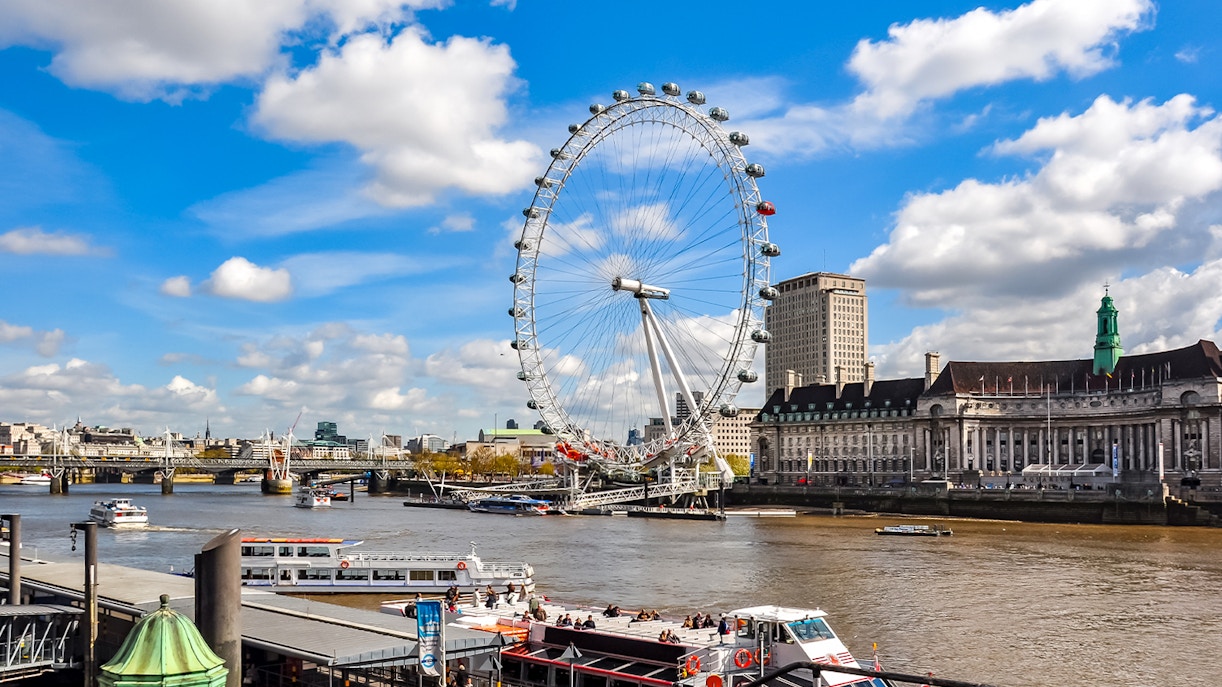
The London Eye is the largest cantilevered observation wheel in the world, with a diameter of 394 feet. It is however no longer the largest ferris wheel in the world. That is now Ain Dubai.

Designed by husband-and-wife duo of Julia Barfield and David Marks, it was originally planned to be temporary, but its popularity led to its permanent installation.

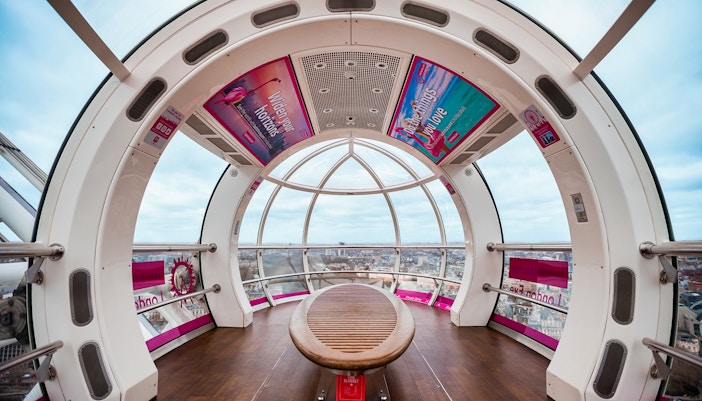
Each of the London Eye's 32 passenger capsules represents one of the boroughs of London. They are also climate-controlled, so no matter what the weather is like outside (even if it is a typical cold and rainy London day), you'll be cozy inside.

Why is the London Eye a must-visit attraction

london eye
  • Iconic as they come: The London Eye is the city’s most iconic structure. It is often the face of the English capital and proof of its amazing architecture and modern landscape.
  • Stunning views: Thanks to its elevation, the London Eye offers unbeatable views of the English capital and skyline. Big Ben, the Tower of London, and Buckingham Palace are all visible from the London Eye.
  • Open all day: The London Eye provides daytime and nighttime views of the London skyline. The views from the observation capsules are different in daylight and moonlight, making the London Eye a unique attraction.
  • A unique experience: Several locations in London offer views of the city skyline, but the London Eye is unique. Seeing the city from an elevation of 135 meters in a rotating capsule will blow your mind, and the experience will stay with you forever.
  • Great location: Located on the South Bank of the River Thames, the London Eye is accessible by public transport. You can visit it conveniently from anywhere in London.

History of the London Eye in a nutshell

  • 1993 The Sunday Times and Great Britain’s Architecture Foundation sponsor a competition to design a new landmark in London for the turn of the millennium. Marks Barfield architects David Marks and Julia Barfield submitted their entries to the competition.
  • 1998 Marks and Barfield began developing the project despite not officially winning the competition. No winner was ever announced.
  • 1998 Construction began in 1998. The wheel was constructed horizontally over the river and pulled upright towards the end of the project.
  • 1999 Then-British Prime Minister Tony Blair ceremonially opened the London Eye on December 31, 1999, ushering the city and the world into a new millennium.
  • 2000 The London Eye welcomed its first paying passenger on March 9, 2000, more than two months after its opening.
  • 2005 The London Eye was scheduled to be dismantled in 2005, but was kept alive due to its popularity.
  • 2006 An LED lighting system was installed to make the attraction equally beautiful in the dark.
  • 2006 Owners British Airways and Marks Barfield transferred the sole ownership of the attraction to the Tussauds group.
  • 2007 Tussauds was sold to private equity behemoth The Blackstone Group, which merged the London Eye into its Merlin Entertainments Group.

Who built the London Eye

The London Eye was designed by Marks Barfield architects David Marks and Julia Barfield in 1993, and construction began in 1998. British Airways, Tussauds Group, and the Marks Barfield firm partnered financially for the project, with several companies, like Hollandia and Tilbury Douglas, providing the materials for the attraction.

Architecture and design of the London Eye

london eye

The London Eye is a marvelous piece of engineering architecture. It continues to captivate audiences, providing them with a visual treat in the city center. The attraction is 135 meters high and offers visitors visuals up to 25 miles ahead.

Two supports, leaning out over the river at 65°, support the hub of the London Eye, and six backstay cables anchored to another foundation hold the entire structure.

The Ferris wheel has a diameter of 120 meters and is connected to the central structure by 64 cables. These cables work like the spokes of a bicycle wheel. Meanwhile, the capsules are mounted on the Ferris wheel, and are 32 in number, corresponding to the 32 boroughs in London.

More on the London Eye architecture

What to do at the London Eye

The London Eye is a famous destination in the English capital, attracting millions annually. Here are the common things to do at the attraction:

Ride on the London Eye

The London Eye observation wheel is an experience of a lifetime! Sit in one of the capsules and enjoy the changing London landscape as you move through space.

Enjoy the view

The London Eye offers the best views of the London skyline and popular attractions. Admire the grandeur of the English capital in your elevated rotating vehicle.

Get a hosted experience

The London Eye capsules are more like small restaurants in the air. Sip your favorite bubbly and enjoy unbeatable views of the London skyline.

Check out the gift shop

You’ll find a gift shop at the London Eye exit. Buy souvenirs and mementos to remember your time at the iconic London attraction, including t-shirts, posters, and decor.

More about the London Eye

London Eye

The London Eye became a trendsetter after it opened its doors in March 2000. Several cities, like Las Vegas, Seattle, and most recently, Dubai, got their observation wheels. They were not an exact copy of the London Eye but were directly inspired by the attraction.

Legoland Windsor, 30 miles outside London, went a step further. It added a scale model of the London Eye to its Miniland Exhibit.

Inside the London Eye

World heritage sites visible from the London Eye

The London Eye is a unique attraction in the English capital because it also provides stunning views of several UNESCO World Heritage Sites in London.

Tower of London

The Tower of London, a historic fortress on the banks of the River Thames, has served as a royal palace, prison, and treasury, housing the Crown Jewels, and boasting iconic structures like the White Tower.

Westminster Abbey

Westminster Abbey, a UNESCO World Heritage Site, is a medieval church where coronations, royal weddings, and burials have taken place for centuries, hosting the tombs of notable figures from British history.

Frequently Asked Questions about the London Eye

A full rotation on the London Eye takes approximately 30 mins. The wheel moves slowly and continuously, allowing for gradual boarding and disembarking.

More Reads

London Eye Location

London Eye Facts

Inside London Eye