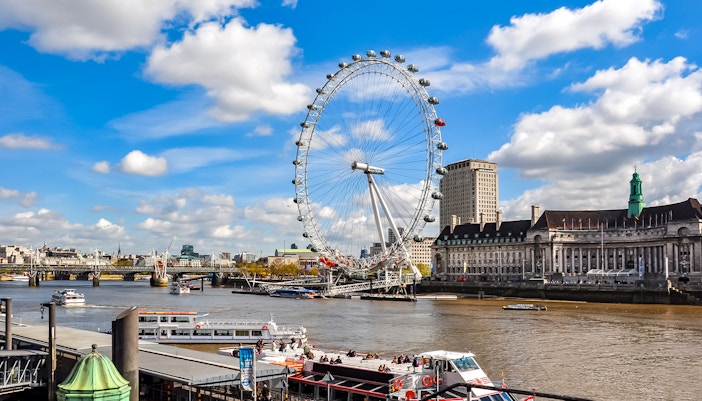
The London Eye was first imagined by husband-and-wife architects David Marks and Julia Barfield. Their design, called the "Millennium Wheel," was submitted to a competition celebrating the year 2000. Though the entry didn't win, the couple pursued the idea independently.
London Eye history | The modern symbol of London's skyline
The London Eye wasn't designed to become a permanent fixture of London's skyline—it was originally intended to stand for just five years. More than two decades later, it has become one of the city's defining landmarks. Read on to explore the fascinating history of the London Eye, from its bold conception and groundbreaking engineering to its enduring place on London's skyline.
London Eye timeline
1993: Millennium Wheel concept submitted
Architects David Marks and Julia Barfield enter the Sunday Times/Architecture Foundation Millennium Competition with a giant observation wheel design.1998: Construction begins
Despite not winning the competition, the wheel is built horizontally on barges over the Thames before being lifted upright.1999: Ceremonially opened by Tony Blair
The wheel makes its first rotation without passengers on New Year's Eve, marking London's millennium celebrations.2000: Opens to the paying public
The Eye welcomes its first passengers on 9 March, with each rotation lasting around 30 minutes.2002: Made a permanent landmark
Originally granted five-year planning permission, Lambeth Council votes to keep the Eye permanently due to its popularity.2006: Height record lost; ownership consolidated
The Star of Nanchang in China overtakes it as the world's tallest Ferris wheel; ownership transfers fully to the Tussauds Group.2009–2012: Capsules upgraded; Olympic Torch relay
All 32 capsules are refurbished ahead of the Games; in 2012, 17-year-old Amelia Hempleman-Adams carries the Olympic Torch atop a capsule.2013: Surpassed as London's highest viewpoint; first Coronation Capsule
The Shard takes the title of London's highest public viewpoint; a capsule is named the "Coronation Capsule" for Queen Elizabeth II's 60th coronation anniversary.2015–2020: Cultural lighting milestones
The Eye is illuminated in rainbow colours for London Pride in 2015, then lit blue for NHS workers during the 2020 pandemic.2023–2025: Royal tribute and 25th anniversary
The Coronation Capsule is redecorated in Westminster Abbey style for King Charles III's coronation in 2023; the Eye marks its 25th anniversary in 2025 as a permanent London icon.
London Eye history explained
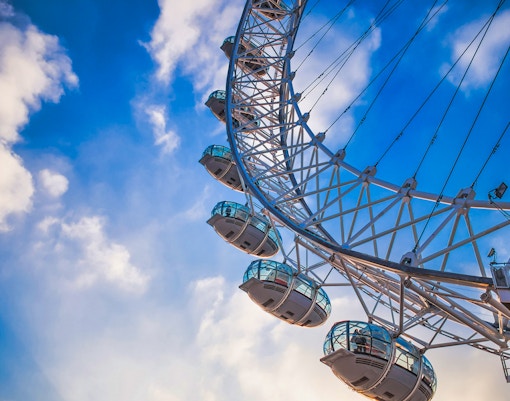
1993: Concept born

1998: Construction begins
Construction on the wheel officially began in 1998. Major components were manufactured across Europe and transported to London via barges. The structure was assembled horizontally on floating platforms in the River Thames, making it one of the most ambitious engineering projects of its time.
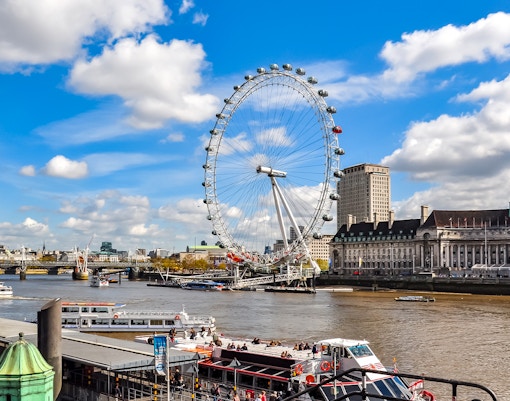
1999: First rotation
The London Eye was inaugurated on New Year's Eve by then-Prime Minister Tony Blair. The wheel made its ceremonial first rotation, without passengers, as part of the city's millennium celebrations. It served as a centrepiece for London's transition into the 21st century.
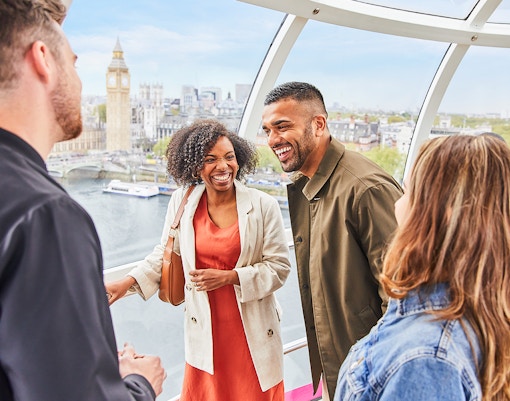
2000: Public launch
The London Eye opened to the public on 9 March. Each rotation takes about 30 minutes, providing panoramic views of the city. The experience quickly became a must-do for locals and tourists alike, and it soon ranked among London's top paid attractions.
2002: Made permanent
Although it was initially granted a five-year permit, the wheel's overwhelming popularity led to its permanent approval by Lambeth Council. Its continued success contributed to the regeneration of the South Bank area and influenced the development of similar observation wheels worldwide.
2006: LED lighting & new ownership
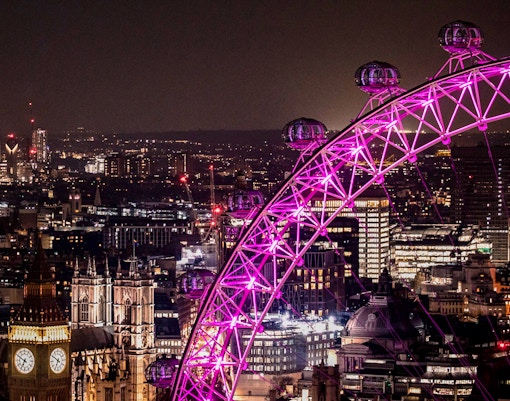
In 2006, the London Eye underwent significant upgrades. A new energy-efficient LED lighting system was installed, allowing dynamic light displays. The ownership was also transferred from British Airways to the Tussauds Group.
2009: Capsule upgrades
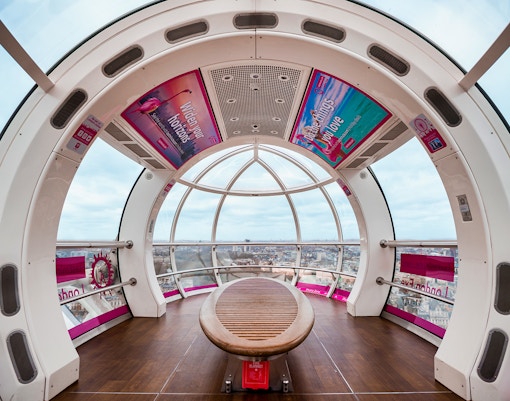
Ahead of the 2012 Olympic Games, all 32 capsules were removed one at a time and refurbished. The updates included improved ventilation, heating, and in-capsule entertainment systems.

2012: Olympic torch moment
During the lead-up to the London 2012 Olympics, the Eye played a role in the torch relay. Seventeen-year-old Amelia Hempleman-Adams carried the Olympic flame atop one of the capsules, suspended 135 metres above the River Thames.
2015: Rainbow lighting for Pride
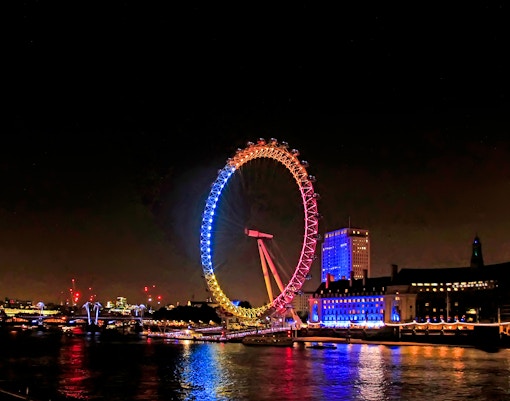
The London Eye was lit up in rainbow colors for the first time to mark London Pride. The move was part of a larger celebration of diversity and inclusion. It also marked a shift in how the landmark engaged with cultural and social movements. The lighting display has since become an annual tradition.
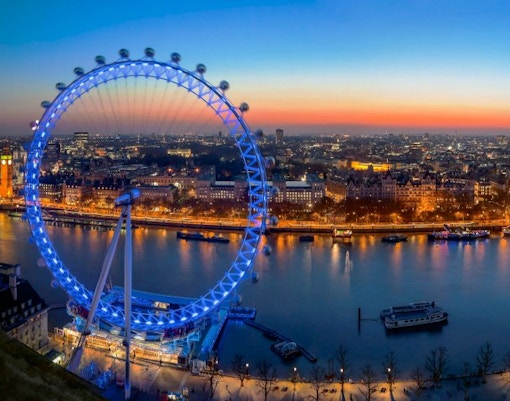
2020: Pandemic tribute
During the COVID-19 pandemic, the Eye joined national efforts to honor healthcare workers. It was illuminated in blue as part of the weekly “Clap for Carers” initiative. This gesture made it a visual beacon of gratitude across the city. It reinforced the Eye’s role as more than just a tourist attraction.
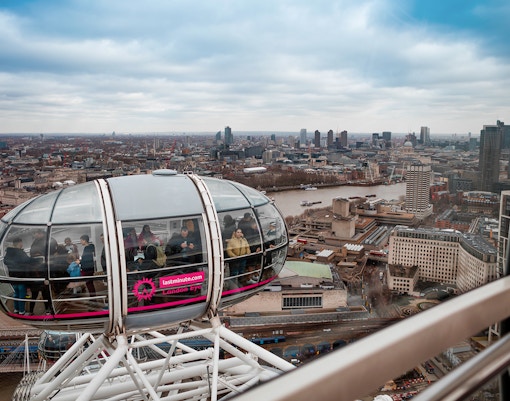
2023: Coronation Capsule
To celebrate King Charles III’s coronation, the London Eye unveiled a special “Coronation Capsule.” The interior was styled to resemble Westminster Abbey. It featured royal memorabilia and immersive storytelling.
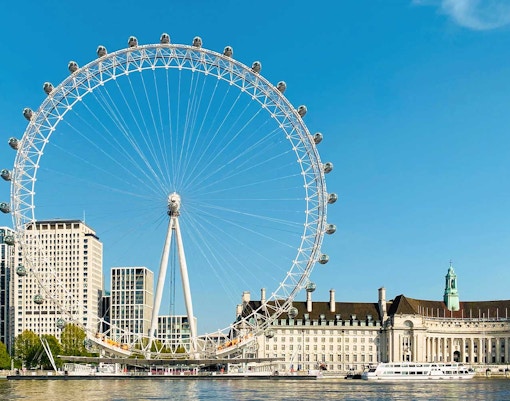
2025: Silver Jubilee
The London Eye celebrates its 25th anniversary in 2025. Over the years, it has welcomed millions of visitors and hosted countless events. It remains one of the most iconic landmarks in London. The milestone reaffirms its place as a symbol of modern British identity and innovation.
Construction of the London Eye
The construction of the London Eye began in 1998 and stands as a remarkable achievement in modern engineering. Designed by architects David Marks and Julia Barfield, the 135-meter-tall observation wheel was intended as a lasting symbol to celebrate the new millennium. Unlike conventional Ferris wheels, it was assembled flat on floating platforms on the River Thames and then gradually lifted into position using a sophisticated system of hydraulic strand jacks—an unprecedented method at the time that took several days to complete.
The project was a logistical triumph, with components manufactured across six countries: steel from the UK, cables from Italy, and passenger capsules from France. The structure’s unique cantilevered design is supported from just one side and holds 32 fully enclosed, air-conditioned glass capsules mounted externally to offer uninterrupted 360° views. Despite considerable technical and environmental challenges, the build was finished on schedule, transforming a temporary idea into a permanent, world-famous symbol of London’s skyline.
The London Eye today
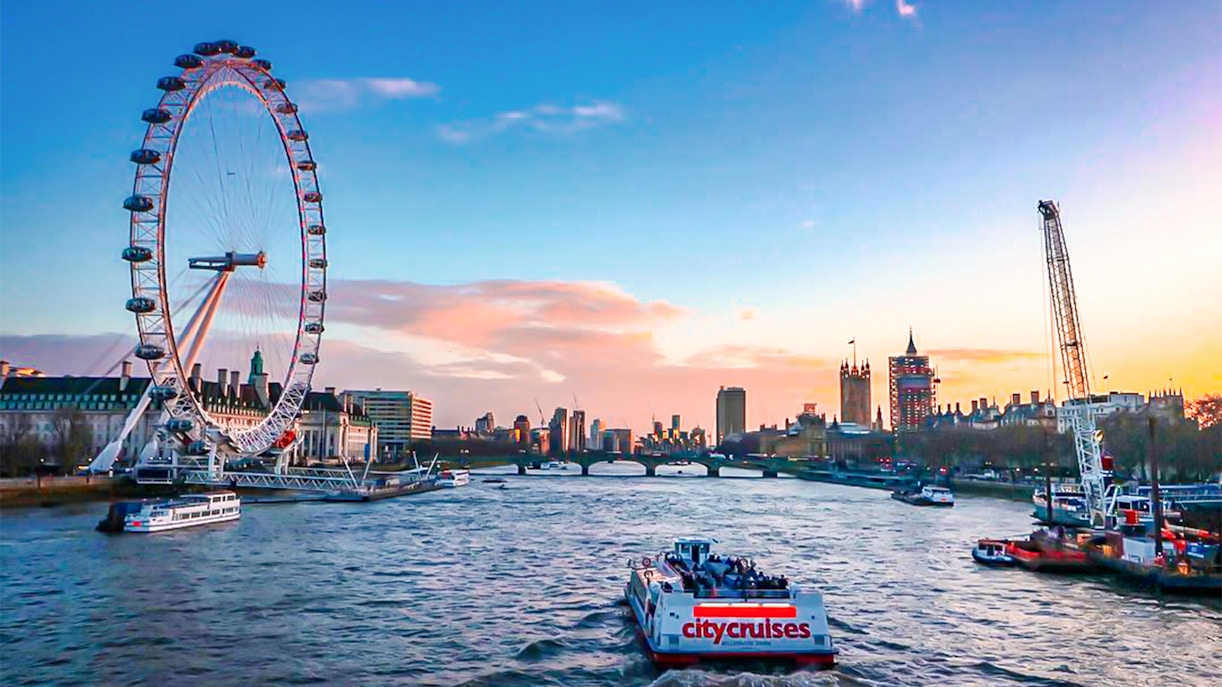
More than two decades after opening, the London Eye remains one of the UK's most visited paid attractions and a defining feature of London's skyline. Operated by Merlin Entertainments, it welcomes millions of visitors each year for a 30-minute rotation offering 360° views across the capital.
From its 32 glass capsules, you can spot landmarks such as Big Ben, Buckingham Palace, St Paul's Cathedral, The Shard, Tower Bridge, and, on exceptionally clear days, Windsor Castle, nearly 25 miles away. Beyond sightseeing, the London Eye has become a focal point for national celebrations, seasonal light displays, and London's famous New Year's Eve fireworks, cementing its place as one of the city's most recognisable modern landmarks.
Frequently asked questions about the London Eye's history
Public response was overwhelmingly positive. Though originally a temporary attraction, its popularity and demand led to it becoming a permanent fixture by 2002.
The name reflects its panoramic views of the city, like an ‘eye’ over London. It replaced the original name “Millennium Wheel” after becoming a permanent landmark.
Each capsule represents one of London’s 32 boroughs. There’s no capsule numbered 13, due to common superstitions.
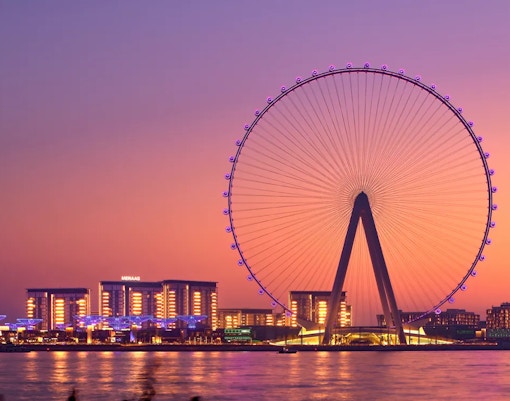
The success of the London Eye inspired a wave of similar cantilevered observation wheels in cities like Las Vegas, Singapore, and Dubai, designed to mirror its engineering and tourism appeal.
The London Eye has appeared in numerous films and shows, including Harry Potter and the Order of the Phoenix, Fantastic Four: Rise of the Silver Surfer, and Sherlock. It’s also featured in modern artwork, music videos, and national campaigns.
Yes, the wheel can pause for maintenance, special events, or during high winds. In emergencies, it can be safely evacuated even mid-rotation.
It was the first major wheel ever to be assembled over water and lifted into vertical position in segments, a technique never used before on this scale.