Right across the river, this is the view the London Eye is built around. The Gothic spires and the clock face sit almost close enough to touch, with the Thames curling beneath them.
London Eye views: Top attractions to spot
Whether it's your first time in London or your fifth, the views from the London Eye never get old. Rising 135 metres above the River Thames, the observation wheel offers sweeping 360° panoramas of the city's skyline, letting you spot famous landmarks from a whole new perspective. On a clear day, you can see as far as 40 kilometres, with everything from Big Ben and Buckingham Palace to St Paul's Cathedral and Tower Bridge visible from the glass capsules. Here's what you can expect to see, the best viewpoints, and tips for making the most of your London Eye experience.
What can you see from the London Eye?
Closest landmarks
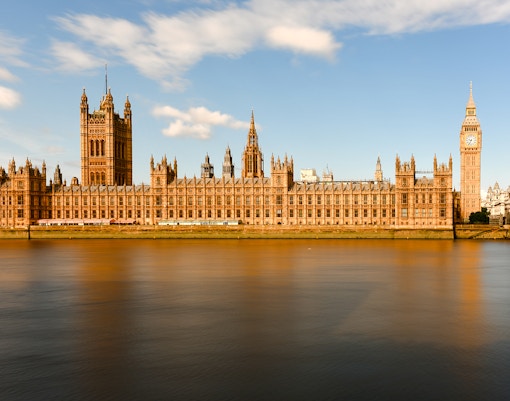
Big Ben & the Houses of Parliament
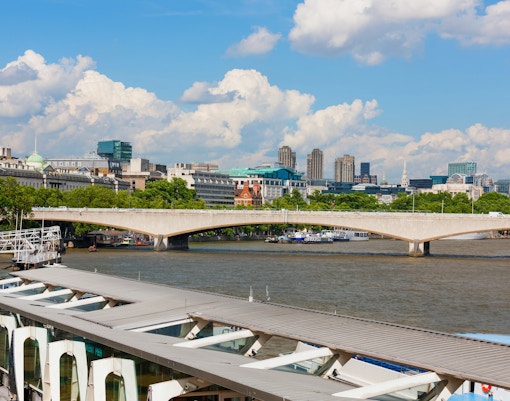
River Thames
The river is the thread that ties the whole panorama together. Watch riverboats trace the water below and bridges stitch the two banks together as the city slowly rotates into view.

Westminster Bridge
Stretching directly beside the London Eye, Westminster Bridge provides a classic foreground for skyline photographs, especially during golden hour.

Westminster Abbey
Tucked just behind Parliament, look upon Westminster Abbey's twin towers rising into view as you climb past the halfway point of the rotation.
Further across the skyline

Buckingham Palace
Framed by the green of St James's Park and Green Park, the Palace sits to the west — a quieter, more understated landmark among the grander views nearer the river.
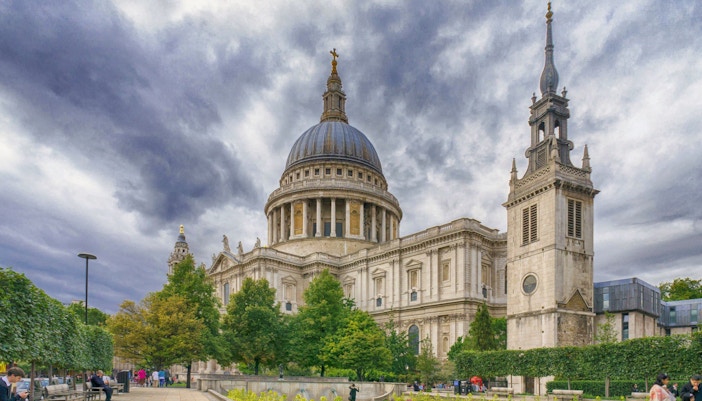
St Paul's Cathedral
Christopher Wren's dome has anchored this stretch of the skyline for over 300 years, and it still holds its own against the glass towers rising around it.

The Shard
There's no missing the Shard! As the tallest building in Western Europe, its glass spire cuts straight through the skyline no matter the light or weather.

Tower Bridge
Several kilometres downriver, the Tower Bridge's twin towers still read clearly from the top of the rotation — a fitting bookend to the view that starts at Parliament.

Canary Wharf
Beyond Tower Bridge, London's financial district rises in a cluster of glass and steel — a sharp contrast to the historic stonework closer to the Eye.
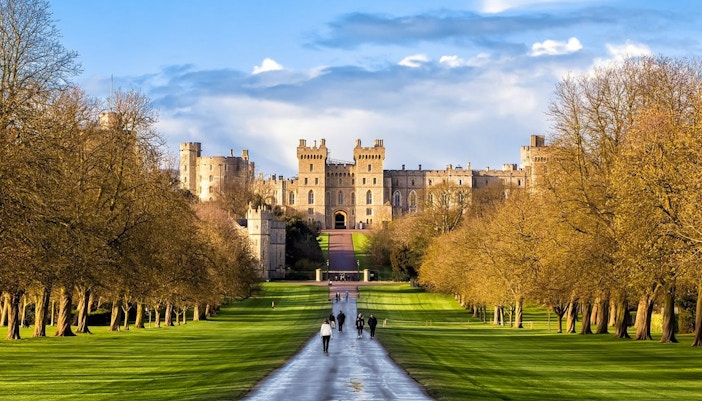
Windsor Castle
On the clearest days, the London Eye's 40km reach stretches all the way to Windsor — a faint silhouette on the western horizon if you know where to look.
If visibility is good, you may also spot Wembley Stadium's iconic arch (around 16 km away), Alexandra Palace (about 14 km away), and the Crystal Palace Transmitter (roughly 11 km away) rising above London's skyline. No matter where you stand inside the capsule, the slow 30-minute rotation offers constantly changing perspectives, revealing a new side of London's skyline every few minutes.
The London Eye experience
Source: Travel360
Views by direction
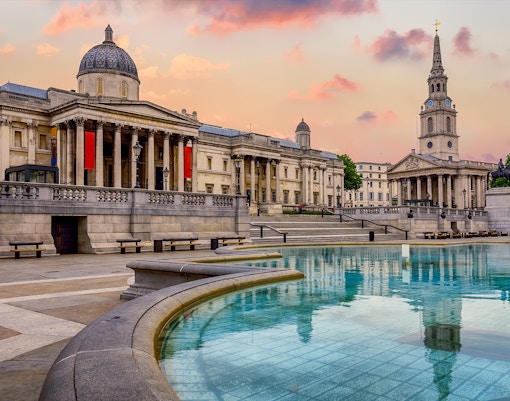
North
Dominated by the city's historic core, including Trafalgar Square, the National Gallery, and the winding streets of Covent Garden. On a clear day, you might even spot Hampstead Heath in the distance.
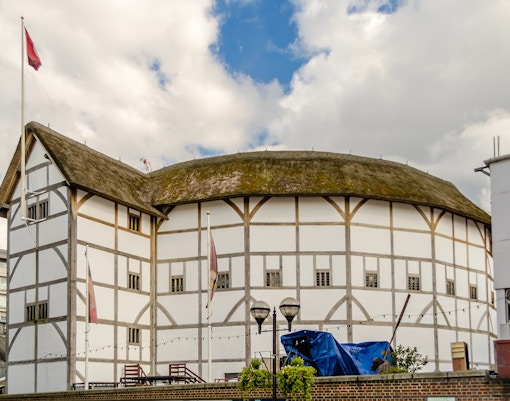
South
Features the South Bank's cultural hub, including the Royal Festival Hall and Shakespeare's Globe. Beyond that, you'll see a mix of residential areas and green spaces stretching towards Croydon.
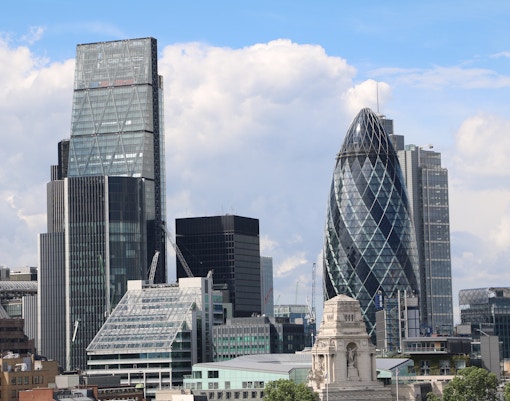
East
Reveals London's financial heart, where skyscrapers like The Gherkin, The Cheesegrater, and the Walkie Talkie dominate the skyline. Follow the Thames east towards Canary Wharf, Greenwich, and the O2 Arena.
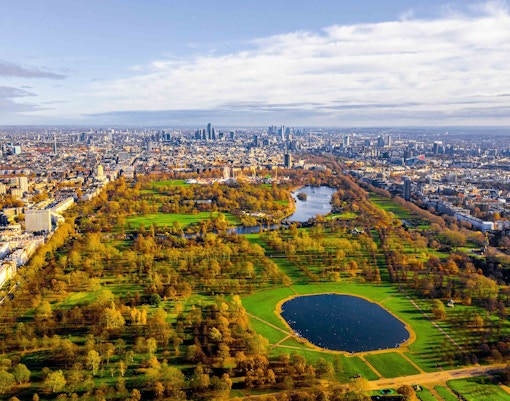
West
Showcases London's royal and political heart. Beyond Buckingham Palace, you'll spot Hyde Park, Kensington Gardens, and the elegant neighbourhoods of Mayfair and Belgravia, completing the London Eye's sweeping 360° panorama.
London Eye views by time & season
Best time to visit for specific views
- Early morning (Opening time): Often less crowded, offering clearer views from the London Eye and a serene atmosphere as the city wakes up.
- Daytime (Clear): Ideal for spotting individual landmarks and appreciating the architectural details. The city is vibrant and bustling.
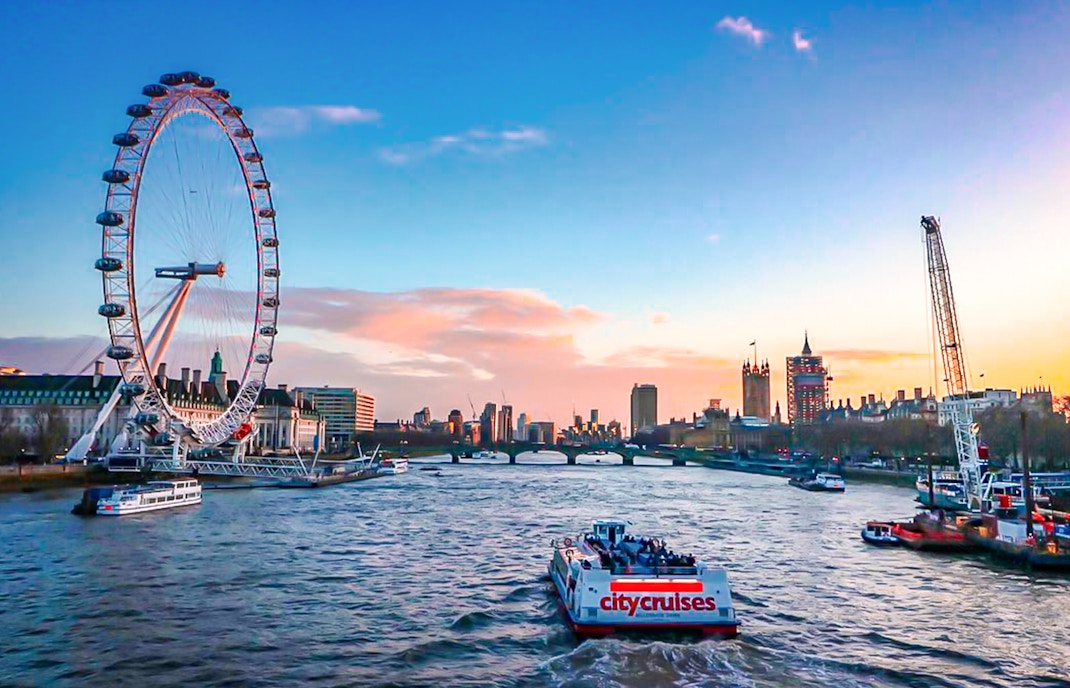
- Sunset: Witness the magical transition as the city lights begin to twinkle against the fading sunlight. The sky often paints itself in spectacular hues.
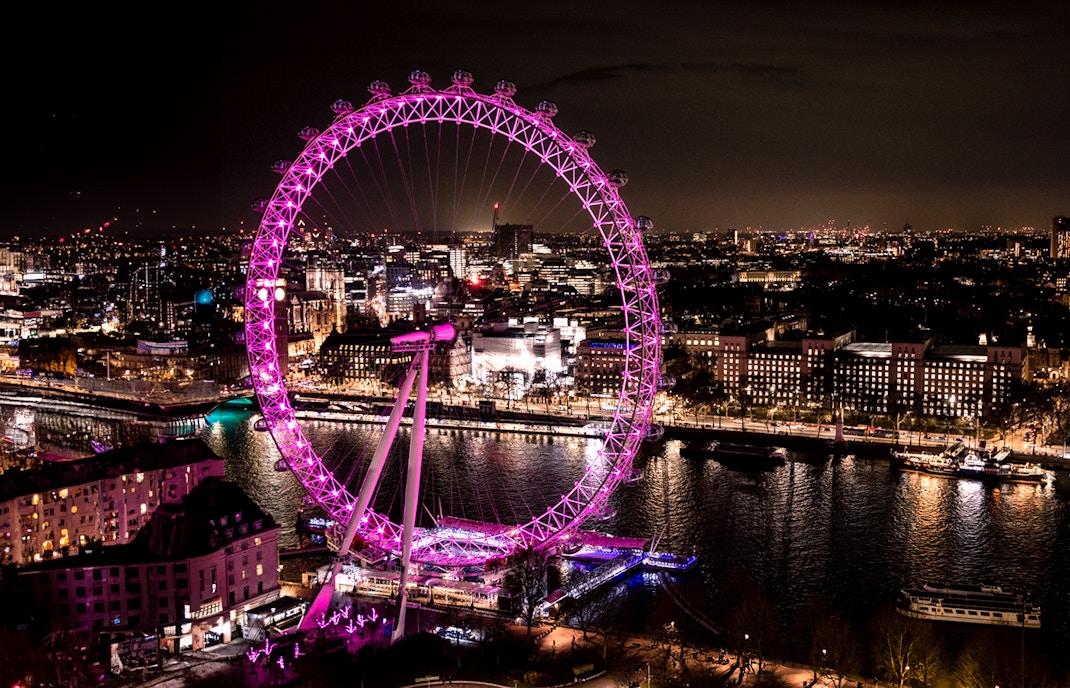
- Nighttime: Experience the city ablaze with lights. Landmarks are dramatically illuminated, and the River Thames reflects a shimmering glow, creating a truly romantic scene, promising incredible night views in London.
Best season to visit for views
- Spring: Parks below come into bloom, days lengthen, and the air is often clearer after winter.
- Summer: Longest daylight hours mean more time for golden-hour and sunset rides, though afternoons can turn hazy and queues are at their busiest.
- Autumn: Golden foliage across the parks below, combined with comfortable temperatures, makes for some of the best photography conditions of the year.
- Winter: Shorter days bring earlier sunsets and a festively lit skyline, though fog and low cloud can significantly reduce visibility.
- Which season offers the clearest skyline? Autumn tends to strike the best balance — cool, settled air without summer's afternoon haze.
Tips for getting the best views from the London Eye

- Stand opposite the capsule doors: Gives you uninterrupted views without other passengers in your eyeline.
- Walk around the capsule: Every angle changes as the wheel turns, so don't stay fixed in one spot.
- Don't rush your photos: The 30-minute rotation moves slowly enough to give you several chances at the same view.

- Minimise reflections: Wear dark clothing to reduce reflections in the glass, which noticeably improves your photos of the view.
- Clean your lens: Make sure your camera or phone lens is spotless before you board, since glass reflections and smudges both show up in shots.
- Focus on detail: Use your zoom for close-ups of specific landmarks like Big Ben or St Paul's.
- Capture the panorama: Switch to panoramic mode on your smartphone for wide shots that do justice to the 360-degree view.
- Aim for golden hour: Sunrise or sunset gives you the best natural light for photos.
- Bring binoculars: The views are spectacular to the naked eye, but binoculars help you pick out details on landmarks further away, like Windsor Castle or Wembley Stadium on a clear day.

- Changing of the Guard: Time your visit right and you may spot the crowds gathering around Buckingham Palace for the ceremony.
- River activity: Watch the mix of tourist cruises and commuter ferries moving along the Thames below.
- Rooftop gardens: Look out for hidden green spaces tucked among the rooftops, which add unexpected character to the skyline.
- Architectural contrast: Beyond the big-name landmarks, notice how historic buildings sit right up against modern glass towers throughout the view.

- Choose a clear-weather day if you can: Visibility can reach up to 40km on the clearest days, versus a fraction of that when it's overcast.
- Download an offline map of London beforehand: Makes it much easier to identify what you're looking at in the moment.
Frequently asked questions about the views from the London Eye
From your vantage point, you'll see a panorama of London's most iconic landmarks. These include the Houses of Parliament and Big Ben, Westminster Abbey, Buckingham Palace, St. Paul's Cathedral, the Tower of London and Tower Bridge, The Shard, and the River Thames.
As you ascend, look east for the cluster of modern skyscrapers in the City of London (Gherkin, Walkie-Talkie, Cheesegrater) juxtaposed with St. Paul's Cathedral. At the peak of your rotation, the view directly north over the Houses of Parliament and Westminster Abbey is iconic. As you descend, the views of the South Bank and the winding Thames become more prominent.
On an exceptionally clear day, the visibility from the London Eye can extend up to 40km (25 miles) in all directions. This allows you to see far beyond the immediate city centre, potentially spotting landmarks much further afield, such as Windsor Castle!
On a very clear day, it is possible to spot more distant landmarks like the O2 Arena, the Wembley Stadium, the Queen Elizabeth Olympic Park, and the ArcelorMittal Orbit tower. Visibility for these more distant sites is highly dependent on weather conditions and atmospheric clarity, impacting what you can see from the London Eye.
Clear and sunny days are optimal for long-distance visibility and vibrant colours. On cloudy days, the view from the London Eye can still be impressive, with landmarks visible, though the colours might be more muted. Overcast days can sometimes offer unique, dramatic skies. On rainy days, visibility will be reduced, but the experience can still be atmospheric, with glistening wet surfaces and reflections. The enclosed pods protect you from the elements. Note that heavy fog can obscure the views from the London Eye, limiting visibility to only the immediate surroundings. While less ideal for panoramic viewing, it can create a surreal, ethereal atmosphere. Ultimately, many still find the experience worthwhile even in less-than-perfect weather, so it’s up to you!
To potentially experience less crowded pods and better views from the London Eye, consider visiting first thing in the morning when it opens or later in the evening, closer to closing time. It’s also best to visit during off-peak seasons (mid-week in autumn or winter, avoiding school holidays). There are also fewer crowds during traditional mealtimes (lunch, dinner).
The London Eye offers an incredible vantage point for many events. However, accessing the London Eye during major events like New Year's Eve is by special ticketed events only, which sell out far in advance. The London Eye is closed to the public during the actual fireworks ceremony. For parades, you might be able to see elements of them if they pass through areas visible from the Eye, but the view might be distant.
A standard rotation on the London Eye takes approximately 30 mins. This allows ample time to slowly ascend, enjoy the full London Eye 360-degree view as you reach the top, and then descend, giving you a comprehensive visual tour of the city.
Children typically find the views from the London Eye fascinating! The slow, smooth rotation and the enclosed pods make it a comfortable experience. Spotting familiar landmarks like Buckingham Palace or seeing London's red buses from above can be particularly thrilling for younger visitors.
While the primary appeal is visual, the London Eye is designed to be inclusive. Guests with visual impairments can still enjoy the sensation of elevation and movement, the changing sounds of the city below, and the general atmosphere.


