Quick Information

RECOMMENDED DURATION

30 minutes

VISITORS PER YEAR

3500000

NUMBER OF ENTRANCES

4

EXPECTED WAIT TIME - STANDARD

30-60 mins (Peak), 0-30 mins (Off Peak)

EXPECTED WAIT TIME - SKIP THE LINE

0-30 mins (Peak), 0-30 mins (Off Peak)

Plan your visit

Did you know?

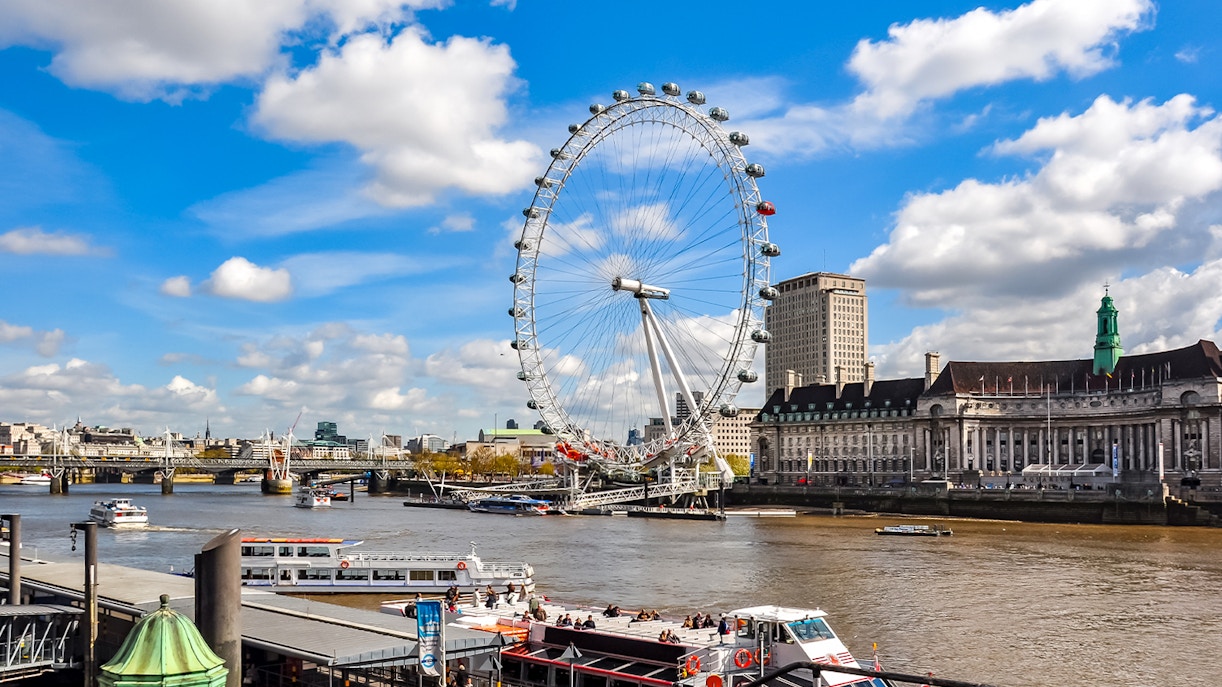
The London Eye is the largest cantilevered observation wheel in the world, with a diameter of 394 feet. It is however no longer the largest ferris wheel in the world. That is now Ain Dubai.

Designed by husband-and-wife duo of Julia Barfield and David Marks, it was originally planned to be temporary, but its popularity led to its permanent installation.

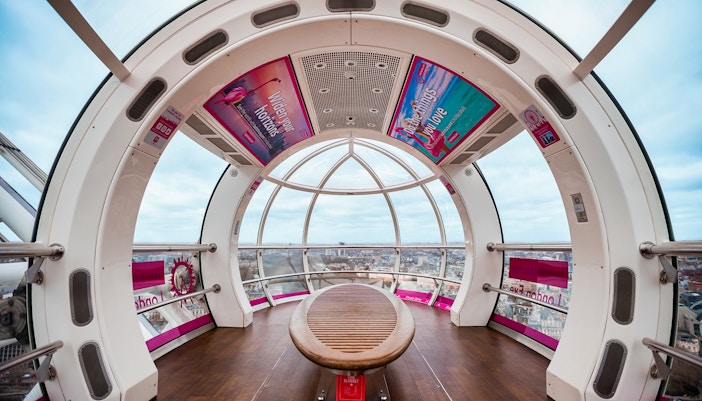
Each of the London Eye's 32 passenger capsules represents one of the boroughs of London. They are also climate-controlled, so no matter what the weather is like outside (even if it is a typical cold and rainy London day), you'll be cozy inside.

Is the London Eye worth visiting? 

Nothing quite prepares you for the feeling you experience when the London Eye capsule lifts off the ground. It moves so slowly you barely notice leaving it, and then suddenly the whole city is beneath you: the Thames bending away in both directions, Parliament close enough to touch, and St Paul's dome catching the light. It's the stillness that surprises people. Half an hour of quiet, suspended above a city that never stops moving.

It was built to mark the turn of the millennium, a piece of ambitious engineering meant to give Londoners a way to see their own city fresh, from an angle no one had before. That intent still comes through in the design: glass, steel, and nothing to block the view.

The payoff is perspective, literally. You leave with a mental map of London you didn't have going in and a strange calm that's hard to find anywhere else in the city.

Skip it if you're short on time and the sky is grey. On an overcast day, the experience loses most of its impact.

What to see at the London Eye

London Eye with view of Big Ben and Houses of Parliament in the background.
1/6

The 32 class capsules

The 32 glass capsules are the heart of the London Eye experience. Each one completes a 30-minute rotation with floor-to-ceiling glass walls, giving you uninterrupted views across London as landmarks appear from every angle.

The highest point at 135 metres

At the top of the wheel, the city opens out beneath you with sweeping views across London. On clear days, you can spot landmarks stretching from Westminster and St Paul’s Cathedral to The Shard and beyond.

The Westminster skyline view

Big Ben and the Houses of Parliament come into view as the capsule rises above the Thames. This iconic perspective captures some of London’s most recognisable landmarks in a single panoramic frame.

The River Thames view

The London Eye’s position beside the Thames offers a constantly changing view of the river, bridges, and boats below. The rotation shows how London’s historic centre has grown around its most important waterway.

The South Bank view

The capsule looks down over the South Bank’s theatres, galleries, and riverside paths. This view reveals the contrast between London’s cultural district, historic landmarks, and modern skyline.

The London Eye 4D Cinema Experience

The short 4D film combines aerial footage of London with effects like wind, mist, and bubbles. It sets the scene before the rotation by introducing the city’s landmarks from above.

Turn one London view into the full city experience

You’ve seen London from above — now explore it from the river, behind the scenes, and up close. Pair your London Eye ride with a Thames River cruise, Madame Tussauds, SEA LIFE London, the Tower of London, or Tower Bridge to save on separate tickets and experience more of the city in one day.

How to explore the London Eye

Budget around 45 minutes to 1 hour for the full London Eye experience, including the 30-minute rotation and time for boarding. Arrive 15–30 minutes early, especially during peak periods, as security checks and queues can add time.

Suggested route

Start with the pre-ride 4D cinema experience before entering the queue for your capsule. Once onboard, walk around the capsule as it rises to enjoy changing views of Big Ben, the Houses of Parliament and The Shard from different angles.

Must-see

The highest point of the rotation, the Westminster skyline, and the panoramic views along the River Thames.

Optional: Sunset and evening rides offer a different atmosphere, with London's landmarks illuminated after dark. Book these time slots well in advance, as they are among the first to sell out.

Standard tickets vs combo tickets

A standard ticket is ideal if the London Eye is your main stop. If you're planning to visit multiple attractions in a day or two, a combo ticket offers better value by bundling experiences like a Thames River cruise, Madame Tussauds, SEA LIFE London, the Tower of London, or Tower Bridge into a single booking.

Brief history of the London Eye

  • 1993: Architects David Marks and Julia Barfield submit their design for a giant observation wheel to a competition celebrating the new millennium. Although the proposal isn't selected, they continue developing the idea independently.
  • 1998: Construction begins beside the River Thames. The wheel is assembled horizontally on floating platforms before being slowly lifted into its upright position—an engineering milestone in its own right.
  • 31 December 1999: Prime Minister Tony Blair officially inaugurates the London Eye as part of the UK's millennium celebrations.
  • March 2000: The attraction opens to the public and quickly becomes one of London's most popular paid attractions.
  • Today: Originally intended as a temporary installation, the London Eye remains a permanent part of London's skyline, welcoming millions of visitors each year with panoramic views across the capital.

Explore the history of the London Eye

Architecture of the London Eye

London Eye

Style: Modern engineering landmark, built as a cantilevered observation wheel rather than a traditional Ferris wheel design. It's the only structure of its kind supported entirely on one side.

Materials: Nearly 2,000 tonnes of steel and over 3,000 tonnes of concrete anchor the structure, with 64 cables connecting the rim to the central hub, all held upright by an A-frame rather than a full support ring.

Architects: David Marks and Julia Barfield designed the wheel with a clear vision: give Londoners a way to see their own city from an angle that had never existed before, using glass and steel to keep the view completely unobstructed.

Experiential detail: Standing in a capsule, there's no visible support structure around you, just the sensation of floating above the city rather than riding a machine.

Learn more about the architecture of London Eye

Who built the London Eye?

The London Eye was designed by architects David Marks and Julia Barfield, founders of Marks Barfield Architects. Conceived as a landmark for the millennium, their vision was to create a structure that celebrated London's skyline through innovative engineering and public accessibility. Although planned as a temporary attraction, the design's popularity secured its place as a permanent London landmark.

Frequently asked questions about the London Eye

Plan for 45 minutes to 1 hour in total. The rotation itself lasts about 30 minutes, with the remaining time for security, boarding, and the optional 4D Cinema Experience. During peak periods, arrive 15–30 minutes before your scheduled entry time.

More reads