Canterbury began as Durovernum Cantiacorum, a Roman walled town on an important road network. Even now, parts of the street pattern and surviving wall traces help explain why the historic centre feels so compact and navigable.
Canterbury history from Roman roots
Few English cities feel as layered as Canterbury, where Roman streets, Anglo-Saxon faith, and medieval pilgrimage still shape a compact, walkable centre. Knowing that backstory helps you spot far more than cathedral stonework on a day trip.
Canterbury timeline
- c. AD 43: Roman town founded
Durovernum Cantiacorum becomes a key settlement on Watling Street. - AD 597: Augustine arrives
Canterbury becomes the base for the mission that reintroduced Christianity to Anglo-Saxon England. - 1070: Norman rebuilding begins
Archbishop Lanfranc starts a new cathedral after the Norman Conquest. - 1170: Thomas Becket is murdered
The cathedral becomes the scene of England’s most famous medieval martyrdom. - 1173: Pilgrimage boom starts
Becket is canonised, and his shrine draws pilgrims from across Europe. - c. 1387–1400: Chaucer writes the pilgrims
The Canterbury Tales fixes the city in literary history. - 1538: Becket’s shrine destroyed
Henry VIII’s Reformation ends Canterbury’s great age of pilgrimage. - 1942: Baedeker raids hit
Wartime bombing damages much of the historic city centre. - 1988: UNESCO inscription
The cathedral, abbey, and St Martin’s Church gain World Heritage status.
Canterbury's history explained
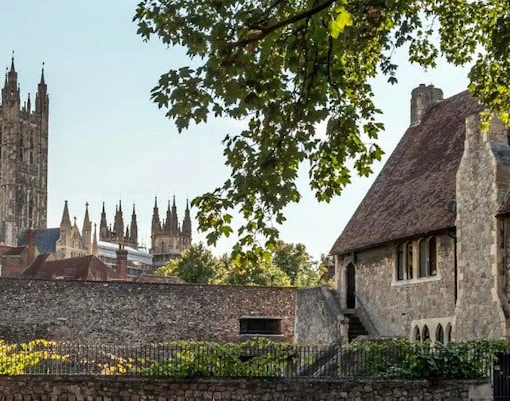
Roman foundations and street plan (c. AD 43–410)
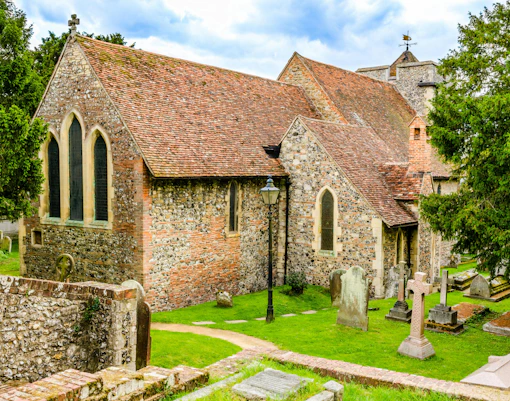
Seat of the English Church (AD 597–1066)
Augustine’s mission, backed by King Ethelbert, made Canterbury the leading Christian centre in early England. St Martin’s Church, St Augustine’s Abbey, and the cathedral precinct still show how faith shaped the city’s identity.
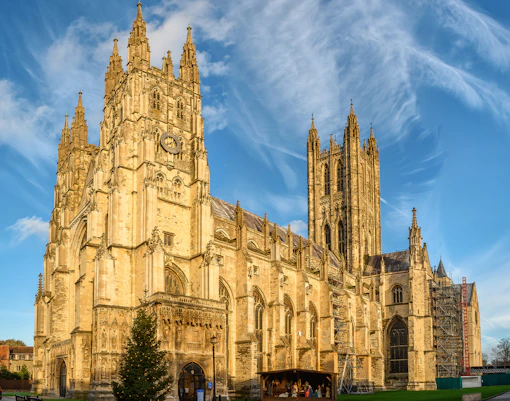
Pilgrimage and fame (1170–1400s)
Becket’s murder transformed Canterbury into one of medieval Europe’s best-known pilgrimage destinations. Inns, markets, and streets grew around pilgrim traffic, and that movement later inspired Chaucer’s journey in The Canterbury Tales.
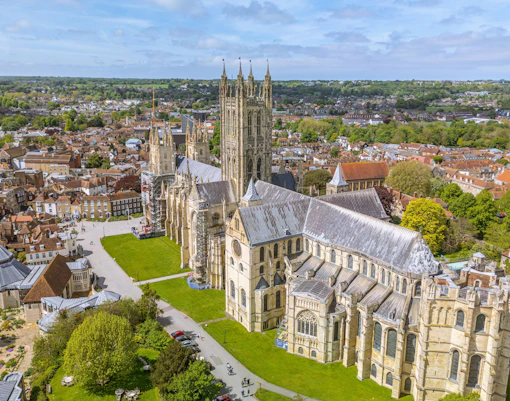
Loss, survival, and rebuilding (1538–today)
The Reformation ended Becket’s shrine cult, but Canterbury never lost its symbolic weight. Later unrest, fire, bombing, and careful restoration created the layered city you walk through now—part ancient street plan, part resilient modern heritage city.
Construction and architecture of Canterbury
Much of historic Canterbury was built in layers rather than in one burst. Roman walls and street lines underpin the city, while Canterbury Cathedral was rebuilt from 1070 under Lanfranc and expanded again after the 1174 fire in increasingly Gothic forms. Around it, medieval timber-framed buildings, stone gateways, and postwar rebuilding tell a story of adaptation. That mix is why Canterbury rewards slow walking as much as sightseeing.
Canterbury today: Why it matters
Today, Canterbury’s historic core remains one of England’s most rewarding small-city heritage visits, anchored by the UNESCO-listed trio of Canterbury Cathedral, St Augustine’s Abbey, and St Martin’s Church. The cathedral is cared for by its Dean and Chapter, while English Heritage manages the abbey ruins, and visitors can also explore Westgate Towers, medieval streets, and layers of Roman-to-modern city fabric on foot.
Frequently asked questions about Canterbury's history
Canterbury’s story is usually read through five phases: Roman, Anglo-Saxon Christian, medieval pilgrimage, Reformation, and modern rebuilding.
It became the base of St Augustine’s mission in AD 597 and later the seat of the Archbishop of Canterbury, head of the Church of England.
Becket was Archbishop of Canterbury and was murdered in the cathedral in 1170. His death turned the city into a major pilgrimage destination.
Chaucer used a pilgrimage to Becket’s shrine as the frame for his stories, linking London travellers with the real road to Canterbury.
Prioritise Canterbury Cathedral, St Augustine’s Abbey, St Martin’s Church, Westgate Towers, and the medieval streets between them.
Yes. You can still read the old street plan, spot sections of the city wall, and walk through lanes and gateways shaped by medieval trade and pilgrimage.
The Reformation destroyed Becket’s shrine in 1538; the 17th century brought religious and political upheaval, and the 1942 Baedeker raids damaged the city centre.
It helps you decide whether you want a cathedral-focused visit, a broader pilgrimage story, or a combined day that also includes Dover Castle and the White Cliffs.


