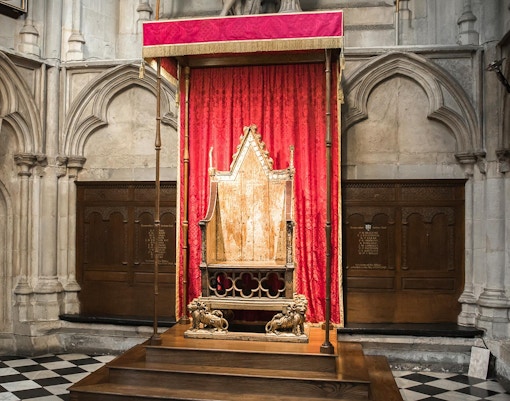
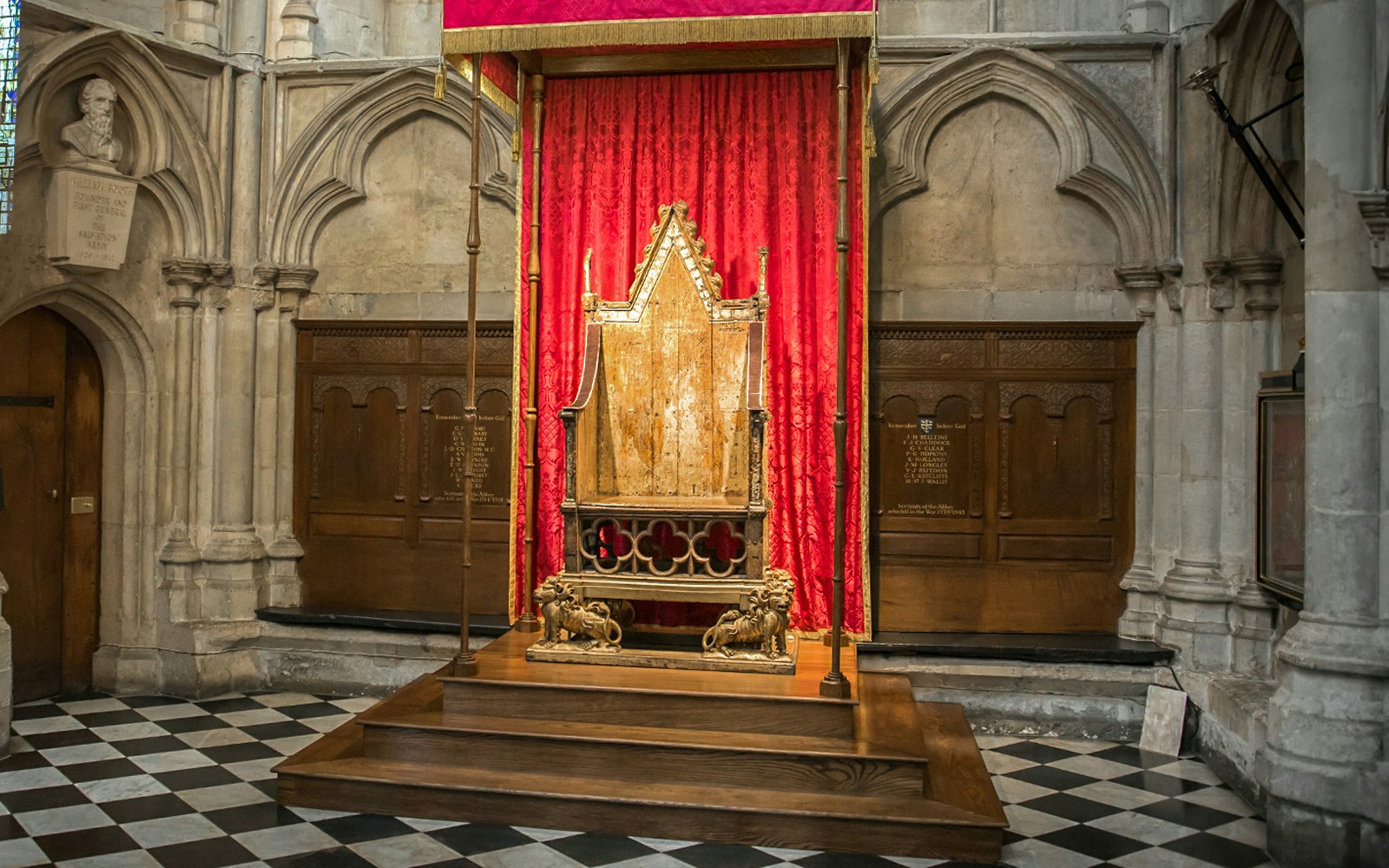
The Coronation Chair remains one of Westminster Abbey’s most historically important artefacts. Built in 1296 for King Edward I, monarchs have used this chair during coronation ceremonies for more than 700 years. The chair traditionally stands near the High Altar during coronation services.
Quick Information
RECOMMENDED DURATION
2 hours
Timings
09:30–15:30
VISITORS PER YEAR
1600000
TICKETS
From $41.95
NUMBER OF ENTRANCES
2
EXPECTED WAIT TIME - STANDARD
1-2 hours (Peak), 30-60 mins (Off Peak)
EXPECTED WAIT TIME - SKIP THE LINE
30-60 mins (Peak), 0-30 mins (Off Peak)
UNESCO YEAR
1987
Did you know?
Recognized as one of the oldest and most significant buildings in the United Kingdom, Westminster Abbey was designated a UNESCO World Heritage Site in 1987.
Westminster Abbey houses the oldest surviving Anglo-Saxon door in the country, dating back to 1050.
Westminster Abbey has been the setting for 17 royal weddings, such as that of Prince William and Catherine Middleton, as well as Queen Elizabeth II and Prince Philip.
Why is Westminster Abbey a must-visit attraction?
Westminster Abbey remains one of the most significant landmarks in British history and culture. Visitors exploring Westminster Abbey step into a space where royal tradition, religion, and national identity meet. The abbey continues to serve as the official coronation church of British monarchs, which explains why Westminster Abbey remains so important to the United Kingdom’s cultural and political heritage.
The abbey hosted the coronation of King Charles III in 2023, continuing a tradition that has lasted nearly a millennium. Westminster Abbey has also witnessed numerous royal weddings, including the globally celebrated wedding of Prince William and Catherine Middleton in 2011.
The attraction stands out not only for its royal connections but also for its extraordinary Gothic architecture. Intricate stained glass windows, vaulted ceilings, and historic chapels create a breathtaking atmosphere.
Westminster Abbey also offers remarkable cultural value. The famous Poets’ Corner celebrates literary legends such as Geoffrey Chaucer, William Shakespeare, and Charles Dickens. Science enthusiasts admire the memorials of Isaac Newton, Stephen Hawking, and Charles Darwin.
What to see at Westminster Abbey?
Henry VII Lady Chapel
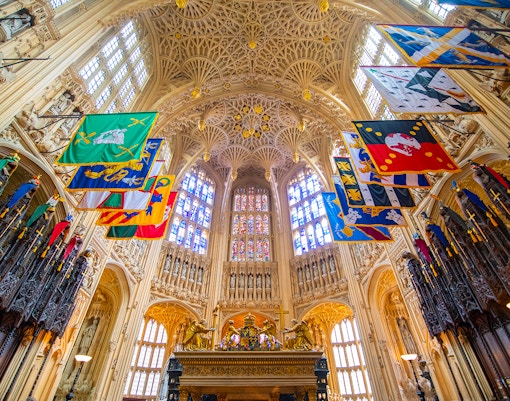
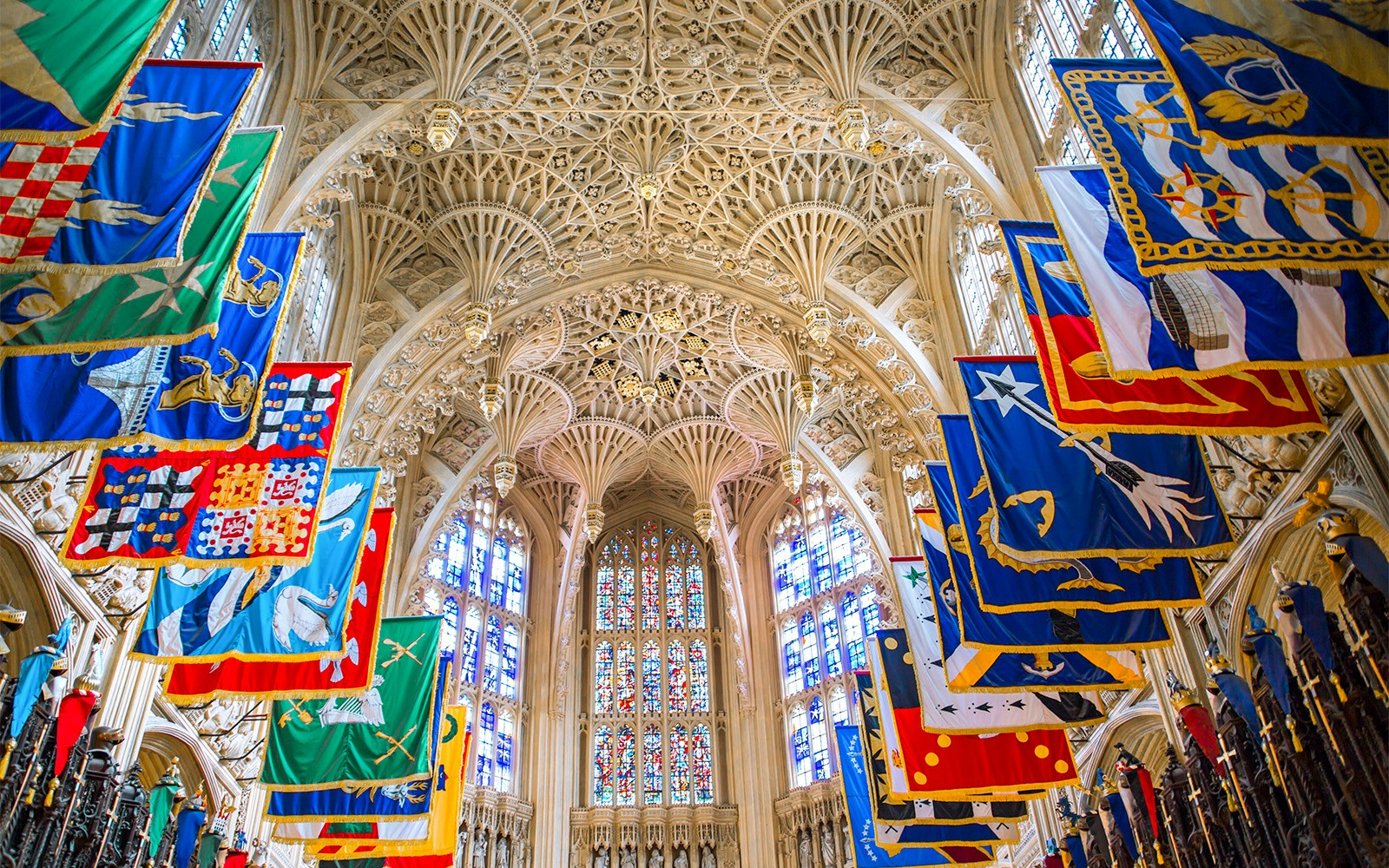
The Henry VII Lady Chapel represents one of the finest examples of late Gothic architecture in Europe. The chapel features an elaborate fan-vaulted ceiling and houses the tombs of King Henry VII, Elizabeth of York, and several Tudor monarchs. The chapel remains one of Westminster Abbey’s most visually striking areas.
Royal tombs
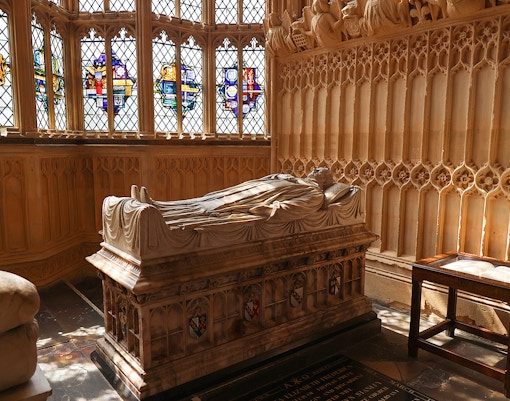
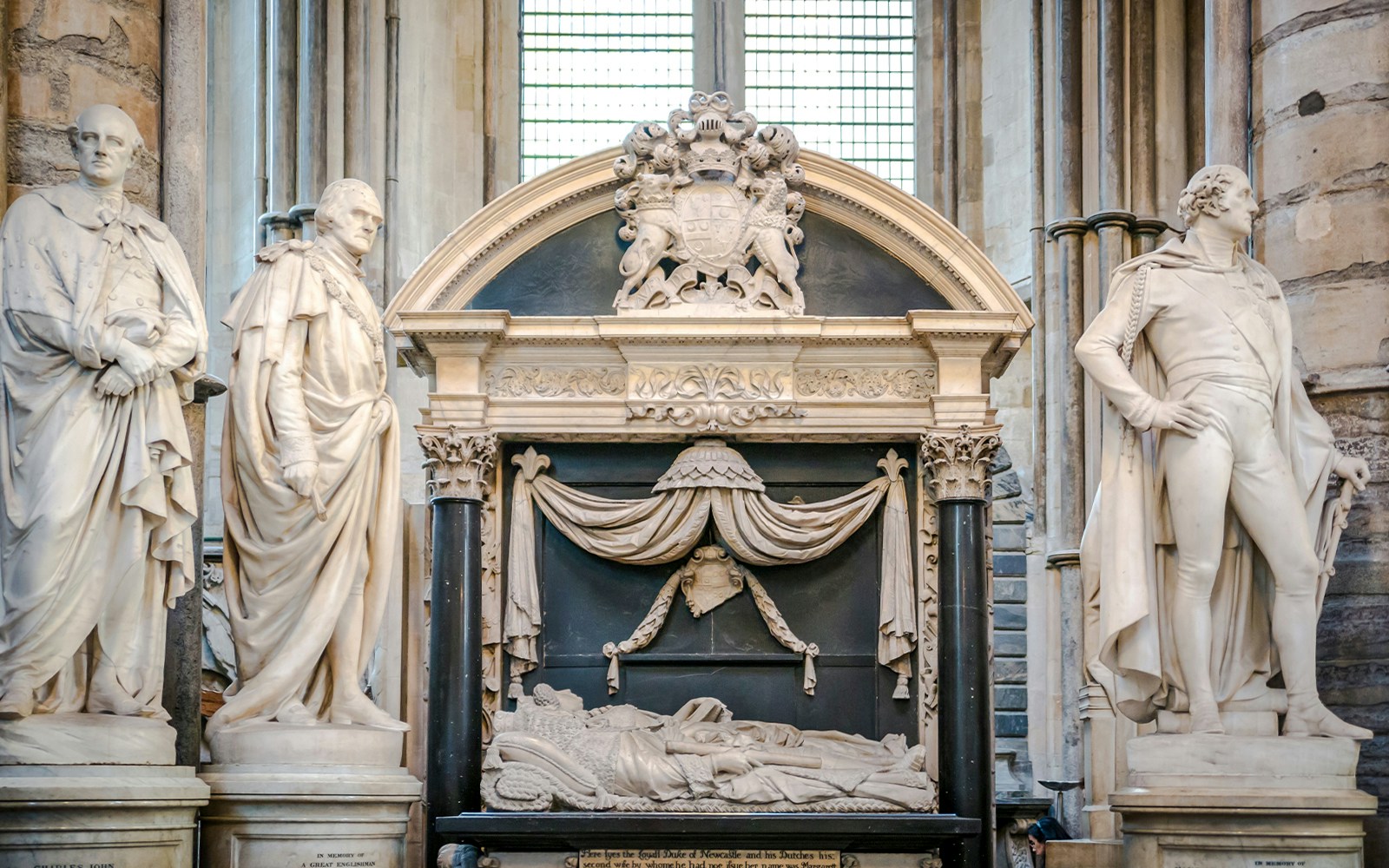
Westminster Abbey contains the burial sites of more than 30 kings and queens. The shrine of Edward the Confessor stands as one of the abbey’s most sacred locations. Visitors can also see the tombs of Elizabeth I, Mary, Queen of Scots, and Henry III.
Poets' Corner
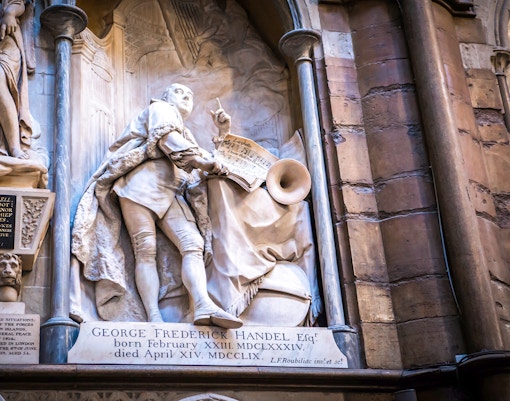
Poets’ Corner honours some of the world’s most celebrated literary figures. Geoffrey Chaucer became the first writer buried here in 1400. The corner now includes memorials to William Shakespeare, Jane Austen, Charles Dickens, and many other influential writers.
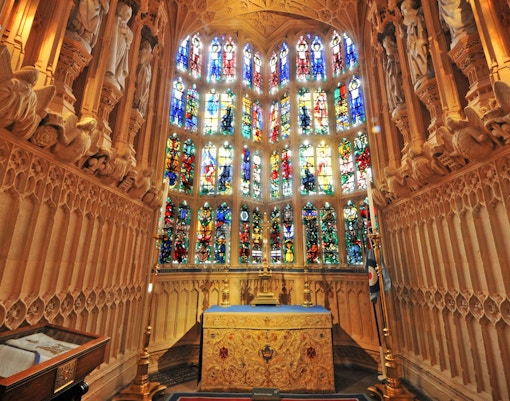
Pyx Chamber
The Pyx Chamber represents the oldest surviving part of Westminster Abbey. Built around 1070, the chamber originally stored royal treasures and important documents. Visitors admire its medieval tiled floor and historic oak doors.
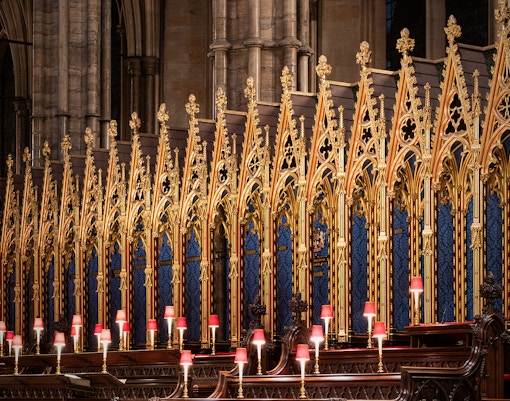
The choir and quire
Westminster Abbey’s choir continues a musical tradition that dates back more than 1,000 years. Visitors attending services can listen to choral performances that maintain historic Anglican liturgical traditions.
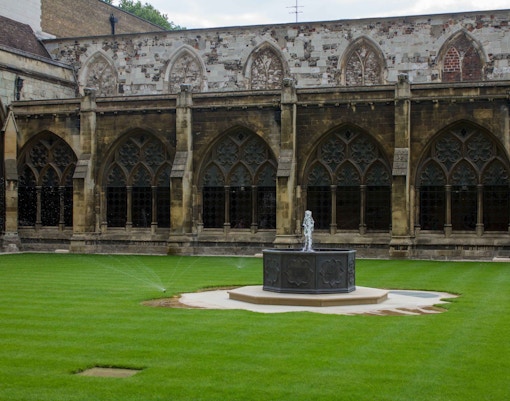
Abbey gardens and cloisters
Westminster Abbey features peaceful garden spaces, including College Garden, which dates back approximately 900 years. You can also explore cloisters that once served as walking areas for monks and now offer tranquil historic views.
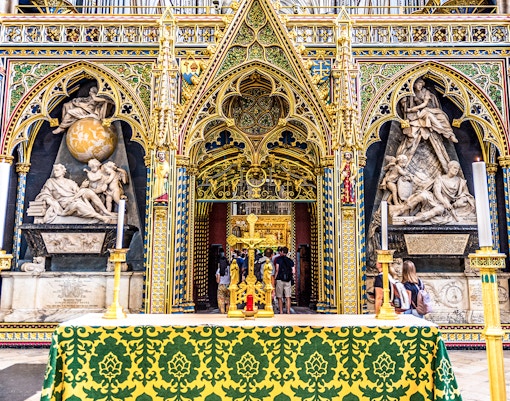
Modern Martyrs
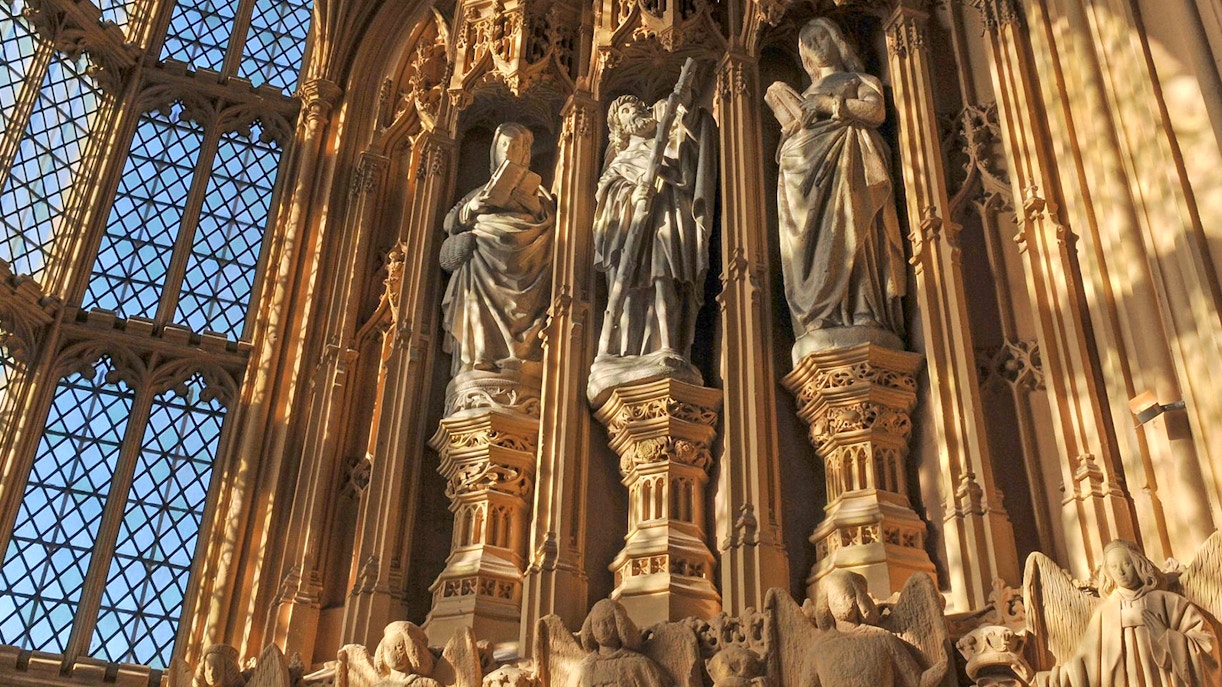
The statues above Westminster Abbey’s West Door commemorate twentieth-century martyrs who died for their faith or human rights causes. Figures include Dr Martin Luther King Jr. and Wang Zhiming, symbolising global religious and social struggles.
Highlights of Westminster Abbey in London
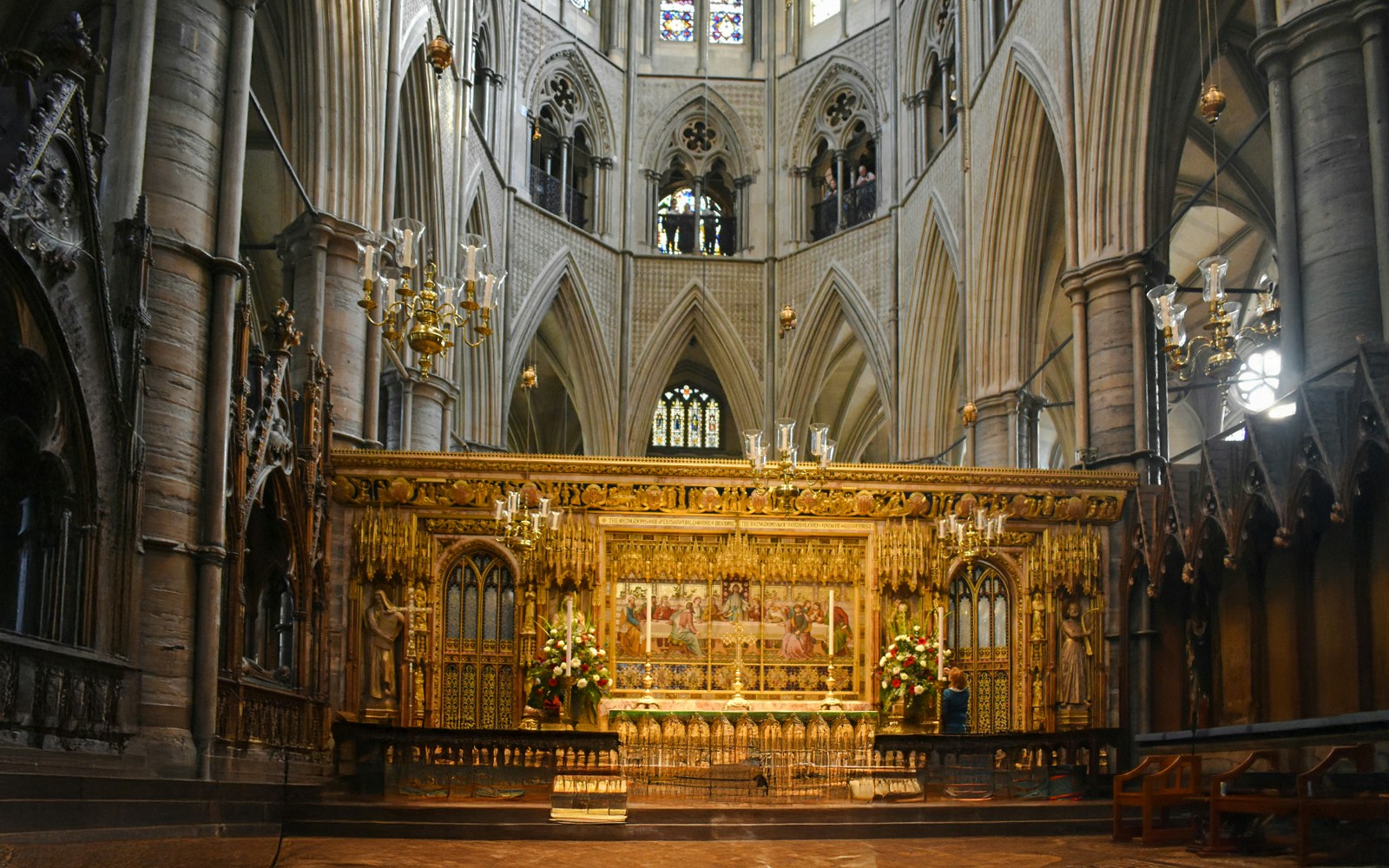
The shrine of Edward the Confessor represents Westminster Abbey’s spiritual centre and one of England’s most sacred medieval relics.
Brief history of Westminster Abbey
Westminster Abbey originated as a Benedictine monastery during the tenth century on Thorney Island. King Edward the Confessor ordered the construction of a grand Romanesque church between 1042 and 1065, which later became the site of his burial and shrine.
William the Conqueror chose Westminster Abbey as his coronation location in 1066, establishing a royal tradition that continues today. In 1245, King Henry III began rebuilding Westminster Abbey in Gothic style, inspired by French cathedrals. This reconstruction created much of the structure you see today.
The abbey experienced significant religious transformation during the English Reformation in the sixteenth century, eventually becoming a royal peculiar directly governed by the British monarch. Westminster Abbey continues functioning as an active church, ceremonial site, and burial place for national figures.
Who built Westminster Abbey?
King Henry III initiated the reconstruction of Westminster Abbey in 1245. Master masons Henry of Reyns, John of Gloucester, and Robert of Beverley oversaw the Gothic redesign. Their work introduced advanced architectural techniques inspired by French cathedral construction. The abbey evolved through several centuries as additional monarchs expanded its structure and ceremonial importance.
Architecture of Westminster Abbey
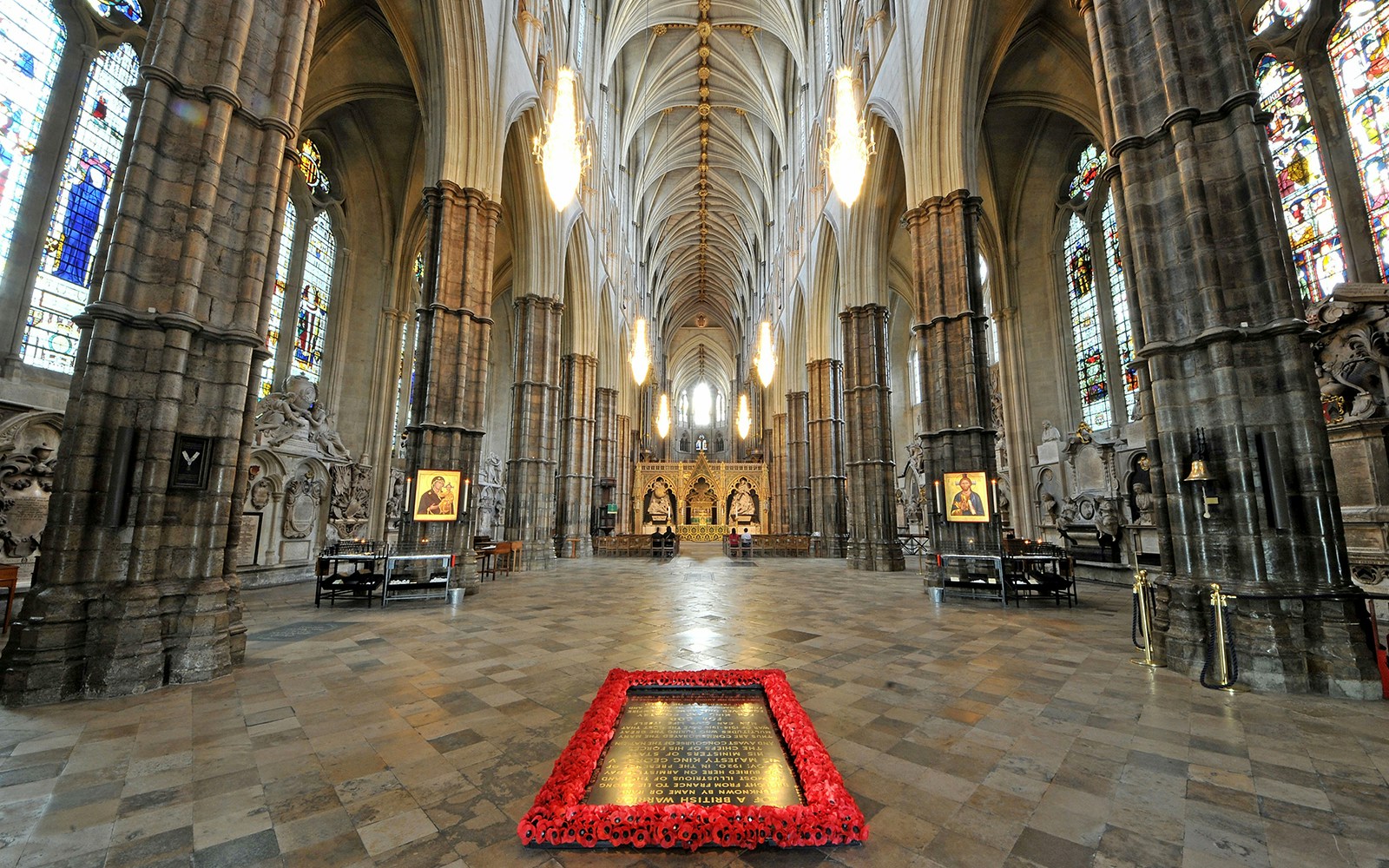
Westminster Abbey represents one of England’s finest examples of Gothic architecture. The abbey features pointed arches, ribbed vaults, tall stained glass windows, and an impressive nave that emphasises vertical height and natural light. The structure combines Anglo-French Gothic influences, particularly visible in the apse and radiating chapels.
The Henry VII Lady Chapel stands out for its exceptional fan-vault ceiling, considered among the most complex stone vaults ever constructed. Westminster Abbey also includes elaborate medieval carvings, royal heraldic symbols, and sculpted monuments.
The abbey’s design deliberately emphasises ceremonial grandeur. The wide open space between the quire and High Altar allows large coronation ceremonies to take place. Westminster Abbey remains one of the tallest Gothic structures in England and continues to showcase medieval craftsmanship.
Westminster Abbey on screen
- Movies: The Da Vinci Code (2006), The Young Victoria (2009), Army of Shadows (1969), Westminster Abbey (1996), Minions (2015), and more.
- TV series: The Prisoner (1967-68), A History of Britain (2000-02), Monarchy (2004-07), The Tower (2021-24), and more.
- Music: England Swings (Roger Miller), Different Ways of Living (Bee Appleseed), Lost Art (JR Shitty & the Bean Flowers).
- Video games: Watch Dogs: Legion, The Da Vinci Code, Assassin’s Creed Syndicate, Assassin’s Creed: Project Legacy, Sherlock Holmes: Fenian Dynamite Campaign, The Simpsons: Tapped Out, and more.
Why is Westminster Abbey so important in British history?
Westminster Abbey holds unmatched ceremonial importance in Britain. It has hosted nearly every royal coronation since 1066, including modern coronations such as King Charles III’s ceremony. The abbey symbolises continuity between monarchy, religion, and national identity.
Westminster Abbey also serves as a national burial ground. Monarchs, scientists, military leaders, and artists rest here, making it one of the most historically significant memorial spaces in the world. Major royal weddings and state funerals also take place here, reinforcing Westminster Abbey’s cultural and political significance.
Westminster Abbey today
Westminster Abbey continues operating as an active place of worship while welcoming millions of visitors each year. Daily services, concerts, and national commemorations still take place within its historic walls. Visitors can explore exhibitions, chapels, tombs, and galleries while learning about British heritage.
Frequently asked questions about Westminster Abbey
Westminster Abbey is spread across 32,000 sq. ft. or 3000 sq. meters.
Most visitors spend between 1.5 and 2 hours exploring Westminster Abbey. Visitors interested in history, architecture, or memorials often spend longer exploring chapels, exhibitions, and the Poets’ Corner area.
It’s where every English and British monarch has been crowned since 1308. It even held the Stone of Scone beneath the seat for centuries.
No. It started as a Benedictine monastery under Catholic rule and became part of the Church of England after the Reformation in the 16th century.
Although it suffered minor damage, it was largely preserved. Its royal connections meant it avoided the fate of many religious buildings at the time.
It’s by royal permission only, usually reserved for monarchs, national heroes, poets, scientists, and major cultural or public figures.
The Abbey is Anglican and historic; the Cathedral is a much newer Roman Catholic church located nearby, completed in 1903.
Do not miss the Poets' Corner, the Coronation Chair, and the Lady Chapel, all of which hold significant historical importance. Noteworthy artifacts include the oldest door in Britain, medieval paintings, and the tomb of the Unknown Warrior.
Westminster Abbey is famous for hosting royal coronations, weddings, and burials. It has crowned British monarchs since 1066 and contains memorials to historical figures, including Isaac Newton and Charles Dickens.
Yes, Westminster Abbey welcomes visitors to attend religious services free of charge. Sightseeing access remains separate from worship services, and photography restrictions may apply during services.
Westminster Abbey represents a centuries-old ceremonial tradition and spiritual setting. Its royal history, religious significance, and architectural grandeur make it the official coronation church of British monarchs.


