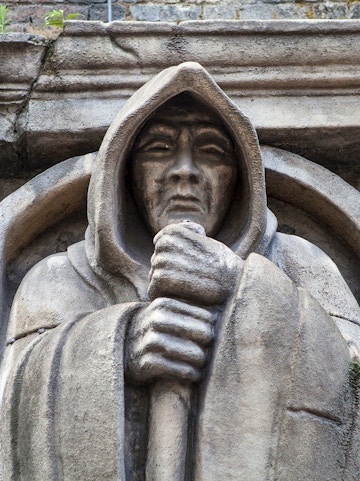
The Abbot of Westminster Abbey, buried in the cloisters.
Westminster Abbey cloisters – Medieval monastic corridors of Westminster Abbey
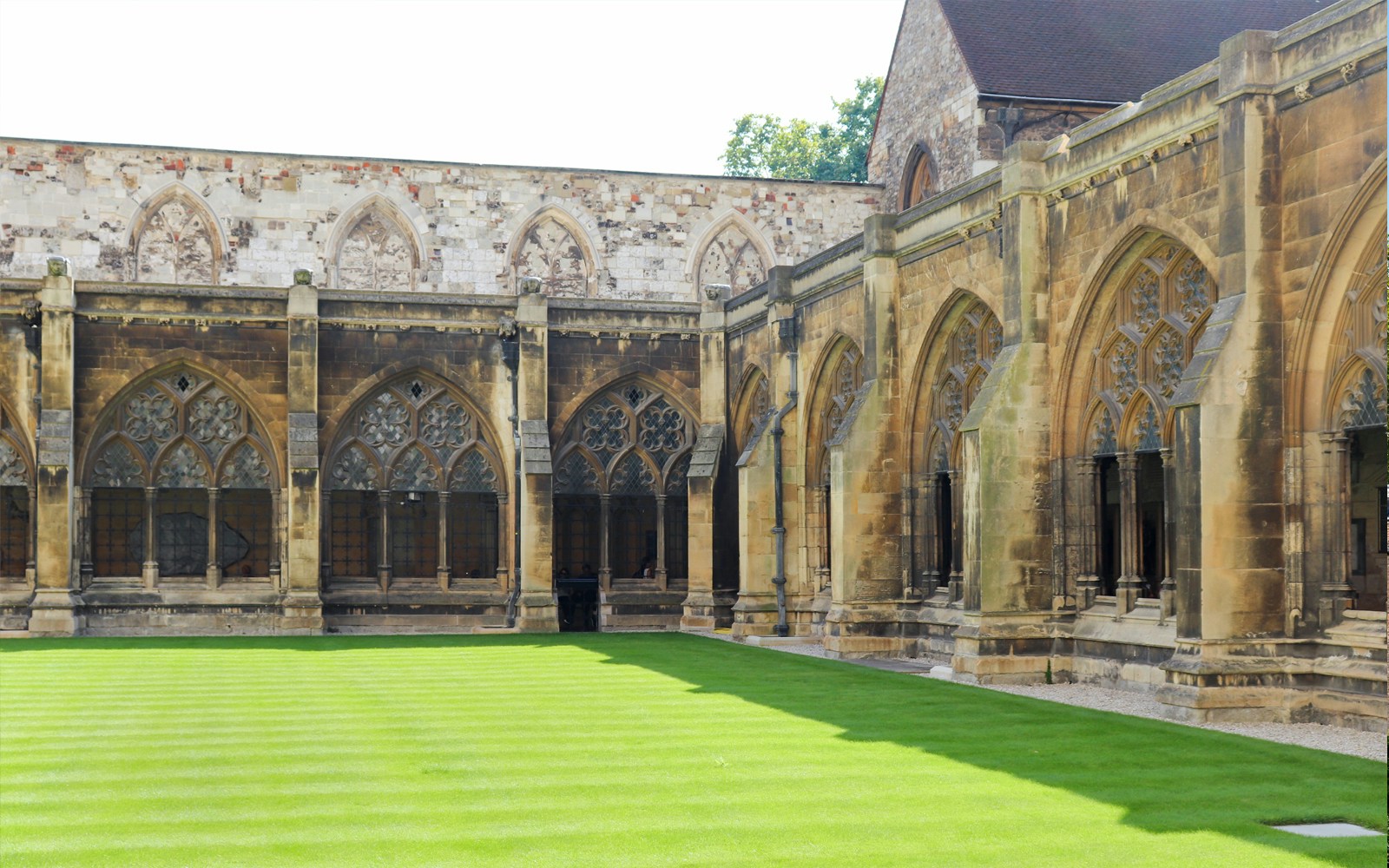
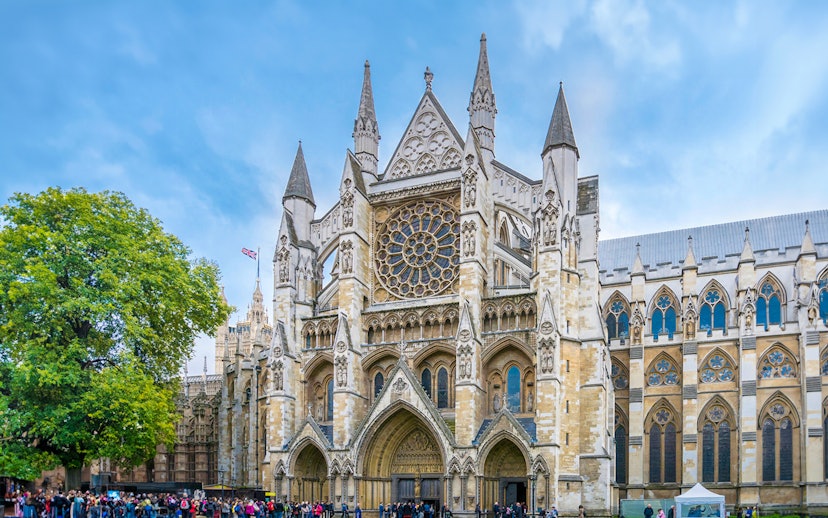
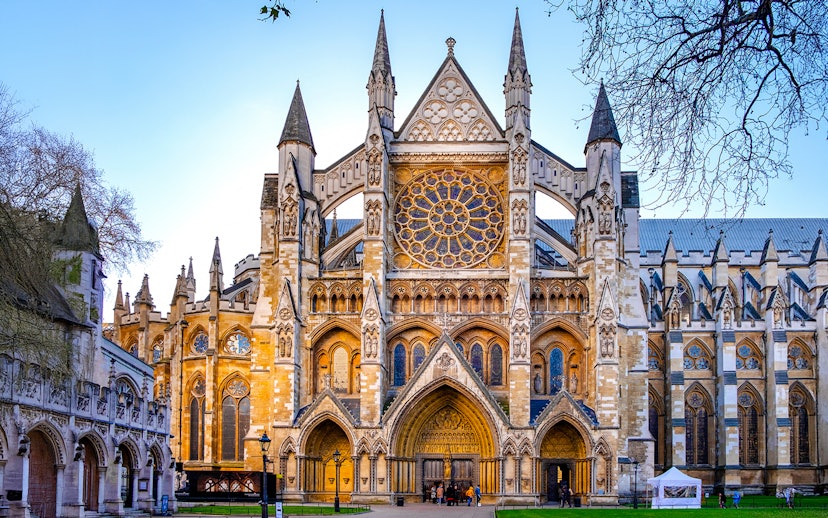
Dating largely to the 13th and 14th centuries, the Westminster Abbey cloisters were built as sheltered walkways for Benedictine monks to read, meditate, and move between monastic buildings. Today, the cloisters preserve centuries of spiritual tradition, connecting important abbey spaces while offering visitors one of the quietest areas inside the complex.
Where is it located?
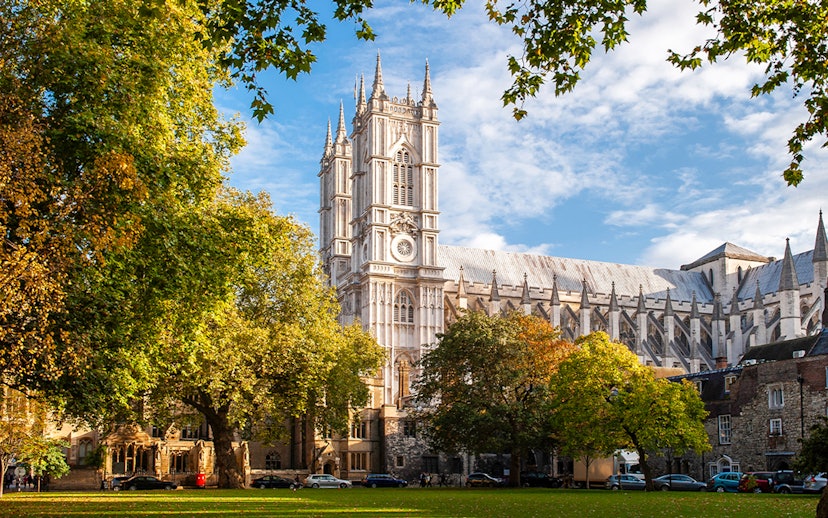
The Westminster cloisters sit on the south side of Westminster Abbey, surrounding a central grassy courtyard known as the garth and linking monastic rooms such as the Chapter House and Pyx Chamber.
How to access?
The Westminster Abbey cloisters are included within the visitor route of Westminster Abbey and are accessible with standard abbey admission tickets. Entry follows the abbey’s regular opening hours.
Things to know before booking Westminster Abbey cloisters tickets
- Access to the cloisters is included with all standard Westminster Abbey entry tickets. Visitors do not need to purchase a separate ticket to explore the cloisters at Westminster Abbey.
- Ticket pricing remains the same because the cloisters are considered part of the abbey’s historic visitor route rather than a standalone attraction. However, certain guided tours may provide deeper insight into the history, symbolism, and hidden details of the Westminster cloisters.
- Some areas connected to the cloisters, such as the Chapter House and Pyx Chamber, may have limited accessibility due to historic flooring or steps. Visitors with mobility requirements can still access most cloister walkways.
- The Westminster Abbey cloisters usually follow the Abbey’s operating hours, though occasional service events or conservation work may temporarily restrict sections.
Westminster Abbey cloisters in a nutshell
Your Westminster Abbey cloisters ticket types
| Ticket type | Is Westminster Abbey cloisters access included? | Why go for it? | Starting price |
|---|---|---|---|
Standard entry tickets | Yes | Budget-friendly access to abbey highlights | From £31 |
Skip-the-line tickets | Yes | Saves time during peak seasons | From £80 |
Guided tours | Yes | Expert storytelling and historical insights | From £80 |
Combo tours | Yes | Combines multiple London landmarks | From £44.65 |
Exploring inside the Westminster Abbey cloisters
1/6
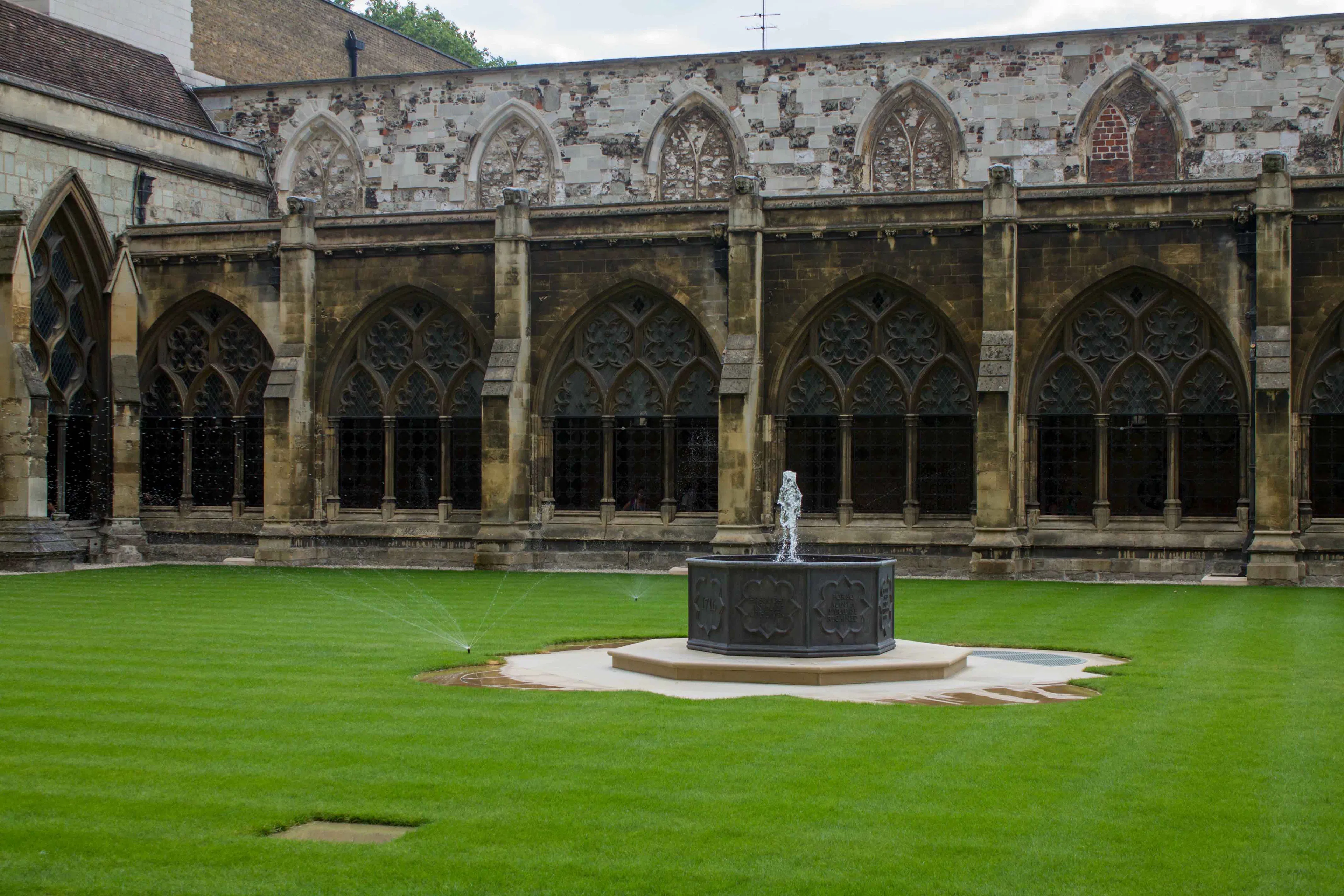
The cloister quadrangle and garth
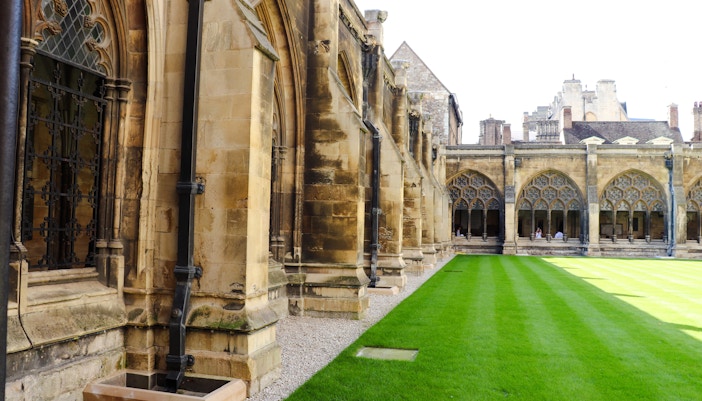
The central courtyard surrounded by the Westminster Abbey cloisters creates a peaceful square layout. Historically used for contemplation and ritual walks, the garth still offers a calm contrast to the bustling abbey interior.
The east cloister and Chapter House entrance
The east walkway of the cloisters at Westminster Abbey leads to the Chapter House, an octagonal chamber where monks met daily for readings, discipline, and administrative matters.
The north cloister study corridors
The north section of the Westminster cloisters functioned as a reading and teaching area for monks. Visitors can still see stone seating and window recesses where scholarly activities once took place.
Memorial floors and burial stones
Many sections of the Westminster Abbey cloisters contain tomb slabs and memorial inscriptions honouring abbots, musicians, craftsmen, and abbey officials who served the church across centuries.
South cloister
The south cloister was a busy route connecting monks to the refectory for meals and processions. Covered walkways, niches, and benches supported both practical routines and ceremonial movements, linking sacred duties with daily needs in the tightly structured life of a medieval monastic community.
Little cloister
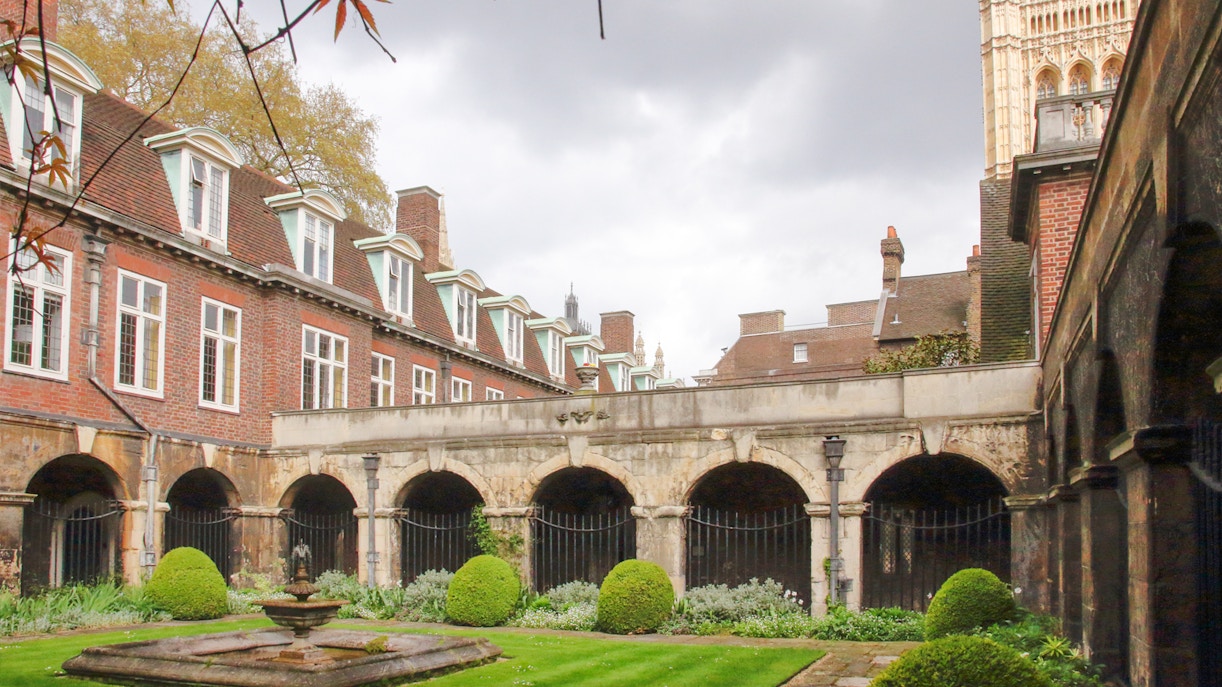
Historically part of the monks’ infirmary, the Little Cloister is now a peaceful garden framed by medieval stonework. A central fountain and passage through the shaded Dark Cloister give it a secluded, meditative atmosphere that once supported recovery, rest, and reflection within the abbey grounds.
Architectural highlights of Westminster Abbey cloisters
Historical and cultural significance of Westminster Abbey cloisters
The Westminster Abbey cloisters formed the centre of Benedictine monastic life, connecting daily rituals, study, and community activity. The cloisters also hosted ceremonial traditions such as Maundy Thursday rituals. Even after monastic life ended during the Reformation, the cloisters continued to serve administrative and commemorative roles within Westminster Abbey.
Notable figures of Westminster Abbey Cloisters
Know before you go
The cloisters follow Westminster Abbey’s visitor opening hours, typically operating Monday to Saturday. Entry to the cloisters is included within the abbey visitor route and usually closes when final abbey admissions end.
Timings may vary during religious services, ceremonial events, or conservation work, so checking the abbey’s official schedule before visiting is recommended.
- The cloisters are quietest during the early morning, shortly after opening hours.
- Visiting early allows travellers to experience the peaceful monastic atmosphere and observe architectural details without heavy crowds.
- Late morning visits also provide excellent natural lighting as sunlight filters through cloister windows, creating distinct patterned shadows along the walkways.
The Westminster cloisters are located on the south side of Westminster Abbey. They surround a central grassy courtyard called the garth and connect key monastic buildings such as the Chapter House, Pyx Chamber, and historic monastic rooms. The Westminster Abbey cloisters form part of the internal visitor circulation route and are accessed once you enter the abbey complex.
- The Westminster Abbey cloisters provide convenient access to visitor facilities such as the abbey shop and museum areas.
- Restrooms and visitor assistance points are located within the abbey complex and can be reached through cloister walkways.
- The cloisters also serve as a quieter transitional space between busier abbey sections.
- Most walkways within the Westminster Abbey cloisters are step-free and accessible for wheelchair users and visitors with limited mobility.
- The pathways are generally level, making them easier to navigate than some interior abbey sections.
- However, adjoining historic spaces such as the Chapter House and Pyx Chamber may include steps or uneven medieval flooring, which could limit accessibility.
- Non-flash photography is generally permitted in the Westminster Abbey cloisters, allowing visitors to capture architectural details, memorial inscriptions, and views of the garth courtyard.
- However, photography is restricted in most areas inside the main abbey church.
- Tripods, professional equipment, and flash photography are not allowed inside the cloisters.
The Westminster Abbey cloisters remain part of a functioning religious site and heritage monument.
Visitors are encouraged to maintain a quiet atmosphere, avoid touching fragile memorials or stonework, and walk carefully as burial inscriptions are embedded into the flooring.
Respectful behaviour helps preserve the cloisters for future visitors.
- Visit early in the day to enjoy quieter moments in the cloisters before the main nave opens and large crowds arrive.
- The cloisters connect multiple areas of the Abbey, including the museum and shop, so use them as a quieter route between sections.
- Rest briefly on one of the cloister benches to take in the serene atmosphere once used for monastic meditation and silent prayer.
- The cloisters stay open later than some parts of the Abbey, so save them for the end if you’re tight on time.
- Don’t walk too fast through the West Cloister, as many tomb inscriptions are small and clustered close to the wall bases.
- Try to join a guided tour that includes the cloisters, as many of the plaques and symbols aren’t self-explanatory without context.
- Use the cloisters to view changing light patterns through stained glass windows, especially late morning when sunlight filters from the south.
Frequently asked questions about Westminster Abbey cloisters
Yes, access to the Westminster Abbey cloisters is included in all standard Westminster Abbey admission tickets.
No, self-guided exploration is allowed, but guided tours provide deeper historical and symbolic insights.
Yes, most guided tours of Westminster Abbey include the Westminster Abbey cloisters as part of the visitor route.
Most visitors spend 15 to 30 minutes exploring the cloisters during their abbey visit.
Yes, most cloister walkways are accessible, though some connected historic rooms may have restrictions.
Non-flash photography is usually permitted in the cloisters, but photography is restricted inside most abbey interiors.
Yes, the cloisters contain burial slabs and memorials dedicated to abbots, musicians, clergy, and abbey officials.
Yes, Elizabeth I used the Chapter House during her reign, and cloister routes were often used by monarchs accessing the abbey privately from the Palace of Westminster.
Most of the current Westminster cloisters date to the 13th and 14th centuries and replaced earlier Norman structures.
The East Cloister dates back to the 11th century and is the oldest surviving section. It was part of Edward the Confessor’s original abbey.
They represent transitions across Norman, Early English, and Perpendicular Gothic styles, with details like rib-vaulted ceilings, lancet arches, and carved capitals spanning centuries.
This is due to centuries of soot and London pollution affecting the stone. Restoration is ongoing, but some areas remain blackened as a visual timeline.
Yes, the cloisters provide one of the most peaceful and historically rich spaces within Westminster Abbey.