Headout is a brand trusted by millions of guests worldwide offering curated experiences to enjoy this attraction. This is not the venue's website.
4.6/5
158 travellers from around the world love this
Reservation required
While entry to the British Museum is free, booking a timed-entry slot online is strongly recommended, especially during weekends, holidays, and peak seasons.
How Headout makes choosing experiences effortless
We curate the best ways to experience
We research and organise all unique experiences - from tickets to tours to special combos - so you get all the choices without the clutter.
We partner with the best
Every supplier is vetted for quality, reliability, and value so you only get top rated experiences. No surprises, no disappointments.
All the best options, in one place
Each experience is thoughtfully organised to give you maximum availability, great value and an easy way to choose.
Book with complete peace of mind
Free cancellations, Flexible payments, and 24/7 support - thoughtfully designed for flexibility, assurance, and total peace of mind.
1/4
Slide 1 of 4
Visiting the British Museum
Ways to explore: Entry to the British Museum permanent collection is free. Paid options mainly include temporary exhibitions, special experiences, and city passes.
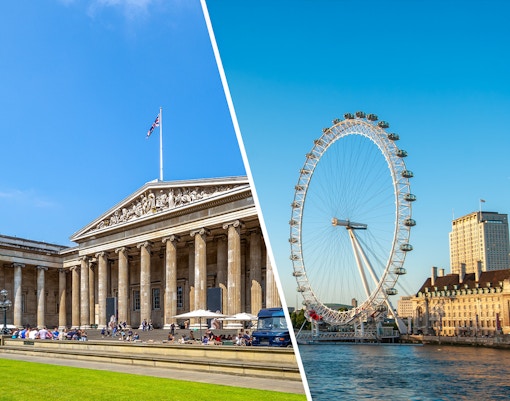
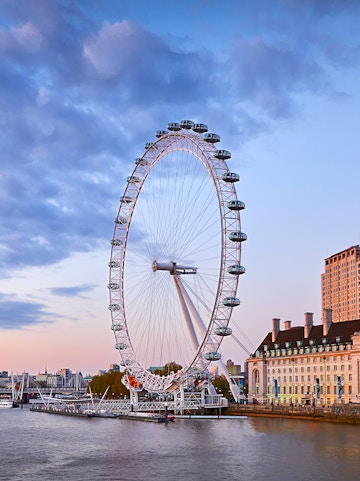
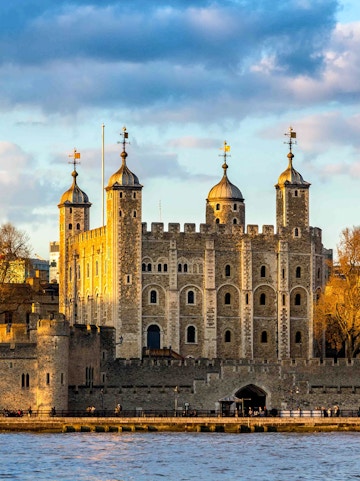
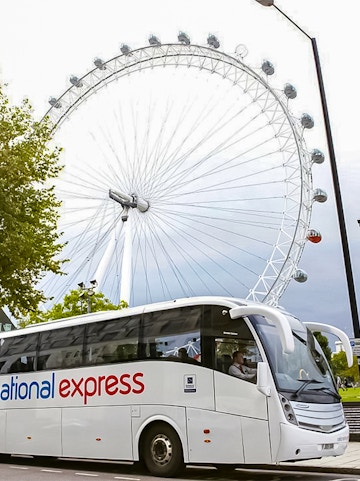
What’s included: General entry grants access to the museum’s permanent galleries and around 80,000 objects on display at any given time. The Headout Pass London includes 2 to 7 London attractions like the London Eye, Tower of London, Thames cruises, and Afternoon Tea at the British Museum.
Queues & entry: General museum entry is free, but security screening is mandatory and can take 10–30 minutes during weekends and peak travel seasons.
When to book: Summer holidays, weekends, and special exhibitions at the British Museum can sell out several days ahead. Check timings and book tickets at least 2 weeks in advance for preferred slots.
Good to know: Each attraction included with the pass can be visited once. Some attractions require advance reservations after purchasing the pass.
Best upgrade: A multi-attraction London Pass is the best option if you plan to visit several paid London landmarks during your trip.
What to expect at the British Museum?
1/6
Step into world history
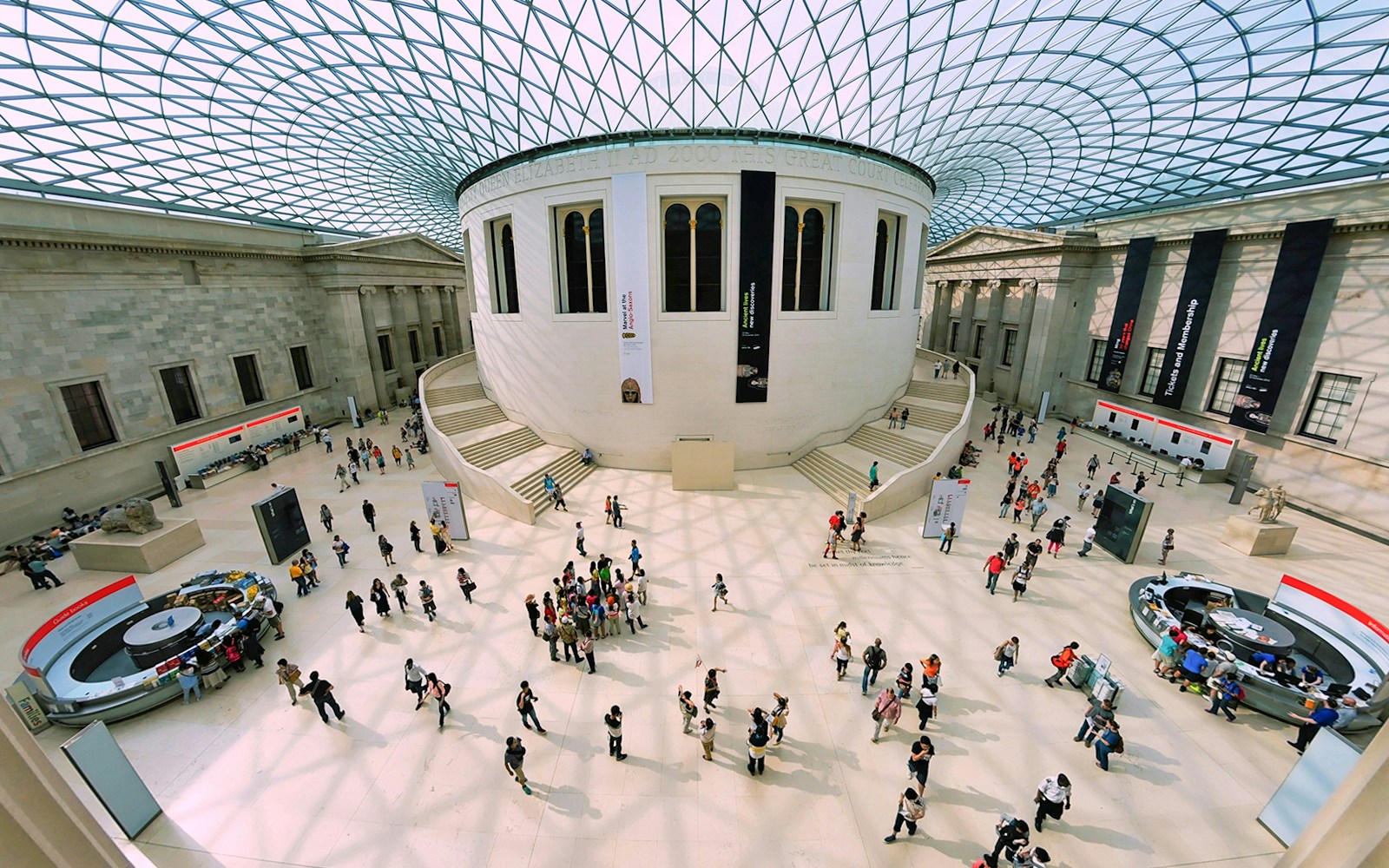
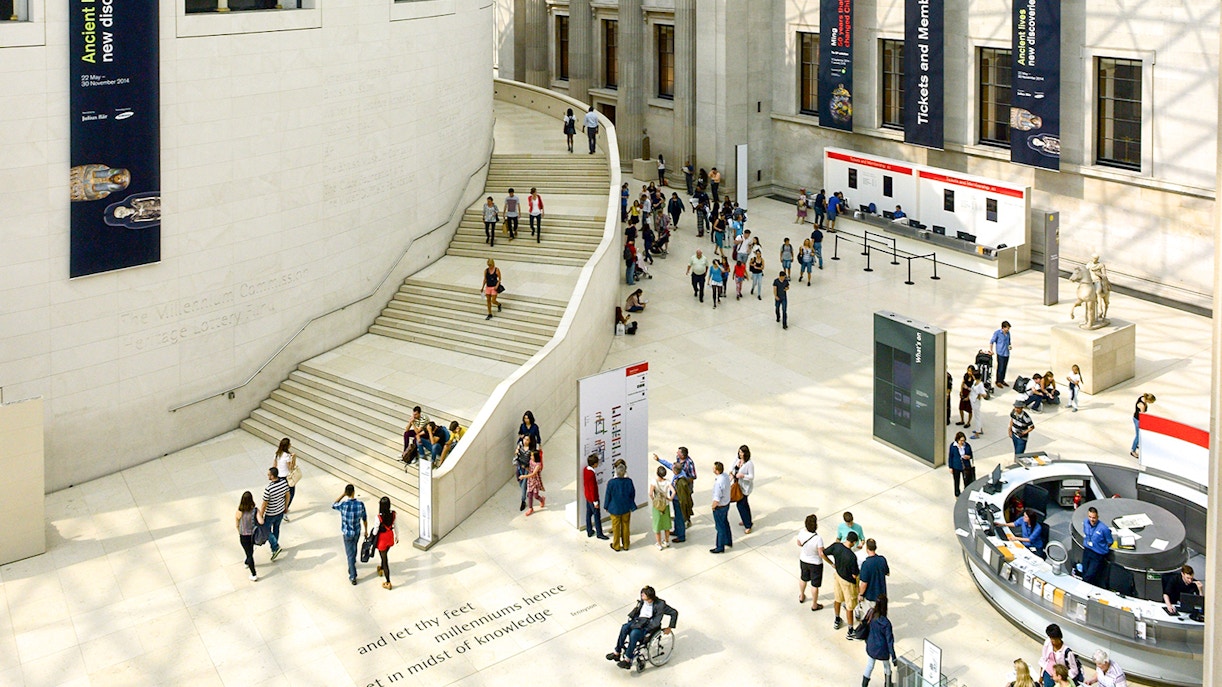
Enter the soaring Great Court at the British Museum, where a glass roof floods the space with natural light. Home to a collection of over 8 million artefacts spanning two million years, the museum offers one of the richest journeys through human history anywhere in the world.
Start with the icons
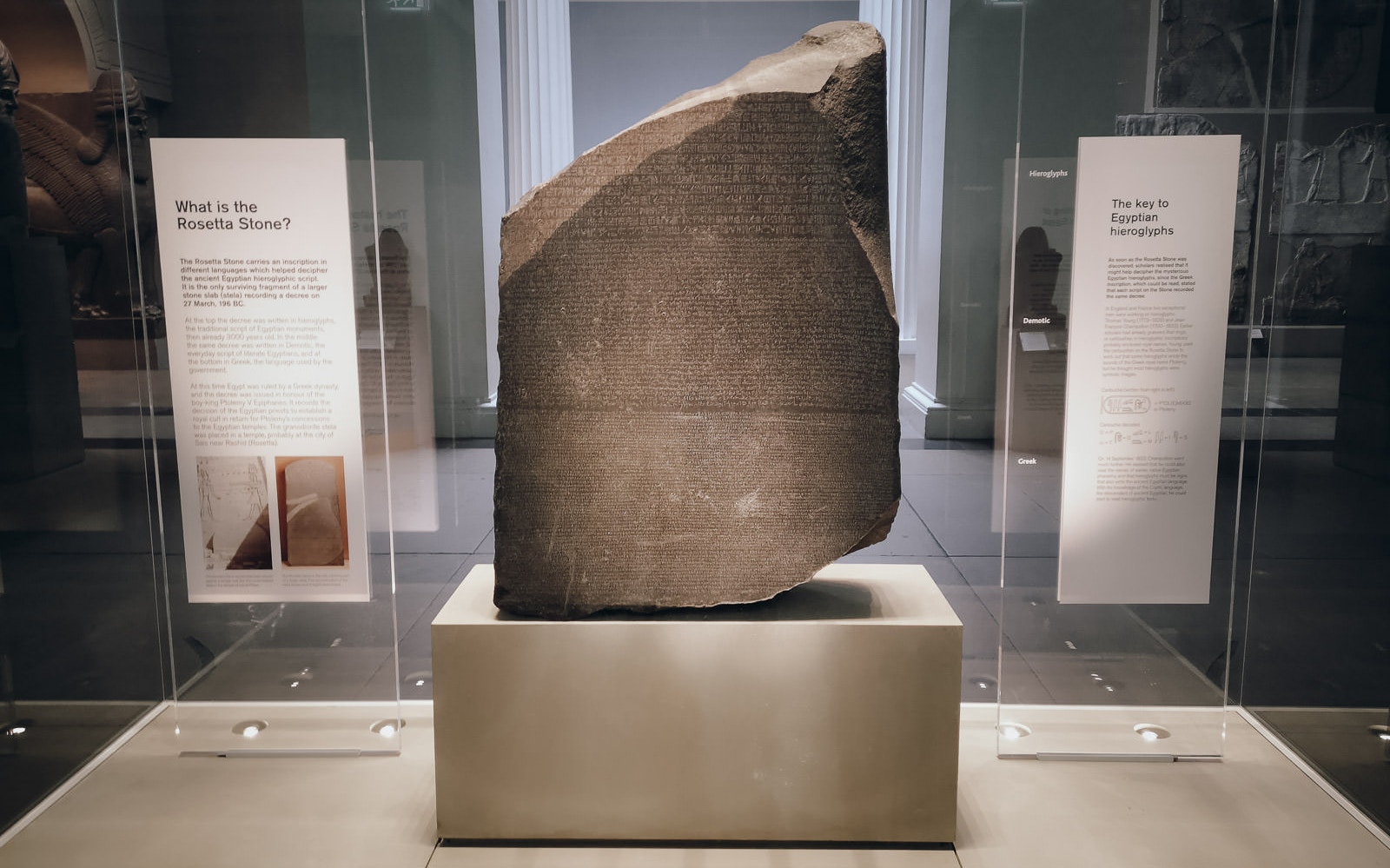
Begin with the museum’s headline treasures: the Rosetta Stone, Egyptian mummies, and Parthenon Sculptures. From ancient Assyrian reliefs to world-famous antiquities, the British Museum in London brings together remarkable objects from nearly every civilization under one roof.
Explore ancient civilizations
As you move through Roman galleries, Asian collections, and Middle Eastern halls, the scale of the museum becomes clear. Expect monumental statues, centuries-old manuscripts, and immersive displays that help visitors navigate history with ease.
Pause beneath the Great Court
Move on to the Queen Elizabeth II Great Court, which offers cafés, seating areas, and one of the museum’s most photogenic spaces. It’s the perfect mid-visit break before continuing into quieter upper-floor galleries or temporary exhibitions at this iconic museum.
Discover special exhibitions
Beyond the free permanent collection, the museum regularly hosts paid special exhibitions focused on artists, civilizations, and historical themes from around the world. These timed-entry experiences feel more curated and intimate, giving something new to discover throughout the year.
Explore beyond the museum
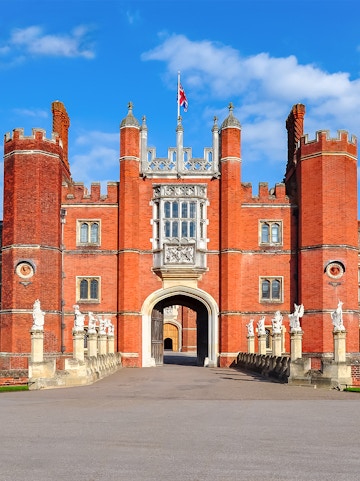
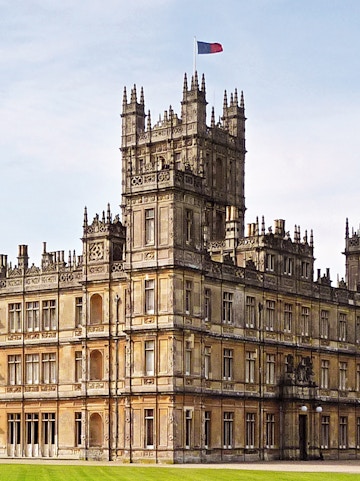
If special experiences like Afternoon Tea at the British Museum are available during your visit, they can be included with select pass options for an upgraded day out. Once done, pair your visit with a London pass covering attractions like the Tower of London, the London Eye, and Thames cruises for a broader London experience.
Things to know before you book British Museum tickets
Booking window: General entry to the British Museum is free and usually available throughout the day, though weekends, school holidays, and major exhibitions can get crowded. Temporary exhibitions often sell out several days ahead, especially during the summer.
Entrances & flow: Visitors enter through the museum’s main Great Russell Street entrance. Security screening is mandatory for all guests and can take around 10–30 minutes during peak hours. There are no skip-the-line or fast-track entry options for the permanent collection.
What’s included: Free museum entry includes access to the permanent galleries, Great Court, and around 80,000 objects on display at any given time. The Headout Pass London additionally includes access to 2 to 7 London attractions, such as the London Eye, Tower of London, Thames cruises, hop-on hop-off bus tours, and select cultural experiences depending on the option chosen.
Ways to explore: A self-guided visit gives you the flexibility to explore the British Museum London galleries at your own pace. Audio guides and guided tours, when available, help visitors navigate the museum’s vast collection more efficiently and provide deeper historical context.
Add-ons & upgrades: The Headout British Museum London pass lets you bundle your museum visit with 2 to 7 London attractions, including the London Eye, Tower of London, Thames cruises, and select cultural experiences like Afternoon Tea at the British Museum. The pass remains valid for 30 days from activation, making it ideal for flexible sightseeing.
Policies: Most temporary exhibition tickets are timed-entry and valid only for the selected slot. Multi-attraction passes typically allow one visit per included attraction within the pass validity period.
Explore the British Museum
Great Court
The Queen Elizabeth II Great Court is the architectural centerpiece of the British Museum, covered by a striking glass roof and surrounded by cafés, seating spaces, and information desks. It’s the museum’s main gathering and orientation area.
Access: Yes, included with free general entry.
Reading Room
Located at the center of the Great Court, the historic Reading Room once welcomed scholars like Karl Marx and Virginia Woolf. While no longer functioning as a public library, it remains one of the museum’s most recognizable interior spaces.
Access: Limited; interiors may not always be open to visitors.
Temporary exhibitions
The museum regularly hosts paid exhibitions focused on specific civilizations, artists, and historical themes, often featuring rare international loans and limited-run collections unavailable in the permanent galleries.
Access: No, a separate paid ticket is required.
Family and learning spaces
The museum also offers interactive family trails, educational workshops, and activity spaces designed for children and school groups throughout the year. Seasonal programs and guided activities are especially popular during holidays.
Access: Yes, though select workshops may require advance booking.
Museum cafés
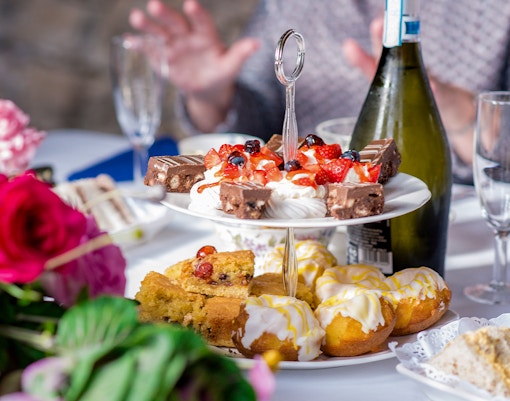
Take a break at one of the museum cafés or enjoy Afternoon Tea at the British Museum, available through select dining experiences and city pass options. It’s a quieter way to extend your visit beyond the galleries.
Access: Café access included; Afternoon Tea requires a separate booking
Museum shops and bookshops
The museum’s gift shops and bookshop feature exhibition catalogues, art prints, jewelry, homeware, and history-inspired souvenirs connected to the British Museum England collections and exhibitions.
Access: Yes, included with general entry.
Galleries at the British Museum
Egyptian galleries
Among the museum’s busiest spaces, these galleries feature monumental statues, temple fragments, mummies, and archaeological corridors tracing ancient Egyptian civilization. Spread across the ground floor, they form one of the core routes through the British Museum.
Access: Yes
Highlights: Rosetta Stone, Egyptian mummies, colossal statues of pharaohs
Greek and Roman galleries
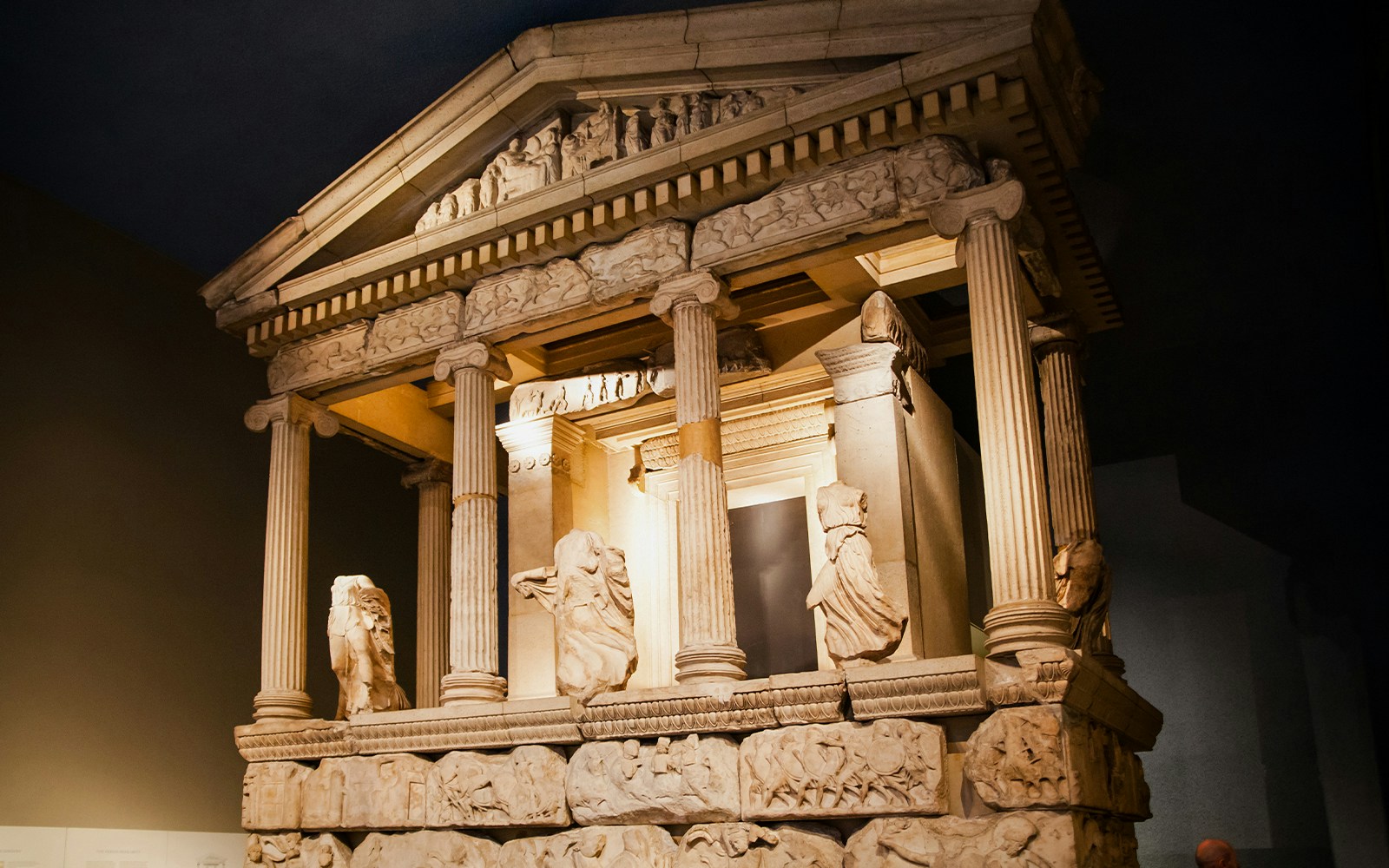
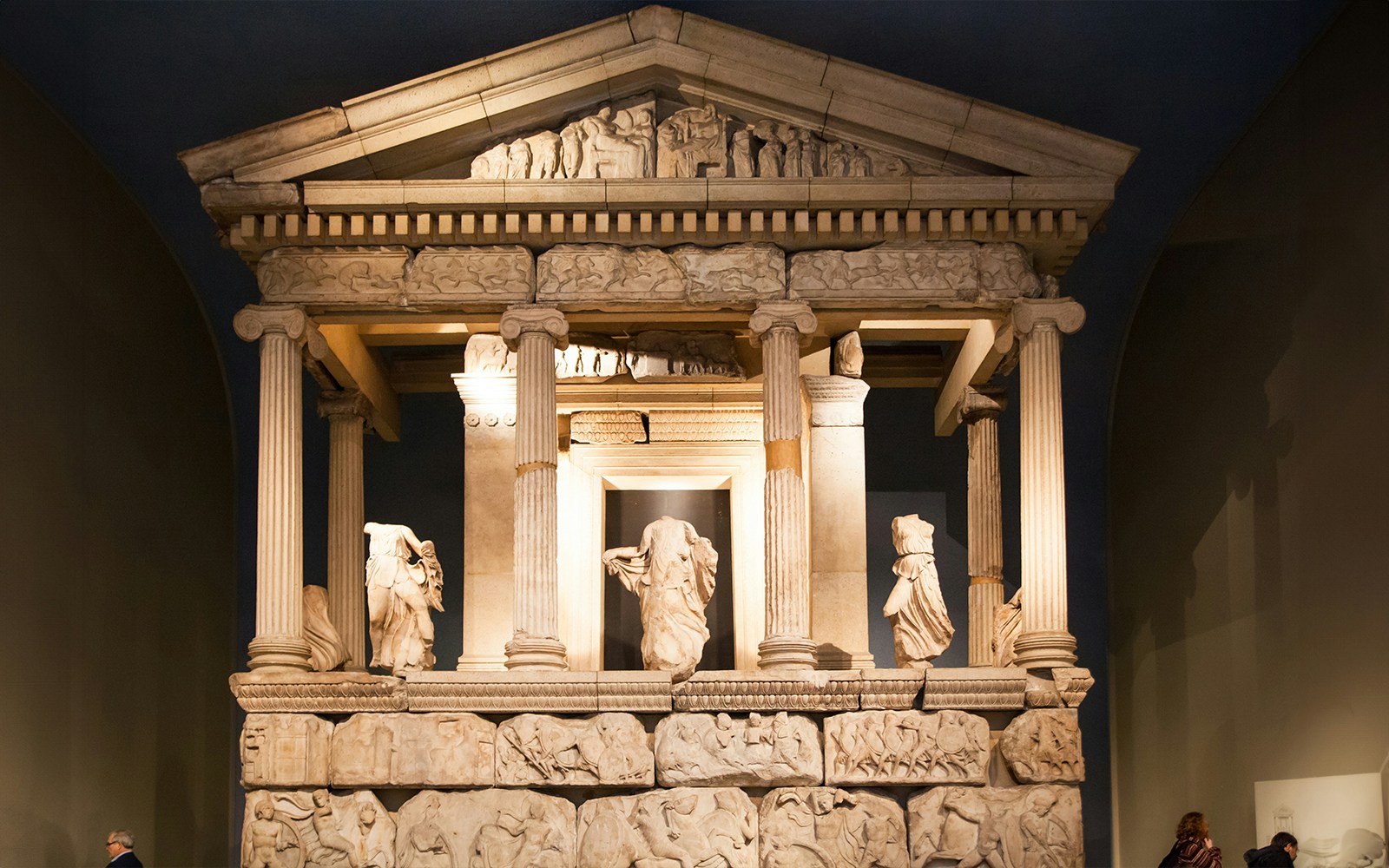
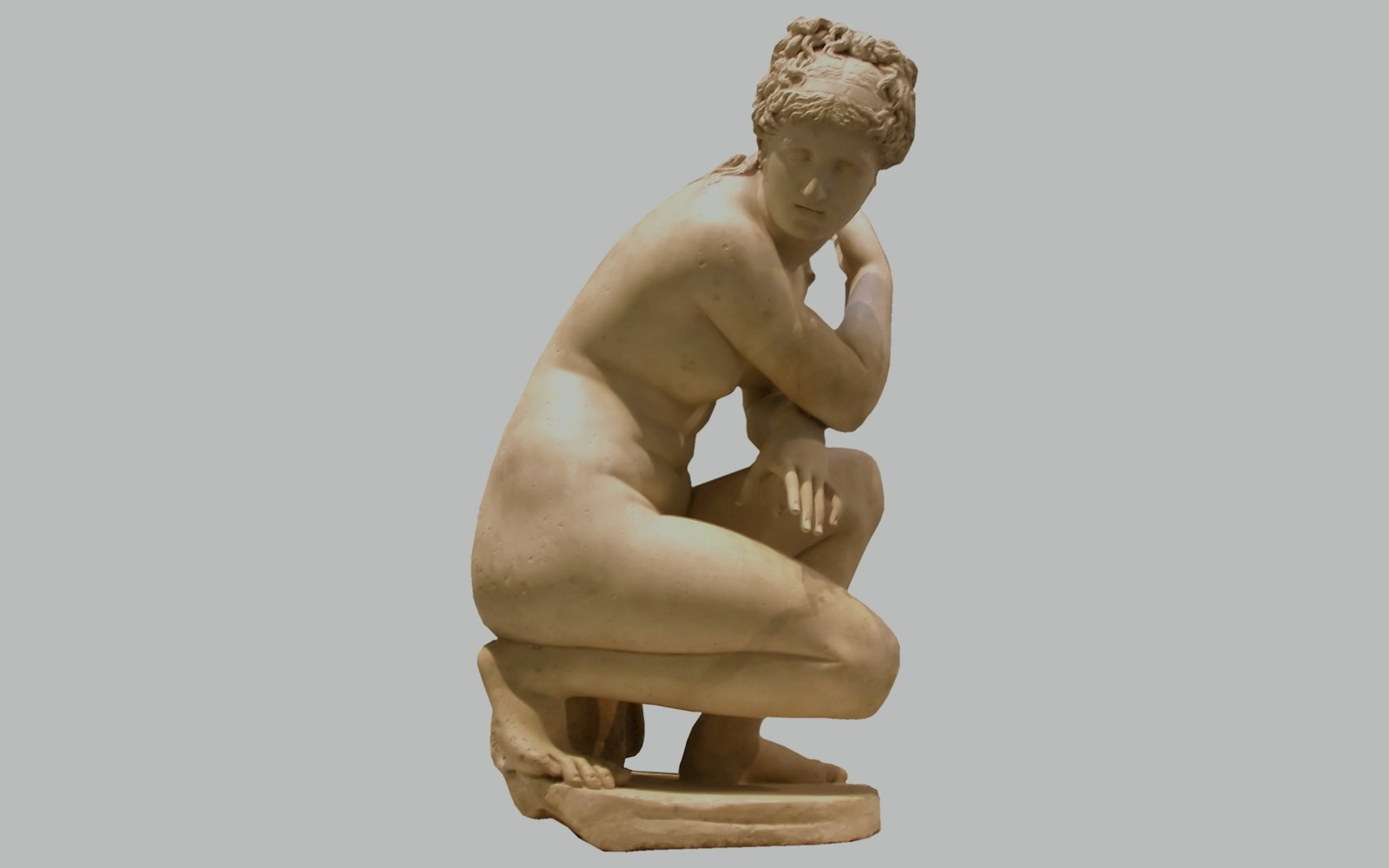
These grand classical galleries showcase sculptures, pottery, inscriptions, and architectural fragments from ancient Greece and Rome. Large marble halls and open gallery layouts make this one of the most visually striking sections of the British Museum's collections.
Access: Yes
Highlights: Parthenon Sculptures, Nereid Monument, Roman mosaics
Middle East galleries
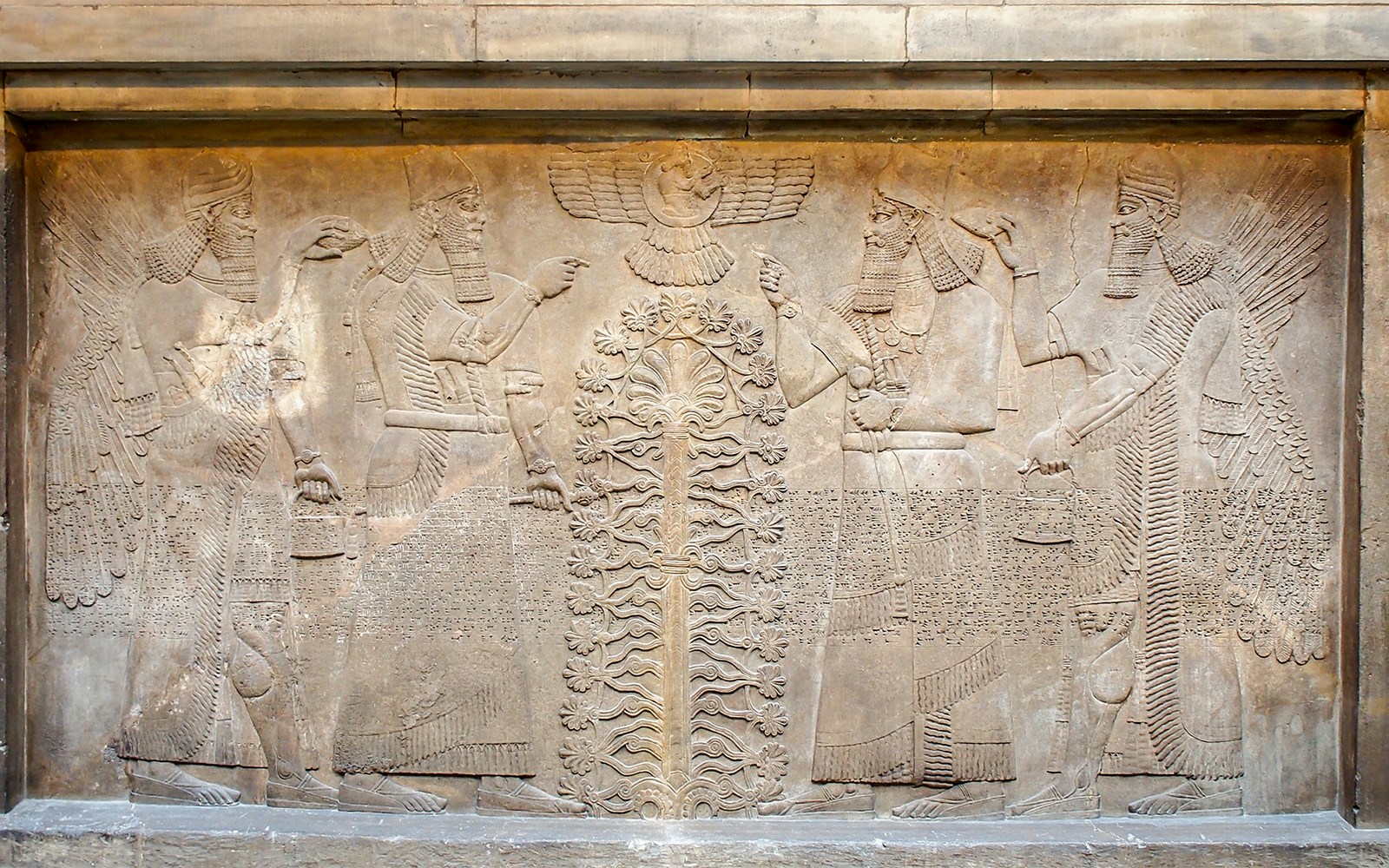
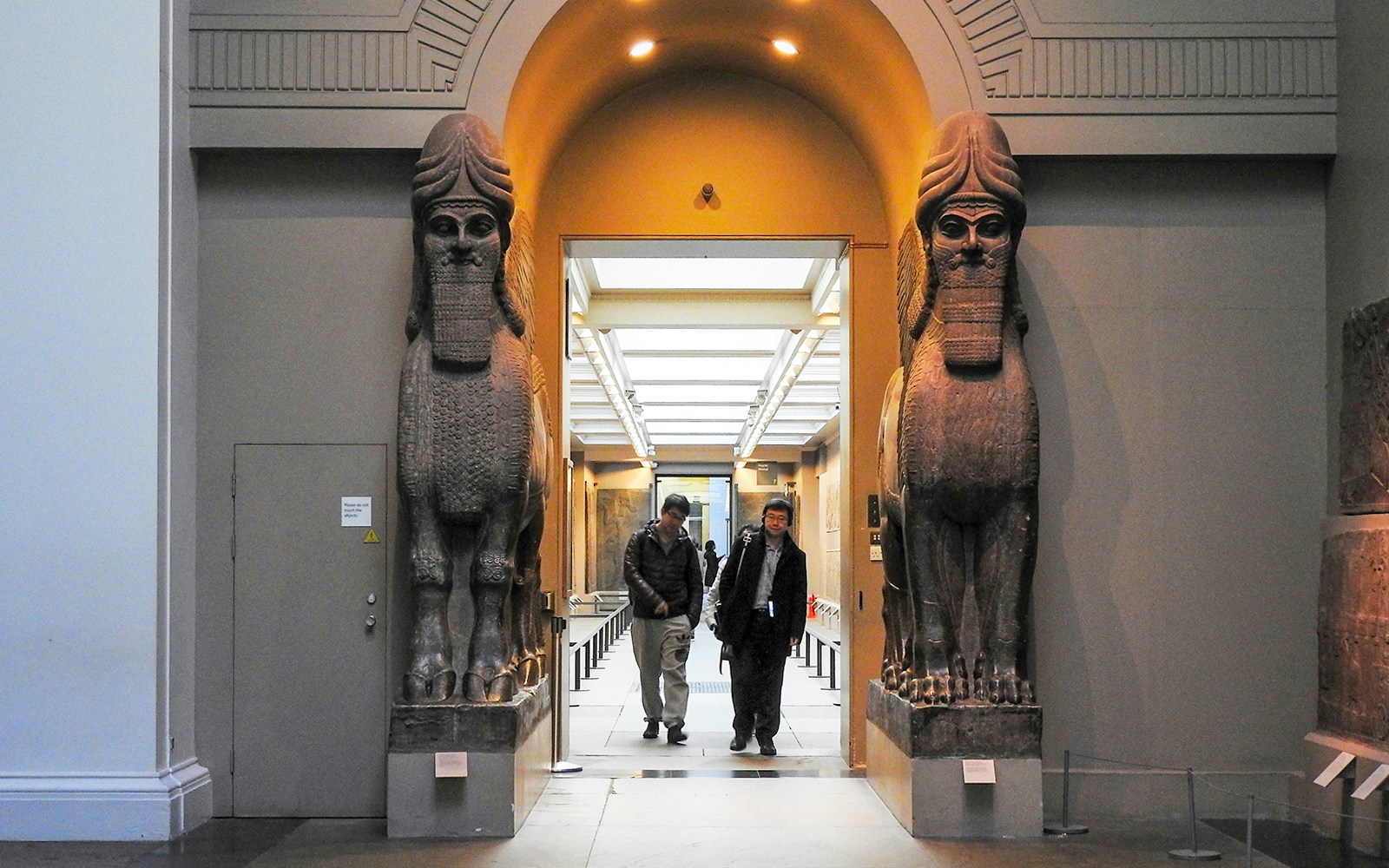
Dedicated to Assyrian, Mesopotamian, and Persian civilizations, these galleries feature palace reliefs, guardian figures, and archaeological discoveries from some of the world’s earliest empires.
Access: Yes
Highlights: Assyrian Lion Hunt reliefs, lamassu statues, and the Cyrus Cylinder
Africa galleries
These galleries explore the artistic and cultural traditions of Africa through ceremonial masks, textiles, sculptures, and royal objects from across the continent. The spaces feel more intimate and thematic, focusing on storytelling, identity, and living cultural heritage.
Access: Yes
Highlights: Benin Bronzes, royal regalia, African ceremonial masks
Asia galleries
The Asian collections span Buddhist sculpture halls, Japanese decorative arts, Chinese ceramics, and South Asian religious objects. Spread across the upper-floor galleries, these spaces offer a calmer and more reflective museum experience.
Access: Yes
Highlights: Chinese ceramics, Amaravati sculptures, Japanese prints
Britain and Europe galleries
These galleries trace European history from prehistoric Britain through medieval and early modern Europe. Expect treasure collections, ceremonial objects, and archaeological discoveries displayed in more intimate gallery spaces.
Access: Yes
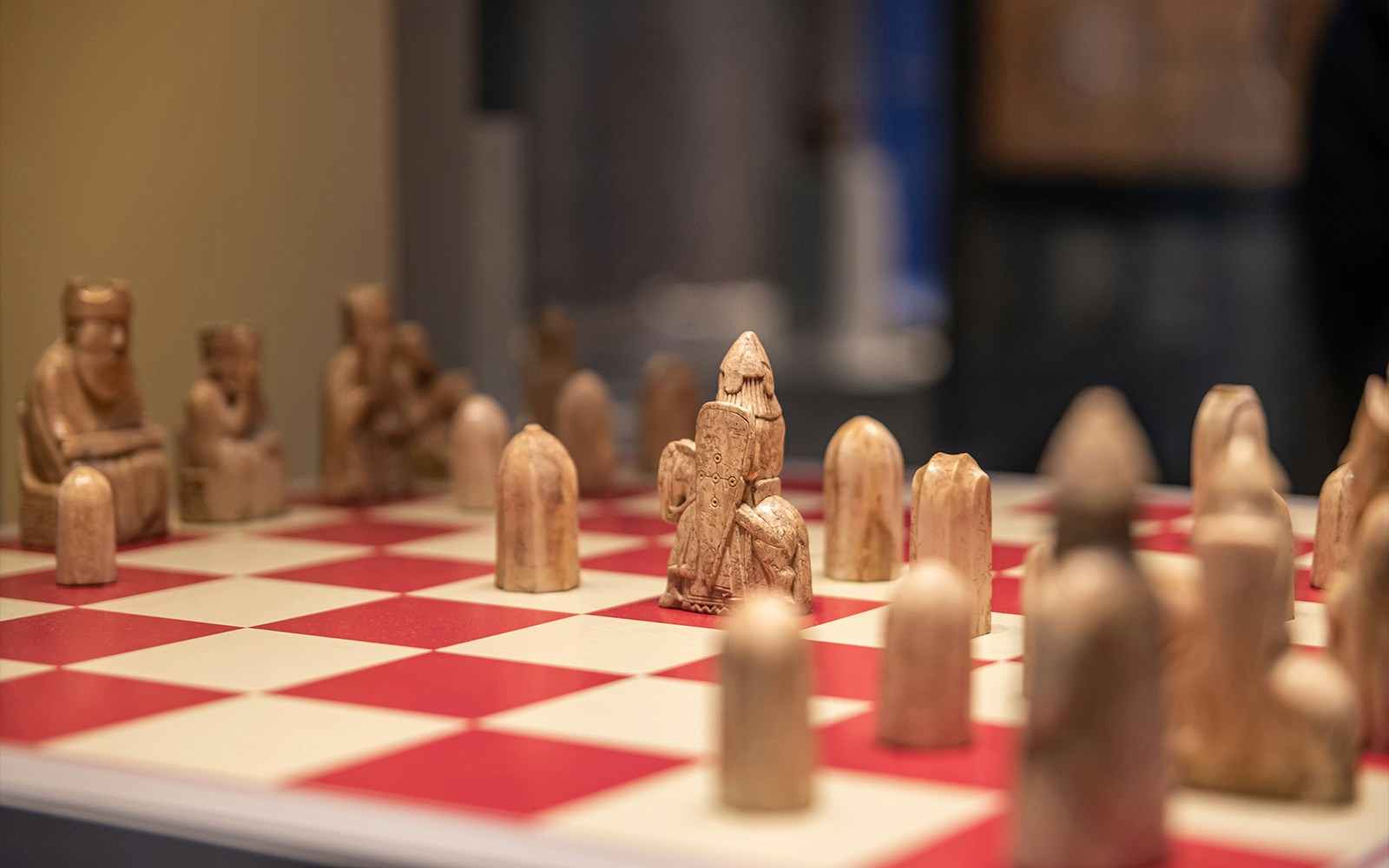
Highlights: Sutton Hoo treasures, Lewis Chessmen, Roman Britain artifacts
Prints and drawings galleries
Located in quieter study areas of the museum, these rotating display spaces feature delicate works on paper, including manuscripts, sketches, and rare prints that cannot remain on permanent display for conservation reasons.
Access: Limited rotating access
Highlights: Michelangelo sketches, Albrecht Dürer prints, historic manuscripts
Temporary exhibition galleries
Separate exhibition spaces host rotating international showcases and themed exhibitions throughout the year. These galleries provide a more curated and less crowded experience than the permanent collections.
Access: No, separate ticket required
Highlights: Seasonal international exhibitions, rare loans, themed historical showcases
Must-see highlights at the British Museum
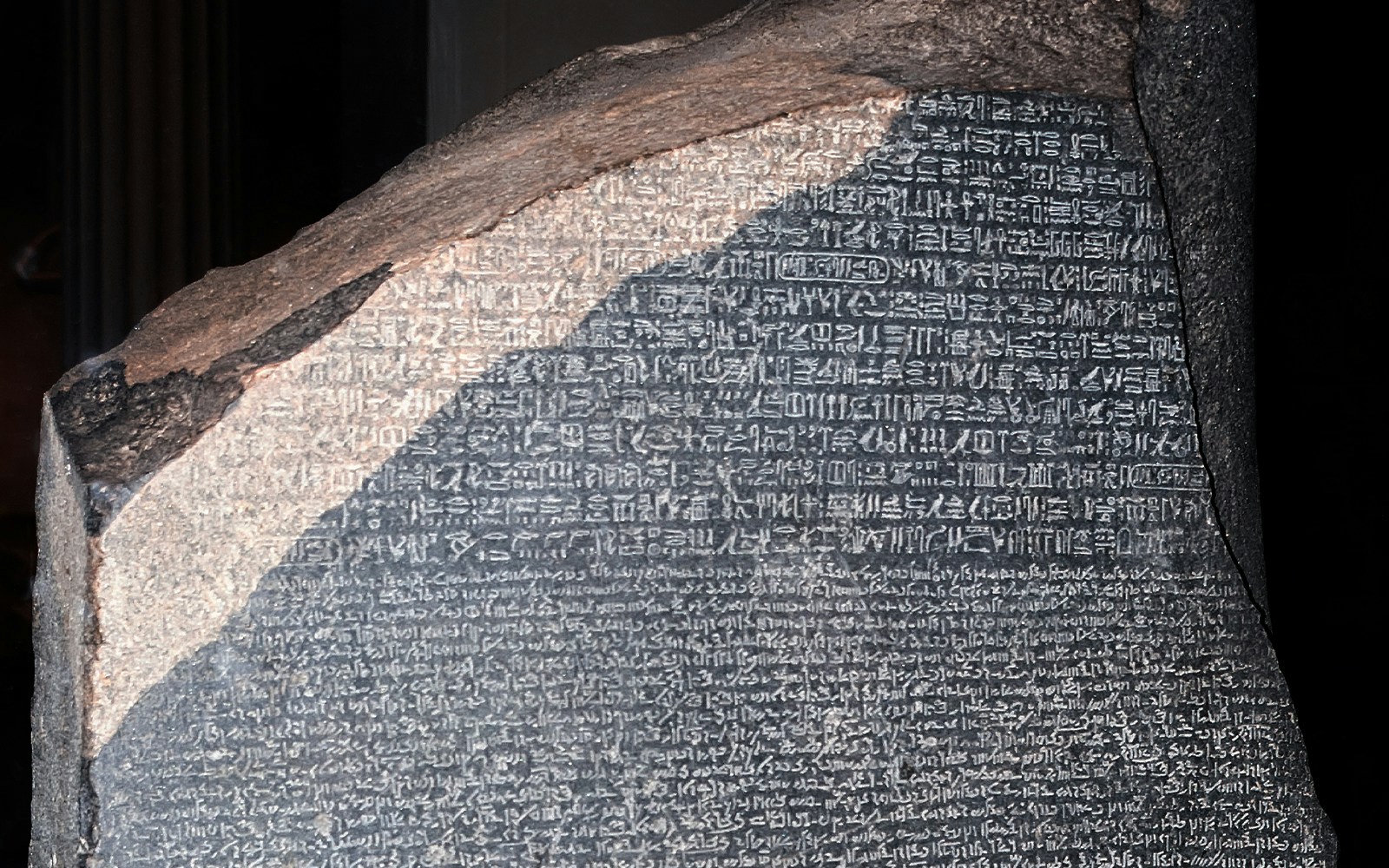
Rosetta Stone | Ancient Egyptian priests (196 BC)
Egyptian galleries
One of the world’s most famous archaeological discoveries, this inscribed stone helped scholars finally decode ancient Egyptian hieroglyphs after centuries of mystery.
Plan your visit to the British Museum
The British Museum is open:
Saturday to Thursday: 10 am - 5 pm (last entry at 4.45 pm)
Friday: 10 am - 8.30 pm (last entry at 8.15 pm)
Late openings: Fridays are ideal for a quieter visit, with extended evening hours and a calmer atmosphere across many galleries and special exhibitions.
Holiday exceptions: There is no late-night opening on Good Friday (April 18). The museum remains closed from December 24–26 annually.
Closing time: Galleries begin clearing approximately 10 minutes before official closing time, so plan to complete your final exhibits slightly earlier.
Peak season: June to August, school holidays, bank holidays, and festive weekends are the busiest periods at the British Museum, especially around the Egyptian galleries and Rosetta Stone displays.
Low season: November to early December usually sees lighter crowds and a calmer atmosphere across most galleries, making it one of the best times for a quieter British Museum visit.
Best time of day: Arrive before 11 am or after 4 pm for fewer crowds, better photo opportunities, and shorter waits near the museum’s most popular highlights.
Best day to visit: Weekdays are generally quieter than weekends. Friday evenings are especially pleasant thanks to extended opening hours and a more relaxed atmosphere in both permanent galleries and special exhibitions.
Peak crowd hours: The busiest period is typically between 12 pm and 3 pm, when school groups, tour groups, and midday visitors fill the main gallery routes throughout the British Museum's collections.
The British Museum has two entrances. There’s an airport-style security check at both entrances:
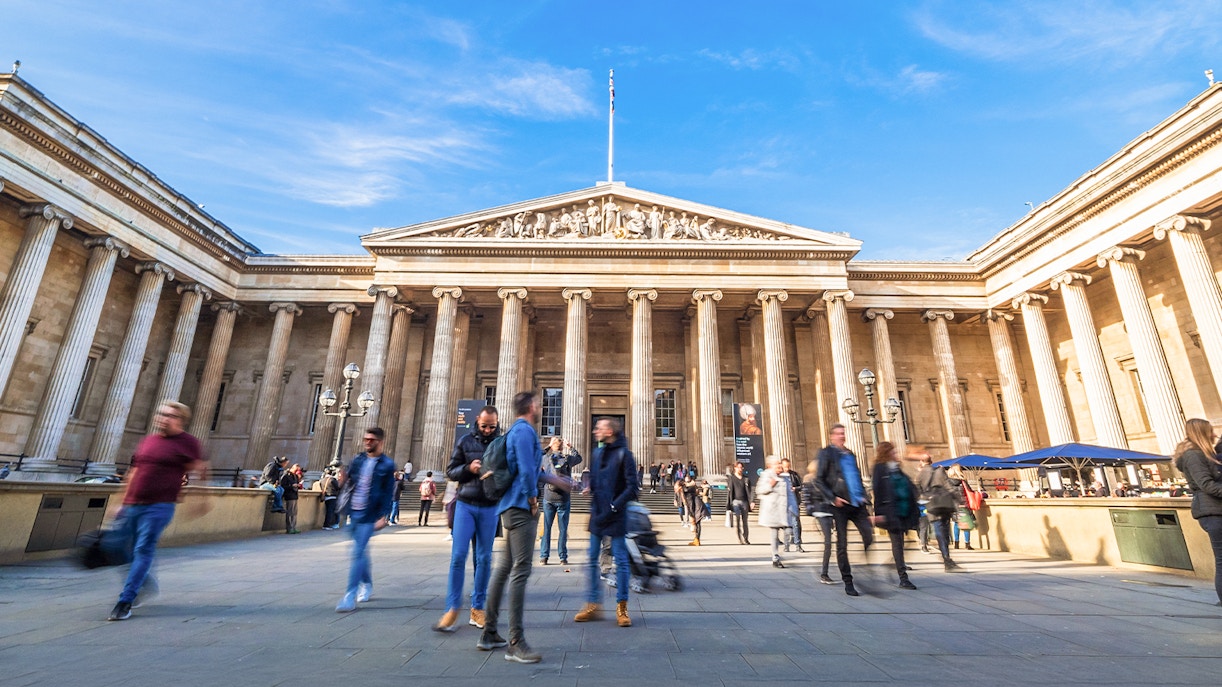
Main entrance: The British Museum, Great Russell Street, London WC1B 3DG. This entry has 12 steps and a handrail.
Second entrance: Montague Place, London WC1E 7JW (your only probably entry option during busy times). Has 12 steps and an elevator.
Cloakroom: The cloakroom is right after you enter through the main entrance, on your left. You can stash your items (up to 8 kg) 1 hour before closing time, and pick them up 30 minutes before closing time for a fee.
Lost property: If you lose something on site, just shoot an email to lostproperty@britishmuseum.org and they'll try to help you track it down.
Free Wi-Fi: You can stay connected while you wander through history. Just look for the network named "British Museum WiFi" and connect.
Toilets: Toilets are available on Level 0 near the East Stairs, the Collections Shop, the Book Shop, and the Pizzeria.
Audio guide: The British Museum audio app has expert talks on 250 highlights from the collection, 65 gallery introductions, self-guided tours by theme, and an interactive map in English, Chinese, Spanish, Italian, French, Korean, Japanese, German, and British Sign Language.
Accessibility: Wheelchairs and mobility scooters are permitted inside the Museum.
Wheelchairs on loan: Manual wheelchairs are available to pre-book for free and can be collected at the main entrance.
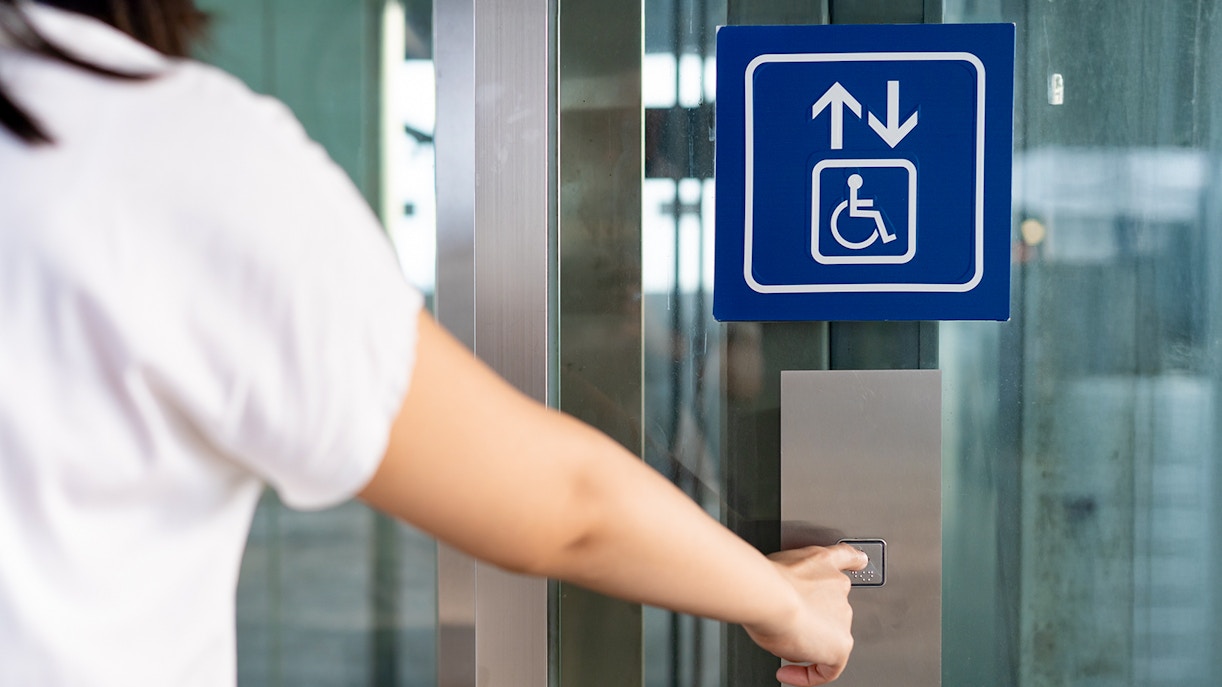
Lifts: Most lifts in the Museum are wheelchair accessible, have audio announcements, and include braille signage.
Toilets: Accessible toilets are available in the Great Court: Level 0.
Guide dogs: Service, assistance, and emotional support animals are welcome. They should be identifiable as working and remain on a leash.
Visitors with hearing impairments: Induction Loops are installed at the Ticket Desk in the Great Court. British Sign Language Guides are available on the British Museum app.
Touch tours: Touch tours are free and take place daily from 11am–4pm, subject to availability, in select galleries.
There are a bunch of free activities for kids that you can collect from the Families Desk. The museum also hosts workshops during school holidays. There's a special Little Feet program for kids under 5. Plus, most special exhibits are free for kids under 16.
Families' desk opening times: 10am–12:30pm and 1:15pm–4:30pm (Weekends and school holidays)
Dining: All museum cafes and restaurants have high chairs on request, and there's a children's menu at the Pizzeria. You can also bring your own food to eat in the Ford Centre.
Prams and buggies: Prams and buggies are allowed. Fold-up prams and buggies can be left free of charge in the cloakroom.
Baby-changing rooms: There are baby-changing facilities at the Great Court toilet facilities, Levels 0 and 3 of the North stairs, and the Ford Centre for Young Visitors.
Breastfeeding: You're welcome to breastfeed or bottle-feed anywhere. The museum has special feeding rooms for extra privacy, located adjacent to the baby changing spaces.
Photography: You can take photos and videos with a flash on your handheld camera in most parts of the museum, but commercial shoots are not allowed. Selfie sticks, tripods, and anything else that needs extra support are a no-go inside the building.
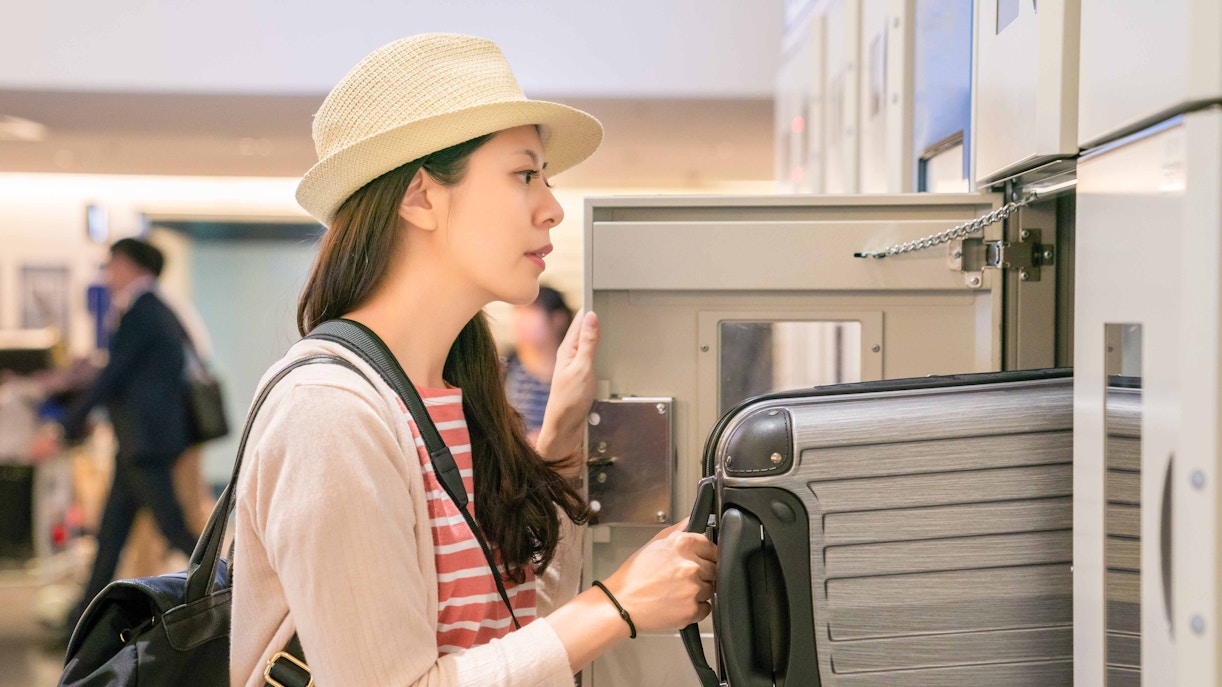
Prohibited items: Large luggage, sports equipment, folding bikes, scooters, skateboards, wheeled cases, and musical instruments are not allowed inside.
Entrance for groups: Tour groups need to enter through the Montague Place entrance. If you show up at the other entrance, you will be asked to enter through the Montague Place entrance.
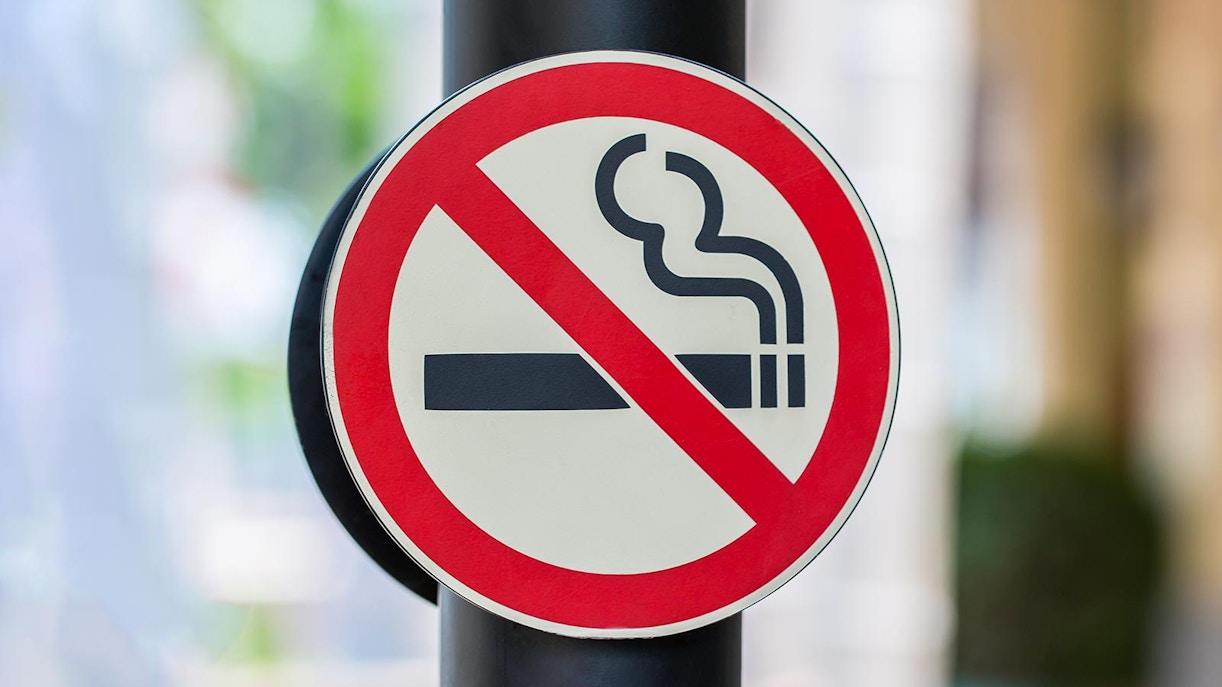
Smoking: Smoking of any kind (cigarettes, e-cigarettes, vapes) is a no-no inside the museum, but you can light up outside in the colonnade or forecourt area.
Food and drinks: Food and drinks are off-limits inside the museum (except for the cafes, restaurants, and the Great Court). Please toss your trash and uneaten food responsibly!
Download the museum app or grab a map to focus on areas you care about and save time.
Visit iconic exhibits early (like the Rosetta Stone and Egyptian mummies) before crowds build up.
Use the Montague Place entrance—it’s less busy than Great Russell Street.
Do not skip the temporary exhibits. These are less crowded but packed with treasures you might not see again!
Knowledgeable museum volunteers can point out details you might otherwise miss, so reach out when you see them!
Court Cafés: Need a quick bite? Head to the Court Cafes on the ground floor of the Great Court. They have fresh sandwiches, salads, cakes, and all the usual hot and cold drinks to keep you fueled up.
Great Court Restaurant:Treat yourself to a sit-down meal under the amazing glass roof of the Great Court Restaurant. Reservations are essential, but they might have walk-in spots available too.
Pizzeria: This family-friendly spot serves up fresh, hand-tossed pizzas, salads, and yummy desserts (don't forget the gelato!). They even have gluten-free crusts and vegetarian and vegan options.
Coffee Lounge: Located on the first floor with a great view of the iconic Reading Room, the Coffee Lounge offers a lively atmosphere and a menu with savory meals, salads, cakes, and hot and cold drinks.
Outdoor dining: Grab snacks and drinks from the museum's two food trucks and enjoy them in the outdoor seating areas.
What to expect: Browse art-inspired souvenirs and gifts inspired by the exhibitions, collect replicas of the artifacts at the museum, and buy from a wide selection of jewelry, books, fashion, homeware, and games.
For children: There are British Museum-themed souvenirs that are perfect for children! You can also shop from your favorite collections at the museum, like your own Lewis Chessmen replica, a Rosetta Stone replica, gifts from the Hokusai collection, or even items celebrating cats from history!
Visitor tips
Head to the Egyptian galleries and Rosetta Stone first. Crowds build quickly after 11am, especially around the museum’s most famous highlights.
Use the Great Court as your navigation hub. Most major gallery routes branch out from here, making it the easiest place to reorient during your visit.
Friday evenings are one of the best times to explore the British Museum London collections with fewer tour groups and a noticeably calmer atmosphere.
Temporary exhibitions usually attract smaller crowds than the permanent galleries and can be a quieter alternative during busy weekends and holidays.
The museum is massive, so focus on one or two civilizations instead of trying to see everything in a single visit. Most visitors comfortably cover only a few major gallery sections in 2–3 hours.
Café queues peak between 1pm - 2.30 pm. Eat earlier or later if you want a quicker break between galleries.
Frequently asked questions about the British Museum tickets
It depends on your interest. A brief visit might take 2–3 hours, but to fully immerse yourself, set aside at least half a day.
A guided tour of the museum takes 2 hours. However, it is recommended that you spend at least 3 to 4 hours to explore the entire museum. If you plan to attend a workshop or participate in discussions or activities, it's best to reserve an entire day for the British Museum.
Yes, the museum offers curated tours focusing on themes like ancient civilizations, European art, and more on its app. Private and group tours are also available at an additional price.
While entry to the museum is free, please arrive at the time slot that you picked at the time of booking the tickets. For guided tours and other activities, please arrive at least 30 minutes before the start time as there is a security check at the entrance.
General admission is always free, so you can visit as often as you like. However, since the queues can be super long, we don’t recommend leaving the museum. For special exhibitions, tickets are valid for one-time entry.
Definitely! Solo visitors can enjoy exploring at their own pace. Audio guides and interactive displays make it a great experience for individuals.
The Rosetta Stone from Eygpt which helped decipher hieroglyphics is probably the most famous artifact at the museum. Other famous artifacts include the Parthenon sculptures, the Egyptian mummies, drawings by Botticelli and Michelangelo, Assyrian reliefs, the Lewis Chessmen, and the Sutton Hoo treasures.
While there’s no set route, the museum offers maps and themed itineraries at the entrance, such as "Around the world in 90 minutes" or "Eye opener tours."
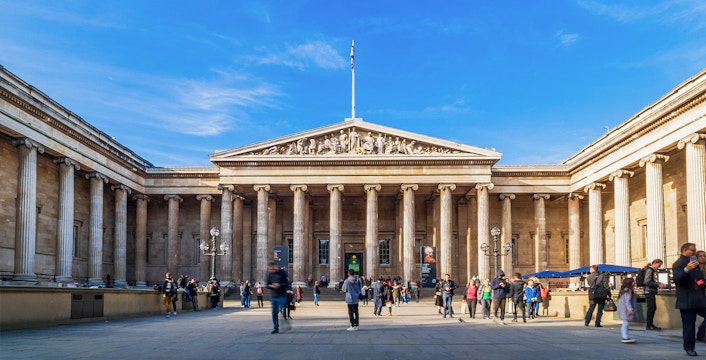
The British Museum was designed by Sir Robert Smirke, a renowned architect from the 1800s and a key figure in the Greek Revival movement.
No. The Kohinoor Diamond is on display at the Tower of London.
Yes, several spaces inside the museum are available for corporate hires. Please email corporatesupport@britishmuseum.org to learn more and to book a space.