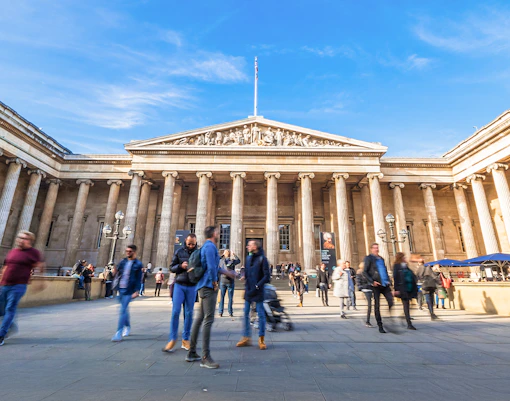
Budget at least 2–3 hours for highlights and around 4–5 hours if you want to explore multiple wings of the British Museum in detail. The museum is vast, and the key galleries are spread across different floors, so a planned route makes the visit far smoother.
Is the British Museum worth visiting?
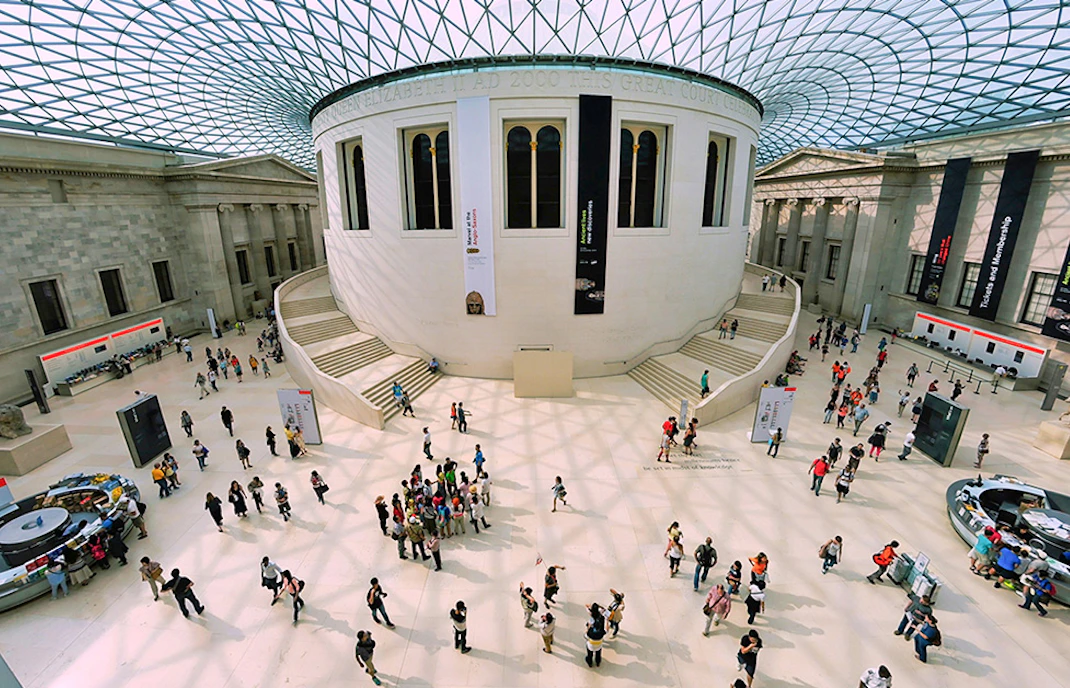
Walking into the British Museum feels less like entering a building and more like stepping into a vast archive of human civilisation. The Great Court opens above you in glass and light, while galleries spread into worlds of empires, beliefs, and everyday life spanning 2 million years.
The museum holds over 8,000,000 objects, with around 80,000 on display at any time. Highlights include the Rosetta Stone, Parthenon Sculptures, and Egyptian mummies, each marking defining moments in human history.
Built to preserve and share knowledge from across the world, the museum still reflects that ambition today, letting you move between Egypt, Greece, Assyria, Asia, and beyond in a single visit.
That’s not it. The emotional payoff is perspective—the sense of time stretching far beyond your own life and how deeply connected human stories really are.
Skip it if you have under 90 minutes and prefer open-air landmarks over large indoor museums with extensive walking.
What can you see at the British Museum?
1/9
Egyptian galleries and the Rosetta Stone
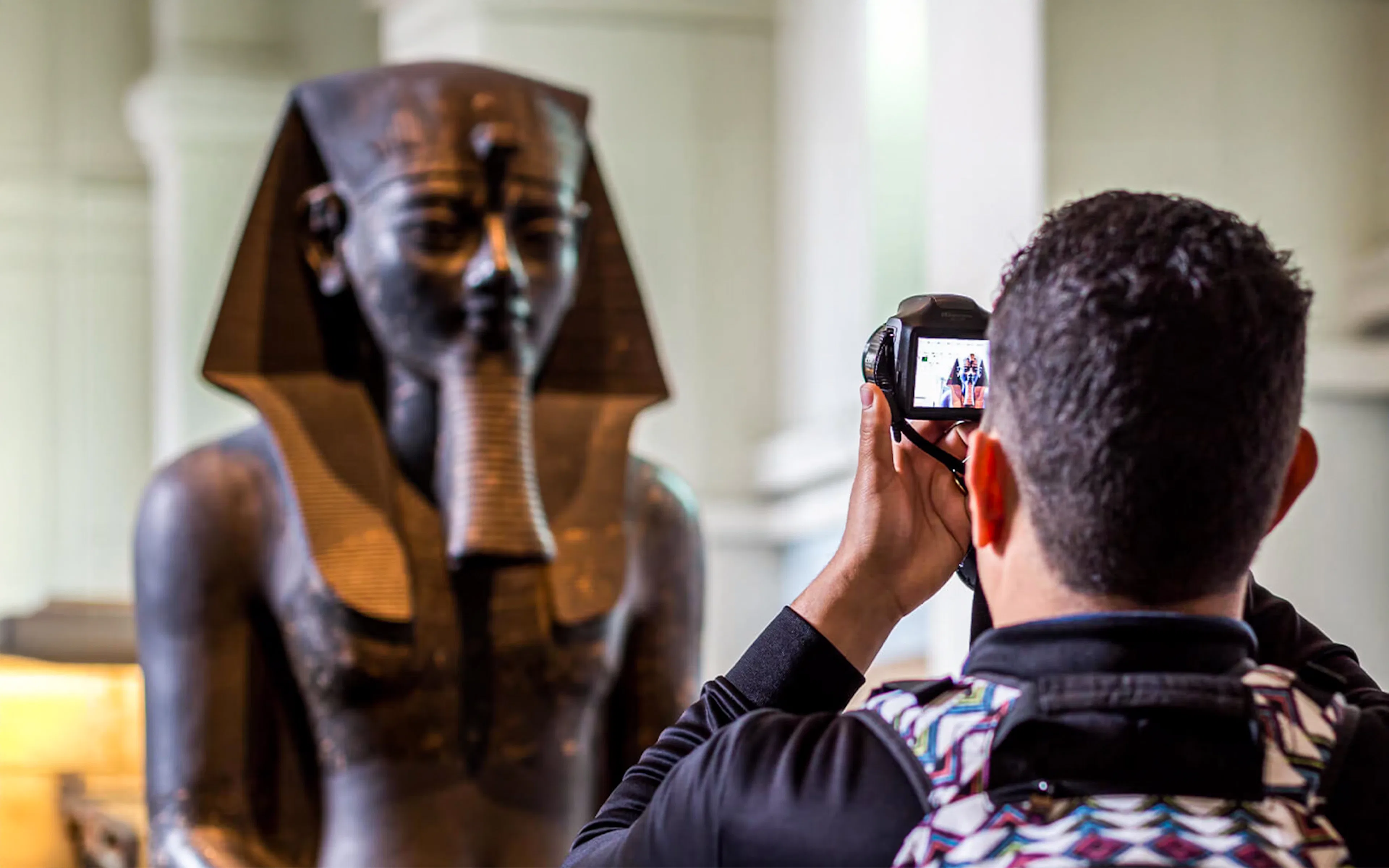
Ancient Egypt takes centre stage in the British Museum, where the Rosetta Stone, mummies, and funerary objects span more than 3,000 years of civilisation. Among all displays, the Rosetta Stone consistently draws the largest crowds, especially during peak hours when viewing time can be limited.
Greek and Parthenon Sculptures galleries
Fragments from the Parthenon in Athens sit alongside classical Greek sculptures and architectural pieces. The scale and detail of the carvings make this one of the most visited areas, with steady footfall throughout the day.
Assyrian and Mesopotamian galleries
Towering stone reliefs from ancient Assyrian palaces dominate these rooms, including winged bulls and intricate hunting scenes. The sheer size of the carvings creates a dramatic atmosphere that stands out even in a museum of this scale.
Enlightenment Gallery
Housed in the original 18th-century British Library, this gallery brings together early collections formed during the Age of Enlightenment. Rows of cabinets display objects that reflect how modern museum culture first began to take shape.
Africa galleries
Across these rooms, African artistic traditions are presented through masks, sculptures, textiles, and ceremonial objects spanning many regions and centuries. The collection highlights both historical depth and remarkable cultural diversity.
Asia galleries
Buddhist sculpture, ceramics, prints, and religious artefacts from across South, East, and Southeast Asia are displayed in a wide-ranging collection. The galleries reflect how art, religion, and cultural exchange evolved across vast and interconnected regions.
Europe and medieval galleries
Religious artefacts, armour, jewellery, and sculpture trace the development of European societies from the early medieval period onwards. Compared to the busier wings, this section often feels more spacious and reflective.
Britain, Europe and prehistory galleries
Objects from prehistoric Britain through the Roman and medieval eras reveal everyday life across centuries, from simple tools to intricate jewellery. The displays help connect local history with broader European developments.
Prints and drawings
Works on paper by artists such as Michelangelo, Rembrandt, and Dürer appear in rotating displays due to conservation needs. Each visit offers a slightly different selection, making it a quieter but rewarding section to revisit.
How to explore the British Museum?
Suggested duration
Suggested route
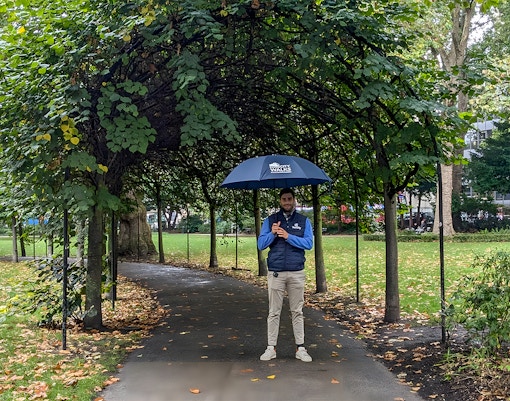
Start at the Great Court, then head to the Egyptian galleries for the Rosetta Stone and mummies before crowds build. Continue to the Greek and Parthenon Sculptures, then the Assyrian and Mesopotamian rooms, and finish with Asia or Europe, depending on time and interest.
Must-see
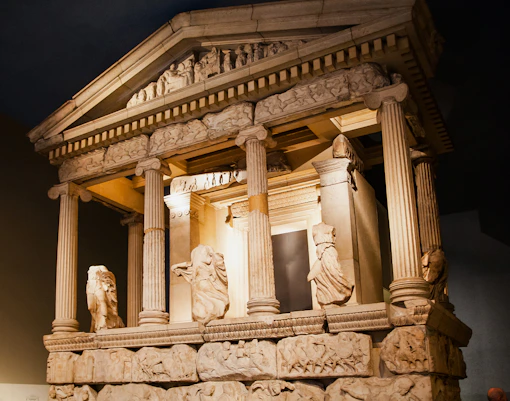
Rosetta Stone, Egyptian mummies, Parthenon Sculptures, ancient Mesopotamian artefacts, Sutton Hoo treasures, and key African ceremonial masks and sculptures.
Optional: Africa galleries, Europe and medieval galleries, Britain and prehistory collections, Asia galleries, and prints and drawings for a slower, more detailed visit.

Guided vs self-paced
A self-guided visit is the standard way to explore the museum and works well due to clear thematic zoning and strong signage. Audio guides or pre-reading can help add context, especially in the Egyptian and Mesopotamian galleries, where interpretation significantly enhances the experience.
Brief history of the British Museum
- 1753: The British Museum is founded through an Act of Parliament, based on the collection of Sir Hans Sloane, which includes books, manuscripts and antiquities. It is established as the first national public museum in the world.
- 1759: The museum opens to the public in Montagu House in Bloomsbury, London, offering free admission to “all studious and curious persons,” marking a major shift toward public access to knowledge.
- 1823–1852: Montagu House is gradually replaced by the current neoclassical building designed by Sir Robert Smirke, as the museum expands to accommodate rapidly growing collections.
- 1802: The Rosetta Stone enters the collection after being acquired by the British Museum, becoming one of its most significant and visited artefacts.
- 1857: The circular Reading Room opens at the centre of the museum, becoming a major scholarly hub used by writers, historians, and researchers.
- 19th–20th century: Major acquisitions from Egypt, Greece, Assyria, and Asia define the museum’s global reputation, including the Parthenon Sculptures acquired in the early 19th century.
- 2000: The Great Court, designed by Foster + Partners, opens, transforming the museum’s central space with a modern glass roof over the historic Reading Room and improving visitor circulation.
- Today: The museum continues to expand its collections and exhibitions, housing over 8 million objects that document human history, culture, and art across more than two million years.
Who built the British Museum?
The original building of the British Museum was designed by Sir Robert Smirke between 1823 and 1852 as part of a planned expansion to house the growing national collection. His neoclassical design was influenced by ancient Greek architecture, emphasising proportion, symmetry, and monumental scale. The Great Court was later created in 2000 by Foster + Partners, who enclosed the museum’s central courtyard with a glass roof and redesigned internal circulation. Smirke’s design remains one of the most important examples of Greek Revival architecture in Britain and continues to define the museum’s external identity.
Architecture of the British Museum
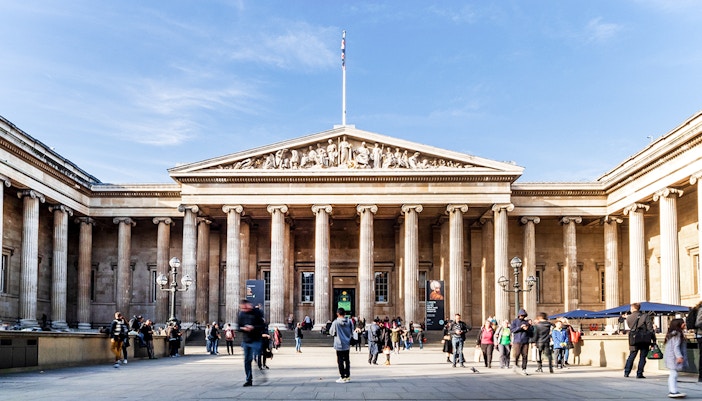
Neoclassical (Greek Revival) style
The British Museum is designed as a “temple of knowledge,” reflecting 19th-century ideals of order, learning, and permanence through a classical architectural language inspired by ancient Greek and Roman design.
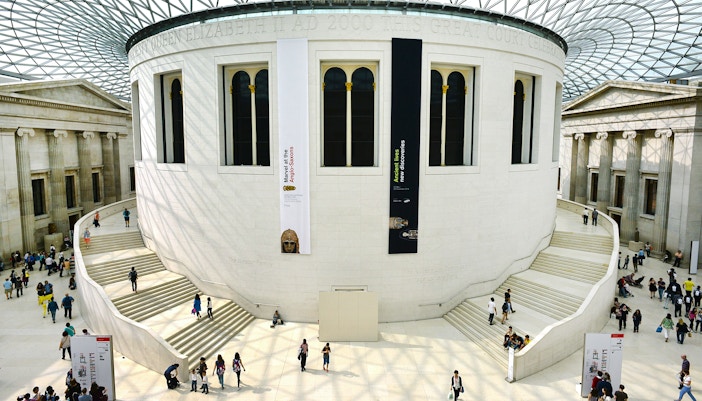
Structure
The building is constructed from Portland stone, giving it a pale, monumental appearance. Its defining feature is the long Ionic colonnade at the main entrance, directly inspired by ancient Greek temple architecture and intended to express authority and cultural continuity.
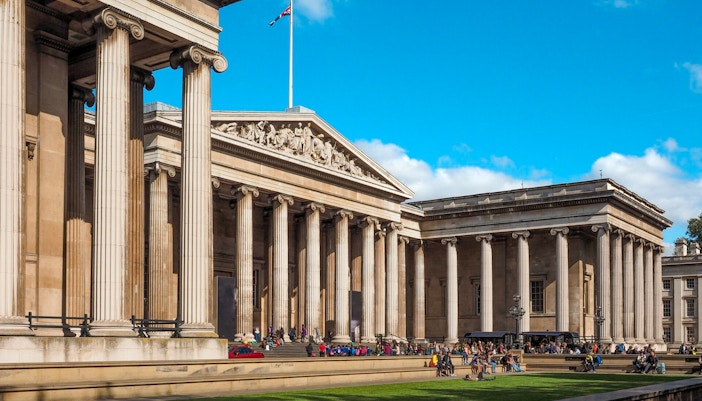
Engineering
The core building was designed by Sir Robert Smirke and constructed between 1823 and 1852, with later extensions added as the collection expanded. The central courtyard was later enclosed in 2000 to create the Great Court, significantly improving circulation and usable public space.
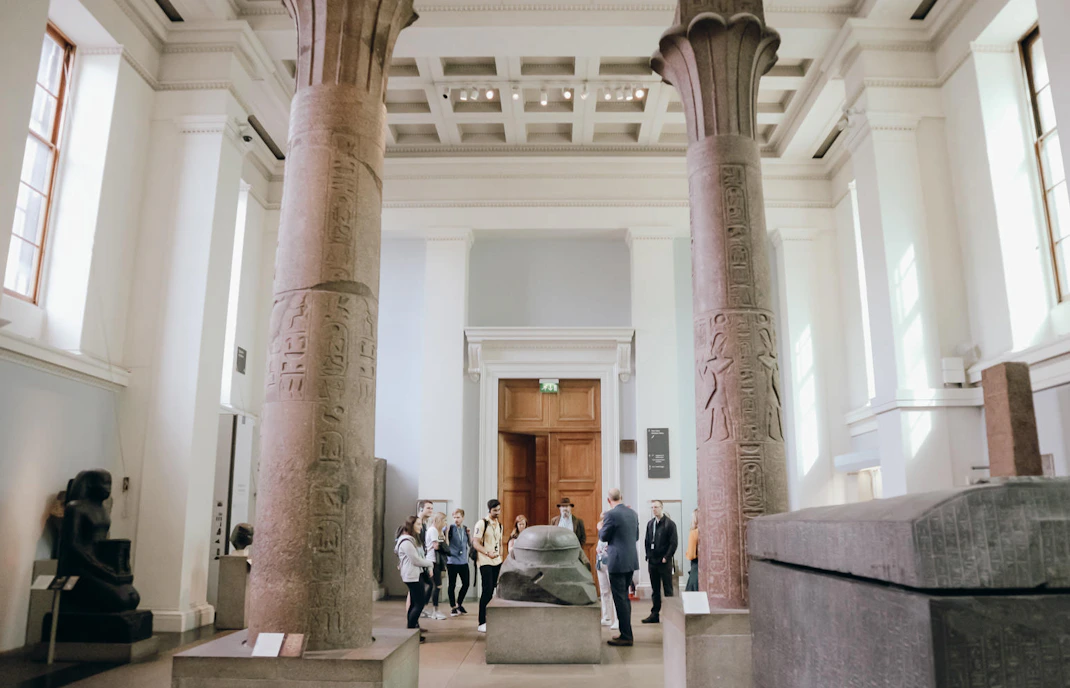
Experiential detail
The Great Court creates a dramatic contrast between historic stone architecture and the modern glass roof, producing a vast, light-filled central space that changes the way visitors move through the museum.
Architect
Sir Robert Smirke designed the original neoclassical structure in the early 19th century. His work was guided by Greek architectural principles and a focus on symmetry and scale, creating a monumental civic building intended for public education.
Learning, research and public engagement at the British Museum
The British Museum operates as both a public museum and a centre for learning and research. It offers a wide programme of educational activities, including talks, workshops, gallery sessions, performances, and special events for different audiences across age groups.
The museum also conducts extensive research based on its collection, involving archaeological study, conservation science, and collaboration with international partners. This research helps improve the understanding of objects and their historical context.
Conservation and scientific departments within the museum study and care for objects using a range of analytical and preservation techniques, ensuring long-term protection of the collection
Frequently asked questions about the British Museum
Yes, especially if you’re interested in world history, archaeology, or iconic artefacts. The British Museum brings together objects from across continents and time periods, including the Rosetta Stone, Parthenon Sculptures, and Egyptian mummies. Entry is free for the main collection, making it one of London’s most accessible major attractions.
Most visitors spend around 2 to 3 hours seeing the main highlights, while a fuller visit covering multiple galleries can take 4 hours or more. The museum is large and spread across themed sections, so planning a route helps you avoid missing key areas like Egypt, Greece, and Assyria.
The Rosetta Stone, Egyptian mummies, Parthenon Sculptures, and Assyrian palace reliefs are the most visited highlights. The Enlightenment Gallery and Sutton Hoo treasures also offer important context on how collections and archaeology developed, while the Africa and Asia galleries add global depth beyond the most crowded rooms.
Yes, it works well for families thanks to free entry and wide-open galleries that are easy to navigate. The Egyptian and animal-related displays are especially engaging for children, while quieter sections like Asia or Europe offer breaks from crowded main halls.
Weekday mornings, especially Tuesday to Thursday, are generally the quietest. Early mornings at opening (10 am) or later afternoons after 3 pm help avoid peak crowd times, particularly around the Rosetta Stone and Egyptian galleries. Fridays can also feel calmer later in the day due to extended opening hours.
No, general admission to the British Museum is free and does not require advance booking. However, special exhibitions and temporary displays may require paid tickets, which are best booked ahead of time during busy travel seasons or weekends.