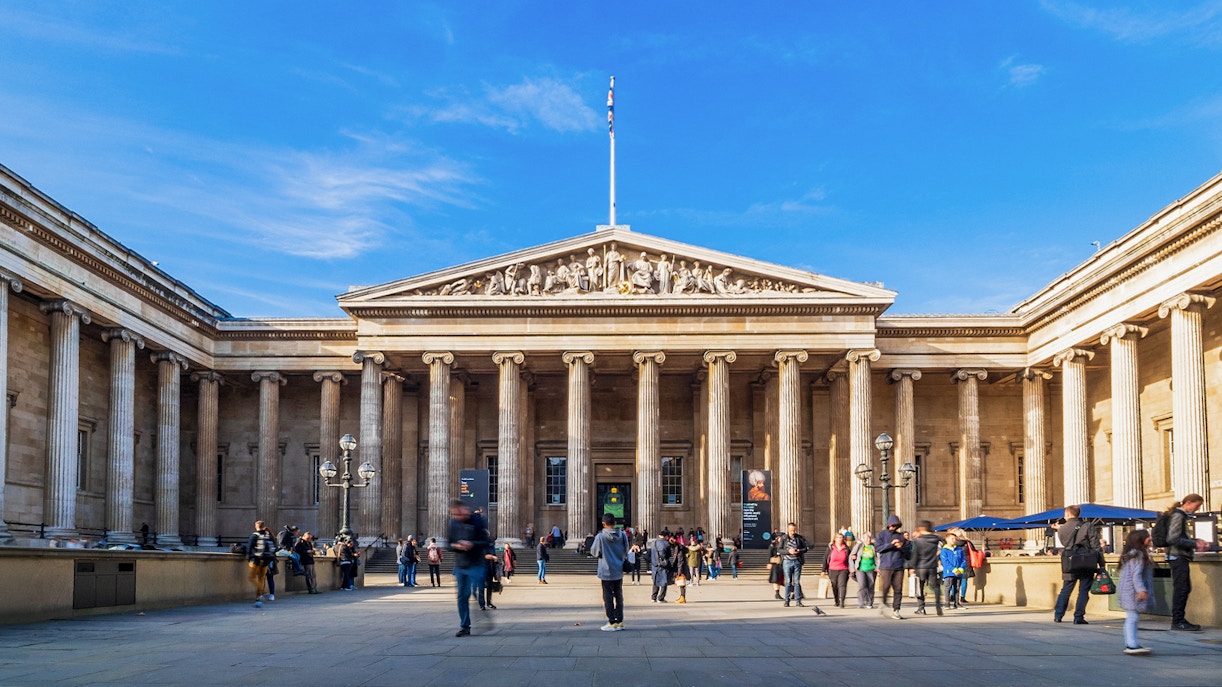
Explore the British Museum collection of iconic artefacts

The British Museum collection brings together some of the world’s most significant artefacts, spanning thousands of years of human history and cultures across the globe. From ancient civilisations to iconic works that shaped how we understand the past, it offers a unique journey through time in the heart of London. Here’s everything you need to know to explore what’s inside and make the most of your visit.

Discover the British Museum collection

The British Museum collection brings together over 2 million years of human history, with objects dating from prehistoric times through ancient and medieval periods to more recent global cultures. It includes artefacts from major civilisations such as Egypt (from around 3000 BC), Mesopotamia (from around 3500 BC), and Classical Greece and Rome (1st millennium BC).

The collection also extends across Asia, Africa, and the Americas, reflecting a wide range of artistic traditions, belief systems, and everyday life objects. Together, it forms a global archive of human creativity, preserved across centuries and continents under one roof in London.
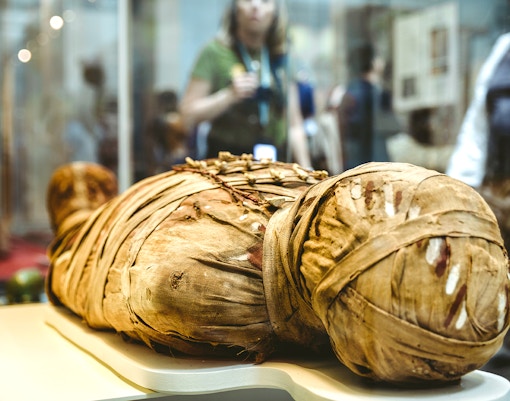

British Museum collection | Regions to look out for

Egypt

Ancient Egypt unfolds here across thousands of years, from early prehistoric communities to the dynastic civilisations of the Nile. Mummies, papyri, and funerary objects sit alongside everyday artefacts that reveal how religion, death, and daily life were deeply intertwined in one of the world’s most enduring cultures.

Sudan

Along the Nile, Nubian and Kushite kingdoms developed distinct identities while also sharing long-standing connections with Egypt. This relationship is reflected in pottery, jewellery, sculpture, and ritual objects that speak to both cultural exchange and regional independence.

Mesopotamia (Iraq)

Some of the earliest forms of writing and urban life are preserved through cuneiform tablets, cylinder seals, and carved reliefs. Sumerian, Babylonian, and Assyrian societies emerge through objects linked to administration, religion, trade, and early city life dating back to around 6000 BC.

Iran

The Iran collection reflects powerful empires such as the Achaemenid, Parthian, and Sasanian periods through finely worked metal objects, inscriptions, and decorative arts. Trade networks and imperial systems shaped a visual culture defined by refinement and symbolic expression.

Saudi Arabia & the Arabian Peninsula

Rather than a single unified tradition, this region reveals shifting communities connected through trade routes and desert life. Inscriptions, stone tools, and archaeological finds trace patterns of movement, survival, and exchange across the Arabian landscape.

India

The India collection spans millennia of religious and artistic development shaped by Buddhism, Hinduism, and Jainism. Sculpture, manuscripts, textiles, coins, and decorative arts together reflect a cultural landscape where spirituality and artistic expression are closely linked.

China

From early jade and bronze work to imperial ceramics and calligraphy, artistic production in China reflects long-term philosophical and dynastic change. Innovation and continuity sit side by side across thousands of years of material culture.

Korea

Ceramics, Buddhist sculpture, and metalwork reflect a refined artistic tradition shaped by spiritual practice and cultural exchange. Across different dynasties, craftsmanship evolves while maintaining strong continuity in style and technique.

Medieval Europe

Religious belief, political change, and regional identity shaped material culture between roughly 500 and 1500 AD. Illuminated manuscripts, jewellery, metalwork, and everyday objects reveal how society transformed during this period.

Mexico

The Mexico collection brings together artefacts from Maya and Aztec civilisations where ritual, astronomy, and governance were closely connected. Sculpture, ceramics, and ceremonial objects reflect highly structured and symbolically rich societies.

North America

The North America collection highlights diverse Indigenous cultures expressed through masks, clothing, tools, and ceremonial objects. These materials reflect identity, environment, and spiritual systems across different communities.

British Museum highlights

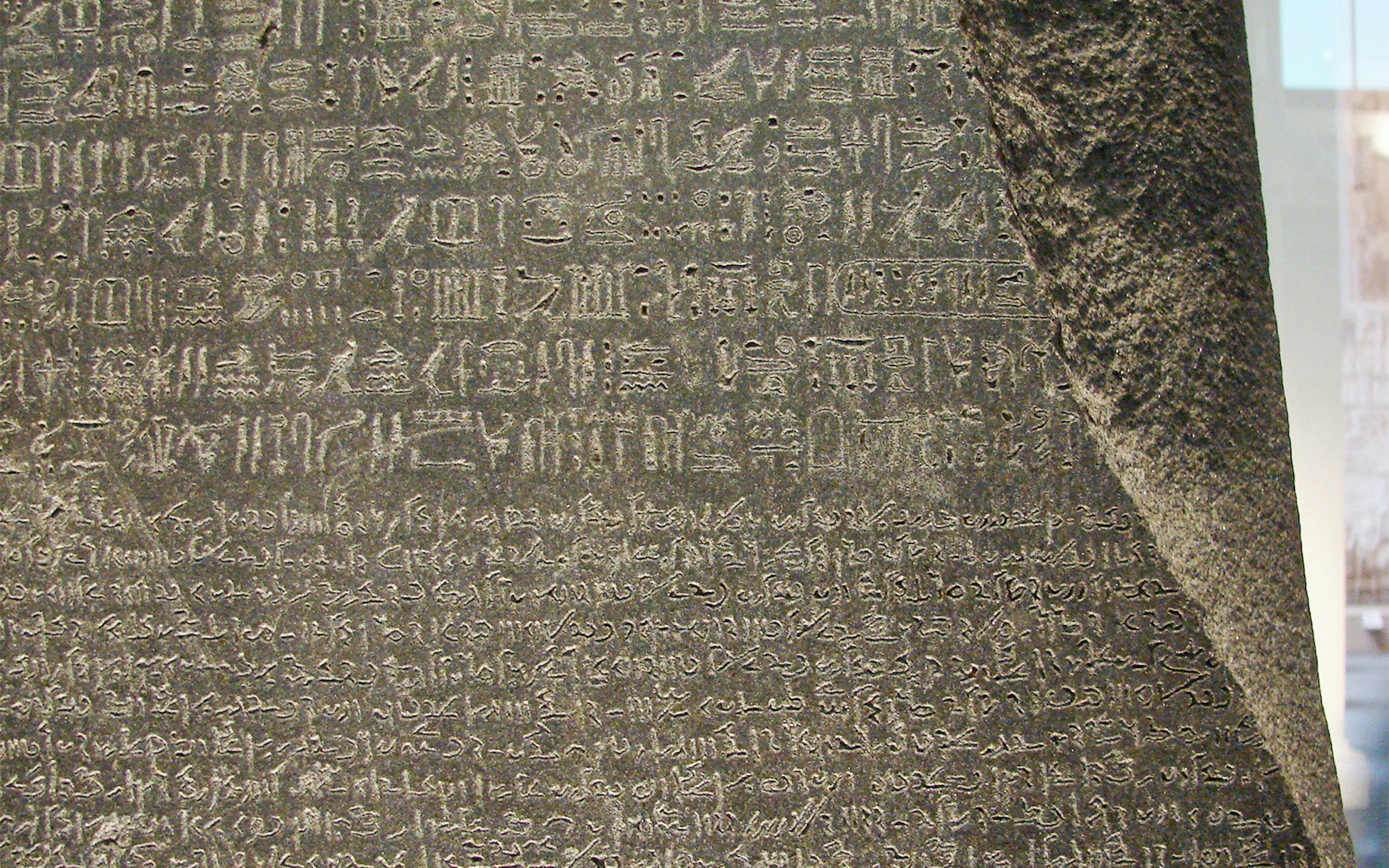
Rosetta Stone inscriptions at the British Museum, London, featuring ancient scripts.
Placeholder Image Headout Blimp
1/10

Rosetta Stone

  • Date: 196 BC
  • Location: Room 4, Egyptian Sculpture Gallery 

The Rosetta Stone is a granodiorite slab inscribed in three scripts—hieroglyphic, demotic, and ancient Greek. It was key to deciphering Egyptian hieroglyphs and remains central to understanding ancient written language.

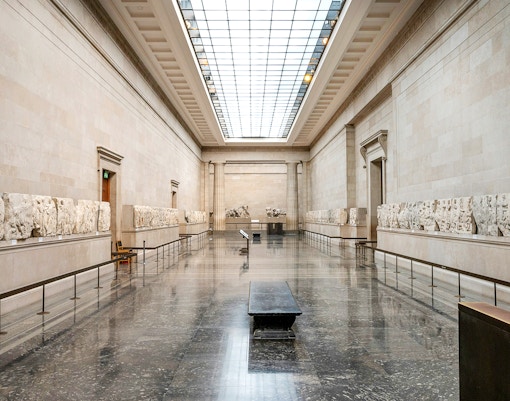
Parthenon Sculptures (Elgin Marbles)

  • Date: 5th century BC (c. 447–432 BC)
  • Location: Room 18, Duveen Gallery

Originally part of the Parthenon in Athens, these sculptures depict mythological narratives and ceremonial processions. They are among the most important surviving works of classical Greek art.

Sutton Hoo Helmet

  • Date: Early 7th century AD
  • Location: Room 41, Sutton Hoo and Europe Gallery

Found in an Anglo-Saxon ship burial, this helmet represents elite craftsmanship and early medieval symbolism in Britain, combining warrior imagery with intricate decorative design.

Lewis Chessmen

  • Date: 12th century AD
  • Location: Room 40, Medieval Europe Gallery

These walrus-ivory chess pieces are among the most famous medieval artefacts ever discovered. Their expressive faces and detailed carving reflect Norse artistic traditions and social structure.

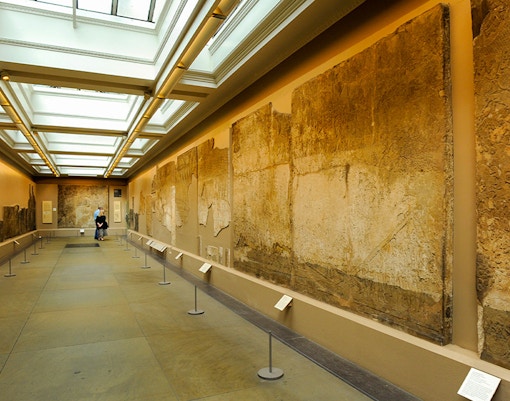
Lamassu from Nineveh

  • Date: c. 883–859 BC
  • Location: Room 6, Assyrian Sculpture Gallery

A monumental guardian figure from an Assyrian palace, this sculpture combines human, bull, and bird features, symbolising strength, intelligence, and protection.

Hoa Hakananai’a (Easter Island statue)

  • Date: c. 1200–1500 AD
  • Location: Room 24, Africa, Oceania and Americas Gallery

Carved by the Rapa Nui people, this basalt statue is linked to ancestral worship and ceremonial traditions on Easter Island in Polynesia.

Assyrian Lion Hunt reliefs

  • Date: c. 645 BC
  • Location: Room 10a, Assyrian Galleries 

These stone reliefs from the palace of Ashurbanipal depict royal lion hunts, symbolising kingship, power, and control over chaos in the Assyrian Empire.

The Standard of Ur

  • Date: c. 2600 BC
  • Location: Room 56, Mesopotamian Galleries

A decorated box from ancient Sumer showing scenes of war and peace, the Standard of Ur offers insight into early Mesopotamian society, military organisation, and ritual life.

Cyrus Cylinder

  • Date: c. 539–530 BC
  • Location: Room 52, Ancient Iran Gallery

A clay cylinder inscribed with a declaration by Cyrus the Great, this artefact records his policies following the conquest of Babylon and is often regarded as an important example of early royal inscriptions reflecting governance and cultural tolerance.

The Portland Vase

  • Date: c. 1–25 AD
  • Location: Room 70, Greece and Rome Gallery

A masterpiece of Roman cameo glass, this vase is admired for its technical precision and intricate mythological scenes carved into deep blue glass.

Visitor tips for exploring the British Museum collection

  • Plan a focused route: The collection is vast, so prioritise key areas like Egypt, Greece & Rome, or Mesopotamia instead of trying to cover everything in one visit.
  • Start early in the day: Morning hours are generally quieter, making it easier to explore major galleries without heavy crowds.
  • Use the museum map: Planning your route in advance helps you navigate efficiently and ensures you don’t miss major highlights.
  • Take regular breaks: Galleries span multiple floors and long walking distances, so short breaks help maintain energy throughout the visit.
  • Focus on highlights first: Begin with iconic objects such as the Rosetta Stone or Parthenon Sculptures before exploring lesser-known sections.
  • Allow extra time for exhibitions: Temporary exhibitions often provide a deeper context and are worth including if time allows.

Frequently asked questions about the British Museum collection

The collection includes archaeological artefacts, sculptures, manuscripts, ceramics, jewellery, coins, textiles, and decorative arts from across global civilisations, spanning prehistoric times to the modern era.