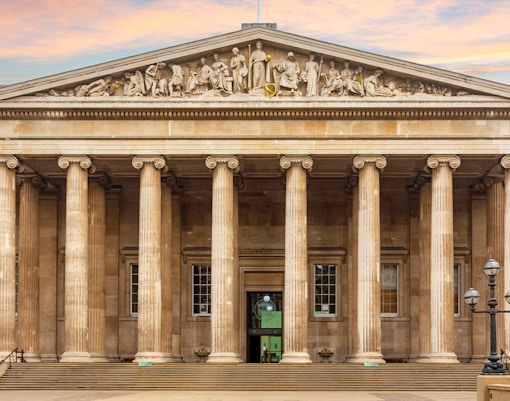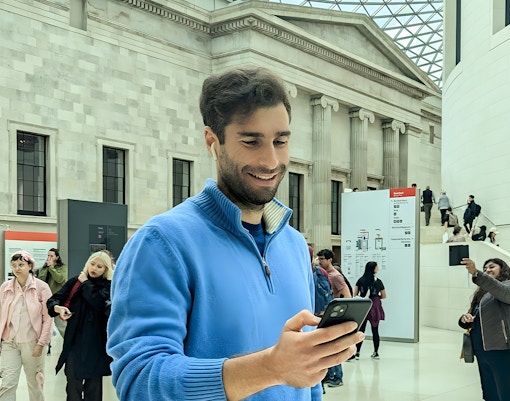
Navigate the British Museum with ease using the map

The British Museum is a large, multi-level museum spread across interconnected wings surrounding a central courtyard. Its scale and layout can feel overwhelming on a first visit, with galleries covering different eras, regions, and themes throughout the building.

A map shows how the museum is organised, highlighting major galleries, exhibition spaces, and key routes. It helps you orient yourself quickly, move between sections efficiently, and plan a focused visit without unnecessary backtracking.

Find your way around the British Museum

Key zones at the British Museum

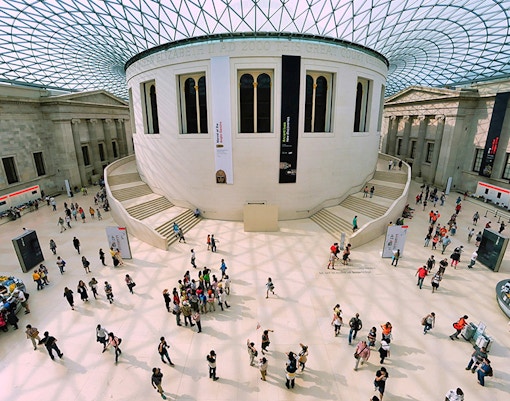
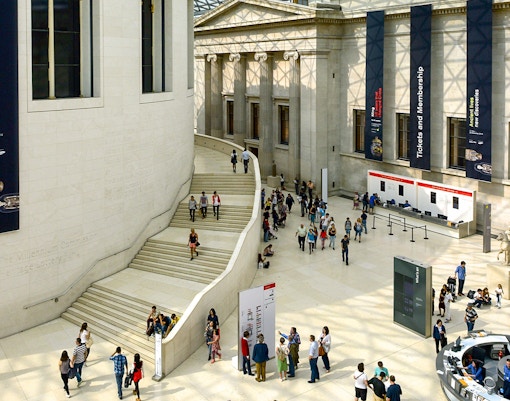
Great Court (Central Hub)

The vast glass-roofed central courtyard that forms the main orientation space of the museum, connecting all surrounding wings and galleries through clearly marked entry points.

  • Highlights: Reading Room façade, Great Court glass roof, radial entrances into all major galleries.
  • Why is it important: This is the primary navigation hub of the museum and the main reference point for planning any route through the building.
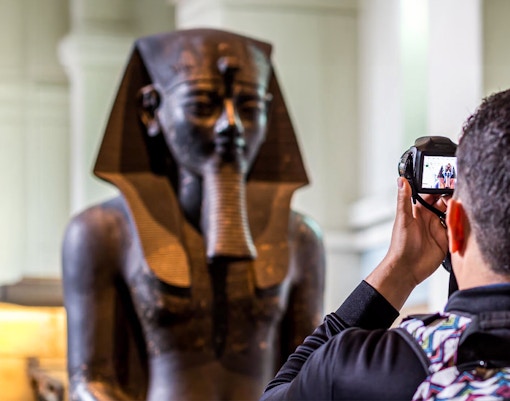

Egyptian Sculpture & Mummies Galleries

A large northern wing dedicated to ancient Egyptian civilisation, arranged across multiple interconnected rooms with dense thematic displays.

  • Highlights: Rosetta Stone, Egyptian mummies, sarcophagi, funerary artefacts, and monumental statues.
  • Why is it important: This is one of the most visited and high-density gallery areas, requiring structured time due to its scale and globally significant artefacts.

Assyrian & Mesopotamian Galleries

A sequence of galleries focused on ancient Mesopotamian and Assyrian empires, featuring monumental stone reliefs and reconstructed palace artworks.

  • Highlights: Lamassu guardian figures, palace wall reliefs, Assyrian lion hunt reliefs, and narrative stone carvings.
  • Why is it important: These galleries provide a powerful visual record of early empire storytelling and large-scale stone craftsmanship.

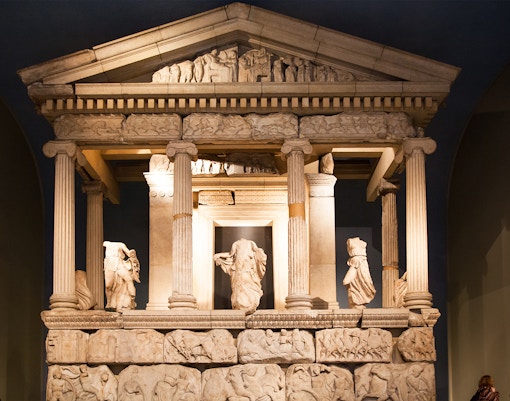
Greek & Roman Antiquities

A major classical collection space showcasing sculpture, architectural fragments, and artworks from ancient Greece and Rome.

  • Highlights: Parthenon sculptures, classical statues, temple friezes, and architectural remains.
  • Why is it important: This is one of the museum’s most internationally recognised collections and is central to classical antiquity studies.

Roman Britain & Europe Galleries

A chronological gallery area illustrating life in Britain and Europe under Roman influence through archaeological finds.

  • Highlights: Mildenhall Treasure, mosaics, jewellery hoards, and everyday Roman Britain artefacts.
  • Why is it important: It connects Roman civilisation directly to Britain, offering a strong local historical context.

Middle East Galleries

A wide gallery section covering ancient civilisations of the Near and Middle East, spanning early writing systems and organised societies.

  • Highlights: Cyrus Cylinder, cuneiform tablets, cylinder seals, and ceremonial objects.
  • Why is it important: It includes some of the earliest known examples of writing, law, and administration.

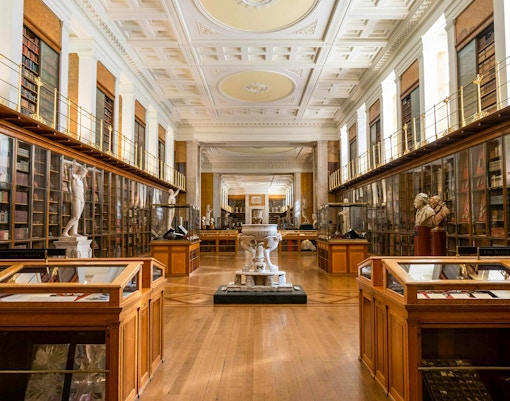
Enlightenment Gallery

A preserved 18th-century interior gallery reflecting the early formation of the British Museum’s collections and intellectual history.

  • Highlights: Original display cabinets, early scientific collections, historic artefacts.
  • Why is it important: It shows how the museum itself developed as a centre of knowledge and classification.

Asia Galleries

A continuous gallery network showcasing artistic and cultural artefacts across multiple Asian civilisations and historical periods.

  • Highlights: Chinese ceramics, Buddhist sculptures, Japanese prints, South Asian bronzes.
  • Why is it important: It represents one of the museum’s most diverse and geographically extensive cultural collections.

Must-see highlights inside the British Museum

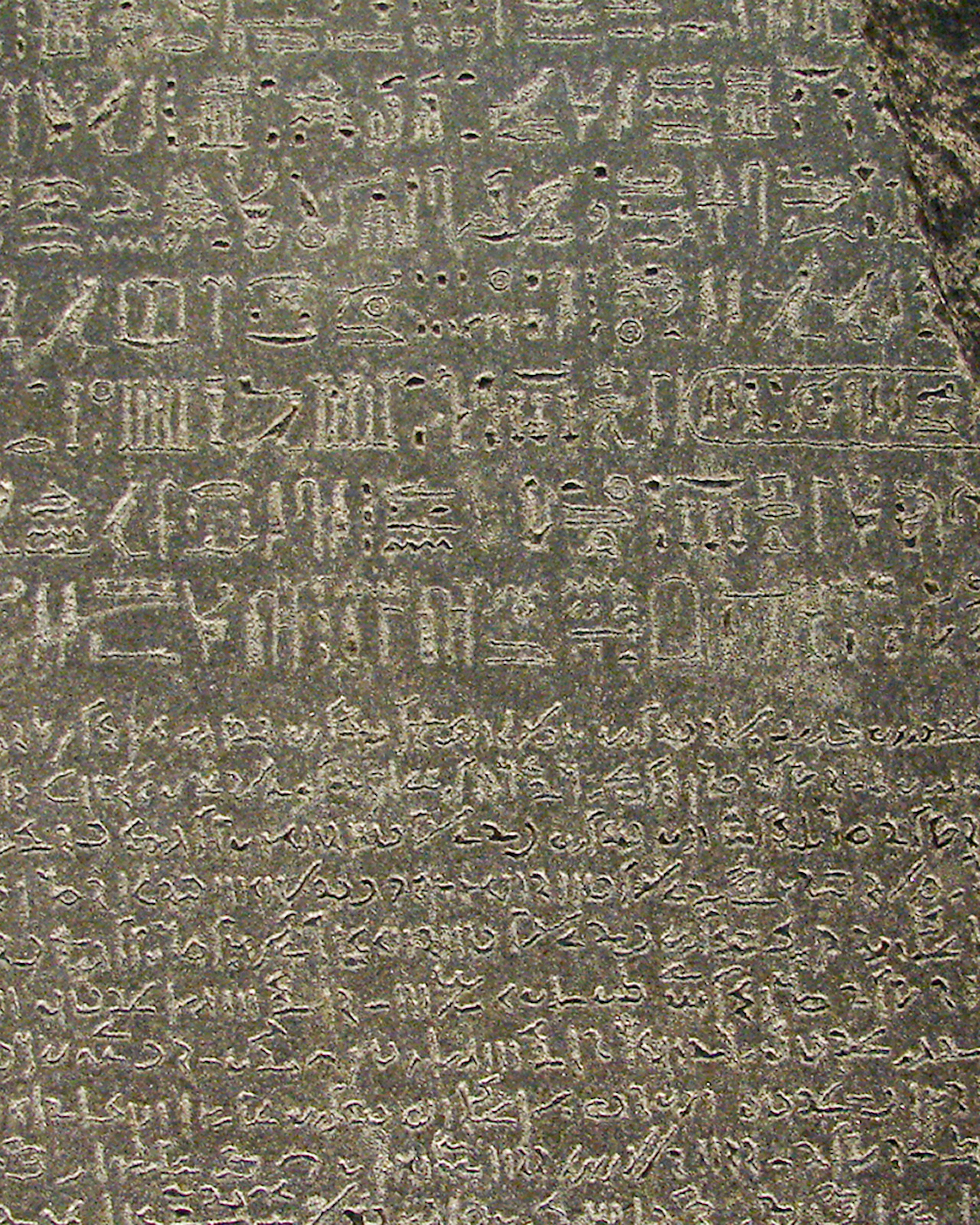
Rosetta Stone inscriptions at the British Museum, London, featuring ancient scripts.
Placeholder Image Headout Blimp
1/11

Rosetta Stone

A trilingual inscription that allowed scholars to decode ancient Egyptian hieroglyphs by comparing Greek, Demotic, and hieroglyphic scripts.

  • What makes it important: It was the breakthrough that unlocked understanding of ancient Egyptian writing and history.
  • Where is it: Egyptian Sculpture Gallery

Parthenon Sculptures (Elgin Marbles)

Original marble architectural sculptures from the Parthenon temple in Athens, including friezes and figure panels.

  • What makes it important: They preserve key elements of Classical Greek temple sculpture and are central to the study of ancient Greek art.
  • Where is it: Duveen Gallery

Egyptian Mummies

Human remains preserved through ancient embalming practices, often displayed with coffins and burial goods.

  • What makes it important: They provide direct evidence of Egyptian beliefs about death, preservation, and the afterlife.
  • Where is it: Ancient Egypt Galleries

Assyrian Lion Hunt Reliefs

Stone wall panels showing the Assyrian king Ashurbanipal hunting lions in detailed ceremonial scenes.

  • What makes it important: They communicate royal power and ideology through symbolic depictions of control over nature.
  • Where is it: Assyrian Galleries

Sutton Hoo Helmet

A reconstructed 7th-century Anglo-Saxon helmet from one of Britain’s most important ship burials.

  • What makes it important: It reveals elite craftsmanship and early medieval kingship in Britain.
  • Where is it: Early Medieval Europe Galleries

Lewis Chessmen

Medieval chess pieces carved from walrus ivory, discovered in the Outer Hebrides of Scotland.

  • What makes it important: They represent medieval gaming culture and are among the most complete surviving chess sets.
  • Where is it: Medieval Europe Galleries

Hoa Hakananai’a

A basalt moai statue from Rapa Nui with later-added ceremonial carvings.

  • What makes it important: It reflects ancestral worship and cultural change on Easter Island.
  • Where is it: Wellcome Trust Gallery

The Standard of Ur

A Mesopotamian artefact with detailed inlaid scenes showing war and peace.

  • What makes it important: It is one of the earliest known examples of narrative visual storytelling.
  • Where is it: Mesopotamia Galleries

The Cyrus Cylinder

A clay cylinder inscribed with a decree from Cyrus the Great after the conquest of Babylon.

  • What makes it important: It is often cited as an early example of governance policy and religious tolerance.
  • Where is it: Middle East Galleries

Lamassu (Assyrian Guardian Figures)

Colossal winged bulls with human heads that once guarded palace entrances in Assyria.

  • What makes it important: They symbolise protection, authority, and divine guardianship in imperial architecture.
  • Where is it: Assyrian Galleries

Portland Vase

A Roman cameo glass vessel decorated with finely carved mythological scenes in contrasting colours.

  • What makes it important: It is one of the finest surviving examples of Roman glass artistry.
  • Where is it: Roman Britain & Europe Galleries

How to navigate the British Museum efficiently

Recommended route strategy

Start from the main entrance and follow a clockwise route through the main galleries wherever possible. This aligns with natural visitor movement and helps you progress through key exhibits in a logical sequence.

Crowd hotspots

Crowding is typically heaviest around signature objects such as the Rosetta Stone, Egyptian mummies, and the Parthenon Sculptures. These areas tend to slow movement due to longer viewing times and photo stops, especially during mid-day peak hours.

Best entry timing

Arrive early or just after opening when galleries are quieter and easier to navigate. This gives you a smoother start before peak visitor flow builds up across major sections.

Timings

On-site navigation approach

Decide your priority highlights before entering. Once inside, stick to a planned direction rather than switching between distant galleries. This reduces backtracking and keeps your route efficient.

Tips for using the British Museum map

  • Study the map before entry: Get a quick sense of the gallery layout so you can identify where key highlights sit and avoid wandering aimlessly once inside.
  • Mark your must-see route on the map: Pin your priority objects (like the Rosetta Stone, Parthenon Sculptures, Egyptian Mummies) and connect them into a logical walking path.
  • Follow the map in one direction: Use a clockwise or linear flow shown on the map to reduce backtracking between distant galleries.
  • Use the map to avoid congestion zones: Identify dense highlight areas in advance and plan to pass through them early or during off-peak times.
  • Time your movement using the map: Break your route into sections (start / mid / final zones) so you can pace your visit instead of rushing or doubling back.
  • Refer back to the map at junction points: Use central intersections and gallery crossroads to reorient yourself and stay on your planned route.

Frequently asked questions about the British Museum map

Yes, the British Museum provides physical maps at the entrance and information desks. Digital versions are also available on the official museum website, helping visitors navigate galleries, highlights, and facilities more easily.