The British Museum was founded in 1753 through Sir Hans Sloane’s bequest and opened in 1759 at Montagu House. It established the world’s first free public national museum, transforming access to knowledge and collections.
British Museum history | A fascinating journey through time and discovery
The British Museum stands as one of the world’s great gateways to human history, where over eight million objects trace the story of civilisations across continents and millennia. Founded in 1753, it was the first national public museum in the world, built on the bold idea that knowledge should be open to everyone—not locked away for the privileged few.
Walking through its grand halls, you move from ancient Egypt to classical Greece, from the Roman Empire to distant Asian dynasties, all under one roof in the heart of London. It’s more than a museum—it’s a journey through time, culture, and the shared story of humanity.
British Museum timeline
• 1753: Founded by Act of Parliament
The British Museum is established through the bequest of Sir Hans Sloane, creating the world’s first national public museum.
• 1759: Museum opens to the public
The museum opens in Montagu House, Bloomsbury, offering free access to its growing collection.
• 1802: Rosetta Stone enters the collection
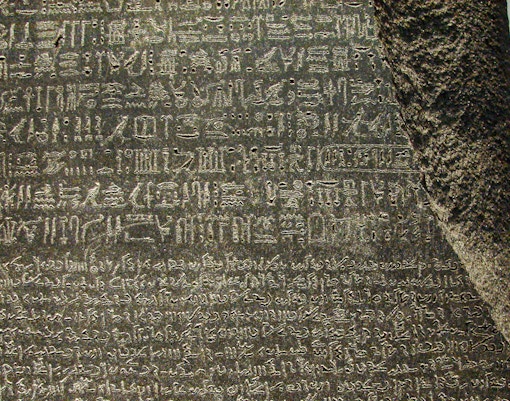
The Rosetta Stone arrives in London after being taken during the French campaign in Egypt, later becoming key to deciphering Egyptian hieroglyphs.
• 1801–1816: Elgin Marbles acquired
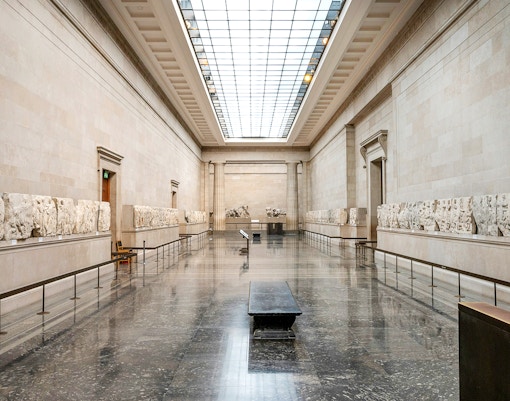
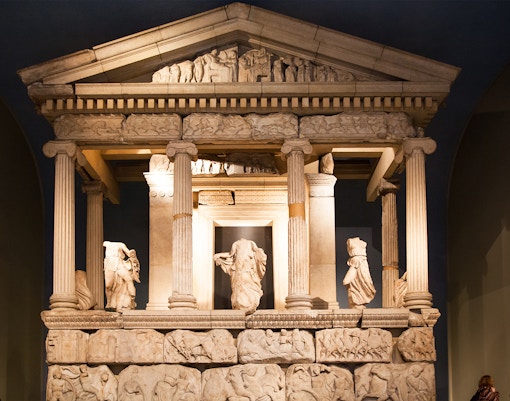
Sculptures from the Parthenon in Athens are brought to Britain and later formally acquired by the museum in 1816.
• 1823–1852: Construction of the new museum building
Sir Robert Smirke designs the Greek Revival building that gradually replaces Montagu House and forms the core of the museum today.
• 1857: The Round Reading Room opens
A major scholarly space is completed at the centre of the museum, later used by leading thinkers and writers.
• 1939–1945: World War II protection of collections
Key artefacts are evacuated and stored safely outside London to protect them during wartime bombing.
•1973–1997: British Library separated and moved to St Pancras
The library collections are formally separated from the museum to become an independent institution, with the historic collections later moving to St Pancras, enabling major redevelopment of museum spaces.
• 2000: The Great Court opens
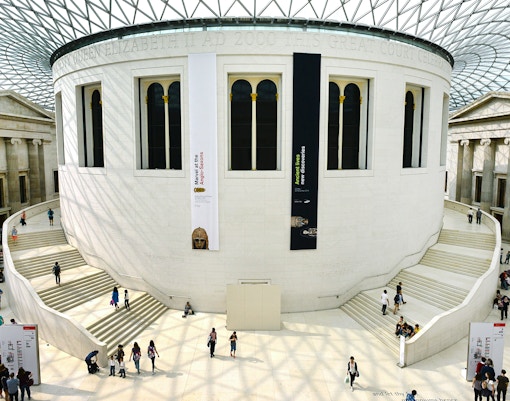
Queen Elizabeth II inaugurates the restored central courtyard with its iconic glass roof, designed by Foster and Partners.
• 2020s–Present: Modernisation and redevelopment
The museum continues conservation work, digital expansion, and long-term redevelopment planning for its historic Bloomsbury site.
British Museum’s history explained
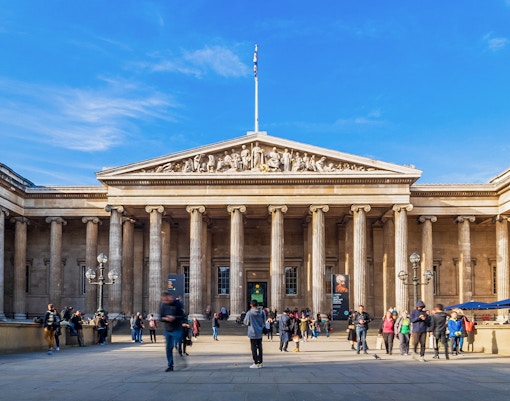
Early foundations (1753–1759)
Early discoveries & breakthroughs (1800–1820s)
This era shaped the museum’s global significance. The Rosetta Stone arrived in 1802 and enabled Champollion’s 1820s decipherment of Egyptian hieroglyphs, a major archaeological breakthrough. The Elgin Marbles were also acquired, reinforcing its role in classical antiquity debates.
Empire-era collection expansion (19th century)
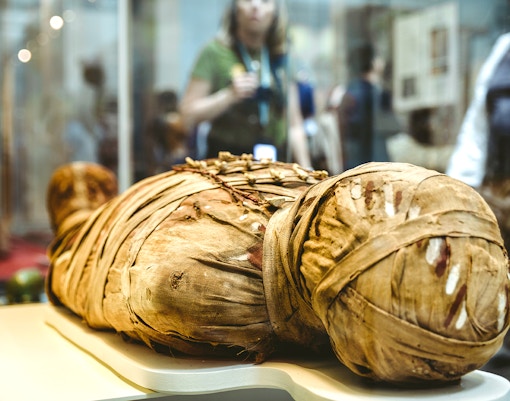
The 19th century saw rapid expansion through large-scale excavations in Egypt, Assyria, and Mesopotamia. Systematic fieldwork and imperial collecting built one of the world’s most comprehensive ancient civilisation collections, shaping the museum’s global archaeological authority.
Neoclassical transformation (1820s–1850s)
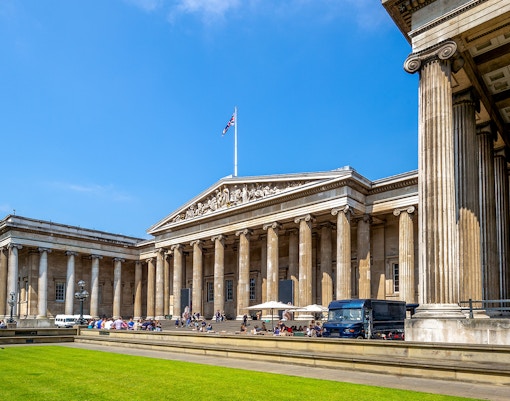
Sir Robert Smirke redesigned the museum in grand Greek Revival style, replacing Montagu House with a monumental neoclassical structure. This architectural transformation reflected Enlightenment ideals of order, learning, and permanence in stone.
Early 20th-century growth & modernization (1900s–1930s)
The museum entered a phase of institutional development, with expanding departments, improved curation practices, and strengthened research frameworks. This period marked a shift toward a more structured, modern museum system before the disruptions of World War II.
War, evacuation & preservation (1939–1945)
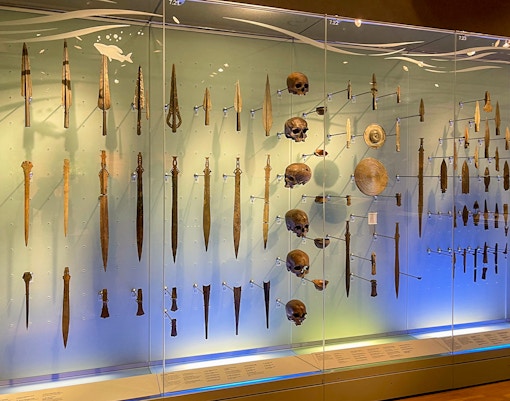
During World War II, major collections were evacuated from London to protect them from bombing. While the building sustained damage during air raids, careful preservation efforts ensured the survival of priceless artefacts and reinforced the museum’s resilience.
Post-war restructuring (1945–1990s)
Post-war decades brought major institutional change, including the separation of the British Library in 1973 and its relocation in 1997. These reforms redefined the museum’s focus and allowed greater emphasis on archaeology, art, and cultural heritage.
Contemporary transformation (2000–present)
The opening of the Great Court in 2000 reshaped the museum’s architecture and visitor experience. Since then, ongoing redevelopment, conservation, and debates around cultural ownership have defined its modern identity as a global cultural institution.
Construction and architecture of the British Museum
The architecture of the British Museum reflects nearly two centuries of expansion, combining neoclassical design with later modern interventions to create one of London’s most iconic cultural landmarks.
The main building was designed in the 19th century by Sir Robert Smirke in a Greek Revival style inspired by ancient classical temples. Constructed mainly between the 1820s and 1850s, it replaced Montagu House and was built using Portland stone and brick, creating a monumental and durable structure that defines the museum today.
A major architectural highlight is the Round Reading Room, completed in 1857 by Sydney Smirke. Built using cast iron and topped with a large domed ceiling, it became both an engineering achievement of its time and an important scholarly space within the museum.
In 2000, the museum was transformed by the Great Court project, designed by Norman Foster and Foster + Partners. This renovation enclosed the central courtyard with a glass-and-steel roof, dramatically improving circulation and creating a striking modern space within the historic building.
British Museum today: Why it matters
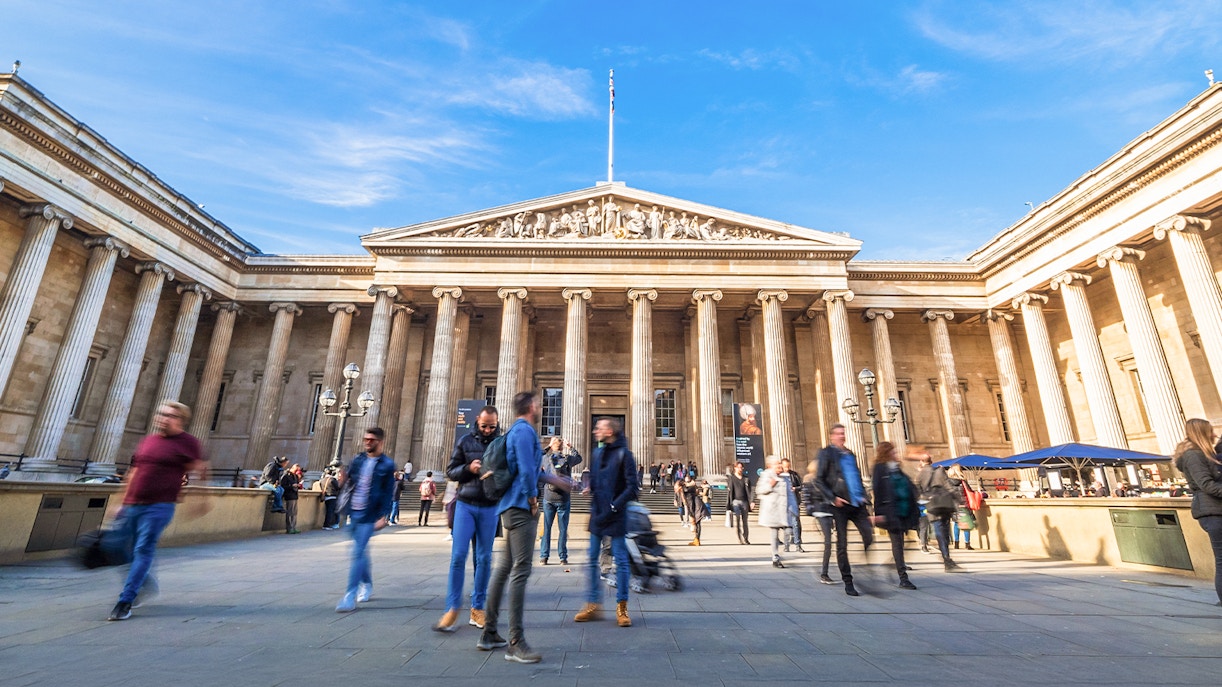
Today, the British Museum stands as a leading global cultural institution governed by a board of trustees and supported by public funding. It preserves over eight million objects spanning human history, serving as a key centre for the study of world civilisations.
Its collection includes the Rosetta Stone, Egyptian mummies, Assyrian reliefs, and the Parthenon Sculptures. With free access, its galleries connect history, art, and scholarship across cultures and continents.
Beyond its displays, the museum plays a major role in research, conservation, and global cultural dialogue, continuing to shape how human history is studied, preserved, and understood.
Frequently asked questions about the British Museum’s history
The British Museum was established in 1753 through an Act of Parliament following Sir Hans Sloane’s bequest. It opened to the public in 1759 in Montagu House, Bloomsbury.
It was created as a free public institution to house collections of natural history, art, and antiquities, making knowledge and cultural heritage accessible to everyone.
It was the world’s first national public museum and became a major centre for archaeology, scholarship, and global cultural exchange through its vast and diverse collections.
Key artefacts include the Rosetta Stone, Egyptian mummies, Assyrian reliefs, and the Parthenon Sculptures, each playing a major role in archaeology and historical study.
It evolved from Montagu House into a major neoclassical complex in the 19th century, expanded its global collections during the imperial era, and modernised significantly in the 20th and 21st centuries.
Major collections were evacuated for protection from air raids, and the building sustained damage, but careful planning ensured the survival of its most valuable artefacts.
Opened in 2000, the Great Court transformed the museum’s central courtyard into a large public space covered by a glass roof, improving access and visitor flow.
Yes, general admission remains free, reflecting its founding principle of making knowledge and cultural heritage accessible to all.


