- Official name: The British Museum
- Nature of attraction: Public museum and cultural landmark
- Location: Great Russell Street, Bloomsbury, London WC1B 3DG, United Kingdom
- Founded: 1753
- Main building completed: 1852
- Architectural style: Greek Revival architecture
- Main architects: Sir Robert Smirke, Sydney Smirke, Foster and Partners
- Key architectural highlights: Grand colonnaded façade, Great Court glass roof, Reading Room, Greek-inspired columns, and triangular pediment
- Building features: 43 Ionic columns, a monumental entrance staircase, and the two-acre covered Great Court
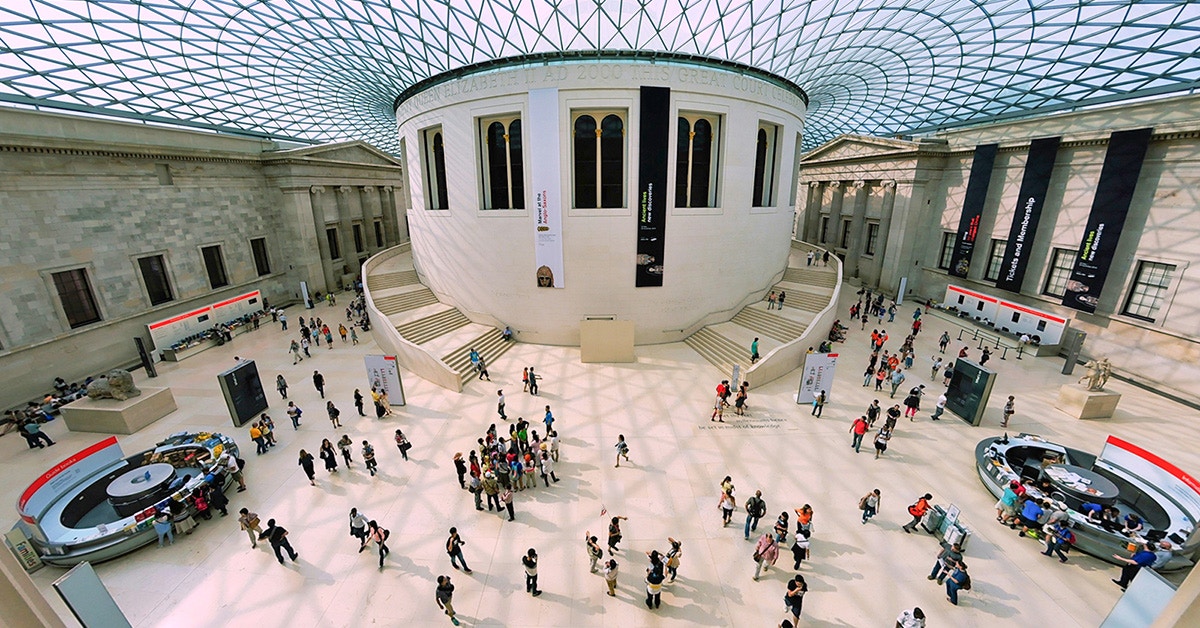
- Famous modern addition: The Queen Elizabeth II Great Court, opened in 2000 with a glass-and-steel roof designed by Foster and Partners
British Museum architecture | Greek Revival design and classical interiors
The British Museum is one of London’s greatest architectural landmarks, celebrated for its grand Greek Revival design and monumental columns. Designed by Sir Robert Smirke and completed in the mid-19th century, the museum blends neoclassical elegance with modern additions like the striking Great Court roof, making it a must-see for architecture and history lovers alike.
British Museum architecture | Quick overview
Architectural styles & influences of the British Museum
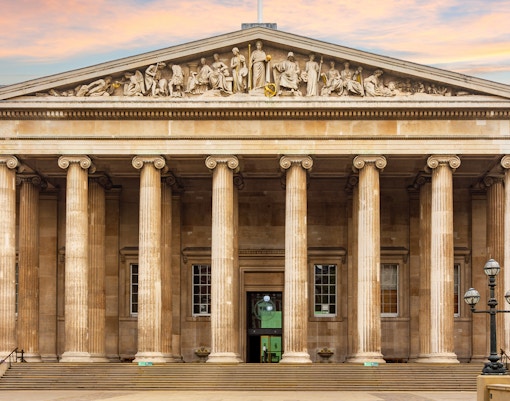
Greek Revival foundations
The British Museum is a leading example of Greek Revival architecture in the United Kingdom, inspired by the temples and public buildings of ancient Greece. Designed by Sir Robert Smirke, it reflects a period when Britain linked classical Greek design with knowledge, democracy, and cultural prestige.
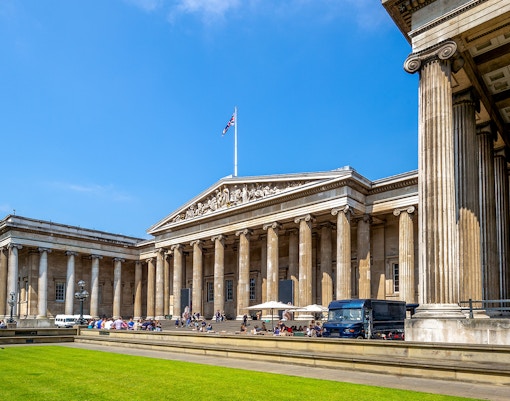
Classical design features
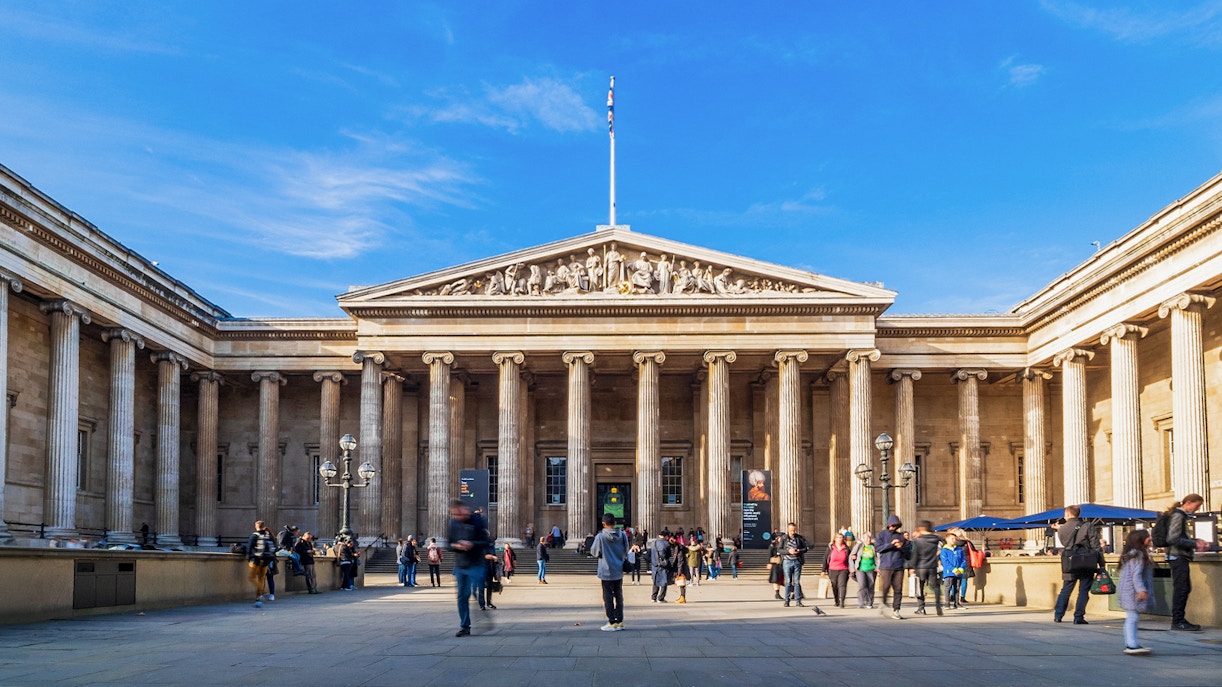
The museum’s most recognizable feature is its south façade, with 43 Ionic columns and a triangular pediment. Its symmetry and clean lines reflect neoclassical design seen in landmarks such as London’s National Gallery and the US Capitol.
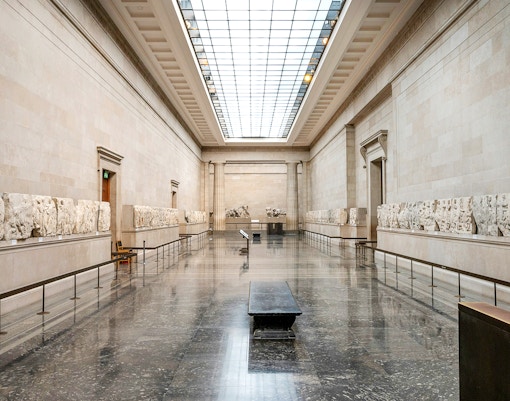
Interior architecture & spatial planning
Inside, the museum continues its neoclassical design language with galleries, high ceilings, and wide corridors arranged in an orderly layout. The architecture balances elegance with functionality, allowing natural light and proportion to shape the visitor experience.
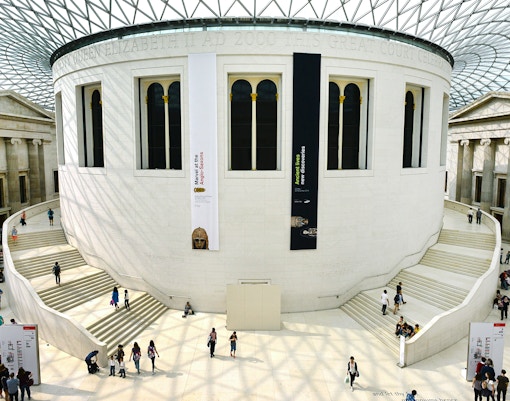
The modern Great Court transformation
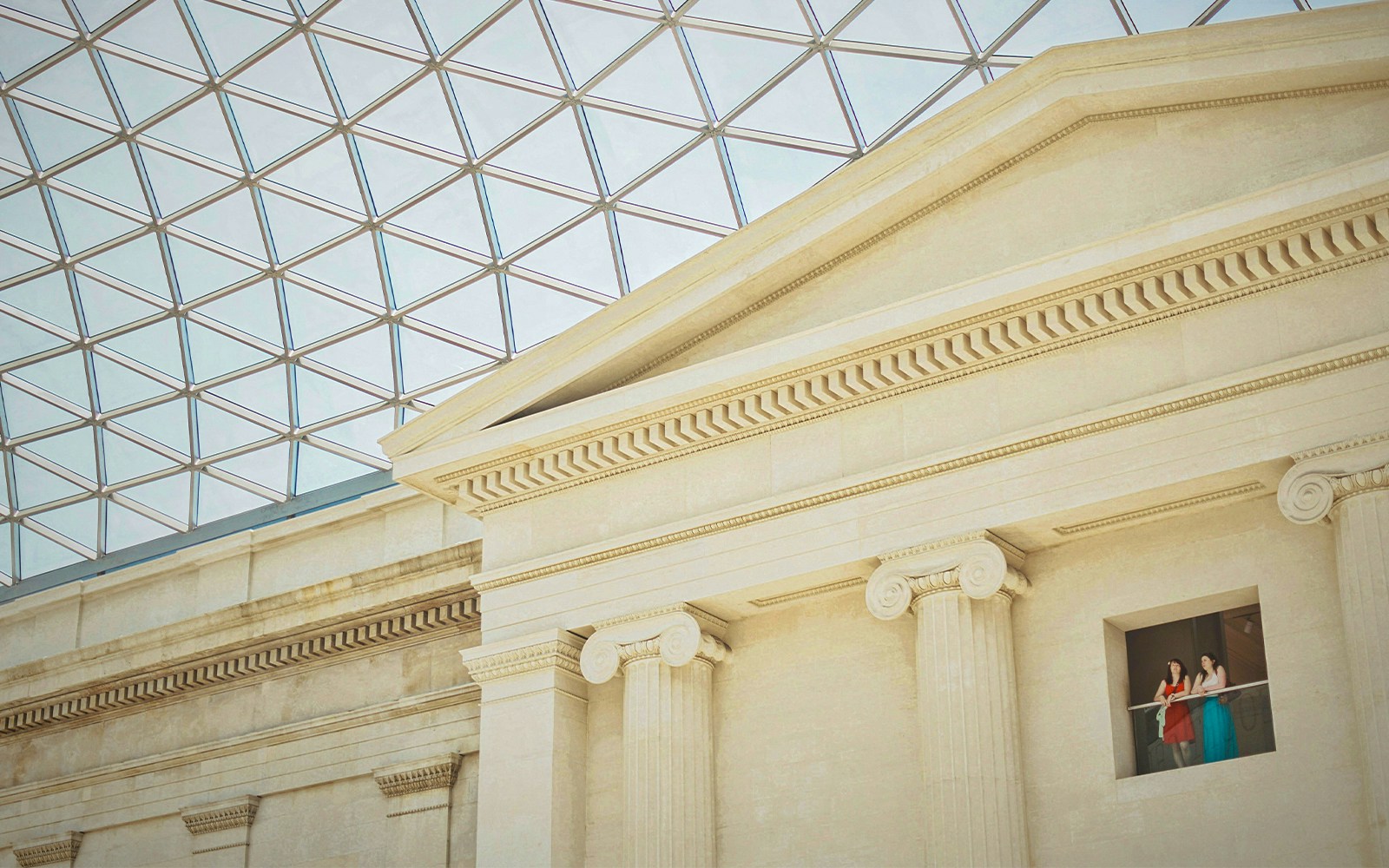
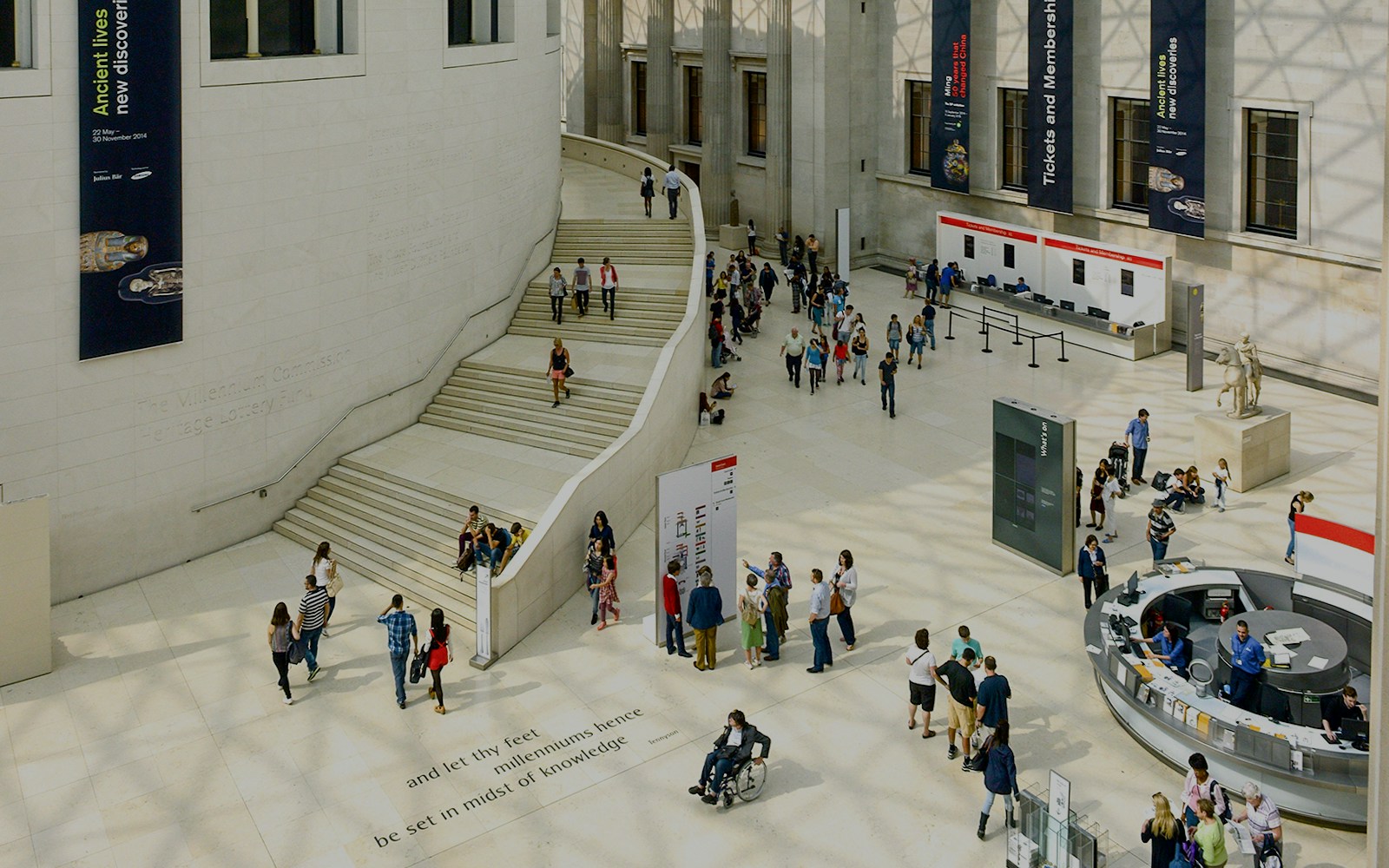
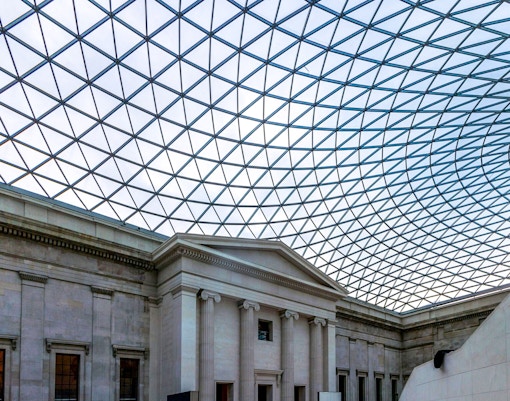
In 2000, the museum unveiled the Queen Elizabeth II Great Court, designed by Foster + Partners. Its glass-and-steel roof of over 3,000 unique panes transformed the central courtyard into one of Europe’s largest covered public squares, blending modern transparency with the museum’s Greek Revival architecture.
Architectural highlights & iconic features of the British Museum
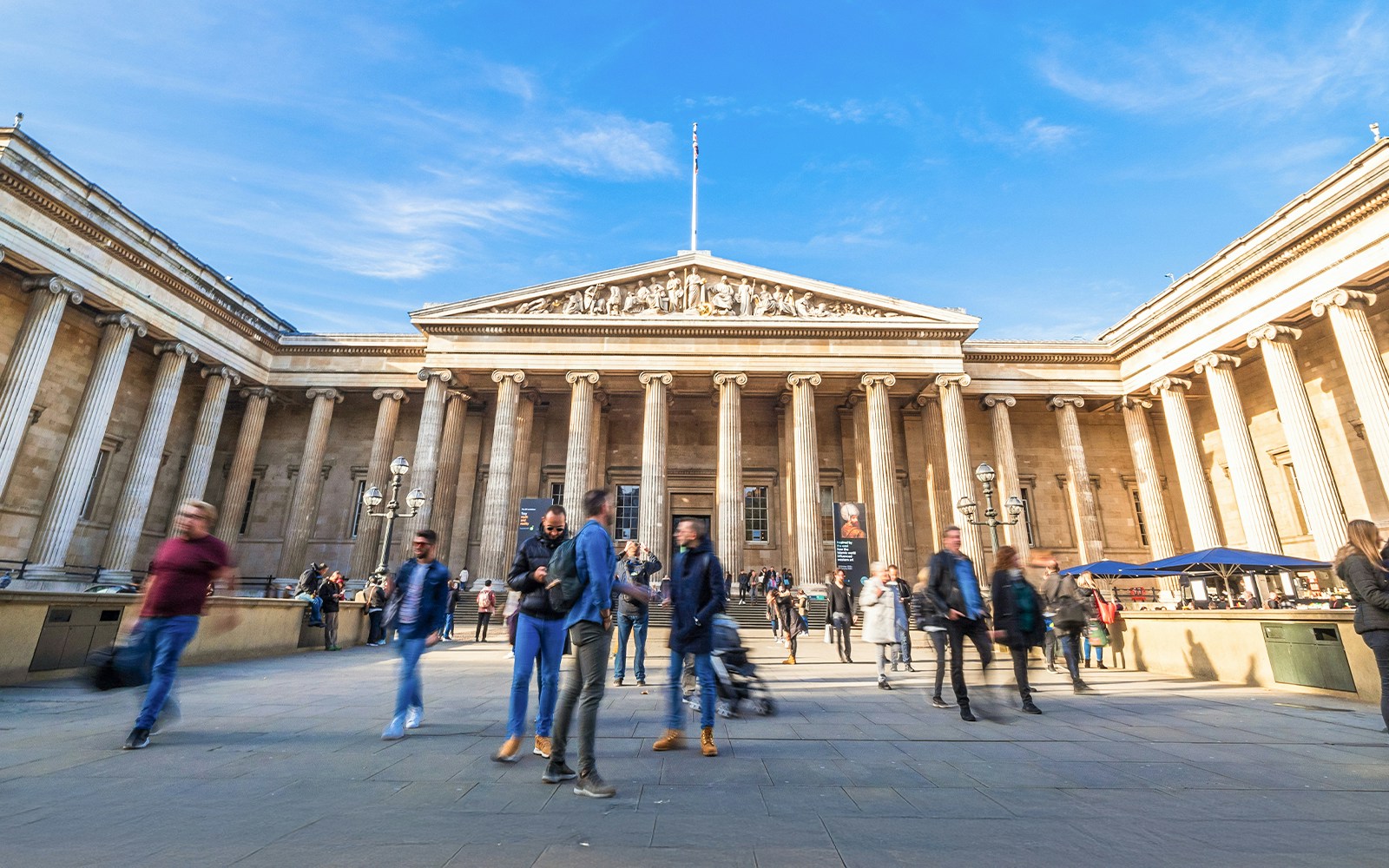
The South Portico
Inspired by ancient Greek temples, the museum’s grand south entrance features towering Ionic columns, massive stone steps, and a monumental neoclassical façade.
Who designed the British Museum?
Sir Robert Smirke
Sir Robert Smirke was the principal architect behind the British Museum’s Greek Revival design. He envisioned the museum as a “temple of knowledge,” inspired by the symmetry of ancient Greek architecture. His design introduced the museum’s south façade, Ionic columns, and neoclassical layout that still define the building today.
Sydney Smirke
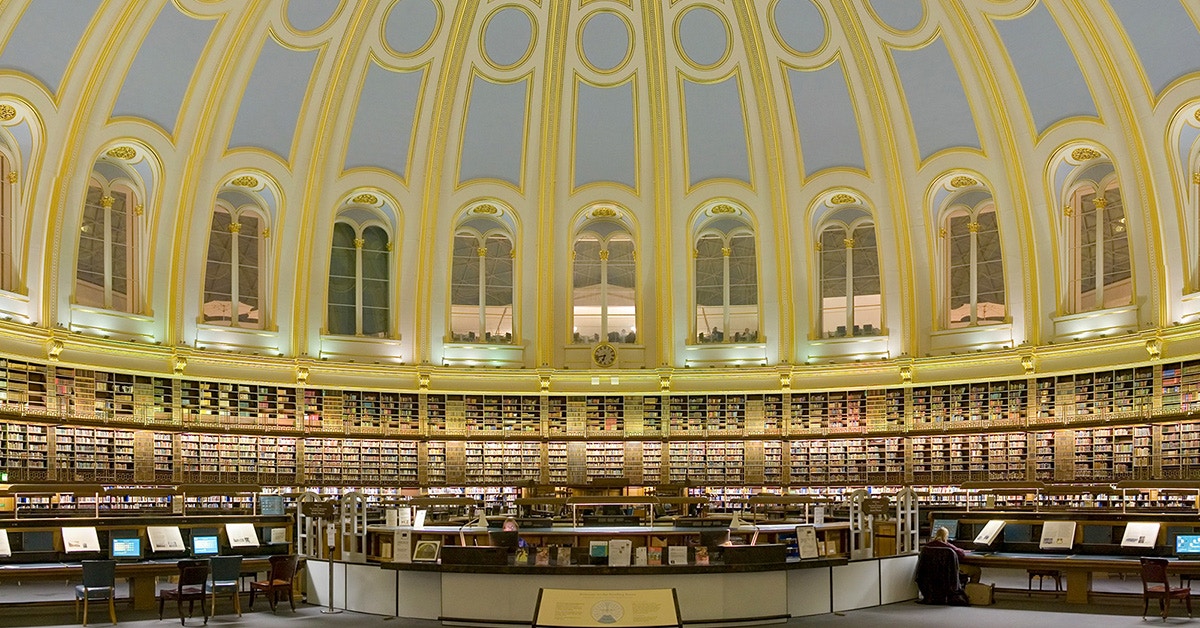
Sydney Smirke, Sir Robert Smirke’s younger brother, later contributed to the museum’s expansion and designed the famous Round Reading Room in the mid-19th century. His work blended with the original neoclassical architecture while creating one of the museum’s most recognizable interior spaces.
Foster and Partners
In 2000, the architectural firm Foster and Partners transformed the museum by creating the Queen Elizabeth II Great Court. Led by Norman Foster, the project introduced a modern glass-and-steel roof designed to bring openness, transparency, and natural light into the historic complex.
History of the British Museum’s architecture
Montagu House and the museum’s beginnings (1753–1823)
The British Museum was founded in 1753 and first housed in Montagu House, a 17th-century mansion in Bloomsbury. As the collection expanded, the building became overcrowded, prompting plans for a purpose-built structure reflecting Britain’s growing cultural ambitions.
Sir Robert Smirke’s Greek Revival masterpiece (1823–1852)
In 1823, Sir Robert Smirke redesigned the museum in the Greek Revival style, inspired by ancient Greek temples. Built in phases over nearly 30 years, it replaced Montagu House with the neoclassical landmark seen today, defined by its Ionic colonnade, symmetry, and monumental south façade.
The Round Reading Room and Victorian expansion (1850s)
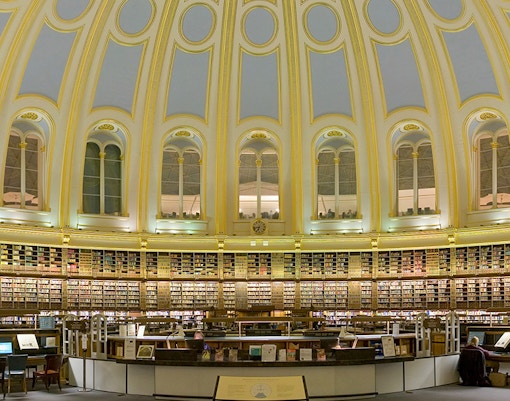
Sydney Smirke completed the Round Reading Room in 1857, a domed circular space that became one of the world’s most important scholarly rooms. The museum continued expanding throughout the Victorian era as its collections grew.
The Great Court transformation (1997–2000)
Between 1997 and 2000, Foster + Partners transformed the central courtyard into the Queen Elizabeth II Great Court. Its glass-and-steel roof of over 3,000 panes created one of Europe’s largest covered public squares, blending modern design with the historic building.
The exterior of the British Museum
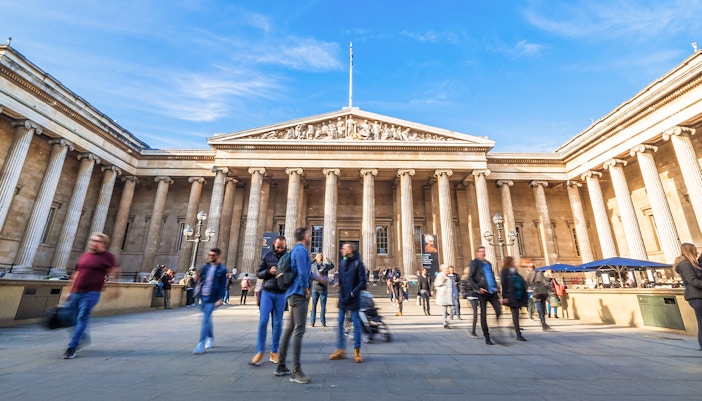
The grand south façade
The museum’s exterior is a key example of Greek Revival architecture, designed by Sir Robert Smirke in the 19th century. The south façade runs along Great Russell Street with strict symmetry and temple-like form, expressing knowledge, permanence, and civic authority.
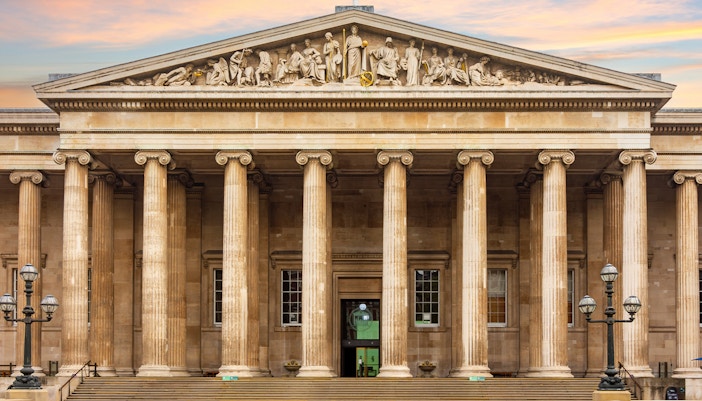
The Ionic colonnade & classical portico
An Ionic colonnade forms the main entrance, with tall columns topped by spiral volutes inspired by ancient Greek temples. Their spacing creates a steady visual rhythm, drawing the eye toward the entablature and pediment through classical balance and proportion.
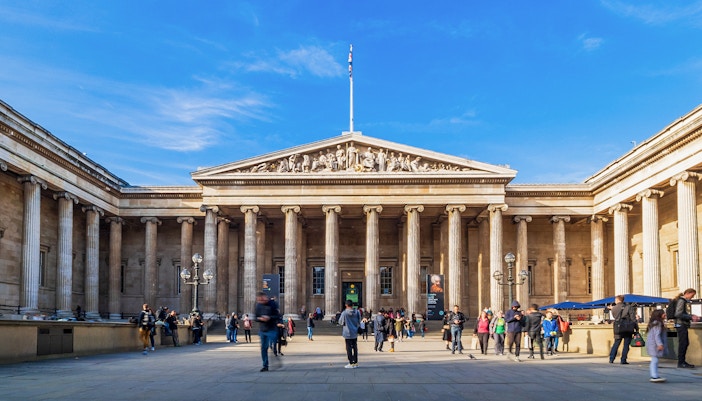
The pediment sculptures
Above the entrance sits Richard Westmacott’s The Progress of Civilisation (1851). The sculpted pediment compresses a narrative of human advancement—moving from early life to art, science, and learning—reinforcing the museum’s identity as a “temple of knowledge” in stone.
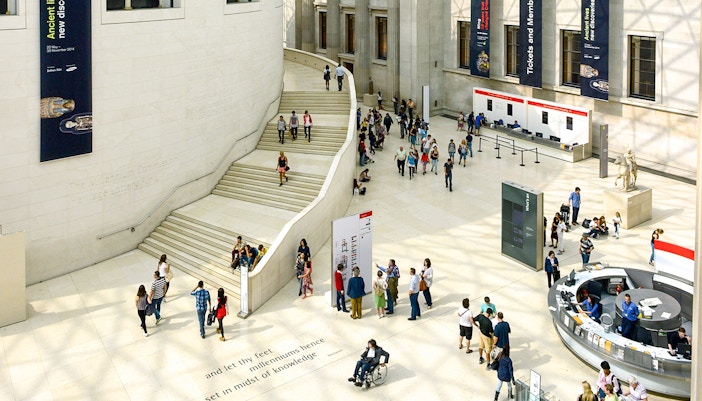
The monumental entrance staircase
A broad stone staircase rises from street level to the portico, creating a deliberate sense of ascent. This transition heightens the approach, aligning movement with the building’s axial symmetry and reinforcing its ceremonial character.
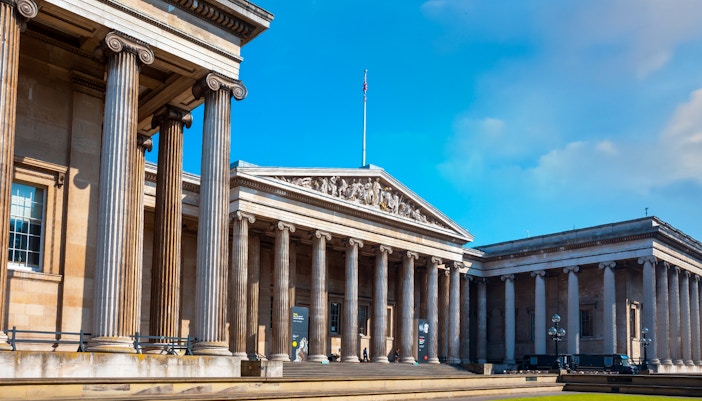
Portland stone & material presence
Built in brick and faced with pale Portland stone, the façade has a unified, luminous appearance. Subtle weathering and carved details become clearer up close, while from a distance it reads as a continuous classical mass shaped by light and shadow.
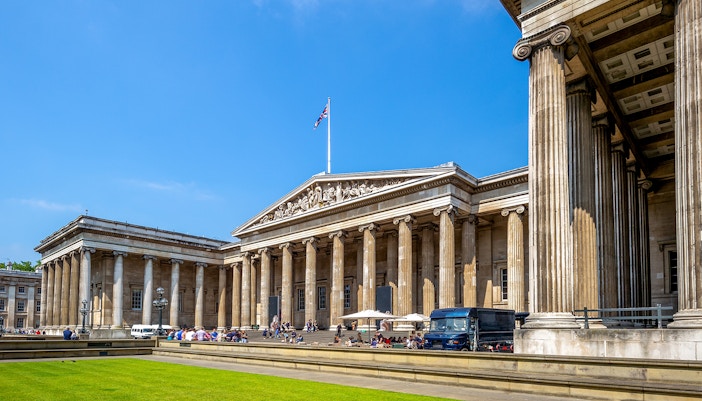
Symmetry & neoclassical order
The exterior is governed by strict symmetry and proportion, from column spacing to façade layout. This geometry reflects neoclassical ideals of clarity and rational order, presenting the museum as an expression of cultural authority and stability.
The interior of the British Museum
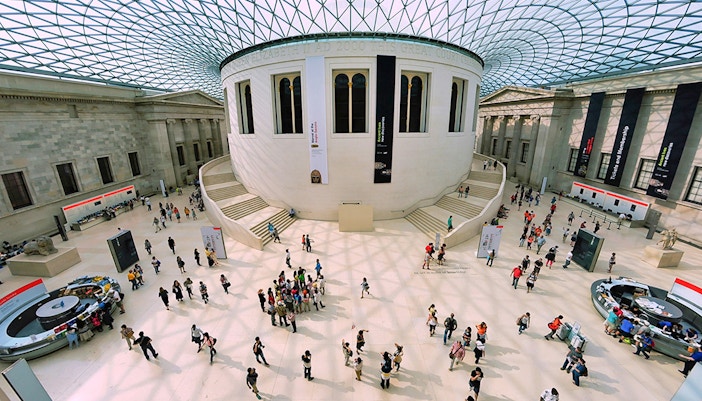
The Great Court
The Queen Elizabeth II Great Court is the museum’s central interior, designed by Norman Foster and Foster and Partners and completed in 2000. It transformed the former courtyard into a vast covered public square beneath a glass-and-steel roof made of over 3,000 unique panes.
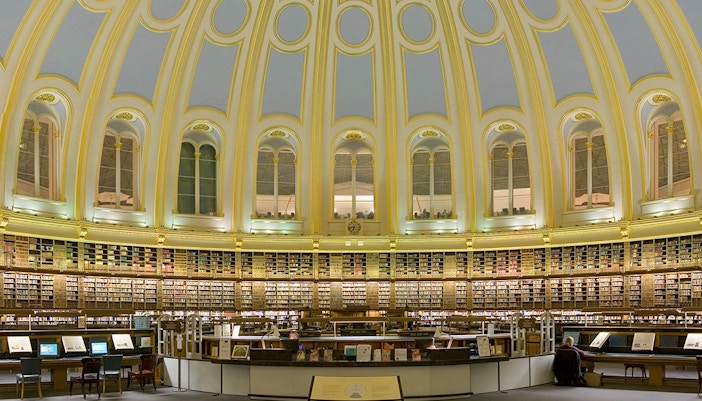
The Reading Room
At the centre of the Great Court sits the Reading Room, a circular neoclassical structure completed in the 19th century. Its domed ceiling creates a highly ordered interior once used for study and research.
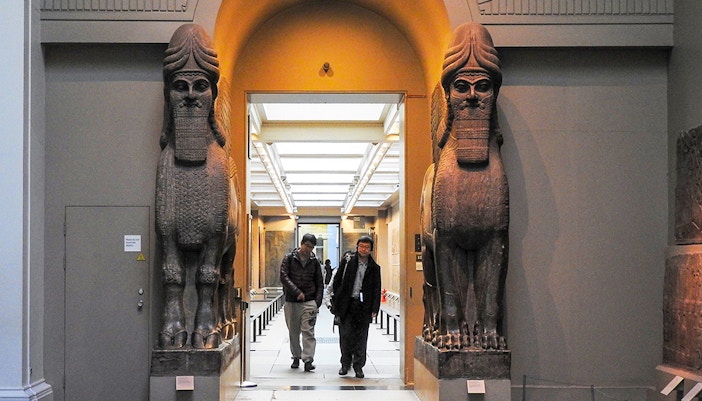
Weston Hall
Weston Hall forms the principal interior entrance space of the museum and acts as a key transition between the exterior façade and internal galleries. Designed by Sydney Smirke, it features a grand central staircase and classical detailing that reflect the museum’s neoclassical language.
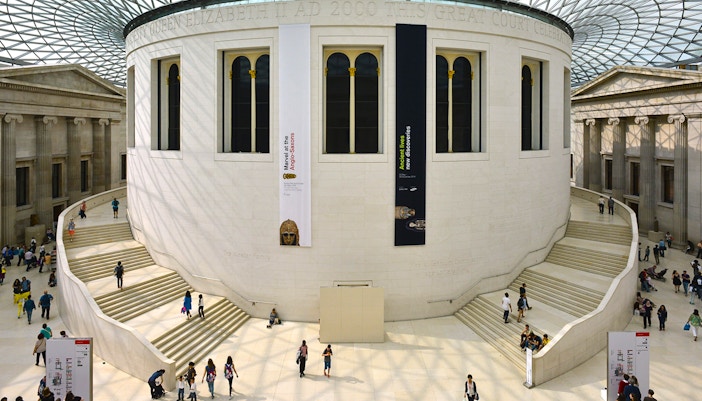
The main staircases & circulation system
Wide stone staircases and long corridors connect the museum’s galleries across multiple levels. These circulation spaces emphasize clarity, proportion, and movement, using height and repetition to guide spatial flow through the building.
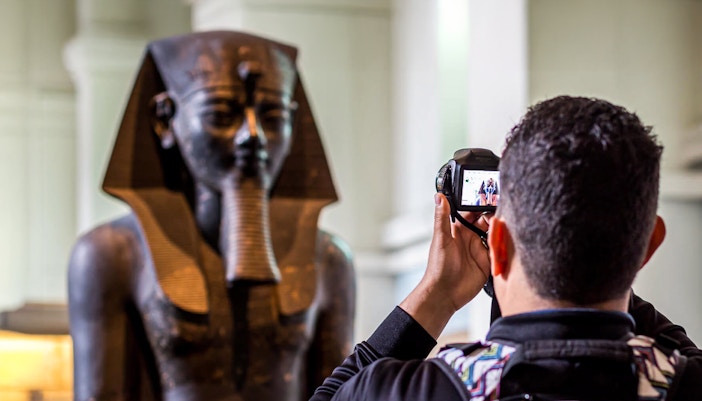
The galleries
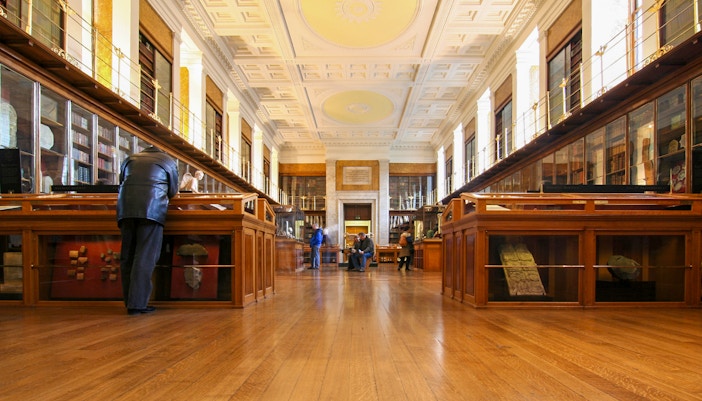
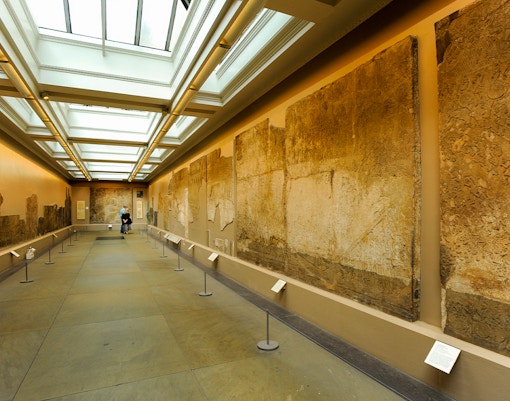
The galleries are arranged as long, linear interior spaces with consistent proportions and high ceilings. This ordered layout reflects Enlightenment principles of classification, where architecture supports structured display and logical progression through collections.
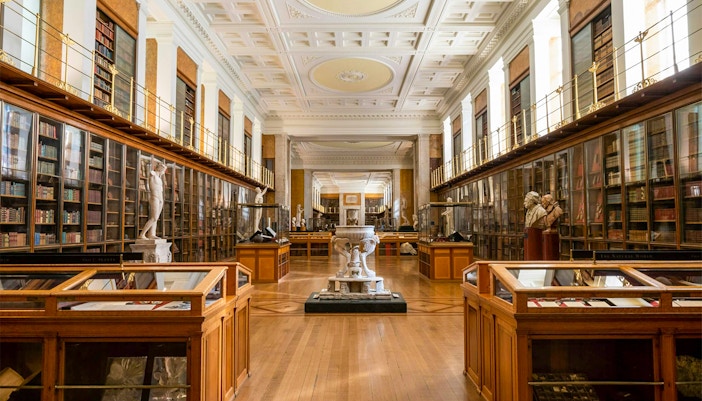
The King’s Library / Enlightenment Gallery
The Enlightenment Gallery is one of the museum’s most significant historic interiors. Retaining its 19th-century neoclassical character, it features wooden bookcases, and refined proportions that reflect its original scholarly function.
Frequently asked questions about the British Museum’s architecture
The British Museum is designed in the Greek Revival neoclassical style, inspired by ancient Greek temples. Its use of Ionic columns, symmetry, and stone construction reflects ideals of order, knowledge, and permanence.
The main building was designed by Sir Robert Smirke in the 19th century. Later additions include the Round Reading Room by Sydney Smirke and the Queen Elizabeth II Great Court by Norman Foster and Foster and Partners.
Greek Revival was chosen to reflect Enlightenment ideals of learning, democracy, and cultural authority. The temple-like design presents the museum as a symbolic “house of knowledge” built to inspire learning and public education.
The monumental south façade is the most iconic feature, defined by its Ionic colonnade and sculpted pediment. It establishes the museum’s classical identity and is one of the most recognisable architectural landmarks in London.
The Great Court is a modern architectural transformation completed in 2000. Its glass-and-steel roof encloses the former courtyard, creating a vast covered public space and connecting the historic buildings around it with natural light.
The interior is organised around long, symmetrical gallery spaces and grand circulation routes. This layout reflects Enlightenment principles of classification, using order and proportion to guide movement through the museum.
Modern architecture is expressed in the Queen Elizabeth II Great Court, where glass and steel contrast with the original neoclassical stone structure. The design adds transparency and openness while respecting the historic symmetry of the building.