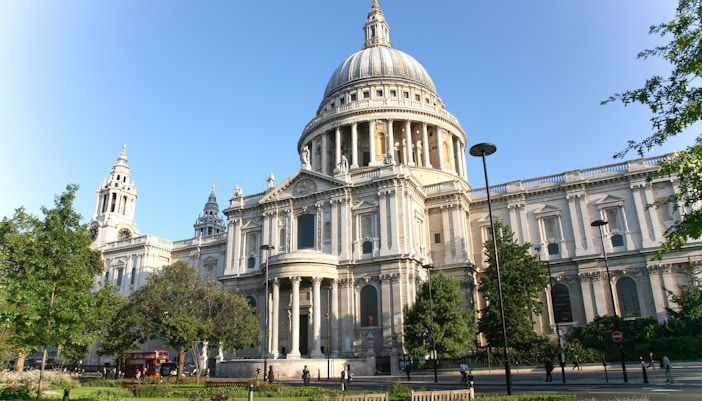
Budget 1.5–2.5 hours for a full visit, or about 1 hour if you plan to stay on the cathedral floor and in the crypt. The longer end comes from the dome climb: 528 steps, photo stops, and occasional brief holds near the galleries when traffic builds. Start as close to opening as you can. Enter through the west front, collect the multimedia guide, take in the nave and high altar first, and then begin the ascent before late-morning tour groups thicken.
Quick Information
RECOMMENDED DURATION
2 hours
Timings
Closed today
VISITORS PER YEAR
2000000
TICKETS
From $35.77
EXPECTED WAIT TIME - STANDARD
0-30 mins (Peak), 0-30 mins (Off Peak)
Did you know?
St Paul's Cathedral is the fourth church to be built on the site.
St Paul's Cathedral has one of the largest domes in the world, with a height of 366 feet.
The Whispering Gallery in the cathedral is built in such a way that if you whisper in one end of the room, you can hear it in the other end!
Is St. Paul’s Cathedral worth visiting?
You feel St. Paul’s before you understand it. The nave opens wide, the dome lifts your eyes almost involuntarily, and the whole building seems engineered to slow your pace. Even on a busy day, there is a moment when the city noise drops away, and the scale of the place takes over.
It was built to restore London’s confidence after the Great Fire, and that ambition still shapes the visit. Christopher Wren did not design a modest parish church; he designed a national statement, one that could hold worship, ceremony, grief, and celebration under a single dome.
The payoff is not just beauty, but perspective. You leave having seen London from above, its heroes buried below, and its public memory gathered in one building. Few places let you read the city so clearly.
Skip it if: narrow staircases, heights, or long stair climbs turn a visit into work rather than pleasure.
What to see inside St. Paul’s Cathedral?
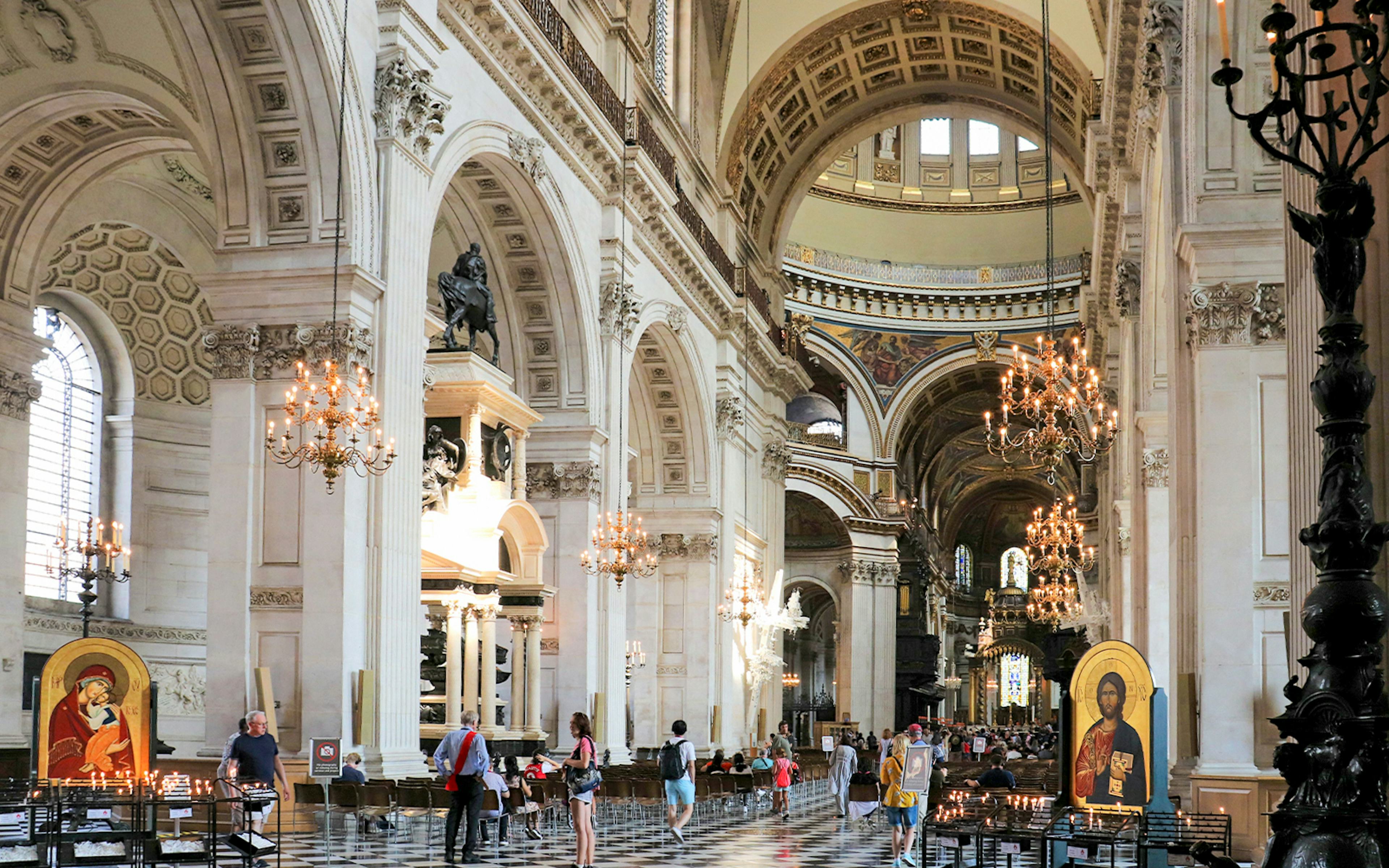
1/7
The nave
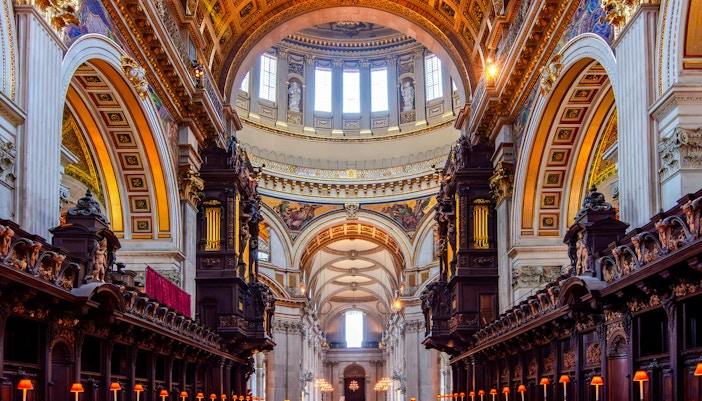
Your first view is all scale: patterned floor, long processional space, and the dome rising beyond. Pause here before climbing, because this central axis feels most legible before late-morning groups fill the floor.
The dome mosaics
Stand beneath the inner dome and look up slowly. Painted scenes from St. Paul’s life and gilded decoration reward patient viewing, and this is where the cathedral feels less like a landmark and more like staged drama.
The Whispering Gallery
Reached after 257 steps, this circular balcony gives you a direct view down into the cathedral and the famous curved-wall acoustics. It is one of the busiest stopping points, so early visitors get the clearest experience.
The Stone Gallery
This outdoor walkway is the first open-air reward of the climb, with clear views over the Thames, the Millennium Bridge, and the Tate Modern. It is a smart stopping point if you want skyline views without the final squeeze upward.
The Golden Gallery
After 528 steps, you reach the small platform wrapped around the top of the dome. Capacity is naturally tight, so short waits can build here around midday. The 360-degree skyline is the reason most people keep climbing.
The crypt
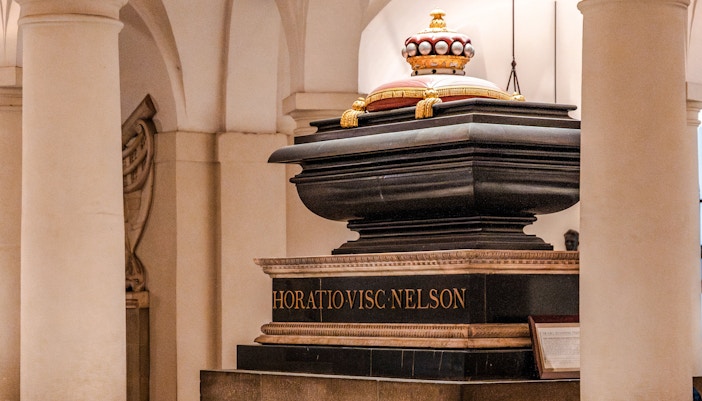
Below ground, you will find the tombs of Admiral Nelson, the Duke of Wellington, and Sir Christopher Wren. The crypt also holds memorials, a café, and much of the cathedral’s national memory in one quieter, heavier space.
Oculus film experience
This 270-degree film helps you place the building in London’s story, from the Great Fire to the Blitz. It is especially useful if you are visiting without a live guide and want context before piecing the spaces together.
How to explore St. Paul’s Cathedral
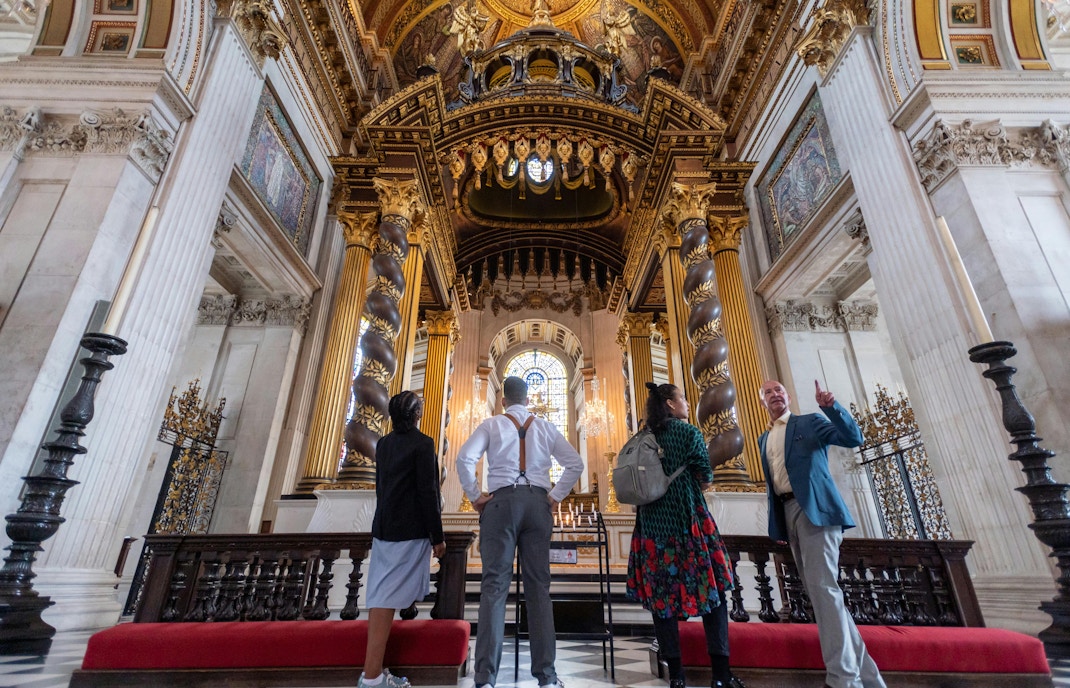
How long to spend
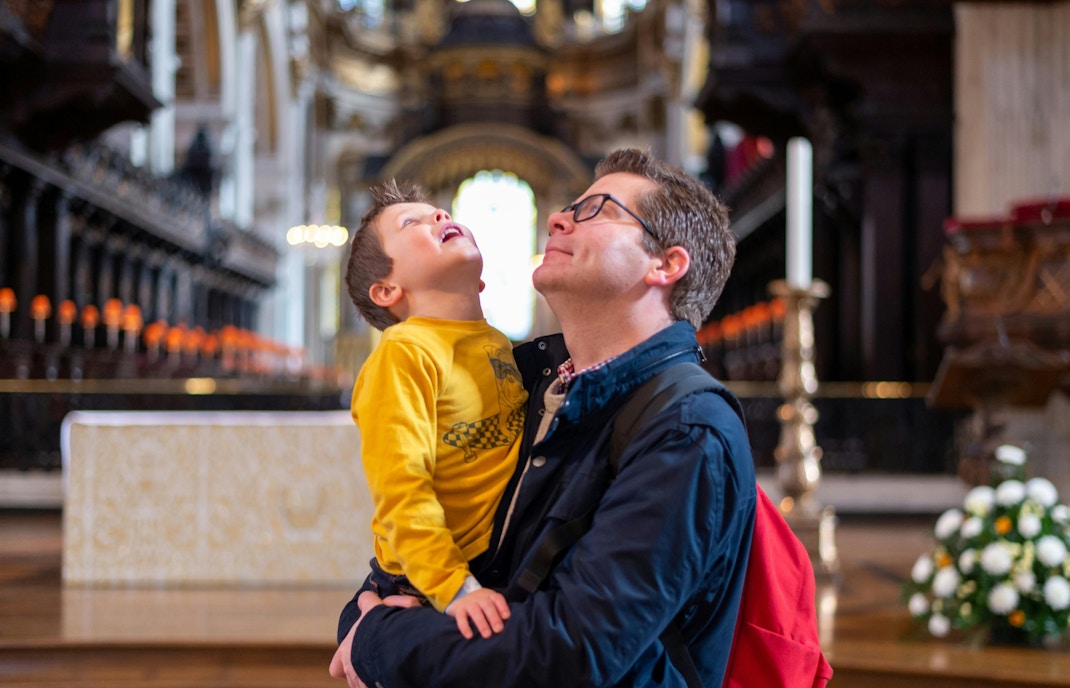
Must-see highlights
After the galleries, come back down to the crypt, which feels calmer and is easier to absorb once you have seen the building from above.
- Must-see: the nave view under the dome, the Golden Gallery, Nelson’s tomb, and Wren’s memorial in the crypt.
- Optional: Oculus and a café stop in the crypt, which adds about 20–30 minutes and works well if you want more context or a break after the stairs.
- Guided vs. self-paced: self-paced works well because the included multimedia guide is strong, but a guided experience adds real value when you want Westminster and the cathedral linked into one political and architectural story.
Brief history of St. Paul’s Cathedral
- 604 AD: A cathedral dedicated to St. Paul is founded on Ludgate Hill, establishing the site as London’s episcopal centre.
- 1666: The medieval cathedral is badly damaged in the Great Fire of London, making a complete rebuild unavoidable.
- 1675: Sir Christopher Wren begins work on the present cathedral, pursuing a monumental Baroque design for a recovering capital.
- 1697: The first service is held in the unfinished building, marking St. Paul’s return to London’s religious life.
- 1710: The cathedral is declared complete, including the great dome that would redefine the London skyline.
- 1940–1941: St. Paul’s survives the Blitz and becomes a symbol of national endurance after photographs show its dome rising through smoke.
- Today: It remains a working cathedral, ceremonial church, and major visitor site with galleries, the crypt, and daily worship.
Architecture of St. Paul’s Cathedral
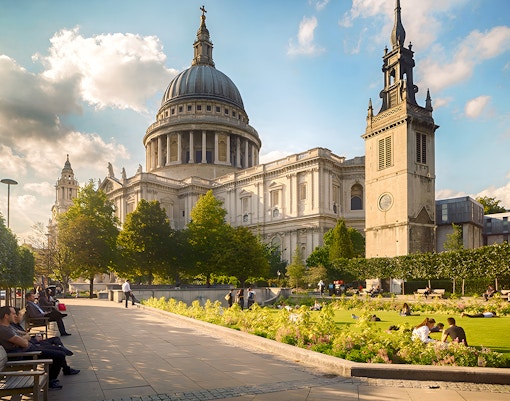
Style
English Baroque, designed to feel ceremonial rather than intimate; the long nave and rising dome pull your eye forward and upward the moment you enter.
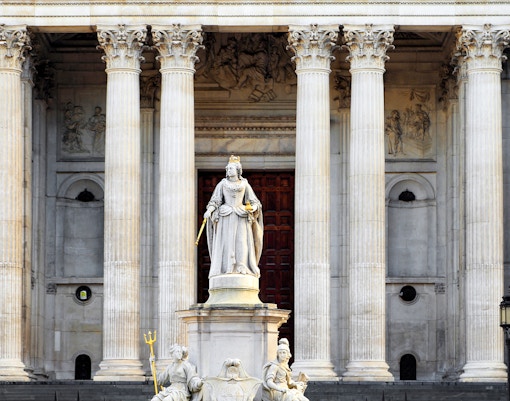
Materials
Portland stone defines the exterior, while marble, mosaics, carved wood, and painted plaster give the interior its weight, glow, and texture.
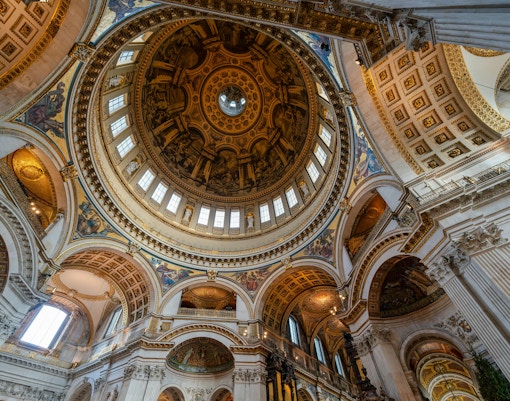
Dome
Wren’s triple-shell dome creates the vast volume you experience inside while supporting the outer profile that still dominates the London skyline.
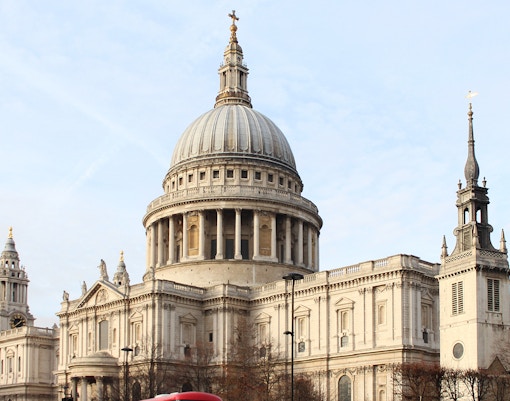
On the ground
The architecture keeps shifting your sense of scale, from broad west steps to compressed stair spirals and then open-air galleries high above the city.
Who built it?
Sir Christopher Wren designed the present cathedral after the Great Fire of 1666, backed by the Crown and the Church of England. His ambition was not simply replacement, but a rebuilt national church for a recovering capital. The great dome was bold for Protestant England, and it permanently changed London’s skyline.
Sir Christopher Wren led the rebuilding, but only after years of debate with church authorities and the Crown over how grand the replacement should be. His final design balanced Anglican liturgical needs with continental Baroque drama, turning a post-fire rebuilding project into a statement of national confidence.
Why St. Paul’s remains London’s ceremonial church
St. Paul’s matters to London not only as architecture, but as a stage for national memory. This is where thanksgiving services, state funerals, jubilee events, and major moments of public mourning have been marked in a setting large enough to feel civic, not merely local. That role explains why the building can feel different from other churches: it belongs as much to the story London tells about itself as to parish life. When you stand inside, you are in a place the city still turns to when history becomes public.
Frequently asked questions about St. Paul’s Cathedral
Yes. The dome climb, crypt, and multimedia guide give you far more than a quick church visit, and the skyline view is the payoff. Book St Paul’s Cathedral tickets ahead so you spend less time at the ticket desk.
Most visitors need 1.5–2.5 hours. Stay closer to 90 minutes if you skip the upper galleries; allow the full stretch if you want the climb, crypt, Oculus film, and time with the multimedia guide.
Don’t miss the nave, the crypt tombs of Nelson and Wellington, and the climb to the Golden Gallery. On a clear day, that final platform gives you the strongest sense of St. Paul’s place in London.
Yes, for most families and first-timers. The cathedral floor and crypt are easy to manage, but the dome climb is better for older children comfortable with narrow stairs, enclosed sections, and a long descent.
The quietest window is right at opening or after 3pm on a weekday. Saturdays are busiest, and Sundays are for worship only. If timing matters, pre-book St Paul’s Cathedral tickets and arrive early.
Yes, especially in summer and on Saturdays. Pre-booking won’t skip security, but it does remove the ticket-desk wait and makes entry smoother. For a broader day out, consider the Westminster small-group guided walking tour with St Paul’s Cathedral tickets.
Yes, if St. Paul’s is the only one stop on your London list. Westminster Abbey + St. Paul's Cathedral tickets pair two major churches, while St Paul's Cathedral + London Eye tickets balance interiors with skyline views nicely.