Before the Great Fire, the medieval Old St Paul’s was already falling into disrepair, and Wren had proposed a plan to renovate it. Once the fire reduced the cathedral to ashes, Sir Christopher Wren's St Paul’s Cathedral journey truly began. He was officially tasked to act as the chief architect of St Paul’s Cathedral, designing an entirely new structure from the ground up.
Sir Christopher Wren | Architect of St Paul’s Cathedral
Sir Christopher Wren was not originally an architect by trade; he was a brilliant mathematician, physicist, and astronomer. However, the Great Fire of London in 1666 completely reshaped his career, and the London skyline, giving him the ultimate canvas to establish his legacy as the master designer of St Paul’s Cathedral. Today, the magnificent monument stands as a testament to his genius.
Birth of Venus... and a new masterpiece
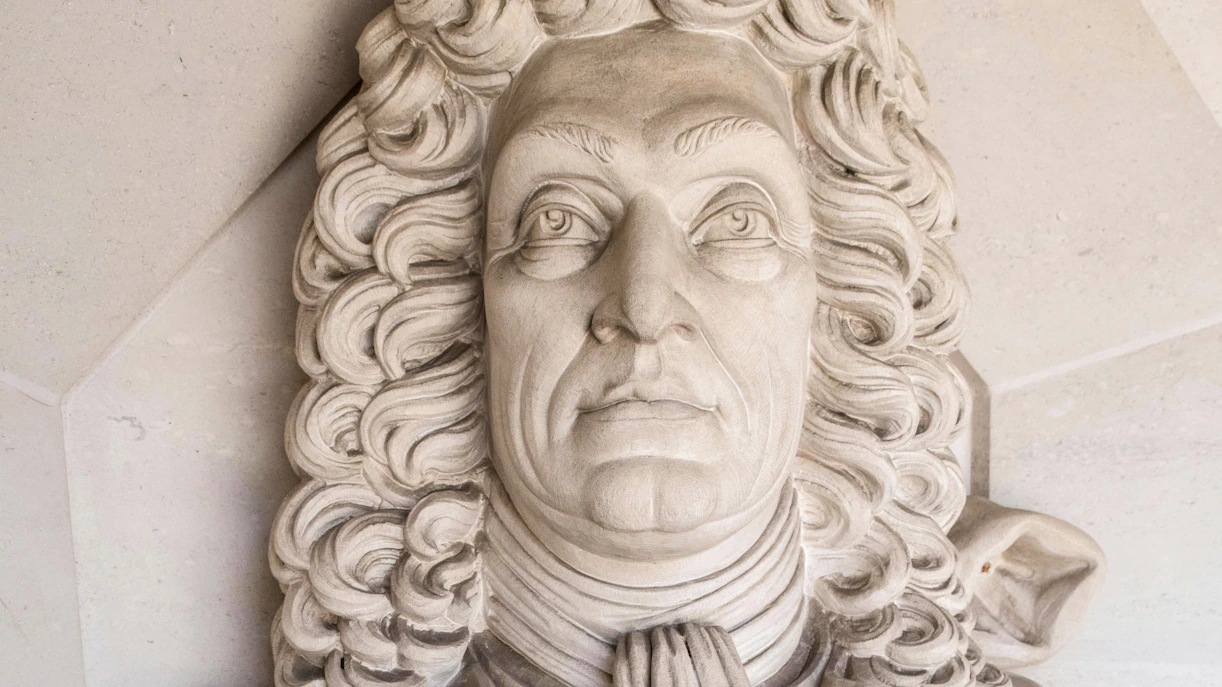
Brief history of Christopher Wren's masterpiece
The journey to the final structure was a massive 35-year undertaking that went through several radical phases:
- 🏛️ The first model: Wren's initial design was a modest proposal to quickly get the cathedral back on its feet, but it was rejected for lacking ambition.
- 🏛️ The great model (1673): He then designed a spectacular, radical building shaped like a Greek Cross with a massive dome. He even built a giant, 18-foot wooden model of it (which is still preserved at the cathedral today). However, the Church authorities rejected it because they felt it was too 'foreign'.
- 🏛️ The warrant design (1675): To appease the critics, the St Paul’s Cathedral designer drafted a traditional, Gothic-influenced layout. However, he cleverly secured a clause allowing him to make 'ornamental' changes. He used this loophole to secretly guide the building back toward his grand, classical vision, proving why Christopher Wren designed St Paul’s Cathedral with such enduring brilliance.
Did you know?
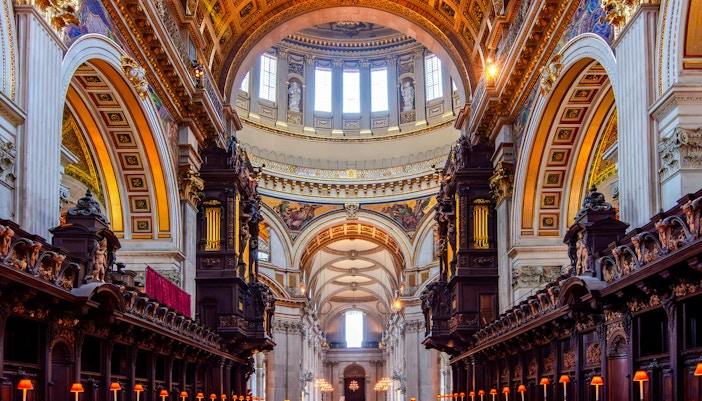
A hidden clause
Wren bypassed strict committee rules by hiding his true structural plans under the guise of 'decorative variations'.
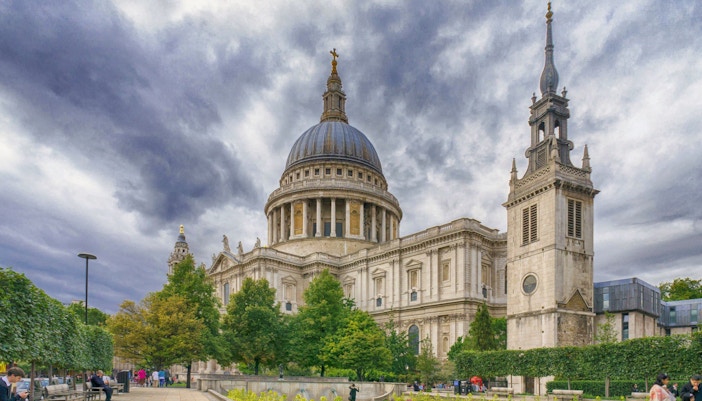
A timeless clock
The cathedral's southwest tower houses 'Great Tom', a massive bell that has struck the hours for centuries over London.
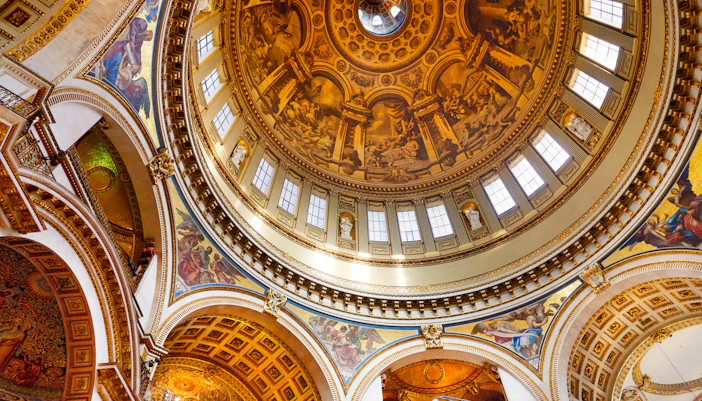
The living monument
St Paul's was the first cathedral in England to be completed during the lifetime of its primary architect.
Christopher Wren’s artistic style
Wren's unique background in science and mathematics allowed him to solve structural problems that would have baffled traditional builders of his era. As the ultimate architect of St Paul’s Cathedral, he championed the English Baroque style, seamlessly marrying classical Roman geometry with contemporary European engineering.
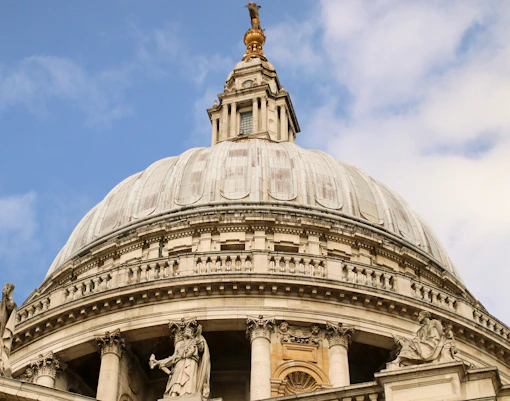
His crowning achievement was the iconic 365-foot dome, designed using an innovative three-shell system:
- Inner dome: Built for interior aesthetics, painted with frescoes to look perfect from the cathedral floor.
- Middle dome: A hidden, structural brick cone that supports the immense weight of the stone lantern on top.
- Outer dome: A massive, lead-covered timber framework that creates the iconic silhouette on the London skyline.
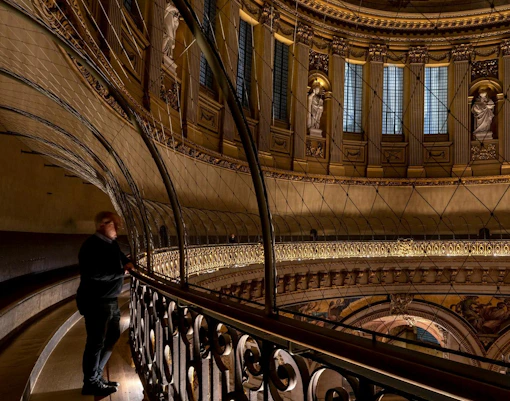
He also engineered the famous Whispering Gallery, an interior walkway around the base of the dome where a whisper against the wall can be clearly heard on the exact opposite side, thanks to the perfect mathematical acoustics of his design.
Christopher Wren vs contemporaries
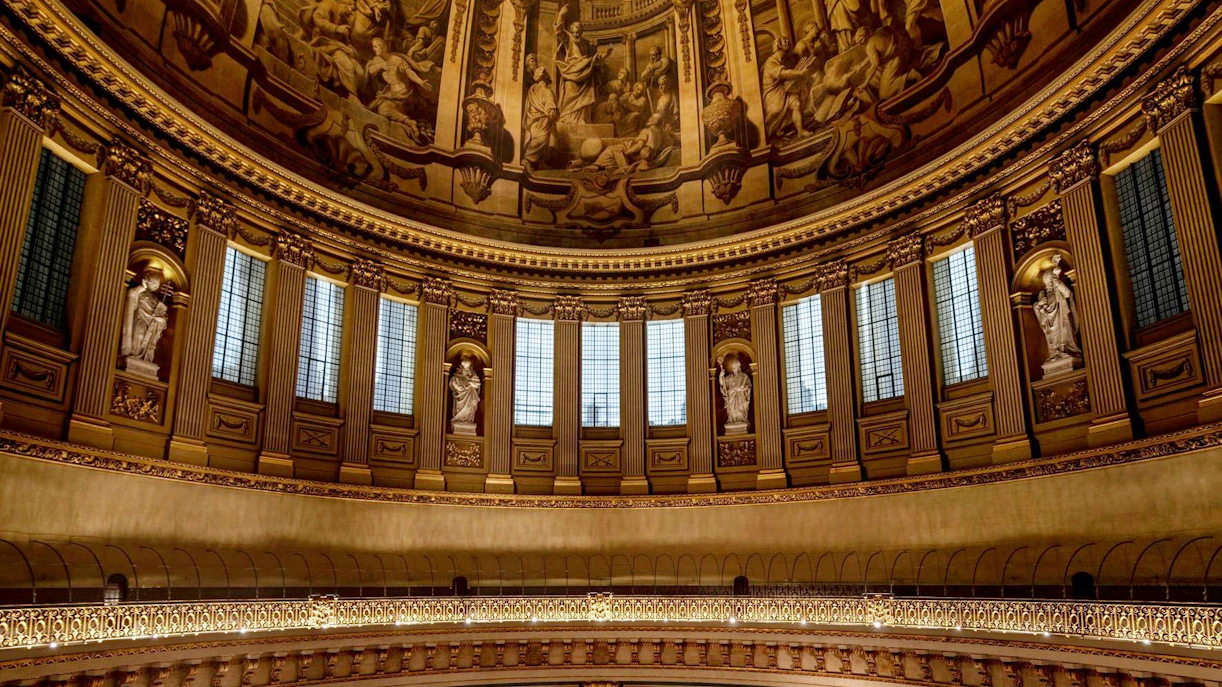
While contemporary builders of the late 17th century relied strictly on traditional Gothic drafting styles, Wren approached architecture as a geometric puzzle. His fierce rivals often criticized his fascination with continental European domes, favouring conservative, steeple-heavy layouts instead. Ultimately, the iconic cathedral designed by Christopher Wren silenced his detractors by blending traditional longitudinal layouts with a majestic, modern dome that redefined British architecture.
Where else to see Wren's work
Beyond his work as the primary St Paul’s Cathedral designer, Wren left an incredible mark on London's landscape after the Great Fire:
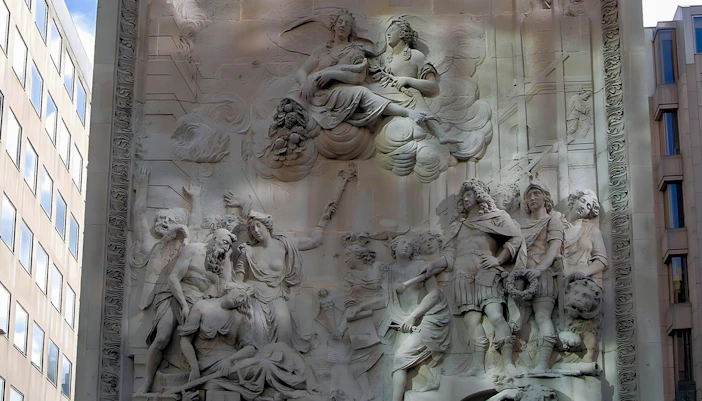
The Monument to the Great Fire of London
A massive Doric column built to commemorate the historic fire.
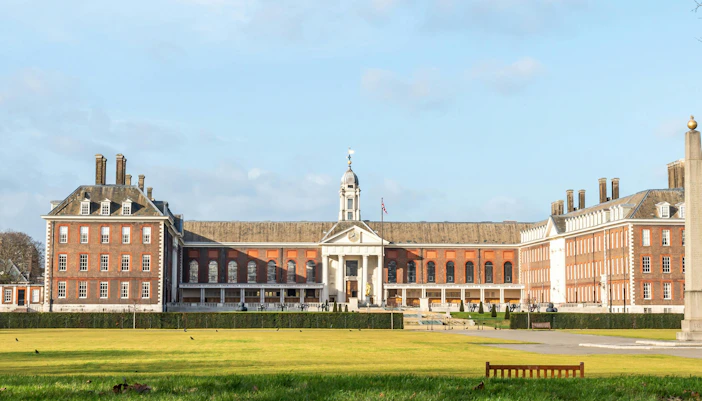
The Royal Hospital Chelsea
A masterful retirement home designed for British soldiers.
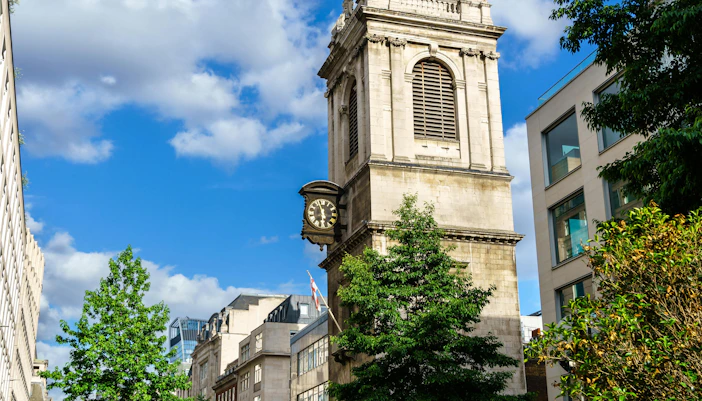
St Mary-le-Bow
One of the many parish churches rebuilt by Christopher Wren after St Paul’s fame, featuring one of his most famous steeples.
Frequently asked questions about Christopher Wren
Construction officially began in 1675. The final stone was laid in 1708, and Parliament officially declared the building complete on Christmas Day in 1711.
Today, Wren’s body lies peacefully in the crypt of the very building he spent his life creating. St Paul’s Cathedral was designed by a man who needed no grand, sculpted monument. Instead, his tomb features a simple black marble slab with one of the most famous Latin epitaphs in history: "Lector, si monumentum requiris, circumspice." (Reader, if you seek his monument, look around you.)
It took 35 years of active construction. Work officially began in 1675, the final stone was laid in 1708, and Parliament officially declared the structure complete on Christmas Day in 1711. This made St Paul's the first cathedral in England to be fully completed during the lifetime of its primary architect.
Before the Great Fire of London in 1666, Wren was already a highly respected mathematician and scientist who had been consulted on repairing the old, decaying medieval cathedral. After the fire completely destroyed the structure, his scientific genius, understanding of physics, and early architectural proposals made him the natural choice to serve as the chief architect of St Paul’s Cathedral.
The cathedral designed by Christopher Wren is a definitive masterpiece of the English Baroque style. He brilliantly fused classical Roman geometry and grand European domes with traditional English medieval layouts, creating a unique hybrid aesthetic that redefined British architecture.
When visiting, the most iconic highlights include:
- The Dome & Whispering Gallery: A geometric marvel where whispers travel perfectly across the walls.
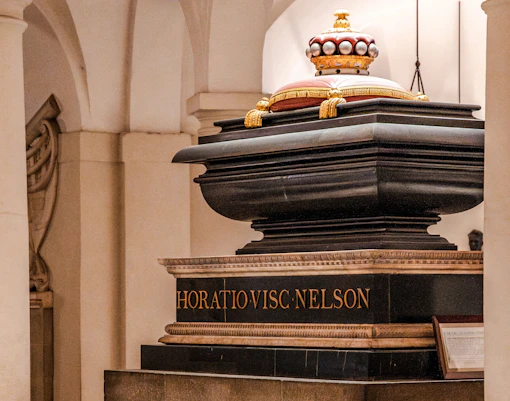
- The Crypt: The largest crypt in Western Europe, which serves as the final resting place for Sir Christopher Wren.
- The Grand Organ: Installed in 1695, this historic instrument was played by Mendelssohn and is still used today.