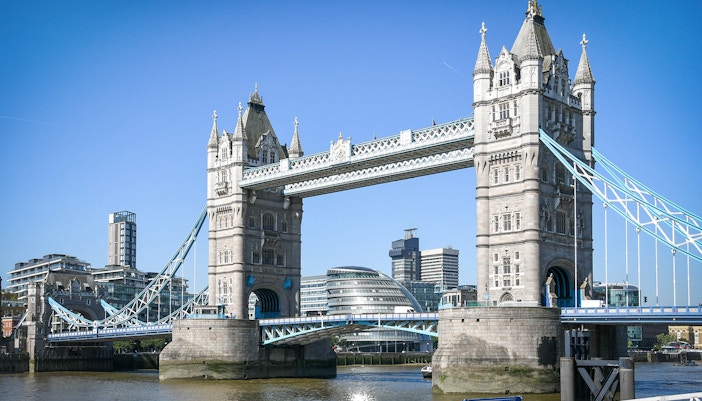
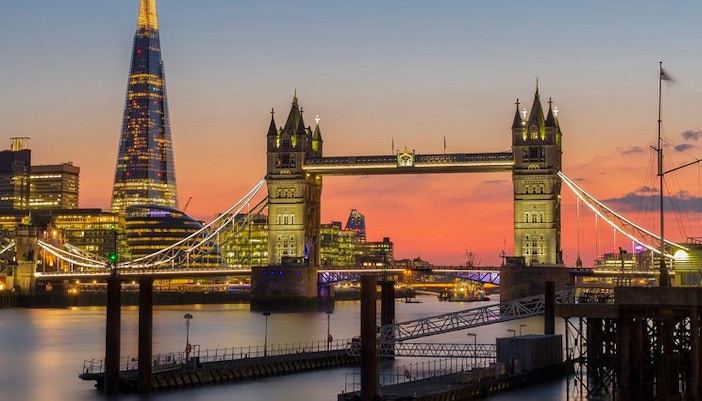
Construction officially began on April 22, 1886, under architect Sir Horace Jones, launching an eight year engineering project. More than 11,000 tons of steel formed the framework, later covered with Cornish granite and Portland stone to create the bridge’s Gothic appearance.
Tower Bridge history I The Victorian battle to cross the Thames
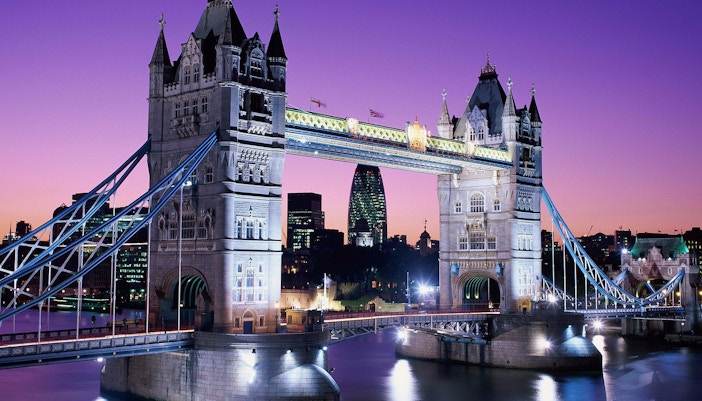
Tower Bridge stands as a monumental achievement of Victorian engineering, seamlessly blending functionality with Neo-Gothic grandeur. Despite its ancient appearance, the design was considered wildly modern for the 1890s, requiring more steel than the Eiffel Tower to build its framework. Delve into Tower Bridge history to discover how this ingenious drawbridge became London's most famous structure.
Tower Bridge history: A chronological timeline
- 1886: Construction on Tower Bridge officially began on April 22 under architect Sir Horace Jones, using 11,000 tons of steel beneath its Gothic stone exterior.
- 1894: Tower Bridge officially opened on June 30 by the Prince and Princess of Wales, immediately carrying both road traffic and river vessels.
- 1910: The high level pedestrian walkways closed due to low visitor use and safety concerns, as most pedestrians preferred waiting below instead.
- 1952: Bus driver Albert Gunter famously jumped his number 78 double decker across the opening bascules after a watchman failed to ring warning bells.
- 1973 & 1977: Tower Bridge gained Grade I Listed status in 1973, then received its iconic red, white, and blue paint scheme in 1977.
- 1974–1976: Tower Bridge replaced its original coal fired steam hydraulics with a modern electro hydraulic system powered by electric pumps and oil hydraulics.
- 1982: The preserved Victorian Engine Rooms opened to visitors, showcasing the original steam machinery once used to power Tower Bridge’s lifting bascules.
- 2012: Tower Bridge became a London Olympics icon, displaying suspended Olympic rings and appearing in the memorable James Bond opening ceremony sequence.
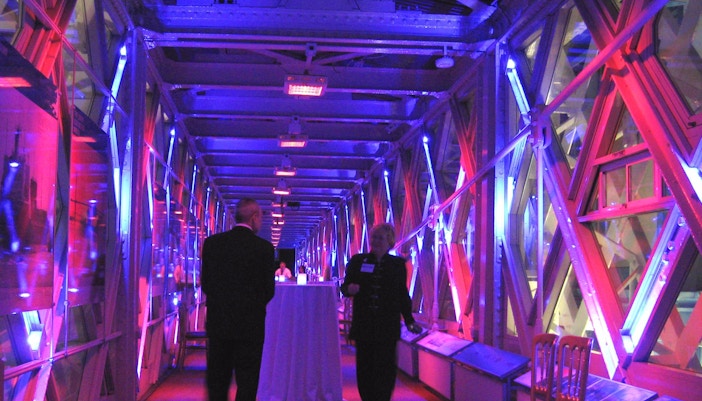
- 2014: The refurbished high level walkways reopened with transparent glass floors, giving visitors dramatic views directly above the traffic and River Thames below.
Tower Bridge history explained
1886: Construction commences
.jpg?auto=compress%2Cformat&w=702.4499999999999&h=401.4&q=90&ar=7%3A4&crop=faces&fit=crop)
1894: Royal opening & first lift
Tower Bridge officially opened on June 30, 1894, by the Prince and Princess of Wales, later King Edward VII and Queen Alexandra. The bridge immediately began carrying both road traffic and river vessels through its opening bascules.
1910: High level walkways close
The upper pedestrian walkways closed to the public because very few people used them. Most pedestrians preferred waiting for the bridge to lower instead of climbing the towers, and the isolated walkways also raised safety concerns.
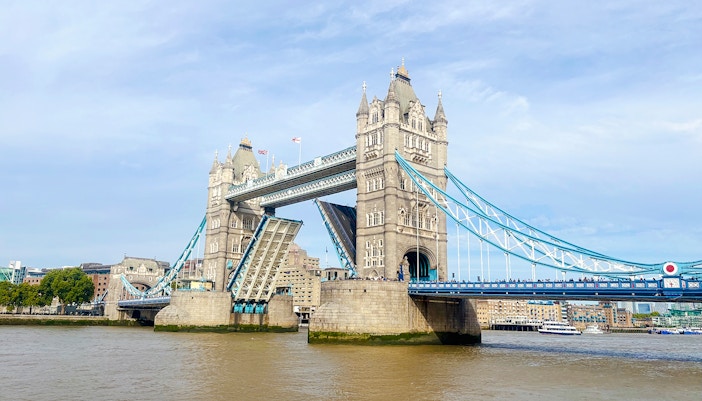
1973 & 1977: Listed status & iconic paint scheme
The remaining sections of Tower Bridge received Grade I Listed status on September 27, 1973, recognising its historic and architectural importance. In 1977, the bridge was repainted in its famous red, white, and blue colours for Queen Elizabeth II’s Silver Jubilee celebrations.
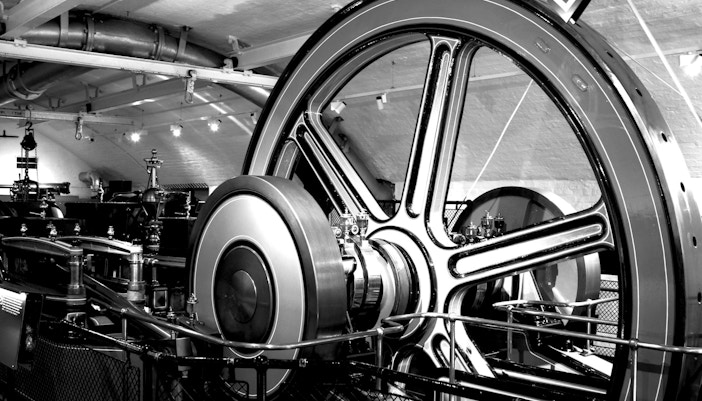
1974 to 1976: Switch to electric power
Tower Bridge began replacing its original coal fired steam hydraulics in 1974 with a modern electro hydraulic system powered by electric pumps and oil hydraulics. By 1976, the Victorian steam system had been fully retired.
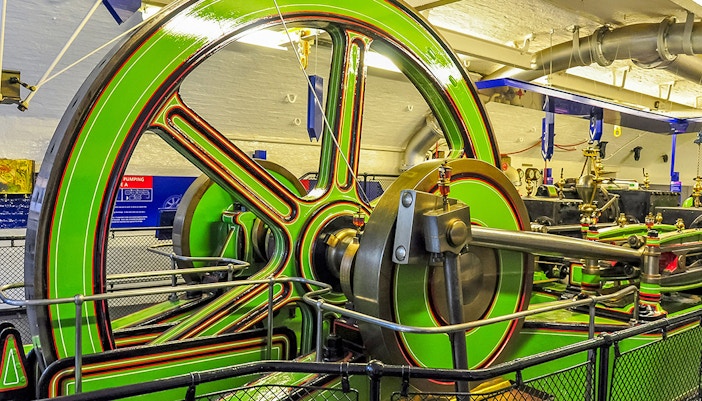
1982: Engine Rooms open to the public
The preserved Victorian machinery beneath the southern approach was opened as part of the Tower Bridge Exhibition. Visitors could now see the original steam engines and learn how the bridge’s powerful lifting system once operated.
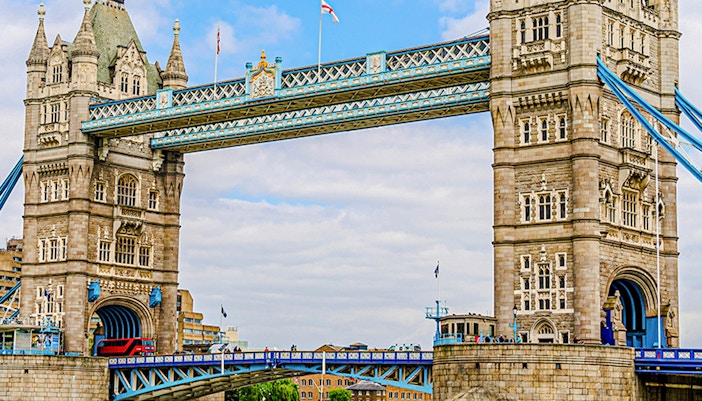
2012: Olympic Ceremony highlight
Tower Bridge became one of the defining visual icons of the London Olympics. Olympic rings were suspended between the bascules, and the bridge also appeared in the memorable James Bond opening ceremony sequence featuring Daniel Craig and a stunt double for Queen Elizabeth II.

2014: Glass Walkway unveiled
The refurbished high level walkways reopened with transparent glass floor panels that allowed visitors to look directly down onto the traffic and River Thames below. The west glass floor opened on November 10, 2014, followed by the east walkway on December 1, 2014.
2016: Structural integrity & modern life
While the Glass Walkway opened in 2014, the bridge underwent a massive, ongoing £4 million renovation. This included a three-month closure in 2016 for critical work on the suspension bridge's bearings and the complete resurfacing of the road deck, ensuring the 19th-century structure could safely carry 21st-century traffic.
Major moments in Tower Bridge history: Famous lifts and vessels
The first and the royal
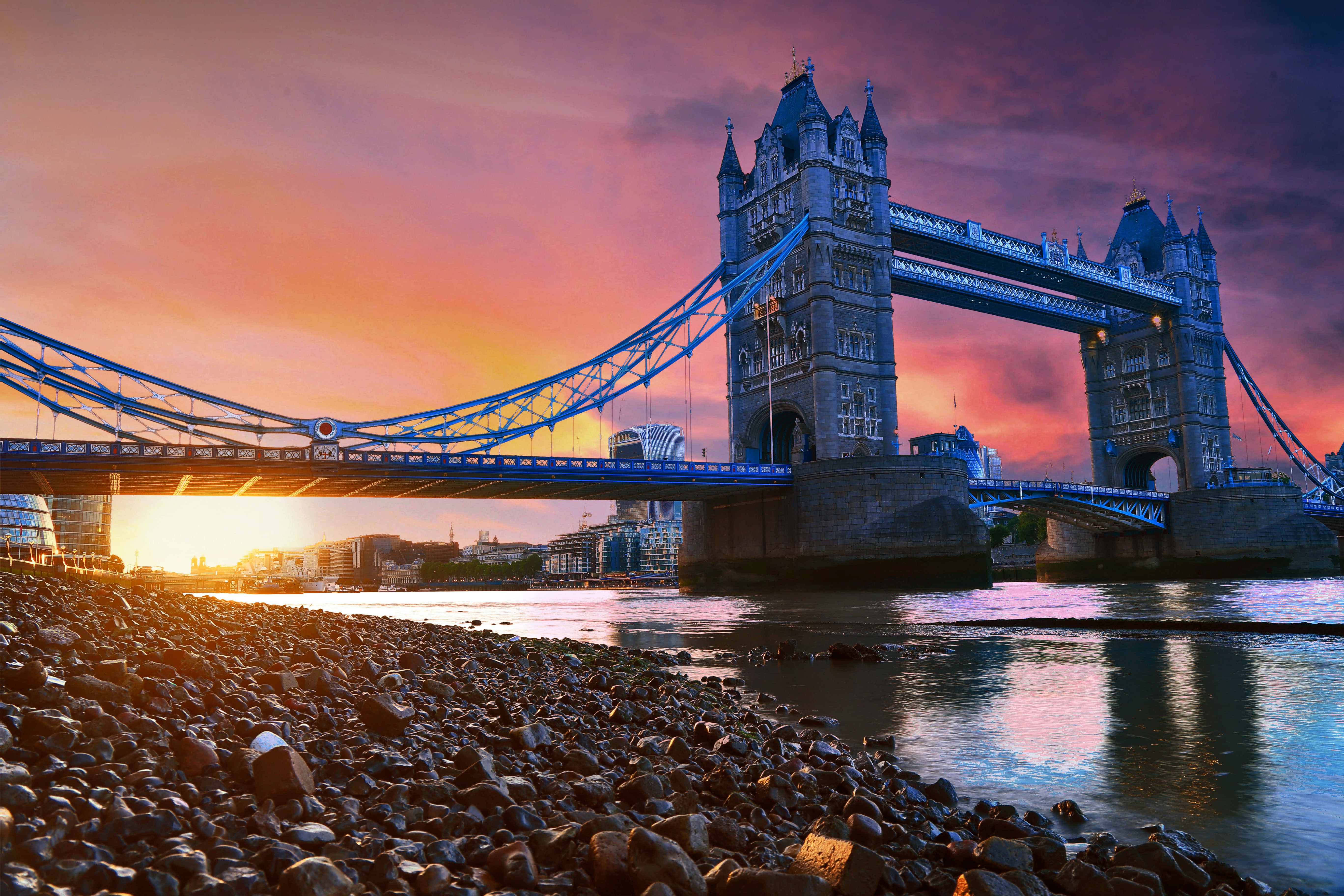
- The maiden voyage (1894): The very first vessel to pass beneath the newly opened bridge was the Harbour Master's vessel, the Daisy. It was immediately followed by a celebratory procession that included the Trinity House Yacht Irene and the gunboat HMS Landrail.
- The Queen's return (1954): Thousands of spectators lined the Thames to witness a significant royal event: the Royal Yacht Britannia sailed beneath Tower Bridge, carrying Her Majesty The Queen back to London following a six-month Commonwealth tour.
Drama and near misses
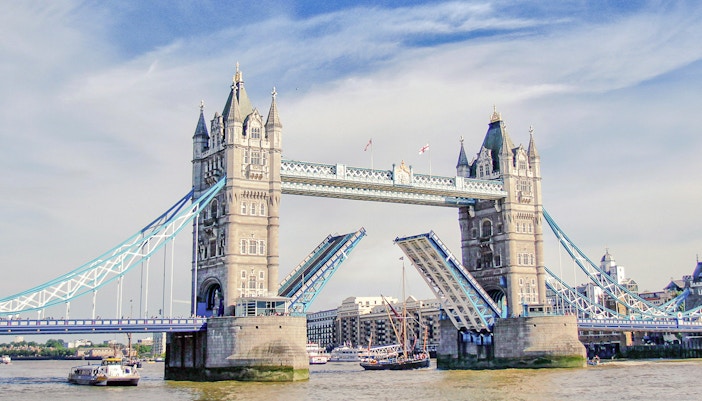
- The striking cargo ship (1957–1967): The Spanish cargo ship Monte Urquiola had an unfortunate encounter with the bridge, hitting and causing damage to the structure on three separate occasions between 1957 and 1967 due to navigational errors.
- The unbooked lift incident (2004): On May 15, 2004, the sailing ships STS Lord Nelson and SV Tenacious struck the South Pier of Tower Bridge after the bridge authorities failed to receive or process their official lift booking, causing minor structural damage and generating headlines.
Modern and cultural moments
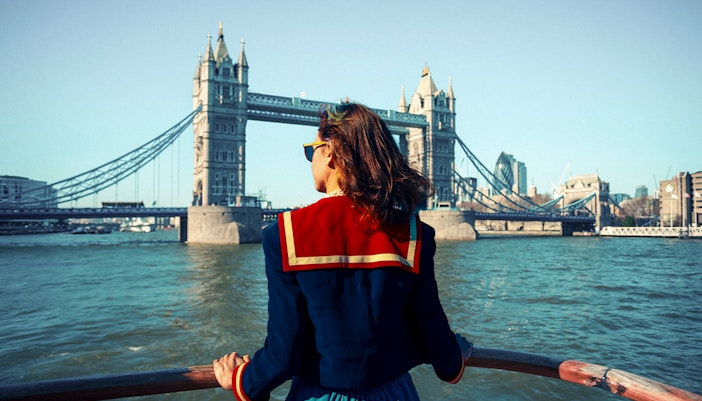
- The Olympic torch relay (2012): During the London 2012 Olympics Opening Ceremony, football icon David Beckham dramatically drove a high-speed speedboat, the Max Power (a Bladerunner BR RIB 35), beneath the raised bridge, carrying the Olympic Torchbearer, Jade Bailey.
- The cruise ship tradition (2013–Present): Tower Bridge regularly welcomes large vessels into the Upper Pool of London. Since 2013, the bridge has seen over 30 cruise ships a year pass through.
Construction and architecture of Tower Bridge
- Visionary Victorian design: Tower Bridge was designed by architect Sir Horace Jones and engineer Sir John Wolfe Barry, blending Victorian engineering innovation with dramatic Neo Gothic architecture.
- Inspired Medieval appearance: Its decorative towers and walkways were intentionally styled to resemble medieval buildings, helping the bridge visually complement the nearby Tower of London.
- Steel framework beneath the stone: Beneath the exterior sits a massive steel framework, with more than 11,000 tons of steel providing the bridge’s structural strength and stability.
- Protective granite and stone cladding: Cornish granite and Portland stone were added around the steel framework, protecting the metal underneath while creating Tower Bridge’s iconic historic appearance.
- Innovative bascule mechanism: The bridge’s most important engineering feature is its bascule system, where two giant lifting roadways pivot upward to create space for passing ships.
- Built for London’s busy river trade: This movable design allowed tall masted vessels to travel along the River Thames while road traffic continued crossing one of London’s busiest river routes.
Tower Bridge today: Why it matters
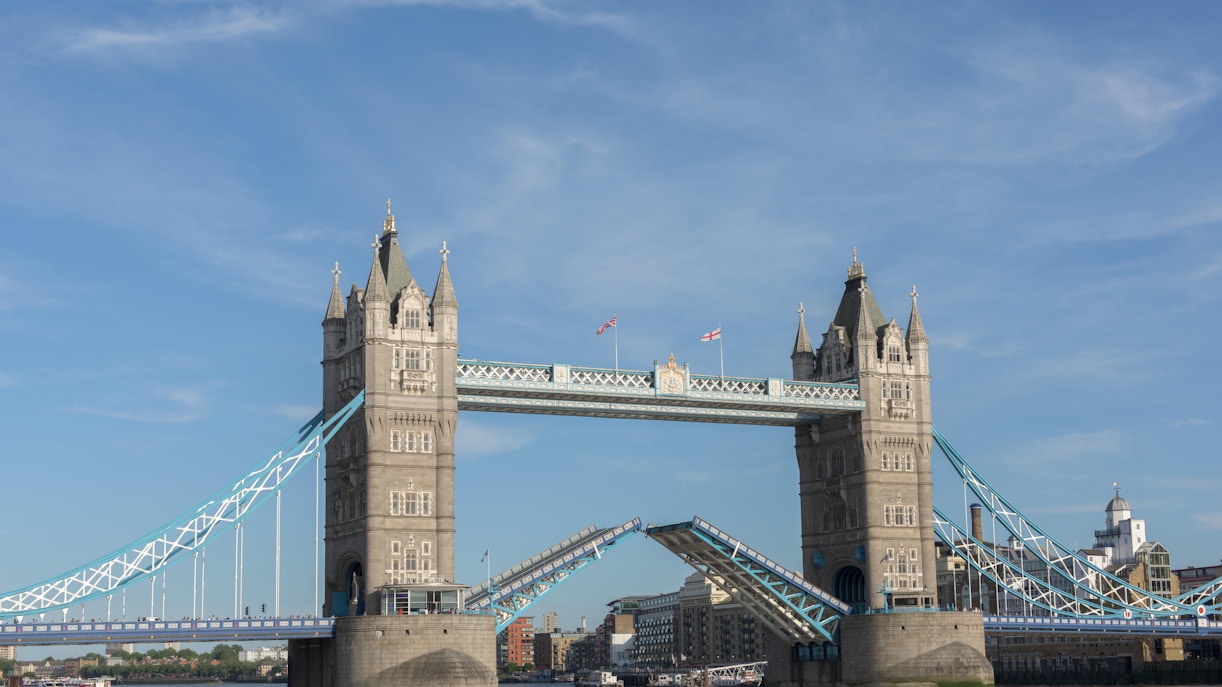
Tower Bridge is managed by the City of London Corporation and remains one of the most critical and impressive crossings over the River Thames. Unlike many historical sites, Tower Bridge continues to operate daily as both a piece of vital infrastructure and a premier visitor attraction.
Despite its age, the bridge is used by over 40,000 people and 21,000 vehicles daily. It still lifts approximately 800 times a year, now powered by an efficient electric system. Although the Victorian steam engines were retired in 1974, the machinery is immaculately preserved in the Engine Rooms. Recognised worldwide (from the Olympics to postcards), the bridge is a protected Grade I Listed Building.
Frequently asked questions about Tower Bridge history
It represents a pinnacle of Victorian engineering, successfully solving the conflict between the need for a lower road crossing and the necessity of maintaining the River Thames’s busy shipping access.
They are often confused due to their proximity. However, the ornate, famous Tower Bridge is a distinct, Victorian marvel located near the Tower of London, while London Bridge is much older and plainer.
They were built to allow pedestrians to cross the river even when the bascules were raised. They were closed in 1910 due to lack of use, as people preferred to wait below.
As a key landmark and connection point to the Port of London, the bridge suffered some damage from enemy attacks between 1940 and 1942 but was quickly repaired and remained operational.
The design was chosen by Sir Horace Jones and Sir John Wolfe Barry. The bridge was opened by the Prince of Wales (later King Edward VII).
It originally ran on a massive coal-fired steam hydraulic system until 1974, when it was upgraded to the current, quieter, and more efficient electro-hydraulic system.
Yes, you can join a guided tour to learn more about the bridge’s history. The standard ticket also grants access to the Tower Bridge exhibition, which includes the historic Engine Rooms and narratives detailing the full construction and operational history.