In practice, this means buying a Westminster Abbey admission and adding the gallery slot. Choose it if the triforium views, rare objects, and quieter museum feel are the main reasons you’re going upstairs.

Set high in Westminster Abbey’s medieval triforium, the Queen’s Diamond Jubilee Galleries bring together royal effigies, coronation objects, manuscripts, and a rare overlook into the nave below. A dedicated ticket is required for entry, usually as a £5 gallery add-on to Westminster Abbey admission. If you’re planning a bigger London sightseeing day, book your Abbey visit first and then decide whether to pair it with one of the broader Westminster combos.
In practice, this means buying a Westminster Abbey admission and adding the gallery slot. Choose it if the triforium views, rare objects, and quieter museum feel are the main reasons you’re going upstairs.
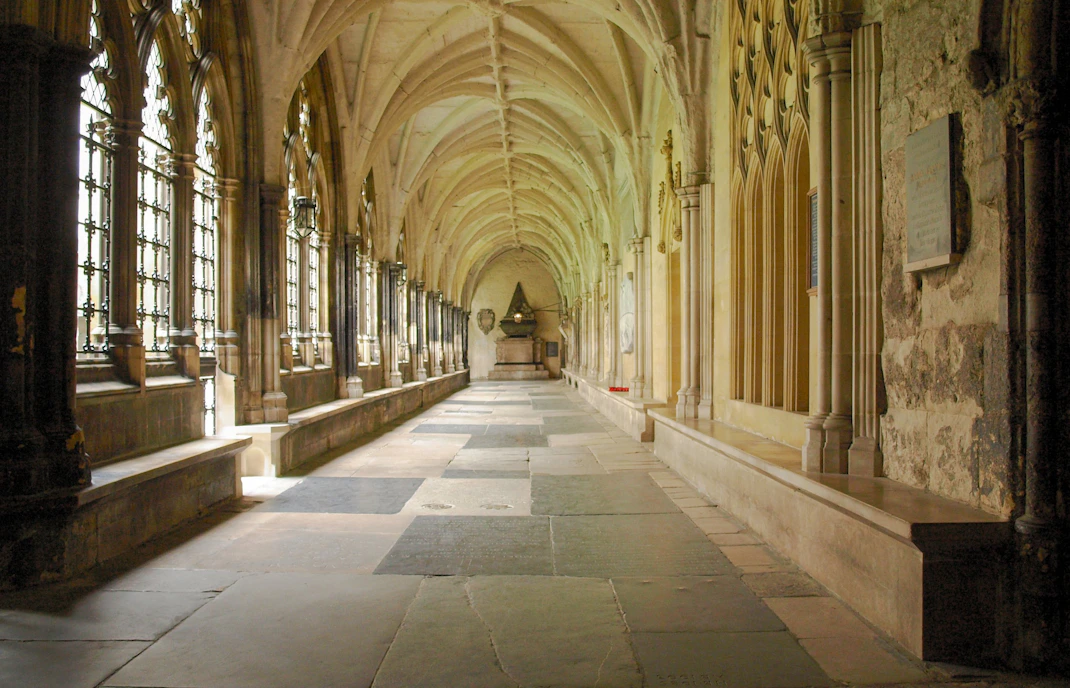
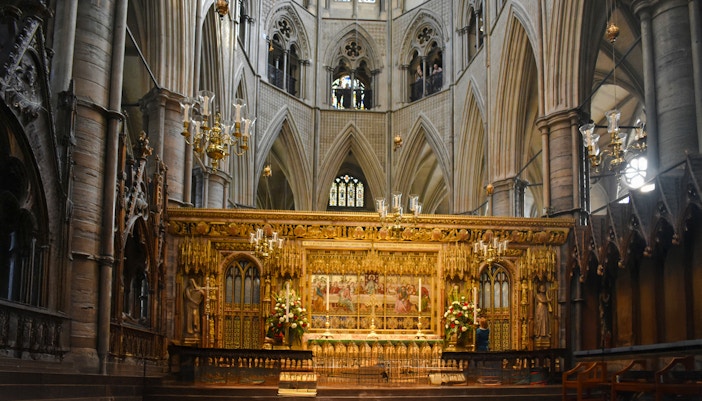
Westminster Abbey still feels complete without the galleries if your priority is the nave, royal tombs, Poets’ Corner, the Coronation Chair, and cloisters. Skip the add-on if you’re short on time or want a simpler visit.
| Ticket | Price | What’s included |
|---|---|---|
Queen’s Diamond Jubilee Galleries add-on | £5 | Timed entry to the galleries. Valid only with same-day Westminster Abbey admission. A dedicated ticket is required for entry. |
Westminster Abbey + Queen’s Diamond Jubilee Galleries | £35 | Entry to Westminster Abbey and timed access to the galleries. Valid for the booked date only. A dedicated ticket is required for entry. |
Westminster Abbey only | £30 | Entry to Westminster Abbey with multimedia guide. Does not include gallery access. Valid for the booked date only. |
Aim for the first gallery slots on a Tuesday, Wednesday, or Thursday. The overlook feels calmer before late-morning traffic rises through the Abbey, and you’ll have more space at the windows. Book an early slot if possible.
Give the galleries 20–30 minutes for a focused visit, or closer to 40 if you like reading object labels carefully. The cases are compact, but the elevated views usually slow people down more than expected.
Visit the galleries after you’ve seen the main church below. The manuscripts, effigies, and coronation material make more sense once you’ve already walked through the nave, chapels, and royal tombs. End upstairs rather than starting there.
The busiest stretch is usually late morning into early afternoon, when timed Abbey entries feed into the lift queue together. Off-peak slots let you step back from the cases, read clearly, and enjoy the overlook without shoulder-to-shoulder traffic.
If time is limited, prioritise the nave overlook, the medieval funeral effigies, and the Richard II panel. Go to the view first, then work the display cases in order so you don’t miss the most distinctive perspective.
The most common mistake is treating the galleries as just a lookout. Visitors who rush straight to the windows miss the objects that explain the Abbey’s ceremonies. Do one full circuit first, then return to the overlook before leaving.
The Queen’s Diamond Jubilee Galleries feel different from the Abbey below because they turn Westminster Abbey from a ceremonial space into a collection you can read object by object. What makes them worth the extra ticket is that the treasures are shown inside the very building they belong to, not in a separate museum. Don’t stop at the first cases and leave — walk all the way to the overlook above the nave, then circle back through the displays.
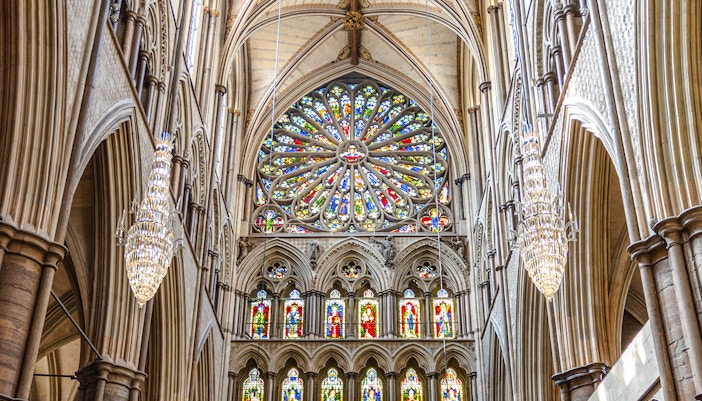
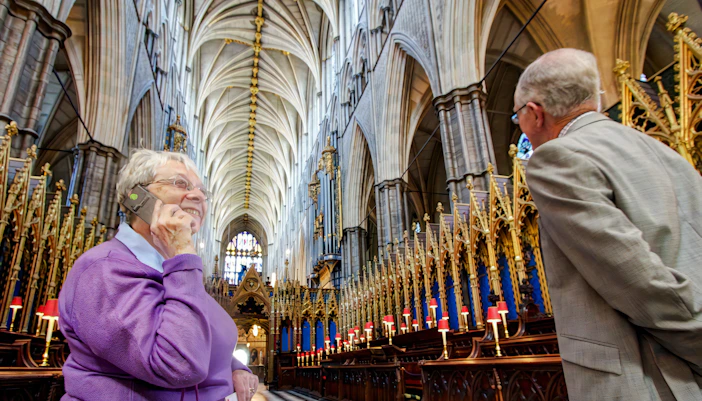
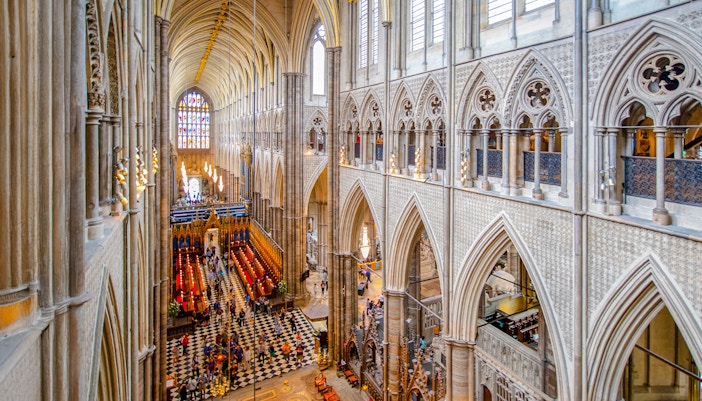
Your first real payoff upstairs is the elevated view into the Abbey itself. From here, the church’s geometry becomes clear in a way it never does from the floor — the long nave axis, the crossing, and the arrangement of monuments below. Pause longer than you think you need to. This is the point where the galleries stop feeling like an add-on and start reframing the whole visit.
The medieval funeral effigies are among the most memorable pieces here because they make the royal ceremony feel human rather than abstract. Their carved faces, painted surfaces, and lifelike scale show how the dead were publicly represented during state ritual. Don’t just glance front-on. Move sideways and look closely at the workmanship and wear, which reveal how old and ceremonial these objects really are.
This section rewards slower readers. The manuscripts, charters, and coronation-related objects explain how the Abbey functioned not just as a church, but as a record-keeper of monarchy and national ceremony. The displays are not flashy, but they’re dense with meaning. If one case seems text-heavy, keep going — the sequence works best when you follow it as a story rather than isolated objects.
One standout is the Richard II panel, which gives you a rare encounter with surviving medieval royal imagery in a building where so much has changed over centuries. It’s worth stepping back first to read the composition, then moving closer to study the painted detail. In a gallery full of stone, wood, and ceremonial fragments, this work adds a strong visual jolt.
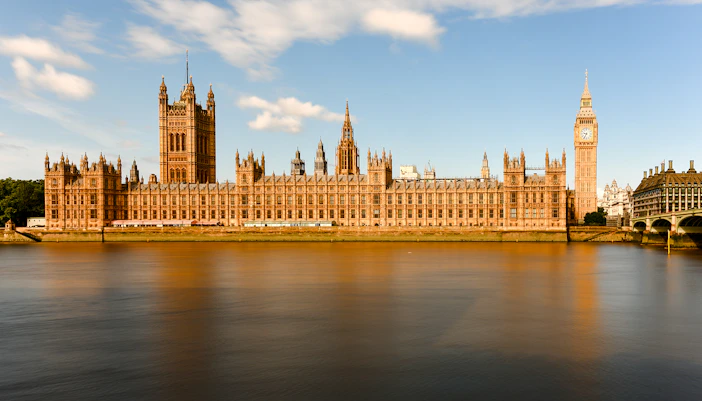
Some of the best moments are not inside the cases at all, but at the outward-facing windows toward the Palace of Westminster. These views quietly place the Abbey back into the civic heart of London. After all the tombs and relics below, the sightline outside reminds you that this has never been a sealed historical monument — it has always been tied to national life around it.
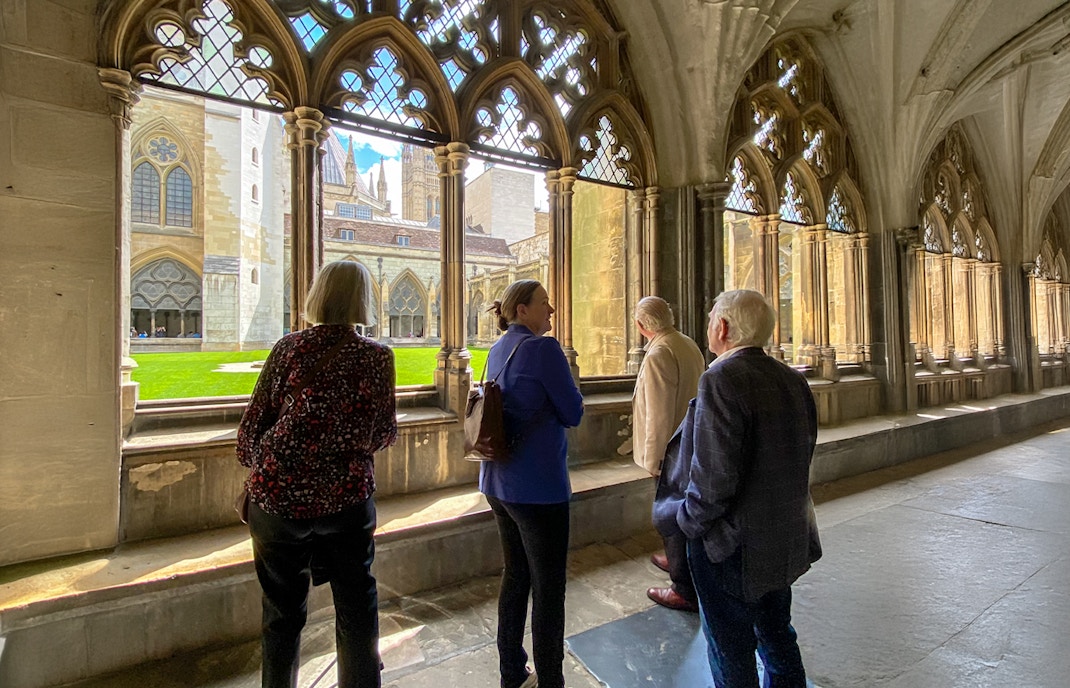
Most visitors don’t realise the Queen’s Diamond Jubilee Galleries occupy Westminster Abbey’s medieval triforium, a space largely closed to the public for around 700 years before reopening in 2018. That matters because the galleries are not a separate museum dropped into the Abbey later — they are the Abbey interpreting its own memory through effigies, coronation objects, records, and art. Today, they help visitors understand the church as both a place of worship and a working archive of British state ceremony.
Monarch whose Diamond Jubilee gave the galleries their name and commemorative framing.
Westminster Abbey’s Surveyor of the Fabric, responsible for the access tower and visitor route.
Medieval king represented by one of the galleries’ best-known surviving painted works.
Note: The Queen’s Diamond Jubilee Galleries keep shorter visiting hours than Westminster Abbey. See details below.
Address: Westminster Abbey, 20 Deans Yd, London SW1P 3PA
Yes. Queen’s Diamond Jubilee Galleries are not included in the general Westminster Abbey admission. A dedicated ticket is required for entry.
No. Standard Westminster Abbey tickets cover the Abbey floor, chapels, cloisters, and multimedia guide. Gallery access is an extra add-on with its own timed slot.
Buy the gallery add-on if you want rare objects and high-level nave views. Skip it if you’re short on time and mainly want the main church.
Around 20–30 minutes is typical. Give yourself closer to 40 minutes if you like reading labels and spending time at the overlook above the nave.
Weekday mornings are best. Earlier slots usually feel calmer, and the overlook is easier to enjoy before late-morning Abbey traffic reaches the upper level.
No. The galleries sit inside Westminster Abbey, so you need Abbey admission as well as the gallery add-on to visit.

Yes. Pre-booking is smart for school holidays, Saturdays, and summer mornings because timed gallery capacity is limited and convenient slots go first.
Yes, in the galleries. Flash photography is prohibited inside Westminster Abbey, and standard security rules on large bags, food, and drink still apply.
Westminster Abbey Tickets
Westminster Abbey Guided Tour with Skip-the-Line Entry
Combo (Save 6%): Westminster Abbey + Tower of London Tickets
Westminster Abbey, Big Ben & Buckingham Palace Guided Tour