





Westminster Abbey

Shrine of Edward the Confessor tickets

Included with Westminster Abbey tickets

Timings

RECOMMENDED DURATION

2 hours

Shrine of Edward the Confessor at Westminster Abbey

Top things to do in London

Quick overview
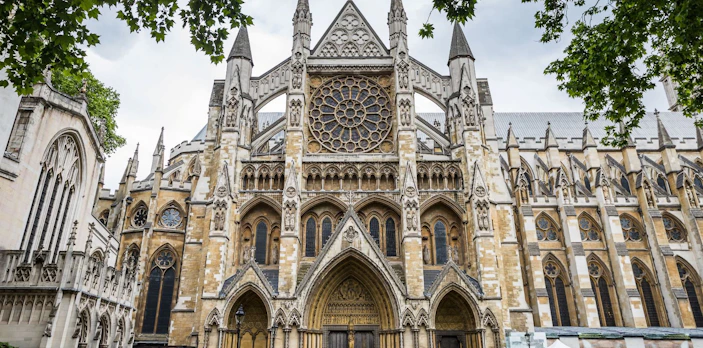
  • Access: Included in all Westminster Abbey tickets
  • Separate ticket: Not required
  • When you’ll see it: Final third of the Abbey route, behind the High Altar
  • Visit duration: 10–15 min self-guided / 15–20 min with guide
  • Best time: First timed entry on a weekday, before tour groups gather in the east end
  • Restrictions: No photography inside the Abbey. Quiet, respectful behavior expected.

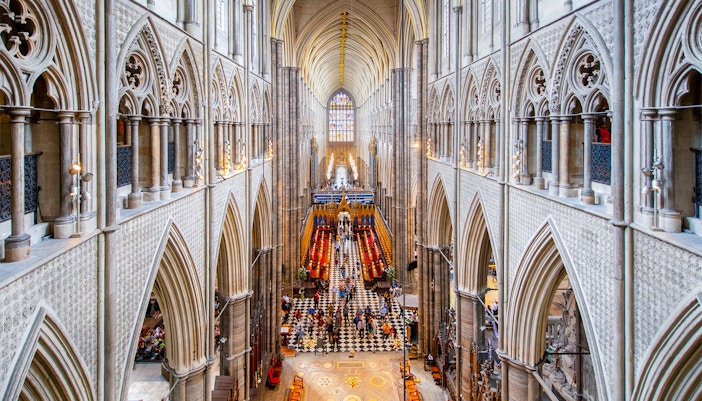
The Shrine of Edward the Confessor is included with all Westminster Abbey tickets. No separate ticket is needed. It sits in St Edward’s Chapel behind the High Altar, which most visitors reach in the final third of the Abbey route, and you cannot enter it independently from outside the church. If this is a priority stop for you, book a guided or skip-the-line Abbey experience so you reach the east end with more time and context.

How to best experience Shrine of Edward the Confessor

Best time to visit

Book the first timed entry on a weekday if the shrine matters to you. The east end is calmer before group tours stack up around St Edward’s Chapel and Henry VII Lady Chapel. By late morning, the narrow passage slows down, so don’t leave this stop to a busy midday window.

How long to spend

Give it 10–15 minutes on a self-guided visit, or 15–20 minutes with a guide. That’s enough to study the shrine itself and the surrounding royal tombs. If you only pause for a quick glance, the whole royal context disappears.

Where it fits in your itinerary

You’ll reach the shrine in the Abbey’s final third, behind the High Altar and before or alongside the Lady Chapel. Allow about 20–30 minutes from the entrance if walking steadily, longer if following the multimedia guide closely. Save some attention for this east-end cluster.

Crowd patterns

The tightest crowding usually builds from late morning into early afternoon, especially on Saturdays, school holidays, and peak summer days. The shrine area doesn’t have much spare space, so even moderate numbers feel compressed. Opening time and later entry windows are the easiest times to pause properly.

What to prioritize if time is short

From the aisle just west of the shrine rail, look first at the elevated medieval structure, then the rich stone inlay around its base, then the ring of royal tombs around it. If you’re moving fast, slow down here rather than in the broader nave.

Common mistakes to avoid

Many visitors hurry toward Henry VII Lady Chapel and treat the shrine as a pass-through. Stop long enough to read it as the center of a royal burial zone, not a standalone object. Also, don’t reach for your phone — photography rules are enforced inside the Abbey.

Best tickets to experience Shrine of Edward the Confessor

Ticket typeWhy choose it

Standard entry

Best if you want to move at your own pace and linger around the shrine with the multimedia guide.

Guided tour

Best if you want the shrine’s royal and religious context explained clearly instead of piecing it together from labels.

Why it's worth seeing

The shrine is the point around which Westminster Abbey’s royal identity was built. Most visitors notice the tombs first and only later realize this saint’s burial is the reason so many kings wanted to be buried nearby. Look closely, and the shrine stops being one more monument and starts reading like the Abbey’s spiritual and dynastic center. These are the details worth finding when you get there.

The base: look for the colored stone inlay
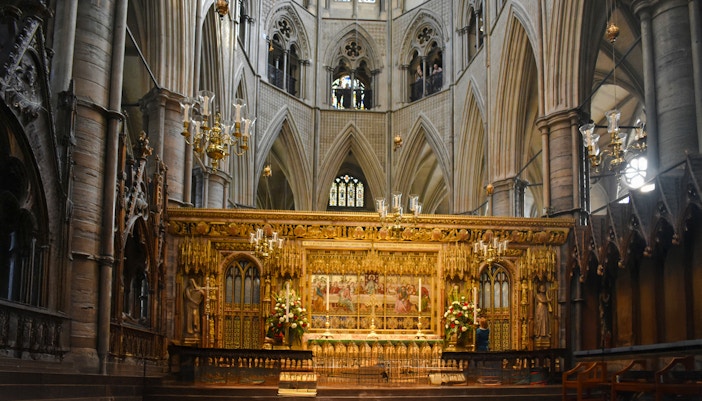
Stand just outside the rail and look at the lower platform before you look up. The bands of colored stone and glass-like inlay around the base set the shrine apart from the paler tombs nearby and immediately signal that this was meant to be a special devotional object.

The upper shrine: look above eye level first

Your eye naturally lands on the surrounding tombs, but the shrine’s main form sits higher than that. Lift your gaze to the elevated canopy-like structure in the middle of St Edward’s Chapel. From the west side, you get the clearest sense of its height and central placement.

The royal ring: look around, not only at the shrine

Once you’ve faced the shrine, turn outward and read the space around it. Tombs of Henry III, Edward I, Edward III, and Richard II cluster nearby, showing how later monarchs wanted burial close to Edward’s relics. The chapel makes more sense when you read it in a circle.

History and cultural significance

For more than 750 years, this shrine has marked Westminster Abbey’s holiest royal space. Edward died in 1066, was canonized in 1161, and Henry III translated his remains to the present shrine in 1269, turning the Abbey’s east end into a royal burial center. What began as a saint’s cult site remains a place of prayer inside a working church, not just a museum object.

👉 Explore the full history of Westminster Abbey

Notable figures

Edward the Confessor | King and saint

The pious Anglo-Saxon king whose death in 1066 transformed the Abbey. His canonization turned his tomb into a sacred pilgrimage site, cementing Westminster as the enduring heart of British royalty.

View Wikipedia

Henry III | Rebuilder and patron

Driven by a deep devotion to St. Edward, Henry demolished the old Norman abbey to rebuild this Gothic masterpiece. In 1269, he personally helped carry Edward's coffin to this new shrine.

View Wikipedia

Richard de Ware | Abbot

The visionary Abbot who traveled to Rome and brought back Italian masters. They created the shrine's magnificent, mosaic-like Cosmati pavement, blending Roman craftsmanship with English Gothic design.

View Wikipedia

Know before you go

  • Open: Westminster Abbey sightseeing is usually available Monday–Friday from 9:30am and Saturday from 9am.
  • Last entry: Current timed windows commonly run until 3pm on weekdays and 2:30pm on Saturdays.
  • Closed: Sightseeing is not available on Sundays; the Abbey is open for worship only.
  • Restrictions: As a working church, some areas may close or hours may reduce during services, ceremonies, or special events.
  • Official source: Check the latest opening times before visiting: westminster-abbey.org/visit-us/opening-times
  • Address: Westminster Abbey, 20 Deans Yd, London SW1P 3PA, United Kingdom.
  • Nearest metro: Westminster station is about a 3-minute walk; St James’s Park is another close option at roughly 8–10 minutes.
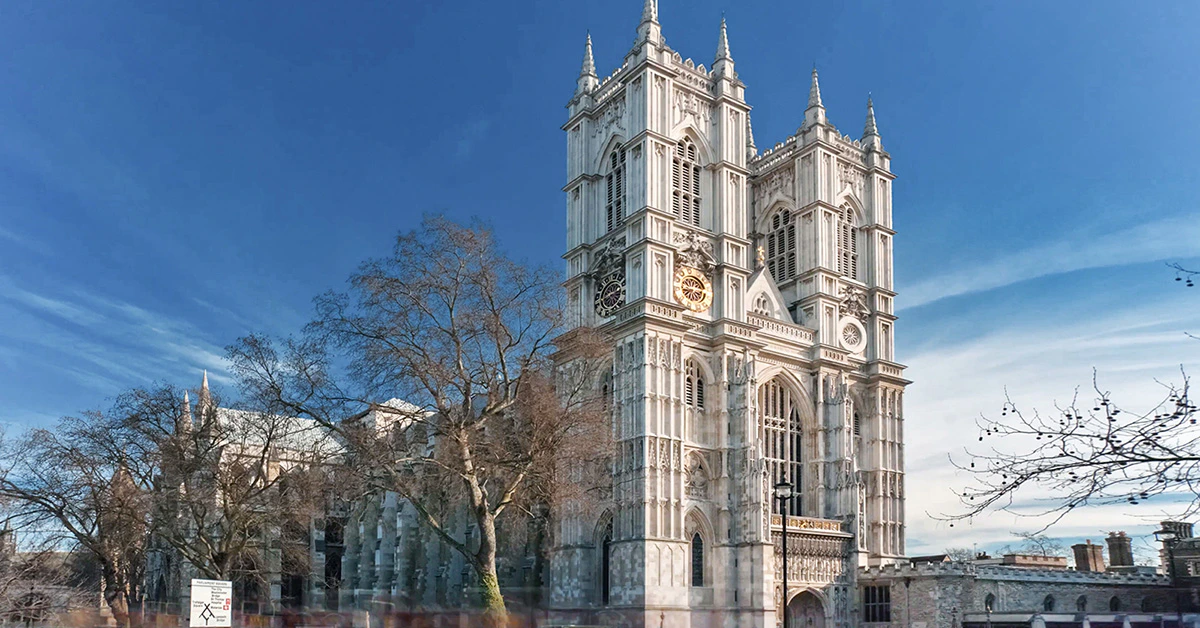
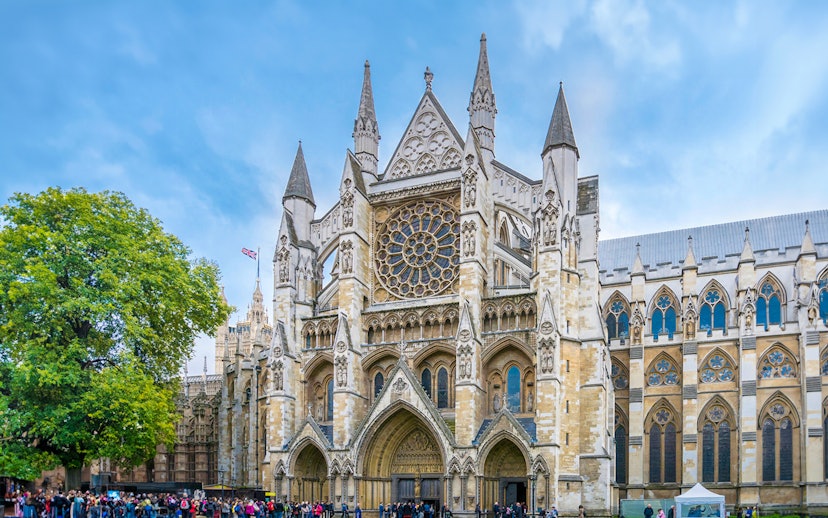
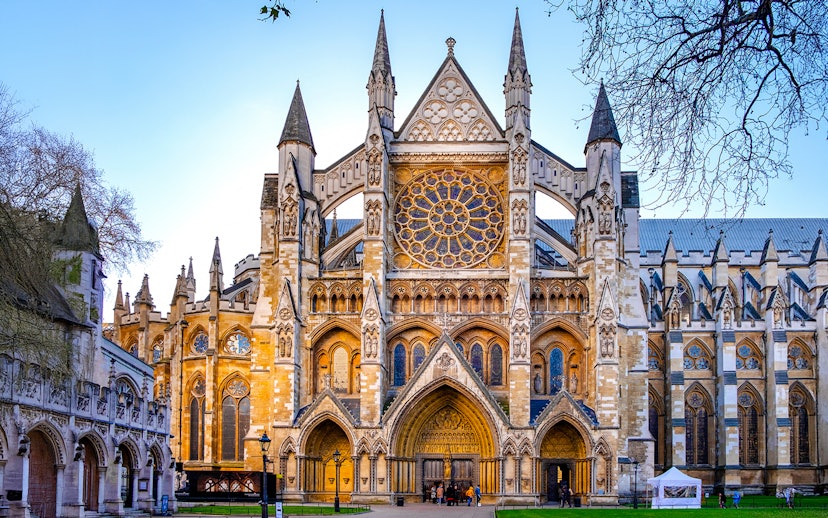
  • Entry point: Use the public visitor entrance on the Abbey’s north side rather than the ceremonial west front.
  • Position in route: The shrine sits at the east end, in St Edward’s Chapel behind the High Altar.
  • Time from entrance: Allow about 20–30 minutes to reach it directly, or longer if you’re following the full multimedia route.
  • Direct access: There is no separate shrine entrance; you must follow the Abbey visitor route.
  • Wheelchair access: Westminster Abbey is partially accessible, rather than fully step-free throughout.
  • Shrine area: The approach is on the main church level, but the east end can feel narrow and busy once crowds build.
  • Accessible support: Ask staff on arrival for the easiest route through the Abbey toward St Edward’s Chapel.
  • Visual support: Braille resources and the Abbey’s multimedia guide help visitors who need audio-led interpretation.
  • Hearing support: A hearing loop system is available.
  • Assistance: Guide dogs are welcome, and the Abbey offers free tickets for disabled visitors.
  • Expectation: Modest dress is recommended because Westminster Abbey is an active place of worship.
  • Enforcement: Ticket terms state there is no strictly enforced sightseeing dress code.
  • Context: The shrine is not a detached museum display; it sits inside a still-functioning church.
  • Service note: If you’re attending prayer or Evensong as well as sightseeing, conservative clothing is the safer choice.
  • Photography: Photography is not allowed inside Westminster Abbey, and flash photography is explicitly prohibited.
  • Behavior: Keep your voice low around the shrine, sanctuary, and surrounding chapels.
  • Bags and prohibited items: Large bags, backpacks, suitcases, drones, banners, whistles, alcohol, and sharp objects are not allowed.
  • Food and drink: Food and beverages are not permitted inside the Abbey.
  • Closures: Areas near the shrine may close temporarily or operate with reduced access during services or special events.

Frequently asked questions about the Shrine of Edward the Confessor

Yes. It is included with every valid Westminster Abbey entry ticket. No separate shrine ticket exists.

More reads