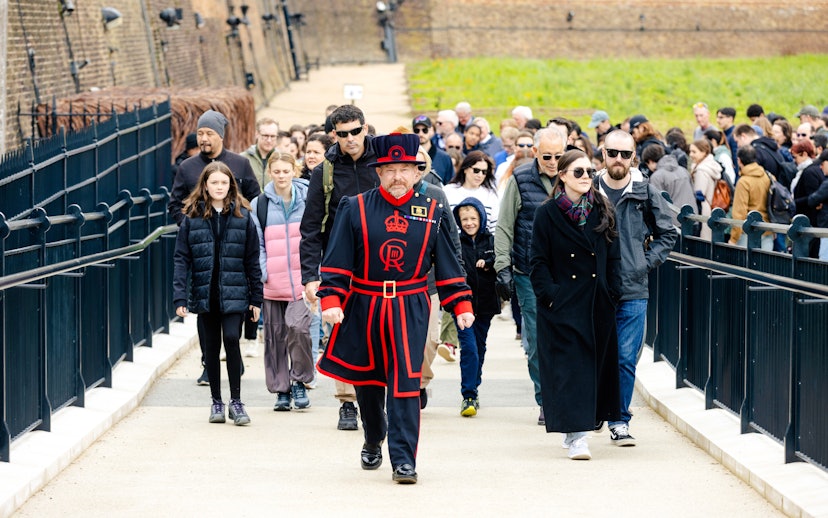












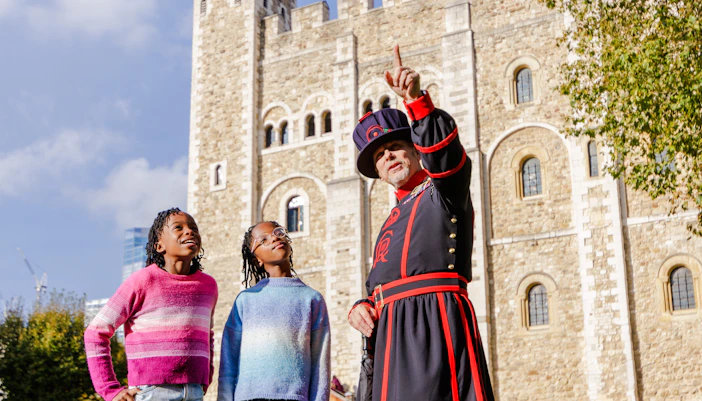
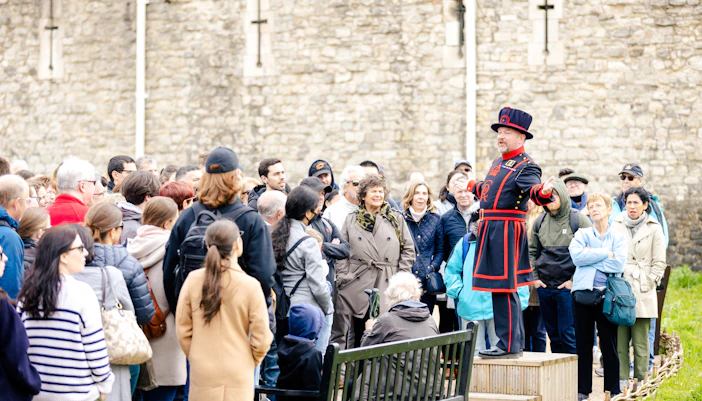
Visit during the first 90 minutes after opening, particularly on weekdays. The smaller chambers remain relatively quiet, giving you time to study the inscriptions without competing for space near the walls. Another good option is the final hour before closing, when visitor numbers begin to fall. Late mornings are typically busiest, especially after Beefeater tours pass through the Inner Ward.
Top things to do in London
Quick overview
- Access: Included in all Tower of London tickets
- Separate ticket: Not required
- When you’ll see it: Midway through most self-guided Tower routes, inside the Inner Ward
- Visit duration: 10–20 mins self-guided/15–25 mins with guide
- Best time: First 90 minutes after opening on a weekday, when the rooms are quieter, and the carvings are easier to read.
- Restrictions: Handheld photography is generally allowed. Tripods, selfie sticks, food, and drink aren't allowed inside the tower.
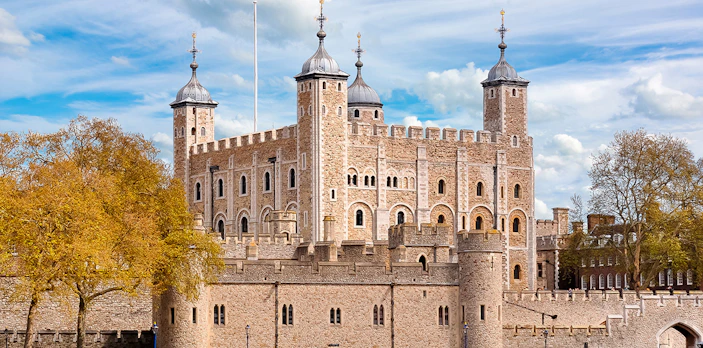
How to best experience the Beauchamp Tower
Best time to visit
How long to spend
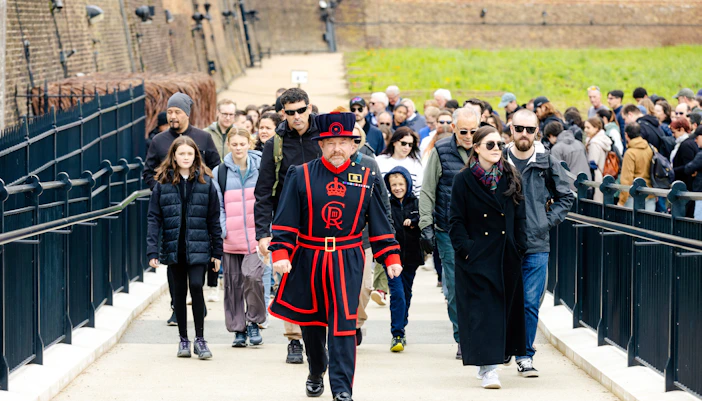
Allow 10–20 minutes if you're exploring independently or 15–25 minutes with a guide. Rather than trying to read every inscription, focus on a handful of the best-preserved carvings and the stories behind them. Taking your time reveals details that are easy to miss during a quick walkthrough.
Where it fits in your itinerary
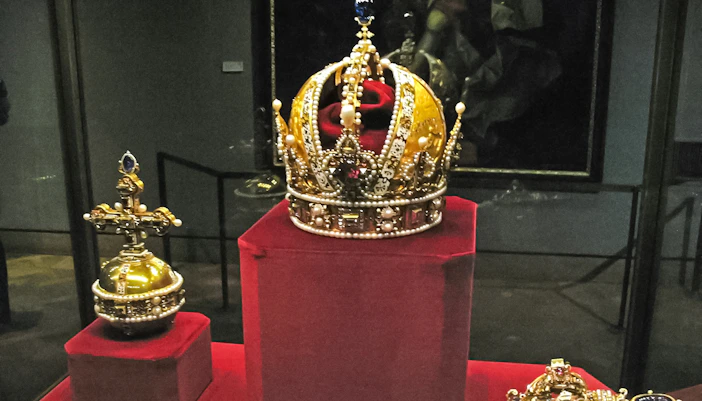
The Beauchamp Tower is usually visited midway through the Tower route, often after the Crown Jewels or the White Tower. It makes an excellent change of pace between larger attractions, replacing grand displays with a quieter, more reflective experience. If you're interested in Tudor history, consider pairing it with the Bloody Tower and Tower Green for a deeper understanding of the Tower's role as a state prison.
Crowd patterns
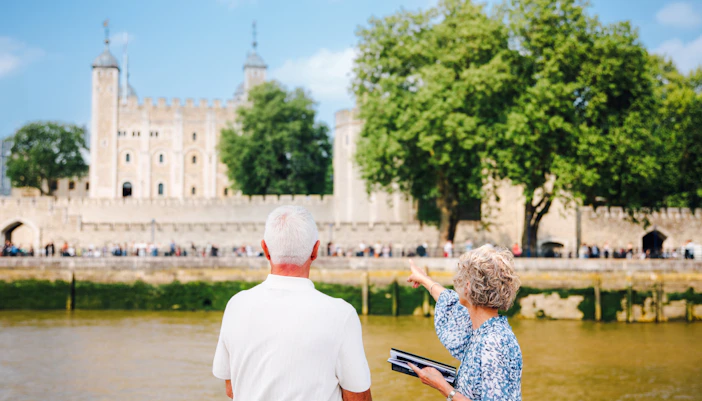
Although the Beauchamp Tower rarely develops long queues, its compact interior can feel crowded when tour groups arrive. Midday generally sees the highest visitor numbers, making it more difficult to study the wall carvings closely. If the chamber feels busy, continue exploring nearby attractions and return 15–20 minutes later for a more relaxed visit.
What to prioritize if time is short
If you only have 10 minutes, begin with the prisoner inscriptions carved into the main chamber walls before looking at the heraldic symbols and decorative carvings nearby. Afterwards, step into one of the deep window recesses to appreciate the tower's thick stone walls and imagine the confined world experienced by its prisoners. Reading just a few carefully chosen inscriptions is far more rewarding than trying to examine every carving.
Common mistakes to avoid
Many visitors walk straight to the windows for the view and overlook the tower's real treasures. Instead, begin by scanning the walls at eye level, where the most important inscriptions are located. Don't rush through expecting dramatic prison cells or interactive displays—the Beauchamp Tower rewards slow observation, with its most fascinating stories carved directly into the stone.
Best tickets to experience the Beauchamp Tower
| Ticket type | Why choose it |
|---|---|
Standard Tower of London admission | Ideal if you'd like to explore the tower independently and spend as much time as you wish studying the original prisoner inscriptions. |
Guided Tower of London tour | Best for understanding the stories behind the carvings, the identities of the prisoners, and the political events that brought them here. |
Early-entry or Beefeater meet-and-greet tour | Perfect if you'd like to visit the Beauchamp Tower before larger crowds arrive, making it easier to examine the historic inscriptions up close. |
Why it’s worth seeing
The Beauchamp Tower offers something no other part of the Tower of London can: the chance to read history exactly where it happened. Instead of display cases or reconstructed rooms, the walls themselves preserve the voices of Tudor prisoners who carved their names, prayers, family emblems, and messages into the stone centuries ago. These inscriptions transform the tower from a medieval fortress into a deeply personal historical record. Rather than rushing through, focus on the features below and you'll begin to understand why this is one of the Tower's most moving spaces.
The carved walls: The prisoners' own record
As soon as you enter, look beyond the architecture and study the stone itself. Hundreds of inscriptions cover the walls, many cut by prisoners who spent months or even years inside the tower. Unlike written chronicles or official records, these carvings were created by the prisoners themselves, making them some of the most authentic personal accounts preserved anywhere within the Tower.
Tudor prisoner inscriptions
Move slowly around the chamber and look for the beautifully carved names, coats of arms, religious symbols, and decorative motifs left by Tudor prisoners. Some inscriptions were created by educated noblemen with remarkable craftsmanship, while others are simpler marks made by men hoping to leave behind proof that they had once been there. Together, they reveal the diverse backgrounds of those imprisoned within the Tower's walls.
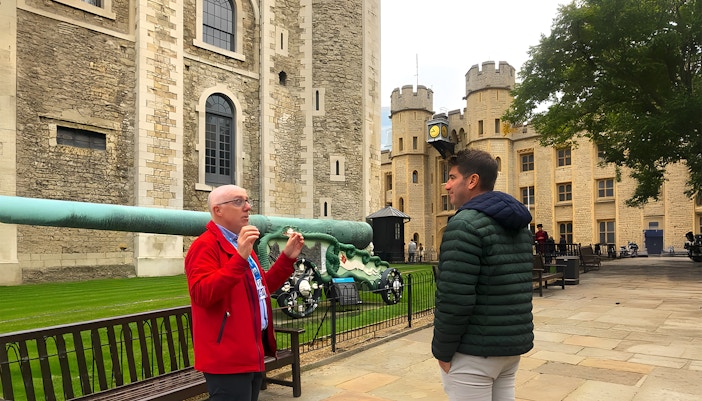
The window recesses and prison chamber
Step into one of the deep window embrasures and look back across the room rather than out towards the fortress. The thick stone walls, limited natural light, and compact chamber make it easier to imagine the daily reality of imprisonment. This perspective also reveals how closely the inscriptions cover the surrounding walls, reinforcing that nearly every surface carries a story.
What are the stories carved into stone

Names that refused to disappear
For many prisoners, carving a name into the wall was an act of remembrance. Some expected never to leave the Tower alive, and their inscriptions became lasting proof of their existence. Centuries later, visitors can still read many of these names exactly where they were carved.
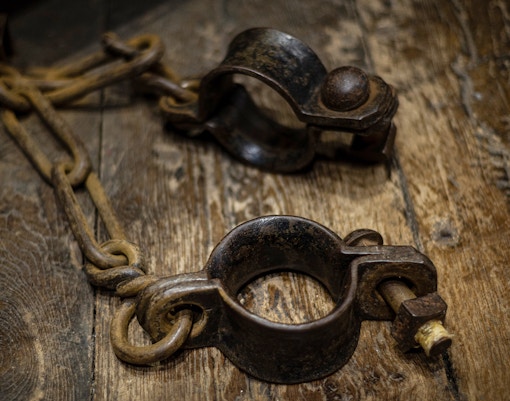
Faith during imprisonment
Religious symbols, biblical quotations, and carved crosses appear throughout the tower. During the turbulent Tudor period, many prisoners were held because of their religious beliefs, and these carvings reveal how faith offered comfort, hope, and resilience during long periods of confinement.
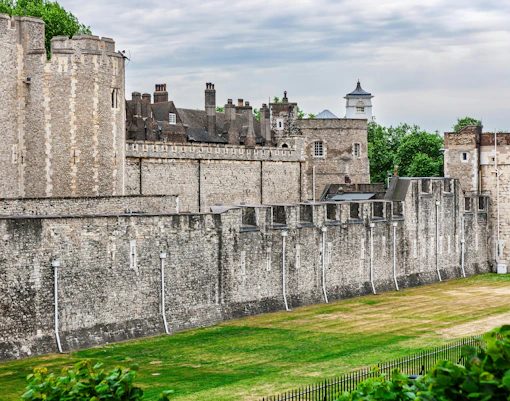
Family crests and heraldic symbols
Several noble prisoners carved elaborate coats of arms and heraldic devices instead of lengthy messages. These carefully executed designs expressed family identity, social standing, and loyalty even while their owners were imprisoned by the Crown.

Messages beyond despair
Not every inscription tells a story of suffering. Some express courage, loyalty, patience, or hope for justice. Together, they create a remarkably human portrait of the individuals who once occupied these rooms, reminding visitors that every carving represents a real person rather than simply another chapter in Tudor history.
Historical and cultural significance
The Beauchamp Tower evolved from a defensive structure into one of the Tower of London's most important state prisons. Today, it is celebrated not for its military architecture, but for preserving one of Britain's most remarkable collections of original prisoner inscriptions.
- A defensive tower is built (13th century): Constructed during the expansion of the Tower's inner curtain wall, the Beauchamp Tower originally served as part of the fortress's defensive system, protecting the western side of the Inner Ward.
- A prison for Tudor prisoners (16th century): During the reigns of Henry VIII, Mary I, and Elizabeth I, the tower became a prison for prominent nobles, clergy, and political prisoners caught up in the religious and dynastic conflicts of the Tudor period. Many left behind the inscriptions visitors see today.
- A preserved historical record (17th century onwards): Unlike many prison cells that were altered over time, the Beauchamp Tower retained much of its original fabric and prisoner carvings. Historians gradually recognised their importance as rare first-hand evidence of imprisonment within the Tower.
- One of the Tower's most personal spaces (Today): Visitors now come not simply to see a medieval tower, but to encounter the words, symbols, and identities carved into its walls by people who experienced some of the most dramatic political events in English history.
Notable figures
Thomas Abell | Chaplain and prisoner
Thomas Abell was imprisoned after defending the validity of Catherine of Aragon's marriage to Henry VIII during the King's break with Rome. His beautifully carved rebus, featuring the initials "T A" and a bell, remains one of the tower's best-known inscriptions.
Robert Dudley | Noble prisoner
Robert Dudley was imprisoned in the Tower following the failed attempt to place Lady Jane Grey on the throne in 1553. Although later released, he went on to become one of Queen Elizabeth I's closest advisers and lifelong favourites.
Guildford Dudley | Noble prisoner
Guildford Dudley, husband of Lady Jane Grey, was held in the Tower after the succession crisis of 1553. His imprisonment reflects the intense political uncertainty that surrounded the Tudor monarchy.
Philip Howard | Earl of Arundel
A leading Catholic nobleman during Elizabeth I's reign, Philip Howard spent years imprisoned in the Tower after being accused of treason. His story highlights the religious conflicts that shaped many of the inscriptions preserved within the Beauchamp Tower today.
Know before you go
- Opening hours: The Beauchamp Tower follows the Tower of London's opening hours and is accessible whenever the Tower is open.
- Entry system: Tower tickets are timed, with admission available in 30-minute entry windows.
- Arrival window: Arrive within 30 minutes of your selected entry time.
- Best time to visit: Early morning or the final hour before closing usually offers the quietest conditions for reading the inscriptions.
- Seasonal timings: Opening hours vary throughout the year, so check the latest schedule before your visit.
- Address: Tower of London, London EC3N 4AB, United Kingdom
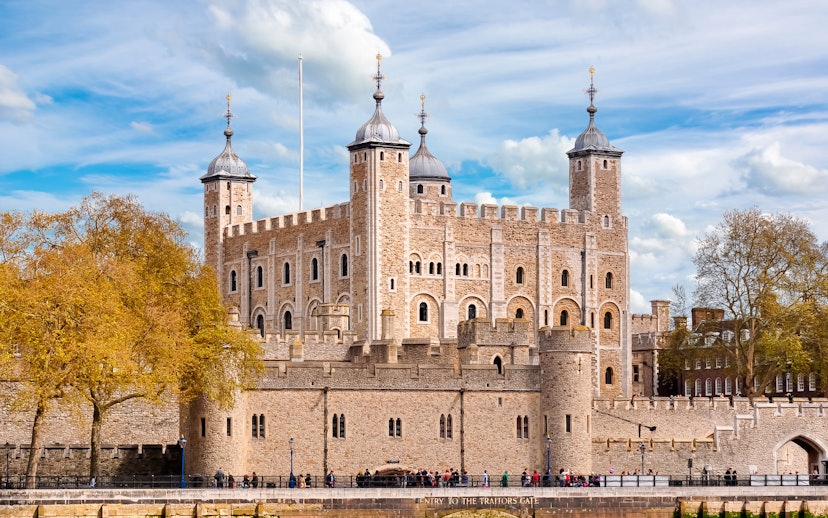
- Inside the Tower: Beauchamp Tower stands within the Inner Ward, along the western section of the fortress walls.
- Nearest Underground: Tower Hill station, approximately a 2–3 minute walk from the main entrance.
- Entry point: Enter through the Tower's main visitor entrance before following the Inner Ward route towards the tower.
- Walking time: Most visitors reach the Beauchamp Tower 45–90 minutes after entering the Tower, depending on whether they visit the Crown Jewels or White Tower first.
- Wheelchair access: The wider Tower site offers partial accessibility, but the Beauchamp Tower isn't step-free.
- Historic stairs: Access involves climbing narrow medieval staircases with uneven stone steps.
- Lighting: Interior lighting is intentionally subdued to help preserve the historic environment, so allow extra time to read the inscriptions.
- Companion tickets: Complimentary carer tickets are available from the Ticket Office with appropriate supporting documentation.
- Assistance dogs: Registered assistance dogs are welcome throughout the Tower of London.
- Photography: Handheld photography is generally permitted inside the Beauchamp Tower.
- Do not touch the carvings: The prisoner inscriptions are original historic features and should never be touched or traced.
- Food and drink: Eating, drinking, and smoking aren't permitted inside the tower.
- Large bags: Oversized luggage, tripods, selfie sticks, and bulky photographic equipment aren't allowed inside the Tower.
- Follow visitor flow: The interior is compact, so be mindful of other visitors when pausing to study the inscriptions.
- Difficulty level: Moderate due to medieval staircases and uneven flooring.
- Walking: Expect moderate walking throughout the Tower before reaching the Beauchamp Tower.
- Standing: Most visitors spend 10–20 minutes standing while reading the wall carvings.
- Space: Interior chambers are relatively small and can feel confined when visitor numbers are high.
- Alternative option: Visitors unable to climb stairs can still appreciate the tower's exterior while focusing on more accessible attractions elsewhere in the Tower.
Things many visitors miss

- Not every inscription has been identified: Although many famous carvings have been linked to known prisoners, historians still cannot identify every name, symbol, or inscription found within the tower. Some remain anonymous reminders of lives that have largely disappeared from the historical record.
- Prisoners didn't always occupy the tower alone: The Beauchamp Tower wasn't designed as a series of isolated prison cells. At different points in its history, multiple prisoners could occupy the same chamber, creating a shared space where inscriptions accumulated over many decades.
- The carvings survived because they were never erased: One of the most remarkable aspects of the Beauchamp Tower is simply that the inscriptions still exist. Unlike many historic prisons where walls were repaired or rebuilt, these carvings were preserved, allowing modern visitors to read messages left behind nearly five centuries ago.
Visitor tips
- Bring your patience rather than rushing through. The Beauchamp Tower rewards careful observation far more than quick sightseeing.
- Read the interpretation panels alongside the carvings. They help explain the stories behind several important inscriptions without overwhelming you with unnecessary detail.
- Visit before or after the busiest attractions. The quieter atmosphere makes it much easier to appreciate the deeply personal nature of the inscriptions.
- Don't expect dramatic prison cells. The emotional impact comes from the original carvings left by real prisoners, not reconstructed displays or theatrical exhibits.
- Pair your visit with the Bloody Tower and Tower Green. Together, these three sites provide one of the most complete pictures of imprisonment, justice, and political conflict within the Tower of London.
Frequently asked questions about the Beauchamp Tower
Yes. Entry to Beauchamp Tower is included with every valid Tower of London ticket. No separate ticket exists.
No. Any Tower of London ticket gets you in. Guided or early-entry options simply give you more context and a calmer visit.
No. Beauchamp Tower has no independent entrance. You must enter the fortress first and reach it from inside the paid complex.
Usually midway through a self-guided visit. Allow about 45–90 minutes from the main entrance, depending on your route and Crown Jewels timing.
Allow 10–20 minutes self-guided, or 15–25 minutes with a guide. The wall carvings reward slow looking.
Yes, on many Tower tours. Even when it is not a formal stop, you can still visit it afterward with the same admission ticket.
Not fully. The wider Tower site is partially accessible, but Beauchamp Tower itself has stairs and is not step-free.
Generally, yes. Handheld photography is usually allowed, but tripods, selfie sticks, large bags, food, and drink are not.
Beauchamp Tower is best for prisoner graffiti. Choose the Bloody Tower for murder lore, and the White Tower for armor and scale.