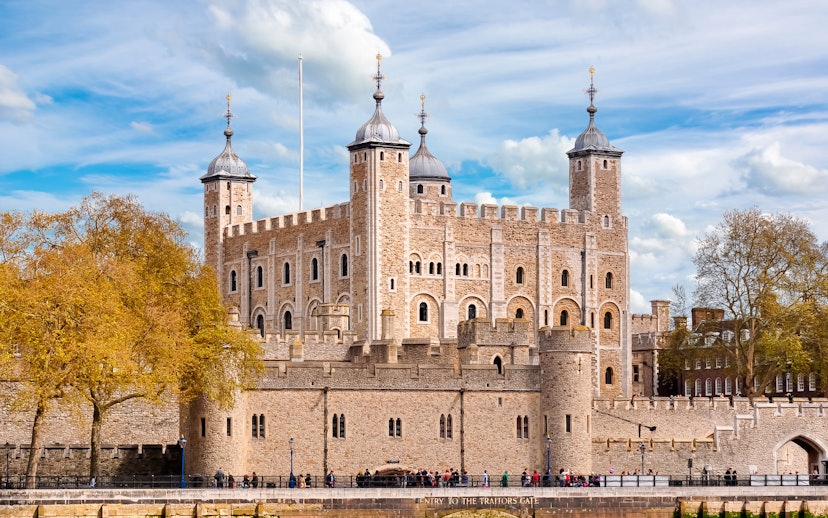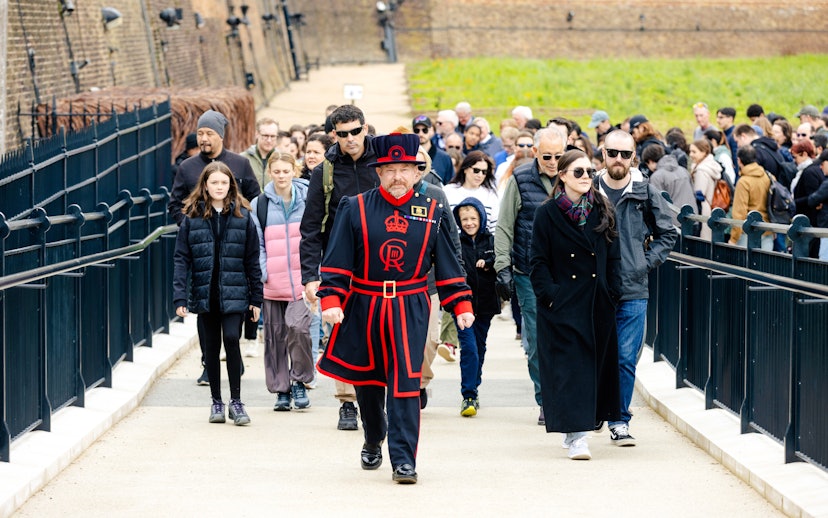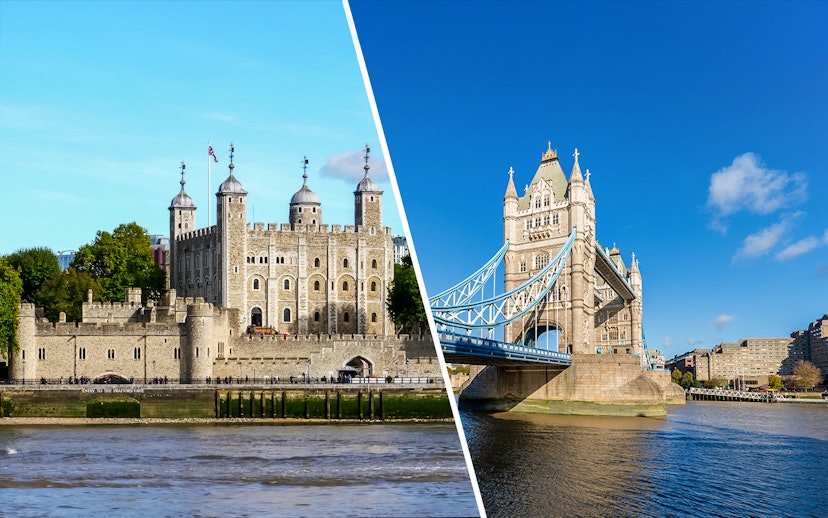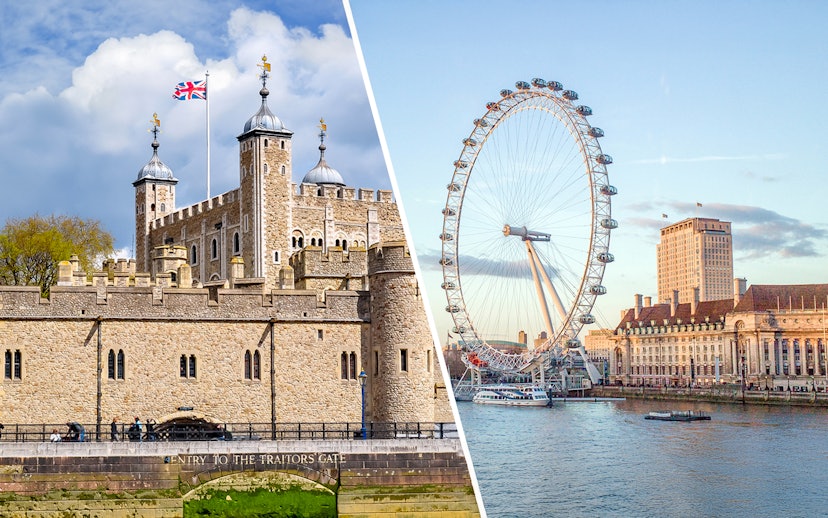









Visit during the Tower's first entry slot on a weekday for the quietest views. Most visitors head straight to the Crown Jewels after entering, so the riverside paths remain relatively peaceful for the first hour. By late morning, foot traffic spreads across the southern walls, making it harder to pause and appreciate the setting.
Top things to do in London
Quick overview
- Access: Included in all Tower of London tickets
- Separate ticket: Not required
- When you’ll see it: Midway on the river-facing side of the Tower route
- Visit duration: 10–15 mins self-guided/15–20 mins with guide
- Best time: First entry slot on a weekday, before Crown Jewels traffic spreads into the riverside paths
- Restrictions: Visitors cannot enter through Traitors' Gate; it is viewed from nearby public pathways within the Tower grounds.
How to access Traitors' Gate
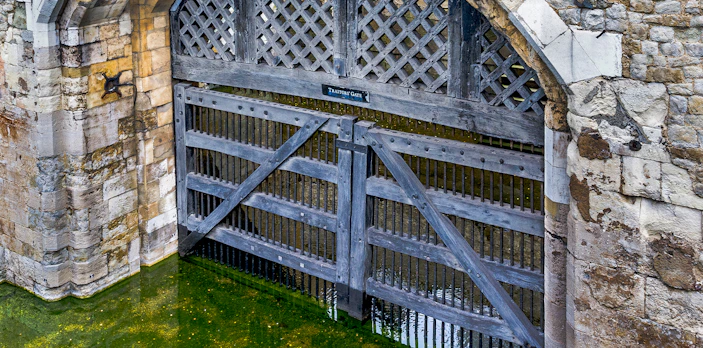
Access to Traitors' Gate is included with all Tower of London admission tickets, and no separate entry is required. Located along the Thames-facing perimeter of the fortress, this historic water entrance can be viewed during your self-guided visit. Many visitors encounter it while walking the outer walls and waterfront areas, where interpretation panels explain its role in bringing high-profile prisoners into the Tower.
How to best experience the Traitors’ Gate
Best time to visit
How long to spend
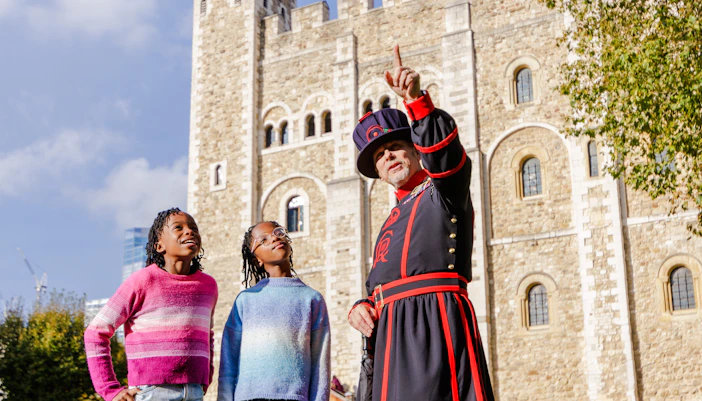
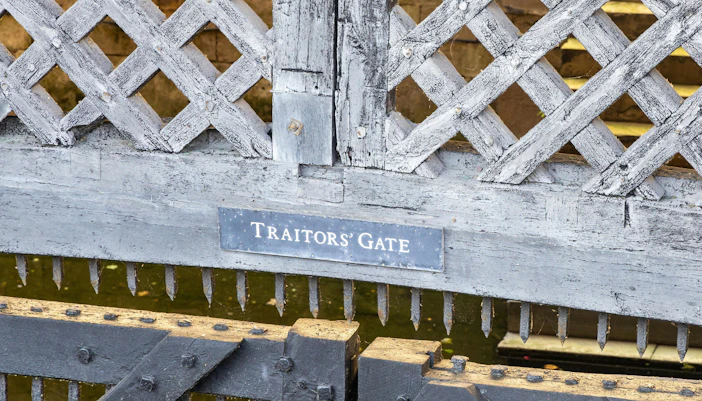
Allow around 10–15 minutes if you're exploring independently, or 15–20 minutes with a guide or Beefeater tour. Rather than simply photographing the gate, spend a few minutes observing its position beneath St Thomas's Tower and imagining how prisoners once arrived directly from the Thames.
Where it fits in your itinerary
Traitors' Gate sits naturally within the Tower's southern waterfront route. Visit it alongside St Thomas's Tower, the Medieval Palace, and Tower Wharf before continuing towards Tower Green and the Bloody Tower. Setting aside 60–90 minutes for this part of the Tower allows enough time to appreciate both the architecture and the stories connected with it
Crowd patterns
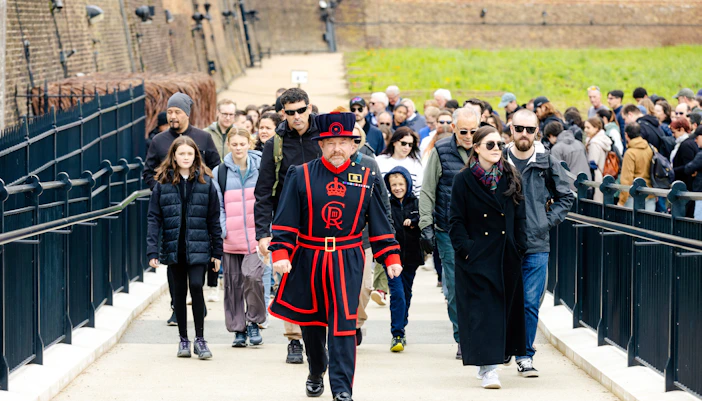
The busiest period is typically 11am–2pm, especially during weekends, school holidays, and summer afternoons. While Traitors' Gate itself never has a queue, the surrounding walkways can become crowded as visitors move between the Crown Jewels, Medieval Palace, and Tower Wharf. Early morning and the final hour before closing usually offer the clearest views.
What to prioritize if time is short
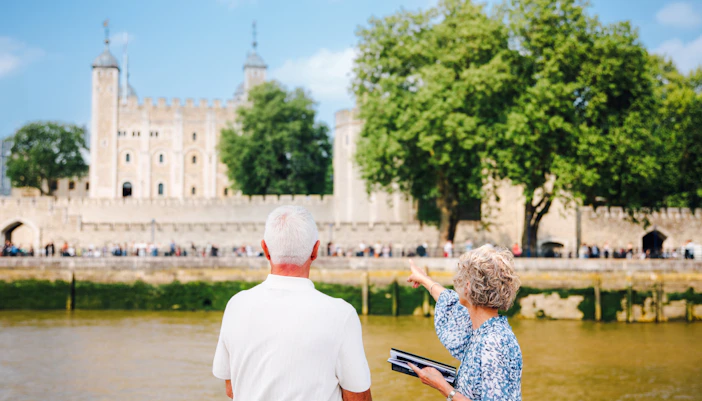
Start by viewing the gate directly beneath St Thomas's Tower, then walk a little further along Tower Wharf for a wider perspective that includes the River Thames and the fortress walls. Seeing the gate within its riverside setting explains far more about its historical role than a close-up photograph alone.
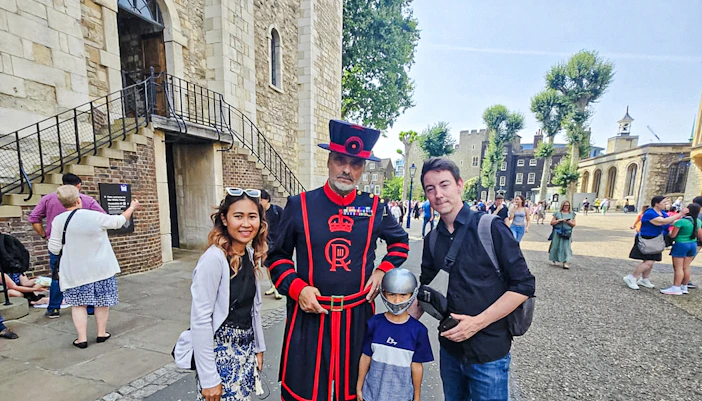
Common mistakes to avoid
Many visitors expect Traitors' Gate to be a grand ceremonial entrance, but its significance comes from its history rather than its size. Don't treat it as a quick photo stop. Spend a few minutes taking in the river approach, the surrounding walls, and the royal apartments above to understand why this modest gateway became one of England's most infamous entrances.
Best tickets to experience the Traitors’ Gate
| Ticket type | Why choose it |
|---|---|
Standard Tower of London admission | Best for exploring at your own pace and including Traitors' Gate naturally within the Tower's self-guided visitor route. |
Guided Tower of London tour | Ideal if you'd like to understand the stories of Anne Boleyn, Elizabeth I, Sir Thomas More, and other famous prisoners before reaching the gate. |
Early-entry or Beefeater meet-and-greet tour | Offers quieter grounds, fewer people along the waterfront, and richer historical context before the busiest visitor hours begin. |
Why it’s worth seeing
Traitors' Gate isn't one of the Tower's grandest structures, but it's one of its most symbolic. Hidden beneath St Thomas's Tower, this modest riverside entrance witnessed the arrival of monarchs, nobles, bishops, and political prisoners whose lives would be changed forever within the fortress walls. Rather than focusing on its size, pay attention to its position beside the Thames, the royal apartments towering above it, and the defensive features built into its design. Together, they tell the story of how the Tower served as both a royal palace and one of England's most feared prisons.
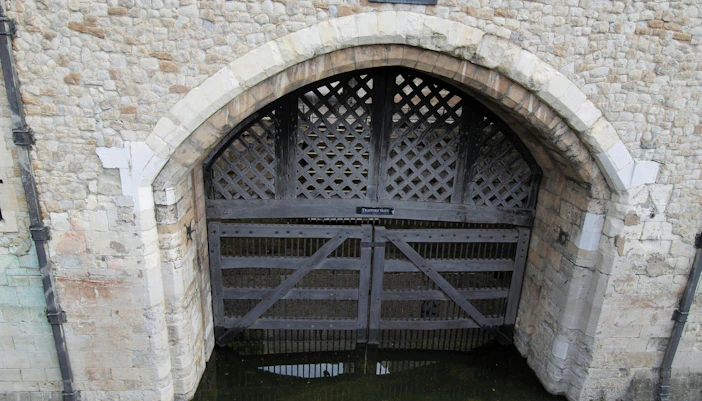
The riverside gateway
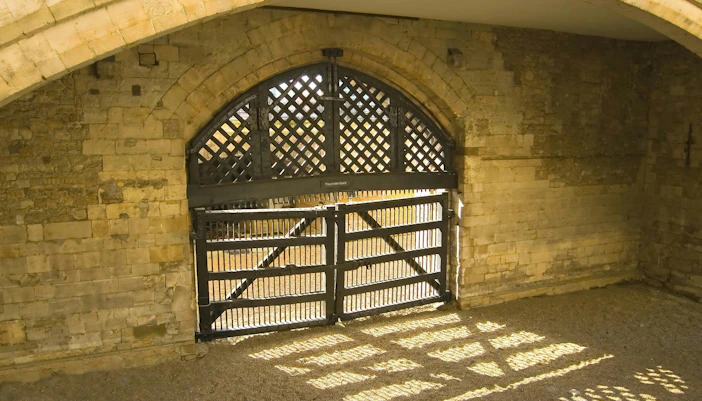
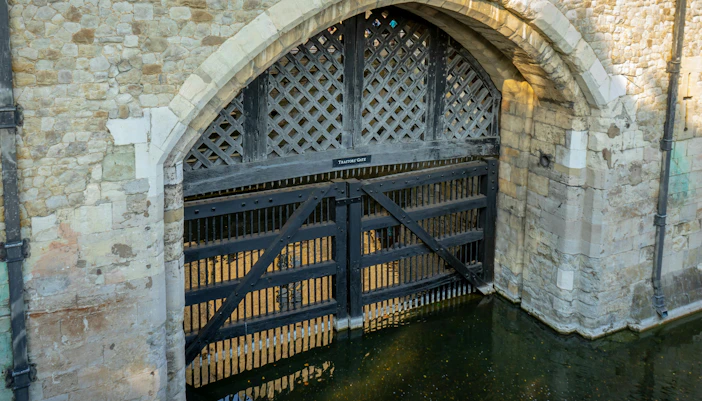
The pointed stone arch sitting low in the fortress wall was designed to receive boats directly from the River Thames, London's busiest transport route during the Middle Ages. Although originally built as a royal water entrance, it became closely associated with high-profile prisoners during the Tudor period. Stand a little east along Tower Wharf to appreciate how naturally the gateway blends into the fortress rather than announcing itself as a grand entrance.
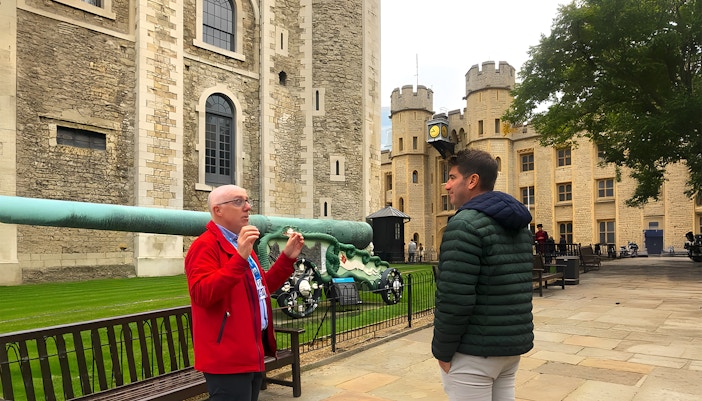
St Thomas’s Tower above it
Lift your eyes above the gateway and you'll see St Thomas's Tower, constructed by Edward I in the late 13th century as part of his luxurious riverside residence. The contrast is striking: elegant royal apartments occupied the upper floors, while beneath them lay the water entrance that later became synonymous with imprisonment. Few places within the Tower illustrate this blend of royal splendour and political power quite so clearly.
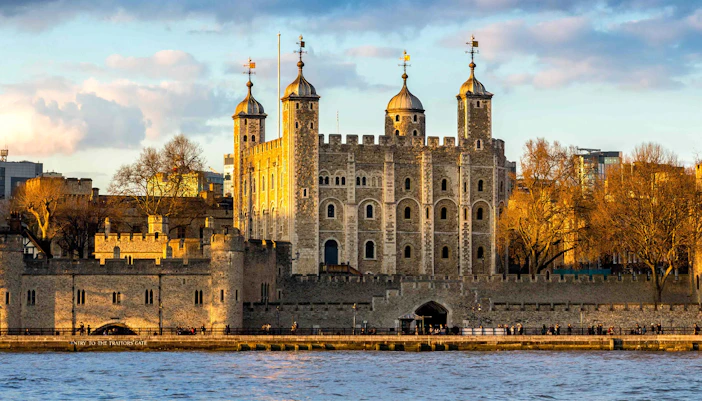
The Thames and surrounding fortress walls
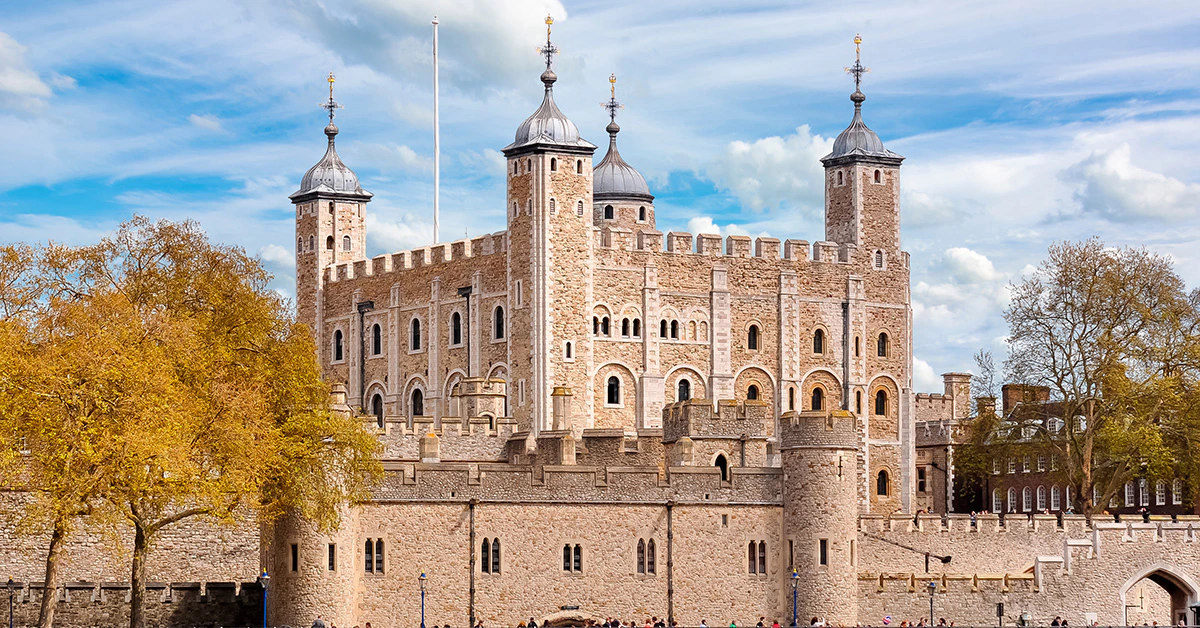
Don't stop at the gate itself. Walk a little further along Tower Wharf and frame the gateway together with the River Thames and the surrounding defensive walls. This wider perspective helps explain why arrival by water carried such significance. Prisoners crossed from the openness of the river into an enclosed fortress designed to control every movement, making the transition far more powerful than the gateway alone suggests.
Architectural details to notice
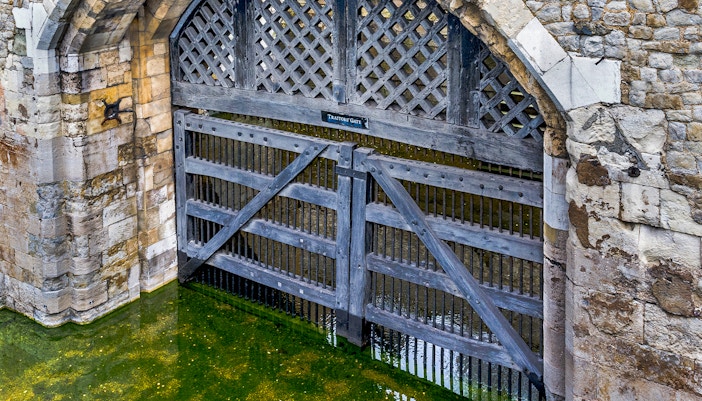
The pointed Gothic arch
Unlike grand ceremonial gateways found elsewhere in the Tower, Traitors' Gate was designed primarily for function. Its pointed medieval arch helped distribute the immense weight of the masonry above while providing sufficient clearance for river barges entering beneath the tower.
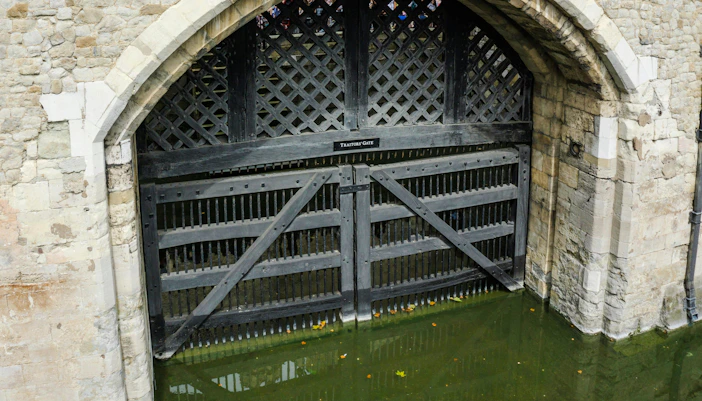
Layers of Kentish ragstone
Much of the surrounding wall is built using Kentish ragstone and limestone, materials commonly used across the Tower during Edward I's expansion. The varied colours and textures visible today reflect centuries of repairs, restoration, and weathering rather than one single phase of construction.
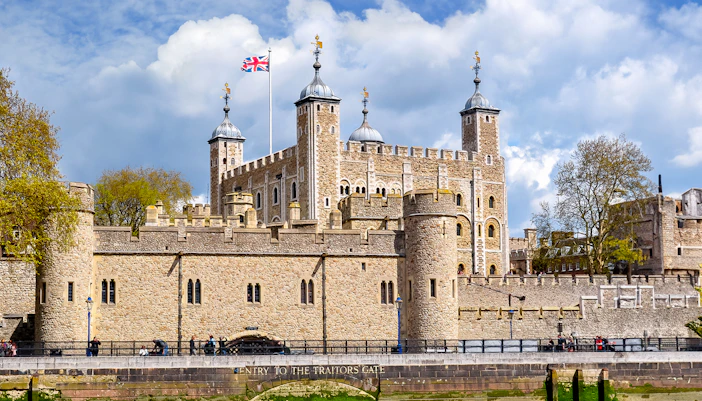
Built into St Thomas's Tower
Rather than existing as an independent gateway, Traitors' Gate forms the river entrance to St Thomas's Tower. This integrated design demonstrates how medieval architects combined royal accommodation, defensive fortifications, and controlled river access within a single structure.
Things many visitors don't realise
- It wasn't originally called Traitors' Gate: When Edward I built the entrance in the 13th century, it was simply known as the Water Gate. The name "Traitors' Gate" only became popular centuries later as more high-profile prisoners entered the Tower through it.
- Not every famous prisoner arrived here: Although Anne Boleyn, Princess Elizabeth, and several notable prisoners are closely associated with the gate, many others entered through different Tower entrances depending on political circumstances, security arrangements, or the state of the river.
- It served kings before prisoners: Long before it gained its infamous reputation, the gateway functioned as a private royal entrance. Monarchs travelling along the Thames could arrive directly beneath St Thomas's Tower without passing through the busy city streets.
- Not everyone who entered was executed: Traitors' Gate became synonymous with imprisonment rather than certain death. Princess Elizabeth, for example, entered the Tower as a prisoner in 1554 but later left safely—and eventually became one of England's greatest monarchs.
Historical and cultural significance
Traitors' Gate reflects how the Tower of London evolved alongside England's monarchy and justice system. What began as a practical royal entrance gradually became one of the country's most recognisable symbols of imprisonment and political power.
- 1270s - Built for Edward I: Traitors' Gate was constructed as part of St Thomas's Tower during Edward I's expansion of the Tower of London. Its original purpose was to provide direct river access to the royal residence inside the fortress.
- 14th–15th centuries - A strategic river entrance: As the Thames became London's busiest transport route, the Water Gate offered secure access for royal visitors, officials, and selected arrivals entering the Tower directly by boat.
- The Tudor period - The rise of Traitors' Gate: During the 16th century, the entrance became forever linked with prisoners accused of treason, including Anne Boleyn, Sir Thomas More, Thomas Cranmer, and the future Queen Elizabeth I. These dramatic arrivals transformed an ordinary gateway into one of England's most enduring historical symbols.
- Today - A symbol of the Tower's prison history: Although no longer used for river arrivals, Traitors' Gate remains one of the Tower's most photographed landmarks. More than its architecture, it is the stories connected with the gateway that continue to capture visitors' imaginations, illustrating how the Tower served as both royal palace and state prison.
Notable figures
Anne Boleyn | Queen consort
Henry VIII's second wife is believed to have entered through Traitors' Gate in 1536 before her imprisonment in the Tower. Just weeks later, she was executed on nearby Tower Green, making her one of the gate's most famous historical figures.
Elizabeth I | Princess and future queen
Before becoming one of England's greatest monarchs, Princess Elizabeth arrived at the Tower in 1554 after being accused of supporting Wyatt's Rebellion. Her imprisonment was brief, and she later ascended the throne as Queen Elizabeth I.
Sir Thomas More | Statesman and scholar
The former Lord Chancellor was imprisoned after refusing to recognise Henry VIII as Supreme Head of the Church of England. His imprisonment at the Tower became one of the defining moments of the English Reformation.
Thomas Cranmer | Archbishop of Canterbury
Archbishop Cranmer was confined in the Tower during Mary I's reign before being tried for heresy. His imprisonment reflected the intense religious conflicts that shaped Tudor England.
Know before you go
- Entry system: Tower of London tickets are timed, with admission slots available every 30 minutes.
- Arrival window: Arrive within your booked time slot. Entry is generally permitted up to 30 minutes after your selected time.
- Re-entry: Re-entry isn't permitted once you leave the Tower grounds.
- Opening hours: Seasonal opening and closing times vary throughout the year, so check the latest schedule before your visit.
- Best viewing time: Visit during the first hour after opening for the quietest riverside paths and the clearest views of Traitors' Gate.
Address: Tower of London, London EC3N 4AB, United Kingdom
- Within the Tower: Traitors' Gate is located beneath St Thomas's Tower on the southern, river-facing side of the fortress.
- Nearest Underground: Tower Hill station, around a 2–3 minute walk from the main entrance.
- River access: Tower Pier sits immediately beside the Tower if you're arriving by Thames river service.
- Walking time: Allow around 20–40 minutes from the main entrance, depending on your route through the Tower and time spent at earlier attractions.
- Ground-level viewing: Traitors' Gate is viewed entirely from outdoor pathways, so you don't need to climb stairs or enter historic interiors to appreciate it.
- Wheelchair access: The riverside viewing areas are generally accessible, although cobbled surfaces and gentle slopes may require extra care.
- Historic pathways: Uneven paving stones are common throughout this section of the Tower, so comfortable footwear is recommended.
- Companion tickets: Complimentary carer tickets are available at the Ticket Office with appropriate supporting documentation.
- Assistance animals: Registered assistance dogs are welcome throughout the Tower grounds.
- Photography: Photography is permitted throughout the outdoor areas, making Traitors' Gate one of the Tower's best photo stops.
- Professional equipment: Tripods, selfie sticks, lighting equipment, and large camera rigs aren't permitted.
- Viewing only: Traitors' Gate isn't part of the public route and cannot be entered by visitors.
- Food and drink: Eating isn't permitted inside historic buildings, although refreshments are available elsewhere within the Tower grounds.
- Respect barriers: Remain behind designated viewing points and avoid leaning over riverside barriers for photographs.
- Difficulty level: Easy. Visiting Traitors' Gate involves no climbing and only a short stop along the main visitor route.
- Walking distance: Expect moderate walking if you're visiting the Tower's major landmarks on the same day.
- Standing time: Most visitors spend around 10–15 minutes viewing and photographing the gate.
- Terrain: Historic cobblestones, uneven paving, and occasional slopes are typical along the waterfront.
- Rest areas: Benches are available nearby around Tower Wharf and other parts of the Tower complex.
Visitor tips
- Visit Traitors' Gate before the Crown Jewels if your route allows. The riverside paths are usually much quieter during the first part of the morning than later in the day.
- Don't judge the gate by its size. It's smaller than many visitors expect, but its significance lies in the stories attached to it rather than its architecture alone.
- Pause before reading the information panels. Looking at the gateway first helps you appreciate its setting before learning about the famous prisoners connected with it.
- Combine it with St Thomas's Tower instead of treating it as a separate stop. Seeing the royal apartments directly above the gate makes the contrast between palace and prison much more striking.
- Walk a little further along Tower Wharf before leaving. The best overall views aren't directly beside the gate but from several metres away, where the river, walls, and gateway can all be seen together.
Frequently asked questions about Traitors' Gate
Yes. Entry to Traitors’ Gate viewpoints is included with every valid Tower of London ticket. No separate ticket exists.
No. Every Tower ticket includes access to the viewing areas. However, guided tours and Beefeater tours provide historical context and stories that help bring the site to life.
No. Traitors' Gate is preserved as a historic monument and isn't part of the public visitor route. You can view it from the riverside pathways inside the Tower grounds but cannot enter through the gateway itself.
The entrance was originally known as the Water Gate when it was built in the 13th century. It later became known as Traitors' Gate because many high-profile prisoners accused of treason were brought into the Tower through this riverside entrance during the Tudor period.
No. While Anne Boleyn, Princess Elizabeth, Sir Thomas More, and several other notable prisoners are closely associated with the gate, not every prisoner arrived this way. Entry routes varied depending on the political situation, security arrangements, and river conditions.
Most visitors spend around 10–15 minutes here. If you're taking a guided tour or want to appreciate the surrounding architecture and riverside setting, allow up to 20 minutes.
You'll find it beneath St Thomas's Tower on the southern side of the Tower of London, overlooking the River Thames. It's usually reached midway through the standard visitor route after passing through the Medieval Palace area.
The quietest time is during the Tower's first entry slot on a weekday. Visitor numbers increase significantly from late morning onwards as crowds spread from the Crown Jewels towards the waterfront.
You can catch a limited glimpse of the gate from Tower Wharf outside the Tower walls, but the best viewpoints and historical interpretation are only available with Tower admission.
Yes. Children generally enjoy spotting the famous gateway from the riverside and learning about the people who once arrived there by boat. Parents may wish to simplify some of the darker historical stories for younger visitors.
Yes, the viewing areas are at ground level and don't require climbing stairs. However, like much of the Tower of London, the surrounding paths include uneven cobblestones and historic paving, which may require additional care.
No. The gateway is preserved as a historic landmark and is no longer used as an active river entrance. Changes to the River Thames and centuries of conservation mean it now serves solely as a historic feature.
Absolutely. Although it's a relatively brief stop, Traitors' Gate offers one of the clearest insights into the Tower's role as a state prison. Its location, history, and connection to some of England's most famous historical figures make it one of the Tower's most meaningful landmarks.
No. They are separate landmarks within the Tower of London. Traitors' Gate is the historic riverside entrance where notable prisoners arrived by boat, while the Bloody Tower is an inner fortress tower associated with famous imprisonments, including the mystery of the Princes in the Tower.
Yes. Photography is permitted, and the riverside location makes Traitors' Gate one of the Tower's best outdoor photography spots. For the best composition, include both the gateway and St Thomas's Tower in your frame while staying behind designated visitor barriers.