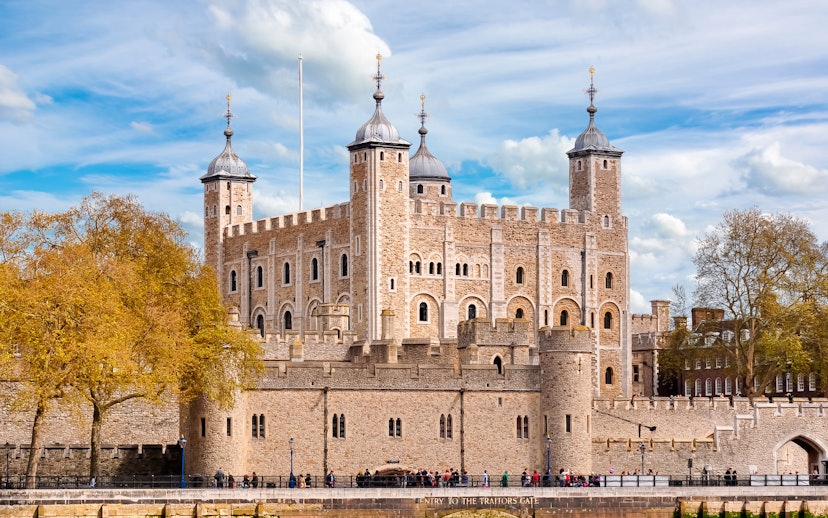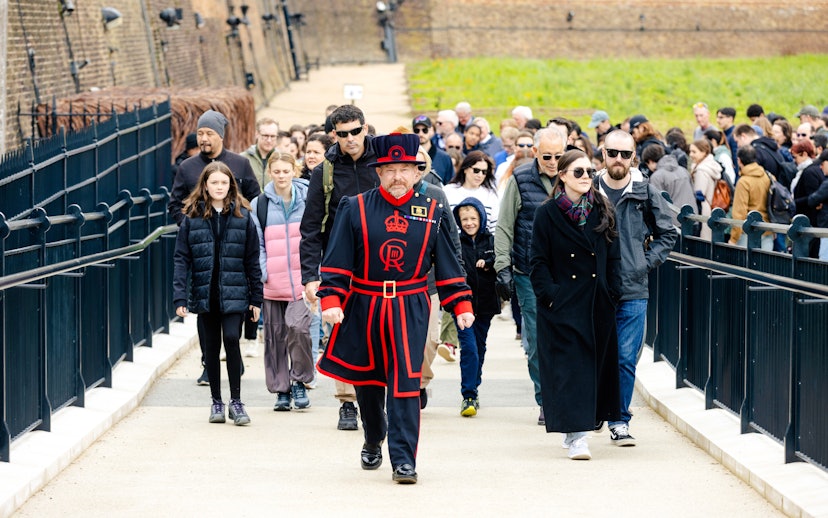




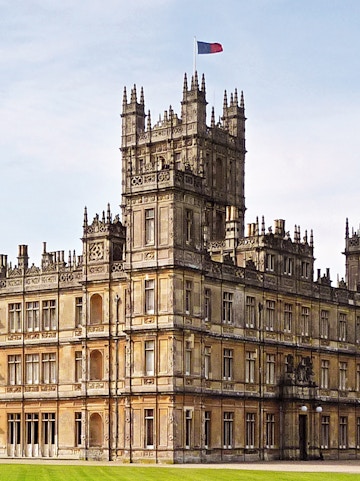


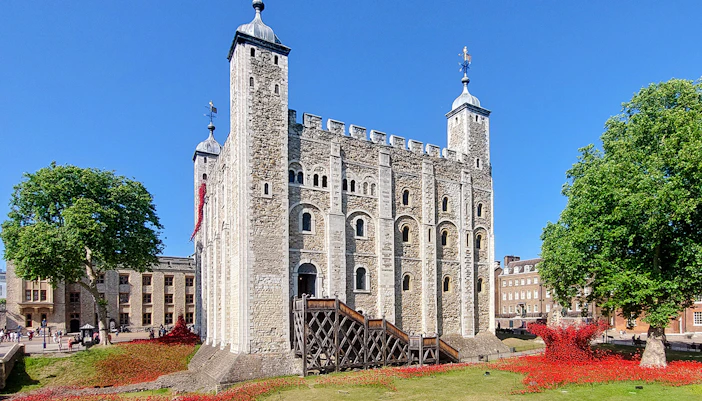
Aim to reach Tower Green within the first hour after the Tower opens or after 3pm on a weekday. Late mornings are typically the busiest, as several Yeoman Warder tours and independent visitors gather here at the same time. Visiting during quieter periods allows for a more reflective experience and better photographs.
Top things to do in London
Quick overview
- Access: Included in all Tower of London tickets
- Separate ticket: Not required
- When you’ll see it: Midway through the Tower route, inside the Inner Ward
- Visit duration: 10–15 mins self-guided/15–20 mins with a guide
- Best time: First hour after opening or late afternoon on weekdays, when tour groups are thinner
- Restrictions: No restrictions specific to Tower Green; standard Tower of London visitor rules apply.
How to access the Tower Green
Access to Tower Green is included with all Tower of London admission tickets, so no separate entry or reservation is required. Located within the Inner Ward, this small open space is one of the Tower’s most historically significant sites, known as the location of several high-profile executions, including those of Anne Boleyn and Lady Jane Grey. Visitors can reach Tower Green easily while exploring nearby landmarks such as the White Tower, Chapel Royal of St. Peter ad Vincula, and the Crown Jewels. Since the area remains open throughout the day, you can visit at your own pace, though arriving earlier often provides a quieter atmosphere and better opportunities to take in its history without large crowds.
How to best experience Tower Green
Visit during quieter hours
How long to spend
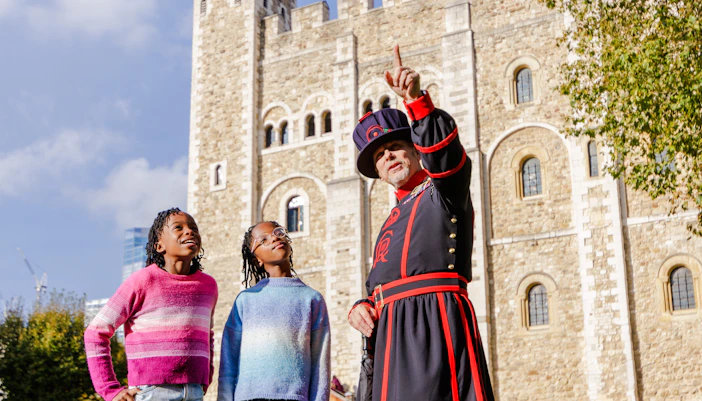
Allow around 10–15 minutes if you're exploring independently, or 15–20 minutes if you're following a guided or Beefeater tour. Although the lawn itself is compact, taking time to understand the memorial, nearby chapel, and surrounding buildings adds much greater meaning to your visit.
Where it fits in your itinerary
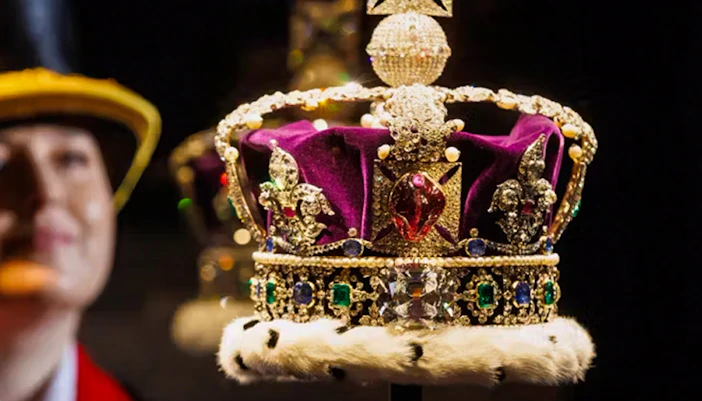
Tower Green is usually reached midway through a visit, after the White Tower or Crown Jewels. It naturally pairs with the Queen's House, the Chapel of St Peter ad Vincula, and the Bloody Tower, making this one of the Tower of London's richest historical areas.
Crowd patterns
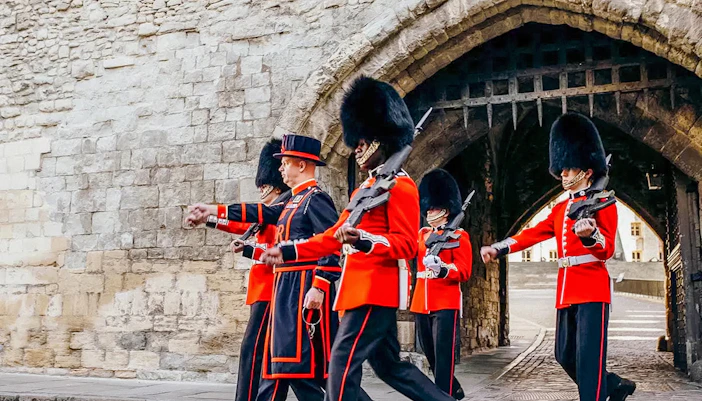
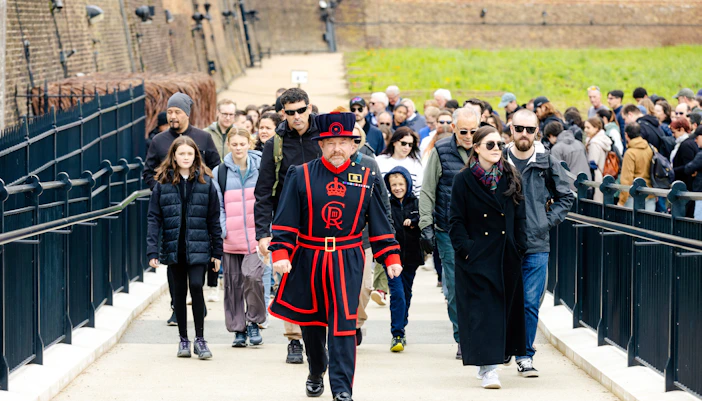
Unlike the Crown Jewels, Tower Green doesn't attract continuous queues. Instead, crowds arrive in waves as guided tours pause here. If the area feels busy, continue exploring nearby attractions and return later when the groups have moved on for a quieter atmosphere.
Don't miss
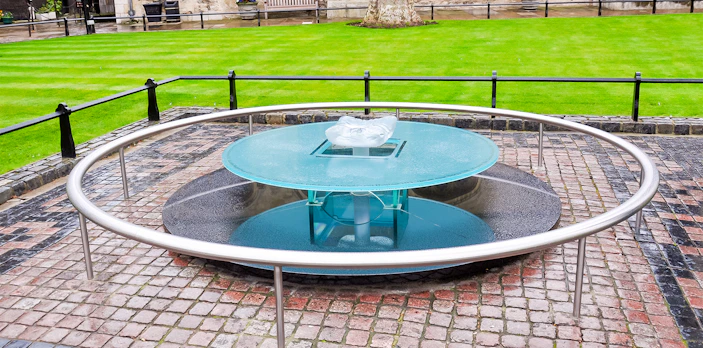
Spend a few moments at the circular Execution Memorial before visiting the Chapel of St Peter ad Vincula. Together, these two landmarks tell the complete story of those who were executed on Tower Green and later laid to rest within the chapel.
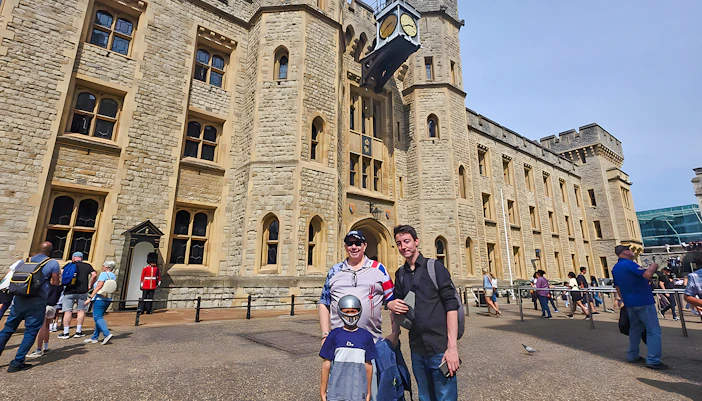
Common mistakes to avoid
Many visitors expect to find a reconstructed scaffold or dramatic exhibition. Instead, Tower Green is intentionally simple and contemplative. Don't rush through after taking a quick photograph, because reading the memorial and understanding its relationship with the surrounding buildings reveals why this quiet lawn remains one of the Tower's most powerful historic sites.
Best tickets to experience Tower Green
| Ticket type | Why choose it |
|---|---|
Tower of London Tickets with access to the Crown Jewels | Best for a flexible self-guided visit that lets you explore Tower Green alongside the White Tower, Bloody Tower, Crown Jewels, and other historic landmarks at your own pace. |
Tower of London guided tour with skip-the-line access | Ideal if you want expert insights into the executions, Tudor politics, and the stories behind Tower Green while exploring the fortress. |
Tower of London tickets with optional guided tour, Thames cruise, or access to the Opening Ceremony | Perfect if you'd like to enhance your visit with a Beefeater tour, audio guide, Thames cruise, or early access before the Tower becomes busier. |
Tower Green in your visitor route
Tower Green sits at the centre of the Inner Ward and is one of the most historically significant stops within the Tower of London. While the lawn itself appears peaceful today, it is surrounded by landmarks that together tell the story of royal life, political intrigue, imprisonment, execution, and remembrance. Visiting these attractions together gives a much fuller understanding of the Tower's Tudor history.
Nearby attractions
- Chapel of St Peter ad Vincula (1-minute walk): Visit the final resting place of Anne Boleyn, Catherine Howard, Lady Jane Grey, and several other prominent prisoners executed at the Tower.
- Queen's House (1-minute walk): View one of the Tower's finest surviving Tudor residences, overlooking Tower Green and still serving as the official home of the Resident Governor.
- Bloody Tower (2–3-minute walk): Continue through one of the Tower's most famous buildings, associated with the Princes in the Tower and Sir Walter Raleigh.
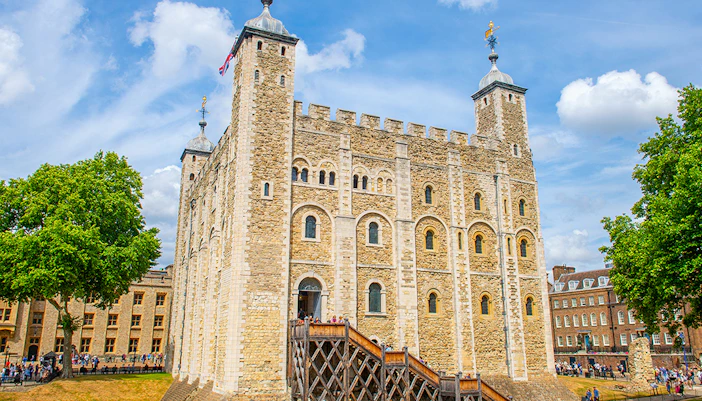
- White Tower (3–5-minute walk): Explore the Tower's oldest building, home to the Royal Armouries, the Chapel of St John, and nearly 1,000 years of royal history.
Executions at Tower Green
Unlike the public scaffold at Tower Hill, Tower Green was reserved for private executions of nobles, royals, and other high-ranking prisoners. Though only a handful of executions took place here, several changed the course of English history.
- Anne Boleyn (1536): Henry VIII's second wife was executed for treason charges, marking a turning point in Tudor politics and the English Reformation.
- Margaret Pole (1541): The Countess of Salisbury's execution remains one of the most controversial and widely debated events of Tudor rule.
- Catherine Howard (1542): Henry VIII's fifth wife was executed after being convicted of treason, just two years after becoming queen.
- Lady Jane Grey (1554): Known as the "Nine Days' Queen," she was executed following a failed attempt to claim England's throne.
- Robert Devereux (1601): The Earl of Essex was executed after leading an unsuccessful rebellion against Queen Elizabeth I's government.
- James Scott (1685): The Duke of Monmouth's execution warrant was signed at the Tower, though the execution itself took place on Tower Hill.
Note: Only a handful of executions took place on Tower Green. Most prisoners condemned to death at the Tower were executed publicly on nearby Tower Hill before large crowds.
Why it’s worth seeing
Tower Green London matters because it turns some of the Tower’s best-known stories into an exact, physical place. What surprises most visitors is how understated it is today: a memorial lawn, surrounding buildings, and a chapel, not a staged execution set. That restraint changes how you read the site. Focus on three details here, and the space becomes far more than a quick pass-through between bigger attractions.
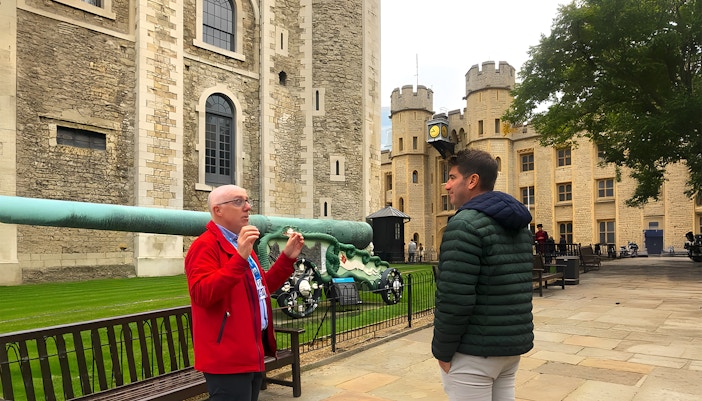
The Execution Memorial
At the centre of Tower Green stands a striking circular glass memorial designed by artist Brian Catling in 2006. Rather than recreating the scaffold that once stood here, the memorial honours those who lost their lives on this site, encouraging reflection on the human stories behind England's turbulent political history.
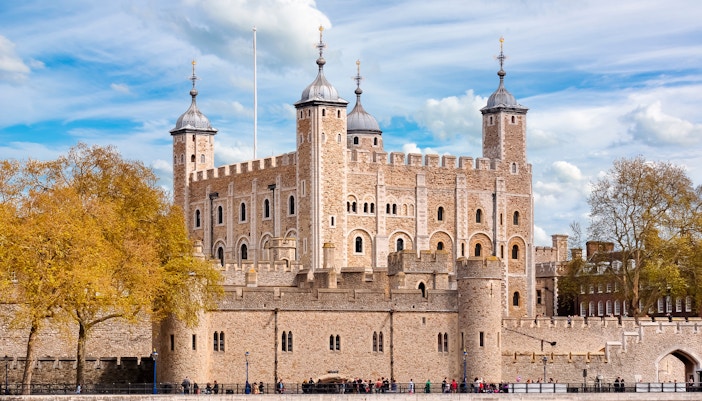
The Chapel of St Peter ad Vincula
Just beside the green is the Chapel of St Peter ad Vincula, where Anne Boleyn, Catherine Howard, Lady Jane Grey, and several other executed prisoners were buried. Visiting the chapel immediately after Tower Green completes the story of their final hours.
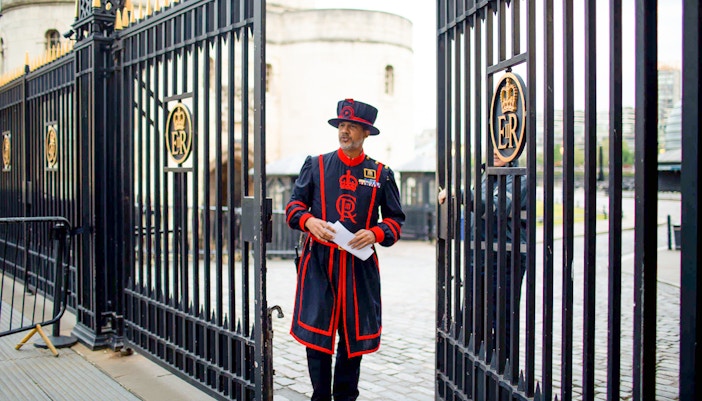
The surrounding Tudor landmarks
Tower Green is enclosed by some of the Tower's most important historic buildings, including the Queen's House, the Chapel of St Peter ad Vincula, and the Bloody Tower. Together, these landmarks reveal how closely royal life, imprisonment, justice, and ceremony coexisted within the fortress walls.
Historical and cultural significance
- Reserved for the monarchy's highest-ranking prisoners: Unlike Tower Hill, where most executions were carried out publicly, Tower Green was used only for a small number of high-profile prisoners. Executions within the Tower walls were considered more private and were generally reserved for queens, nobles, and influential political figures.
- A stage for Tudor power struggles: Between the reigns of Henry VIII and Elizabeth I, Tower Green witnessed several events that reshaped the English monarchy. The executions of Anne Boleyn, Catherine Howard, and Lady Jane Grey remain among the defining moments of Tudor history.
- A place of remembrance: Today, Tower Green serves not as a reminder of punishment but of remembrance. Its memorial, surrounding chapel, and interpretation panels encourage visitors to reflect on the lives behind the political conflicts that shaped Britain's history.
- One of the Tower's most meaningful spaces: Though physically modest, Tower Green represents one of the Tower of London's most emotionally significant locations. It connects many of the fortress's major attractions, from the Queen's House and Bloody Tower to the Chapel of St Peter ad Vincula.
Notable figures
Anne Boleyn | Queen of England
Anne Boleyn, the second wife of Henry VIII, was executed on Tower Green on 19 May 1536 after being convicted of treason. Her death transformed English history, paving the way for Henry's marriage to Jane Seymour and permanently linking Tower Green with one of the Tudor era's most famous events.
Catherine Howard | Queen of England
Henry VIII's fifth wife, Catherine Howard, was executed on Tower Green in 1542 after being accused of treason. At just around 19 years old, she became the second of Henry's queens to lose her life within the Tower walls.
Lady Jane Grey | Claimant to the throne
Lady Jane Grey briefly ruled England for just nine days before being deposed by Mary I. She was executed on Tower Green in 1554, becoming one of the youngest and most tragic figures associated with the Tower of London.
Robert Devereux | Earl of Essex
Once a favourite of Queen Elizabeth I, Robert Devereux led an unsuccessful rebellion against the Crown and was executed on Tower Green in 1601. His death marked one of the last high-profile executions carried out within the Tower.
Know before you go
- Opening hours: Tower Green follows the Tower of London's regular opening hours and can be visited throughout your ticketed visit.
- Best time to visit: The first hour after opening or after 3pm on weekdays generally offers the quietest atmosphere.
- Time in your itinerary: Most visitors reach Tower Green 60–90 minutes after entering the Tower, depending on their route and time spent at the Crown Jewels or White Tower.
- Seasonal closures: The Tower of London is usually closed on 24–26 December and 1 January.
- Re-entry: Admission is valid for one entry only. Re-entry after leaving the Tower is generally not permitted.
Address: Tower of London, London EC3N 4AB, United Kingdom
- Nearest Underground station: Tower Hill station, around a 3-minute walk from the main visitor entrance.
- Entry point: Enter through the Tower of London's main entrance on Tower Hill; Tower Green does not have a separate public entrance.
- Position within the fortress: Located in the Inner Ward, between the White Tower, Queen's House, and the Chapel of St Peter ad Vincula.
- Walking time: Allow approximately 10–15 minutes from the main entrance, depending on queues and your chosen route.
- Nearby attractions: Queen's House, Chapel of St Peter ad Vincula, Bloody Tower, and White Tower are all within a few minutes' walk.
- Easy to access within the Tower: Unlike several historic towers, Tower Green is a ground-level outdoor space and can be reached without climbing steep staircases, making it one of the more accessible areas of the fortress.
- Historic ground surfaces: Routes leading to Tower Green include cobbled paths, uneven paving, and worn stone surfaces typical of the medieval fortress. Comfortable footwear is recommended.
- Step-free visitor routes: Visitors with reduced mobility can ask Tower staff for recommended step-free routes to Tower Green and nearby attractions wherever possible.
- Companion tickets: Complimentary companion tickets are available for eligible visitors with valid supporting documentation, in line with the Tower of London's accessibility policy.
- Assistance dogs: Registered guide dogs and recognised assistance dogs are welcome throughout the Tower of London where operationally appropriate.
- Photography: Photography is permitted throughout Tower Green and the surrounding public areas. Please remember that photography remains prohibited inside the Jewel House where the Crown Jewels are displayed.
- Respect the memorial: Tower Green commemorates the executions of several historic figures. Visitors are encouraged to behave respectfully while visiting the memorial and surrounding chapel.
- Large bags and equipment: Large luggage, tripods, selfie sticks, drones, and bulky photographic equipment are not permitted within the Tower of London.
- Food and drink: Food and beverages should not be consumed inside historic buildings. Please use designated picnic or refreshment areas elsewhere within the Tower grounds.
- Follow visitor pathways: Please remain on marked visitor routes and avoid entering any restricted or landscaped areas surrounding the memorial unless directed otherwise by Tower staff.
- Minimal physical effort: Tower Green is one of the easiest attractions within the Tower to visit, requiring only a short walk across mostly level ground from nearby landmarks.
- Standing during your visit: Most visitors spend 10–20 minutes standing while viewing the memorial, reading interpretation panels, or listening to guided commentary.
- Uneven surfaces: Although the lawn itself is level, surrounding pathways include cobbles and uneven stone paving that may require extra care, particularly in wet weather.
- Suitable for most visitors: Tower Green is suitable for visitors of all ages and fitness levels, with no steep staircases or confined interior spaces to navigate.
- Accessible alternatives nearby: Visitors following step-free routes can comfortably combine Tower Green with nearby attractions such as the Queen's House and selected accessible areas of the Inner Ward, even if some historic towers are less accessible.
Frequently asked questions about Tower Green
Yes. Tower Green is part of the Tower of London visitor route and is included with every valid admission ticket. No separate ticket exists.
Tower Green is famous as the Tower of London's private execution ground for high-ranking prisoners. Several prominent historical figures, including Anne Boleyn, Catherine Howard, Lady Jane Grey, and Robert Devereux, were executed here instead of on the public execution site at Tower Hill.
Most executions took place publicly on Tower Hill before large crowds. Tower Green was reserved for members of the nobility and the royal family, allowing executions to be carried out privately within the security of the Tower walls.
Only a small number of high-profile prisoners were executed on Tower Green, making it far rarer than Tower Hill. Among the best known are Anne Boleyn, Margaret Pole, Catherine Howard, Lady Jane Grey, and Robert Devereux.
No. The scaffold was dismantled after each execution, so nothing survives today. Instead, a contemporary glass memorial marks the approximate location where these executions took place.
Visitors can see the circular Execution Memorial, the peaceful lawn where the executions took place, the nearby Queen's House, and the Chapel of St Peter ad Vincula, where many of those executed were later buried.
Visitors follow designated pathways around and across parts of Tower Green, but access to certain sections of the lawn may be restricted to help preserve the site. Please follow any signs or instructions from Tower staff during your visit.
Most visitors spend 10–15 minutes exploring independently or 15–20 minutes as part of a guided or Beefeater tour. Visiting the nearby chapel immediately afterwards provides additional historical context.
Yes. Tower Green is one of the highlights of Yeoman Warder (Beefeater) tours and many guided Tower experiences. Guides explain the stories behind the famous executions and the significance of the surrounding landmarks.
Yes. There are no graphic displays or reconstructions on site. While the history involves executions, the memorial is presented respectfully, making it suitable for families when discussed in its historical context.
Tower Green is one of the more accessible outdoor areas within the Tower of London. Visitors should still expect cobbled paths and uneven historic surfaces while moving through the wider fortress.
Tower Green is surrounded by some of the Tower's most important landmarks, including the Queen's House, Chapel of St Peter ad Vincula, Bloody Tower, and White Tower, all within a few minutes' walk.