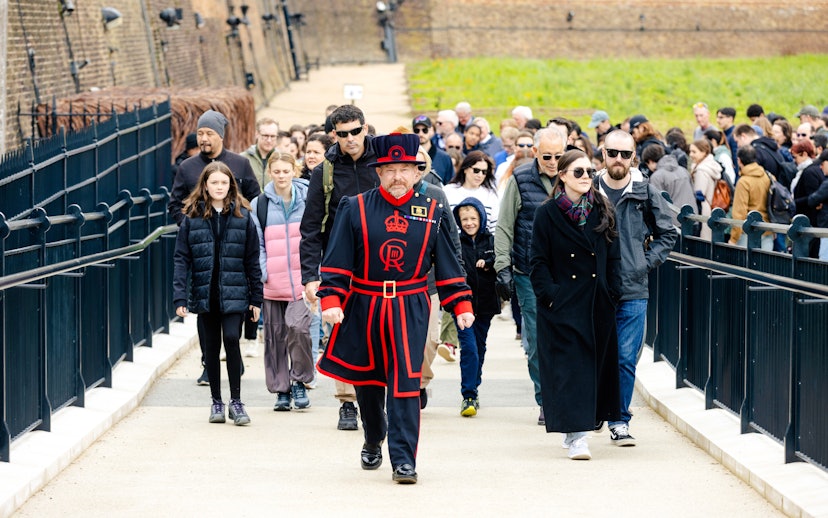



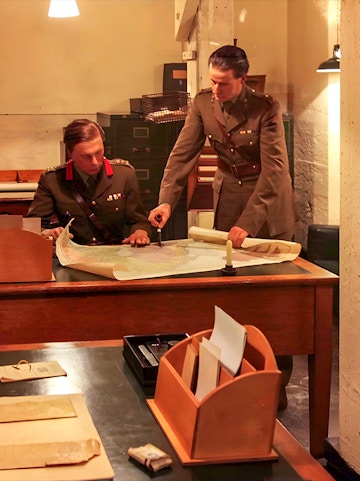


Visit during the first hour after the Tower opens, particularly on weekdays. The reconstructed rooms are quieter before visitors begin moving between the Crown Jewels and the White Tower, giving you more space to appreciate the furnished interiors and riverside views. If you're visiting later in the day, consider returning after 3pm, when guided groups begin to thin out.
Tower of London
4.5(66,600)
Medieval Palace
Included with Tower of London tickets
Timings
RECOMMENDED DURATION
3 hours
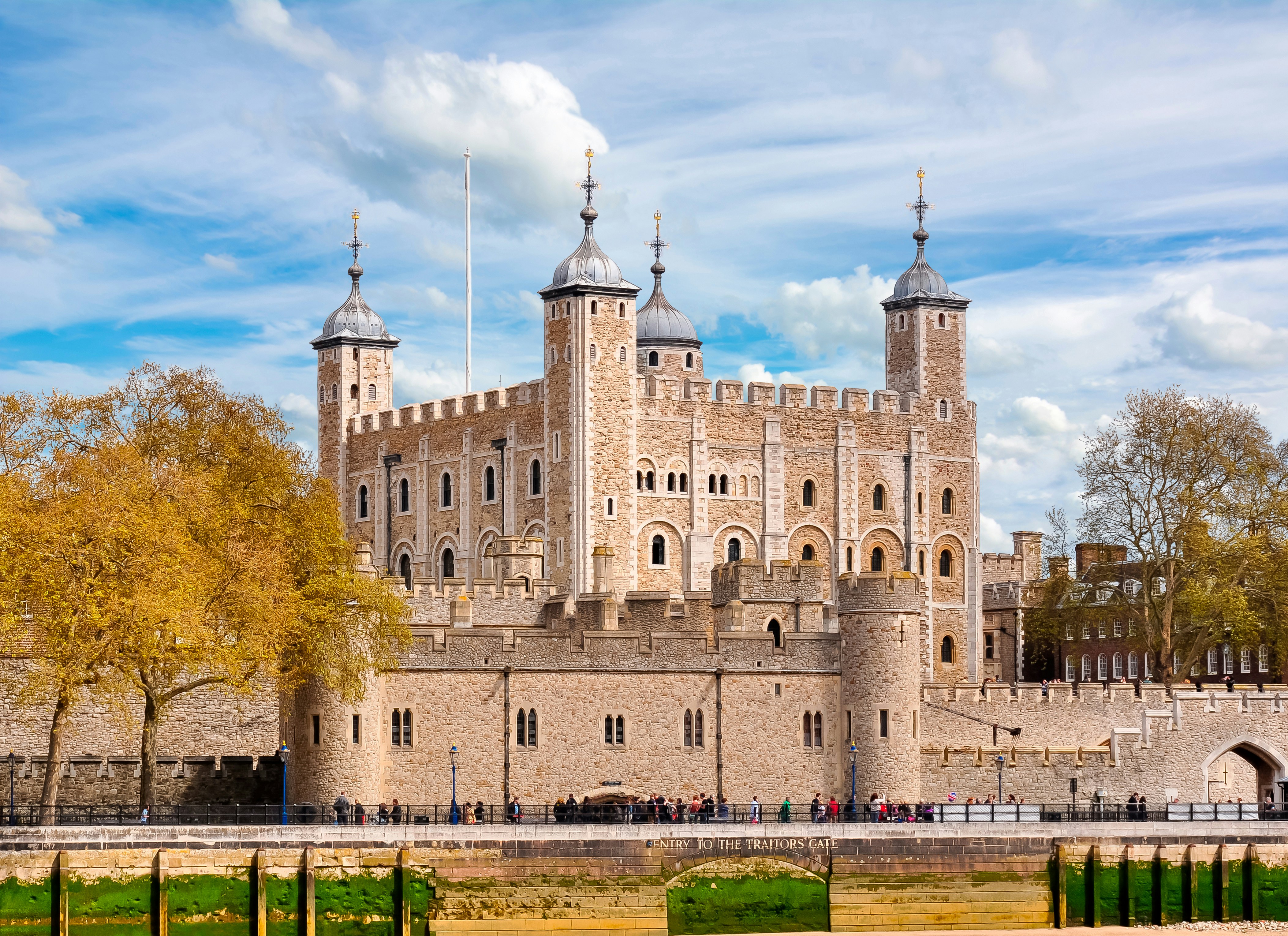
Top things to do in London
Quick overview
- Access: Included in all Tower of London tickets
- Separate ticket: Not required
- When you’ll see it: Midway through most Tower of London visits, on the south side of the fortress
- Visit duration: 20–30 minutes self-guided/30–40 minutes with a guide or audio guide
- Best time: First hour after opening on a weekday, before the Crown Jewels queues spread across the site
- Restrictions: Photography is generally permitted. Food and drink aren't allowed inside the buildings. Large bags, tripods, and selfie sticks aren't permitted.
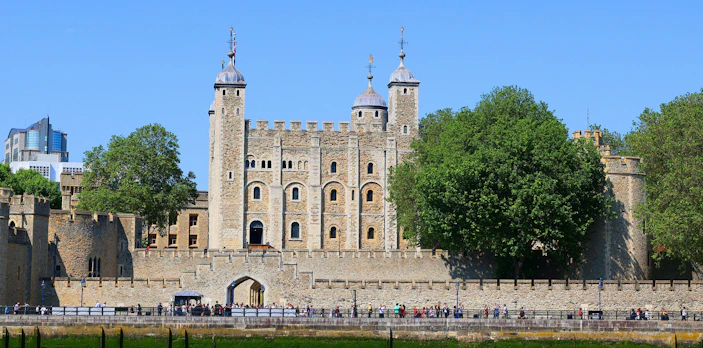
How to best experience the Medieval Palace
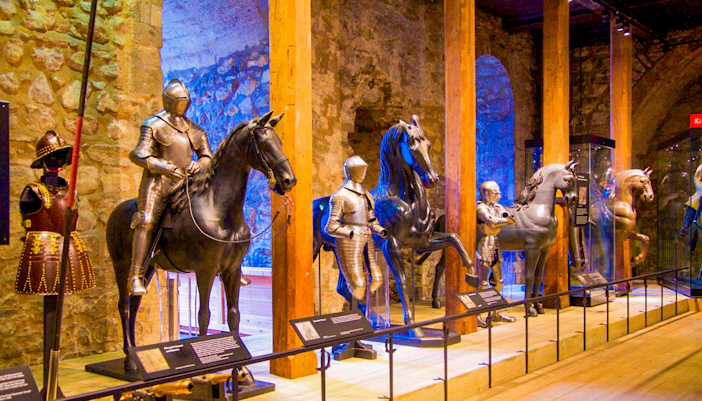
Best time to visit
How long to spend
Allow 20–30 minutes if you're exploring independently or 30–40 minutes with a guide or audio guide. This gives you enough time to move through all three towers, study the reconstructed royal chambers, enjoy the river-facing walkways, and read the interpretation panels without feeling rushed.
Where it fits in your itinerary
The Medieval Palace works best midway through your Tower visit, after you've seen either the Crown Jewels or the White Tower. By this point, you'll already understand the Tower's military and ceremonial importance, making it easier to appreciate how the royal apartments balanced comfort with defence. Continue afterwards towards Tower Green or the riverside attractions to keep your route efficient.
Crowd patterns
Visitor numbers increase steadily from 11am onwards, particularly around the narrow passages linking the palace rooms. While the larger chambers usually remain comfortable, staircases, corridors, and connecting walkways can become congested during peak hours. Early mornings and the final hour before closing generally provide the calmest experience.
What to prioritize if time is short
If you only have 10–15 minutes, focus on St Thomas's Tower, the Wakefield Tower audience chamber, and the riverside views from the connecting wall walk. Together, these spaces provide the clearest picture of the Medieval Palace as both a royal home and a fortified residence. If necessary, shorten your visit elsewhere rather than skipping these highlights.
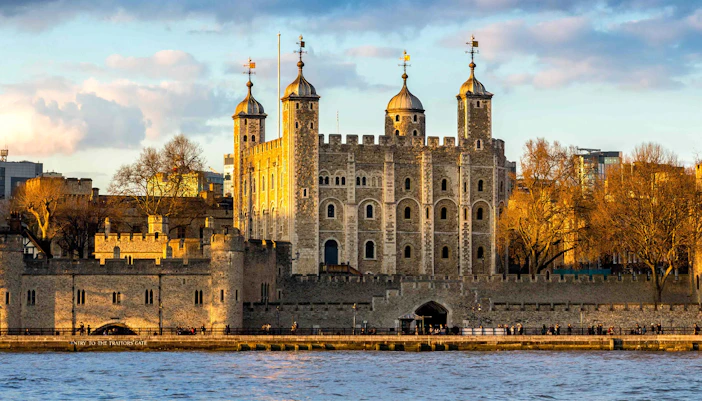
Common mistakes to avoid
Many visitors walk through the palace expecting grand medieval halls and leave disappointed because the rooms feel intimate rather than monumental. Instead, pay attention to the fireplaces, painted walls, furniture, and window views. These carefully reconstructed details reveal far more about medieval royal life than the stone walls alone. If you're visiting with a stroller, be prepared for narrow passages and historic staircases that may require extra care.
Best tickets to experience the Medieval Palace
| Ticket type | Why choose it |
|---|---|
Standard Tower of London admission | Best if you'd like to explore the Medieval Palace at your own pace while fitting it naturally around the White Tower, Crown Jewels, and other attractions. |
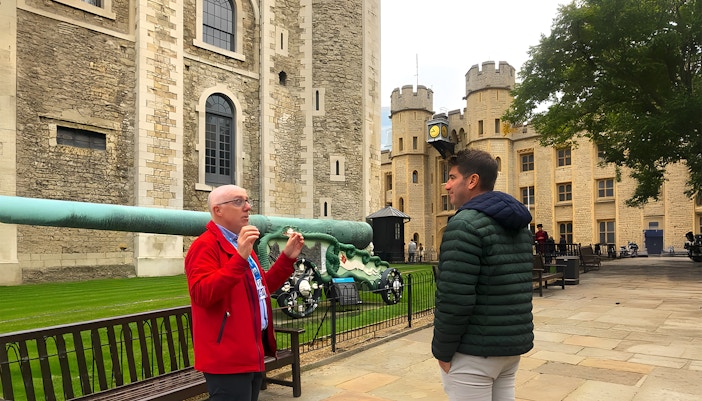
Guided Tower of London tour | Ideal for understanding how the royal apartments fit into the wider history of the Tower, from medieval monarchy to state prison. |
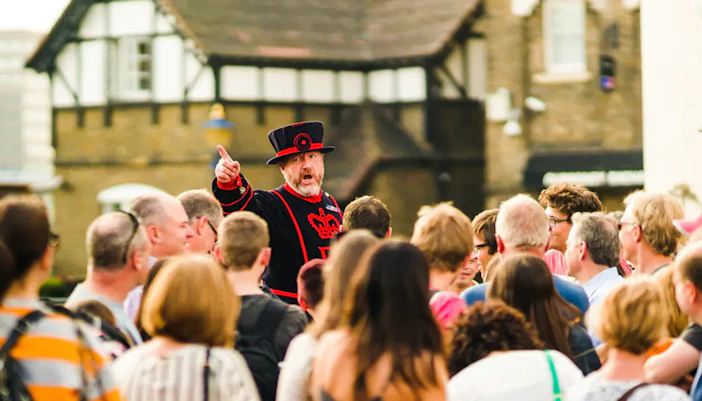
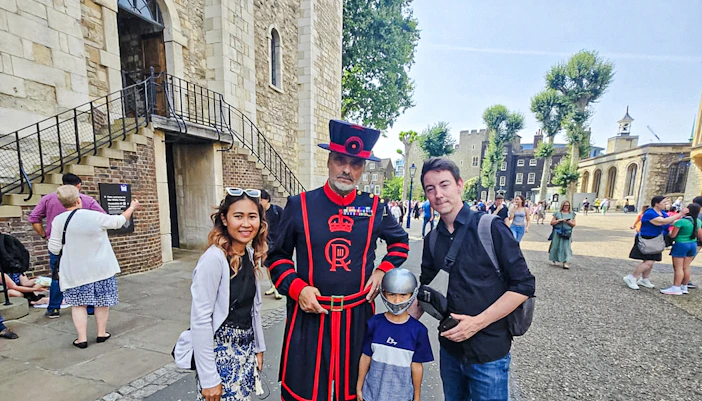
Early-entry or Beefeater meet-and-greet tour | Perfect if you'd like quieter access to the palace rooms before visitor numbers build across the Tower complex. |
Why it’s worth seeing
The Medieval Palace reveals a side of the Tower of London that many visitors never expect. Spread across three interconnected towers, the palace recreates the atmosphere of a 13th-century royal household through furnished chambers, painted interiors, and commanding views over the River Thames. Follow the palace in sequence, and you'll see how defence, ceremony, and everyday royal life existed side by side.
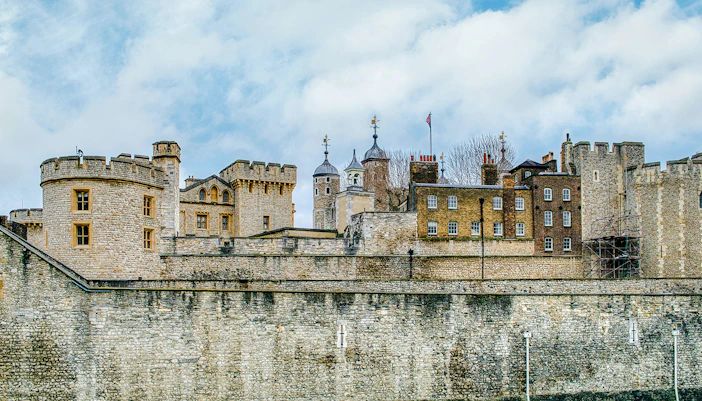
St Thomas’s Tower
Your journey begins in St Thomas's Tower, where the Tower's defensive purpose and royal life come together. At ground level lies the historic water entrance from the Thames, while above it are richly recreated royal apartments built for Edward I. This striking contrast illustrates how one building could welcome distinguished guests, protect the fortress, and provide elegant accommodation for the royal household—all at the same time.
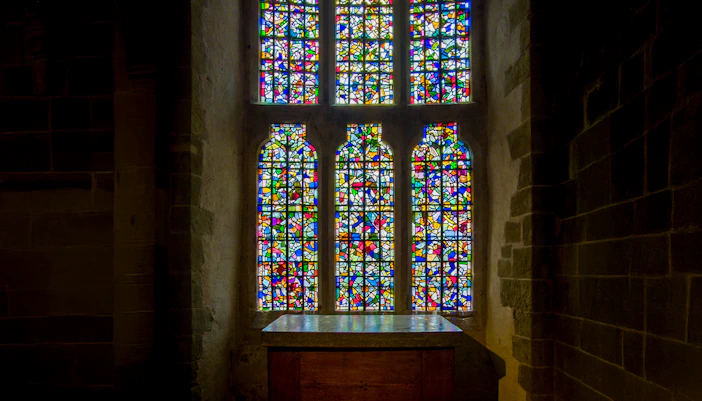
Wakefield Tower
The Wakefield Tower offers the clearest insight into medieval royal life. Its reconstructed audience chamber, richly furnished interiors, and imposing fireplace recreate the setting where Henry III is believed to have received important visitors and conducted royal business. Rather than showcasing military power, these rooms demonstrate how comfort, ceremony, and governance formed an essential part of life inside the Tower.
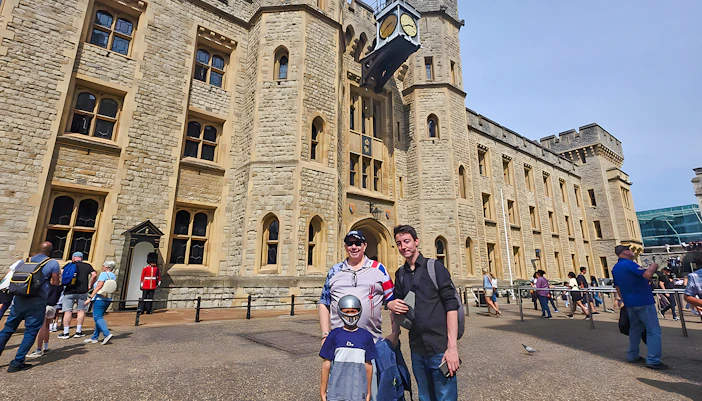
Lanthorn Tower and the riverside walk
Continue into Lanthorn Tower to see the more private side of the royal apartments before stepping onto the connecting wall walk overlooking the Thames. The reconstructed bedchambers and household spaces reveal how the royal family lived beyond public ceremonies, while the river views explain why the Tower occupied such a strategically valuable position. Looking out across the Thames, it's easy to understand why medieval monarchs chose this fortress as both a residence and a seat of power.
Royal life inside the Medieval Palace
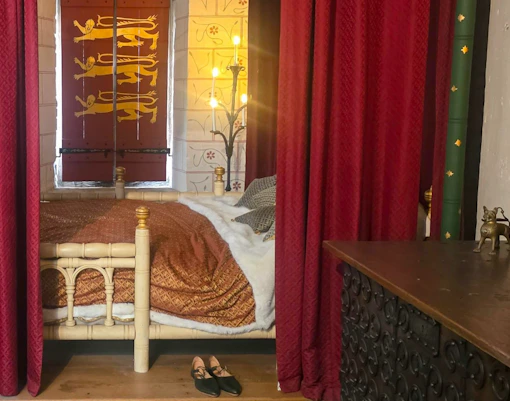
Royal apartments
The rooms throughout the Medieval Palace have been carefully reconstructed using archaeological evidence, medieval records, and surviving architectural features. Rather than empty stone chambers, you'll see colourful furnishings, textiles, and furniture that recreate how England's monarchs and their households would have lived during the 13th century.
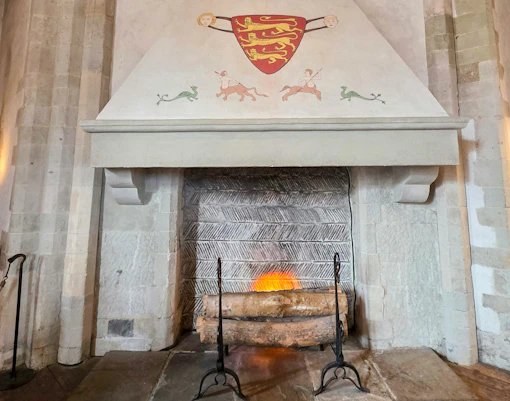
Great fireplaces
Large fireplaces dominate many of the palace rooms. Beyond providing warmth during cold London winters, they also reflected royal status. Their impressive size and craftsmanship reminded guests that these apartments belonged to the king, even within a military fortress.
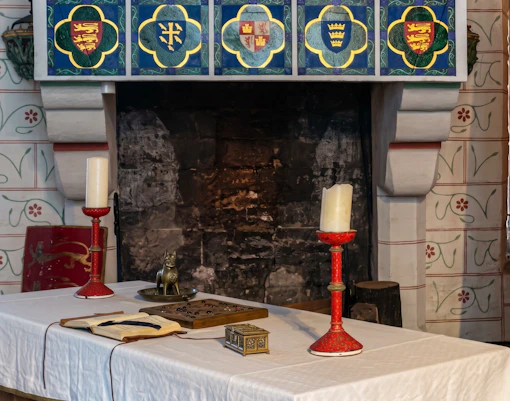
Painted interiors
Many visitors imagine medieval castles as grey and austere, but royal apartments were often surprisingly colourful. Decorative wall paintings, patterned fabrics, and painted wooden furnishings helped create interiors that were both comfortable and visually impressive. The reconstructions here are based on extensive historical and archaeological research.
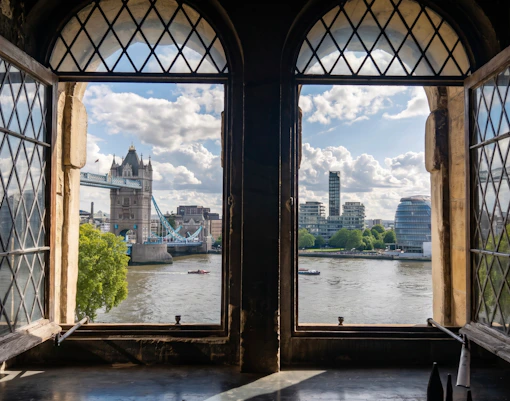
Views over the Thames
The palace overlooks what was once London's busiest transport route. Royal visitors, merchants, diplomats, and important guests frequently arrived by boat, making the river both a practical highway and a powerful symbol of royal authority. Looking through the palace windows today offers much the same strategic perspective enjoyed by medieval kings.
Historical and cultural significance
The Medieval Palace reflects the period when the Tower of London served not only as a fortress but also as one of England's principal royal residences. Its reconstructed interiors help visitors understand how medieval monarchs balanced court life, government, and security within the Tower's walls.
- Henry III created a royal residence (1230s–1240s): Henry III transformed parts of the Tower into a more comfortable royal palace, commissioning elegant apartments, private chambers, chapels, and reception rooms that reflected the growing sophistication of the English court.
- Edward I expands the palace (1270s–1280s): Edward I strengthened the Tower's defences while completing St Thomas's Tower and extending the royal accommodation. His improvements seamlessly combined military architecture with luxurious living spaces overlooking the River Thames.
- The royal court moves elsewhere (The late Middle Ages): As successive monarchs increasingly favoured palaces such as Westminster, Greenwich, and Hampton Court, the Tower gradually became less important as a royal residence. Many of its domestic rooms were adapted for administrative and military purposes over the following centuries.
- Reconstructing medieval royal life (Today): The rooms visitors see today are the result of extensive research by Historic Royal Palaces. Using archaeological discoveries, medieval documents, and surviving architectural evidence, the interiors have been recreated to help visitors imagine how England's medieval kings and queens once lived within the Tower.
Notable figures
Henry III | King and rebuilder
Henry III began transforming the Tower from a purely defensive fortress into a refined royal residence during the 13th century. Many of the palace's earliest royal apartments were created during his reign, reflecting his interest in architecture, ceremony, and court life.
Eleanor of Provence | Queen consort
As Henry III's queen, Eleanor of Provence played an important role in shaping the royal household that occupied these apartments. Her influence helped establish the Tower as an active royal residence rather than simply a military fortress.
Edward I | King and fortifier
Edward I expanded both the Tower's fortifications and its royal accommodation, completing St Thomas's Tower and strengthening the riverside defences. Much of the Medieval Palace visitors explore today reflects the ambitious building programme undertaken during his reign.
Know before you go
- Opening hours: The Medieval Palace follows the Tower of London's opening hours and is accessible whenever the Tower is open to visitors.
- Entry system: Tower tickets are timed, with entry available in 30-minute admission windows.
- Arrival window: Arrive within 30 minutes of your selected entry time.
- Best time to visit: Visit during the first hour after opening for quieter rooms and easier movement between the three towers.
- Seasonal timings: Opening hours vary throughout the year, so check the latest schedule before your visit.
Address: Tower of London, London EC3N 4AB, United Kingdom
- Inside the Tower: The Medieval Palace occupies St Thomas's Tower, Wakefield Tower, and Lanthorn Tower along the fortress's southern riverside wall.
- Nearest Underground: Tower Hill station, approximately a 2–3 minute walk from the main entrance.
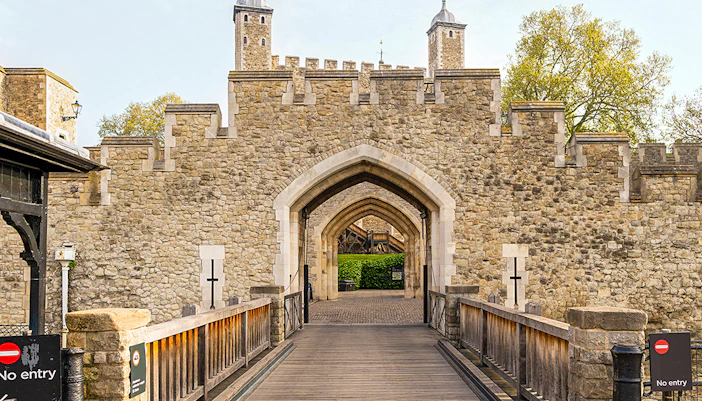
- Entry point: Enter through the Tower's main visitor entrance before making your way towards the south side of the fortress.
- Walking time: If you head there directly, allow around 10–15 minutes from the main entrance. Most visitors reach it later after visiting the White Tower or Crown Jewels.
- Wheelchair access: Accessibility is partial. Some ground-floor areas are accessible, but several palace rooms and connecting towers require the use of historic staircases.
- Prams and strollers: Courtyards and wider pathways are generally manageable, although narrow passages, uneven floors, and stairs inside the palace can make navigation difficult.
- Historic surfaces: Expect uneven stone flooring, medieval thresholds, and occasional changes in level throughout the route.
- Companion tickets: Complimentary carer tickets are available at the Ticket Office with appropriate supporting documentation.
- Assistance dogs: Registered assistance dogs are welcome throughout the Tower of London.
- Photography: Photography is generally permitted throughout the Medieval Palace unless otherwise indicated by staff.
- Food and drink: Eating and drinking aren't permitted inside the historic buildings.
- Large bags: Oversized luggage, tripods, selfie sticks, and bulky camera equipment aren't allowed inside the Tower.
- Respect the exhibits: Most furniture and decorative features are carefully researched reconstructions. Please avoid touching displays unless specifically indicated.
- Follow visitor routes: Some staircases and passageways are narrow, so follow the one-way systems and staff guidance where applicable.
- Difficulty level: Moderate due to historic staircases, uneven flooring, and continuous walking.
- Walking: Allow for moderate walking between the three towers and neighbouring Tower attractions.
- Stairs: Several sections involve steep medieval staircases and narrow connecting passages.
- Standing: Most visitors spend 20–30 minutes walking and standing throughout the palace rooms.
- Alternative route: Visitors who find stairs challenging can still enjoy many of the Tower's accessible outdoor spaces and nearby attractions, although some palace interiors may not be reachable.
Things many visitors miss
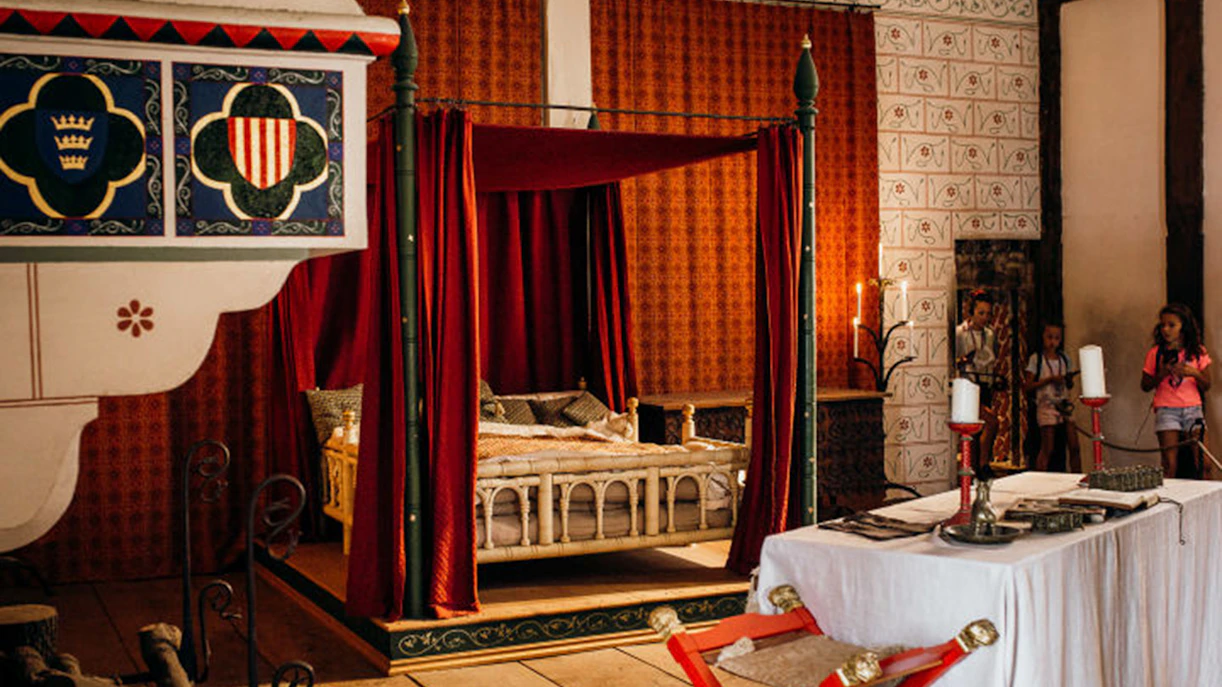
- Most of the furnishings are carefully reconstructed: Although the medieval rooms themselves are original, much of the furniture, textiles, and decoration has been recreated using archaeological discoveries, medieval records, and surviving examples from the period. These reconstructions help visitors visualise how the palace once looked rather than leaving the rooms empty.
- Medieval royal rooms were surprisingly colourful: Many people expect bare stone walls, but royal apartments during the 13th century were filled with painted decoration, embroidered fabrics, wooden furniture, and colourful wall hangings. The recreated interiors challenge the common image of medieval castles as cold, grey spaces.
- The palace wasn't a single building: The Medieval Palace isn't one standalone structure. Instead, it stretches across St Thomas's Tower, Wakefield Tower, and Lanthorn Tower, with each serving a different purpose within the royal household. Exploring all three gives a much fuller understanding of life inside the Tower.
Visitor tips
- Visit all three towers before leaving the palace. It's only by seeing St Thomas's Tower, Wakefield Tower, and Lanthorn Tower together that the Medieval Palace's full story becomes clear.
- Don't compare it with modern palace interiors. The reconstructed rooms are intentionally modest because medieval royal apartments prioritised function, warmth, and security over grandeur.
- Take your time with the reconstructed details. Painted walls, furnishings, fireplaces, and textiles are based on years of historical research and offer valuable insights into everyday medieval court life.
- Pause between the indoor rooms and the riverside wall walk. The contrast between intimate royal chambers and commanding views over the Thames helps explain how closely comfort and defence were linked.
- If you're visiting with children, turn it into a 'spot the royal household' activity. Looking for beds, fireplaces, dining furniture, and decorative details often keeps younger visitors engaged more effectively than reading every interpretation panel.
Frequently asked questions about the Medieval Palace
Yes. Entry to the Medieval Palace is included with every valid Tower of London ticket. No separate ticket exists.
No. Any Tower of London admission ticket includes access to the Medieval Palace. Guided tours and early-entry experiences simply provide additional historical context or allow you to visit before larger crowds arrive.
No. The Medieval Palace has no separate entrance. You must enter the Tower of London first, then walk to the palace rooms inside the walls.
Usually midway through a self-planned visit. Allow about 45–90 minutes from the entrance if you start with the Crown Jewels or White Tower.
No. While the towers themselves are medieval, most of the furniture, textiles, and decorative features are historically accurate reconstructions based on archaeological discoveries, surviving records, and extensive research by Historic Royal Palaces.
Most visitors spend 20–30 minutes exploring independently. If you're following an audio guide or visiting with a guide, allow 30–40 minutes to appreciate the reconstructed interiors and historical context.
Yes. Guided tours include Tower entry, and you can visit the Medieval Palace during or after the guided portion.
Yes. Photography is generally allowed in the Medieval Palace. The main Tower no-photo zones are the Jewel House and Chapel of St John.
Partially. Some rooms and the wall walk involve stairs, narrow passages, and uneven surfaces, so not every section is step-free.
Yes. Families often find it one of the Tower's most engaging areas because the furnished rooms help children imagine what life inside a medieval royal residence was actually like. Looking for beds, fireplaces, kitchens, and royal furnishings makes the visit especially interactive.
Absolutely. If you can spare around 20 minutes, the Medieval Palace offers one of the clearest insights into the Tower's lesser-known role as a royal residence. It provides a welcome contrast to the Crown Jewels, White Tower, and prison-related attractions.