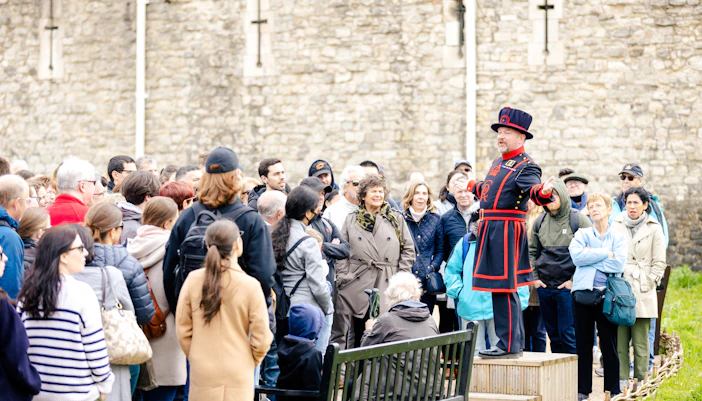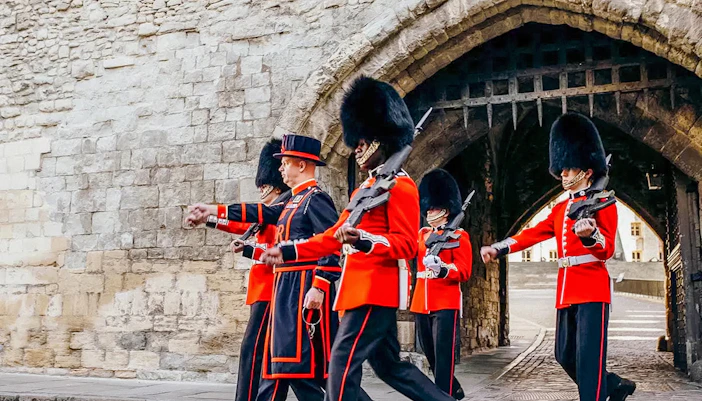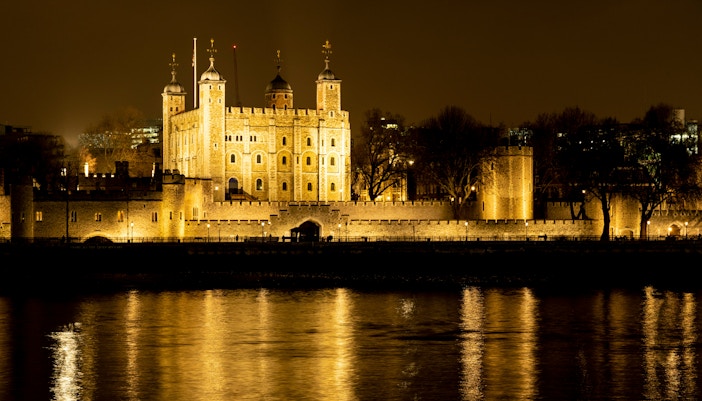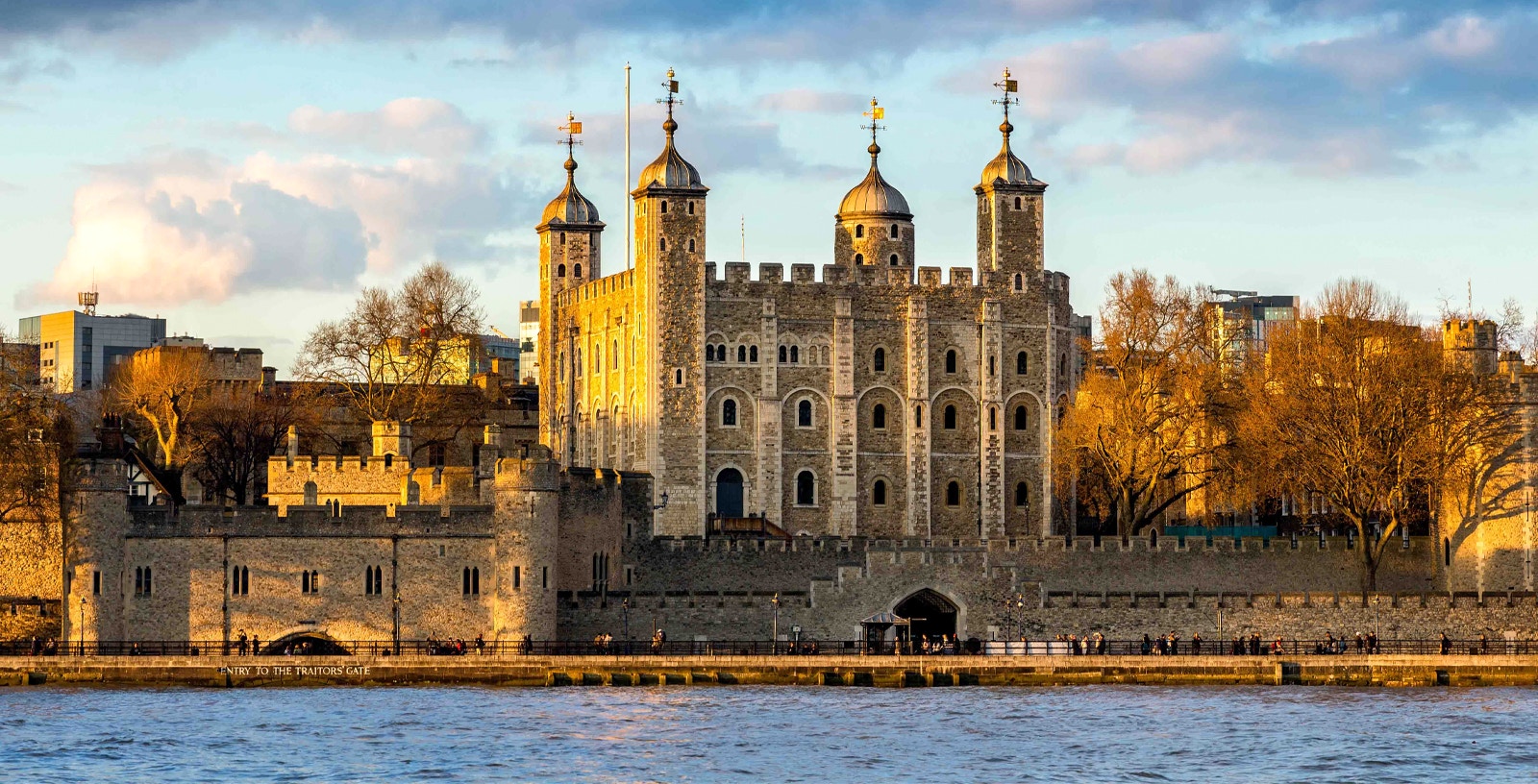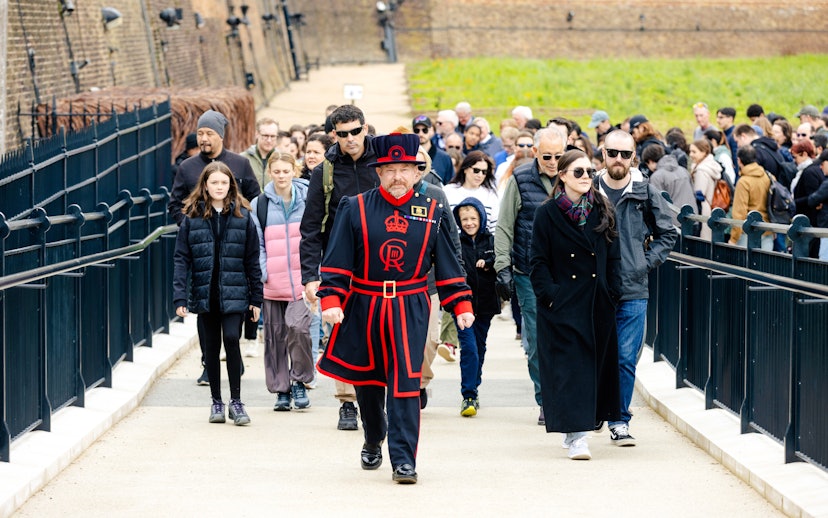






Choose the first timed entry on a weekday if the Crown Jewels are at the top of your list. Visitor numbers begin rising noticeably from around 10:30am, and queues are longest during school holidays, weekends, and summer afternoons. Early arrivals usually enjoy the shortest waiting times.
Top things to do in London
Quick overview
- Access: Included in all Tower of London tickets
- Separate ticket: Not required
- When you'll see it: Early stop inside the Inner Ward; you can visit it any time after entering
- Visit duration: 20–30 mins self-guided/30–40 mins with guide-led context
- Best time: First timed entry on a weekday, when the Crown Jewels queue is shortest
- Restrictions: No photography inside the Jewel House. Large bags, tripods, selfie sticks, and bulky equipment are not permitted.
How to access the Waterloo Block
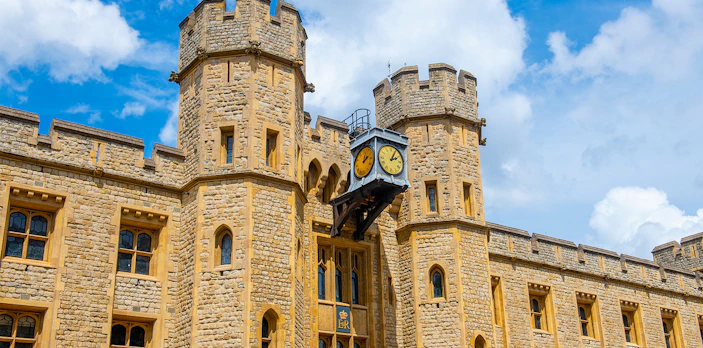
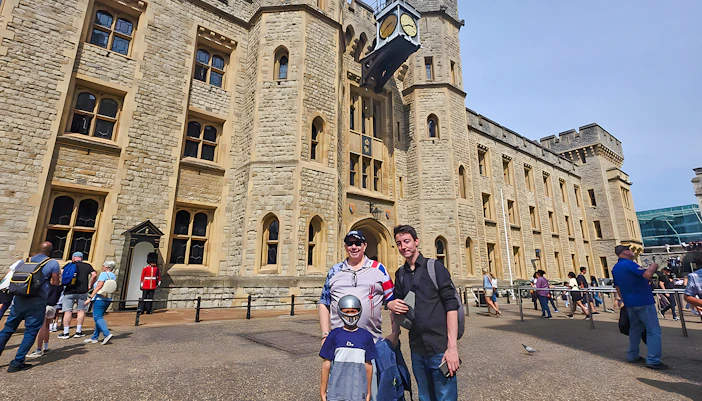
Access to the Waterloo Block is included with all Tower of London admission tickets, so no additional ticket is required. Located on the south side of the Inner Ward, the building houses the Crown Jewels and is one of the Tower's most visited attractions. Visitors can enter as part of their self-guided tour, though many head here early to avoid the longest queues later in the day.
How to best experience the Waterloo Block
Best time to visit
How long to spend
Allow around 20–30 minutes if you're visiting independently, or 30–40 minutes with a guided tour or audio guide. While the queue moves steadily, you'll likely want extra time to appreciate the historic regalia and interpretive displays before and after the main exhibition.
Where it fits in your itinerary
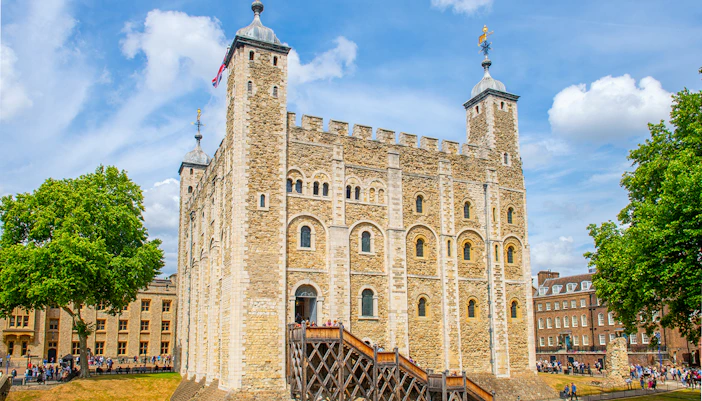
Waterloo Block is one of the first major attractions most visitors encounter after entering the Tower. If the Crown Jewels are your priority, head here before visiting the White Tower, Medieval Palace, or battlements. Saving it until later often means spending considerably longer in line.
Crowd patterns
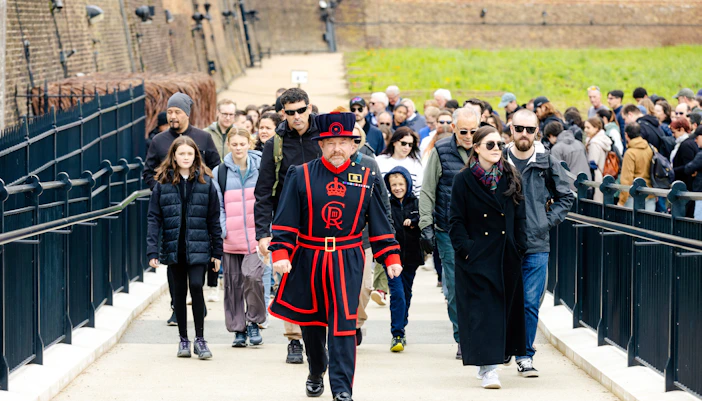
Unlike other Tower attractions, visitor flow is carefully controlled inside the Jewel House for security reasons. Queues generally peak between 11am and 2pm, when guided tours and independent visitors converge. Visiting early or during the final hour before closing typically offers the smoothest experience
Don't miss
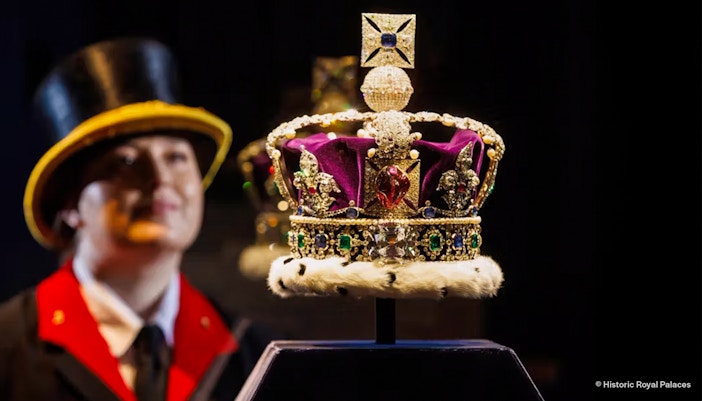
Look beyond the famous crowns. Be sure to pause at the displays featuring St Edward's Crown, the Imperial State Crown, the Sovereign's Sceptre with Cross, and the 12th-century Coronation Spoon, one of the oldest surviving pieces of the medieval Crown Jewels.
Common mistakes to avoid
Many visitors arrive late in the day expecting a short wait, only to find the longest queues of their visit. Others forget that photography inside the Jewel House is strictly prohibited or bring large bags that slow security screening. Travelling light, arriving early, and taking time to view the interpretation panels before the main display will make your visit much more rewarding.
Best tickets to experience the Waterloo Block
| Ticket type | Why choose it |
|---|---|
Tower of London Tickets with access to the Crown Jewels | Best for a flexible self-guided visit that includes the Waterloo Block, Crown Jewels, White Tower, Medieval Palace, and the Tower's other major attractions. |
Tower of London guided tour with skip-the-line access | Ideal if you'd like expert commentary on the Crown Jewels, the Tower's royal history, and the evolution of the Waterloo Block before entering the Jewel House. |
Tower of London tickets with optional guided tour, Thames cruise, or access to the Opening Ceremony | Perfect for visitors who want to combine their Tower visit with a guided experience, early entry, or a Thames cruise while reaching the Crown Jewels before peak queues. |
Waterloo Block in your visitor route
Although many visitors head straight here for the Crown Jewels, the Waterloo Block also sits at the centre of several of the Tower's most important historic landmarks. Visiting the surrounding attractions together gives you a fuller picture of how the fortress evolved from a medieval royal palace into a Victorian military complex and ceremonial treasury.
Nearby attractions
- Jewel House (inside the Waterloo Block): Home to the British Crown Jewels, including St Edward's Crown, the Imperial State Crown, the Sovereign's Sceptre with Cross, and the Coronation Spoon.
- White Tower (2–3-minute walk): Explore the Tower's oldest building, home to the Royal Armouries and nearly 1,000 years of royal and military history.
- Martin Tower (2-minute walk): Learn where the Crown Jewels were once displayed before being moved to today's purpose-built Jewel House.
- Wakefield Tower (3–5-minute walk): Continue through the Medieval Palace to see Henry III's reconstructed royal apartments and discover another chapter of the Tower's royal past.
From barracks to Jewel House
The Waterloo Block has served very different purposes over the course of its history. Understanding that transformation helps explain why this Victorian building occupies such an important place within a largely medieval fortress.
- Replacing the Grand Storehouse: The original Grand Storehouse, built during the reign of Charles II, was destroyed by a devastating fire in 1841. Its loss created the need for a substantial new building that could support the Tower's military operations.
- A Victorian military barracks: Completed during the 1840s, the Waterloo Block was originally designed as barracks for soldiers stationed at the Tower of London. Its orderly brick architecture reflects the practical military planning of the Victorian era rather than the medieval style seen elsewhere within the fortress.
- Home of the modern Jewel House: During the 20th century, the building was adapted to house the Jewel House, providing a secure and purpose-built home for the Crown Jewels. Today, millions of visitors pass through its carefully controlled galleries each year.
- One of Britain's most secure buildings: Modern surveillance systems, reinforced display cases, and controlled visitor routes protect regalia that continue to play a central role in coronations and state ceremonies. The building's security reflects centuries of lessons learned from fires, attempted thefts, and evolving conservation standards.
Why it's worth seeing
The Waterloo Block matters because it holds the only part of the Tower where royal ceremony is still visibly alive: the Crown Jewels here are not retired museum pieces, but objects still used for coronations and state occasions. Most visitors don’t realise the building itself began life as 19th-century barracks after a fire destroyed the earlier Grand Storehouse.
The Crown Jewels
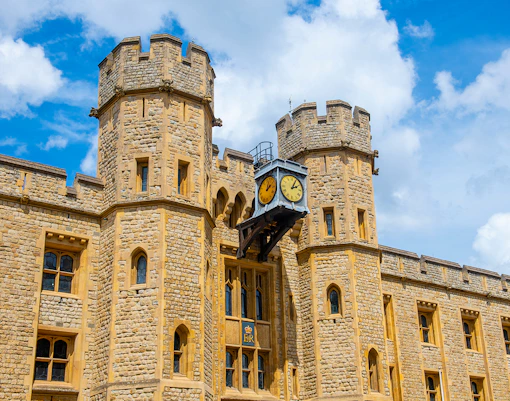
The Waterloo Block's greatest attraction is undoubtedly the Crown Jewels, one of the world's most important collections of ceremonial regalia. Unlike many royal treasures displayed in museums, these objects remain in active use for coronations, State Openings of Parliament, and other significant national ceremonies.
Victorian military architecture
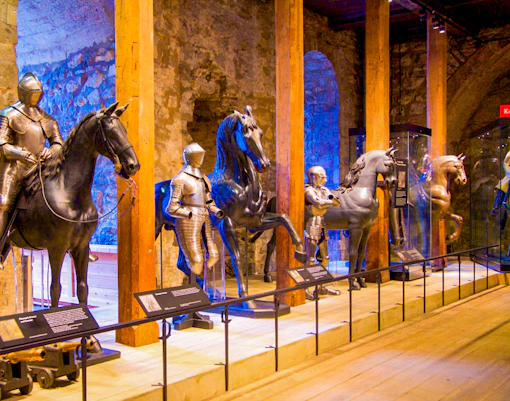
Although surrounded by medieval towers, the Waterloo Block stands out for its distinctive Victorian design. Built from brick with a practical, symmetrical layout, it reflects the Tower's continued military role during the 19th century and provides an interesting contrast to the fortress's Norman and Tudor buildings.
The Jewel House galleries
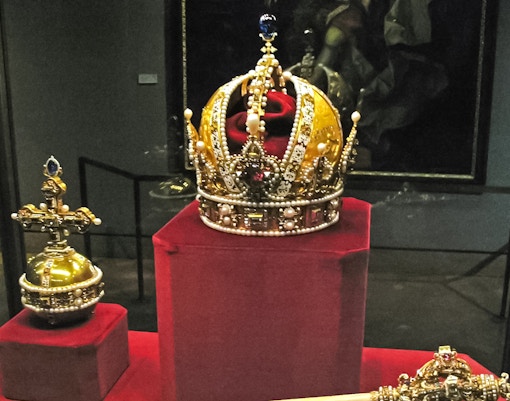
The purpose-built Jewel House combines historical interpretation with modern security. Carefully designed displays, controlled lighting, and the famous moving walkway allow millions of visitors to view the Crown Jewels safely while protecting these priceless ceremonial objects.
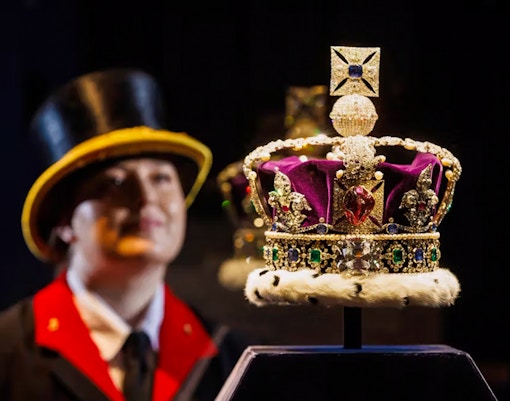
Historic coronation regalia
While the crowns often receive the most attention, don't overlook the Coronation Spoon, Sovereign's Orb, and Sovereign's Sceptre with Cross. Together, these objects illustrate centuries of British coronation traditions and include some of the oldest surviving pieces of the royal regalia.
Historical and cultural significance
- Built after one of the Tower's greatest fires: The Waterloo Block was constructed during the 1840s after the devastating 1841 fire destroyed the Grand Storehouse, one of the Tower of London's most important military buildings. Its construction marked one of the largest rebuilding projects in the fortress's modern history.
- A symbol of Victorian military Britain: Originally serving as military barracks, the Waterloo Block reflects the Tower's continued importance as an active military installation during the Victorian period, long after its days as a royal residence had largely ended.
- Guardian of the Crown Jewels: Today, the Waterloo Block protects Britain's Crown Jewels, a collection that continues to play a central role in coronations and state ceremonies. Housing these working ceremonial objects has made the building one of the Tower's most visited and carefully protected landmarks.
- Where history meets modern security: From the attempted theft by Thomas Blood in 1671 to today's advanced surveillance and conservation systems, the Waterloo Block represents the latest chapter in the centuries-long effort to safeguard the monarchy's most valuable ceremonial treasures.
Notable figures
Charles II | Monarch
Following the destruction of the medieval Crown Jewels during the English Civil War, Charles II commissioned an entirely new set of coronation regalia for his restoration in 1661. Many of the ceremonial objects displayed in the Waterloo Block today were created during his reign and continue to be used at coronations.
Thomas Blood | Would-be thief
In 1671, Thomas Blood carried out one of history's most daring attempted robberies by trying to steal the Crown Jewels from their former home in the Martin Tower. Although the theft failed, it transformed how Britain's royal regalia would be protected in the centuries that followed.
Sir Robert Vyner | Royal goldsmith
Sir Robert Vyner was entrusted with creating much of the new Crown Jewels for Charles II's coronation after the Restoration. His craftsmanship shaped many of the iconic regalia visitors see today, including pieces that remain central to British state ceremonies.
King Charles III | The latest coronation
The Crown Jewels returned to global attention during the coronation of King Charles III in 2023, demonstrating that the collection preserved inside the Waterloo Block remains an active part of Britain's constitutional and ceremonial traditions.
Know before you go
- Opening hours: Waterloo Block follows the Tower of London's regular opening hours on your ticketed day.
- Typical opening times: The Tower generally opens at 9am (Tuesday–Saturday) and 10am (Sunday–Monday), with seasonal variations.
- Closing times: Closing is usually between 4:30pm and 5:30pm, depending on the season.
- Best time to visit: Visit during the first hour after opening to minimise waiting times for the Crown Jewels.
- Last entry: The final admission to the Tower is usually one hour before closing, although queues for the Jewel House may close earlier on particularly busy days.
Address: Tower of London, London EC3N 4AB, United Kingdom
- Nearest Underground station: Tower Hill station, approximately a 3-minute walk from the main entrance.
- Other nearby transport: Tower Gateway DLR station and Tower Pier are both within easy walking distance.
- Entry point: Enter through the Tower of London's main visitor entrance; the Waterloo Block has no separate public entrance.
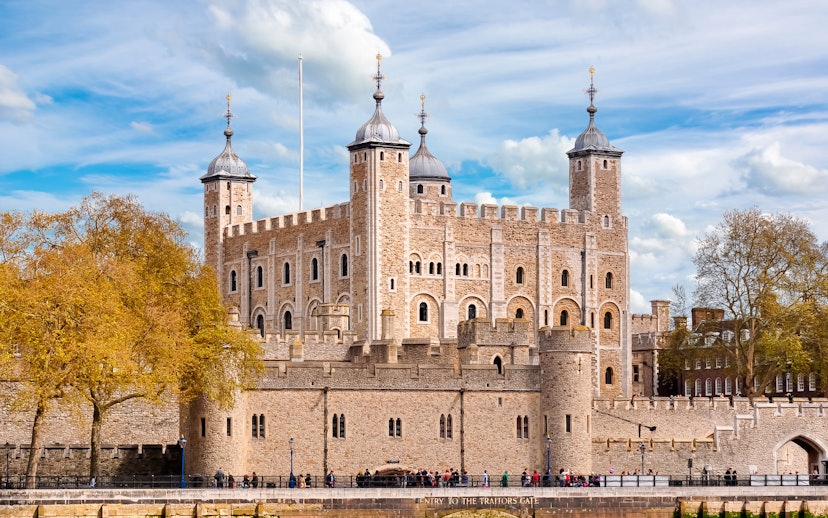
- Position within the Tower: Located in the Inner Ward, immediately south of the White Tower and home to the Jewel House.
- Walking time: Allow approximately 5–10 minutes from the entrance, depending on security checks and visitor numbers.
- Step-free access: The Waterloo Block and Jewel House offer one of the most accessible visitor routes within the Tower of London. Step-free access is available to the Crown Jewels exhibition, making it easier to visit than many of the fortress's medieval towers.
- Wheelchair users: Wheelchair users can comfortably access the Jewel House via designated accessible routes. Staff at the entrance can provide guidance to the most suitable path through the Tower grounds.
- Companion tickets: Visitors requiring assistance may obtain complimentary companion tickets from the Ticket Office on presentation of valid supporting documentation, in line with Historic Royal Palaces' accessibility policy.
- Assistance dogs: Registered assistance dogs are welcome throughout the Tower wherever operationally possible.
- Historic surfaces: Although the Waterloo Block itself is relatively accessible, visitors will still encounter cobbled paths and uneven paving while moving through other parts of the Tower complex.
- No photography inside the Jewel House: Photography and video recording are strictly prohibited inside the Crown Jewels exhibition. Photography is permitted in most other outdoor areas of the Tower unless otherwise indicated.
- Security screening: All visitors should expect airport-style security checks before entering the Tower, with additional staff managing entry into the Jewel House during busy periods.
- Large bags and equipment: Large luggage, tripods, selfie sticks, drones, and oversized photographic equipment are not permitted inside the Tower of London.
- Food and drink: Food, drinks, and smoking are not allowed inside the Waterloo Block or other enclosed historic buildings.
- Moving walkway etiquette: The moving walkway inside the Jewel House is designed to keep visitor traffic flowing during busy periods. If you'd like a longer look at the Crown Jewels, use the stationary viewing area immediately after the walkway before continuing through the exhibition.
- Minimal walking to reach the building: The Waterloo Block is one of the closest major attractions to the Tower entrance, requiring only a short walk across mostly level ground.
- Standing during the exhibition: Most visitors spend 20–30 minutes standing while moving through the Jewel House galleries and viewing the Crown Jewels.
- No tower staircases: Unlike the White Tower or Wakefield Tower, the Jewel House does not require visitors to climb narrow medieval staircases, making it one of the Tower's easiest indoor attractions to visit.
- Busy queues during peak hours: Visitors may spend additional time standing in managed queues, particularly between 11am and 2pm or during weekends and school holidays.
- Suitable for most visitors: Thanks to its modern layout, level floors, and accessible design, the Waterloo Block is among the easiest historic buildings within the Tower of London to visit for families, older visitors, and those with limited mobility.
Frequently asked questions about the Waterloo Block
Yes. Entry to the Waterloo Block is included with every standard Tower of London admission ticket. No separate ticket exists.
The building takes its name from the Battle of Waterloo (1815). Constructed during the 1840s, it reflected the pride and confidence of Victorian Britain while serving as military barracks within the Tower of London.
The Waterloo Block houses the Jewel House, where Britain's Crown Jewels are displayed. You'll also find interpretation galleries explaining the history, symbolism, and continued ceremonial use of the regalia.
No. The building was originally constructed as Victorian military barracks after the 1841 fire destroyed the Grand Storehouse. It was later converted into the modern Jewel House, becoming the permanent home of the Crown Jewels.
No. The Waterloo Block is located inside the Tower of London and does not have its own public entrance. You'll need a valid Tower ticket to visit it.
Most visitors spend 20–30 minutes exploring independently or 30–40 minutes with a guided tour or audio guide. During busy periods, you should also allow extra time for the managed queue to enter the Jewel House.
Photography is permitted in some parts of the Waterloo Block, but photography and video recording are strictly prohibited inside the Jewel House, where the Crown Jewels are displayed.
Yes. During busy periods, visitors pass the Crown Jewels on a moving walkway designed to keep the exhibition flowing smoothly. After leaving the walkway, you can pause at designated viewing points to take a closer look at several displays.
Yes. The Jewel House offers one of the most accessible visitor routes within the Tower of London, with step-free access available throughout the exhibition. Staff can also direct visitors along the easiest accessible route.
Most visitors continue to the White Tower, Wakefield Tower, Martin Tower, or Tower Green, all of which are just a short walk away and help tell the wider story of the Tower's evolution as a royal palace, fortress, prison, and treasury.