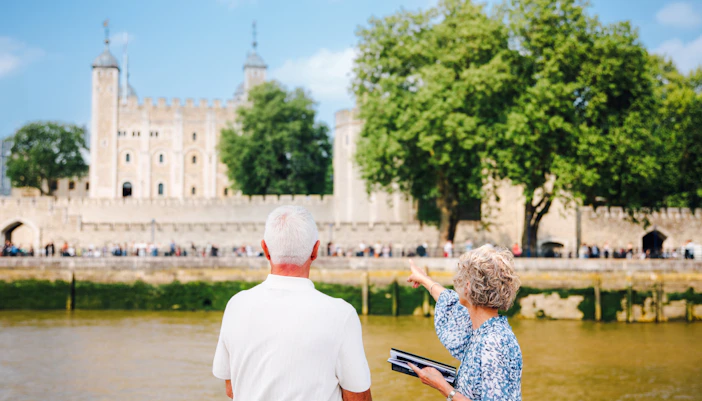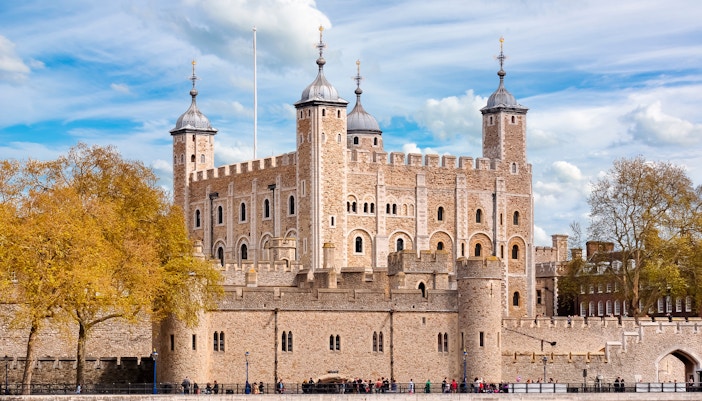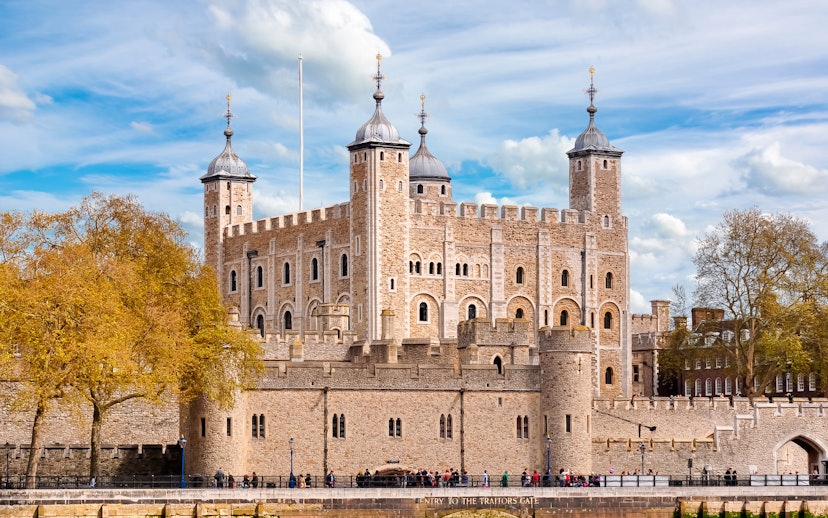









Visit the chapel as soon as you enter the White Tower. During the first hour after opening, the rooms are generally quieter, allowing you to appreciate the chapel's peaceful atmosphere before visitor groups reach the upper floors. By late morning, many people pass through quickly on their way to the armouries, making it harder to pause and take in the details.
Tower of London
4.5(66,598)
St John’s Chapel
Included with Tower of London tickets
Timings
RECOMMENDED DURATION
3 hours
Top things to do in London
Quick overview
- Access: Included in all Tower of London tickets
- Separate ticket: Not required
- When you’ll see it: Midway through a typical Tower visit, inside the White Tower
- Visit duration: 10–15 mins self-guided/15–20 min with a guide
- Best time: First entry slot, before the White Tower and Crown Jewels queues build
- Restrictions: Photography is not permitted. Food and drink are prohibited inside the White Tower.
How to best experience St John’s Chapel
Best time to visit
How long to spend
Allow 10-15 minutes if you're exploring independently or 15–20 minutes with a guide. The chapel isn't filled with artefacts, so the experience comes from observing its architecture, proportions, and natural light. Spending a few extra minutes here offers a welcome contrast to the busier galleries elsewhere in the White Tower.
Where it fits in your itinerary
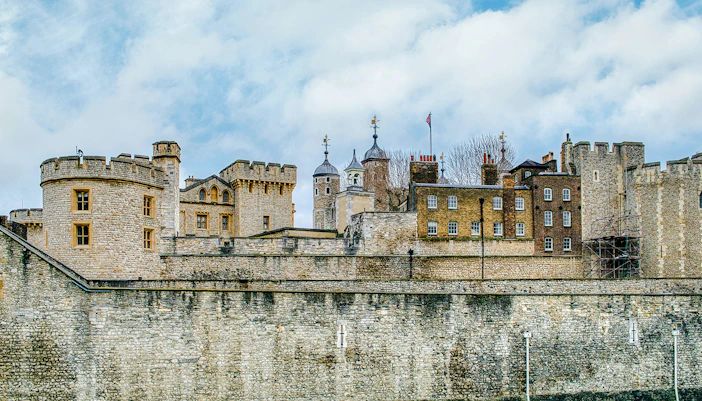
St John's Chapel forms part of the White Tower rather than a separate attraction, so include it naturally during your visit to the keep. If possible, visit the chapel before spending time in the armouries and exhibitions, when you'll be fresher and more likely to appreciate its quiet simplicity. Afterwards, continue to the surrounding displays before moving on to the rest of the Tower complex.
Crowd patterns
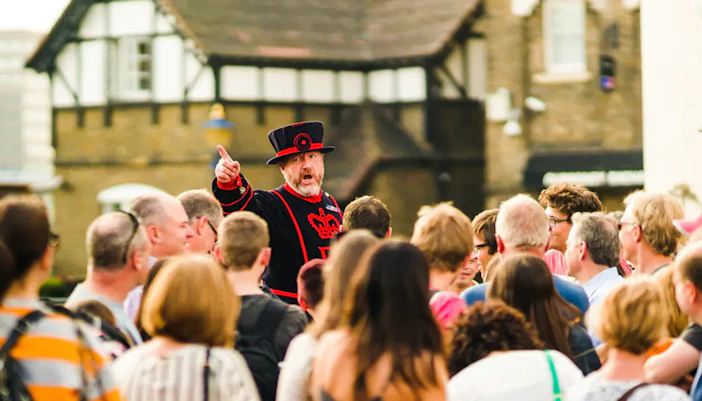
Visitor numbers inside the White Tower increase steadily from late morning onwards, particularly after Beefeater tours finish and Crown Jewels visitors begin exploring other parts of the fortress. Although the chapel rarely feels overcrowded, larger groups can make the small interior feel less tranquil. Early morning and the final hour before closing usually provide the calmest experience.
What to prioritize if time is short
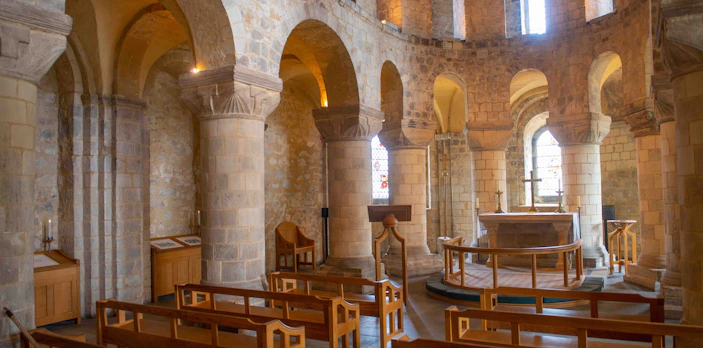
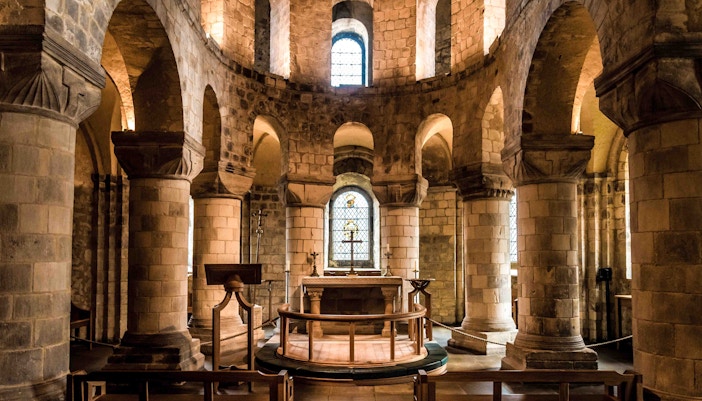
Begin by standing in the centre of the chapel rather than walking straight through. From here, you'll be able to appreciate the symmetry of the rounded arches, thick columns, and semicircular apse in a single view. Then walk towards the eastern end to understand how the space was designed for worship within a military fortress.
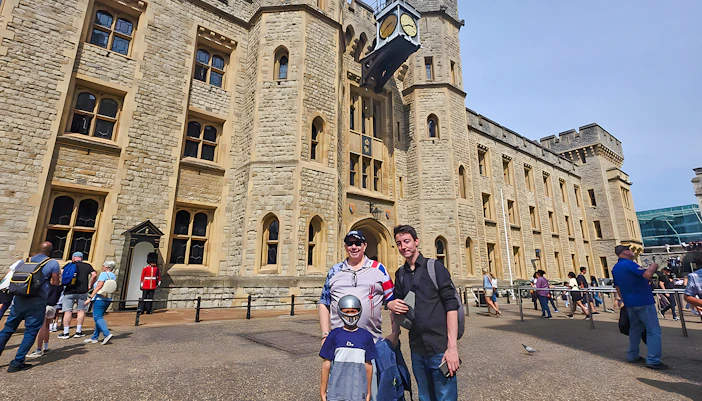
Common mistakes to avoid
Many visitors treat St John's Chapel as simply another room within the White Tower and leave after only a few moments. Instead, give your eyes time to adjust to the natural light and notice how the restrained architecture creates its atmosphere. Remember that photography isn't permitted, so take the opportunity to experience the space without focusing on your camera.
Best tickets to experience St John’s Chapel
| Ticket type | Why choose it |
|---|---|
Standard Tower of London admission | Ideal if you'd like to explore the White Tower at your own pace and spend as much time in the chapel as you wish. |
Guided Tower of London tour | Best for understanding the symbolism of Norman architecture and the chapel's place within William the Conqueror's fortress. |
Early-entry or Beefeater meet-and-greet tour | Offers quieter access to the White Tower, giving you more time to appreciate the chapel before larger visitor groups arrive. |
Why it’s worth seeing
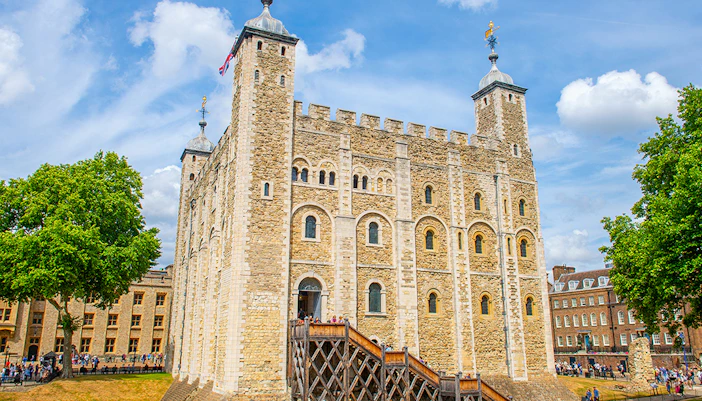
While most visitors associate the fortress with royal ceremonies, political prisoners, and the Crown Jewels, this quiet Romanesque chapel reflects its earliest purpose as a Norman royal residence. Built into the White Tower nearly a thousand years ago, it remains one of the best-preserved examples of Norman church architecture in England. Its beauty lies not in elaborate decoration, but in perfect proportions, clean lines, and remarkable survival.
The apse: start at the east end
Walk to the eastern end of the chapel and turn back towards the nave. The semicircular apse immediately draws your eye and creates the balanced proportions typical of Romanesque churches. From this position, you can appreciate how the rounded arches, thick columns, and vaulted ceiling work together to create a space that feels both grand and remarkably restrained.
The rounded arches and columns
The repeated round arches supported by sturdy stone columns define the chapel's unmistakable Norman character. Unlike later Gothic churches that favoured height and elaborate ornamentation, Romanesque architecture expressed authority through symmetry, strength, and proportion. Notice how every arch mirrors the next, creating a calm rhythm that guides your gaze through the chapel.
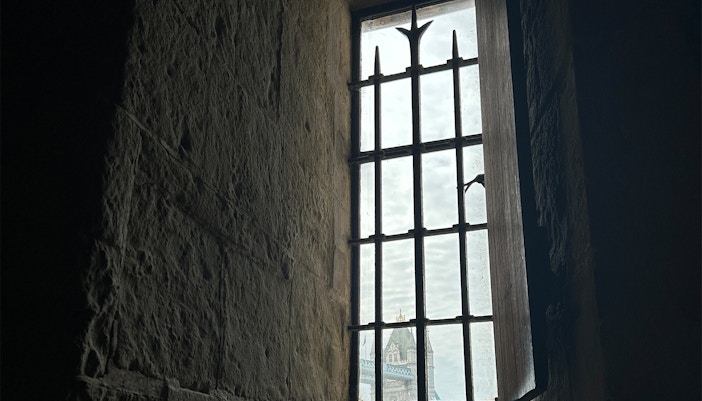
The natural light and simplicity
One of the chapel's most striking qualities is what it doesn't contain. There are no colourful stained-glass windows, intricate carvings, or lavish decorations. Instead, small windows admit soft natural light that highlights the pale stone and clean architectural lines. The result is a peaceful interior that feels remarkably authentic, allowing visitors to experience a space that has changed very little since Norman times.
Romanesque architecture at a glance
Understanding a few key features makes St John's Chapel much easier to appreciate.
Rounded arches
Romanesque churches are recognised by their rounded arches rather than the pointed arches introduced during the later Gothic period. These arches create the chapel's strong, balanced appearance.
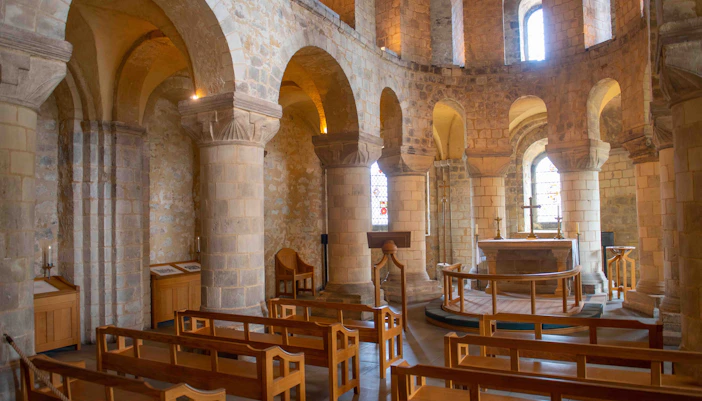
Thick columns and solid masonry
Instead of delicate supports, Norman builders relied on heavy stone columns and thick walls to carry the weight of the building. This gives the chapel its sense of permanence and quiet strength.
Minimal decoration
The chapel's plain interior wasn't unfinished—it was intentional. Norman architecture emphasised geometry, proportion, and craftsmanship instead of elaborate ornament, allowing the building itself to become the focal point.
Historical and cultural significance
St John's Chapel has remained at the heart of the White Tower for nearly a millennium, reflecting the changing role of the Tower of London itself—from royal residence to fortress, prison, and national landmark.
- Built for William the Conqueror (Late 11th century): Constructed as part of the White Tower around 1078–1097, St John's Chapel served as the private place of worship within William the Conqueror's new Norman fortress. Its Romanesque design reflected the architectural style introduced to England after the Norman Conquest.
- A royal chapel (12th–13th centuries): As the Tower developed into a royal residence, the chapel was used by kings, queens, members of the royal household, and important guests. Its position within the keep reinforced the White Tower's dual role as both palace and military stronghold.
- A rare survivor (Later centuries): While many medieval churches were rebuilt or extensively altered, St John's Chapel escaped major architectural changes. Its remarkably intact Norman interior survived periods when the White Tower was adapted for military storage, administration, and ceremonial use.
- One of London's finest Norman interiors (Today): Visitors now encounter one of the most complete Romanesque chapels in Britain. Carefully preserved within the White Tower, it remains an important reminder that the Tower of London began as a royal residence long before it became famous as a prison or the home of the Crown Jewels.
Notable figures
William the Conqueror | King
William commissioned the construction of the White Tower shortly after the Norman Conquest, establishing a powerful royal fortress in London. St John's Chapel formed an integral part of this ambitious project, providing a private place of worship within the keep.
Gundulf of Rochester | Bishop and builder
Although historians continue to debate the details of his involvement, Gundulf is traditionally credited with overseeing the design of the White Tower. His influence is reflected in the disciplined Romanesque architecture that defines St John's Chapel today.
Henry III | King
Henry III modernised much of the Tower during the 13th century, refurbishing royal apartments and strengthening its role as a royal residence. Throughout these changes, St John's Chapel remained the principal place of worship within the White Tower.
Know before you go
- Opening hours: St John's Chapel follows the White Tower's opening hours and is accessible during normal Tower of London operating times.
- Entry system: Tower tickets are timed, with admission available in 30-minute entry windows.
- Arrival window: Plan to arrive within 30 minutes of your selected entry time.
- Best time to visit: Visit the White Tower soon after entering the Tower complex to enjoy a quieter chapel before larger visitor groups arrive.
- Seasonal changes: Opening hours vary throughout the year, so check the latest timings before your visit.
Address: Tower of London, London EC3N 4AB, United Kingdom
- Inside the Tower: St John's Chapel is located on the second floor of the White Tower.
- Nearest Underground: Tower Hill station, approximately a 2–3 minute walk from the main entrance.
- Entry point: Enter through the Tower's main visitor entrance before making your way to the White Tower.
- Walking time: Allow around 45–90 minutes from entering the Tower to reach the chapel, depending on queues and how long you spend at earlier attractions.
- White Tower access: The chapel is inside the White Tower and isn't step-free.
- Stair access: Visitors must climb historic spiral staircases and uneven stone steps to reach the chapel.
- Wheelchair accessibility: While much of the wider Tower complex offers accessible routes, St John's Chapel isn't accessible to wheelchair users because of the building's historic layout.
- Companion tickets: Complimentary carer tickets are available at the Ticket Office with valid supporting documentation.
- Assistance dogs: Guide and assistance dogs are welcome throughout the Tower of London.
- Photography: Photography and filming aren't permitted inside St John's Chapel.
- Food and drink: Eating and drinking aren't allowed anywhere inside the White Tower.
- Large bags: Oversized luggage isn't permitted inside the Tower complex.
- Respect the space: As one of the Tower's oldest surviving interiors, visitors are asked to keep noise to a minimum while inside the chapel.
- Follow staff instructions: Certain areas may occasionally be managed differently during conservation work or special services.
- Difficulty level: Moderate due to multiple flights of historic stairs inside the White Tower.
- Walking: Expect a moderate amount of walking throughout the Tower before reaching the chapel.
- Surfaces: Historic stone steps are narrow, uneven, and worn in places, so sturdy footwear is recommended.
- Standing: Most visitors spend 10–15 minutes standing inside the chapel while appreciating its architecture.
- Alternative option: If climbing stairs isn't suitable, the Tower's outer grounds, battlements, and riverside areas offer easier-access alternatives.
Things many visitors miss
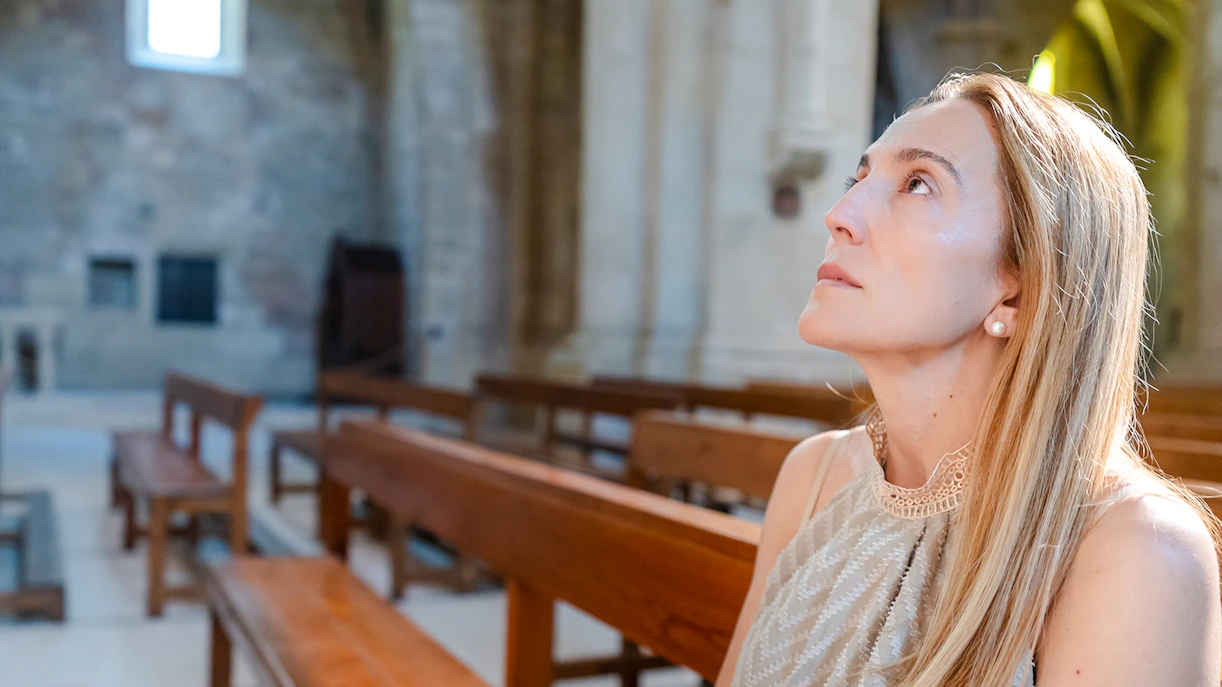
- The chapel is almost unchanged after 900 years: Unlike many medieval churches that were enlarged or rebuilt over the centuries, St John's Chapel has remained remarkably faithful to its original Norman design. The simplicity you see today is much the same as royal visitors would have experienced in the 11th century.
- The plain interior was intentional: Many visitors assume the chapel once contained colourful decoration that has since disappeared. In reality, Norman architects deliberately favoured proportion, solid masonry, and restrained ornamentation, creating a space that reflected permanence rather than luxury.
- It's still a consecrated chapel: Although most visitors experience St John's Chapel as a historic monument, it remains a consecrated place of worship. On special occasions, religious services are still held here, continuing a tradition that stretches back nearly a millennium.
Visitor tips
- Visit the chapel before the armouries if possible. Experiencing its quiet atmosphere first makes the busier exhibition galleries feel less overwhelming afterward.
- Don't expect elaborate decorations. St John's Chapel is celebrated for its architectural purity rather than religious artwork or furnishings, so appreciate its proportions instead of looking for ornament.
- Take a slow walk around the apse before leaving. Viewing the chapel from different angles reveals how carefully the arches, columns, and curved eastern end were designed to work together.
- Allow your eyes a moment to adjust. The chapel is lit mainly by natural daylight filtering through small windows, so subtle architectural details become more noticeable after a few moments.
- Respect the quiet atmosphere. Even during busy periods inside the White Tower, speaking softly helps preserve the peaceful character that makes St John's Chapel one of the Tower's most distinctive spaces.
Frequently asked questions about St John's Chapel
Yes. Entry to St John’s Chapel is included with every valid Tower of London ticket. No separate ticket exists.
No. Any Tower of London ticket includes it. Guided and early-access options simply give you more context or a quieter White Tower visit.
No. The chapel has no separate entrance and sits inside the White Tower. You must enter the Tower complex on a valid ticket.
Most visitors reach it midway through the visit, once they enter the White Tower. Allow roughly 45–90 minutes from the main entrance.
Most visitors spend 10–15 minutes exploring the chapel independently. If you're visiting with a guide or taking time to appreciate its architecture, allow 15–20 minutes.
Yes. It’s included when your guided route covers the White Tower. A guide helps explain why the room is so architecturally important.
Photography is prohibited to help preserve the historic interior and maintain the chapel's peaceful atmosphere. Visitors are encouraged to experience the space without distractions and respect its continued role as a consecrated place of worship.
Unfortunately, no. The chapel is reached via historic staircases inside the White Tower, which isn't step-free. While many outdoor areas of the Tower are accessible, visitors who cannot use stairs won't be able to access the chapel.
Yes. If you’re already visiting the White Tower, it adds only a short stop and gives you the clearest Norman interior in the complex.
Occasionally, yes. Special services are held at selected times throughout the year, but these are limited and aren't included as part of a standard Tower of London visit. Check the Historic Royal Palaces website before travelling if you're interested in attending one.
The chapel is built in the Romanesque, or Norman, architectural style. Its rounded arches, thick stone columns, semicircular apse, and minimal decoration are all defining features of Norman architecture introduced to England after the Norman Conquest.