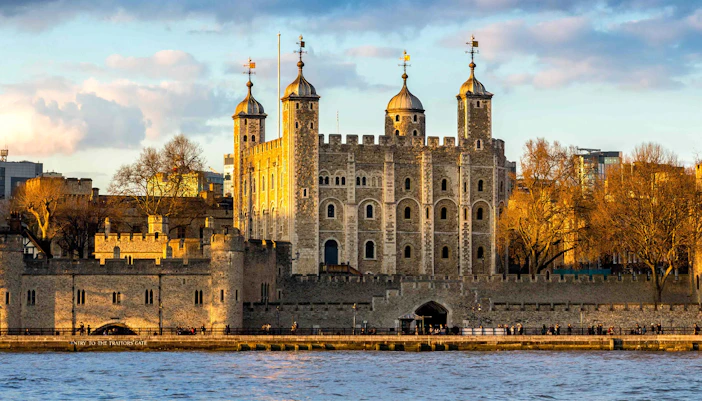
Following his victory at the Battle of Hastings, William the Conqueror needed more than a crown, he needed control. He ordered a fortress on the Thames to intimidate London and secure Norman rule. Around 1078, construction of the White Tower began under Bishop Gundulf of Rochester, creating one of Europe's finest surviving examples of Norman military architecture.
History of the Tower of London | A fortress that shaped a kingdom
For nearly 1,000 years, the Tower of London has stood at the centre of England's greatest triumphs, betrayals, and political upheavals. Built by William the Conqueror after the Norman Conquest, this UNESCO World Heritage Site has served as a royal palace, fortress, prison, treasury, mint, and the enduring home of the Crown Jewels.
Tower of London timeline
- 1066: William the Conqueror orders a royal fortress
- 1078: Construction of the White Tower begins
- 1190s - 1285: The Tower expands into a mighty fortress
- 1238: A royal menagerie arrives, including exotic animals like lions, leopards, and later an elephant.
- 1483: The Princes in the Tower disappear
- 1536 - 1554: The Tower becomes synonymous with Tudor justice
- 1605 - 1606: Guy Fawkes is imprisoned
- 1696: Isaac Newton reforms the Royal Mint
- 1835: The Royal Menagerie closes
- 1988: UNESCO recognises the Tower's global importance
History of the Tower of London explained
The Norman conquest and the birth of the Tower (1066–1100)
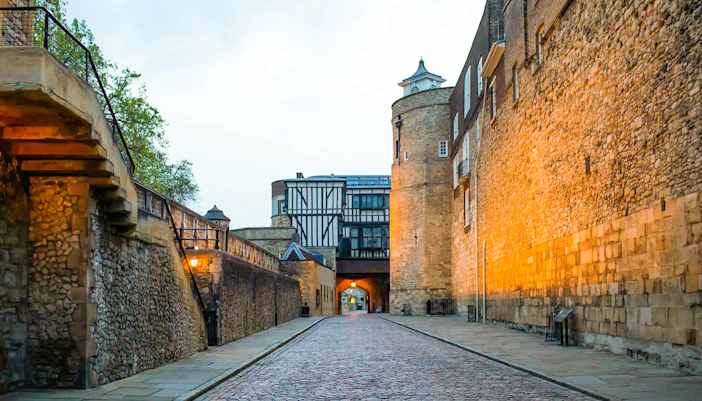
From royal castle to medieval stronghold (1100–1485)
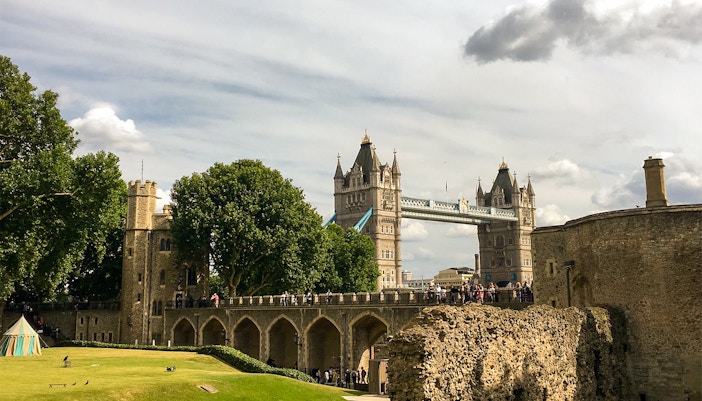
Successive monarchs transformed the White Tower into a vast fortified complex. Henry III and Edward I added curtain walls, towers, gatehouses, and a moat, while the Tower also became a royal residence, treasury, armoury, mint, and even home to a royal menagerie. By the late Middle Ages, it had become the political and military heart of the English monarchy.
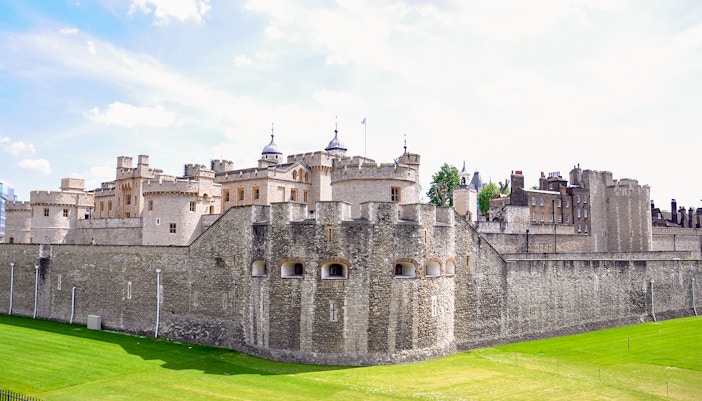
The Tower's darkest chapter: The Tudors (1485–1603)
The Tudor era cemented the Tower's reputation as England's most feared prison. Royals, nobles, and religious figures accused of treason were imprisoned within its walls, including Anne Boleyn, Catherine Howard, Lady Jane Grey, and the future Elizabeth I. Public memory of the Tower became inseparable from political intrigue, imprisonment, and execution.
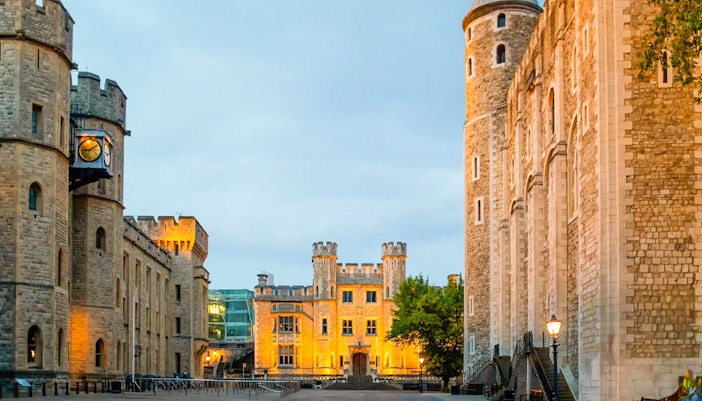
Plots, prisoners, and the Royal Mint (1603–1835)
Although fewer royal prisoners arrived during the Stuart period, the Tower remained central to national affairs. Guy Fawkes was interrogated here after the Gunpowder Plot, while Sir Walter Raleigh spent years imprisoned within the complex. At the same time, the Royal Mint operated inside the fortress, where Isaac Newton later introduced reforms that reshaped England's currency.
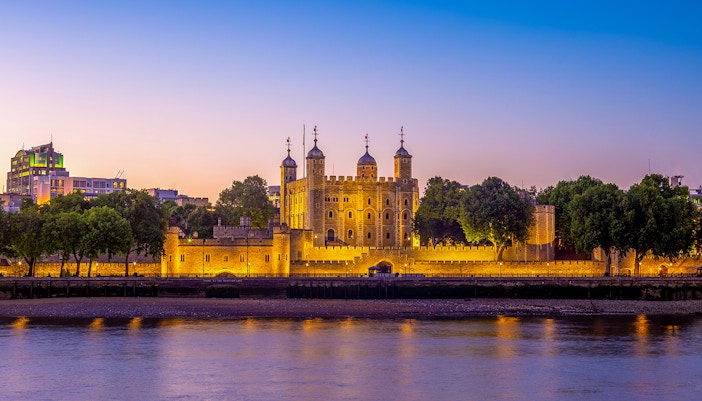
From military fortress to national monument (1835–1945)
As Britain modernised, the Tower's defensive role gradually diminished. The Royal Menagerie closed in 1835, but the site continued serving military purposes, housing the Royal Armouries and occasionally holding prisoners. During the First World War, several convicted German spies were executed here, marking the Tower's final chapter as a place of state execution.
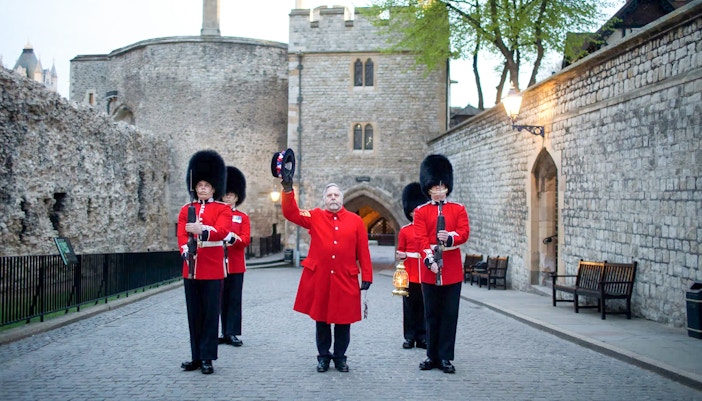
A living symbol of British history (1945–Present)
After the Second World War, the Tower evolved into one of Britain's most important heritage sites. Designated a UNESCO World Heritage Site in 1988, it is now cared for by Historic Royal Palaces. Visitors come to see the Crown Jewels, the White Tower, the medieval battlements, and centuries-old traditions still upheld by the Yeoman Warders, ensuring the fortress remains a living part of Britain's national story rather than simply a preserved monument.
Construction and architecture of the Tower of London
🏰 Norman beginnings (1066–1100)
Following the Norman Conquest, William the Conqueror ordered a fortress to secure London. Around 1078, construction of the White Tower began under Bishop Gundulf of Rochester, creating one of Europe's finest surviving Norman keeps and a powerful symbol of the new king's authority.
🪨 Built to last
The White Tower was constructed using durable Kentish ragstone, with high-quality Caen stone imported from Normandy for its corners, windows, and decorative details. Walls up to 4.6 metres (15 feet) thick helped the fortress withstand attacks while projecting royal strength.
🛡️ Expansion into a mighty fortress (12th–13th centuries)
Rather than remaining a single castle, the Tower steadily expanded under Richard I, Henry III, and Edward I. New curtain walls, defensive towers, gatehouses, and a broad moat transformed it into one of medieval Europe's strongest fortified complexes.
👑 A fortress fit for kings
Although designed for defence, the Tower also functioned as a royal residence. Henry III introduced larger windows, richly decorated interiors, and improved living quarters, allowing the fortress to serve both ceremonial and practical purposes.
⏳ Preserved through the centuries
Unlike many medieval castles that were abandoned or rebuilt, the Tower has been carefully conserved while retaining much of its original layout. Ongoing restoration by Historic Royal Palaces protects nearly 1,000 years of architecture without altering its historic character.
Tower of London today I Why it matters
The Tower of London remains one of Britain's most significant historic landmarks, preserving almost 1,000 years of royal, political, and military history within a single fortress. Managed by Historic Royal Palaces and recognised as a UNESCO World Heritage Site, it continues to safeguard the Crown Jewels while welcoming millions of visitors every year.
Beyond its famous collections, the Tower is still a working ceremonial site. The Yeoman Warders carry out centuries-old traditions, the legendary ravens continue to inhabit the grounds, and the nightly Ceremony of the Keys has taken place without interruption for centuries. From Norman architecture and Tudor history to royal ceremonies that continue today, few places illustrate the evolution of the British monarchy as completely as the Tower of London.
Planning a visit? Read our Tower of London visitor guide.
Frequently asked questions about the Tower of London history
Construction began shortly after the Norman Conquest in 1066, with the White Tower starting around 1078 under William the Conqueror. Bishop Gundulf of Rochester oversaw much of the work, creating a fortress that established Norman authority over England.
William built the Tower to secure London after his victory at the Battle of Hastings. Positioned beside the River Thames, it projected Norman power, protected the capital, and discouraged rebellion by serving as both a fortress and a royal residence.
The Tower was originally designed as a defensive fortress and royal castle. Over time, it also served as a palace, treasury, armoury, Royal Mint, menagerie, archive, observatory, prison, and eventually the permanent home of the Crown Jewels.
The Tower has played a central role in British history for almost a millennium. It has witnessed royal coronations, political imprisonments, executions, military conflicts, and constitutional change while remaining one of the country's best-preserved Norman fortresses.
Among the Tower's best-known prisoners were Anne Boleyn, Elizabeth I before she became queen, Lady Jane Grey, Sir Walter Raleigh, Guy Fawkes, Thomas More, and John Balliol, King of Scotland. Their stories reflect the Tower's long association with royal politics and state security.
In 1483, the young Edward V and his brother Richard disappeared while staying in the Tower before Edward's planned coronation. Their fate remains one of Britain's greatest historical mysteries, with historians still debating what happened to them.
The Crown Jewels have been housed at the Tower for centuries because of its strong fortifications and security. Although parts of the collection have been relocated during times of conflict, the Tower has long been their principal home and remains so today.
No. Although famous for its prisoners, the Tower spent much of its history functioning as a royal palace, fortress, treasury, armoury, Royal Mint, menagerie, and ceremonial centre. Imprisonment was only one of its many roles over the centuries.
Yes. The White Tower, begun around 1078, is the oldest surviving structure within the fortress and remains its architectural centrepiece. Most of the surrounding walls, towers, and gateways were added during the 12th and 13th centuries.
Yes. Expert-led guided tours explain how the Tower evolved over nearly 1,000 years, covering its Norman origins, royal residents, famous prisoners, the Crown Jewels, and traditions that continue today. Many tours also include early access, Yeoman Warder experiences, or Thames River cruises.